Just like the heart of our homes, the ceiling fan's motor relies on a small but crucial component – the capacitor. This often-overlooked part ensures smooth operation and efficient airflow. Selecting the best capacitor for ceiling fan is paramount for both optimal performance and longevity of your fan. This article will guide you through the intricacies of ceiling fan capacitors, providing you with expert advice to make the right choice.
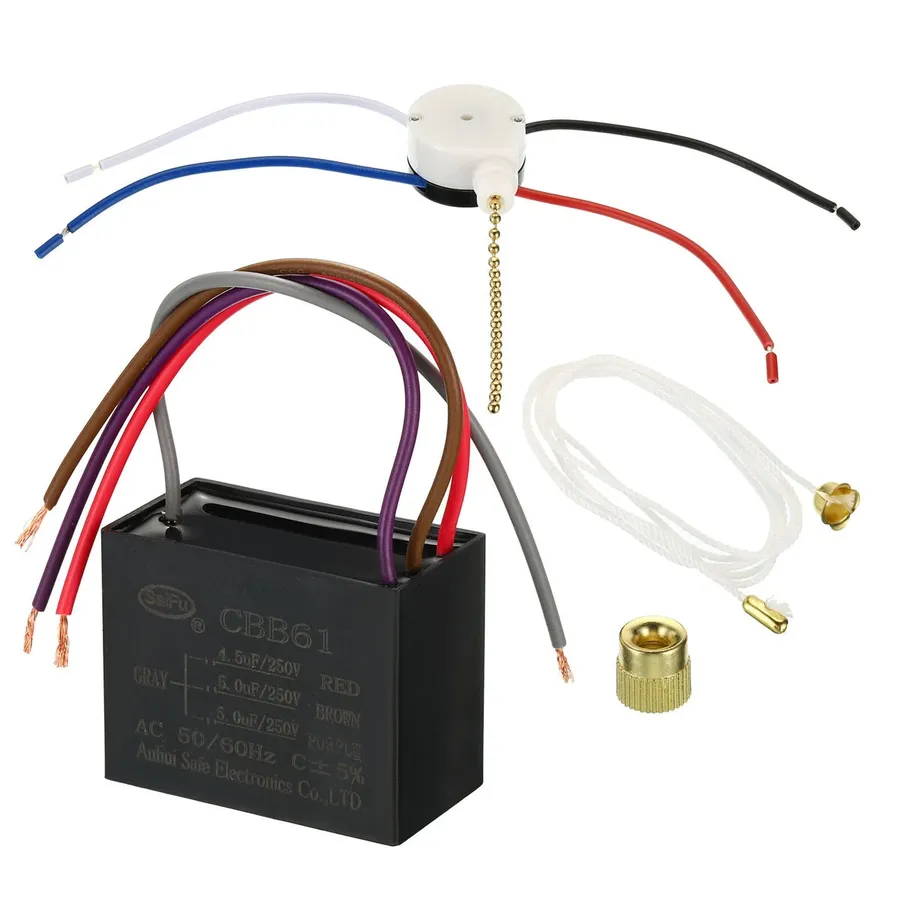
A capacitor is a fundamental component in a ceiling fan, primarily responsible for initiating the motor's rotation and maintaining efficient operation. Without a functioning capacitor, the motor may fail to start, hum, or exhibit reduced performance, directly impacting the fan's speed and overall effectiveness. Essentially, the capacitor acts as a temporary energy storage device that provides the initial electrical 'push' required to overcome the motor's inertia and then assists in maintaining the phase difference between the current and voltage in the windings, enabling smooth and continuous rotation.
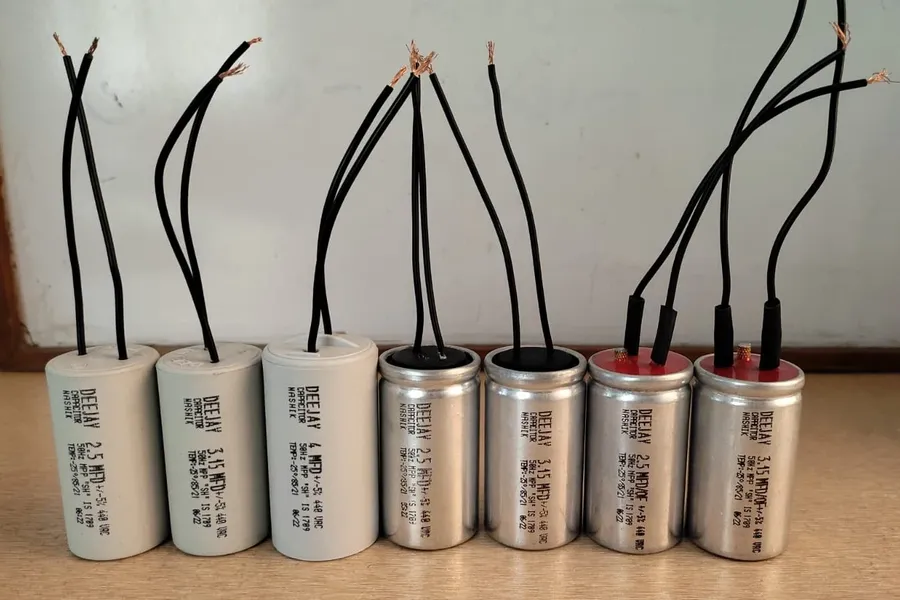
Ceiling fans predominantly utilize two main types of capacitors: electrolytic capacitors and film capacitors, specifically CBB61 type capacitors. Each type has distinct characteristics that determine its suitability for fan motor operation. Understanding these differences is crucial for selecting the correct replacement or for troubleshooting issues.
| Characteristic | Electrolytic Capacitors | CBB61 Film Capacitors |
|---|---|---|
| Construction | Polarized, with a liquid electrolyte. | Non-polarized, with a metallized film dielectric. |
| Polarity | Has defined positive and negative terminals, polarity must be observed during installation. | Non-polarized, can be connected in either direction. |
| Typical Use | Used for applications where high capacitance is required in relatively small size. | Specifically designed for AC motor applications, such as ceiling fans. |
| Lifespan | Shorter lifespan, prone to drying out and failure. | Longer lifespan, more robust and reliable. |
| Cost | Generally lower cost. | Generally higher cost. |
| Failure Mode | Typically fails due to electrolyte loss or internal breakdown, may cause bulging or leakage. | Typically fails by gradual degradation of performance. |
While electrolytic capacitors might be found in some older or lower-cost fans, CBB61 film capacitors are the industry standard for ceiling fans due to their superior performance and safety. CBB61 capacitors are non-polarized, offering flexibility in installation, and have a longer service life compared to electrolytic capacitors, ensuring better reliability for motor startup and speed regulation. For most ceiling fan replacements, a CBB61 capacitor is the best choice.
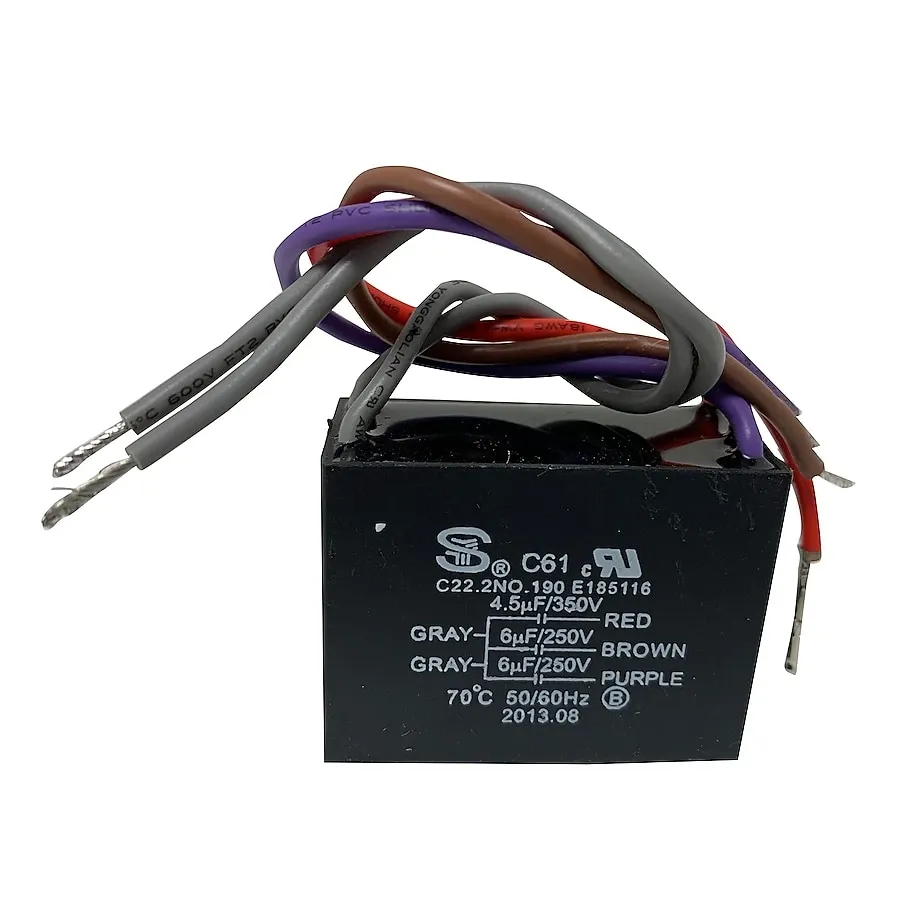
Selecting the correct capacitor for a ceiling fan requires careful consideration of several key specifications. These parameters directly impact the fan's performance, efficiency, and longevity. The primary specifications are capacitance, voltage rating, and tolerance, each playing a vital role in the electrical circuit.
| Specification | Description | Impact on Fan Performance |
|---|---|---|
| Capacitance (μF) | The measure of a capacitor's ability to store an electrical charge, measured in microfarads (μF). | Directly influences the fan's starting torque and running speed; an incorrect value can lead to slow starts, reduced speed, or motor damage. |
| Voltage Rating (V) | The maximum voltage the capacitor is designed to handle without damage or failure. | Ensures the capacitor operates safely within the electrical system; using a capacitor with an insufficient voltage rating can cause it to fail or create a safety hazard. |
| Tolerance (%) | The acceptable deviation from the stated capacitance value, expressed as a percentage. | Indicates the accuracy of the capacitor's capacitance; a lower tolerance means a more precise capacitance, leading to consistent fan performance. |
Each of these specifications must align with the manufacturer's requirements for optimal fan operation. Using a capacitor with incorrect specifications can lead to various issues, including reduced efficiency, increased energy consumption, and premature failure of the motor or capacitor. It is therefore crucial to verify the manufacturer's recommended specifications before replacement.
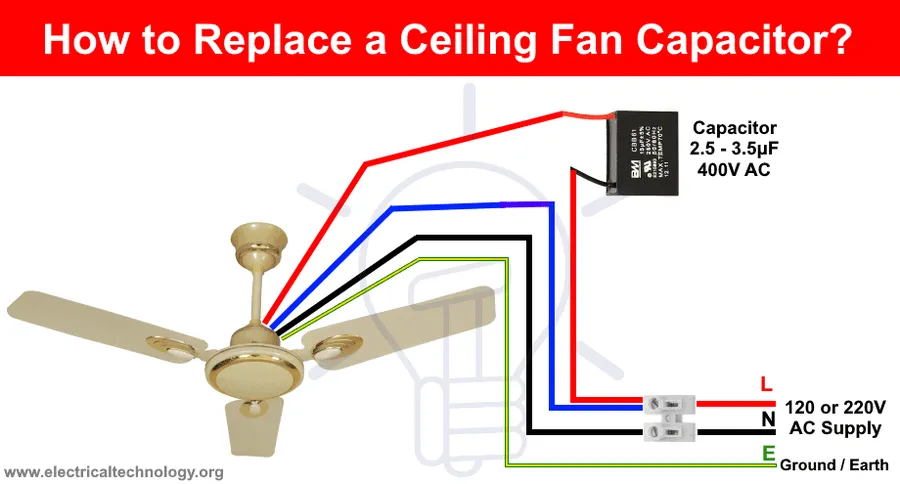
The capacitance value of a ceiling fan capacitor, measured in microfarads (µF), is a critical parameter that directly impacts the fan's performance and longevity. Using a capacitor with the correct original capacitance is essential because it is designed to work in harmony with the motor windings for optimal torque and speed regulation. Deviating from the specified value can lead to inefficient operation, increased heat generation, and potential motor damage.
The ceiling fan motor's design is based on specific electrical characteristics and using the correct capacitor is key to ensuring these characteristics function as designed. When a capacitor of the incorrect value is used it creates an imbalance in the current flow through the motor windings, thereby not achieving the design characteristics of the motor. This has implications for both speed and torque.
| Capacitor Value | Impact on Fan Performance | Potential Consequences |
|---|---|---|
| Correct Value (Original Spec) | Optimal motor starting and running; efficient speed control | Normal operation and expected lifespan |
| Higher Value | Increased current flow; higher motor speed; may lead to motor over heating. | Risk of premature motor failure; reduced lifespan of capacitor. |
| Lower Value | Reduced current flow;lower motor speed and less torque | Poor starting torque; reduced fan performance; potential motor strain. |
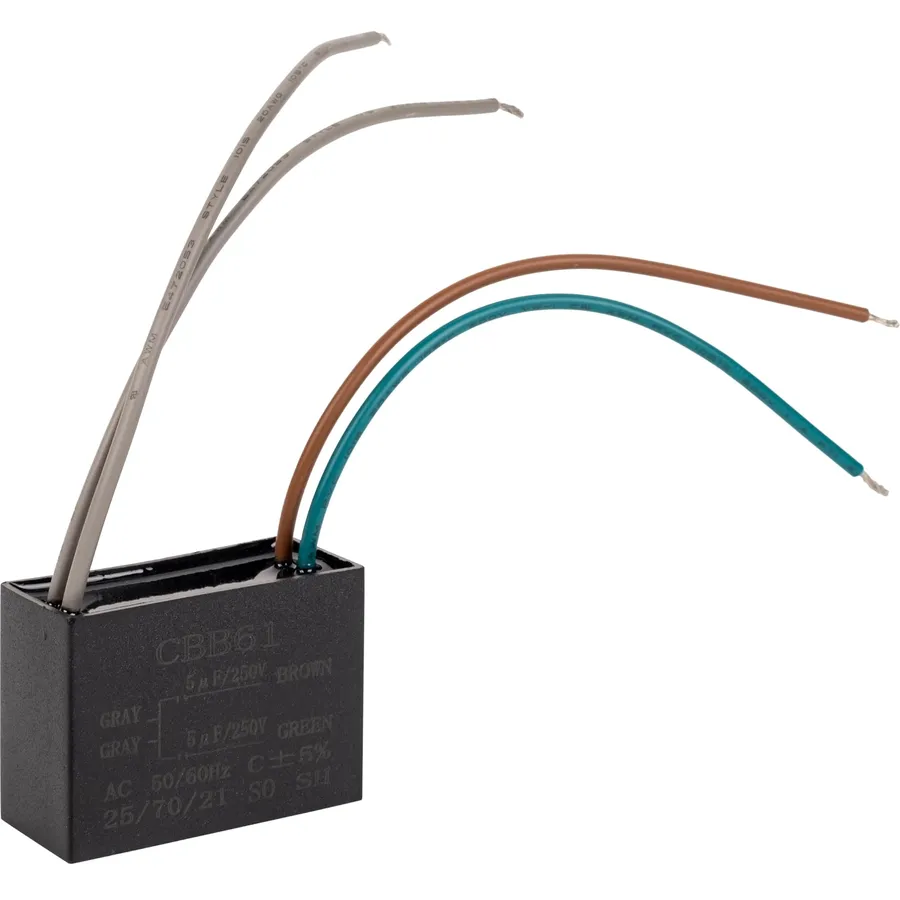
Selecting the correct voltage rating for a ceiling fan capacitor is paramount for ensuring both safety and operational reliability. The voltage rating, typically expressed in Volts (V), indicates the maximum voltage that a capacitor can safely handle without risking damage or failure. It is crucial to match or exceed the original capacitor's voltage rating when replacing it.
The need to adhere to voltage specifications stems from the capacitor's function within the fan's motor circuit. Voltage surges or sustained operation above the rated voltage can lead to dielectric breakdown within the capacitor, causing it to fail, potentially resulting in fan malfunction, overheating, or even fire hazards. Therefore, meticulous attention must be paid to the original rating before any replacement.
When seeking a replacement, it's perfectly acceptable, and in many cases beneficial, to opt for a capacitor with a higher voltage rating than the original. A higher rating provides a greater safety margin and may improve the capacitor's lifespan by reducing stress on the dielectric material. However, it's crucial to never replace with a capacitor that has a lower voltage rating; doing so can be immediately dangerous and is likely to lead to premature failure and potential hazards.
| Scenario | Outcome |
|---|---|
| Using a capacitor with a voltage rating equal to the original. | Safe and reliable operation, assuming other specifications match and the capacitor is within tolerance. |
| Using a capacitor with a higher voltage rating than the original. | Safe and potentially improved operation with an increased safety margin. |
| Using a capacitor with a lower voltage rating than the original. | Unsafe, likely to lead to capacitor failure and potential hazards. |
It's also worth noting that capacitors have a voltage tolerance, which indicates the maximum acceptable deviation from the nominal voltage rating. For example, a capacitor rated at 250V with a tolerance of ±10% can safely operate up to 275V. This tolerance should be considered, but the primary focus should always be on ensuring that the replacement capacitor's nominal voltage rating is at least equal to or greater than the original component.
Understanding the nuances of ceiling fan capacitors is crucial for maintaining optimal fan performance and avoiding potential damage. This section addresses frequently asked questions to provide clarity on common capacitor-related issues.
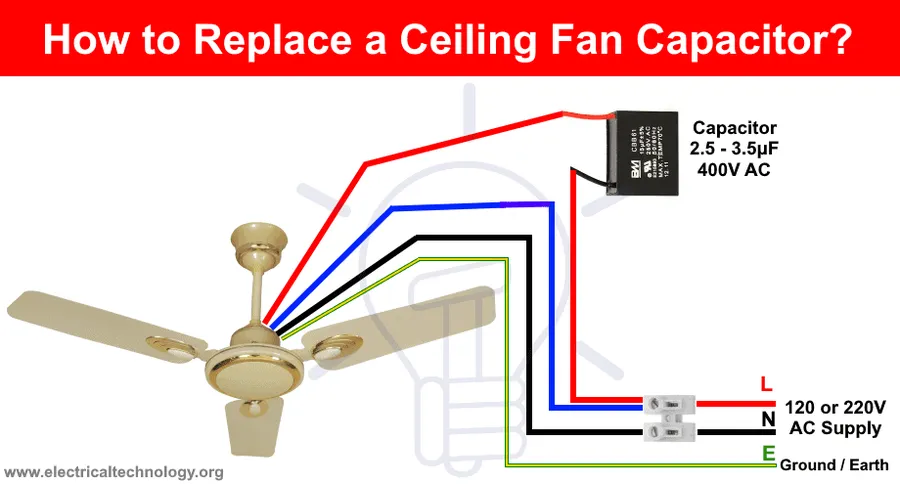
Replacing a ceiling fan capacitor is a straightforward process that can often restore a malfunctioning fan to its proper working condition. This guide outlines the necessary steps for safe and effective replacement. Remember to always prioritize safety by disconnecting power before beginning any electrical work.
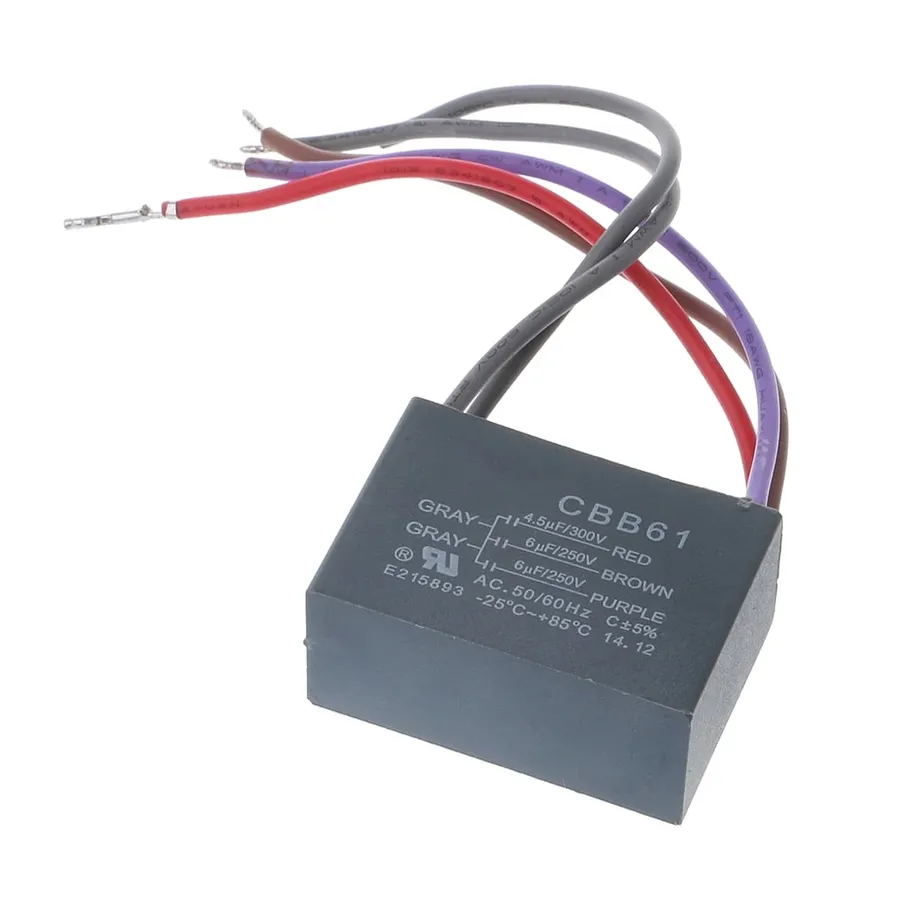
Selecting the correct capacitor for your ceiling fan is crucial for optimal performance and safety. When it comes to purchasing a replacement capacitor, you have the option of online retailers, brick-and-mortar home improvement stores, and local electrical suppliers, each with its advantages and disadvantages.
| Source | Advantages | Disadvantages | Considerations |
|---|---|---|---|
| Online Retailers (e.g., Amazon, specialized electronics websites) | Wide selection, often lower prices, convenient shopping from home, customer reviews available | Potential for longer shipping times, may need to pay for shipping, potential for receiving incorrect parts, verifying seller reliability is key | Check for seller ratings, ensure product specifications match your needs, account for potential shipping delays |
| Home Improvement Stores (e.g., Home Depot, Lowe's) | Ability to inspect the product before purchase, immediate availability, easier returns in some cases, staff may offer basic guidance | Higher prices, selection may be limited, product specifications are often not detailed | Check for availability and verify specifications before your visit. May not have the full range of capacitor options. |
| Local Electrical Suppliers | Knowledgeable staff, ability to get advice and product recommendations, often carry high-quality components, specialized capacitor options | Potentially higher prices, may require travel to reach the store, may be less convenient | Good source for expert advice, worth checking for specialized or hard-to-find capacitors, local presence for returns. |
Capacitor malfunctions are a frequent cause of ceiling fan problems, often manifesting as reduced fan speed, the inability to start, or unusual humming noises. Identifying these issues correctly can lead to efficient repairs and prevent unnecessary replacements of other components. This section provides guidance on diagnosing common capacitor-related problems and determining when a replacement is necessary.
When troubleshooting, always ensure the power to the ceiling fan is turned off at the circuit breaker before inspecting or handling any electrical components. It's prudent to use a non-contact voltage tester to confirm that the power is off before commencing work. If unsure about diagnosing the problem, consulting a qualified electrician is highly recommended for safety and effective repair.
Selecting the best capacitor for ceiling fan is a crucial step in ensuring its smooth and efficient operation. By understanding the different capacitor types, specifications, and how they affect fan performance, you can confidently choose the right capacitor for your needs. Remember, when in doubt, stick to the original specs or consult a professional. Proper capacitor selection not only optimizes performance but also extends the lifespan of your ceiling fan, preventing costly repairs in the long run. With the correct capacitor, your ceiling fan will continue to provide you with the comfort and airflow you desire for years to come.

