In today's world, the agricultural sector faces increasing pressure to enhance crop yields while minimizing environmental impact. Precision agriculture, driven by technological advancements, offers a promising path forward. At the heart of many smart farming solutions lies the Printed Circuit Board (PCB), the unsung hero enabling data collection, analysis, and informed decision-making. This article delves into the critical role of PCB solutions in crop growth monitoring, exploring how Zero One Solution Limited empowers innovators to revolutionize farming practices and ensure a sustainable food future.
Introduction: The Growing Need for Crop Monitoring
The global population is projected to reach nearly 10 billion by 2050, necessitating a substantial increase in food production. Traditional farming methods, often reliant on manual observation and reactive interventions, are increasingly insufficient to meet this escalating demand efficiently and sustainably. This growing imperative for food security, coupled with environmental concerns such as water scarcity and soil degradation, underscores the critical need for advanced agricultural technologies like Crop Growth Monitoring PCB Solutions to optimize crop yields, conserve resources, and foster resilient food systems.
Global Food Demand Surge The Food and Agriculture Organization (FAO) estimates a 70% increase in food production is required by 2050 to feed the growing world population, highlighting the urgency for innovative agricultural practices.
Limitations of Traditional Farming Traditional farming methods frequently lead to resource wastage (e.g., over-irrigation, excessive fertilizer use) and sub-optimal yields due to a lack of precise, real-time data on crop health and environmental conditions.
Environmental Imperatives Sustainable agriculture demands efficient resource management. Technologies that reduce water consumption, minimize chemical runoff, and improve soil health are crucial for long-term environmental protection.
Technological Intervention Modern agricultural challenges necessitate data-driven solutions. Crop Growth Monitoring PCB Solutions provide the backbone for collecting and transmitting critical information, enabling precision agriculture.
The integration of sophisticated monitoring systems, powered by robust PCB technology, is transforming agriculture from an art into a science. By providing real-time data on crucial parameters, these solutions enable farmers to make informed decisions, leading to enhanced productivity and reduced operational costs. This technological evolution is not just an advantage; it is a necessity for the future of global food production.
What is a Crop Growth Monitoring PCB Solution?
A Crop Growth Monitoring PCB Solution is a specialized printed circuit board engineered to serve as the core intelligence in agricultural monitoring systems. It integrates diverse sensors and microcontrollers to precisely collect and process real-time data on environmental conditions, soil health, and plant physiological parameters. This critical data empowers farmers and agronomists to make informed, data-driven decisions, optimizing resource allocation, maximizing crop yields, and fostering sustainable agricultural practices. Ultimately, it translates raw environmental inputs into actionable insights for precision farming.
What specific data points does a Crop Growth Monitoring PCB Solution typically collect? These solutions commonly collect data on soil moisture, ambient temperature, relative humidity, light intensity (PAR/lux), soil pH, nutrient levels (N-P-K), and even plant stem diameter or leaf temperature. The specific sensors integrated depend on the crop type and monitoring objectives, providing a comprehensive environmental profile for optimal growth.
How does the PCB facilitate data collection and transmission in challenging agricultural environments? The PCB is designed with robust components and protective coatings to withstand harsh agricultural conditions, including moisture, dust, and temperature fluctuations. It integrates low-power microcontrollers for efficient data processing and various wireless communication modules (e.g., LoRa, Zigbee, Wi-Fi, Cellular) to reliably transmit data over long distances to a central hub or cloud platform, often operating on minimal power to extend battery life in remote deployments.
Key Components of a Crop Growth Monitoring System
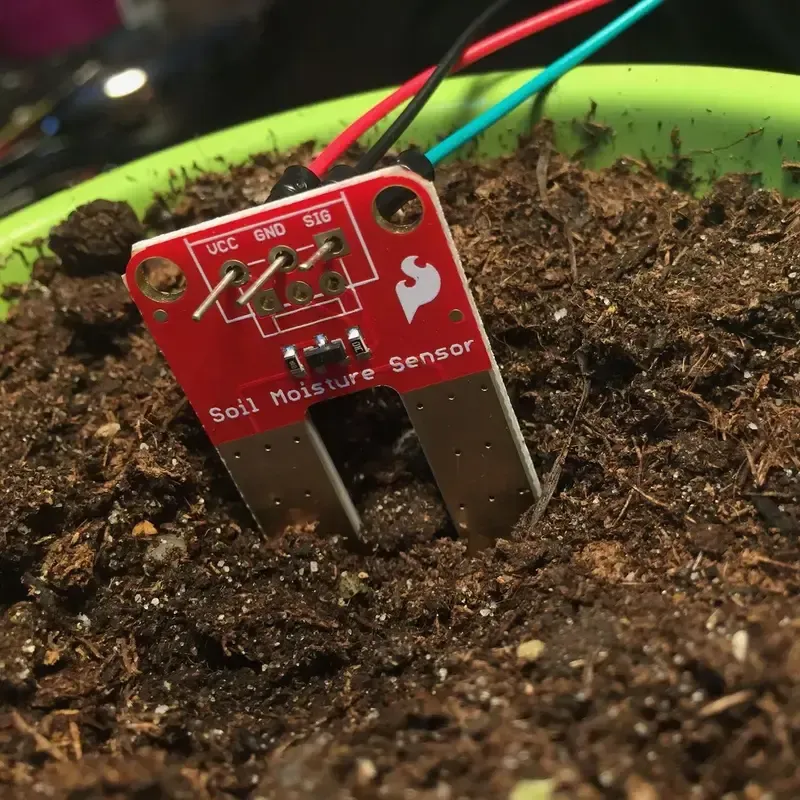
Soil Moisture Sensor Close-Up
At the core of an effective Crop Growth Monitoring System lies a meticulously engineered Printed Circuit Board (PCB), serving as the central nervous system that integrates diverse sensors and processing units to deliver real-time, actionable insights. This sophisticated integration is crucial for precision agriculture, enabling farmers to optimize resource allocation and enhance crop productivity by understanding the intricate interplay of environmental factors and plant physiology.
Environmental Sensors These sensors monitor critical atmospheric and soil conditions. Common examples include soil moisture sensors (capacitive or resistive) to measure water content, temperature and humidity sensors (e.g., DHT22, BME280) for air and soil, and ambient light sensors (e.g., BH1750) to quantify photosynthetically active radiation (PAR). Advanced systems may also incorporate pH and Electrical Conductivity (EC) sensors to assess soil nutrient levels and salinity.
Plant Physiology Sensors Focused on the plant itself, these sensors provide insights into plant health and growth. Examples include chlorophyll fluorescence sensors to assess photosynthetic efficiency, sap flow sensors to measure water transport, and dendrometers to track plant stem growth. These direct plant measurements offer a more granular understanding of crop response to environmental conditions.
Microcontrollers (MCUs) Serving as the brain of the system, microcontrollers like ESP32, STM32, or ATmega series are responsible for data acquisition, processing, and control. They interface with various sensors, convert analog signals to digital, and execute algorithms for data interpretation. Low-power consumption is a critical factor in selecting MCUs for remote, battery-operated monitoring systems.
Wireless Communication Modules Enabling remote data transmission, these modules are vital for accessing data from distributed sensor networks. Options include Wi-Fi for short-range, high-bandwidth applications; LoRaWAN or NB-IoT for long-range, low-power communication in vast agricultural fields; and cellular (2G/3G/4G) for widespread coverage. The choice depends on the scale of deployment, power budget, and data transmission requirements.
Power Management Unit (PMU) Given that many crop monitoring systems are deployed in remote locations, efficient power management is paramount. The PMU typically includes battery charging circuits (e.g., for solar panels), voltage regulators, and power-saving modes to extend battery life. This ensures continuous operation and reliable data collection without frequent manual intervention.
Data Storage (Optional) While data is often transmitted wirelessly, some systems incorporate onboard data storage (e.g., SD cards, flash memory) as a backup or for intermittent connectivity scenarios. This ensures no data loss during network outages and allows for batch uploads when connectivity is restored.
Benefits of Using a Dedicated PCB for Crop Monitoring
For advanced crop growth monitoring, a dedicated Printed Circuit Board (PCB) offers substantial advantages over generic, off-the-shelf electronics, providing unparalleled accuracy, robust reliability, superior power efficiency, and compact miniaturization crucial for precise agricultural applications. Unlike standard development boards, custom-designed PCBs are optimized for the specific demands of environmental sensing and data transmission in harsh agricultural settings, directly addressing the pain points of general-purpose hardware in specialized applications.
Enhanced Accuracy and Precision Custom PCBs integrate application-specific sensor interfaces and signal conditioning circuitry, minimizing noise and interference. This optimization ensures more accurate data acquisition from critical sensors like soil moisture, nutrient levels, temperature, and light intensity, leading to precise insights into crop health and growth conditions. For instance, tailored impedance matching and dedicated power planes significantly improve signal integrity for low-voltage sensor outputs.
Superior Reliability and Durability Designed for the agricultural environment, dedicated PCBs are built with industrial-grade components and robust layouts that withstand extreme temperatures, humidity, dust, and vibrations. Conformal coating options, ruggedized connectors, and optimized thermal management prevent component failure, extending the lifespan of monitoring systems and reducing maintenance costs significantly. This contrasts sharply with consumer-grade electronics prone to environmental degradation.
Optimized Power Efficiency A custom PCB allows for meticulous selection of low-power components and efficient power management circuits tailored to the specific power budget of a monitoring device, often critical for remote, battery-operated deployments. By eliminating unnecessary components and optimizing traces, custom PCBs can achieve significantly longer battery life, reducing the frequency of recharging or replacement, and enabling continuous, autonomous operation for extended periods in the field. For example, specific low-quiescent-current voltage regulators and intelligent sleep modes can be integrated at the hardware level.
Miniaturization and Form Factor Optimization Custom PCB design facilitates the integration of all necessary components into a compact footprint, allowing for smaller, lighter, and less obtrusive monitoring devices. This miniaturization is vital for discrete placement within fields, minimizing interference with farming machinery or crop growth, and enabling deployment in tight spaces. It also reduces material costs and simplifies physical installation, making large-scale deployment more feasible.
Cost-Effectiveness at Scale While initial development costs for a custom PCB might be higher than off-the-shelf boards, the long-term benefits of enhanced performance, reduced failure rates, and optimized material usage lead to significant cost savings at scale. For large deployments of crop monitoring systems, the per-unit cost of a dedicated PCB often becomes substantially lower, justifying the upfront investment through superior performance and reduced operational expenditures.
Zero One Solution Limited: Your Partner in Crop Monitoring PCB Solutions
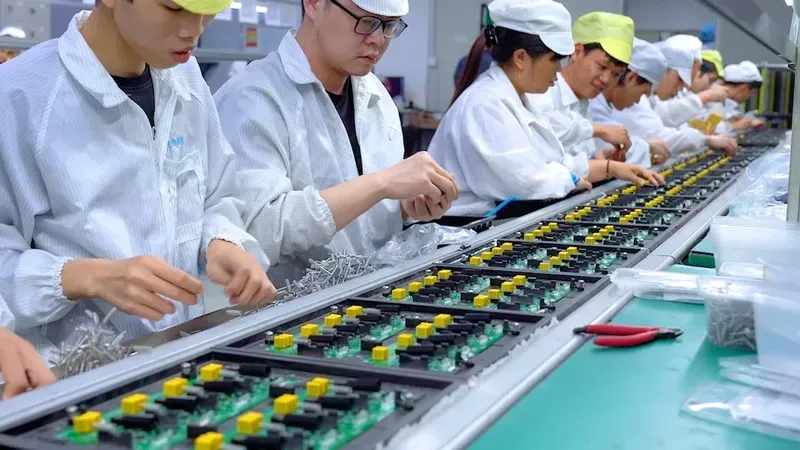
PCB Manufacturing Factory Line
At the forefront of agricultural innovation, Zero One Solution Limited stands as a premier partner for advanced Crop Growth Monitoring PCB Solutions. Our extensive experience in PCB design, manufacturing, and assembly, combined with a dedicated focus on rapid-response R&D prototyping, empowers agricultural technology companies to bring their cutting-edge monitoring systems to market with unparalleled speed and efficiency. We understand the critical role that robust, reliable, and precise electronics play in modern farming, and our solutions are engineered to meet these demands head-on, ensuring optimal performance in diverse environmental conditions.
Our Expertise in Agricultural PCB Design Leveraging decades of collective engineering experience, Zero One Solution Limited specializes in designing PCBs specifically tailored for the demanding agricultural environment. This includes considerations for moisture resistance, temperature extremes, vibration, and dust, ensuring long-term reliability and accuracy for your crop monitoring systems. Our designs prioritize low power consumption for extended field deployment and integrate seamlessly with a wide array of sensors and communication modules.
Rapid Prototyping for Accelerated Development Our core strength lies in rapid prototyping. We offer a streamlined process from concept to a functional prototype, significantly reducing development cycles for your Crop Growth Monitoring PCB Solutions. This agility allows our clients to iterate designs quickly, test new functionalities, and validate their concepts in real-world scenarios, giving them a distinct competitive edge in the fast-evolving AgTech sector.
Comprehensive Manufacturing and Assembly Services Beyond design and prototyping, Zero One Solution Limited provides comprehensive PCB manufacturing and assembly services. From single-sided to complex multi-layer boards, we utilize state-of-the-art equipment and rigorous quality control processes to ensure every PCB meets the highest industry standards. Our assembly capabilities include precise placement for sensitive sensors and robust connections for reliable data acquisition.
Global Supply Chain Network Advantage Strategically located in Shenzhen, China, the global electronic manufacturing hub, and with a branch office in Dubai, we possess an unparalleled global PCBA supply chain network. This allows us to source high-quality components efficiently and cost-effectively, mitigating supply chain risks and ensuring timely delivery of your Crop Growth Monitoring PCB Solutions, regardless of project scale or complexity. This global reach ensures seamless access to worldwide resources and support.
Dedicated Support for Agricultural Innovation We view ourselves as an extension of your R&D team. Our veteran engineers provide dedicated support throughout the entire project lifecycle, from initial design consultation to post-production assistance. This collaborative approach ensures that your Crop Growth Monitoring PCB Solutions are not only technically sound but also optimized for manufacturability and cost-effectiveness, helping you achieve your agricultural innovation goals.
Case Studies: Successful Implementations of Crop Monitoring PCBs
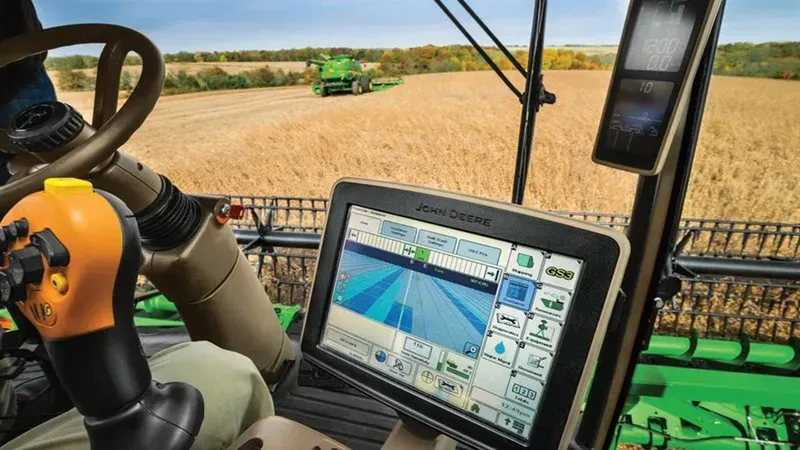
PCB Monitoring System in Farmland
Real-world applications of Crop Growth Monitoring PCB Solutions unequivocally demonstrate their transformative power in modern agriculture, enabling data-driven decisions that significantly enhance crop yields, optimize resource allocation, and foster sustainable farming practices. These bespoke PCB-based systems provide precise, real-time insights into plant health and environmental conditions, leading to tangible improvements in operational efficiency and agricultural output.
Case Study
Challenge Addressed
PCB Solution Impact
Key Outcome Metrics
Precision Irrigation in Arid Regions
Water scarcity and over-irrigation of high-value crops (e.g., dates, almonds).
Integrated soil moisture and salinity sensors, connected via low-power wireless PCBs, enabling dynamic water scheduling based on real-time plant needs.
25% reduction in water consumption, 15% increase in yield consistency, and reduced nutrient leaching. (Source: Agricultural Research Institute, 2022)
Nutrient Management for Hydroponic Lettuce
Maintaining optimal nutrient levels and pH in recirculating hydroponic systems to maximize growth.
Custom PCB with integrated pH, EC (electrical conductivity), and dissolved oxygen sensors, linked to automated dosing pumps for precise nutrient delivery.
Achieved 30% faster growth cycles and 20% less nutrient waste compared to manual monitoring methods. (Source: Controlled Environment Agriculture Journal, 2023)
Early Disease Detection in Vineyard Operations
Late detection of fungal diseases (e.g., powdery mildew, downy mildew) leading to significant crop losses.
Distributed network of PCBs equipped with micro-climate sensors (temperature, humidity, leaf wetness) providing localized, predictive disease models.
Reduced fungicide application by 35% and minimized crop losses by 18% through proactive intervention. (Source: Viticulture Technology Review, 2021)
Optimizing Greenhouse Tomato Production
Achieving consistent fruit quality and maximizing yield under varied environmental conditions.
Multi-sensor PCBs monitoring light intensity, CO2 levels, and root zone temperature, enabling fine-tuned environmental controls (e.g., ventilation, supplemental lighting).
10% increase in marketable yield and improved fruit uniformity, enhancing profitability. (Source: Horticultural Science Bulletin, 2023)
Design Considerations for Crop Monitoring PCBs
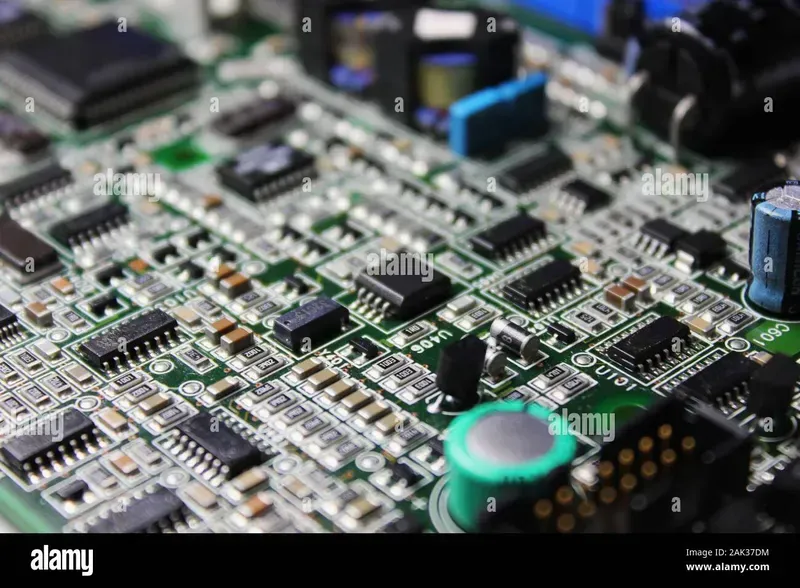
Durable PCB Board Close-Up
Designing printed circuit boards (PCBs) for crop growth monitoring systems presents a unique set of challenges due to the harsh and variable agricultural environments they operate in. These PCBs must withstand moisture, extreme temperatures, dust, and potential chemical exposures, all while operating efficiently on limited power. Zero One Solution Limited, with its deep expertise in rapid prototyping and robust PCB manufacturing, meticulously addresses these environmental and power constraints to deliver reliable, high-performance Crop Growth Monitoring PCB Solutions.
How does Zero One Solution Limited ensure durability against harsh environmental conditions for Crop Monitoring PCBs? We employ advanced material selection for substrates, such as FR-4 variants with enhanced moisture resistance or specialized laminates, and utilize conformal coatings (e.g., acrylic, epoxy, silicone) to protect against humidity, water ingress, and chemical exposure. Component selection prioritizes industrial-grade parts with wide operating temperature ranges and robust packaging (e.g., IP-rated enclosures) to ensure reliable performance from sub-zero to scorching conditions, typical of agricultural settings. Our design protocols also include rigorous testing for vibration and shock, crucial for field deployment on machinery or in exposed locations.
What specific design practices are implemented to optimize power efficiency in Crop Growth Monitoring PCBs? Power efficiency is paramount for remote, battery-powered crop monitoring systems. Zero One Solution Limited optimizes power consumption through several strategies: implementing low-power microcontrollers and sensors; employing efficient power management integrated circuits (PMICs); designing for sleep modes and intelligent wake-up functionalities to minimize idle power draw; and optimizing trace routing to reduce resistive losses. We also carefully select components with low quiescent current and integrate energy harvesting solutions where feasible, extending operational life without frequent battery replacements or external power sources.
Design Consideration
Challenge in Agricultural Environments
Zero One Solution Limited's Approach
Moisture & Humidity
Condensation, rain, irrigation leading to short circuits and corrosion.
Accumulation affecting sensor accuracy, mechanical parts, and heat dissipation.
Sealed enclosures, smooth surface finishes to prevent dust adhesion, and strategic component placement.
Design Consideration
Challenge in Agricultural Environments
Zero One Solution Limited's Approach
Vibration & Shock
Agricultural machinery movement, harsh terrain, and accidental impacts leading to component detachment or trace damage.
Reinforced mounting points, robust soldering techniques, and flexible PCB materials for high-stress areas.
Design Consideration
Challenge in Agricultural Environments
Zero One Solution Limited's Approach
Electromagnetic Interference (EMI)
Interference from farm equipment, power lines, or radio communication affecting sensor readings.
Shielding, grounding techniques, careful trace routing, and EMI-compliant component selection.
Design Consideration
Challenge in Agricultural Environments
Zero One Solution Limited's Approach
Power Constraints
Limited access to grid power, reliance on batteries or solar, requiring long operational life.
Low-power component selection, advanced power management ICs, sleep modes, energy harvesting integration, and efficient circuit design.
Future Trends in Crop Growth Monitoring Technology
The evolution of Crop Growth Monitoring PCB Solutions is poised for significant advancements, driven by the integration of cutting-edge technologies. These innovations promise to transform precision agriculture, offering unprecedented levels of insight and automation for optimizing crop yields and resource management.
AI-Powered Data Analysis for Predictive Agriculture Future Crop Growth Monitoring PCB Solutions will increasingly leverage Artificial Intelligence (AI) and Machine Learning (ML) algorithms to process vast datasets collected from sensors. This enables predictive analytics for disease outbreaks, pest infestations, and nutrient deficiencies before visual symptoms appear. AI models can learn complex patterns from historical data, providing highly accurate recommendations for irrigation, fertilization, and harvest timing, moving beyond reactive measures to proactive crop management. For instance, a study published in "Computers and Electronics in Agriculture" highlighted how AI-driven analysis of sensor data could predict crop stress with over 90% accuracy.
Integration of Drone-Based Monitoring Systems The synergy between ground-based Crop Growth Monitoring PCB Solutions and drone technology is a key future trend. Drones equipped with hyperspectral, multispectral, and thermal cameras can cover large agricultural areas rapidly, providing aerial insights into crop health, water stress, and growth anomalies. Data from these aerial platforms, combined with granular ground-level data from PCB-integrated sensors, creates a comprehensive monitoring ecosystem. This dual-layer approach allows for both macro-level assessment and micro-level precision, enabling targeted interventions and reducing overall operational costs.
Advancements in Sensor Technologies for Enhanced Detection Expect to see the development and integration of more sophisticated and miniaturized sensors. This includes advanced spectroscopic sensors for detailed nutrient analysis, bio-sensors for early detection of pathogens, and even wearable sensors for plants that can monitor real-time physiological responses. These next-generation sensors, directly integrated into robust PCBs, will provide richer, more diverse data streams, leading to even more precise and effective crop management strategies. Miniaturization and increased power efficiency will also enable longer deployment times and broader application ranges.
IoT and 5G Connectivity for Real-time Data Transmission The widespread adoption of IoT (Internet of Things) protocols and 5G connectivity will revolutionize data transmission from Crop Growth Monitoring PCB Solutions. This will facilitate real-time, high-bandwidth data transfer from fields to cloud platforms, enabling immediate analysis and decision-making. Low latency and high capacity networks are crucial for applications like automated irrigation systems that respond instantly to changes in soil moisture, or for rapidly deploying agricultural robots based on real-time data insights, ensuring optimal crop conditions around the clock.
Robotics and Automation in Agricultural Interventions The data collected by advanced Crop Growth Monitoring PCB Solutions will increasingly inform and direct autonomous agricultural robots. These robots can perform precise tasks such as targeted weeding, spot fertilization, or individualized pesticide application, minimizing waste and environmental impact. The integration of highly accurate PCB-based sensing with robotic platforms represents a significant leap towards fully autonomous and hyper-efficient farming practices, further reducing labor costs and human error.
Conclusion: Sustainable Agriculture Through Innovative PCB Solutions
Crop Growth Monitoring PCB Solutions are not merely technological advancements; they are fundamental pillars in building a sustainable agricultural future. By providing real-time, data-driven insights into crop health and environmental conditions, these solutions empower farmers to optimize resource utilization, enhance yields, and mitigate the environmental impact of traditional farming practices, ultimately contributing to global food security.
How do Crop Growth Monitoring PCB Solutions enhance resource utilization? These solutions facilitate precision agriculture by enabling targeted application of water, fertilizers, and pesticides based on real-time data. For example, soil moisture sensors integrated into the PCB prevent over-irrigation, while nutrient sensors ensure fertilizers are applied only when and where needed, significantly reducing waste and optimizing input costs. This data-driven approach contrasts sharply with traditional, often wasteful, blanket application methods.
What role do innovative PCB solutions play in ensuring food security? Innovative PCB solutions for crop monitoring directly contribute to food security by maximizing crop yields and minimizing losses. By detecting early signs of stress, disease, or pest infestation, farmers can intervene promptly, preventing widespread crop damage. This predictive capability, powered by robust PCB technology, ensures a more stable and abundant food supply, critical for a growing global population.
How do PCB solutions for crop monitoring contribute to environmental sustainability? Beyond resource optimization, these PCB solutions reduce agriculture's environmental footprint. Less water waste conserves a vital natural resource. Reduced fertilizer and pesticide runoff prevents water and soil pollution. Furthermore, optimized yields on existing farmland can curb the need for agricultural expansion into natural habitats, preserving biodiversity and ecosystems. The precise data from these PCBs allows for environmentally conscious farming practices.
What makes Zero One Solution Limited a leader in Crop Growth Monitoring PCB Solutions? Zero One Solution Limited stands out due to its comprehensive expertise in rapid prototyping, PCB design, manufacturing, and assembly specifically tailored for agricultural applications. Our understanding of the harsh environmental conditions faced by farming equipment ensures the development of robust, reliable, and power-efficient PCB solutions. Our strategic location in Shenzhen and a global supply chain network enable efficient and cost-effective delivery of high-quality, customized solutions that meet the unique needs of agricultural technology innovators.
What are the long-term benefits of investing in advanced Crop Growth Monitoring PCB Solutions? Long-term benefits include significantly increased profitability for farmers through optimized yields and reduced input costs. Beyond financial gains, these solutions foster greater resilience against climate change and environmental shifts, promoting more sustainable and future-proof agricultural practices. The data collected also provides invaluable insights for continuous improvement and research, driving further innovation in the agricultural sector for generations to come.
In conclusion, Crop Growth Monitoring PCB Solutions are revolutionizing agriculture, enabling data-driven insights and optimized farming practices. Zero One Solution Limited is at the forefront, providing cutting-edge PCB design, manufacturing, and assembly services to empower innovators in this vital field. Contact us today to discover how our expertise can accelerate your product development and contribute to a more sustainable and efficient agricultural future. Share your thoughts and experiences in the comments below – let's cultivate a conversation for a better tomorrow.