In our daily lives, electronic devices are ubiquitous, from smartphones to sophisticated medical equipment. At the heart of every electronic device lies an intricate network of circuits, enabling these devices to perform diverse functions. This article explores the core concepts of electronic devices and circuits, illuminating how these fundamental building blocks power the technology shaping our world. Understanding the basic principles not only enhances our comprehension of how technology works, but also provides a foundation for the advancements that continue to shape our society.
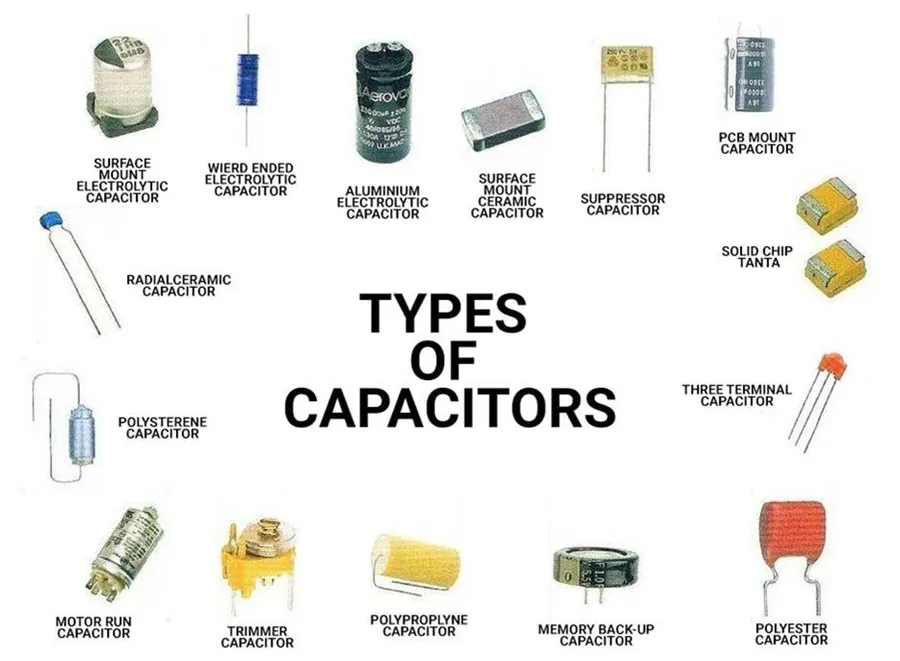
Electronic devices are the fundamental building blocks of all electronic systems, categorized primarily into active and passive components. Active devices, such as transistors and diodes, control current flow and perform amplification or switching, while passive components, including resistors, capacitors, and inductors, manage energy storage and impedance within the circuit. Understanding their individual characteristics and interactions is crucial to analyzing and designing complex electronic systems.
| Component Type | Examples | Primary Function | Key Characteristics |
|---|---|---|---|
| Active Components | Transistors, Diodes, Operational Amplifiers | Control current flow, amplify signals, switch electronic states | Require external power source to operate, provide gain or control |
| Passive Components | Resistors, Capacitors, Inductors | Store energy, limit current, provide impedance | Do not provide gain or control, dissipate or store energy |
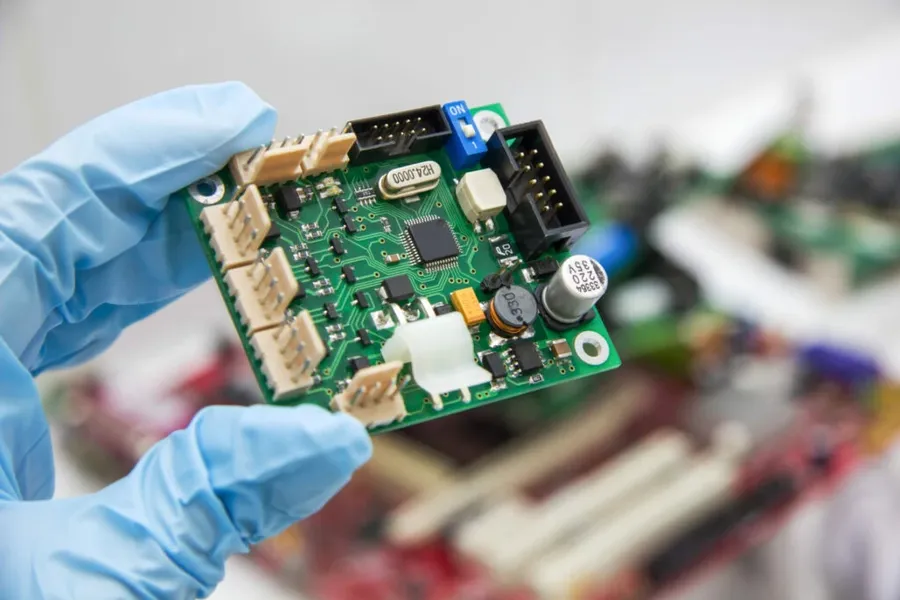
Electronic circuits are the pathways that facilitate the flow of electrical current, enabling the performance of various functions. These circuits are constructed using a combination of electronic components, each with distinct properties that contribute to the overall behavior of the circuit. Understanding the fundamental components and their interactions is crucial for designing and analyzing electronic systems.
The primary building blocks of electronic circuits include passive components like resistors, capacitors, and inductors. Resistors impede current flow, converting electrical energy into heat, while capacitors store electrical energy in an electric field, and inductors store energy in a magnetic field. These components exhibit unique behaviors when subjected to different circuit conditions such as AC and DC signals which influences circuit performance. This section examines how these components and their configurations determine the functionality of electronic circuits, forming the basis for more complex electronic systems.
| Component | Symbol | Function | Behavior in DC Circuits | Behavior in AC Circuits |
|---|---|---|---|---|
| Resistor | [Image of Resistor Symbol] | Limits current flow, dissipates power as heat | Offers constant resistance, obeys Ohm's Law (V=IR) | Offers impedance, resistance remains constant if frequency change is minimal |
| Capacitor | [Image of Capacitor Symbol] | Stores electrical energy in an electric field | Acts as an open circuit after fully charged | Offers capacitive reactance, impedance decreases with frequency |
| Inductor | [Image of Inductor Symbol] | Stores energy in a magnetic field | Acts as a short circuit once current stabilizes | Offers inductive reactance, impedance increases with frequency |
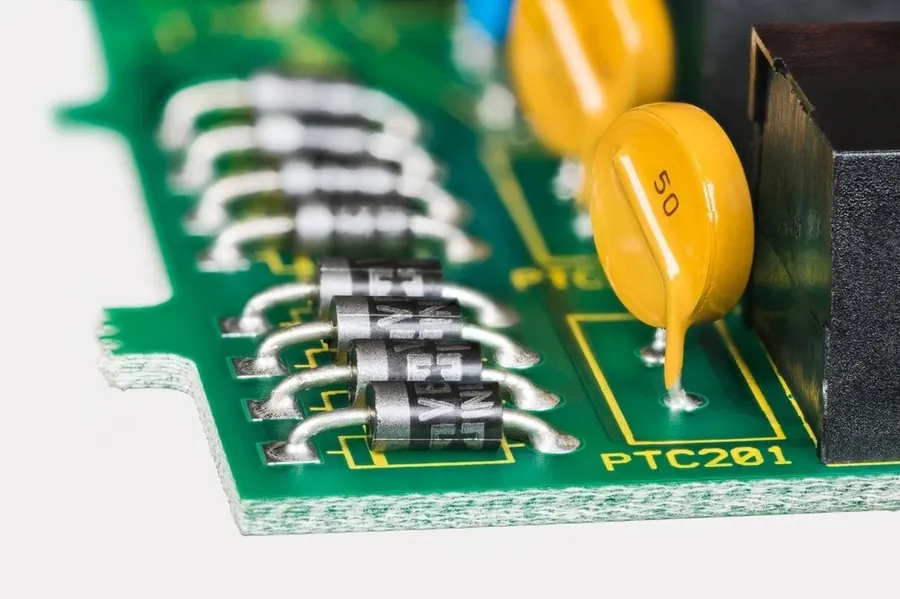
Semiconductor diodes are fundamental two-terminal electronic components that exhibit a unique asymmetrical current-voltage characteristic, allowing current to flow primarily in one direction. This characteristic stems from their construction, typically involving a p-n junction formed by joining p-type and n-type semiconductor materials, enabling them to serve as rectifiers, signal modulators, and in various other critical electronic functions.
| Characteristic | Description |
|---|---|
| Structure | A p-n junction formed by joining p-type and n-type semiconductor materials. |
| Basic Function | Acts as a one-way valve for electrical current due to its asymmetrical behavior. |
| Forward Bias | Allows significant current flow when a positive voltage is applied to the p-side and a negative voltage is applied to the n-side. |
| Reverse Bias | Blocks current flow when a negative voltage is applied to the p-side and a positive voltage is applied to the n-side. |
| Applications | Rectification, signal processing, voltage regulation, logic gates, and other electronic functions. |
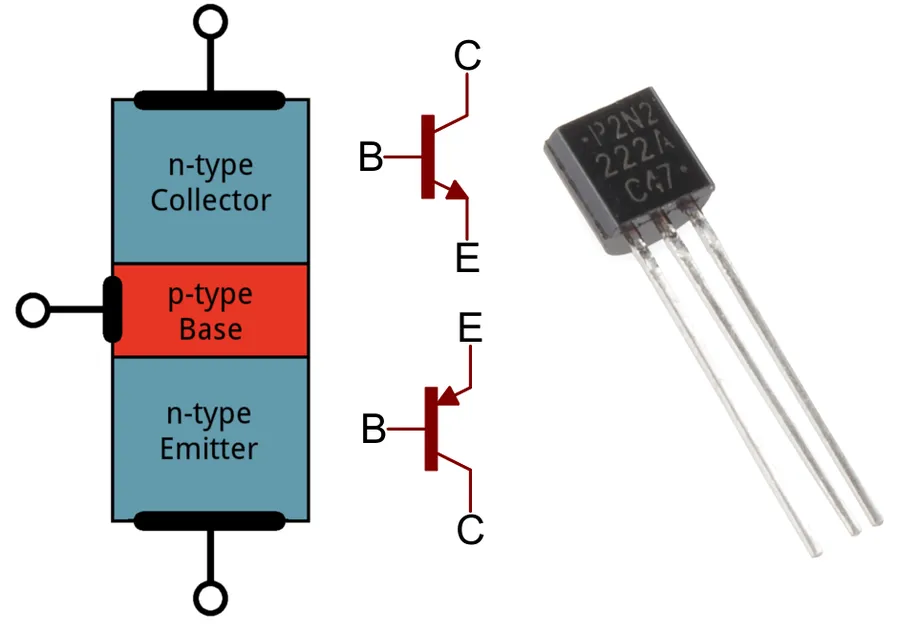
Transistors are fundamental active components in modern electronics, acting as the cornerstone for amplification and switching functionalities. They are essential in both analog and digital circuits, enabling complex signal processing and computational operations. This section will explore the diverse types of transistors, focusing on Bipolar Junction Transistors (BJTs) and Field-Effect Transistors (FETs), alongside their pivotal applications in contemporary electronic systems.
| Feature | Bipolar Junction Transistor (BJT) | Field-Effect Transistor (FET) |
|---|---|---|
| Operating Principle | Current controlled device (base current controls collector current) | Voltage controlled device (gate voltage controls drain current) |
| Types | NPN, PNP | JFET (Junction FET), MOSFET (Metal-Oxide-Semiconductor FET) |
| Input Impedance | Lower | Higher |
| Current Gain | High | Moderate |
| Switching Speed | Moderate | Fast |
| Applications | Amplification, switching | Amplification, switching, digital logic |
BJTs are current-controlled devices, where a small current at the base terminal controls a larger current between the collector and emitter. FETs, conversely, are voltage-controlled devices, where the gate voltage modulates the current between the source and drain terminals. This difference in control mechanisms leads to distinct performance characteristics and suitability for various applications. Within FETs, MOSFETs, are particularly prominent due to their high input impedance and compatibility with digital integrated circuits.
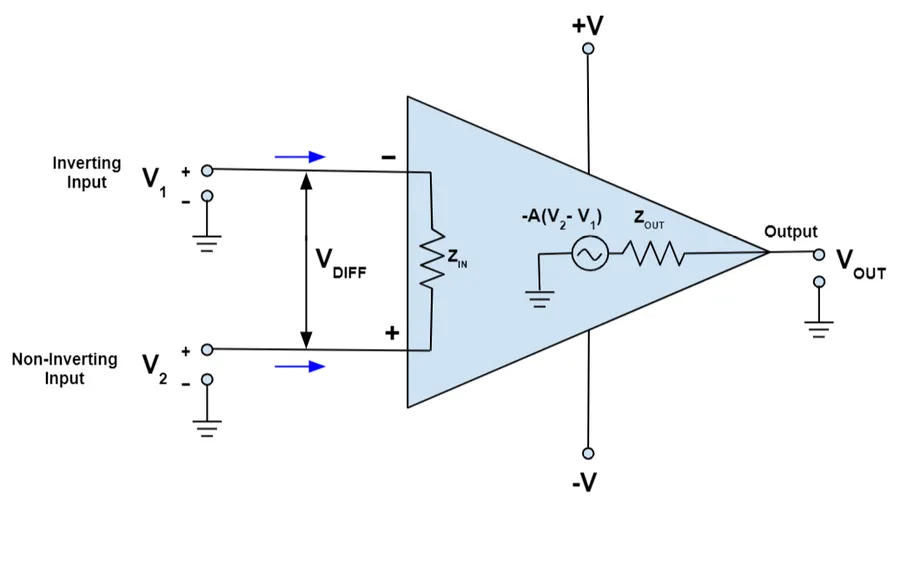
Operational amplifiers, commonly known as op-amps, are fundamental building blocks in analog circuit design. These versatile devices are high-gain voltage amplifiers with differential inputs and a single-ended output, making them ideal for a wide array of applications including signal processing, filtering, and feedback control systems. Their ability to perform mathematical operations on analog signals is why they are a cornerstone of modern analog electronics.
| Characteristic | Description |
|---|---|
| Input Impedance | Ideally infinite, minimizing current draw from source. |
| Output Impedance | Ideally zero, providing strong output voltage irrespective of load. |
| Open-Loop Gain | Extremely high, typically in the range of 10^5 to 10^7, used in comparator applications |
| Bandwidth | Finite, determined by gain-bandwidth product, dictates range of frequencies amplifier can operate on effectively. |
| Slew Rate | Rate of change of output voltage; important for high frequency signal processing |
| Common Mode Rejection Ratio (CMRR) | Measures the op-amp's ability to reject common-mode signals, crucial for differential amplification. |
Op-amps are frequently used in various circuit configurations that leverage negative feedback to establish stable, predictable functionality. These applications include, but are not limited to:
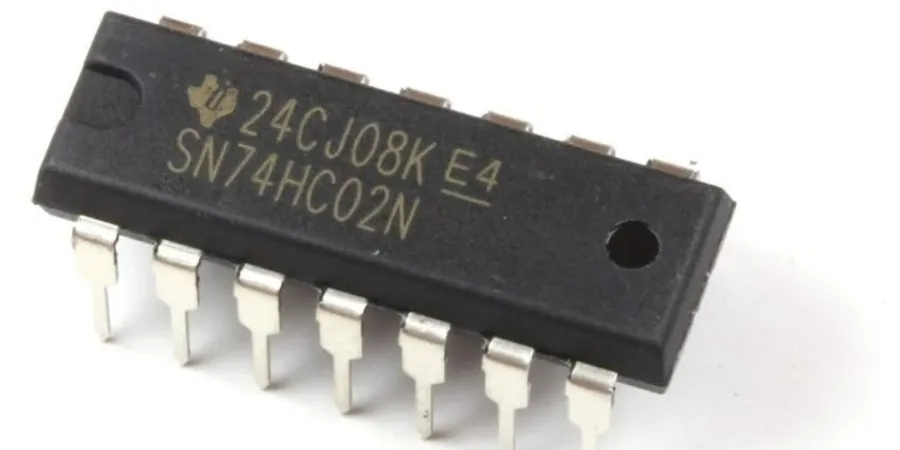
Digital logic gates and integrated circuits (ICs) form the bedrock of modern digital electronics and computing. These fundamental building blocks manipulate binary signals (0s and 1s) to perform logical operations, enabling complex computational tasks. Understanding these components is crucial for anyone seeking to grasp the inner workings of digital systems.
Digital logic gates are elementary circuits that perform basic Boolean operations. The most fundamental gates include AND, OR, and NOT gates. More complex gates, such as NAND, NOR, XOR, and XNOR are derived from these basics.
| Gate | Symbol | Function | Truth Table (A, B Inputs | Output) |
|---|---|---|---|
| AND | A shape with inputs on left, output on right | Output is 1 only if both inputs are 1 | 0,0|0; 0,1|0; 1,0|0; 1,1|1 |
| OR | A curved shape with inputs on left, output on right | Output is 1 if at least one input is 1 | 0,0|0; 0,1|1; 1,0|1; 1,1|1 |
| NOT | Triangle with a circle at the output | Output is the inverse of the input | 0|1; 1|0 |
| NAND | AND gate with a circle at the output | Output is 0 only if both inputs are 1 | 0,0|1; 0,1|1; 1,0|1; 1,1|0 |
| NOR | OR gate with a circle at the output | Output is 1 only if both inputs are 0 | 0,0|1; 0,1|0; 1,0|0; 1,1|0 |
| XOR | OR gate with an extra curved line in front | Output is 1 if inputs are different | 0,0|0; 0,1|1; 1,0|1; 1,1|0 |
| XNOR | XOR gate with a circle at the output | Output is 1 if inputs are the same | 0,0|1; 0,1|0; 1,0|0; 1,1|1 |
Integrated circuits (ICs), commonly known as chips, contain a vast number of interconnected transistors, resistors, and other electronic components fabricated onto a single semiconductor substrate. This miniaturization allows for complex functionalities to be packaged into small, easily manageable components. ICs are categorized based on their integration scale, such as small-scale integration (SSI), medium-scale integration (MSI), large-scale integration (LSI), and very-large-scale integration (VLSI). VLSI is primarily used in modern microprocessors and memory units, while MSI and LSI ICs can form many important components such as timers, counters, and more.
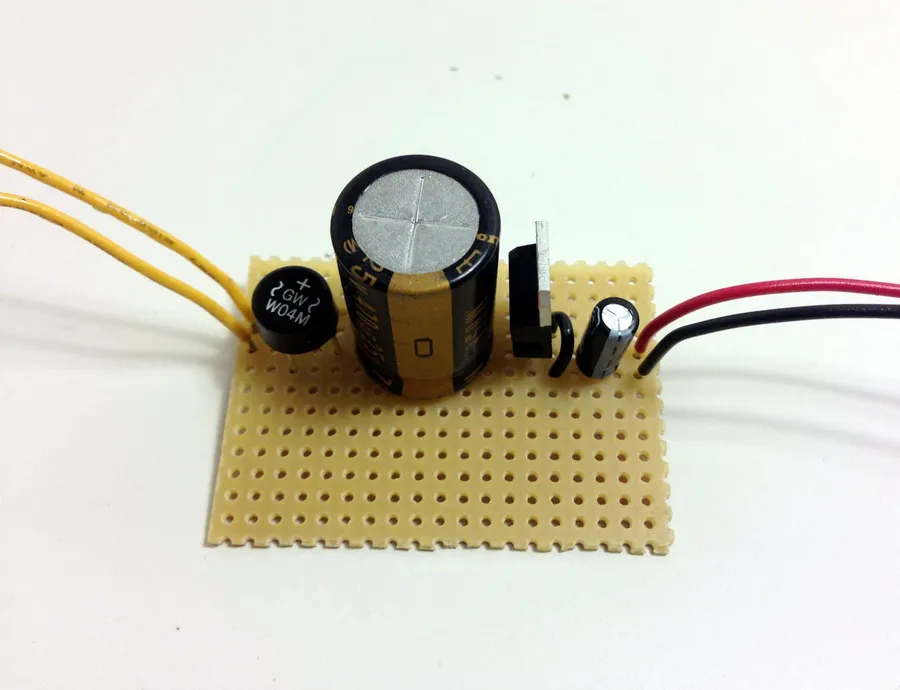
Stable and reliable DC power is paramount for the proper functioning of electronic circuits; this section explores the critical role of power supplies and voltage regulation techniques, including both linear and switching power supplies, in ensuring consistent circuit performance.
The primary function of a power supply is to convert the available electrical power (typically from the AC mains) into a stable DC voltage suitable for electronic circuits. Voltage regulation is the process of maintaining a constant output voltage despite variations in input voltage or load current. Without proper voltage regulation, electronic circuits may malfunction or become damaged.
| Feature | Linear Regulator | Switching Regulator |
|---|---|---|
| Efficiency | Lower (typically 30-60%) | Higher (typically 70-95%) |
| Complexity | Simpler circuit design | More complex circuit design |
| Cost | Generally lower | Generally higher |
| Heat Dissipation | Significant | Less |
| Output Ripple | Low | Higher but can be filtered |
| Applications | Low-power, noise-sensitive applications | Higher power, efficiency-focused applications |
Linear regulators, like the 78xx series, function by dissipating excess power as heat to maintain a constant output voltage. This method is simple and produces a clean, stable output but is inherently inefficient, particularly when the difference between the input and output voltage is large. In contrast, switching regulators, also known as switch-mode power supplies (SMPS), achieve voltage regulation by rapidly switching the input current and storing energy in inductors and capacitors. They are more complex but significantly more efficient, which is crucial in applications where power conservation is a concern. Switching regulators are classified into step-up (boost), step-down (buck), and inverting topologies depending on their output voltage relative to the input voltage.

Electronic devices and circuits are not abstract concepts confined to laboratories; they are the fundamental building blocks of a vast array of technologies that permeate modern life. This section explores their crucial roles across diverse sectors, demonstrating their real-world impact on consumer electronics, healthcare, and industrial automation.
This section addresses common queries regarding electronic devices and circuits, clarifying the distinctions between devices and circuits, circuits and electronics, and the fundamental role circuits play in electrical systems. Understanding these differences is crucial for anyone delving into electronics.
Electronic devices and circuits form the bedrock of modern technology, powering everything from the simplest gadgets to the most complex systems. Understanding the fundamental principles of these devices and their circuits is not just academic, but crucial for innovation. As we continue to push the boundaries of technology, a solid grasp of electronics will remain at the core of any technological advancement, making it vital for those who aspire to be at the forefront of the technological revolution. As circuits become more complex, understanding these fundamentals becomes even more critical for future technological development and application across all industries.

