Finding the Ideal Low Volume PCB Manufacturer: A Comprehensive Guide
2025.01.08
In today's rapidly evolving tech landscape, the need for small batch, high-quality PCBs is increasingly crucial, whether you're prototyping a new gadget or scaling production on a niche electronic device. The perfect low volume PCB manufacturer should be a reliable partner that can deliver both quality and cost-effectiveness, fitting into your unique production needs. This article will navigate the options, from quick-turn prototyping to full turnkey assembly, ensuring you find the best fit for your project.
Understanding Low Volume PCB Manufacturing
Small Batch PCBs
Low volume PCB manufacturing refers to the production of printed circuit boards in smaller quantities, typically ranging from a few to a few thousand units, as opposed to mass production runs. This approach caters to specialized needs, rapid prototyping, and smaller-scale deployments where large-scale production is neither necessary nor economical. Unlike high-volume manufacturing that prioritizes economies of scale, low volume PCB manufacturing emphasizes flexibility, quick turnaround, and often involves more intricate design requirements and customization options.
The key differentiators of low volume PCB manufacturing are:
Quantity Production runs typically range from prototypes to a few thousand units, contrasting with mass production which involves tens or hundreds of thousands of units.
Lead Times Lead times are often shorter, with many manufacturers offering quick turnaround options to support rapid prototyping and time-sensitive projects.
Flexibility Low-volume production often accommodates more complex designs and customization requests, unlike large-scale production which tends to standardize designs to optimize manufacturing efficiency.
Use Cases Common use cases include prototyping, research and development, small batch production for niche products, specialized industrial equipment, and custom consumer electronics.
Key Factors to Consider When Choosing a Low Volume PCB Manufacturer
PCB Factory
Selecting the right low volume PCB manufacturer is crucial for project success, demanding a careful evaluation of multiple factors. This section provides a structured approach to assess these key elements, ensuring you choose a manufacturer that aligns with your specific needs and requirements.
Price While cost is a significant concern, focusing solely on the lowest price can be detrimental. Instead, seek a balance between affordability and quality. Consider the total cost, including potential tooling, setup fees, and shipping.
Quality Standards (IPC Standards) Adherence to IPC standards is essential for reliable and high-performing PCBs. Verify that the manufacturer complies with relevant IPC standards, such as IPC-A-600 for PCB acceptability, which ensures the manufacturing quality of your board.
Turnaround Time Lead time is critical, especially for rapid prototyping or time-sensitive projects. Manufacturers should provide clear and consistent timelines, ranging from a few days for quick-turn orders to several weeks for more complex designs. Understand their typical lead times and if expedited services are available.
Material Choices The materials used in PCB manufacturing greatly affect the board's performance and reliability. Consider the substrate type (e.g., FR-4, aluminum, polyimide), copper thickness, and surface finish options. Choose materials that meet your application's thermal, electrical, and environmental requirements. A good manufacturer should offer a variety of materials and be able to advise on the suitability for your design.
Technology Capabilities The complexity of your PCB design needs to match the manufacturer's capabilities. This encompasses aspects like layer count, minimum trace width and spacing, via types, and surface finish options. Manufacturers equipped with advanced technologies, like laser direct imaging (LDI) and automated optical inspection (AOI), can produce higher-precision and more reliable PCBs.
Customer Support Effective communication and responsive support are crucial. The manufacturer should offer technical assistance, be available to answer questions, and provide feedback on design for manufacturability (DFM). This reduces errors and ensures a smooth fabrication process. Clear communication channels (e.g. email, phone, online chat) and responsive support teams are signs of a reliable partner.
Comparing Top Low Volume PCB Manufacturers
PCB Comparison
Selecting the right low volume PCB manufacturer is crucial for project success. This section provides a comparative analysis of several leading manufacturers, highlighting their strengths and weaknesses across key parameters such as price, lead times, material options, assembly capabilities, and customer support. This comparison is designed to help you make an informed decision based on your specific project requirements.
Manufacturer
Price
Lead Time
Material Options
Assembly Capabilities
Customer Support
Strengths
Weaknesses
PCBWay
Competitive
Fast (3-7 days)
FR-4, Aluminum, Flexible PCBs
SMT, Through-Hole, Mixed
Responsive Online Chat
Wide range of services; Strong prototyping capabilities
Can be overwhelming due to the number of options
OSH Park
Moderate
Moderate (1-2 weeks)
FR-4
Limited
Active Community Support
Easy to use for simple designs; high-quality boards
Limited assembly options; Fewer material choices
JLCPCB
Very Affordable
Fast (3-7 days)
FR-4, Aluminum
SMT (Basic)
Affordable pricing; Fast turnaround; Good for simple designs
Limited assembly options; Customer service can be slow
Sierra Assembly
Higher Price
Moderate (1-2 weeks)
Extensive selection
Full Turnkey Assembly
Dedicated Account Manager
Strong focus on quality; Turnkey service; Good for complex projects
More expensive; Not ideal for basic projects
Low Volume PCB Assembly Options: SMT, Through-Hole, and Mixed Technology
SMT PCB Assembly
Low volume PCB assembly encompasses several techniques, each suited to specific design requirements and production scales. Surface Mount Technology (SMT), through-hole technology, and mixed technology assembly represent the primary methods employed, offering varying levels of automation, component density, and cost-effectiveness.
Assembly Technique
Description
Typical Applications
Advantages
Disadvantages
SMT (Surface Mount Technology)
Components are mounted directly onto the surface of the PCB. Automated placement is common.
High component density, automated assembly, lower cost for high volumes, smaller size
Can be less robust than through-hole, requires specialized equipment, rework can be challenging
Through-Hole Technology
Components are inserted through drilled holes in the PCB and soldered on the other side.
High-reliability applications, prototypes, power electronics, projects requiring robust mechanical connection.
Strong mechanical bond, easy for manual assembly/prototyping, high reliability for larger components
Lower component density, larger board size, more manual labor, more expensive for high volumes.
Mixed Technology
A combination of both SMT and through-hole components on the same PCB.
Applications requiring a mix of high-density SMT components and robust through-hole components for connectors or larger elements.
Flexibility to use best-suited components for specific purposes, optimized for various needs
More complex assembly process, may require more manual intervention, higher cost compared to single technology.
The selection of assembly technology depends significantly on the project requirements. For instance, SMT is preferred for high-density, compact designs, while through-hole is more suited for robust, high-reliability applications. Mixed technology offers flexibility, allowing the integration of both methods as needed. Careful consideration of these aspects ensures optimal cost-effectiveness and performance for your low volume PCB project.
Turnkey vs. Partial PCB Assembly Services
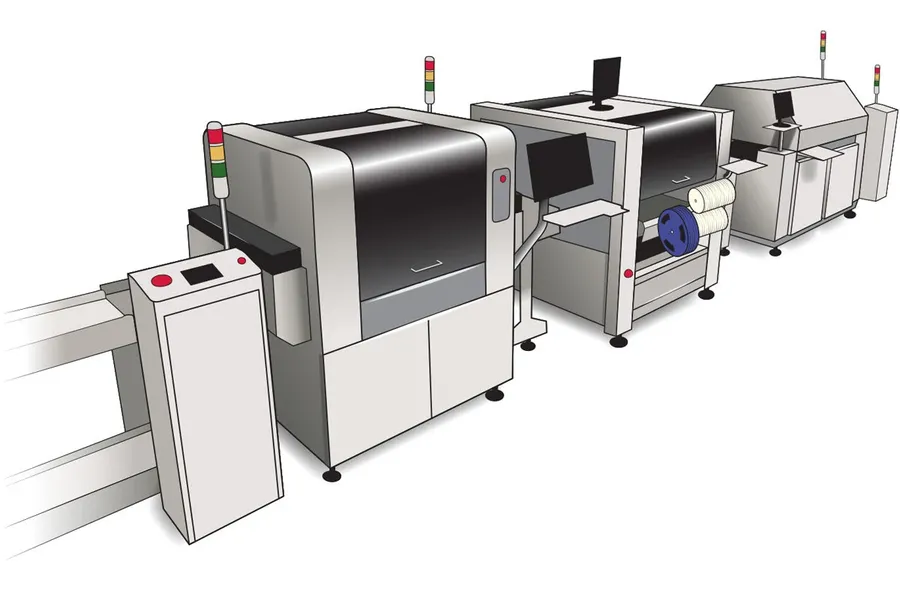
PCB Assembly Line
The choice between turnkey and partial PCB assembly services significantly impacts project management, cost, and lead times. Turnkey services offer a comprehensive solution where the manufacturer handles all aspects of PCB assembly, while partial services require the customer to take on some responsibilities. Understanding the nuances of each is crucial for optimizing your low volume PCB manufacturing process.
Feature
Turnkey Assembly
Partial Assembly
Definition
Manufacturer handles PCB fabrication, component procurement, assembly, and testing.
Customer handles some parts of the process, such as component procurement or PCB fabrication.
Component Procurement
Managed by the manufacturer.
Customer may procure components.
Project Management
Less project management burden on customer.
Requires more project management from customer.
Cost
Potentially higher upfront cost, but can save time and effort.
Potentially lower initial cost but may lead to increased costs due to errors or delays.
Lead Time
Can be faster due to integrated process.
Potentially longer due to divided responsibility.
Risk Management
Lower risk of component incompatibility or assembly issues.
Higher risk of compatibility and assembly issues if not managed well by the customer.
Suitable For
Projects where time is critical and customer prefers minimal involvement.
Projects where customer has specific component preferences or wants to manage costs closely.
Choosing between turnkey and partial PCB assembly depends largely on your internal resources, expertise, and the specific needs of your project. Here’s a breakdown of when each option is most advantageous:
When to Choose Turnkey Assembly Turnkey solutions are ideal for projects where you need a complete solution, minimize project management overhead, and ensure component compatibility. This is especially beneficial when rapid prototyping or time-to-market is a priority. Turnkey also suits teams with limited experience in PCB assembly or those working on complex projects requiring tight integration between different process stages.
When to Choose Partial Assembly Partial assembly is beneficial when you have specific component sourcing preferences, access to cheaper or specific parts, or if you wish to retain control over particular phases of the assembly process. Additionally, partial services can be suitable for cost-sensitive projects, but one should be mindful of the potential management overhead and component compatibility risks. If you have existing inventory or need to use obsolete components, partial assembly gives you that freedom. It can also be helpful if you want to perform the testing phase yourself.
In conclusion, the selection between turnkey and partial services should be based on a meticulous evaluation of project timelines, available resources, cost constraints, and technical expertise. By carefully considering these factors, you can make an informed decision that best aligns with your project's goals and needs.
Frequently Asked Questions About Low Volume PCB Manufacturing
This section addresses common questions regarding low volume PCB manufacturing, providing insights into manufacturer selection, supply chain dynamics, cost optimization, and the influence of regional factors.
Who is considered the best PCB manufacturer for low volume production? The 'best' manufacturer is subjective and depends on specific project needs, such as complexity, required turnaround time, and budget. While some manufacturers excel in quick turnarounds, others focus on high-quality, complex boards. It is recommended to compare factors such as pricing, quality, lead times, materials, and customer support based on the table in the 'Comparing Top Low Volume PCB Manufacturers' section, rather than looking for a single 'best' option. Ultimately, the ideal choice will align with your specific project's priorities and technical requirements.
Is there a current PCB supply chain shortage affecting low volume manufacturing? The PCB supply chain is subject to fluctuations influenced by global events, raw material availability, and manufacturing capacity. While significant shortages observed earlier have largely eased, sporadic delays or price adjustments might occur. It's prudent to check with manufacturers regarding current lead times and material availability before placing an order. Maintaining clear and timely communication with your manufacturer regarding supply chain expectations can mitigate any potential disruptions.
How can I reduce the cost of low volume PCB manufacturing? Cost optimization can be achieved through several strategies. Opting for standard materials and specifications, optimizing PCB design (such as component placement and minimizing layer count), choosing panelization options offered by your manufacturer, and clearly defining your requirements can help reduce manufacturing costs. Engaging in transparent discussions with your manufacturer about cost-saving options during the quoting process can also provide further cost-efficiencies.
How do location and regional factors affect low volume PCB manufacturing costs and services? Geographic location significantly influences manufacturing costs due to variations in labor, material sourcing, and operational overhead. For example, manufacturing in regions with lower labor costs might lead to cheaper PCB prices, though trade-offs in communication and potential shipping time might also need to be considered. On the other hand, local manufacturers within a specific region might offer faster shipping, higher quality and more convenient communication, yet at potentially higher price points. It’s important to consider these regional trade-offs in relation to your project's budget, lead time requirements and quality requirements.
What are the typical lead times for low volume PCB production? Lead times for low volume PCB production can vary based on manufacturer and the complexity of the board. Simple, single-layer boards can often be manufactured in a few days, while more complex, multi-layer boards or those requiring specialized materials might take several weeks. Express or expedited services often exist, but they typically come with a premium cost. It’s always best to confirm expected lead times during the quotation process.
What is the IPC standard and why is it relevant? IPC standards, established by the Association Connecting Electronics Industries, provide guidelines for the design, manufacture, and testing of printed circuit boards and electronics assemblies. Adherence to these standards ensures reliability and quality of the PCB. Most reputable manufacturers will adhere to relevant IPC standards such as IPC-A-600 or IPC-A-610 for bare board fabrication and finished assembly, respectively. Look for certifications or claims of IPC compliance when evaluating manufacturers.
Should I use a turnkey or partial assembly service for my low volume PCB? The choice between turnkey and partial PCB assembly depends largely on your internal capabilities. Turnkey services, where the manufacturer handles everything, from component procurement to assembly, are ideal when you don’t have robust internal component procurement or assembly resources. Partial assembly, where you supply some or all components, may be a more suitable choice if you have a supply chain already established or if you wish to maintain more control over material choices. This decision should be made based on a careful evaluation of available resources and internal capabilities.
Design for Manufacturing (DFM) for Low Volume PCB Assembly
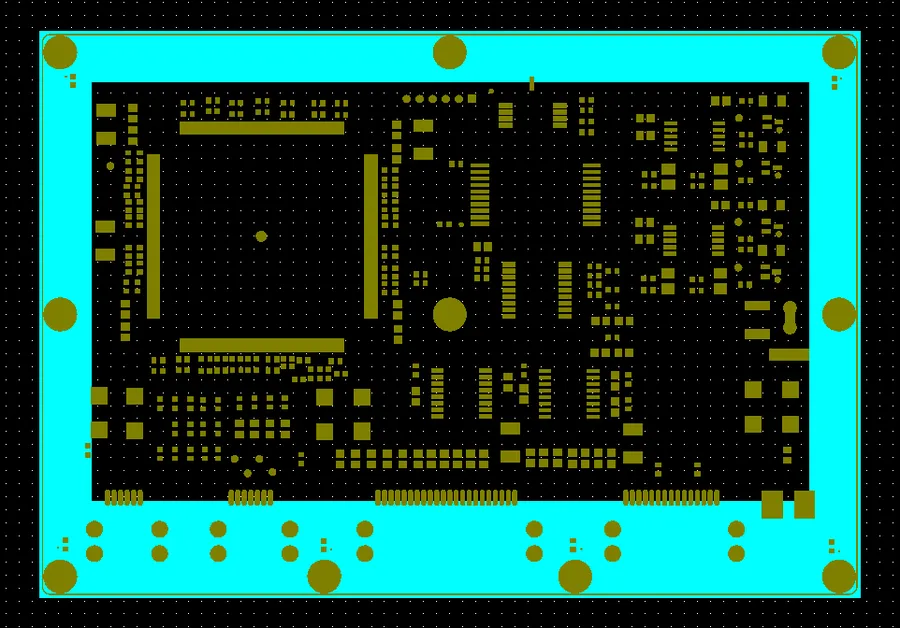
PCB Design File
Design for Manufacturing (DFM) is paramount for achieving cost-effective and high-quality low volume PCB assemblies. By proactively addressing design considerations that affect manufacturability, you can minimize production hurdles, reduce costs, and improve the overall reliability of your PCBs. This section outlines key DFM principles to streamline your low volume PCB projects.
DFM involves optimizing your PCB design to facilitate efficient manufacturing and assembly processes. It entails adhering to industry standards, considering component availability, and choosing suitable assembly techniques. The DFM process ensures that the PCB design can be fabricated accurately, components can be placed effectively, and testing can be conducted without issues. Below are specific areas in PCB design that benefit most from a DFM approach:
Layout Optimization Strategic placement of components to minimize manufacturing time and errors. Ensure adequate spacing between components to avoid assembly challenges and make rework feasible.
Component Selection Opt for readily available and standard components to reduce procurement time and costs. Choosing commonly used components also avoids unnecessary custom part charges and handling.
Documentation Clarity Provide clear and comprehensive assembly drawings and BOMs (Bill of Materials) to facilitate smooth manufacturing. Properly labeled fiducials on the PCB help with automated assembly accuracy.
Implementing these DFM practices requires close collaboration between the design team and the PCB manufacturer. Engaging your manufacturer early in the design process allows for early identification and rectification of any design related problems, minimizing iterations and ultimately saving time and cost. Specific considerations that are important to DFM are detailed below:
Fiducial Placement These alignment marks help automated assembly equipment place components accurately. Ensure they are clearly defined and not obscured by other elements.
Solder Pad Design Use appropriate pad sizes and shapes that match component datasheets and manufacturing requirements. Proper solder pad design ensures proper soldering during assembly.
Trace Widths and Spacing Adhere to manufacturer-recommended trace widths and spacing to ensure reliable electrical connectivity without introducing shorts or other issues. The trace widths should be able to carry the anticipated electrical current.
Via Design Optimize via sizes for signal integrity and manufacturing feasibility. Avoid via in-pad designs unless specifically necessary, as these can complicate assembly.
Panelization Consider panelizing your boards to reduce the cost of production and improve efficiency during assembly. Collaborate with your manufacturer to choose the appropriate panel size and layout that best matches their equipment.
By focusing on DFM during the design stage, you can significantly reduce the cost, time and risk associated with low volume PCB assembly. This proactive approach not only ensures your boards are manufactured correctly the first time but also greatly simplifies the assembly process, reducing overall project lead times and costs. Furthermore, adherence to DFM best practices leads to better reliability, higher yield and improved overall performance of the electronic product.
Cost Optimization Strategies for Low Volume PCB Orders
PCB Cost Optimization
Optimizing costs for low volume PCB orders requires a multifaceted approach, focusing on design efficiency, component selection, manufacturing processes, and effective communication with your manufacturer. Strategic planning in these areas can significantly reduce expenses without compromising the quality and performance of your final product. This section provides actionable strategies to achieve cost-effective PCB production.
Efficient Design Practices Streamline your PCB layout by minimizing the number of layers, utilizing standard component footprints, and optimizing trace routing. A well-designed PCB reduces manufacturing complexities and associated costs. Design for Testability (DFT) should also be considered to reduce later testing costs.
Careful Component Selection Opt for readily available and cost-effective components. Avoid using obsolete or hard-to-source components, which can lead to higher procurement costs and delays. Consider alternatives where possible and consolidate component types when applicable, as this simplifies the assembly process.
Panelization Strategies If your design is small enough, use panelization to manufacture multiple PCBs on a single panel. This can reduce per-unit costs by optimizing the utilization of manufacturing resources. Work with your manufacturer to understand optimal panelization strategies that suit their processes, and how to manage waste.
Effective Communication with Your Manufacturer Maintain clear and open communication with your PCB manufacturer throughout the process. Address any design queries or concerns upfront, which can prevent costly rework. Request detailed quotes, understand the factors affecting cost, and engage in price negotiations if necessary.
Standardized Manufacturing Processes Opt for standard manufacturing processes, avoid special requests, and ask your manufacture to provide a quote based on standard processes. This will typically lower the cost as the manufacture will not have to switch to custom processes which can be costly and time-consuming.
Prototype Testing and Iteration Prior to large low volume manufacturing, produce and test a small number of prototypes. Identifying and fixing errors early in the design process is far less expensive than making changes during full scale production. A prototype will also inform the manufacture of any possible problems in the process.
Choosing the right low volume PCB manufacturer is critical for successful project execution, whether it's a complex embedded system or a simple sensor. By considering factors like quality standards, pricing, turnaround time, and their technological capabilities, you can select a manufacturer such as a **low volume pcb manufacturer** that can support your needs from prototyping to small batch production, and will help you realize your design goals efficiently. Remember, a strong manufacturing partner is key to ensuring the quality and success of your electronic products.