Forest Resources Monitoring Buoy Solution

2025.10.24

The preservation and sustainable management of our planet's forest resources are more critical than ever. Wildfires, illegal logging, and disease outbreaks pose constant threats, demanding innovative solutions for proactive monitoring. At Zero One Solution Limited, we understand the vital role technology plays in environmental stewardship. That's why we've developed a cutting-edge Forest Resources Monitoring Buoy Solution, leveraging our expertise in PCB design and assembly to deliver a comprehensive, real-time data collection and transmission system. How can advanced PCB technology empower us to safeguard these invaluable ecosystems? This article delves into the intricacies of our solution, showcasing its capabilities and highlighting the pivotal role Zero One Solution Limited plays in enabling effective forest management.

Introduction: The Critical Need for Forest Monitoring

Forests are the Earth's lungs, vital for biodiversity, climate regulation, and human well-being, yet they face unprecedented threats from deforestation, illegal logging, and climate change-induced wildfires. The escalating rate of forest degradation necessitates advanced, real-time monitoring solutions to safeguard these invaluable resources and ensure sustainable management. Without precise and timely data, conservation efforts remain reactive and often insufficient, highlighting a critical gap in global environmental protection strategies.
  • Why is forest monitoring critically important today?
    Forests absorb vast amounts of carbon dioxide, regulate global temperatures, and host over 80% of terrestrial biodiversity. Their depletion exacerbates climate change, disrupts ecosystems, and directly impacts human health and economies. Effective monitoring provides the data needed to understand these complex systems, detect threats early, and implement targeted conservation strategies, transitioning from reactive damage control to proactive preservation.
  • What are the primary threats facing global forests?
    The predominant threats include rampant deforestation for agriculture and urbanization, illegal logging for timber, and increasingly, severe wildfires exacerbated by climate change. Pests and diseases, often spread due to climate shifts, also pose significant risks. These threats lead to habitat loss, greenhouse gas emissions, soil erosion, and diminished water quality, creating a cascading negative impact on the environment and human societies.
  • How do traditional monitoring methods fall short?
    Traditional forest monitoring often relies on manual ground surveys, satellite imagery with delayed processing, or sparse sensor networks. These methods are typically labor-intensive, costly, provide non-real-time data, or lack the granular detail needed for immediate threat detection and intervention. Their limitations mean that critical events like nascent wildfires or illicit logging can go undetected for too long, leading to irreversible damage.
  • What role does technology play in modern forest conservation?
    Technological advancements, particularly in IoT, remote sensing, and data analytics, are revolutionizing forest conservation by enabling continuous, real-time monitoring. Solutions like intelligent buoy systems can collect diverse environmental parameters, transmit data instantly, and leverage AI for predictive analysis. This paradigm shift from periodic observations to constant surveillance empowers authorities and researchers with actionable intelligence, making conservation efforts more efficient and effective.

Zero One Solution's Forest Resources Monitoring Buoy: An Overview

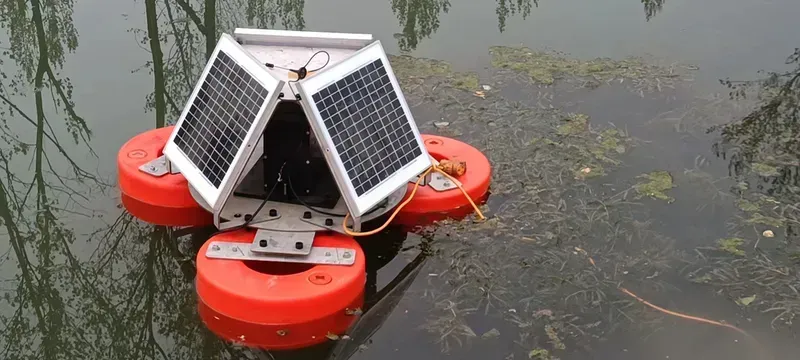
A forest resources monitoring buoy
Forest Resources Monitoring Buoy

Zero One Solution's Forest Resources Monitoring Buoy represents a significant leap forward in proactive environmental management, meticulously engineered to provide comprehensive, real-time insights into forest health and potential threats. This integrated solution leverages cutting-edge technology, with its robust PCB at the core, to deliver unparalleled accuracy and reliability in challenging remote environments, serving as a vital sentinel for our precious forest ecosystems.

  • Core Components Driving Buoy Functionality
    The buoy integrates several critical components, each meticulously selected and engineered for optimal performance and durability in diverse forest and aquatic conditions. These include advanced sensor arrays for environmental parameter collection, a high-efficiency power management system, a robust data transmission module, and a custom-designed, high-reliability PCB at its heart, ensuring seamless operation and data integrity even in harsh conditions. Zero One Solution's expertise in compact, ruggedized PCB design is paramount to the buoy's operational success and longevity.
Component CategoryPrimary FunctionZero One Solution's Contribution
Sensor ArrayCollects environmental data (e.g., temperature, humidity, air quality, water level)Integration of high-precision, low-power sensors
Power Management SystemEnsures continuous operation through efficient energy harvesting and storageOptimized power distribution through custom PCB design
Data Transmission ModuleFacilitates real-time data transfer to central monitoring stationsReliable communication protocol integration on the PCB
Central Processing Unit (CPU)Processes sensor data and manages buoy operationsCompact and robust CPU integration via advanced PCB layout
Buoy Structure & EnclosureProtects internal components from environmental elementsEnsuring optimal internal component placement for structural integrity
  • Primary Functions of the Forest Monitoring Buoy
    The buoy is designed for a multitude of essential functions, focusing on proactive monitoring and early warning. Its primary roles include continuous environmental parameter measurement, real-time anomaly detection for indicators like sudden temperature spikes or unusual air quality changes, and efficient data logging for historical analysis. Furthermore, it facilitates rapid alert dissemination to relevant authorities upon detecting critical events such as potential wildfires, floods, or signs of illegal deforestation, thereby enabling timely intervention and mitigation efforts to protect forest resources.

The Role of Advanced PCB Design in Buoy Functionality

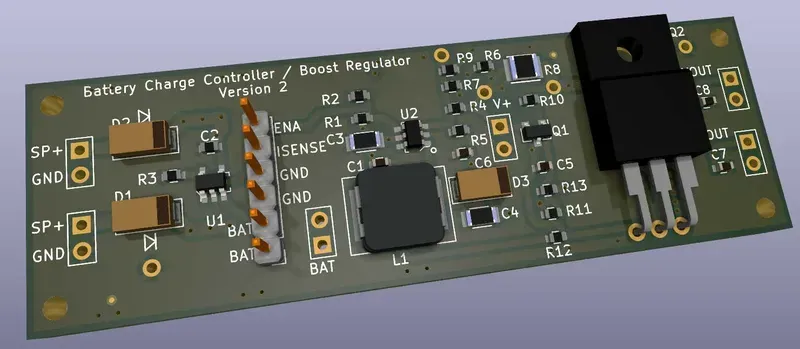
Close-up of a buoy's PCB board
Buoy PCB Board Close-up

The efficacy and longevity of any advanced environmental monitoring system, particularly a Forest Resources Monitoring Buoy, hinge profoundly on the sophistication of its Printed Circuit Board (PCB) design. At Zero One Solution Limited, our decades of expertise in high-performance PCB development are directly integrated into the buoy's core, ensuring unparalleled data processing capabilities, unwavering reliability in harsh environments, and optimal power efficiency. This foundational engineering is what transforms raw sensor input into actionable intelligence for sustainable forest management.
  • Why is PCB design critical for buoy performance?
    Advanced PCB design is crucial because it dictates the entire buoy's operational integrity. It encompasses the meticulous layout of components to minimize signal interference, optimize data pathways, and integrate diverse sensor inputs seamlessly. A superior PCB ensures accurate data acquisition from environmental sensors (temperature, humidity, air quality, water level), robust signal processing, and efficient power distribution, all of which are vital for reliable and precise monitoring in challenging forest conditions.
  • How does Zero One Solution ensure PCB reliability in harsh environments?
    Zero One Solution employs rigorous design-for-reliability (DfR) principles, including selection of industrial-grade components, robust trace routing, and advanced thermal management techniques to dissipate heat effectively. Furthermore, our PCBs often incorporate conformal coatings and specialized enclosures to protect against moisture, extreme temperatures, and vibrations inherent in outdoor deployments, ensuring sustained operation over extended periods without failure.
  • What specific PCB design features support data processing capabilities?
    Our PCBs for the monitoring buoy are engineered with high-speed data buses and optimized component placement to support powerful microcontrollers or FPGAs. This enables on-board edge computing, allowing for real-time data filtering, aggregation, and preliminary analysis directly at the source. Such capabilities reduce the volume of data transmitted, conserve energy, and provide faster insights, crucial for immediate response scenarios like wildfire detection or anomalous environmental shifts.
  • How does Zero One Solution's rapid prototyping benefit buoy development?
    Our rapid prototyping capabilities significantly accelerate the development cycle of the Forest Resources Monitoring Buoy. By quickly iterating on PCB designs and assembling prototypes, we can rapidly test, validate, and refine the buoy's performance in real-world conditions. This agile approach minimizes time-to-market for new features or sensor integrations, ensuring the buoy solution remains at the forefront of environmental monitoring technology.
  • What role does power efficiency play in the PCB design for the buoy?
    Power efficiency is paramount for remote, long-term deployments. Our PCB designs incorporate low-power components, optimize power regulation modules, and implement intelligent power-saving modes to maximize battery life and leverage renewable energy sources like solar panels effectively. This meticulous attention to power management ensures continuous operation and reduces the frequency of maintenance, making the buoy solution sustainable and cost-effective.

Key Sensors and Data Collection Capabilities for Forest Monitoring Buoys

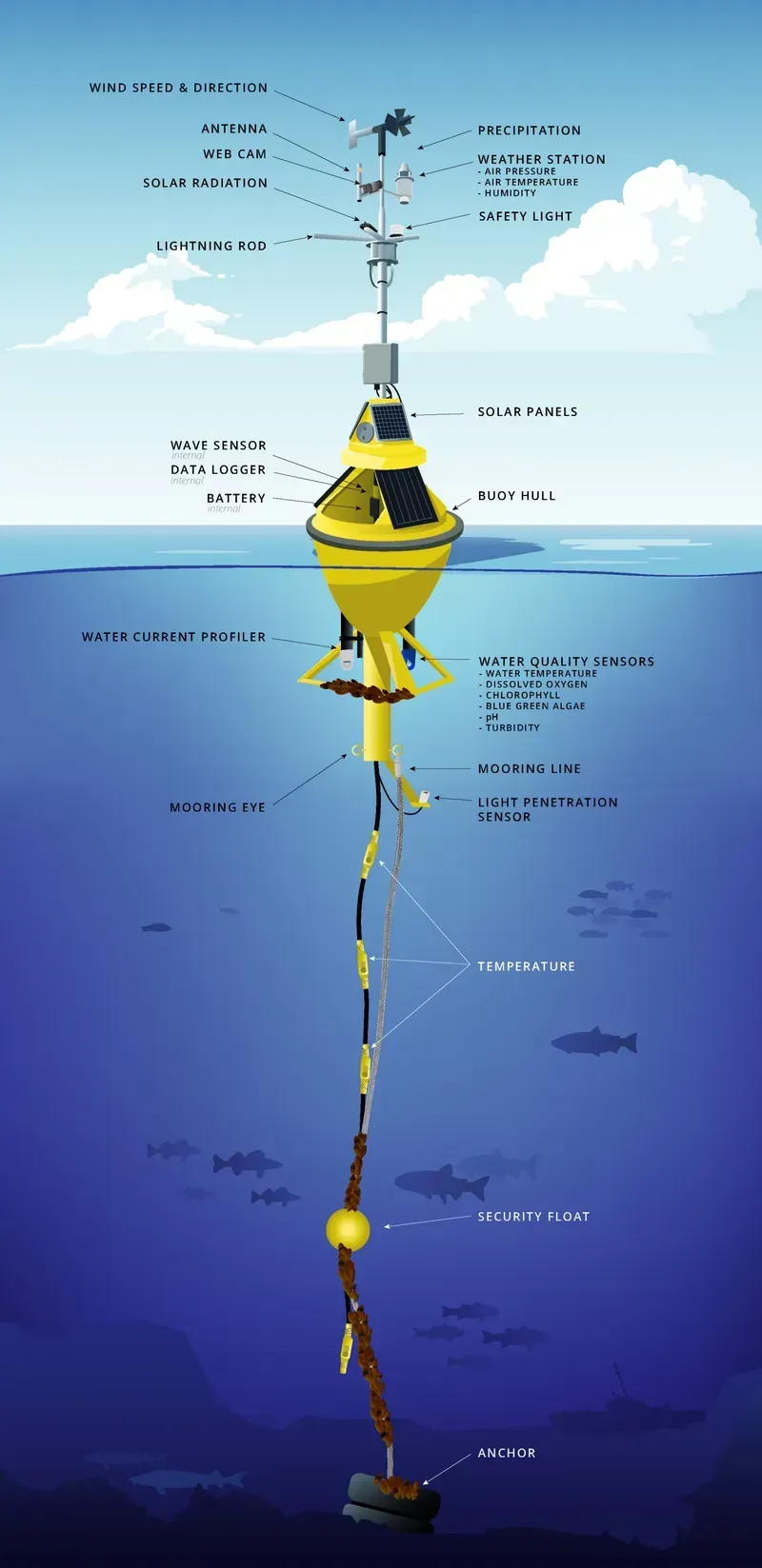
Sensors on a forest resources monitoring buoy
Buoy Sensors

At the heart of any effective forest resource monitoring buoy lies a sophisticated array of sensors, meticulously integrated to capture a comprehensive suite of environmental parameters. These sensors are the 'eyes and ears' of the system, providing critical, real-time data essential for proactive forest management, early warning systems, and long-term ecological studies. Zero One Solution's expertise in high-precision PCB design ensures that these diverse sensors operate seamlessly, offering unparalleled accuracy and reliability in data acquisition, even in the most challenging remote forest environments.

Sensor TypeMeasured ParameterApplication in Forest Monitoring
Temperature SensorAmbient air temperature, water temperatureDetecting heat stress, wildfire indicators, aquatic ecosystem health
Humidity SensorRelative humidity of airAssessing fire risk, understanding plant transpiration, fungal growth prediction
Air Quality SensorParticulate matter (PM2.5, PM10), CO2, VOCsMonitoring air pollution sources (e.g., wildfires, industrial), assessing ecosystem health impacts
Water Level SensorWater depth, water flow rate (optional)Monitoring hydrological cycles, flood prediction, drought assessment, supporting aquatic life studies
Soil Moisture SensorSoil volumetric water contentOptimizing irrigation, drought monitoring, assessing forest health and tree stress
Rainfall GaugePrecipitation levelsHydrological modeling, drought/flood prediction, assessing water availability for ecosystems
Light SensorLight intensity, PAR (Photosynthetically Active Radiation)Understanding plant growth cycles, canopy density, solar energy assessment for buoy power

The precise integration and calibration of these sensors are paramount. Leveraging advanced PCB manufacturing techniques, Zero One Solution ensures minimal signal noise, maximum data integrity, and robust performance under varying climatic conditions. This capability allows for the collection of granular data, which is then processed and transmitted, forming the foundation for insightful analysis and informed decision-making in sustainable forest management.

Real-Time Data Transmission and Communication Protocols

Effective forest resource monitoring hinges on the seamless and real-time transmission of crucial environmental data from the buoy to a central monitoring station. Zero One Solution's Forest Resources Monitoring Buoy is engineered with robust communication protocols, ensuring that collected data on temperature, humidity, air quality, and water levels is relayed instantly, enabling rapid response to ecological shifts and potential threats. This immediate data accessibility is paramount for proactive forest management, facilitating informed decisions on conservation strategies and threat mitigation.

Communication ProtocolDescriptionAdvantagesDisadvantages
Satellite Communication (e.g., Iridium, Inmarsat)Utilizes orbiting satellites to transmit data globally, ideal for remote or vast forest areas without terrestrial network coverage.Global coverage, highly reliable in remote areas, robust against terrestrial infrastructure failures.Higher cost per data unit, potentially higher latency, power consumption can be significant.
Cellular (4G/5G LTE)Leverages existing cellular networks for data transmission, suitable for areas with reasonable cellular coverage.High bandwidth, lower cost than satellite in covered areas, low latency.Dependent on cellular network availability, vulnerable to network outages or signal dead zones.
LoRaWAN (Long Range Wide Area Network)A low-power, wide-area networking protocol for IoT devices, offering long-range communication with minimal power consumption.Extremely low power consumption, long-range capabilities (up to 15 km in rural areas), cost-effective for large sensor deployments.Lower data rates, requires LoRaWAN gateway infrastructure, not suitable for real-time video or high-bandwidth data.
  • How does the Forest Resources Monitoring Buoy ensure data integrity during transmission?
    The buoy employs advanced error correction codes and data encryption protocols (e.g., AES-256) to ensure that transmitted data remains accurate, uncorrupted, and secure from unauthorized access. Redundant transmission paths can also be configured to minimize data loss in challenging environmental conditions.
  • What is the typical latency for data transmission from the buoy?
    Latency varies depending on the chosen communication protocol. Cellular networks offer near real-time transmission with latency typically in milliseconds. Satellite communication might introduce a latency of a few seconds, while LoRaWAN can range from seconds to minutes, depending on the network configuration and data payload size. Our system optimizes for minimal latency where critical.
  • Can the communication protocols adapt to varying environmental conditions?
    Yes, the buoy's communication module is designed with adaptive capabilities. For instance, in areas with intermittent cellular coverage, it can seamlessly switch to satellite communication or store-and-forward data until a reliable connection is established. This ensures continuous data flow despite challenging environmental factors like dense foliage or adverse weather.

Power Management and Energy Efficiency in Forest Monitoring Buoys

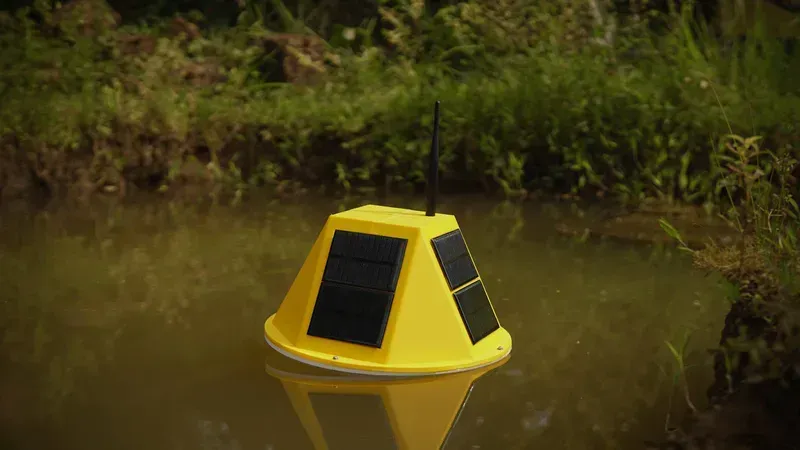
Solar panel powering a forest resources monitoring buoy
Buoy Solar Panel

Sustained operation of remote forest monitoring buoys hinges critically on robust power management and superior energy efficiency, ensuring continuous data collection and transmission without frequent manual intervention. Zero One Solution's Forest Resources Monitoring Buoy integrates a sophisticated power system designed for longevity and reliability in challenging environmental conditions, minimizing operational costs and maximizing the efficacy of forest resource management.
  • What are the primary power sources for Zero One Solution's Forest Monitoring Buoy?
    Our Forest Monitoring Buoys primarily utilize a hybrid power system combining high-efficiency monocrystalline solar panels with advanced, high-capacity lithium-ion battery packs. This configuration ensures continuous operation, with solar panels providing primary power and recharging during daylight hours, while batteries seamlessly take over during nighttime or overcast conditions, guaranteeing uninterrupted functionality.
  • How does the buoy optimize energy consumption for long-term deployment?
    Energy optimization is achieved through a multi-faceted approach. We implement low-power microcontrollers and sensors that are specifically chosen for their minimal current draw. Additionally, sophisticated power management integrated circuits (PMICs) dynamically regulate voltage and current, reducing waste. Data transmission protocols are optimized for burst mode communication, minimizing radio-on time, and the system can enter deep sleep states between transmission intervals, waking only when necessary to collect data or transmit.
  • What is the expected operational lifespan of the buoy's power system?
    Designed for extended deployments, the buoy's power system, including both solar panels and battery units, is engineered for a minimum operational lifespan of 5-7 years under typical forest environmental conditions. This longevity is supported by robust component selection, over-current and over-voltage protection, and thermal management strategies to mitigate degradation.
  • How does the buoy manage power during periods of low sunlight or extreme weather?
    During prolonged periods of low sunlight or extreme weather, the system intelligently prioritizes critical operations. The large-capacity lithium-ion batteries provide ample reserves. Furthermore, the buoy can dynamically adjust sensor sampling rates and transmission frequencies to conserve power, ensuring essential data continues to be collected and transmitted for critical alerts, such as wildfire detection, even under adverse conditions.
  • Are the power components of the buoy designed for environmental resilience?
    Absolutely. All power components, including solar panels, batteries, and internal circuitry, are housed within rugged, IP67-rated enclosures, providing complete protection against dust ingress and immersion in water. The materials selected are resistant to UV radiation, extreme temperatures, and corrosive elements commonly found in forest environments, ensuring reliable performance and durability.

Applications and Benefits of the Forest Monitoring Buoy

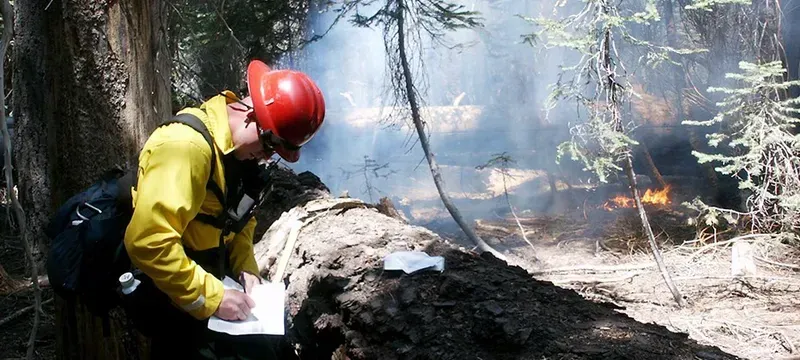
Forest fire monitoring system
Forest Fire Monitoring

Zero One Solution Limited's Forest Resources Monitoring Buoy is a transformative tool, offering diverse applications that address critical challenges in forest management and environmental protection, while delivering substantial benefits to a wide array of stakeholders. This advanced solution is engineered to provide actionable intelligence, empowering proactive conservation efforts and sustainable resource management globally. Its versatility stems from its robust data collection capabilities and reliable real-time transmission, making it indispensable for modern forestry and ecological research.

  • Early Wildfire Detection and Prevention
    By continuously monitoring ambient temperature, humidity, and air quality (e.g., CO2, smoke particles), the buoy can detect anomalous conditions indicative of potential wildfires in their nascent stages. This real-time data allows forestry services to dispatch rapid response teams, significantly reducing the scale and impact of fire outbreaks, thereby safeguarding invaluable forest ecosystems and human lives. Data from the European Forest Fire Information System (EFFIS) consistently highlights the importance of early detection in mitigating fire spread and damage, underscoring the buoy's critical role in this domain. This proactive approach saves millions in damages and protects biodiversity that would otherwise be lost to unchecked fires.
  • Illegal Logging and Poaching Deterrence
    Equipped with acoustic sensors and potentially motion detectors, the buoy can identify unusual sounds or activities associated with illegal logging operations (e.g., chainsaws, vehicle movements) or poaching. This immediate alerts authorities to illicit activities, enabling timely intervention. The deterrent effect of continuous surveillance also discourages future attempts, protecting precious timber resources and vulnerable wildlife populations. Such monitoring directly supports the enforcement of national and international forestry laws, contributing to global efforts against deforestation and illegal wildlife trade. The World Bank estimates illegal logging costs governments billions annually; this buoy offers a tangible solution to curb such losses.
  • Ecosystem Health and Biodiversity Assessment
    The buoy collects vital environmental parameters such as water levels, soil moisture, and air quality, providing a comprehensive snapshot of ecosystem health. This data is crucial for assessing the impact of climate change, pollution, and human activities on forest biodiversity. Researchers and environmental agencies can utilize this information to track long-term trends, identify areas under stress, and inform conservation strategies, ensuring the resilience and sustainability of forest ecosystems. This detailed ecological monitoring facilitates a deeper understanding of complex forest dynamics, supporting evidence-based conservation policies.
Stakeholder GroupKey Benefits of the Buoy Solution
Environmental AgenciesEnhanced ability to monitor vast forest areas, proactive disaster response (wildfire, flood), data-driven policy making for conservation and resource management, improved enforcement against illegal activities, compliance with environmental regulations, better resource allocation for protection efforts, and comprehensive environmental impact assessments for sustainable development initiatives, ultimately leading to healthier ecosystems and reduced ecological degradation, aligning with international sustainability goals such as the UN SDGs for life on land and climate action. The buoys provide the granular data needed for accurate reporting and strategic planning at a national and regional scale, optimizing their operational efficiency and impact on environmental stewardship and resource protection programs and achieving more effective natural resource management and conservation outcomes nationwide, promoting long-term ecological stability and resilience across diverse forest biomes. The precise, real-time data flow from these buoys enables rapid, targeted interventions, preserving natural habitats and vulnerable species from imminent threats, thereby fulfilling critical mandates for environmental protection and biodiversity conservation across their operational jurisdictions, ensuring that agencies can respond proactively to environmental shifts and maintain ecological balance. The continuous monitoring capabilities facilitate early detection of threats, allowing for timely preventative actions that minimize environmental damage and support long-term ecological resilience within managed territories, enabling effective strategic planning and resource allocation to address emerging environmental challenges and foster sustainable land use practices. The data-driven insights provided by the buoys allow agencies to implement adaptive management strategies, ensuring that conservation efforts remain effective and responsive to dynamic environmental conditions and enabling more efficient resource utilization and impactful conservation outcomes across diverse ecosystems, leading to a more robust and resilient natural environment for future generations. This robust data stream directly supports compliance with international environmental agreements and national conservation policies, ensuring accountability and measurable progress in protecting critical forest resources and maintaining ecological integrity.

Zero One Solution Limited: Your Partner in Environmental Monitoring Solutions

Zero One Solution Limited stands at the forefront of providing advanced environmental monitoring solutions, exemplified by our innovative Forest Resources Monitoring Buoy. Our unparalleled expertise in sophisticated PCB design, high-precision assembly, and rapid prototyping capabilities ensures that our solutions are not just functional but also robust, reliable, and tailored to the demanding conditions of environmental deployment. We are committed to empowering organizations with the tools necessary for sustainable resource management.

  • How does Zero One Solution's PCB expertise benefit environmental monitoring devices?
    Our deep expertise in PCB design ensures optimized performance, reduced power consumption, and enhanced data integrity for environmental monitoring devices. We utilize advanced materials and manufacturing processes to withstand harsh outdoor conditions, critical for long-term reliability in deployments like the Forest Resources Monitoring Buoy. This focus on precision engineering directly translates to more accurate data collection and robust operation in the field.
Service AreaKey Contribution to Environmental SolutionsBenefit for Clients
Advanced PCB DesignCustomized, high-performance circuits for precise sensor integration and data processing.Enhanced accuracy, reliability, and extended operational life of monitoring devices. Speed to market for new environmental tech solutions
High-Precision PCB AssemblyAutomated and manual assembly techniques ensuring robust connections and durable enclosures.Reduced failure rates, improved device longevity, and consistent performance in challenging environments. Reduced overall cost of device ownership and maintenance
Rapid PrototypingAccelerated development and iteration of new environmental monitoring concepts.Faster time-to-market for innovative solutions, allowing for quick adaptation to evolving environmental challenges and regulatory needs. Minimized risk during product development.

Our strategic location in Shenzhen, China, combined with a branch in Dubai, allows us to leverage a global supply chain, ensuring access to the best components and manufacturing resources. This global reach, coupled with our commitment to rapid-response R&D, makes Zero One Solution Limited the ideal partner for developing and deploying cutting-edge environmental monitoring technologies that deliver impactful results.

Conclusion: Empowering Sustainable Forest Management

The Zero One Solution Forest Resources Monitoring Buoy stands as a pivotal innovation in the quest for sustainable forest management, providing an indispensable tool for real-time environmental insights. By integrating advanced PCB design, diverse sensor capabilities, and robust data transmission, this buoy offers an unparalleled solution for proactive conservation and effective resource protection, ultimately empowering stakeholders to make informed decisions that safeguard our planet's vital forest ecosystems.

  • What are the core benefits of deploying Zero One Solution's Forest Resources Monitoring Buoy?
    The core benefits include real-time data acquisition for early wildfire detection, prevention of illegal logging through continuous monitoring, comprehensive ecosystem health assessment by tracking various environmental parameters, and enhanced data-driven decision-making for sustainable forest management strategies. This leads to reduced ecological damage, improved resource allocation, and greater accountability in conservation efforts.

In conclusion, Zero One Solution Limited's Forest Resources Monitoring Buoy Solution represents a significant step forward in environmental conservation. By combining advanced PCB technology with innovative buoy design, we provide a robust and reliable system for real-time forest data collection. This solution empowers environmental agencies, researchers, and forestry professionals to make informed decisions, enabling proactive interventions and promoting the long-term health and sustainability of our forests. Contact Zero One Solution Limited today to explore how our PCB solutions can contribute to a greener, more sustainable future. Share this article to raise awareness about the importance of forest conservation and the role of technology in environmental stewardship.


Anypcba