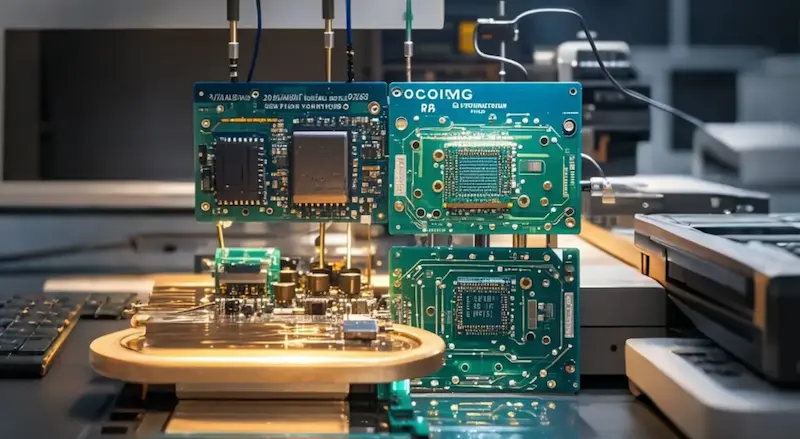
Driven by AI technology, the global electronics industry is accelerating its transformation. As the physical carrier of electronic systems, the PCB is shifting from a basic interconnect to a core technology. Emerging applications such as AI servers, intelligent vehicles, and AI PCs are placing stringent demands on high layer counts, high-frequency materials, and high reliability — pushing the industry into a "volume and value surge" upgrade cycle.
According to Prismark forecasts, global PCB output will reach $78.56 billion in 2025, with AI-related PCBs leading growth across the industry.
This article analyzes the core logic of PCB value restructuring in the AI era from three dimensions: demand, technology, and market.
PCB usage per AI server is 3-5× that of traditional servers, with layer counts jumping to 28-46 layers and single-unit value exceeding $14,000
The AI server PCB market reached $1.7 billion in 2024, projected to grow to $4.9 billion by 2026, with a CAGR of 70%
High-end HDI boards (≥18 layers) grew at 40.3%, far exceeding the industry average
PCB value per intelligent vehicle rose from $70 for combustion-engine cars to $1,100 for electric vehicles; autonomous driving domain controller HDI boards cost 3× that of standard multilayer boards
The new energy vehicle PCB market exceeded $2.8 billion in 2024, projected to reach $7 billion by 2028, with a CAGR of 25%
Shengyi Technology SCGA-500: Under IPC-TM-650 standards at 10GHz, dissipation factor (Df) as low as 0.0009 — a 77% reduction compared to Panasonic Megtron 6 (Df=0.004 @10GHz)
Accelerating Domestic Substitution: Shengyi Technology's Megtron 6-class copper-clad laminate achieves Df below 0.001, breaking the Japanese monopoly and securing over 25% share in NVIDIA AI server supply
Optimization Logic: Real-time equipment monitoring through virtual production line simulation to predict process defects. AI inspection systems achieve 99.9% defect recognition rates and reduce R&D cycles by 40%
Quantified Benefits: A semiconductor cleanroom application improved yield from 82% to 93%; battery manufacturing scenarios improved yield by 8%
Headline Enterprise Performance Explosion:
Victory Giant Technology's Q1 2025 net profit increased 272%-368% year-over-year, with 50% market share in AI server HDI
WUS Printed Circuit's 2024 gross margin reached 35.85%, with a $500 million expansion in Huangshi targeting computing demand
Significant Capital Market Premium:
The A-share PCB sector rose over 150% in 2024, with foreign capital continuing to increase holdings in leaders like Zhen Ding Technology and WUS
Accelerating High-End Breakthroughs in China:
Shennan Circuits' ABF substrate yield reached 85%, entering Huawei's Ascend supply chain; Xingsen Technology targets 10% IC substrate market share by 2025
China's high-end PCB (≥18 layers) grew at 32.5%, exceeding Taiwan/Japan by 15%
Capacity Regionalization Risk Mitigation:
Victory Giant and Shennan Circuits' Thailand/Mexico facilities will account for 30% of capacity by 2025, achieving "local delivery"
Bound to NVIDIA/Tesla, mass-producing 70-layer high-precision boards and 28-layer 8-stage HDI, with AI business revenue accounting for 60%. R&D investment increased 45% year-over-year, building a full-chain barrier from materials to design to manufacturing.
Digital Twin Implementation: $110 million invested in digital upgrading, optimizing processes through virtual production line simulation
AI Collaborative Ecosystem: Deploying "AIPC + AR glasses" terminal PCBs, reducing management expense ratio by 3% and increasing per-capita output by 20%
Technology Substitution Risk: SiP packaging may replace traditional PCBs; accelerate 3D integration technology development
Geopolitical Risk: US-China competition drives supply chain regionalization; recommend "domestic + overseas" dual-cycle layout
Product Structure Upgrade:
By 2028, HDI/IC substrate/rigid-flex market sizes will reach $125 billion / $111 billion / $70 billion
AI and Green Manufacturing Integration:
AI Design Tools: Siemens launched AI-enhanced EDA tools, improving layout optimization efficiency by 40%. AI design tool penetration among leading enterprises is expected to exceed 50% by 2025
Green Manufacturing: Lead-free process penetration will reach 70%, with carbon emission intensity reduced by 30%
The core logic of PCB value restructuring in the AI era lies in:
Demand Side: Computing infrastructure (70% CAGR) + terminal intelligence (25% CAGR) driving volume and value growth
Technology Side: High-frequency materials (Df ≤ 0.001) + digital twins (yield from 82% to 93%) building competitive barriers
Market Side: Chinese manufacturers hold over 50% global share, with high-end products leading growth worldwide
The future industry winner will depend on a three-dimensional capability matrix: technology autonomy (domestic high-frequency materials), capacity elasticity (30% overseas capacity), and AI ecosystem collaboration (design tool penetration >50%).
Looking for a Manufacturing Partner That Understands AI-Era PCB Requirements?
AnyPCBA has over a decade of experience in small-to-medium batch PCB manufacturing, supporting 2-64 layers with HDI, rigid-flex, and high-frequency hybrid capabilities. As AI hardware demand accelerates, we continue to focus on high-frequency material applications, high-layer-count manufacturing, and signal integrity optimization.
Our engineering team provides DFM/DFA design reviews to help identify potential issues in stackup, impedance, and material selection before fabrication.
Contact us to discuss your project →