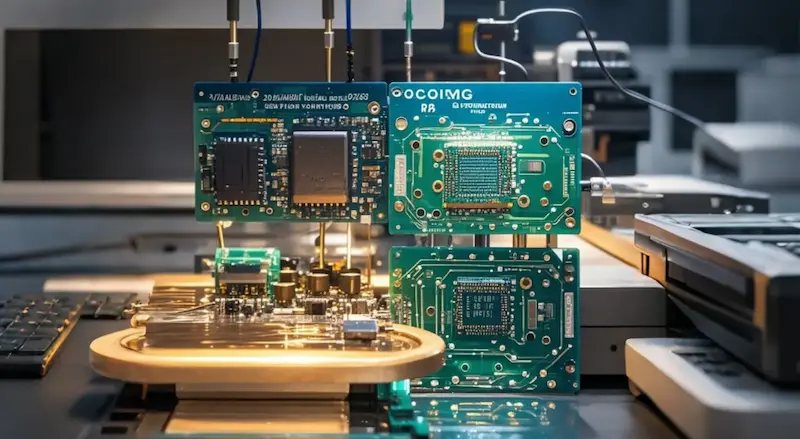
In the world of patient diagnostics, there is no margin for error. A blood pressure monitor is only as reliable as its internal printed circuit board assembly (PCBA), which acts as the nerve center for clinical precision. For medical device manufacturers, choosing the right PCBA partner is a high-stakes decision that dictates both regulatory success and patient outcomes. This guide outlines the essential criteria for selecting a PCBA partner that delivers the reliability your instrumentation demands.
The Crucial Link Between PCBA Quality and Clinical Accuracy
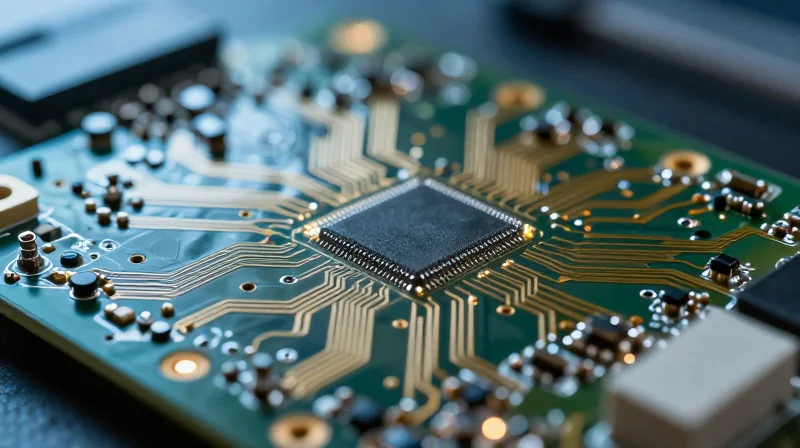
In the realm of precision medical instrumentation, the Printed Circuit Board Assembly (PCBA) acts as the nervous system for blood pressure monitoring devices. Any variance in electrical signal integrity, thermal management, or component tolerance within the PCBA can lead to signal noise, inaccurate sensor readings, and ultimately, incorrect diagnostic data. Because these devices rely on subtle oscillometric or auscultatory measurements, the PCBA must be manufactured with extreme consistency to ensure that biometric algorithms receive clean, high-fidelity data feeds.
The Impact of Signal Integrity on Clinical Outcomes
High-accuracy monitoring requires the near-total elimination of electromagnetic interference (EMI). A robust medical-grade PCBA design incorporates high-quality PCB layout practices, including proper grounding planes and shielding, to prevent noise from corrupting the delicate signals captured by pressure transducers. If the PCBA is poorly engineered, the device may report 'drift' or 'out-of-range' errors, undermining the trust required for clinical decision-making.
| Quality Aspect | Influence on Accuracy | Clinical Risk |
|---|---|---|
| Component Tolerance | Maintains precise ADC scaling | Potential for systematic bias |
| Thermal Stability | Reduces sensor drift | Inconsistent long-term readings |
| Signal Shielding | Prevents EMI-induced noise | False hypertensive diagnosis |
Common Concerns Regarding Medical PCBA Reliability
- How does moisture impact PCBA performance in home-use monitors?
Humidity can lead to leakage currents on the board surface, which interferes with high-impedance sensing circuits, leading to erratic readings. - Why is component traceability critical for medical boards?
Traceability ensures that every capacitor and resistor meets ISO 13485 standards, preventing failures caused by sub-standard or counterfeit components. - Can aging components affect clinical accuracy over time?
Yes, degradation of passive components can cause analog signal degradation, which is why selecting industrial-grade components with long-term stability is essential for medical-grade PCBA.
Prioritizing ISO 13485 Certification in Manufacturing

Why ISO 13485 Is the Gold Standard for Medical PCBA
For precision medical devices, ISO 13485 is not merely a manufacturing badge; it is a rigorous quality management system (QMS) specifically designed for the medical device industry. When choosing a PCBA partner for blood pressure monitors, ISO 13485 certification provides the necessary assurance that the manufacturer has established robust traceability, stringent process controls, and a culture of continuous improvement. Without this certification, a manufacturer may lack the requisite protocols to manage the complex documentation, risk mitigation strategies, and supply chain transparency required by regulatory bodies such as the FDA and the EMA.
Compliance vs. Quality Assurance
| Feature | ISO 9001 (General) | ISO 13485 (Medical) |
|---|---|---|
| Focus | Customer Satisfaction | Patient Safety |
| Risk Management | General/Optional | Integrated & Mandatory |
| Traceability | Standard | Full Component/Process |
Frequently Asked Questions Regarding Regulatory Compliance
- Can a non-ISO 13485 certified facility handle medical PCBAs?
While possible, it introduces extreme regulatory risk. Most medical device OEMs will mandate ISO 13485 to ensure the PCBA is 'audit-ready' for clinical submissions. - Does this certification cover component sourcing?
Yes. ISO 13485 mandates strict supplier controls, preventing the use of counterfeit components that could cause hardware drift in blood pressure sensors. - How does this impact the final device approval?
The Technical File for your medical device will require evidence of manufacturing quality; having an ISO 13485 certified partner drastically simplifies the verification process.
Implementing Strict Component Traceability Protocols

Ensuring Authenticity Through End-to-End Traceability
In the context of medical devices, component traceability is not merely an administrative exercise but a fundamental safety requirement. For blood pressure monitoring devices, where the integrity of microchips and pressure sensors directly dictates clinical outcomes, manufacturers must enforce a digital pedigree for every part on the Bill of Materials (BOM). This involves documenting the origin, batch number, and movement of every capacitor, resistor, and integrated circuit from the authorized component distributor through the assembly line to the final device serialization.
Comparative Approaches to Component Sourcing
| Sourcing Strategy | Traceability Depth | Risk Profile | Regulatory Compliance |
|---|---|---|---|
| Authorized Direct | Complete documentation | Negligible | High |
| Independent Broker | Fragmented/Limited | High | Low |
| Gray Market | None | Critical | None |
Addressing Counterfeit Risks: Frequently Asked Questions
- How does component traceability prevent counterfeit ingress?
Strict traceability ensures that every component is sourced from original component manufacturers (OCMs) or authorized distributors, creating a verifiable chain of custody that blocks non-certified aftermarket or recycled parts. - Why is lot-level tracking critical for medical PCBA?
If a manufacturing defect is discovered in a specific semiconductor batch, lot-level tracking allows for precise identification of impacted blood pressure monitors, enabling targeted recalls rather than widespread, costly product withdrawals. - What documentation should I demand from my PCBA manufacturer?
You should insist on Certificates of Conformance (CoC), detailed traceability reports linking serial numbers to specific component lot codes, and comprehensive incoming quality control (IQC) inspection records.
Design for Manufacturing (DFM) and Design for Reliability (DFR)

Optimizing PCBA Design for Manufacturing (DFM)
Design for Manufacturing (DFM) bridges the gap between circuit design and production efficiency. For sensitive blood pressure monitoring hardware, DFM focuses on optimizing trace routing, component placement, and thermal management to minimize the risk of soldering defects such as tombstoning, solder bridges, or voids that could compromise signal integrity.
| DFM Focus Area | Impact on PCBA Quality | Benefit for Blood Pressure Monitors |
|---|---|---|
| Component Spacing | Reduces solder bridging risks | Prevents short-circuits in sensor circuits |
| Trace Geometry | Ensures uniform copper plating | Maintains stable signal impedance |
| Panelization | Minimizes stress during breakout | Prevents micro-cracks in sensitive solder joints |
Prioritizing Design for Reliability (DFR)
Design for Reliability (DFR) centers on the longevity of the device under continuous clinical use. By conducting Failure Mode and Effects Analysis (FMEA) and physics-of-failure modeling early, engineers can predict how environmental factors—such as humidity or mechanical vibration—affect long-term biometric accuracy. Implementing robust conformal coating and vibration-resistant mounting techniques is standard practice to preserve the integrity of the pressure transducer interface.
Frequently Asked Questions
- How does DFM affect long-term sensor calibration?
DFM ensures that the placement of pressure sensors remains consistent across production batches, reducing the need for aggressive software recalibration and ensuring high measurement repeatability. - Why is thermal management critical for DFR?
Medical devices generate internal heat that can drift sensor values; DFR strategies ensure proper thermal dissipation, maintaining stable measurements during extended monitoring cycles. - Does DFR require specialized testing?
Yes, it often incorporates Accelerated Life Testing (ALT) and Highly Accelerated Life Testing (HALT) to expose potential weaknesses in the PCBA design before full-scale manufacturing begins.
Material Selection and Thermal Management
Substrate Material Selection for Clinical Environments
The choice of substrate is the foundation of device reliability. For blood pressure monitors, high-frequency signal integrity and dimensional stability are non-negotiable. Standard FR-4, while cost-effective, may succumb to delamination or dielectric constant fluctuations under continuous thermal cycling. Engineers must prioritize materials with high Glass Transition Temperatures (Tg) and low Coefficient of Thermal Expansion (CTE) to prevent signal drift in sensitive pressure transducers.
| Material Type | Key Advantage | Recommended Application |
|---|---|---|
| High-Tg FR-4 | Balanced cost and thermal stability | General-purpose digital BP monitors |
| Polyimide | Exceptional flexibility and heat resistance | Wearable, compact blood pressure sensors |
| Ceramic-Filled PTFE | Ultra-low signal loss | High-precision diagnostic interfaces |
Thermal Management Strategies
Thermal dissipation is critical in precision instruments, as heat-induced expansion can alter the mechanical calibration of blood pressure sensors, leading to inaccurate patient data. Effective heat management is achieved by combining intelligent component placement with passive cooling architectures.
- Does heat directly affect pressure sensor accuracy?
Yes, thermal gradients across the board can cause micro-deflections in sensor diaphragms, leading to baseline drift and inaccurate blood pressure readings. - How should I design for better heat dissipation?
Utilize copper-heavy ground planes to act as heat spreaders and incorporate thermal vias near high-power components to transfer heat efficiently to external layers or custom heatsinks. - Is active cooling necessary for these devices?
Active cooling is rarely required; instead, opt for optimized passive airflow design and strategic component positioning that separates power-regulating stages from sensitive analog signal paths.
To achieve a design-for-reliability outcome, the thermal profile of the PCBA must be verified through thermographic imaging during the prototyping phase. Ensuring that localized hotspots do not exceed the operating parameters of analog-to-digital converters is vital for maintaining long-term clinical accuracy.
Rigorous Testing and Quality Assurance Standards
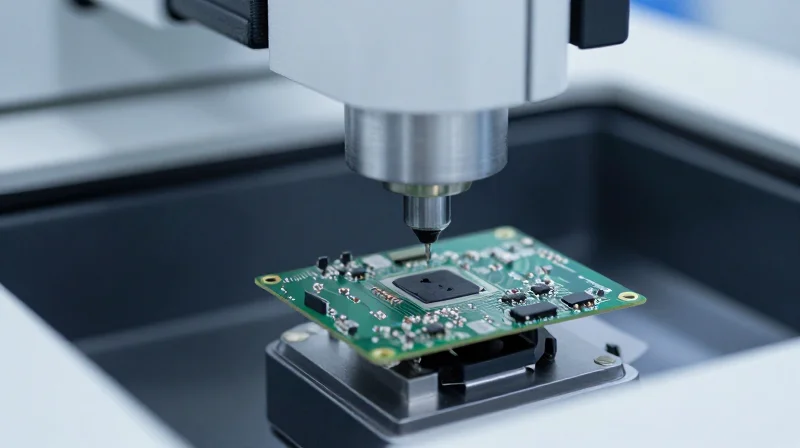
In the context of medical devices, testing is not merely a final inspection step but a foundational requirement embedded throughout the manufacturing cycle. For precision blood pressure monitors, even microscopic solder joint defects or signal noise can lead to erroneous diagnostic data. A robust Quality Assurance (QA) protocol must verify both the physical integrity of the PCBA and the accuracy of its electronic performance under diverse clinical conditions.
Essential Inspection and Validation Methodologies
| Testing Method | Purpose in Medical PCBA | Key Benefit |
|---|---|---|
| Automated Optical Inspection (AOI) | Detects surface-level placement errors | Identifies missing components and shorts |
| Automated X-ray Inspection (AXI) | Checks hidden solder joints (BGA) | Detects internal voids and solder bridges |
| In-Circuit Testing (ICT) | Validates circuit connectivity | Confirms electrical resistance and capacitance |
| Environmental Stress Screening (ESS) | Subjects board to thermal cycling | Uncovers latent manufacturing defects |
Addressing Common Quality Assurance Questions
- Why is Environmental Stress Screening (ESS) critical for BP monitors?
ESS forces latent failures to manifest by subjecting the board to extreme temperature fluctuations, ensuring the device remains stable in varying clinical environments. - Does AOI replace the need for X-ray inspection?
No; while AOI is excellent for surface components, AXI is required to inspect hidden joints under Ball Grid Arrays (BGAs) where optical systems cannot reach. - How does automated testing improve patient safety?
Automated systems eliminate human error in the inspection process, ensuring every single unit adheres to the exact performance tolerances required for life-critical measurement precision.
Implementation of Functional Testing
Beyond structural inspection, functional testing acts as the ultimate simulation of the PCBA's life cycle. For a blood pressure monitor, the PCBA must undergo calibration checks that verify its ability to accurately interpret pressure transducer signals into reliable patient data. This stage typically involves software-driven test fixtures that cycle the hardware through various pressure ranges to ensure the signal-to-noise ratio meets the manufacturer's stringent medical specifications.
Managing Supply Chain Resilience in Medical Electronics
Strategies for Supply Chain Stability
For precision medical devices, supply chain fragility is a critical failure point. To ensure the availability of essential components for blood pressure monitors, manufacturers must transition from reactive purchasing to a strategic supply chain resilience model. This includes building deep visibility into Tier 2 and Tier 3 suppliers, where component sub-assemblies often originate.
Assessing Partner Capability
| Evaluation Criterion | Strategic Benefit | Red Flag Indicator |
|---|---|---|
| Obsolescence Monitoring | Prevents design redesign costs | Lack of formal EOL tracking |
| Multi-Sourcing Strategy | Reduces bottleneck reliance | Single-point-of-failure BOM |
| Buffer Stock Management | Shields against lead time spikes | Just-in-time reliance for critical ICs |
Mitigating Obsolescence Risks
Precision blood pressure monitors often utilize specialized sensors with long development cycles. An effective PCBA partner must provide a Life Cycle Management (LCM) report for every component on the Bill of Materials. By identifying 'Not Recommended for New Design' (NRND) parts early, you can initiate a timely migration path before the component disappears from the market, thus avoiding expensive, unplanned re-certification processes.
Frequently Asked Questions
- How do we handle long lead times for specialized sensor components?
Establish a rolling forecast with your partner and consider 'Last Time Buy' agreements or bonded inventory programs to secure stock for a 12-to-18-month horizon. - Why is Tier 2 visibility critical for medical PCBAs?
Many critical components in blood pressure monitoring are fabricated by secondary suppliers; visibility allows you to foresee disruptions before they cascade into a production stop. - Should we approve alternative components in the initial design phase?
Yes, pre-qualifying drop-in replacements for non-proprietary parts adds significant resilience, allowing for rapid substitution if the primary supply chain experiences volatility.
Documenting Regulatory Compliance for FDA and Global Markets
The Role of Documentation in Regulatory Compliance
Regulatory bodies like the FDA and CE (MDR) require more than just a functional device; they mandate a transparent 'Device History File' (DHF) and 'Design History File' that proves every stage of development and production adheres to strictly defined quality management systems (QMS), such as ISO 13485.
Essential Components for Audit-Ready Documentation
| Document Type | Purpose for Audit | Regulatory Relevance |
|---|---|---|
| BOM Traceability Matrix | Component sourcing verification | FDA 21 CFR Part 820 |
| Process Validation Records | Manufacturing consistency | ISO 13485:2016 |
| Change Control Log | Revision impact analysis | Post-market surveillance |
Strategic BOM Management
Managing a Bill of Materials (BOM) in blood pressure monitoring devices goes beyond part numbers. It requires detailed documentation of component specifications, material origin, and life-cycle status. A reliable PCBA partner must provide digital traceability to ensure that if a sub-component fails, the impacted units can be identified immediately, fulfilling critical post-market surveillance requirements.
- Why is process validation documentation critical?
Validation proves that the manufacturing process consistently produces a board meeting specified requirements, which is mandatory for Class II medical devices. - What constitutes a robust Change Control process?
Any modification to the PCBA design or manufacturing process must be documented, tested, and validated to ensure no negative impact on device performance or regulatory filing. - Does global compliance require different documentation?
Yes, while ISO 13485 is a universal foundation, specific markets like the EU require additional technical files for MDR compliance, necessitating highly detailed risk management reports for the PCBA.
Selecting a medical-grade PCBA partner is not just about cost-efficiency; it is about building a foundation of trust for your end users. By prioritizing quality systems, material integrity, and rigorous testing, you ensure your device remains at the forefront of medical technology. Ready to elevate the reliability of your blood pressure monitor? Contact our engineering team today to discuss your next manufacturing project.