
When lives are on the line, the reliability of your automated external defibrillator (AED) is non-negotiable. Designing for mission-critical medical hardware requires more than just technical competence; it demands a manufacturing partner who understands the intersection of rigorous regulatory compliance and absolute hardware durability. This guide provides a strategic framework for evaluating potential partners to ensure your PCB assembly meets the highest medical standards.
The Absolute Necessity of ISO 13485 Compliance

Why ISO 13485 Is Non-Negotiable for AED Manufacturing
When manufacturing printed circuit boards (PCBs) for Automated External Defibrillators (AEDs), there is no margin for error. An AED is a life-critical device that must function perfectly in high-stress, emergency environments. ISO 13485 represents the global gold standard for a Quality Management System (QMS) specifically tailored to the medical device industry. Partnering with a manufacturer that lacks this certification introduces unacceptable risks, ranging from component failure to catastrophic liability issues.
Core Benefits of ISO 13485 Compliance
- Risk-Based Approach
Certified manufacturers implement rigorous risk management processes at every stage, identifying potential failure points in the PCB design and assembly before they impact the final device. - Traceability and Accountability
The standard mandates complete documentation of the supply chain, ensuring that every capacitor, resistor, and semiconductor can be traced back to the original authorized distributor. - Consistent Quality Output
By adhering to standardized work instructions and validation protocols, manufacturers minimize variability, ensuring that every board produced meets the same high-performance specifications.
Certified Quality vs. General Manufacturing
| Feature | ISO 13485 Certified | General PCB House |
|---|---|---|
| Risk Management | Integrated into all processes | Often informal or nonexistent |
| Supply Chain | Fully documented traceability | Varies, often lacks granularity |
| Audit Readiness | Prepared for regulatory scrutiny | Not optimized for medical audits |
| Product Longevity | Lifecycle management focus | Focus on volume and speed |
Ultimately, selecting a manufacturer without ISO 13485 is a liability. For devices like AEDs, where reliability directly correlates to human life, the standard acts as a guarantee that your partner operates with the documentation, validation, and quality controls necessary for regulatory approval and operational excellence.
Assessing Traceability and Component Provenance
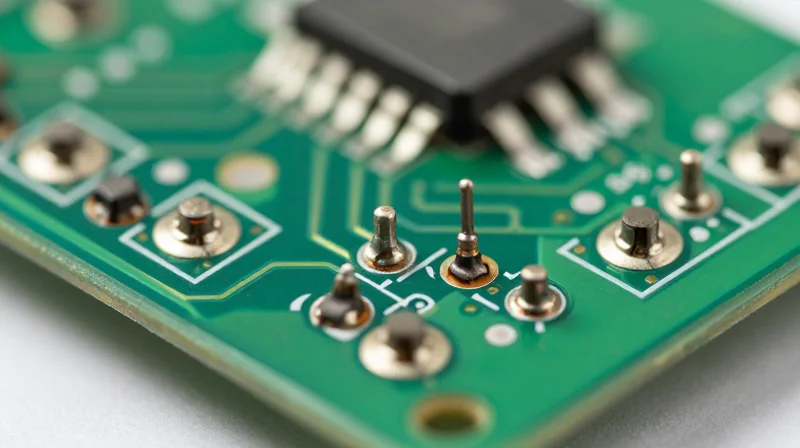
The Risk of Counterfeit Components in Life-Critical Systems
In the context of automated external defibrillators (AEDs), a single sub-par component can lead to catastrophic failure during a cardiac emergency. Counterfeit, recycled, or substandard electronic components frequently infiltrate the global supply chain, masquerading as authentic parts. These components often lack the longevity, temperature tolerance, and precision electrical characteristics required for medical-grade hardware. Partnering with a manufacturer that lacks a transparent, verified procurement strategy invites unacceptable risk to both device performance and patient safety.
Strategies for Ensuring Full Provenance
- Authorized Distribution Only
Demand that your PCB manufacturer sources all critical integrated circuits and active components exclusively from authorized distributors or the original component manufacturers (OCMs). This eliminates the risks associated with independent 'broker' markets where counterfeit goods are most prevalent. - Documented Traceability Logs
A high-reliability manufacturer must provide a comprehensive 'bill of materials' (BOM) trace. This includes lot numbers, date codes, and certificates of conformance (CoC) for every high-risk component used in the assembly. - Rigorous Incoming Quality Control (IQC)
Verify that the manufacturer performs physical and electrical inspections upon receipt of components. High-end facilities often employ X-ray inspection or destructive testing on random samples to confirm internal die architecture matches OCM specifications.
Evaluating Manufacturer Provenance Capabilities
| Capability Metric | Low-Risk (Recommended) | High-Risk (Avoid) |
|---|---|---|
| Sourcing Policy | Authorized distributors/OCM direct | Mix of brokers and secondary markets |
| Traceability Record | Digital lot-level tracking for 10+ years | Manual logs or incomplete records |
| Counterfeit Mitigation | AS6081/AS6171 compliance standards | Reactive inspection only upon failure |
| Audit Accessibility | Full transparency of supply chain nodes | Opaque sourcing or proprietary black-box sourcing |
Ultimately, your manufacturer should act as an extension of your own quality assurance team. If a manufacturer is hesitant to disclose their component supply chain or cannot provide immediate proof of purchase for critical AED components, they are not suitable for medical-grade production. Selecting the right partner requires moving beyond mere cost-per-unit metrics to prioritize verified provenance that protects the integrity of every shock delivered.
Technical Capabilities for Complex Medical PCBA
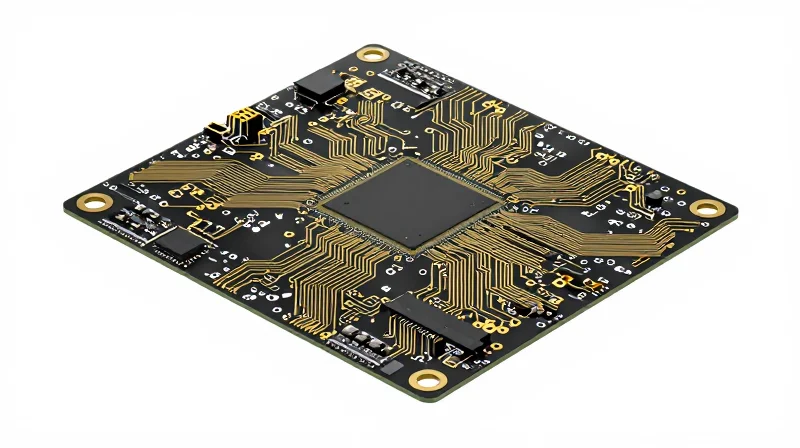
Technical Capabilities for Complex Medical PCBA
Manufacturing an AED defibrillator requires more than standard assembly; it demands an environment capable of handling high-density interconnects (HDI), precision micro-vias, and rigorous environmental protection protocols. Because these devices remain in standby mode for years before needing to deliver a precise, life-saving electrical discharge, every solder joint and trace must be engineered for extreme long-term reliability.
Advanced Manufacturing Processes
When auditing a potential partner, evaluate their ability to manage complex PCB architectures that support the high-speed data processing and power management circuits found in modern AEDs. Key capabilities include:
| Process Capability | Significance for AED Reliability |
|---|---|
| Micro-via Technology | Enables high-density routing and reduced signal noise in compact defibrillator housings. |
| Advanced Conformal Coating | Essential for preventing corrosion and shorts caused by moisture or chemical ingress in varying field conditions. |
| Automated Optical Inspection (AOI) | Ensures precise alignment and integrity of microscopic components that manage critical charge cycles. |
| Vacuum-Assisted Reflow | Reduces voiding in solder joints, which is vital for high-power connections that must not fail under pulse stress. |
Frequently Asked Questions Regarding PCBA Capabilities
- Why is vacuum-assisted reflow critical for AED circuitry?
AED boards often handle high current density. Voids in solder joints act as thermal bottlenecks and points of mechanical failure; vacuum reflow significantly lowers these void percentages to enhance long-term structural integrity. - How does conformal coating selection affect device lifespan?
AEDs are often deployed in public spaces where humidity and environmental contaminants vary. A high-quality parylene or specialized acrylic coating is necessary to prevent electrochemical migration over the decade-long lifespan of the device. - What should I look for regarding HDI capacity?
The manufacturer should demonstrate proficiency in laser-drilled micro-vias and blind/buried via structures to minimize board footprint while maintaining signal integrity for sensitive diagnostic sensors.
Rigorous Testing and Quality Inspection Protocols
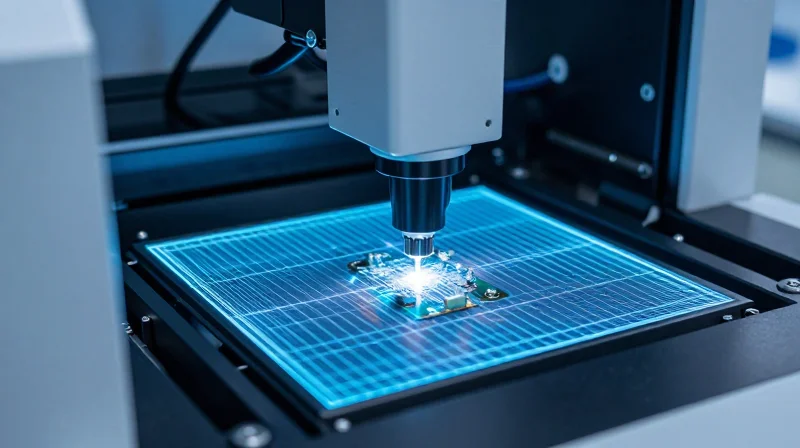
Because AEDs must function perfectly after months or years of standby time, the PCB manufacturing process requires a zero-failure approach. Selecting a manufacturer necessitates verifying their implementation of an exhaustive inspection regimen that spans the entire production cycle, from raw laminate verification to final functional validation.
Essential Inspection and Validation Techniques
| Test Method | Primary Application | Benefit to AED Reliability |
|---|---|---|
| Automated Optical Inspection (AOI) | Surface mount component placement | Detects solder bridges and alignment errors early. |
| Automated X-ray Inspection (AXI) | BGA/Hidden solder joints | Identifies internal voids and shorts in high-density chips. |
| Functional Testing (FCT) | Circuit behavior under load | Verifies board performance in actual operational state. |
| In-Circuit Testing (ICT) | Individual component values | Ensures precise resistance and capacitance benchmarks. |
Advanced Quality Verification Protocols
For critical medical hardware, visual inspection is insufficient. Manufacturers must employ AXI to peer beneath BGA packages, as micro-fractures in solder balls can lead to intermittent failure that standard optical tools miss. Furthermore, high-voltage stress testing (often referred to as dielectric withstand testing) is essential for defibrillator circuits to ensure insulation integrity during high-energy discharge events.
Frequently Asked Questions Regarding Testing
- Why is functional testing mandatory for every single board?
Sampling methods are insufficient for medical devices. Every AED PCB must undergo FCT to ensure that specific timing and signal integrity benchmarks are met before the board is integrated into the device chassis. - How does conformal coating affect testing procedures?
Conformal coating must be applied post-testing or using specialized masking. If a manufacturer tests after coating, it can mask cold solder joints or surface defects, compromising the inspection process. - What role does environmental stress screening (ESS) play?
ESS, such as thermal cycling, exposes boards to extreme temperatures to accelerate infant mortality failure modes, ensuring the PCB will survive deployment in harsh, uncontrolled environments.
Supply Chain Resilience and Risk Mitigation
Strategies for Supply Chain Resilience in Life-Critical Manufacturing
Medical device manufacturers must prioritize partners who move beyond reactive procurement to predictive supply chain management. For AED production, where component obsolescence or shortages can lead to catastrophic delivery delays, your PCB assembler must demonstrate proactive life-cycle monitoring, multi-tier sourcing transparency, and robust inventory buffering strategies.
Evaluating Manufacturer Risk Mitigation Capabilities
| Strategy | Impact on Reliability | Requirement for Manufacturer |
|---|---|---|
| Proactive EOL Monitoring | Prevents unscheduled design changes | Continuous tracking of silicon/passive component lifecycles |
| Approved Vendor Lists (AVL) | Ensures component provenance | Strict verification of authorized distributors only |
| Inventory Buffering | Mitigates sudden lead-time spikes | Dedicated safety stock for long-lead-time critical ICs |
Frequently Asked Questions on Supply Chain Integrity
- How can a manufacturer help prevent counterfeit components?
A high-reliability partner will source exclusively from authorized distributors and manufacturers, maintaining full documentation trails (CoC) and performing inbound inspections of all critical active components. - Why is 'Design for Supply Chain' important for AEDs?
Design for Supply Chain (DfSC) involves selecting components with long-term availability and multiple sources early in the design phase, significantly reducing the risk of costly production halts due to regional shortages. - What indicates a manufacturer has poor risk management?
Red flags include a lack of formal EOL (End-of-Life) management, reliance on gray-market brokers to source missing parts, and an inability to provide transparency regarding sub-tier component suppliers.
Cleanroom Standards and Environmental Controls
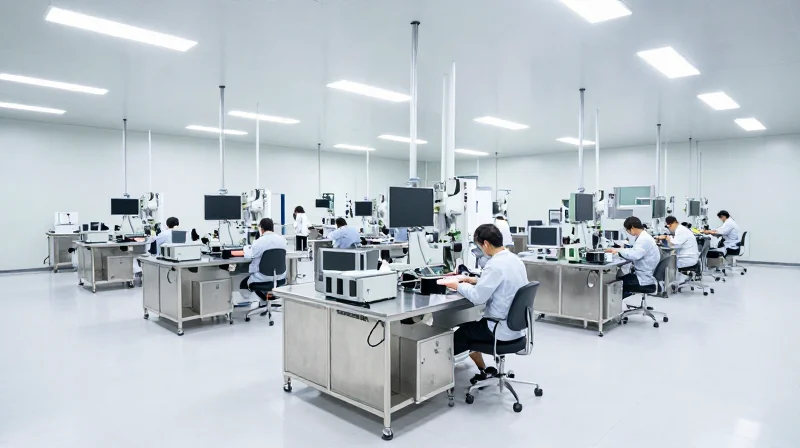
For Automated External Defibrillator (AED) electronics, the reliability of the printed circuit board (PCB) is paramount. Given the life-critical nature of these devices, even invisible environmental contaminants—such as dust, moisture, or particulate matter—can cause impedance changes, short circuits, or long-term dendrite growth, leading to device malfunction at a critical moment. A qualified manufacturer must strictly adhere to certified cleanroom environments to mitigate these latent defects.
Classifying Cleanroom Requirements for PCB Assembly
PCB assembly environments are categorized based on the maximum allowable particle count per cubic meter of air. For medical-grade assemblies, manufacturers typically adhere to ISO 14644 standards to maintain high-quality production conditions.
| ISO Class | Particulates (0.5µm/m³) | Application in AED Manufacturing |
|---|---|---|
| ISO 7 (Class 10,000) | 352,000 | Standard SMT assembly lines for general medical PCBA |
| ISO 6 (Class 1,000) | 35,200 | High-density assembly and precision cleaning processes |
| ISO 5 (Class 100) | 3,520 | Specialized coating and final medical device assembly |
Environmental Control Parameters
Beyond particle counts, advanced manufacturers must manage dynamic environmental variables that influence solder integrity and component longevity. Consistent humidity and temperature levels prevent electrostatic discharge (ESD) and ensure consistent flow during the reflow process.
- Humidity Management
Maintaining 30% to 50% relative humidity is critical for preventing moisture-sensitive device (MSD) damage and inhibiting corrosion during the soldering process. - ESD Controls
Cleanrooms must incorporate ESD-safe flooring, ionized air systems, and standardized grounding protocols to protect sensitive defibrillator integrated circuits from latent damage. - Air Filtration
Use of High-Efficiency Particulate Air (HEPA) filters ensures that the assembly air remains free of organic contaminants that could degrade long-term insulation resistance.
Verification and Monitoring
Selecting a manufacturer requires verifying that their cleanroom environment is not just compliant by design, but actively monitored. Request documentation regarding their routine environmental audits, air quality data logging, and particle counter calibration records to ensure that the medical device reliability is not compromised by fluctuating facility standards.
Engineering Collaboration and DFM Optimization
The Strategic Value of Early DFM Engagement
Engineering collaboration should begin long before the final PCB design reaches the manufacturing floor. By involving your contract manufacturer during the design phase, you gain access to expert insights that identify potential manufacturing bottlenecks, such as suboptimal trace routing or incompatible component footprints, which could compromise the device's reliability in emergency conditions.
DFM Optimization Pillars for AED Electronics
| Focus Area | DFM Optimization Strategy | Reliability Impact |
|---|---|---|
| Component Selection | Standardizing footprints and sourcing lifecycle-stable parts. | Prevents late-stage redesigns and assembly errors. |
| Thermal Management | Optimizing heat sink placement and via patterns. | Protects sensitive components during high-energy discharge. |
| Testability (DFT) | Integrating dedicated test points for FCT and ICT. | Ensures 100% board integrity before deployment. |
Frequently Asked Questions
- How does early DFM engagement reduce production defects?
It allows the manufacturer to validate board layouts against their specific machine tolerances and solder paste stencil requirements, effectively eliminating 'Design for Manufacturability' errors before full-scale production begins. - Why is thermal optimization vital for defibrillator PCBs?
AEDs undergo extreme power fluctuations. DFM-optimized layouts ensure effective heat dissipation, preventing local hot spots that could lead to intermittent failures or premature component degradation. - Does collaborative engineering extend product lifespan?
Yes, by optimizing for component reliability and environmental resilience, DFM minimizes stress on the board assembly, ensuring the device remains functional even after years of standby storage.
Due Diligence: Auditing Your Potential Partner
The Anatomy of a Quality Audit
A comprehensive due diligence audit must look beyond marketing brochures and certifications. You are evaluating whether the manufacturer integrates a 'quality-first' mindset into their daily operations. This involves on-site verification of process documentation, traceabilty systems, and the actual cleanliness of the production floor, ensuring that every PCB assembly adheres to strict IPC Class 3 standards.
| Audit Category | Key Indicator | Red Flag |
|---|---|---|
| Traceability | Digital tracking of components to specific serial numbers | Manual logging or batch-only tracking |
| Equipment Calibration | Automated alerts for expiring calibration | Expired stickers or missing maintenance logs |
| Staff Training | Documented IPC certification records | Lack of formal training documentation |
Critical Questions for Site Visits
- How do you handle non-conforming materials?
Look for a robust quarantine process that physically segregates defective parts and uses a digital ERP system to prevent them from entering the production line. - Can you provide real-time yield data?
A high-performing partner should offer transparent visibility into first-pass yield (FPY) rates; consistent opacity suggests underlying process instability. - How is electrostatic discharge (ESD) monitored?
Verify not just the presence of ESD mats, but automated continuous monitoring systems at workstations that alarm when a grounding path is broken.
Evaluating Cultural Alignment
Technical capability is void without organizational alignment. During your visit, observe how floor-level employees handle challenges. Do they stop a line when a deviation occurs, or do they prioritize throughput over compliance? For life-critical AED components, the manufacturer must empower every operator to halt production if a quality threshold is breached. This culture of accountability is the strongest indicator of long-term reliability for your medical device program.
Selecting a PCB manufacturing partner is a strategic decision that directly influences the safety and efficacy of your medical devices. By prioritizing rigorous certification, supply chain security, and advanced manufacturing precision, you safeguard your brand's reputation and, most importantly, the patients who rely on your technology. Contact our engineering team today to discuss how our specialized medical manufacturing processes can support your next life-critical project.
