
In the high-stakes world of automotive manufacturing, the failure of a single HVAC control board is not just an inconvenience—it is a critical safety and warranty liability. As procurement leaders, selecting a manufacturing partner goes beyond unit cost; it requires a rigorous assessment of quality systems, technical maturity, and compliance standards. This guide provides the strategic framework needed to audit and partner with manufacturers capable of meeting the uncompromising demands of the automotive industry.
Understanding the Necessity of IATF 16949 Certification

Why IATF 16949 is the Global Automotive Benchmark
IATF 16949 is far more than a standard quality certification; it represents a commitment to the rigorous demands of the automotive supply chain. For HVAC control board PCBA manufacturing, this certification serves as a primary gatekeeper, ensuring that every stage of the production cycle—from design verification to final testing—is aligned with global automotive standards. It is designed to minimize defects, reduce supply chain waste, and ensure the long-term reliability of electronic components operating under the extreme thermal and mechanical stresses of a vehicle environment.
Core Pillars of the Standard
| Requirement | Impact on PCBA Manufacturing |
|---|---|
| Process Control | Ensures consistent soldering and component placement to prevent HVAC system failure. |
| Traceability | Enables full batch tracking for every control board, essential for automotive recalls. |
| Risk Management | Proactively identifies potential failure modes before they reach mass production. |
Frequently Asked Questions
- Can a supplier use ISO 9001 instead of IATF 16949?
While ISO 9001 is a foundational quality management system, it lacks the specialized automotive industry requirements for zero-defect production and robust change management. IATF 16949 is the strict requirement for automotive tier 1 and OEM suppliers. - How does IATF 16949 improve HVAC board reliability?
The standard mandates advanced quality planning (APQP) and production part approval processes (PPAP), ensuring that the design, hardware, and software of the control board meet exact automotive duty-cycle expectations. - Is certification a one-time check?
No, IATF 16949 requires continuous surveillance audits. Maintaining this status forces a partner to sustain high quality through constant improvement and proactive operational oversight.
Evaluating Automotive-Grade Reliability Standards
Addressing Harsh Environmental Demands
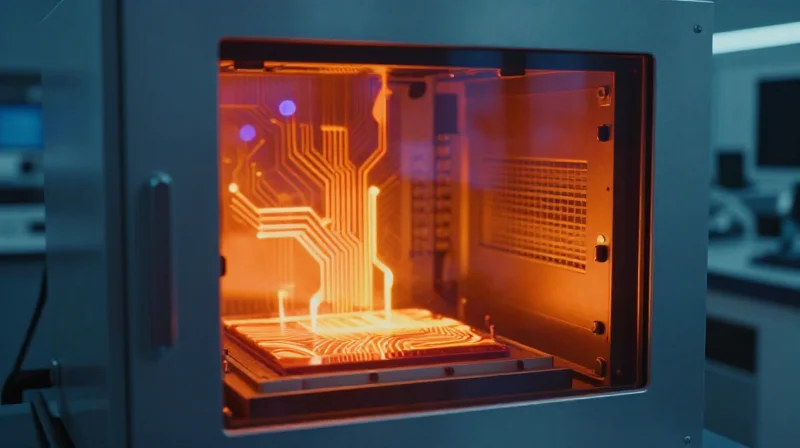
Automotive HVAC systems operate in one of the most punishing environments within a vehicle. A qualified manufacturing partner must demonstrate mastery over thermal cycling, mechanical shock, and chemical exposure. Failure to meet these criteria often manifests as intermittent sensor errors or total board failure during critical temperature transitions.
Comparison of Industry Testing Standards
| Stress Factor | Common Automotive Requirement | Partner Capability |
|---|---|---|
| Thermal Shock | -40°C to +125°C | Accelerated cycling validation |
| Vibration | ISO 16750-3 profile | Sine and random vibration testing |
| Humidity/Moisture | 85% RH / 85°C | Conformal coating precision |
Critical Reliability FAQs
- How does moisture ingress impact HVAC boards?
HVAC systems are prone to condensation due to rapid temperature drops; without specialized potting or high-grade conformal coatings, moisture leads to dendrite growth and short circuits. - Is vibration testing necessary for static HVAC controllers?
Yes. Even if the controller is panel-mounted, the vehicle's engine-induced vibrations cause fatigue in solder joints over years of operation, necessitating IPC Class 3 assembly standards. - Why is thermal cycling data critical for partner selection?
Thermal cycling data reveals weaknesses in component CTE (Coefficient of Thermal Expansion) matching; a partner who cannot provide this data lacks the visibility required for automotive-grade failure prevention.
Assessing Supply Chain Transparency and Traceability

Assessing Supply Chain Transparency and Traceability
In the automotive HVAC sector, a failure in traceability is equivalent to a failure in safety. A robust manufacturing partner must demonstrate an unbroken data thread from the raw component manufacturer through to the final PCBA assembly. Transparency is not merely about tracking part numbers; it is about verifying the provenance of every semiconductor, connector, and passive component to eliminate the risk of counterfeit parts entering the HVAC control board production line.
Verification Mechanisms: Comparing Approaches
| Audit Method | Primary Objective | Effectiveness in Automotive |
|---|---|---|
| Full Lot Traceability | Linking raw material lots to end products | High: Essential for rapid recalls |
| Authorized Channel Audit | Ensuring procurement only from OEMs | Critical: Prevents grey market entry |
| Digital Twin Tracking | Real-time visibility of component status | Optimal: Modern standard for Industry 4.0 |
Frequently Asked Questions on Traceability
- How can I verify that my manufacturer avoids the grey market?
Request an 'Authorized Distributor List' for your specific Bill of Materials (BOM) and mandate that only Tier-1 suppliers are utilized for all critical ICs and power components. - What documentation should a partner provide for every shipment?
Partners should provide Certificates of Conformance (CoC), full lot code records for critical components, and, if required, digital traceability logs that map serial numbers to specific production batches. - Why is counterfeit detection crucial for HVAC systems specifically?
HVAC boards control critical vehicle cabin air management and defrosting systems; counterfeit components often lack automotive-grade temperature tolerance, leading to premature field failure and safety hazards.
When auditing a partner, insist on a facility tour that highlights their warehouse segmentation—specifically, how they segregate 'Approved' from 'Quarantined' stock. A partner with world-class traceability will have automated systems that flag any component lot code that does not align with your approved vendor list (AVL), preventing production errors before they reach the assembly stage.
Deep Dive into Testing Protocols: AOI, AXI, and ICT
Deep Dive into Testing Protocols: AOI, AXI, and ICT
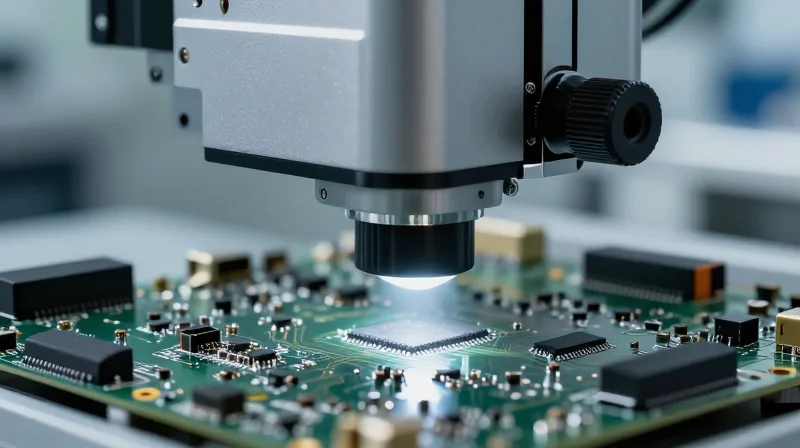
For automotive HVAC systems, where reliability is safety-critical, relying on visual inspection alone is insufficient. Manufacturing partners must utilize a tiered inspection strategy to catch defects at the component, solder joint, and circuit levels before the board reaches the vehicle.
| Method | Primary Focus | Best For |
|---|---|---|
| AOI | Surface visual defects | Component alignment, solder fillets, polarity |
| AXI | Internal solder structure | BGA, QFN, and hidden joints |
| ICT | Electrical performance | Shorts, opens, and component values |
Multi-Layered Validation Strategy
An effective quality management plan integrates these technologies to create a 'no-escape' environment for manufacturing defects. Automated Optical Inspection (AOI) provides high-speed, surface-level validation during the SMT process. When designs include advanced packaging like Ball Grid Arrays (BGAs), Automated X-Ray Inspection (AXI) is non-negotiable to detect hidden voids or shorts under the component body. Finally, In-Circuit Testing (ICT) validates that the board functions electrically as intended by stimulating circuits and verifying continuity.
- Why is AXI mandatory for HVAC controls?
Automotive HVAC boards often use high-density, leadless packages where solder joints are invisible to optical cameras; AXI is the only way to inspect these hidden connections for reliability. - Does ICT replace functional testing?
No, ICT verifies individual component health and assembly accuracy, while functional testing verifies that the entire module operates according to HVAC firmware logic. - How does AOI mitigate risk?
By deploying AOI immediately after reflow, manufacturers identify process drifts in real-time, preventing the propagation of recurring defects.
Managing Scalability and Production Capacity
Managing Scalability and Production Capacity for HVAC Controls
Scaling production for automotive HVAC control boards is not merely a matter of output volume; it is a complex challenge of maintaining consistent quality at speed. Manufacturers must demonstrate robust process control systems, modular capacity planning, and automated production lines that do not drift when operating at 24/7 capacity. The key is ensuring that the transition from prototype to full-scale production maintains the exact electrical and mechanical tolerances essential for high-reliability climate control systems.
Indicators of Scalability Readiness
| Indicator | Strategic Importance | Validation Metric |
|---|---|---|
| Automation Degree | Reduces human error during high-volume runs | Percentage of robotic assembly vs. manual |
| Equipment Redundancy | Mitigates downtime impact on delivery | Number of parallel SMT lines per product |
| Supply Chain Agility | Ensures component continuity at scale | Lead time volatility index |
Frequently Asked Questions on Capacity Management
- How do I ensure quality remains stable when ramping up production?
Look for manufacturers who utilize SPC (Statistical Process Control) in real-time. This provides an early warning system if tolerances start to deviate before a defective batch is produced. - Does high capacity require moving production overseas?
Not necessarily. Many high-capacity partners offer global footprints, but the critical factor is verifying that their 'Quality Management System' (QMS) remains identical across every facility, regardless of location. - What should be the primary focus during a capacity audit?
Prioritize evaluating the manufacturer's 'buffer capacity.' A partner operating at 95% utilization will struggle to accommodate demand spikes without sacrificing the quality oversight necessary for HVAC boards.
Engineering Collaboration and DFx Capabilities

Leveraging DFx for Automotive HVAC Reliability
Design for Excellence (DFx) is not merely a theoretical framework but a pragmatic requirement for automotive HVAC systems. By engaging your manufacturing partner during the early design stages, you ensure that the board layout is optimized for high-speed assembly and rigorous testing, which directly reduces iterative costs and field failure rates.
| DFx Discipline | Primary Objective | HVAC Application Impact |
|---|---|---|
| DFM (Manufacturing) | Assembly optimization | Reduced soldering bridges on dense sensor arrays |
| DFT (Testing) | Maximum fault coverage | Verification of blower motor control PWM signals |
| DFA (Assembly) | Streamlined automation | Improved high-volume throughput of control modules |
Critical Engineering Engagement Questions
- When should the partner get involved in the design cycle?
Ideally during the initial schematic and component selection phase to prevent long-lead time issues and suggest footprint optimizations that favor automated assembly. - How does DFT impact total cost of ownership?
Proactive DFT integration reduces the need for expensive, custom rework stations later in the production line by ensuring test points are accessible for ICT probes. - What data transparency is required for collaborative engineering?
A high-quality partner will demand access to thermal models, signal integrity simulations, and rigorous failure mode and effects analysis (FMEA) to identify latent design risks.
When evaluating a potential partner, insist on a unified engineering interface. Manufacturers who operate as silent contractors often struggle with the complex thermal management and high-vibration requirements unique to automotive HVAC control boards. Look for a partner that proactively suggests layout improvements to avoid 'black box' production, ensuring that every board leaving the line meets stringent IATF 16949 standards.
Auditing Facility Infrastructure and Cleanliness
Automotive HVAC control boards contain sensitive microcontrollers and power electronics that are highly susceptible to environmental contamination. A manufacturing partner must demonstrate mastery over facility conditions to mitigate latent defects caused by particulate ingress, moisture, and static discharge. An audit of their production floor is not merely a courtesy; it is a critical assessment of the partner's commitment to zero-defect manufacturing.
Cleanroom Standards and Contamination Control
For automotive HVAC components, cleanliness directly influences solder joint integrity and conformal coating adhesion. Manufacturers should maintain ISO-certified cleanroom environments or, at minimum, strictly controlled ESD-protected areas (EPA). Preventing microscopic debris is essential to avoid intermittent failures in climate control systems.
| Infrastructure Element | Automotive Requirement | Risk if Neglected |
|---|---|---|
| ISO Class Environment | Class 7 or 8 cleanroom | Particulate-induced short circuits |
| ESD Protection | ANSI/ESD S20.20 certified | Latent component degradation |
| HVAC/Air Quality | Controlled humidity/temp | Moisture-related soldering defects |
Key Questions for Facility Audits
- How is humidity controlled during the SMT process?
Humidity control is essential to prevent moisture absorption in MSL-rated components, which can cause 'popcorning' during reflow. - What are your specific ESD monitoring protocols?
A high-quality partner utilizes real-time ESD monitoring systems at all workstations rather than relying on manual logbooks. - Is the facility climate-controlled throughout the entire assembly line?
Temperature fluctuations can alter solder paste rheology, leading to inconsistent joint quality and long-term reliability issues.
Verification of Maintenance and Calibration
Infrastructure is only as reliable as its maintenance schedule. During an audit, inspect the calibration records for all SMT placement machines and reflow ovens. A partner dedicated to automotive quality will have a rigorous, automated preventative maintenance program that ensures machinery operates within its precise design tolerances, preventing the micro-deviations that often lead to field failures in HVAC controls.
Establishing Long-Term Partnership Metrics
Defining Success: Strategic KPIs for Automotive PCBA Manufacturing
Establishing a long-term partnership requires moving beyond simple transactional quality checks toward a proactive performance management framework. To ensure sustained reliability for safety-critical HVAC components, manufacturers and clients must align on standardized metrics that capture production stability, delivery reliability, and responsiveness to technical failures.
| KPI Category | Primary Metric | Target Range |
|---|---|---|
| Quality Assurance | First Pass Yield (FPY) | >99.5% |
| On-Time Delivery | OTD Ratio | >98% |
| Responsiveness | Non-Conformance Report (NCR) Cycle Time | <48 Hours |
Operationalizing Non-Conformance Management
A critical component of a mature partnership is the speed and efficacy of the Root Cause Analysis (RCA) process. When a defect occurs in an HVAC control board, the partner must demonstrate not only a repair capability but a structured approach to prevention.
- How should non-conformance reports be handled?
Implement a 'Closed-Loop' feedback system where every NCR mandates a 5-Why or Ishikawa diagram analysis submitted within 48 hours. - Why monitor FPY for HVAC assemblies?
First Pass Yield is the most sensitive indicator of process drift; sudden dips often signal issues with solder paste printing or component placement accuracy before final electrical testing. - How do we ensure long-term scalability?
Establish quarterly business reviews (QBRs) that compare performance data against baseline metrics to identify trends that may jeopardize future production batches.
By mandating transparency in raw data and aligning on specific defect thresholds, automotive OEMs can transition from reactive oversight to a collaborative improvement model. This fosters a relationship where both parties are incentivized to optimize yield, thereby reducing total cost of quality over the multi-year lifespan of an HVAC control board program.
Selecting an automotive PCBA partner is a foundational decision that influences your brand's reputation and vehicle safety for years. By prioritizing strict compliance, technical transparency, and rigorous testing, you mitigate risk and build a foundation for success. Ready to elevate your manufacturing quality standards? Contact our technical advisory team today to schedule an audit or discuss your next automotive HVAC project requirements.
