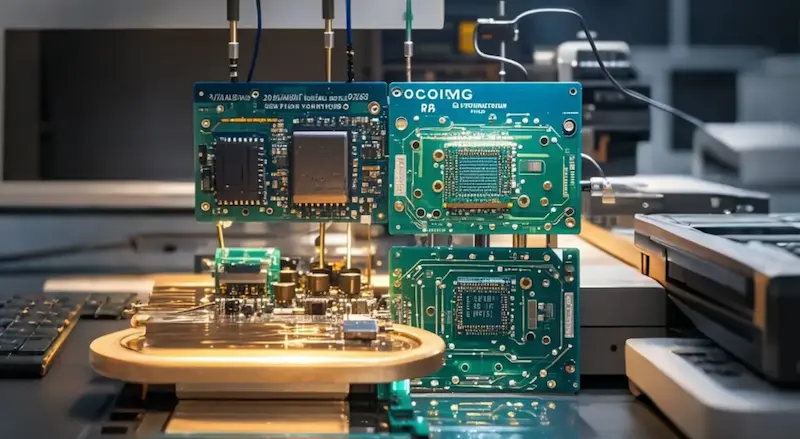
As 5G networks transition toward mmWave frequencies, the margin for error in PCB design has effectively vanished. Achieving reliable signal transmission in dense base station infrastructure demands an uncompromising approach to material selection. In this guide, we break down the complex relationship between dielectric properties and copper profiles to help you engineer for maximum performance and long-term network reliability.
The Critical Impact of Dielectric Constant (Dk) Stability

The Physics of Dk Stability in mmWave Applications
In 5G base station architectures, the dielectric constant (Dk) is not a static value; it is a dynamic property sensitive to both frequency and thermal shifts. As base stations move into the mmWave spectrum (24GHz to 100GHz), even infinitesimal fluctuations in Dk translate into significant phase velocity errors. Because 5G beamforming relies on precise phase synchronization across multi-element antenna arrays, a shift in Dk can cause beam squint, where the signal energy is misdirected away from the intended user, leading to catastrophic degradation in spectral efficiency.
Comparing Material Stability Factors
| Parameter | Impact on Signal | Requirement for 5G |
|---|---|---|
| Dk/Temp Coefficient | Frequency shift over thermal cycles | Near-zero (TCDk < 20 ppm/C) |
| Dk vs. Frequency | Impedance mismatch at high bands | Flat response up to 80GHz |
| Moisture Absorption | Dk increase leading to phase lag | Low (<0.05% weight gain) |
Frequency Dependencies and Thermal Management
Base stations operate in harsh outdoor environments, subjecting PCB laminates to extreme thermal cycling. A laminate that exhibits high Temperature Coefficient of Dielectric Constant (TCDk) will experience a change in its effective Dk as the hardware heats up, directly affecting the phase length of microstrip lines. To maintain beamforming accuracy, engineers must prioritize laminates with high dimensional stability and low TCDk, ensuring that the propagation delay remains constant regardless of the ambient temperature.
Common Concerns Regarding Dk Consistency
- How does Dk variance affect beamforming?
Variation in Dk across a substrate causes inconsistent phase delays for individual antenna elements, resulting in a distorted beam pattern and reduced gain. - Why is high frequency behavior different from low frequency?
As frequency increases, molecular polarization in the dielectric material changes. If the material composition is not homogeneous, the Dk will drop significantly, causing massive impedance mismatches. - Does copper foil roughness affect effective Dk?
Yes. While Dk is a material property, the roughness of the copper foil increases the path length of the signal, creating a 'skin effect' that makes the effective Dk appear higher, necessitating ultra-low profile copper for mmWave.
Understanding Dissipation Factor (Df) and Signal Loss

The Role of Df in High-Frequency Signal Loss
Dissipation Factor, often referred to as loss tangent (tan δ), represents the measure of electromagnetic energy lost as heat within the dielectric material of a PCB. In the context of 5G infrastructure, where signal frequencies reach mmWave bands (24 GHz to 71 GHz and beyond), even minor energy absorption significantly degrades signal strength over trace lengths. Minimizing Df is therefore the primary mechanism for mitigating insertion loss, allowing designers to maintain the power budget necessary for complex modulation schemes.
Df Impact on Transmission Lines
As frequencies increase, the dielectric loss becomes a dominant component of total attenuation, frequently exceeding conductor loss caused by the skin effect. Engineers must select laminates with ultra-low Df values to ensure that the transmitted signal reaches the receiver with sufficient amplitude and minimal bit-error rate (BER). High-performance laminates engineered for 5G typically feature Df values below 0.002, which is vital for maintaining high-quality RF signal propagation across long backplane traces or dense antenna arrays.
| Laminate Class | Typical Df @ 10 GHz | Primary 5G Application |
|---|---|---|
| Standard FR-4 | 0.015 - 0.020 | Low-frequency control logic |
| High-Speed Mid-Loss | 0.005 - 0.008 | Sub-6 GHz infrastructure |
| Ultra-Low Loss PTFE/Ceramic | 0.001 - 0.002 | mmWave front-end modules |
Frequently Asked Questions
- Does Df change with frequency?
Yes, Df is frequency-dependent. Selecting a laminate requires verifying the Df value at the specific operating frequency of the 5G band, as values often rise significantly in the mmWave spectrum. - Why is PTFE preferred for low Df?
PTFE (Polytetrafluoroethylene) composites inherently possess a very stable and low molecular dielectric loss, making them the industry standard for minimizing signal attenuation in high-frequency 5G applications. - How does Df affect heat dissipation?
Because Df represents energy lost as heat, materials with higher Df values will generate more thermal stress under high-power RF transmission, which can lead to localized board warping or impedance instability.
Selecting the Right Copper Foil Profile

The Relationship Between Profile and Insertion Loss
In 5G base station applications, copper foil profile refers to the surface roughness of the foil interface. As signal frequencies increase, the skin effect causes current to concentrate at the outer surface of the copper trace. If the copper-to-dielectric interface is rough, the effective path length of the signal increases, leading to significantly higher insertion loss. Engineers must choose profiles that minimize this roughness without compromising the mechanical bond strength necessary for PCB reliability.
| Foil Type | Roughness Level | Insertion Loss | Peel Strength |
|---|---|---|---|
| Standard (STD) | High | Highest | Excellent |
| Low Profile (LP) | Moderate | Moderate | Good |
| Very Low Profile (VLP) | Low | Low | Adequate |
| Ultra-Low Profile (U-VLP) | Minimal | Lowest | Challenging |
Frequently Asked Questions Regarding Copper Selection
- Why is U-VLP foil favored for 5G mmWave designs?
U-VLP foil significantly reduces the surface resistance caused by the skin effect at frequencies above 20 GHz, directly improving signal integrity and reducing overall channel attenuation. - What is the primary risk of using ultra-low-profile copper?
The smoother surface provides less mechanical interlocking with the laminate, which can result in lower copper peel strength and an increased risk of trace lifting during thermal cycling or high-temperature soldering processes. - How do I balance loss and adhesion?
Select a laminate vendor that uses chemical bonding agents or silane treatments, which compensate for the lack of mechanical roughness by creating a superior chemical bond between the smooth copper and the substrate.
Thermal Management and Coefficient of Thermal Expansion (CTE)
Thermal Management in Outdoor Infrastructure
Base station infrastructure is subject to significant thermal stress caused by high-power density components, high-frequency operation, and harsh, variable outdoor climates. For 5G applications, thermal management is not just about heat dissipation; it is about preventing delamination, barrel cracking, and impedance shifts caused by inconsistent material expansion. High-frequency laminates must exhibit a low Coefficient of Thermal Expansion (CTE) to ensure that the printed circuit board assembly remains dimensionally stable throughout the lifecycle of the base station.
Understanding the Role of CTE in Reliability
The CTE represents the rate at which a material expands when heated. In a multilayer board, if the laminate's CTE does not closely match the copper foil's CTE (approx. 17 ppm/°C), the mismatch induces internal stress on plated through-holes (PTHs). This stress often leads to micro-cracking during rapid temperature fluctuations typical of desert or arctic deployments.
| Material Property | Impact on Reliability | Design Consideration |
|---|---|---|
| Low CTE (X/Y) | Maintains dimensional stability for alignment. | Critical for high-density interconnects. |
| Low CTE (Z-axis) | Reduces stress on copper plating in holes. | Essential for thick boards and multi-layer stacks. |
| High Thermal Conductivity | Lowers localized component temperature. | Reduces thermal fatigue over time. |
Frequently Asked Questions
- Why is Z-axis CTE more important than X/Y-axis CTE?
Z-axis CTE is critical because it dictates how much the board thickness changes under heat, directly impacting the integrity of the vertical interconnects (vias). Excessive Z-axis expansion frequently leads to barrel cracking in high-layer count boards. - Does thermal conductivity mitigate CTE issues?
While thermal conductivity helps remove heat faster, reducing the peak operating temperature, it does not change the fundamental CTE property. You still require a low CTE laminate to handle the inherent delta between ambient cold and peak operational heat. - How can I check if my laminate is suitable for outdoor use?
Look for laminates with a Glass Transition Temperature (Tg) significantly higher than the peak expected operating temperature and request the CTE values for both below and above the Tg to calculate potential strain across the operating window.
Compliance with 5G Industry Standards
The Role of IPC Standards in 5G Infrastructure
Selecting the right laminate requires strict adherence to industry benchmarks, primarily defined by the IPC (Association Connecting Electronics Industries). For 5G base stations, compliance is centered on high-speed signal integrity and thermal robustness, requiring laminates that meet or exceed IPC-4101 standards for slash sheets related to high-frequency and high-speed applications.
Key Compliance Metrics and Standards
| Standard Category | Key Specification | Impact on 5G Performance |
|---|---|---|
| IPC-4101 | Dk/Df Stability | Ensures consistent impedance and minimal signal attenuation. |
| IPC-TM-650 | Thermal Stress Testing | Validates reliability under cyclic outdoor temperature swings. |
| IPC-6012 | Rigid PCB Quality | Defines structural integrity and interconnection reliability. |
Addressing Regulatory and Reliability Requirements
- Why is RoHS/REACH compliance non-negotiable?
Base station infrastructure is subject to international environmental regulations; all selected high-frequency laminates must be free of restricted hazardous substances like PBBs and PBDEs to qualify for global deployment. - How does moisture absorption impact compliance?
IPC standards dictate low moisture absorption rates, which is vital for outdoor base stations; high moisture ingress can shift the dielectric constant (Dk), causing impedance mismatch and failing signal integrity tests. - What is the importance of UL 94-V0 rating?
This flammability standard is mandatory for base station electronics to ensure that materials self-extinguish in the event of thermal runaway, providing an essential safety barrier for active hardware components.
Ultimately, compliance serves as the baseline for performance. Engineers should prioritize laminate datasheets that explicitly document compliance with the latest IPC-4101 test methods, specifically targeting Dk/Df consistency across 5G frequency bands (sub-6 GHz and mmWave). Choosing materials that deviate from these standards may result in premature field failures and non-compliance with regional telecommunications regulatory bodies.
Moisture Absorption and Long-term Impedance Control
For 5G base station deployments, environmental resilience is as vital as electrical performance. Moisture absorption directly impacts the dielectric constant (Dk) and dissipation factor (Df) of a substrate because water has a Dk of approximately 80. Even trace amounts of moisture trapped within the laminate can cause significant impedance shifts, phase instability, and increased insertion loss, potentially leading to catastrophic network downtime in outdoor environments.
The Impact of Humidity on Impedance Stability
When a laminate absorbs moisture, the effective permittivity of the signal path increases. This lowers the characteristic impedance of transmission lines, leading to impedance mismatches. In high-frequency 5G mmWave circuits, these mismatches create signal reflections and amplitude fluctuations that compromise throughput and signal integrity.
| Parameter | Effect of Moisture Ingress | Network Consequence |
|---|---|---|
| Dielectric Constant (Dk) | Increases significantly | Impedance mismatch and signal reflection |
| Dissipation Factor (Df) | Increases (Higher loss) | Increased attenuation of high-frequency signals |
| Phase Stability | Phase delay shift | Beamforming errors in massive MIMO arrays |
Material Selection and Mitigation Strategies
- How does low moisture absorption factor into laminate selection?
Engineers should prioritize PTFE-based or advanced hydrocarbon laminates with low moisture absorption rates (typically < 0.1%). These materials prevent the dielectric from absorbing atmospheric humidity, ensuring the Dk remains constant over the device's service life. - Why is surface treatment important?
High-quality surface finishes and moisture-resistant solder masks act as a barrier. For outdoor 5G units, the use of hydrophobic coatings or specialized resin systems can further inhibit moisture ingress at the laminate edges. - Does frequency play a role in moisture sensitivity?
Yes, as frequencies reach mmWave bands, the wavelength decreases significantly. Smaller changes in Dk caused by humidity result in larger phase shifts, making moisture management exponentially more critical in 28GHz and 39GHz applications.
To ensure long-term reliability in the field, specify materials that demonstrate stable dielectric properties under controlled humidity testing (such as IPC-TM-650). Choosing laminates with an inherently low hygroscopic nature remains the most effective defense against the harsh, fluctuating environmental conditions faced by 5G base stations.
Cost-Performance Trade-offs in Material Selection
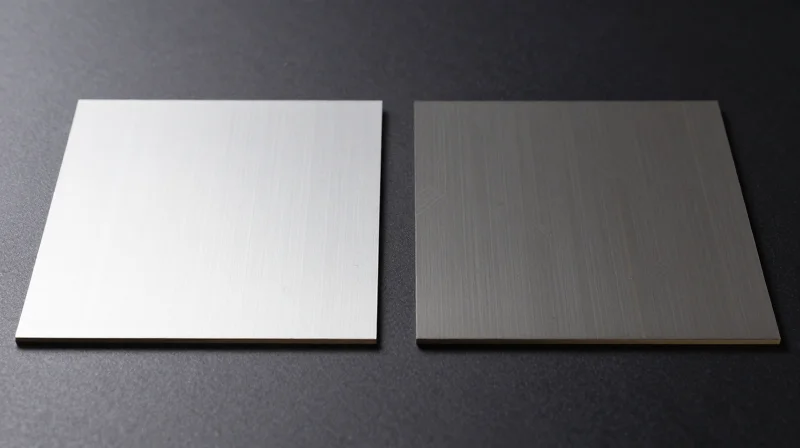
Selecting high-frequency PCB laminates for 5G infrastructure often pits advanced electrical performance against budget constraints. The industry-standard strategy involves identifying the 'minimum viable dielectric'—selecting a material that satisfies your specific signal integrity and thermal requirements without over-specifying performance characteristics that result in diminishing returns. Engineers must evaluate the total cost of ownership, accounting not just for the laminate price, but for potential yield losses, thermal management requirements, and long-term maintenance costs associated with signal degradation in outdoor environments.
Strategic Material Classification
| Material Category | Cost Profile | Performance Tier | Typical Use Case |
|---|---|---|---|
| Standard Epoxy | Low | Basic/Entry | Sub-6 GHz low-density coverage |
| Filled Hydrocarbon | Moderate | Mid-Range | Macro base stations, Mid-Band 5G |
| PTFE/Ceramic | High | High-Frequency/mmWave | High-capacity beamforming arrays |
Key Trade-off Considerations
- Is the lowest loss tangent always necessary?
No. While ultra-low loss (Df) is critical for mmWave frequencies, it may be an unnecessary expense for sub-6 GHz applications where standard high-speed materials suffice. - How does reliability impact long-term cost?
Premium materials with lower CTE and better moisture resistance significantly reduce the total cost of ownership by extending the operational lifespan of base stations in harsh, outdoor field environments. - Do manufacturing complexities affect cost?
Yes. Advanced materials often require specialized fabrication processes, such as plasma etching or unique drill parameters, which increase per-board processing costs beyond the raw laminate price.
To achieve an optimal cost-performance balance, designers should adopt a modular approach to stack-up design. Utilizing hybrid boards—where expensive high-frequency materials are reserved for critical signal layers and more cost-effective FR-4 or standard high-speed laminates are used for grounding or non-critical layers—can result in substantial material savings without compromising the system's overall RF integrity.
Best Practices for Prototyping and Validation
Bridging Simulation and Reality
The validation process must begin with high-fidelity electromagnetic (EM) modeling that incorporates accurate Dk and Df values provided by laminate manufacturers. Relying on generic library values often leads to resonance shifts and impedance mismatches during production. Before committing to high-cost fabrication, engineers should perform sensitivity analyses on laminate thickness tolerances and copper surface roughness, as these factors significantly influence insertion loss at millimeter-wave frequencies.
Validation Workflow Comparison
| Validation Stage | Primary Goal | Key Metric |
|---|---|---|
| Virtual Modeling | Predict SI/PI behaviors | Return Loss (S11) |
| Coupon Testing | Verify material properties | Dielectric Constant (Dk) |
| HALT/HASS | Assess long-term reliability | Impedance Stability |
Iterative Testing Protocols
Physical validation should prioritize the creation of test coupons that mirror the actual stack-up and copper distribution of the 5G base station board. By using TDR (Time Domain Reflectometry) measurements on these coupons, teams can quantify impedance variations caused by the manufacturing process. These empirical findings should then be fed back into the simulation tools to recalibrate the model, creating a closed-loop design cycle that minimizes costly re-spins.
Common Validation Questions
- Why is copper roughness analysis critical?
At 28GHz and above, the skin effect concentrates current near the copper surface. Even microscopic surface roughness can substantially increase insertion loss, making simulation inaccurate if not modeled correctly. - How do I validate environmental durability?
Use Highly Accelerated Life Testing (HALT) to cycle boards through temperature extremes and humidity. Measure impedance before and after cycles to ensure the laminate's dielectric constant remains stable. - When is a prototype considered successful?
A prototype is successful when measured S-parameters deviate from simulation by less than 0.5 dB across the target frequency band, and impedance control remains within a +/- 5% tolerance.
Selecting the right PCB laminate is the cornerstone of robust 5G infrastructure. By carefully evaluating dielectric stability and copper profiles against your specific frequency needs, you ensure your design survives the rigorous demands of next-generation networks. Ready to elevate your next project? Contact our engineering team today for a technical consultation on the best materials for your specific RF application.