
In the world of medical infusion pump technology, the margin for error is non-existent. A single board failure can have catastrophic implications, making the selection of a PCB manufacturing partner a high-stakes decision. This guide breaks down the essential technical and regulatory benchmarks required to ensure your control systems are built to withstand the rigors of clinical use.
Prioritizing ISO 13485 Certification and Beyond

The Non-Negotiable Standard: ISO 13485
For infusion pump control systems, where failure can result in fatal medication errors, ISO 13485 is more than a quality badge—it is a rigorous framework for risk-based manufacturing. This standard requires manufacturers to demonstrate a robust Quality Management System (QMS) specifically tailored to the medical device lifecycle. Partnering with an ISO 13485-certified PCB provider ensures that every step, from design for manufacturing (DFM) and raw material traceability to cleanroom assembly and final verification, adheres to documented, repeatable processes that meet international regulatory demands.
Why Quality Management Systems Matter in Infusion Technology
| Component Quality Aspect | Risk if Non-Compliant | ISO 13485 Mitigation Strategy |
|---|---|---|
| Traceability | Difficulty in identifying faulty batches during recalls | End-to-end documentation from component procurement to final ship |
| Process Validation | Inconsistent soldering and board reliability | Strict validation of manufacturing parameters and operator training |
| Risk Management | Unforeseen hardware failure under stress | Integration of ISO 14971 risk management within the production workflow |
Certification and Beyond: Essential Considerations
- Does ISO 13485 cover all medical device requirements?
While ISO 13485 is the cornerstone for QMS, manufacturers must also demonstrate compliance with IPC Class 3 standards for high-reliability electronics to ensure the long-term performance of infusion pump circuitry. - How does this impact the supply chain?
Certified manufacturers maintain validated supplier lists, preventing the risk of counterfeit components, which is a critical threat to the safety of medical-grade hardware. - Is facility cleanliness a factor?
Yes. Beyond certification, you must evaluate their ESD control and cleanroom capabilities; high-precision pumps require contamination-free environments to prevent dendrite growth and microscopic shorts.
Supply Chain Transparency and Component Traceability
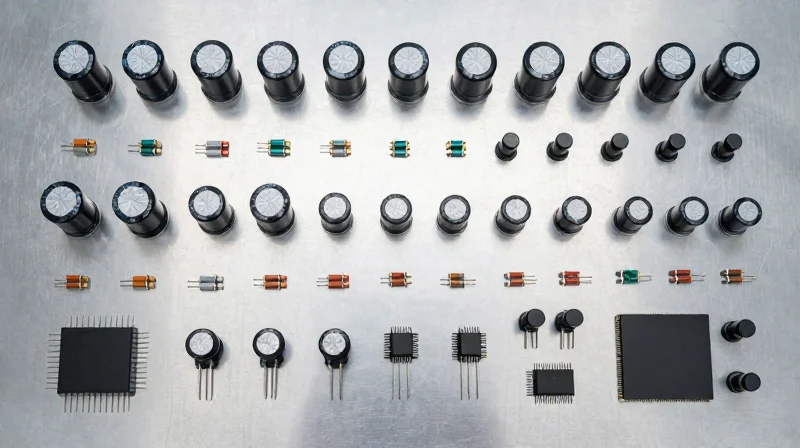
For life-critical infusion systems, the PCB is only as reliable as its weakest component. Manufacturers must implement a rigorous traceability program that tracks every capacitor, resistor, and integrated circuit from procurement through assembly to the final serialized device. This level of granular oversight ensures that if a component batch is recalled or exhibits failure, you can identify exactly which infusion pumps are affected, thereby minimizing patient risk and regulatory liability.
Mitigating Counterfeit Component Risks
The medical electronics market is increasingly targeted by counterfeiters. To combat this, your PCB partner must adhere to AS6171 or similar standards for detecting non-conforming parts. Verification should include visual inspection, X-ray testing, and solvent testing for remarking or resurfacing indicators on high-risk active components.
| Risk Factor | Mitigation Strategy | Expected Documentation |
|---|---|---|
| Unauthorized Brokers | Authorized Distributor Policy | Certificate of Conformance |
| Component Degradation | MSL (Moisture Sensitivity Level) Tracking | Baking Logs and Humidity Data |
| Unknown Origin | Full Chain-of-Custody Auditing | Manufacturer Lot/Date Code Records |
Implementing End-to-End Traceability
True traceability requires a digital thread that links specific component lots to specific PCB assemblies. By implementing a Manufacturing Execution System (MES) that scans component barcodes against the Bill of Materials (BOM) during the SMT placement process, the manufacturer creates an immutable record for every device produced.
- How does MES integration improve patient safety?
MES ensures that only validated, traceable parts enter the assembly line, preventing unverified or substitute components from being integrated into the pump control system. - What should I ask regarding component storage?
Ask for their ESD-safe facility protocols and MSL environmental controls, as improper storage can lead to silent component failures that are not immediately detectable during initial testing. - How do I verify the manufacturer's supply chain transparency?
Conduct an onsite audit focusing on their incoming material inspection process and demand to see a 'cradle-to-grave' report for a sample production run of similar medical devices.
Advanced Testing and Inspection Methodologies
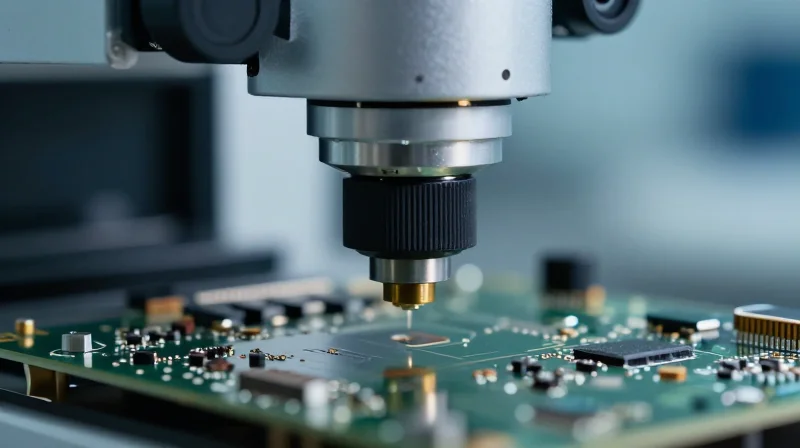
Advanced Testing and Inspection Methodologies
Reliability in medical infusion pump control systems hinges on the manufacturer's ability to detect microscopic solder defects and latent circuit faults before they reach the clinical environment. Because pump controllers often utilize high-density interconnects and miniaturized components, traditional testing methods fall short. Implementing a multi-layered inspection strategy—encompassing automated optical, radiographic, and electrical testing—is mandatory to mitigate the risk of intermittent failures that could lead to medication delivery errors.
Comparison of Critical Inspection Technologies
| Methodology | Target Defect | Application in Medical PCBs |
|---|---|---|
| Automated Optical Inspection (AOI) | Surface mount component placement, polarity, solder fillets | High-speed detection of assembly errors on top/bottom sides |
| Automated X-Ray Inspection (AXI) | BGA/QFN solder voids, hidden shorts, internal layer alignment | Verification of hidden solder joints beneath dense IC packages |
| In-Circuit Testing (ICT) | Electrical continuity, resistance, shorts, passive component values | Validating specific circuit path integrity on complex control boards |
Frequently Asked Questions on Inspection Protocols
- Why is AXI mandatory for infusion pump PCBs?
Modern controllers frequently use Ball Grid Array (BGA) components. Standard optical inspection cannot verify the integrity of these hidden solder balls; AXI is the only way to detect internal voids that could cause intermittent failures over time. - Is Functional Testing a substitute for In-Circuit Testing?
No. While functional testing evaluates the overall system performance, ICT pinpoints specific component-level failures. For medical device reliability, performing both ensures that the board not only works as intended but is built to last under various electrical loads. - How does manufacturer data reporting improve quality control?
A high-precision manufacturer should provide detailed defect reports and SPC (Statistical Process Control) charts. This transparency allows you to identify trends in manufacturing yields, enabling predictive maintenance on your assembly line.
Design for Manufacturing (DFM) for Medical Precision

Integrating DFM Early to Mitigate Lifecycle Risks
Collaborating with a PCB manufacturer during the initial design phase—rather than after the board layout is complete—is the most effective strategy to prevent costly revisions. For medical infusion pump control systems, this early engagement ensures that critical design constraints, such as trace impedance control, thermal relief patterns, and component footprint optimization, are addressed before mass production begins.
DFM Considerations for Medical Hardware
| Design Factor | Medical Impact | DFM Action |
|---|---|---|
| Thermal Management | Prevent component drift | Define thermal vias and copper weight early |
| Signal Integrity | Maintain accurate dosage | Simulate impedance and crosstalk thresholds |
| Component Clearance | Ensure assembly reliability | Optimize pick-and-place nozzle access |
Frequently Asked Questions
- How does early DFM improve signal integrity?
Early collaboration allows the manufacturer to review layer stack-up and trace routing. This ensures that sensitive analog sensor signals—vital for pump flow rates—are isolated from high-speed digital noise. - Can DFM help with thermal stress?
Yes. By discussing heat sink placement and copper pour strategies during the design review, you minimize hot spots that lead to solder joint fatigue in portable medical devices. - What is the primary benefit of a DFM review?
The primary benefit is the reduction of 'hidden' costs. By refining the design for manufacturability, you avoid expensive board spins, speed up the transition to production, and increase overall system reliability.
Cleanroom Standards and Contamination Control
The Vital Role of Cleanroom Environments
For infusion pump control systems, even microscopic particulates—such as skin cells, dust, or residual flux—can cause latent failures in high-precision circuits. A manufacturer must provide a controlled environment that minimizes environmental stressors, ensuring that sensitive components are not exposed to contaminants that lead to short circuits, dendrite growth, or long-term reliability degradation.
Comparing Cleanliness Standards
| Requirement Level | ISO Class Standard | Application in Medical PCB Assembly |
|---|---|---|
| Standard Assembly | ISO 8 (Class 100,000) | General electronics with basic filtration. |
| High-Precision Medical | ISO 7 (Class 10,000) | Required for medical-grade infusion systems. |
| Critical Implantable | ISO 6 (Class 1,000) | Specialized assembly requiring minimal debris. |
Contamination Prevention Protocols
- How do you verify a manufacturer's cleanroom claims?
Always request current ISO certification documentation and recent air particle count audit reports to verify that their environment meets the stated classification. - What is the importance of 'No-Clean' versus 'Water-Soluble' flux?
While 'no-clean' flux is efficient, medical-grade manufacturers often utilize 'water-soluble' processes followed by rigorous ionic contamination testing to ensure absolute board hygiene. - What preventative measures should operators take?
Standard protocols must include static-dissipative smocks, hairnets, gloves, and mandatory air-shower entry systems to prevent human-borne contaminants from entering the assembly floor.
Monitoring and Validation
Beyond physical cleanroom ratings, you must evaluate the manufacturer’s monitoring processes. Look for regular surface swabbing, ion chromatography testing to detect chemical residues, and real-time particle monitoring equipment. If a manufacturer cannot provide a data trail for their environmental control, they are unsuitable for the high-precision requirements of life-critical medical devices.
Long-Term Reliability and Lifecycle Management
Mitigating Obsolescence Risk in Life-Critical Systems
For infusion pump control systems, selecting a PCB manufacturer that operates with a proactive lifecycle management strategy is non-negotiable. Medical devices often have life cycles spanning a decade or more, far outstripping the typical availability of commercial-grade electronic components. A capable manufacturing partner must implement robust component traceability and supply chain monitoring to detect End-of-Life (EOL) notices before they impact production.
Strategies for Lifecycle Sustainability
| Strategy | Implementation Method | Benefit to Medical OEMs |
|---|---|---|
| Proactive Monitoring | PCN/EOL tracking services | Early warning for redesigns |
| Last-Time-Buy (LTB) | Strategic inventory warehousing | Prevents immediate production halts |
| Form-Fit-Function | Design validation for substitutes | Reduces recertification needs |
Frequently Asked Questions on Reliability Management
- How does component substitution impact FDA/MDR re-validation?
Any change to a critical component requires an impact assessment; choosing a manufacturer with deep experience in medical documentation ensures that technical files are updated to support seamless regulatory submission for component changes. - What role does thermal management play in long-term reliability?
Infusion pumps generate localized heat; a reliable manufacturer performs thermal mapping to ensure that trace geometries and component placements minimize thermal aging, which otherwise leads to premature solder joint failure. - Can a manufacturer guarantee availability for 10+ years?
While component manufacturers control individual parts, your EMS partner should provide 'bridge-to-redesign' services, maintaining high-reliability inventory buffers and assisting with PCB re-spins when necessary.
Evaluating Financial Stability and Operational Capacity
Ensuring Long-Term Continuity Through Financial Stability
The medical device lifecycle often spans a decade or more, requiring a manufacturing partner with the financial liquidity to weather market fluctuations. A stable manufacturer ensures that resources for quality control, staff training, and equipment upgrades remain consistent, mitigating the risk of sudden insolvency disrupting your infusion pump production lines.
Operational Capacity and Scalability Metrics
Evaluating capacity is not merely about current output; it is about the ability to scale seamlessly when market demand spikes. A robust partner must demonstrate both advanced automation and the workforce agility necessary to maintain precision tolerances in high-volume environments.
| Capacity Indicator | Why It Matters for Infusion Pumps | Target Metric |
|---|---|---|
| Facility Throughput | Ensures consistent delivery during clinical demand surges. | N+20% Spare Capacity |
| Equipment Redundancy | Prevents total line stoppages if a SMT machine fails. | Dual-Line Capability |
| Automation Level | Reduces human error in high-precision soldering. | High-Speed Pick-and-Place |
Operational Due Diligence FAQ
- How do I verify a manufacturer's financial health?
Request audited financial statements or credit reports and evaluate their investment history in new technologies. A consistent pattern of capital expenditure usually indicates a healthy, forward-looking organization. - What role does supply chain transparency play?
Your manufacturer must provide visibility into their tier-two suppliers. Lack of knowledge regarding sub-tier sourcing is a major risk factor for supply chain volatility in medical electronics. - How can I assess if they can handle complex medical assemblies?
Look for specific certifications such as ISO 13485 and evaluate their historical experience with high-density interconnect (HDI) boards typical in modern infusion pumps.
Communication and Technical Support Alignment
The Necessity of Transparent Communication Loops
In the development of life-critical medical devices, silence is the greatest risk to production timelines. A superior PCB manufacturer integrates directly with your engineering team, utilizing transparent project management platforms to provide real-time updates on status, potential design-for-manufacturing (DFM) conflicts, and procurement bottlenecks. This proactive transparency prevents minor assembly issues from cascading into regulatory compliance failures.
Support Models: Dedicated vs. Ticket-Based
| Support Type | Responsiveness | Technical Depth | Best Use Case |
|---|---|---|---|
| Dedicated Liaison | Immediate | High (Embedded Engineering) | Rapid Prototyping/R&D |
| Account Portal/Ticket | 24-48 Hours | Low (Transactional) | Established Production |
Technical Support During Production Ramp-Up
Transitioning from a working prototype to high-volume production of infusion pump control systems requires more than just machine time; it demands technical collaboration. The right manufacturer provides on-site or virtual engineering support to address yield variability, component variability, and calibration challenges that only emerge at scale.
- How does technical support impact regulatory auditing?
Responsive manufacturers provide detailed documentation packages, including First Article Inspection (FAI) reports and Material Certifications, which are essential for FDA or CE marking audits. - What should be expected from engineering collaboration?
Expect consistent DFM feedback, assistance with thermal management simulations, and collaborative troubleshooting for signal integrity issues critical to infusion pump precision. - Why is real-time notification critical for medical devices?
Changes in supply chain or process deviations can trigger mandatory regulatory reassessments; immediate communication allows teams to mitigate issues before they impact the final, certified unit.
Selecting the right PCB manufacturing partner is not merely a vendor procurement task; it is a critical investment in patient safety. By prioritizing certified expertise and robust quality controls, you safeguard your device's reputation and clinical performance. Contact our engineering team today for a technical consultation to see how we uphold the highest standards for medical-grade electronic assemblies.
