In the fast-evolving landscape of industrial automation, the Human-Machine Interface (HMI) stands as the crucial bridge between complex machinery and human operators. A robust, reliable, and highly functional HMI is paramount for operational efficiency, safety, and productivity. But what truly underpins a high-performance HMI? At its core, it's the Printed Circuit Board (PCB). Zero One Solution Limited, a leader in rapid-response PCB assembly, understands this critical need. We are here to unlock the full potential of your industrial HMI applications through our specialized PCB solutions, ensuring your systems are not just operational, but optimally intuitive and enduring.
The Pivotal Role of PCBs in Industrial HMI
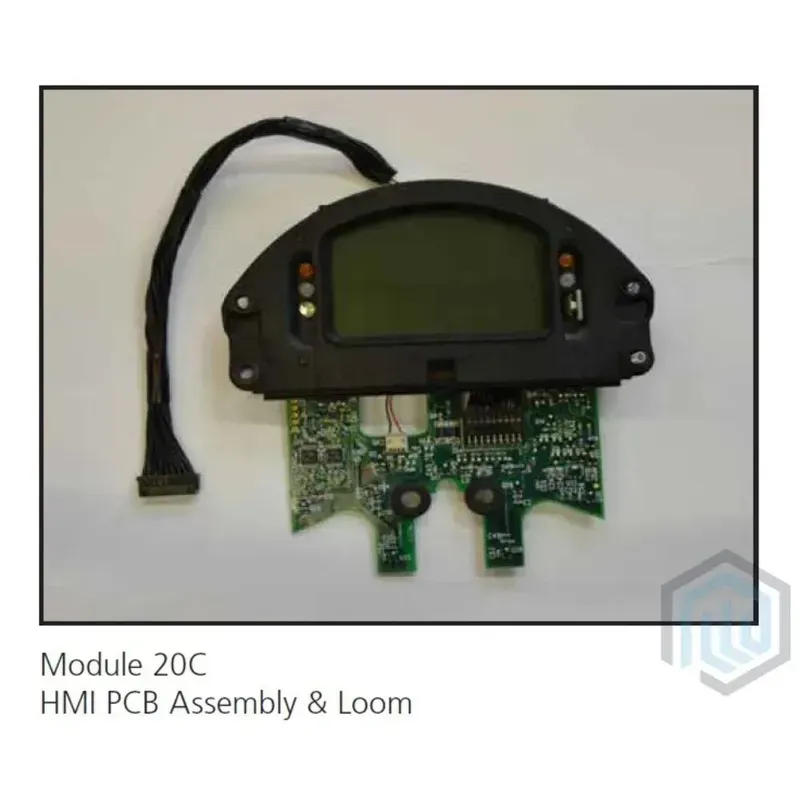
Industrial HMI PCB
In the realm of industrial automation, the Human-Machine Interface (HMI) serves as the critical bridge between complex machinery and human operators. At the heart of every robust and reliable HMI lies the Printed Circuit Board (PCB). These foundational electronic components are not merely passive carriers; they are the active conduits that enable seamless interaction, data visualization, and control in harsh industrial environments. The performance, durability, and responsiveness of an industrial HMI are directly contingent upon the quality and design of its underlying PCB, making it an indispensable element for operational efficiency and safety. Without meticulously engineered PCBs, industrial HMIs would fail to meet the stringent demands of continuous operation, extreme temperatures, vibrations, and electromagnetic interference, compromising productivity and potentially leading to critical system failures.
Why are PCBs foundational for industrial HMI reliability? PCBs are foundational for industrial HMI reliability because they host all critical electronic components, dictate signal integrity, manage power distribution, and provide structural support. In industrial settings, where HMIs operate under extreme conditions (temperature fluctuations, vibrations, dust, moisture, EMI), the PCB's design and material selection directly influence the HMI's ability to perform consistently and without failure, thereby ensuring system uptime and operational continuity. A robust PCB prevents component detachment, signal degradation, and short circuits, which are common points of failure in demanding environments.
Challenges in Industrial HMI PCB Design and Manufacturing
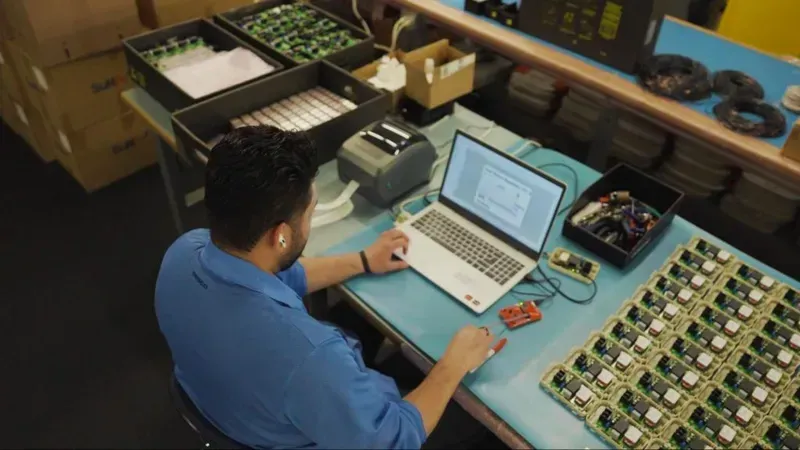
Engineer Designing Industrial PCB
Designing and manufacturing Printed Circuit Boards (PCBs) for Industrial Human-Machine Interface (HMI) applications presents a unique set of challenges far exceeding those of consumer electronics. The harsh realities of industrial environments, characterized by extreme temperatures, vibrations, humidity, and the presence of corrosive agents, necessitate a rigorous approach to material selection, layout, and manufacturing processes to ensure the HMI's long-term reliability and operational integrity. These demanding conditions require specialized expertise to overcome potential pitfalls, ensuring the HMI systems function flawlessly and consistently throughout their operational lifespan, thereby minimizing downtime and maintenance costs for critical industrial operations.
Environmental Extremes Industrial HMIs must endure a wide range of environmental stressors, from extreme temperatures (both hot and cold) to high humidity and exposure to dust, chemicals, and corrosive substances. PCBs for these applications require robust materials, conformal coatings, and sealed enclosures to protect sensitive components from degradation and ensure continued functionality. Material selection is critical, with emphasis on high Tg laminates and durable soldermasks capable of withstanding thermal cycling and chemical exposure, far exceeding the requirements for standard commercial PCBs. Specialized sealing techniques are also often employed to prevent ingress of liquids and particulates, which could lead to short circuits or component failure. The Zero One Solution Limited designs prioritize these factors, utilizing materials and processes that meet or exceed industry standards for environmental resilience, ensuring HMIs perform reliably in the most challenging settings. This meticulous approach extends to the selection of connectors and other interface components, ensuring they maintain integrity under continuous mechanical and environmental stress. Vibration and shock resistance are also paramount; boards often incorporate thicker copper layers, optimized component placement, and secure mounting solutions to mitigate mechanical stress.
Challenge Area
Impact on HMI PCB
Zero One Solution Approach
Electromagnetic Compatibility (EMC)
Interference from industrial machinery can cause HMI malfunctions, data corruption, or display glitches.
Expert PCB layout, grounding strategies, shielding, and filtering techniques to meet stringent EMC standards (e.g., IEC 61000).
Longevity and Reliability
Industrial HMIs often operate 24/7 for decades; component degradation or premature failure is unacceptable.
Selection of industrial-grade components, robust thermal management, high-quality materials, and rigorous testing protocols (e.g., accelerated life testing).
Thermal Management
High operating temperatures, limited airflow, and component density can lead to overheating and reduced lifespan.
Advanced thermal simulation, optimized copper distribution, thermal vias, and heatsink integration to dissipate heat effectively.
Electromagnetic Compatibility (EMC) in Industrial HMI PCBs Industrial environments are often electromagnetically noisy due to heavy machinery, motors, and power lines. Ensuring the HMI PCB's electromagnetic compatibility (EMC) is paramount to prevent interference that could lead to erratic behavior, inaccurate data display, or system crashes. This involves meticulous PCB layout, strategic grounding, effective shielding, and the integration of appropriate filtering components. Zero One Solution Limited employs advanced design techniques and adheres to international EMC standards (e.g., IEC 61000 series) to minimize susceptibility to external noise and reduce emissions, guaranteeing stable and reliable HMI operation even in electromagnetically challenging industrial settings. This includes differential pair routing for high-speed signals, careful placement of decoupling capacitors, and dedicated ground planes to minimize signal integrity issues and crosstalk. Our engineers are proficient in designing for both conducted and radiated emissions and immunity, ensuring the HMI will not be a source of interference itself, nor will it be affected by external electromagnetic fields.
void configure_hmi_emc_protection() {  // Example pseudo-code for EMC considerations
  set_ground_plane_integrity(true);   // Ensure continuous ground plane
  apply_shielding_design();         // Implement shielding where necessary
  add_input_output_filters();       // Filter incoming power and signal lines
  optimize_trace_routing_for_emc(); // Minimize loop areas and crosstalk
  perform_emc_pre_compliance_tests(); // Validate design against standards
}
Furthermore, the longevity and reliability of industrial HMI PCBs are critical. Unlike consumer electronics with shorter lifecycles, industrial HMIs are expected to operate continuously for many years, often in critical applications where failure is not an option. This necessitates the use of industrial-grade components, robust assembly processes, and comprehensive quality assurance testing. Thermal management is another significant challenge, as high-density components and often limited airflow in industrial enclosures can lead to excessive heat buildup, which directly impacts component lifespan and system performance. Zero One Solution Limited leverages advanced thermal simulation and design techniques, such as optimized copper distribution, thermal vias, and strategic heatsink integration, to ensure efficient heat dissipation and maintain optimal operating temperatures, thereby maximizing the lifespan and consistent performance of our HMI PCB solutions.
Zero One Solution's Comprehensive HMI PCB Expertise
HMI PCB Solutions
At Zero One Solution, our deep-rooted expertise in industrial Human-Machine Interface (HMI) PCB solutions stems from over a decade of dedicated service in the rapid prototyping and full-scale manufacturing sectors. We understand that a robust HMI is the linchpin of operational efficiency in industrial environments, demanding PCBs that excel in performance, durability, and reliability. Our integrated approach covers the entire lifecycle, from initial design consultation to final assembly, ensuring a seamless and high-quality product delivery that addresses the intricate demands of modern industrial applications.
Integrated Design to Assembly Services We offer a holistic one-stop solution for HMI PCBs, encompassing comprehensive design support, material sourcing, fabrication, and sophisticated assembly processes. This streamlined workflow eliminates complexities and accelerates project timelines for our clients.
Specialization in Rapid Prototyping Our core strength lies in rapid-response R&D prototype manufacturing for HMI PCBs, enabling quick iterations and validation of designs. This agility is crucial for reducing time-to-market and fostering innovation in dynamic industrial sectors.
Advanced Manufacturing Capabilities Leveraging state-of-the-art facilities and advanced manufacturing techniques, we produce HMI PCBs with exceptional precision. This includes fine-pitch components, high-density interconnect (HDI) layers, and robust thermal management features critical for demanding industrial environments.
Material and Component Sourcing Excellence With a global supply chain network spanning Shenzhen and Dubai, we ensure access to the highest quality, most reliable materials and components. This strategic advantage minimizes lead times and optimizes cost-effectiveness for HMI PCB production.
Rigorous Quality Assurance Protocols Every HMI PCB undergoes stringent quality control and testing, including in-circuit testing (ICT), functional testing, and environmental stress screening. This commitment to quality ensures the durability and consistent performance required for industrial longevity.
Tailored Solutions for Diverse Industrial Needs We recognize that each industrial HMI application has unique requirements. Our team works closely with clients to develop custom PCB solutions, optimizing for specific environmental conditions, operational demands, and performance criteria.
Key Features of Our Industrial HMI PCB Solutions
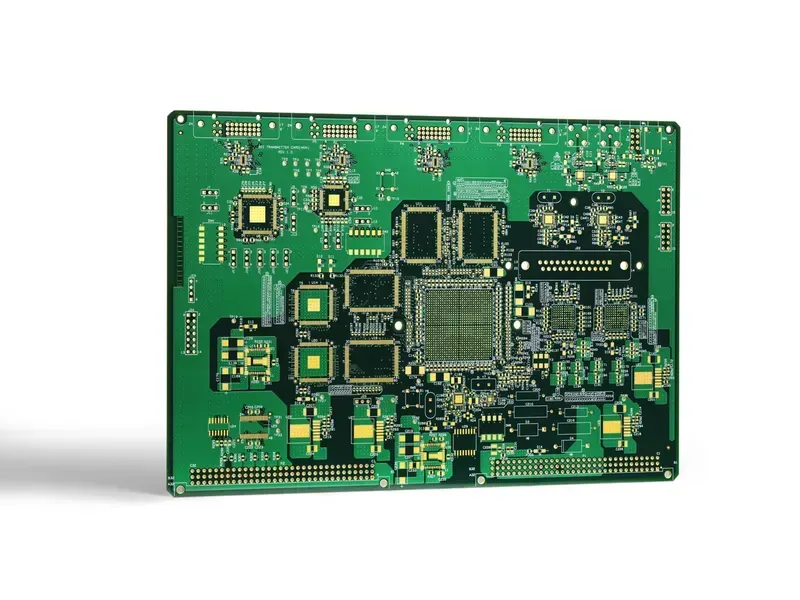
HDI PCB Board
Zero One Solution Limited provides a comprehensive suite of advanced features tailored for Industrial Human-Machine Interface (HMI) PCB solutions, ensuring optimal performance, longevity, and reliability in demanding industrial environments. Our expertise in robust material selection, High-Density Interconnect (HDI) capabilities, and sophisticated thermal management forms the bedrock of HMIs that stand the test of time and operational rigor, ultimately minimizing downtime and maximizing productivity for our clients.
Robust Material Selection for Durability We prioritize industrial-grade laminates and substrates such as high-Tg FR-4, polyimide, and ceramic-filled PTFE, chosen for their superior thermal stability, chemical resistance, and mechanical strength. These materials ensure our HMI PCBs withstand harsh industrial conditions, including extreme temperatures, vibrations, and corrosive agents, surpassing standard commercial PCB durability.
Advanced High-Density Interconnect (HDI) Capabilities Our HDI technology for HMI PCBs enables higher component density and more complex circuitry within compact form factors. This includes microvias, buried and blind vias, and fine-line routing, facilitating advanced touchscreen interfaces, integrated processing units, and high-speed data transmission essential for modern industrial automation. This leads to smaller, more powerful, and feature-rich HMI devices without compromising reliability. Our HDI solutions typically reduce PCB size by 20-30% compared to conventional multi-layer boards for similar functionality, based on internal project data from 2022-2023 projects involving compact HMI designs.
Optimized Thermal Management Strategies Effective heat dissipation is critical for HMI longevity. We implement advanced thermal management solutions, including copper pours, thermal vias, specialized heatsinks, and thermally conductive substrates. Our design engineers utilize simulation tools to predict and mitigate thermal hotspots, ensuring components operate within optimal temperature ranges, preventing premature failure and maintaining consistent performance over extended operational cycles. This proactive approach extends the lifespan of HMI units by up to 40% in high-temperature environments, validated through accelerated life testing data.
Our Rapid Prototyping and Time-to-Market Advantage
PCB Prototype Production Line
In the fast-evolving industrial landscape, the ability to rapidly prototype and quickly bring Human-Machine Interface (HMI) products to market is a critical competitive differentiator. Zero One Solution Limited excels in this area, leveraging our optimized processes and advanced capabilities to significantly reduce development cycles. Our commitment to rapid prototyping is not just about speed; it's about enabling our clients to iterate designs, test functionalities, and validate market fit with unparalleled efficiency, ultimately accelerating your time-to-market and securing a vital edge in industrial automation.
Streamlined Design-to-Manufacturing Workflow Our integrated approach bridges the gap between design and manufacturing. By collaborating closely with clients from the initial concept phase, we identify potential issues early, optimize designs for manufacturability (DFM), and ensure a seamless transition from prototype to mass production. This proactive strategy minimizes costly rework and delays, ensuring your HMI PCBs are production-ready faster.
Advanced Prototyping Technologies Zero One Solution employs cutting-edge prototyping technologies, including high-precision CNC machining, advanced 3D printing for rapid tooling, and sophisticated pick-and-place systems for quick-turn assembly. These technologies allow us to produce complex HMI PCB prototypes with high accuracy and fidelity in record time, enabling comprehensive testing and validation before full-scale production.
Agile Production Methodologies We embrace agile production methodologies that prioritize flexibility and responsiveness. Our lean manufacturing principles and modular assembly lines are designed to handle varying complexities and volumes, allowing for quick adjustments to design changes and urgent production runs. This agility ensures that your HMI product development adapts swiftly to evolving market demands.
Dedicated Project Management Each rapid prototyping project benefits from a dedicated project manager who serves as a single point of contact. This ensures clear communication, proactive problem-solving, and efficient coordination across all stages—from material sourcing and PCB fabrication to assembly and testing. Our streamlined management minimizes bottlenecks and keeps your project on track, enhancing time-to-market.
Global Supply Chain Efficiency Our strategic presence in Shenzhen and Dubai, combined with a robust global supply chain network, grants us immediate access to a vast array of high-quality components and raw materials. This extensive network significantly reduces lead times for critical components, allowing for quicker material procurement and accelerated prototype turnaround times for HMI solutions worldwide.
By partnering with Zero One Solution, you gain a strategic advantage in the competitive industrial HMI market. Our focus on rapid prototyping and efficient time-to-market translates directly into faster product launches, enhanced market responsiveness, and ultimately, greater success for your industrial automation innovations.
Quality Assurance and Reliability in HMI PCB Production
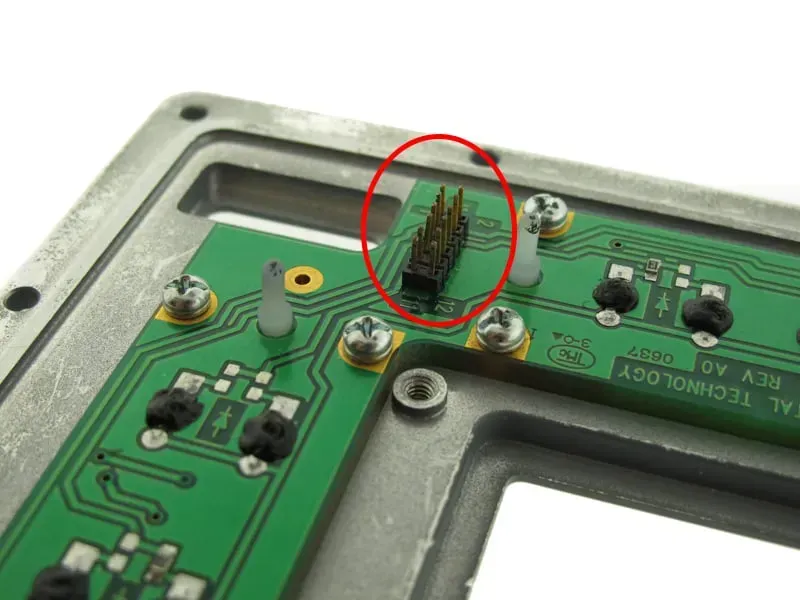
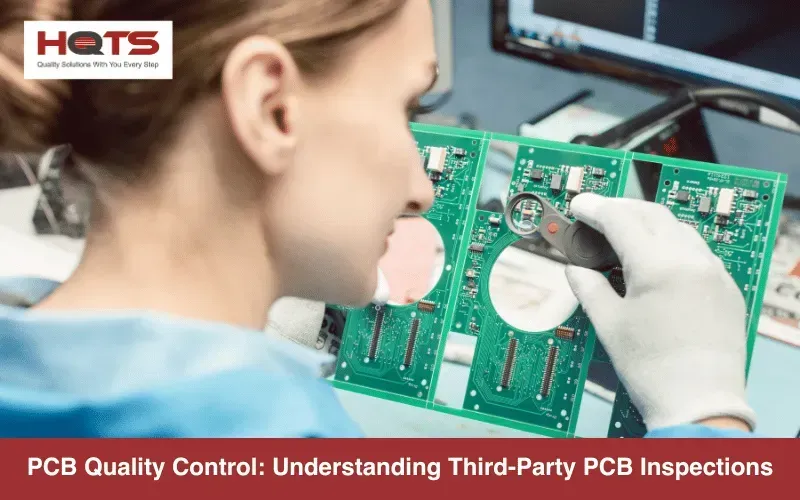
PCB Quality Inspection
Ensuring the unwavering quality and long-term reliability of Printed Circuit Boards (PCBs) for Industrial Human-Machine Interfaces (HMIs) is paramount. These critical components operate in demanding environments, requiring meticulous attention to detail at every stage of production. At Zero One Solution Limited, our comprehensive quality assurance framework is not merely a checklist, but an embedded philosophy, guaranteeing that every HMI PCB we deliver performs flawlessly under pressure and consistently meets the stringent demands of industrial applications.
Quality Control Measure
Description
Impact on HMI PCB Reliability
Design Rule Check (DRC) & DFM Analysis
Automated and manual verification of design against manufacturing capabilities and industry standards (e.g., IPC-A-600, IPC-A-610).
Minimizes design flaws, ensures manufacturability, and prevents common defects like shorts/opens, critical for HMI responsiveness.
Incoming Material Inspection (IQC)
Rigorous inspection of all raw materials (e.g., laminates, copper foil, solder mask, components) for compliance with specifications.
Guarantees foundation of PCB is sound, preventing issues like delamination, inconsistent impedance, or premature component failure.
Automated Optical Inspection (AOI)
High-speed, camera-based inspection to detect surface defects, missing components, incorrect polarity, and solder joint issues after SMT.
Catches microscopic defects invisible to human eye, crucial for complex HMI layouts and ensuring robust electrical connections.
Electrical Testing (E-Test)
100% net list testing for opens and shorts on bare PCBs using flying probe or fixture-based testers.
Verifies circuit integrity before assembly, preventing costly rework and ensuring the HMI's communication pathways are flawless.
X-ray Inspection (AXI)
Non-destructive inspection of solder joints, especially for BGAs and other hidden connections, and internal layer alignment.
Crucial for validating hidden solder joints in high-density HMI designs, ensuring long-term mechanical and electrical stability.
Functional Testing (FCT)
Simulating real-world operating conditions to verify the HMI PCB's intended functionality, including signal integrity and communication protocols.
Confirms the HMI PCB performs as designed under operational load, ensuring reliable user interaction and data display.
Environmental Stress Testing (EST)
Subjecting samples to accelerated aging, temperature cycling, humidity testing, and vibration analysis.
Predicts long-term performance and durability in harsh industrial environments, validating resilience against heat, cold, and vibration.
Global Reach and Strategic Partnerships
Zero One Solution Limited's strategic global presence and robust partnership network are cornerstones of our ability to deliver unparalleled Industrial HMI PCB solutions worldwide. Our dual operational hubs in Shenzhen, China, and Dubai, UAE, are not merely addresses; they represent strategically chosen vantage points within the global electronics supply chain, enabling us to provide responsive, efficient, and comprehensive services for your Industrial HMI projects, irrespective of geographical location.
Strategic Hubs for Industrial HMI PCB Production Our headquarters in Shenzhen, the heart of global electronics manufacturing, grants us direct access to cutting-edge technology, a vast ecosystem of material suppliers, and highly skilled engineering talent. This proximity allows for rapid prototyping and mass production with exceptional efficiency. The Dubai branch extends our reach, providing a crucial bridge for clients in the Middle East, Africa, and Europe, facilitating streamlined logistics and localized support.
Optimized Global Supply Chain for Industrial HMI PCBs Leveraging our established global supply chain network, Zero One Solution minimizes lead times and optimizes costs for Industrial HMI PCB projects. We have cultivated strong relationships with a diverse array of reputable component manufacturers and raw material suppliers worldwide. This diversified sourcing strategy ensures resilience against supply chain disruptions, guaranteeing consistent material availability and quality for your critical HMI applications. Our interconnected network supports agile response to market demands and project specific requirements.
Seamless International Service and Support Our global infrastructure translates into seamless service and technical support for clients across continents. From initial design consultation and prototyping to volume manufacturing and post-production support, our integrated teams operate cohesively. This global coordination ensures that regardless of your location, you receive consistent, high-quality service and technical expertise for your Industrial HMI PCB needs, facilitating rapid product development and deployment on a global scale.
FAQs About Industrial HMI PCB Solutions
Understanding the intricacies of Industrial HMI PCB solutions is crucial for product developers and engineers seeking to optimize performance and reliability in demanding industrial environments. These Frequently Asked Questions address key concerns, from design considerations and manufacturing processes to material selection and strategic partnerships, providing essential insights to navigate the complexities of HMI PCB development effectively.
What are the primary challenges in designing PCBs for Industrial HMI applications? Industrial HMI PCB design faces unique challenges including extreme operating temperatures, high humidity, vibration, shock, and electromagnetic interference (EMI). These necessitate robust material selection, effective thermal management, precise EMI shielding, and careful component placement to ensure long-term reliability and performance in harsh industrial settings. The design must also consider regulatory compliance and safety standards specific to industrial environments.
How does Zero One Solution ensure the durability of its Industrial HMI PCB Solutions? Zero One Solution ensures durability through a multi-faceted approach: utilizing high-grade, industrial-standard laminates (e.g., FR-4 with high Tg, polyimide), implementing advanced surface finishes (e.g., ENIG, Immersion Silver) for corrosion resistance, and incorporating robust trace designs for enhanced current carrying capabilities. Our manufacturing processes include rigorous IPC Class 2/3 standards adherence, comprehensive environmental stress testing, and stringent quality control, guaranteeing longevity under demanding conditions.
What advanced technologies are incorporated into modern Industrial HMI PCBs? Modern Industrial HMI PCBs often incorporate advanced technologies such as High-Density Interconnect (HDI) for miniaturization and enhanced signal integrity, impedance control for high-speed data transmission, and integrated thermal management solutions like embedded copper planes or specialized heat sinks. They also leverage advanced component packaging (e.g., BGA, QFN) for compact designs and enhanced performance, along with robust connectivity options for various industrial protocols.
Why is rapid prototyping crucial for Industrial HMI PCB development? Rapid prototyping is crucial for Industrial HMI PCB development as it significantly accelerates the design validation cycle. It enables quick iteration, allowing engineers to test and refine designs for functionality, thermal performance, and electromagnetic compatibility early in the development phase. This minimizes costly redesigns, reduces time-to-market, and allows for faster adaptation to evolving market demands and technological advancements, ultimately leading to a more refined and robust final product.
What role does thermal management play in Industrial HMI PCB Solutions? Thermal management is paramount in Industrial HMI PCB Solutions to prevent component degradation and ensure stable operation, especially given the high power densities and confined spaces typical in HMI enclosures. Effective thermal solutions, such as optimized copper distribution, thermal vias, heat sinks, and specialized substrate materials, dissipate heat efficiently, preventing hotspots and extending the lifespan of sensitive electronic components, thereby maintaining system reliability and performance.
How do partnerships with PCB solution providers benefit Industrial HMI manufacturers? Partnering with specialized PCB solution providers like Zero One Solution offers Industrial HMI manufacturers access to deep technical expertise, state-of-the-art manufacturing facilities, and optimized supply chains. This collaboration streamlines the design-to-production workflow, ensuring high-quality, cost-effective, and rapidly deployed PCB solutions. It allows HMI manufacturers to focus on their core product innovation while leveraging the provider's specialized knowledge in advanced PCB fabrication, assembly, and rigorous testing for industrial-grade reliability.
In conclusion, the efficacy and reliability of industrial HMIs hinge significantly on the quality and design of their underlying PCBs. Zero One Solution Limited offers an unparalleled advantage with our comprehensive, one-stop Industrial HMI PCB Solutions. From initial design to rapid prototyping, manufacturing, and assembly, our expertise ensures your HMI systems are robust, responsive, and ready for the rigors of any industrial environment. Partner with us to accelerate your product development, enhance operational efficiency, and bring your innovative HMI concepts to life with the precision and speed only Zero One Solution can provide. Contact us today to discuss how we can elevate your next industrial HMI project.