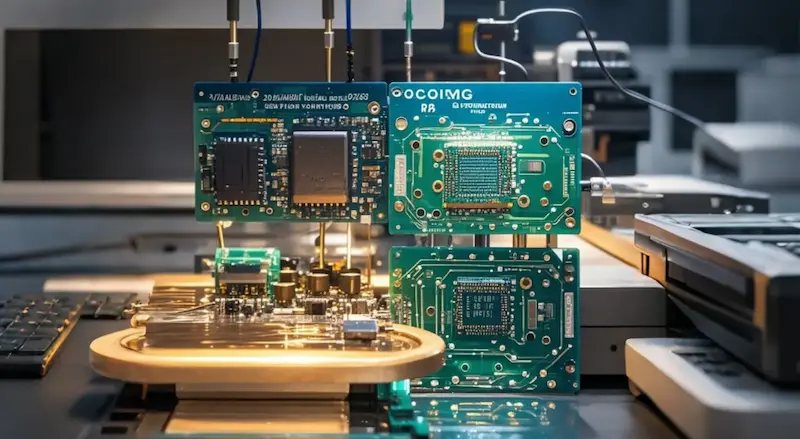
The robotics landscape is undergoing a seismic shift. As smart factories demand near-zero latency and autonomous decision-making, the limitations of traditional PCB architectures are becoming glaringly apparent. This guide explores why transitioning to AI-capable, edge-computing-ready controller modules is no longer an optional upgrade, but a necessity for competitive manufacturing.
The Evolution of Industrial Robotic Controllers
The Evolution of Industrial Robotic Controllers
The trajectory of industrial robotic control has undergone a paradigm shift, moving from monolithic architectures to sophisticated, distributed networks. Historically, the controller acted as the central nervous system, relying on Programmable Logic Controllers (PLCs) that dictated every movement through deterministic, hard-coded cycles. Today, Industry 4.0 trends are driving the integration of AI-optimized PCB architectures, enabling controllers to process sensory data in real-time, adapt to environmental variables, and perform edge-level decision-making without constant reliance on a primary CPU.
From Centralized Logic to Decentralized Intelligence
| Feature | Traditional PLC Architecture | AI-Optimized PCB Architecture |
|---|---|---|
| Control Topology | Centralized/Hierarchical | Decentralized/Distributed |
| Processing Capability | Deterministic Logic | Machine Learning & Heuristics |
| Scalability | Hardware-Dependent | Software-Defined/Modular |
| Fault Tolerance | Single Point of Failure | Self-Healing Nodes |
Key Architectural Transitions
Early robotics relied on heavy, rack-mounted controllers that were difficult to reconfigure. The transition toward modern PCB architectures emphasizes miniaturization and heterogeneous computing. By integrating high-performance FPGAs and specialized AI accelerators directly onto the robot's control PCB, manufacturers are enabling low-latency inference. This allows for predictive maintenance and path optimization at the site of actuation, a marked departure from the legacy 'calculate-then-command' flow.
- Why is the move toward decentralized controllers critical for Industry 4.0?
Decentralization reduces latency and bandwidth strain, allowing robotic units to react to sensor data in micro-seconds, which is essential for high-speed collaborative environments. - How does AI optimization change the role of the PCB?
AI optimization shifts the PCB from a mere signal relay to a cognitive computing unit, integrating neural network acceleration to process unstructured visual or tactile data. - Does this evolution eliminate the need for PLCs?
While PLCs remain relevant for safety-critical logic, their role is shifting toward high-level coordination, while granular motion and optimization tasks migrate to intelligent edge controllers.
Anatomy of Legacy PCB Architectures
Architectural Bottlenecks in Traditional Controller PCBs
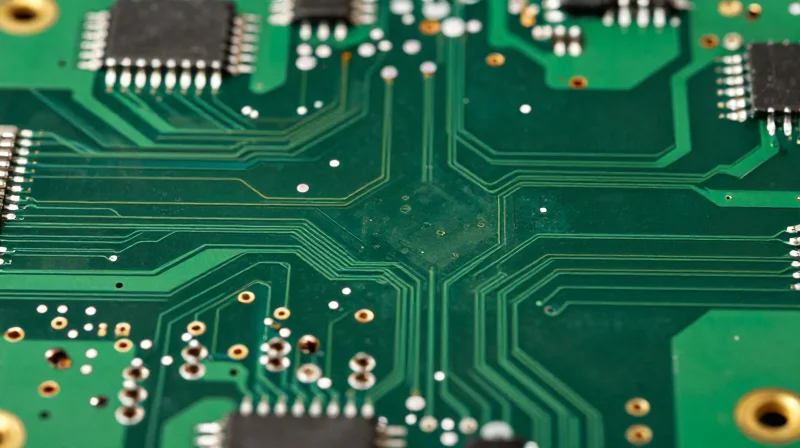
Legacy PCB architectures in industrial robotics were designed for deterministic, low-frequency control tasks. These systems typically rely on a centralized MCU (Microcontroller Unit) managing high-level logic alongside low-level hardware abstraction via rigid interrupt routines. This architecture faces significant bottlenecks when forced to handle high-velocity data streams typical of Industry 4.0 environments, leading to latency spikes and deterministic failure.
- Processing Bottlenecks
Traditional architectures use single-core or low-clock-speed MCUs that struggle to execute complex inverse kinematics in parallel with vision-based path correction. - Integration Bandwidth
Legacy bus protocols (e.g., standard UART, SPI, or early CAN implementations) lack the throughput required for modern, high-density sensor fusion arrays. - Rigid Hardware Stacks
The tight coupling between peripheral drivers and the main firmware loop prevents modular hardware updates without complete system re-compilation.
Legacy vs. Contemporary Controller Constraints
| Feature | Legacy Architecture | Modern Requirement |
|---|---|---|
| Control Logic | Centralized/Monolithic | Decentralized/Distributed |
| Bus Throughput | Low (kbps - Mbps) | High (Gbps) |
| AI/Edge Processing | None/Hardcoded Rules | Hardware-Accelerated Neural Engines |
| Feedback Loop | Fixed Sampling Rate | Adaptive/Dynamic Polling |
The fundamental challenge lies in the 'fixed-function' nature of legacy boards. These designs were optimized for stability and cost-efficiency in closed-loop, static environments. However, in modern robotics, where a controller must act as an edge-compute node, these legacy boards lack the memory-mapped I/O bandwidth and hardware acceleration required to process machine learning models locally. This forces data back to a master controller, introducing significant network latency that renders high-precision robotic movements unreliable.
The Rise of Edge Computing in Robotics
The Shift Toward Decentralized Intelligence
The rise of edge computing represents a fundamental shift in Industry 4.0, moving computational power from centralized PLCs to the robot's edge—directly at the sensor and actuator interface. By processing data locally, robots can achieve sub-millisecond response times, essential for complex motion control and high-speed vision systems that traditional architectures cannot sustain.
Comparative Performance: Edge vs. Cloud Architectures
| Feature | Cloud-Centric (Traditional) | Edge-Optimized (Modern) |
|---|---|---|
| Latency | High (Network Dependent) | Ultra-Low (Microsecond scale) |
| Bandwidth Usage | Excessive (Raw data streams) | Minimal (Feature extraction at source) |
| Reliability | Risk of network failure | High (Autonomous operation) |
| Data Privacy | Sensitive data off-site | Localized security containment |
Technical Drivers for Edge Implementation
- Reduced Latency
By processing sensory data on the PCB near the motor or effector, robots eliminate the round-trip delay inherent in centralized architectures. - Network Resilience
Edge devices function independently during network interruptions, ensuring process continuity in harsh industrial environments. - Optimized Bandwidth
Instead of streaming high-frequency raw telemetry, only actionable insights or compressed metadata are sent to the supervisory control layer.
AI-Optimized PCBs and Edge Inference
The integration of NPUs (Neural Processing Units) directly onto robot controller PCBs allows for real-time edge inference. This enables sophisticated functionalities such as predictive maintenance, dynamic obstacle avoidance, and adaptive path correction without external compute dependencies. By bridging the gap between hardware constraints and software-defined intelligence, engineers are effectively creating a 'brain' at the edge, redefining the performance ceilings of modern industrial robotics.
Core Advantages of AI-Optimized Controller Modules
The Architecture of Intelligent Control
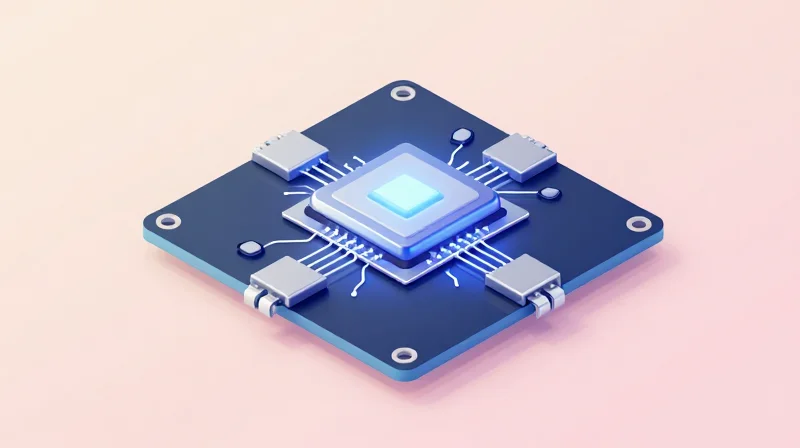
AI-optimized PCB architectures represent a fundamental shift from general-purpose microcontrollers to dedicated silicon designed for low-latency inference. By integrating Neural Processing Units (NPUs) directly onto the control board, these modules execute complex machine learning models at the edge, eliminating the latency inherent in cloud-based or centralized processing.
Key Operational Enhancements
| Feature | Traditional PLC Architecture | AI-Optimized Module |
|---|---|---|
| Maintenance | Reactive (threshold-based) | Predictive (pattern-based) |
| Path Planning | Hard-coded trajectory | Dynamic, obstacle-aware |
| Data Handling | Centralized processing | Decentralized NPU inference |
| Latency | Variable/High | Deterministic/Ultra-low |
Transforming Industrial Workflows
- How does an NPU impact predictive maintenance?
NPUs monitor vibration, thermal, and electrical signals in real-time to identify micro-anomalies that precede mechanical failure, enabling maintenance before downtime occurs. - What is the benefit for real-time path planning?
By offloading spatial computing to dedicated AI hardware, robots can autonomously recalculate trajectories around moving obstacles without interrupting the primary control loop. - Why move intelligence to the PCB level?
Moving compute to the edge ensures that safety-critical decision making remains functional even during network interruptions, maintaining operational continuity.
The deployment of AI-optimized controllers allows for the convergence of high-frequency motor control and cognitive inference. This architecture not only increases throughput but also extends the lifecycle of robotic hardware by optimizing power consumption and reducing mechanical wear through smarter motion profiles.
Performance Metrics: Latency, Throughput, and Power Efficiency
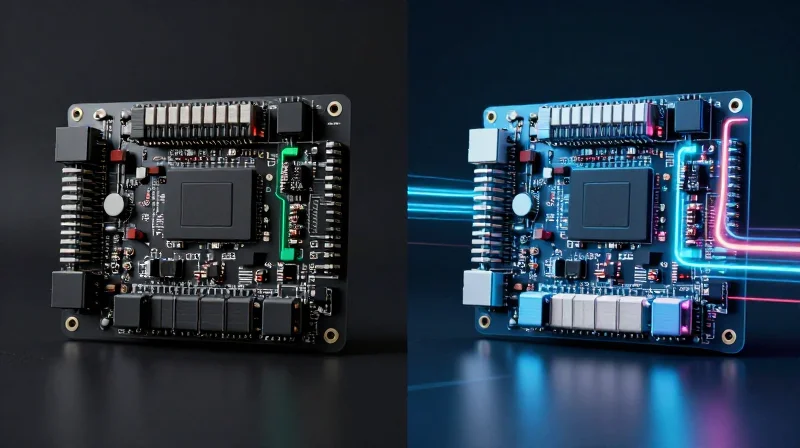
Performance Metrics: Latency and Throughput
Traditional PCB architectures for robotics often suffer from centralized processing bottlenecks, where sensor data must travel across a bus to a primary MCU, introducing microsecond delays that compound during complex path planning. In contrast, AI-optimized controllers leverage heterogeneous computing, utilizing dedicated NPUs to process sensor inference locally. This shift moves the system from a polling-based model to a high-concurrency architecture, resulting in significantly higher throughput and near-deterministic latency essential for high-speed industrial feedback loops.
| Metric | Traditional PCB | AI-Optimized Controller |
|---|---|---|
| Inference Latency | High (ms range) | Ultra-Low (µs range) |
| Throughput Capacity | Limited by serial bus | Parallel processing via NPU |
| Task Handling | Sequential/Synchronous | Asynchronous/Massively Parallel |
Power Efficiency and Thermal Management
Power efficiency in Industry 4.0 is not merely about battery life; it is a critical thermal constraint that determines component lifespan. Traditional controllers often run at higher clock frequencies to compensate for inefficient instruction sets, leading to thermal throttling. AI-optimized modules utilize domain-specific architectures that execute neural network workloads at lower power envelopes. By minimizing data movement between memory and the processor, these boards achieve superior energy-per-inference metrics.
Comparative FAQ
- Why does localized AI processing improve latency?
By offloading inference to an on-board NPU, the system eliminates the round-trip delay caused by sending raw sensor data to a centralized host, enabling real-time corrective actions. - How do AI controllers reduce power consumption?
AI-optimized hardware uses specialized tensor cores that require significantly fewer clock cycles to perform matrix multiplication compared to general-purpose CPUs, resulting in lower power draw per operation. - Does higher throughput impact thermal performance?
Paradoxically, yes. While the computational throughput is higher, the efficiency of dedicated hardware reduces heat dissipation compared to traditional CPUs operating at max load to perform the same task.
Design Considerations for Next-Gen PCBs
Engineering for Next-Gen Robotic Performance
As robotics transitions from fixed automation to adaptive, AI-enhanced systems, the underlying PCB architectures must accommodate significantly higher data throughput and tighter physical footprints. Designers are now balancing the need for massive computational power provided by onboard NPUs with the strict electrical and thermal requirements of modern industrial environments.
Key Design Pillars
- Signal Integrity (SI) at High Frequencies
Modern controllers require multi-gigabit data lanes for sensor fusion. Designers must utilize low-loss dielectric materials (e.g., Megtron 6/7) and rigorous impedance control to prevent cross-talk and signal degradation between the NPU and high-speed memory interfaces. - Advanced Thermal Dissipation
AI processors generate concentrated heat loads. Next-gen designs incorporate embedded copper coins, direct-to-case thermal paths, and thermally optimized via stitching to prevent localized hotspots that throttle performance. - High-Density Interconnect (HDI) Requirements
Miniaturization necessitates the use of Micro-vias (laser-drilled) and Any-Layer HDI technology, allowing for higher component density while maintaining essential routing clearance for sensitive power delivery networks.
| Design Factor | Legacy Approach | AI-Optimized Requirement |
|---|---|---|
| Layer Stackup | 4-6 Layers (Standard) | 10+ Layers (HDI/Complex) |
| Material Selection | Standard FR-4 | Low-Loss/High-Tg Laminates |
| Via Technology | Through-hole | Micro-via & Via-in-Pad |
| Thermal Management | Passive Convection | Active Heat Spreading/Copper Coins |
Code snippet: Power Delivery Network (PDN) Simulation
def calculate_pdn_impedance(frequency, capacitance, inductance):
    # Simplified impedance formula for decoupling network analysis
    z = 1 / (2 * 3.14159 * frequency * capacitance) + (2 * 3.14159 * frequency * inductance)
    return z

# Targeting sub-milliohm impedance at 500MHz for NPU core rail
target_z = 0.0005
print(f'PDN Target: {target_z} Ohms')
Adopting these strategies ensures that robotic controllers remain robust under the intense computational demands of AI workloads, providing the longevity and reliability required for Industry 4.0 applications.
Addressing Challenges in Implementation
Overcoming Integration and Compatibility Hurdles
The primary challenge in adopting AI-optimized PCB controllers lies in the fragmentation of existing industrial ecosystems. Legacy robotics often utilize proprietary communication protocols and rigid hardware abstraction layers that struggle to interface with high-throughput neural processing units (NPUs). Bridging this gap necessitates robust middleware solutions and modular firmware updates that can translate AI-driven path planning insights into actionable control signals for older actuators and motor drivers.
Comparative Challenges: Traditional vs. AI-Optimized Architectures
| Challenge Category | Traditional PCB Obstacles | AI-Optimized PCB Obstacles |
|---|---|---|
| System Integration | Lack of modularity | High complexity in middleware |
| Software Compatibility | Static, rigid control loops | Dynamic AI model versioning |
| Data Infrastructure | Limited onboard bandwidth | High-speed signal integrity |
Hardware-Software Co-Design Requirements
Transitioning to AI-driven control requires a paradigm shift from sequential development to holistic hardware-software co-design. Developers must manage the thermal constraints of integrated NPUs while maintaining nanosecond-level timing precision. This necessitates custom PCB layout strategies, such as multi-layer signal integrity shielding and advanced power delivery networks, to ensure that high-speed data processing does not interfere with low-latency real-time control loops.
Implementation FAQ
- How do we ensure reliability during the transition to AI controllers?
Implement parallel execution paths where legacy control loops act as a fallback safety layer during the validation phase of the AI models. - What is the biggest bottleneck in hardware-software co-design?
The bottleneck is often the power density management, where high-performance NPU workloads create thermal hotspots that compromise the accuracy of precision sensors on the same PCB. - How can we manage software updates for AI-ready hardware?
Utilize over-the-air (OTA) update frameworks coupled with containerized model deployment to decouple the control firmware from the evolving AI inference logic.
Future Outlook: The Modular Robotic Ecosystem
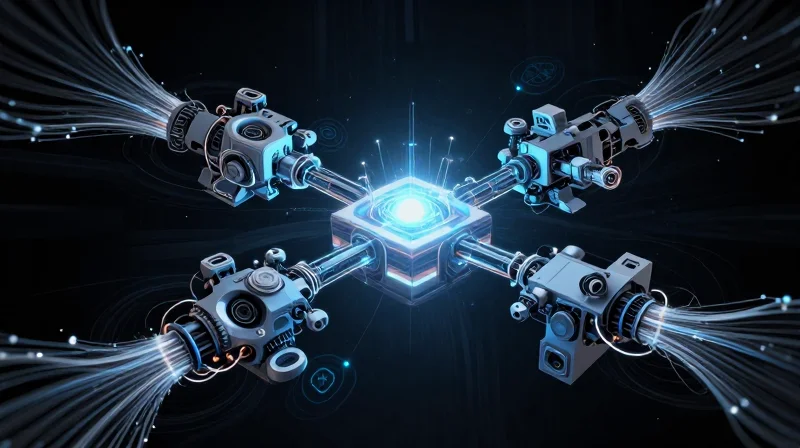
The Shift Toward Modular PCB Architectures
As Industry 4.0 matures, the rigid PCB designs of yesterday are being supplanted by modular, 'plug-and-play' controller architectures. The future robotic ecosystem relies on decoupled hardware, where AI-processing units, sensory interfaces, and motion control logic exist as interchangeable modules rather than a single integrated board. This modularity allows for rapid hardware updates without decommissioning the entire robotic chassis.
| Feature | Legacy Monolithic Design | Modular AI-Optimized Design |
|---|---|---|
| Upgradability | Low; requires board replacement | High; field-replaceable modules |
| AI Integration | Add-on peripheral latency | Native edge computing integration |
| Maintenance | System-wide downtime | Component-level hot-swapping |
Future Trends in AI-Driven Controller Design
The integration of AI into PCB architecture is trending toward System-on-Module (SoM) configurations that prioritize high-bandwidth communication buses. Future controllers will likely leverage optical interconnects to reduce thermal output and electromagnetic interference (EMI), ensuring that signal integrity is maintained as processing requirements surge.
Frequently Asked Questions
- How does modularity affect PCB thermal management?
Modularity distributes heat-generating components across distinct modules, preventing localized hotspots and allowing for more targeted, efficient heat-sink implementation. - What role does AI play in modular board orchestration?
AI algorithms manage the handshake protocols between modules, dynamically reassigning tasks based on which hardware modules are currently detected in the system. - Are there standardization challenges for these architectures?
Yes, the primary hurdle is establishing cross-vendor physical and software interfaces (APIs) to ensure that modules from different manufacturers can communicate seamlessly.
Transitioning to AI-optimized PCB architectures is the key to unlocking the full potential of Industry 4.0 robotics. By prioritizing low-latency processing and edge-based intelligence, manufacturers can achieve unprecedented efficiency and operational flexibility. Is your facility ready to modernize its control infrastructure? Contact our engineering team today to discuss upgrading your robotic control modules.