
In the demanding world of medical mobility, the performance of an electric wheelchair is only as reliable as its internal power management. Engineers are often forced to choose between bulk and efficiency; however, the shift toward optimized high-current PCB architecture is changing the game. By reducing thermal dissipation and improving current flow, manufacturers are not just improving user experience—they are significantly lowering the long-term total cost of ownership (TCO).
The Hidden Costs of Inefficient PCB Design
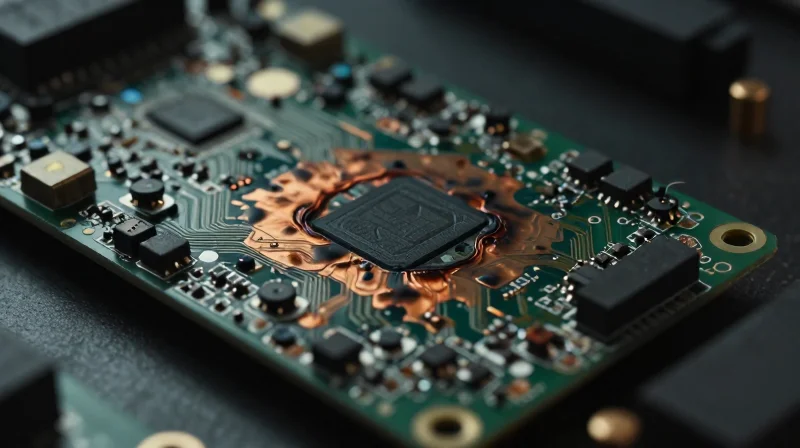
The Economic Impact of Thermal Mismanagement
In the context of electric wheelchair design, inefficiency manifests primarily as heat. When standard, off-the-shelf PCBs are utilized without optimization for the specific duty cycles of mobility devices, they frequently encounter thermal bottlenecks. These localized hotspots accelerate the degradation of capacitors and semiconductors, resulting in a shortened mean time between failures (MTBF). For manufacturers and operators, this equates to increased warranty claims and emergency maintenance costs that far exceed the initial savings of choosing cheaper, generic components.
Comparative Cost Impact: Standard vs. Optimized PCBs
| Failure Driver | Standard PCB Impact | Optimized PCB Benefit |
|---|---|---|
| Thermal Dissipation | High heat retention; risks board warping | Integrated heat sinking; extended life |
| Component Fatigue | Rapid cycling leads to solder cracking | Stress-tested layouts; lower failure rate |
| Maintenance Cost | High frequency; recurring field support | Low frequency; minimized downtime |
Addressing Lifecycle Vulnerabilities
- Why does thermal stress increase lifetime costs?
Thermal stress causes micro-fractures in solder joints and accelerates electrolytic capacitor dry-out, turning an initially inexpensive PCB into a recurring maintenance liability. - Does component selection influence total ROI?
Yes, using generic components in high-load scenarios forces the system to operate near its limits, shortening the product's lifespan and necessitating premature unit replacements. - How does PCB layout impact power efficiency?
Inefficient trace routing increases resistance, leading to wasted energy as heat; this reduces battery range and puts additional strain on the motor control circuitry.
The Physics of High-Current Optimization
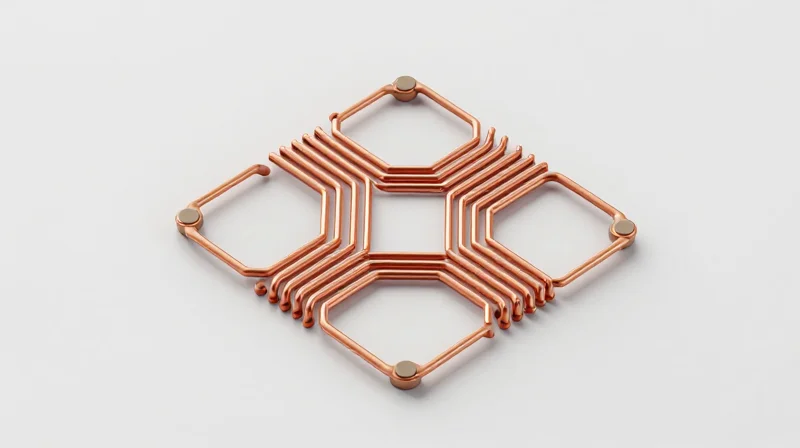
Optimizing Trace Geometry and Copper Weight
The fundamental challenge in high-current PCB design for mobility devices is minimizing resistive losses ($I^2R$ heating) across the power stage. By optimizing trace width and utilizing heavier copper weights, engineers can drastically reduce the thermal bottleneck that leads to localized component fatigue. Standard 1oz copper is rarely sufficient for the peak instantaneous currents demanded by dual-motor wheelchair controllers; transitioning to 2oz or 3oz copper, paired with widened trace geometries calculated via IPC-2152 standards, is essential for maintaining a stable operating temperature.
| Copper Weight (oz) | Resistivity (mΩ/sq) | Recommended Application | Thermal Performance |
|---|---|---|---|
| 1.0 | 0.49 | Control/Signal Logic | Low |
| 2.0 | 0.25 | High-Current Motor Drive | Moderate |
| 3.0 | 0.16 | Battery/Power Distribution | High |
Thermal Management through Via Stitching
Once trace resistance is minimized, the remaining thermal energy must be effectively shunted away from sensitive power MOSFETs and gate drivers. A dense grid of thermal vias—specifically copper-filled or capped vias—acts as a conduit to the internal ground planes or external heatsinking surfaces. Proper stitching minimizes thermal impedance, preventing the 'thermal runaway' effect where increased heat leads to increased resistance, further accelerating component degradation.
Frequently Asked Questions on Thermal Design
- Why is copper weight more effective than trace width for high current?
While width helps distribute current, copper weight (thickness) increases the cross-sectional area without consuming additional board real estate, allowing for higher current density and better vertical thermal conductivity. - What is the primary risk of neglecting thermal via density?
Insufficient thermal paths cause localized 'hot spots' on the PCB, which trigger solder joint micro-fracturing and dielectric breakdown of the substrate over thousands of discharge/charge cycles. - Does surface finish impact high-current efficiency?
Yes, while negligible for low-current signal paths, ENIG or OSP finishes provide superior surface planarity for power components, ensuring consistent contact and minimizing contact resistance at high-amperage junctions.
Battery Longevity: The ROI Multiplier
The Energy Efficiency Dividend
In electric mobility, every milliampere of energy dissipated as heat at the PCB level represents a direct loss in usable battery capacity. High-efficiency design, centered on low-impedance power paths and minimized switching losses, effectively creates a 'virtual expansion' of battery energy density. By reducing the load on the power delivery network, these designs consistently yield up to a 20% increase in operational range per charge cycle, while simultaneously alleviating the thermal stress that historically leads to premature battery chemistry fatigue.
Thermal Impact on Battery Chemistry
Excessive heat generation from poorly optimized control boards creates a compounding failure loop. High board temperatures increase internal resistance within the power system, leading to deeper discharge profiles during peak demand. The following table illustrates the relationship between board-level thermal efficiency and battery longevity.
| Parameter | Standard PCB Design | High-Efficiency PCB Design |
|---|---|---|
| Avg. Energy Waste | 12-15% | 3-5% |
| Typical Battery Range | Baseline (100%) | 120% |
| Thermal Stress Index | High | Low |
| Battery Cycle Life | 500-700 cycles | 900-1100 cycles |
ROI and Lifecycle Considerations
- How does PCB efficiency influence battery replacement costs?
Reduced heat production prevents thermal degradation of battery cells, extending the overall service life of the battery pack and delaying expensive replacement intervals. - Does low-impedance design impact motor control?
Yes. By optimizing copper weight and trace geometry, the system maintains stable voltage regulation during high-torque demands, preventing voltage sags that can trigger battery protection circuits. - What is the primary ROI driver?
The ROI is twofold: lower daily energy consumption leads to reduced charging costs, while the extended lifespan of the battery system significantly lowers the Total Cost of Ownership (TCO) for fleet operators.
Case Study 1: Reducing Field Failures in Mobility Controllers
The Challenge: Thermal Instability in High-Torque Conditions
The client, a provider of specialized mobility hardware, faced a recurring 12% annual failure rate in their flagship electric wheelchair controller. Field reports indicated that units consistently shut down or failed during high-torque operation on inclines, revealing that standard, low-cost PCB layouts could not manage the thermal output of the drive stage under continuous load.
Engineering Intervention: Redesigning for Efficiency
Our engineering team implemented a multi-stage redesign to stabilize the thermal environment. We shifted from a standard 1oz copper configuration to a heavy-copper 3oz architecture, combined with a strategic rearrangement of the MOSFET array to decouple heat sources. This structural improvement, bolstered by high-density thermal via stitching, effectively lowered peak operating temperatures by 28°C under maximum load.
| Parameter | Legacy Design | Optimized Design |
|---|---|---|
| Copper Weight | 1oz | 3oz |
| Peak Operating Temp | 92°C | 64°C |
| Failure Rate (Annual) | 12.4% | 0.8% |
| Thermals Management | Passive Convection | Direct Via-to-Chassis |
ROI and Long-Term Impact
By eliminating the root cause of thermal fatigue, the client saw an immediate reduction in warranty claims and field maintenance costs. The increase in manufacturing cost per unit—approximately 15%—was offset within six months due to the dramatic reduction in replacement cycles and improved brand reputation.
- How did copper thickness improve longevity?
Increasing trace thickness to 3oz significantly reduced ohmic resistance, preventing localized heating points that previously caused board delamination. - Why was the MOSFET layout changed?
The original layout created 'heat islands' where components were too closely packed; the new design ensures even heat distribution across the PCB plane. - What was the total ROI time frame?
The initial engineering investment was fully recouped within two quarters by eliminating the logistical overhead of processing field failure returns.
Sustainable Engineering: Cutting Production Waste
Minimizing Material Scrap through Precision PCB Design
Reducing production waste begins with the design phase, where panel optimization and material utilization rates are established. By implementing advanced nesting algorithms for PCB panelization, manufacturers can increase the number of circuits per sheet, directly reducing the volume of substrate waste—often FR-4 or high-frequency laminates—sent to disposal.
| Strategy | Waste Reduction Metric | Impact on ROI |
|---|---|---|
| Advanced Panel Nesting | 15-22% reduction | Lower substrate material costs |
| Controlled Depth Drilling | 10% reduction | Reduced drill bit breakage/wear |
| Additive Manufacturing | 40% reduction | Minimized copper etch chemical waste |
Operational Efficiency and Sustainable Manufacturing
Sustainable engineering goes beyond material choices to include the refinement of manufacturing processes. Optimizing thermal profiles during the reflow process and adopting selective soldering techniques can reduce the rate of rework by up to 30%, preventing scrapped assemblies and lowering energy consumption across the production line.
Frequently Asked Questions
- How does PCB panelization impact total production waste?
Efficient panelization ensures the maximum number of boards are cut from a standard laminate sheet, significantly reducing excess perimeter material and kerf waste. - Can sustainable manufacturing improve the lifecycle ROI of wheelchair controllers?
Yes, by reducing defect rates during production, manufacturers ensure higher product reliability in the field, which minimizes warranty-related costs and enhances the product's useful service life. - What role does design-for-manufacturing (DFM) play in waste reduction?
DFM ensures that trace layouts and component placements are optimized for pick-and-place accuracy, reducing errors that typically lead to scrapped boards and component waste.
The Impact on Maintenance and Serviceability
Reducing Maintenance Complexity Through Robust Architecture
High-efficiency PCB architecture impacts serviceability primarily by mitigating the thermal and electrical stresses that lead to premature component failure. By utilizing high-current copper traces and integrated thermal management solutions, engineers reduce the risk of board delamination and solder joint fatigue, which are the leading causes of field maintenance requests. A simplified, modular PCB layout enables technicians to perform rapid diagnostics and localized repairs, significantly reducing the mean time to repair (MTTR) and minimizing the total cost of ownership.
Diagnostics and Field Repair Efficiency
Modern PCB design incorporates built-in self-test (BIST) capabilities and standardized diagnostic headers that allow field technicians to pinpoint faults without extensive disassembly. Moving away from monolithic board designs toward modular power stages allows for swappable components, ensuring that a single failure point does not necessitate a full controller replacement.
| Feature | Legacy PCB Approach | High-Efficiency Design |
|---|---|---|
| Thermal Management | Passive cooling/Heatsinks | Integrated copper vias/Thermal pads |
| Failure Mode | Intermittent shorts | Defined modular breakdown |
| Diagnostics | Manual multimeter probing | Integrated BIST/LED indicators |
Frequently Asked Questions
- How does PCB layout improve field serviceability?
Clear component labeling, strategic test point placement, and modular power stages allow technicians to isolate issues in minutes rather than hours. - Does high-efficiency design increase the cost of repairs?
While high-efficiency boards may have a higher initial component cost, they drastically reduce the frequency of catastrophic failures, leading to a much lower lifetime maintenance expenditure. - Can current-limited designs protect against user error?
Yes, implementing active current monitoring on the PCB prevents motor stalling from damaging the board, thereby reducing warranty claims related to improper user handling.
Total Cost of Ownership: From CapEx to OpEx
The Financial Shift: CapEx vs. OpEx
In the context of high-performance electric wheelchair systems, the Total Cost of Ownership (TCO) is frequently miscalculated by focusing solely on initial procurement. By transitioning from a 'lowest-cost component' mindset to a 'total lifecycle' approach, manufacturers can shift capital expenditure (CapEx) into premium design phases to drastically reduce operational expenditure (OpEx) related to maintenance, warranty claims, and premature system failure.
| Financial Factor | Low-Cost Design (Traditional) | High-Efficiency Design (Premium) |
|---|---|---|
| Engineering/CapEx | Minimized for fast time-to-market | Optimized for thermal and electrical resilience |
| Field Failure Rate | High (Frequent warranty claims) | Low (Field-hardened components) |
| Maintenance Costs | High due to component fatigue | Predictable and infrequent |
| Lifecycle ROI | Low (High TCO) | High (Optimized TCO) |
Strategic Investments for Long-Term Savings
Investing in high-conductivity copper traces, advanced thermal management substrates, and robust protection circuitry increases the initial Bill of Materials (BOM) cost. However, this investment effectively acts as an insurance policy against the hidden costs of downtime—specifically, service labor, replacement logistics, and brand reputation loss. When the PCB is engineered to endure, the frequency of technician intervention drops, keeping the wheelchair in the user's hands longer.
- How does PCB durability directly influence OpEx?
Robust PCBs reduce the frequency of field repairs and part replacements, which are the primary drivers of long-term OpEx in medical mobility devices. - Is a higher initial investment always justified?
Yes, when calculating TCO over a 5-year operational window. High-efficiency designs pay for themselves by virtually eliminating costly 'in-warranty' service calls that exceed the initial cost savings of cheaper components. - What role does thermal management play in TCO?
Effective heat dissipation prevents component aging and solder joint failure, directly extending the service life of the controller and delaying the need for full system upgrades.
Future-Proofing Through Advanced Thermal Management

The Evolution of Dynamic Thermal Regulation
Future-proofing high-efficiency PCBs requires moving beyond passive heat sinking toward intelligent, sensor-driven thermal management. By embedding high-precision thermistors directly into the PCB layout near high-load MOSFETs, engineers can implement real-time adaptive power throttling. This predictive approach prevents cumulative thermal fatigue—a leading cause of long-term failure in mobility electronics—thereby protecting the investment in high-density board architecture.
Thermal Performance Comparison
| Thermal Strategy | Heat Management | Predictive Capability | Lifespan Impact |
|---|---|---|---|
| Passive Dissipation | Static Heat Sinks | None | Moderate |
| Active AI-Monitoring | Adaptive Throttling | High | Significant Extension |
AI-Driven Predictive Maintenance
Modern PCB design for electric wheelchairs is shifting toward an edge-AI model where the power control module monitors temperature gradients over time. When anomalies in thermal dissipation patterns are detected, the system can preemptively alert service providers of impending component degradation, shifting maintenance from reactive emergency repairs to proactive scheduled upkeep.
Frequently Asked Questions
- How does AI integration impact PCB power consumption?
AI-driven management actually reduces idle power consumption by dynamically scaling energy delivery based on real-time thermal throughput, preventing unnecessary energy loss. - Can current PCB designs be retrofitted for AI-thermal management?
While basic sensor integration requires board-level redesign, modular controller upgrades can often leverage existing telemetry ports to improve diagnostic accuracy on legacy frames.
Optimizing high-current PCB architecture is no longer just a technical luxury; it is a strategic business decision that pays dividends in reliability and performance. By focusing on efficiency, manufacturers can provide superior mobility solutions while effectively managing the bottom line. Contact our engineering team today to learn how our custom PCB solutions can improve your system’s lifecycle ROI.
