
In the fast-paced world of smart home technology, the thin line between a breakout success and a budget-draining flop often lies in the production process. As manufacturers race to scale, uncontrolled component costs and inefficient assembly workflows can erode margins before the product ever hits the shelf. This guide explores the strategic blueprint for optimizing your PCBA production to drive sustainable profitability.
The Economics of IoT Hardware: Why Traditional Costing Fails

The Limitations of Legacy Costing
Traditional costing models typically focus on Bill of Materials (BOM) pricing and direct assembly labor, treating hardware as a static commodity. In the IoT landscape, this approach is fundamentally flawed. Because IoT devices rely on complex firmware-hardware integration, edge-to-cloud connectivity, and long-term security maintenance, the initial unit cost represents only a fraction of the actual capital expenditure. Relying on unit-price-centric procurement often leads to 'cheap' hardware that incurs exorbitant expenses through field failures, manual provisioning, and inefficient supply chain management.
Comparison: Unit Cost vs. Total Cost of Ownership (TCO)
| Cost Driver | Traditional Unit Cost Model | TCO-Based IoT Model |
|---|---|---|
| Procurement Focus | Lowest component price | Supply chain resilience |
| Quality Assurance | Initial inspection only | Lifecycle reliability monitoring |
| Deployment | Out-of-box condition | Provisioning and scalability |
| Maintenance | Excluded | OTA update overheads |
Critical Economic Questions
- Why does initial hardware price fail to predict ROI?
Initial price ignores the high cost of manual intervention during deployment, technical debt in firmware, and the economic impact of device downtime. - How does integration impact PCBA manufacturing costs?
Modern IoT requires high-density PCBAs that necessitate specialized testing protocols; traditional costing fails to account for the yield loss and rework costs associated with advanced testing. - What hidden variables must be included in TCO?
TCO must include logistics, reverse supply chain management, cybersecurity compliance certification, and the ongoing costs of remote configuration management.
Adopting a TCO-centric framework allows firms to shift from reactive cost-cutting to proactive ROI optimization. By factoring in long-term reliability and operational ease of use, organizations can justify higher upfront investments in premium components and advanced manufacturing techniques, ultimately reducing the total expenditure over the product's entire lifecycle.
Strategic Component Sourcing for Scalability
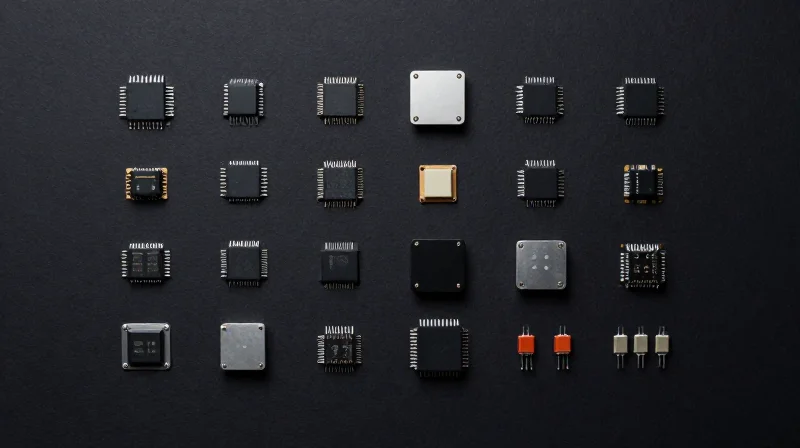
Architecting for Supply Chain Scalability
True scalability in IoT production requires moving beyond ad-hoc component procurement toward a platform-based sourcing model. By standardizing core modules—such as connectivity chips, power management ICs, and microcontrollers—across your product line, you create leverage for volume pricing and minimize the risk of obsolescence.
Procurement Strategy Comparison
| Strategy | Cost Impact | Risk Profile | Best For |
|---|---|---|---|
| Spot Buying | High | Extreme | Prototyping |
| Distributor Contracts | Moderate | Low | Growth Phase |
| Direct OEM/Factory Sourcing | Low | Medium | High-Volume Scale |
Optimizing IoT Component Longevity
IoT devices often live in the field for years, making component lifecycle management essential for ROI. Choosing 'legacy-plus' components that offer long-term production availability prevents the costly mid-cycle redesigns that occur when critical sensors or radios reach End-of-Life (EOL).
- How does dual-sourcing impact manufacturing ROI?
While maintaining two sets of vendors requires higher administrative oversight, it provides a crucial safety net against regional supply chain disruptions, preventing catastrophic production halts that far outweigh the initial sourcing overhead. - What is the role of bulk procurement in IoT?
Bulk procurement allows firms to lock in pricing and inventory for 12-18 month cycles, insulating the balance sheet from volatility in the semiconductor market and ensuring availability for high-demand quarters.
Design for Manufacturing (DFM) as a Financial Lever

The Financial Imperative of Proactive DFM
In IoT PCBA production, the 'Rule of Ten' is a vital financial metric: a defect caught during the design phase costs pennies to fix, whereas identifying that same error during mass production can cost thousands in scrap, logistics, and supply chain delays. By integrating DFM principles early, engineering teams reduce non-recurring engineering (NRE) costs and eliminate the need for costly board revisions.
| Cost Driver | Reactive Design Impact | DFM Optimized Impact |
|---|---|---|
| Assembly Speed | High rework/Manual intervention | Automated high-speed placement |
| Yield Rates | High defect rate (60-80%) | Targeted yield (98-99%+) |
| Testing Costs | Manual probing and debug | Automated Optical/In-circuit testing |
| Tooling/Jigs | Multiple revisions required | First-pass success |
Key DFM Strategies for Cost Reduction
- Standardization of Footprints
Utilizing industry-standard land patterns reduces specialized setup time and tooling costs at the contract manufacturer (CM), leading to lower NRE fees. - Panelization Efficiency
Optimizing board dimensions for panel utilization reduces laminate waste—a direct reduction in raw material costs for every unit produced. - Component Orientation
Uniform component orientation and strategic placement allow for faster pick-and-place cycles, directly lowering assembly labor costs. - Design for Test (DFT)
Incorporating test points and accessible nodes ensures automated test equipment can validate units in seconds, preventing time-intensive manual troubleshooting.
Maximizing ROI Through Iterative Collaboration
Financial success in IoT manufacturing is rarely achieved in a vacuum. Engaging your CM during the PCB layout stage ensures that designs are aligned with the specific capabilities of the assembly line. This collaborative approach shifts the focus from theoretical design performance to real-world manufacturability, effectively turning the assembly line into a competitive advantage rather than a source of hidden expense.
Streamlining PCBA Assembly Workflows
Optimizing the Assembly Lifecycle
To achieve superior ROI, manufacturers must transition from reactive assembly processes to proactive, automated workflows. By integrating data-driven scheduling and real-time monitoring, facilities can identify bottlenecks before they manifest as costly downtime, ensuring that capital equipment operates at maximum utilization rates.
Automation vs. Manual Process Trade-offs
| Metric | Manual Assembly | Automated Assembly |
|---|---|---|
| Throughput Capacity | Low/Variable | High/Consistent |
| Initial Capital Expense | Minimal | Significant |
| Error Rate | Higher (Human Factor) | Low (Precision-Controlled) |
| Scalability | Limited by Headcount | High (Hardware-Dependent) |
Strategic Implementation of Lean Methodologies
Applying Just-in-Time (JIT) delivery and SMED (Single-Minute Exchange of Die) methodologies reduces work-in-progress inventory and accelerates line changeovers. When production lines spend less time undergoing retooling, the overall equipment effectiveness (OEE) increases, driving higher returns on fixed manufacturing assets.
Frequently Asked Questions on Assembly Efficiency
- How does automation directly impact ROI in IoT PCBA?
Automation reduces labor costs per unit and minimizes rework expenses caused by human error, which significantly improves the long-term margin per board. - What is the primary indicator of an inefficient assembly workflow?
High inventory levels of partially finished goods and frequent unplanned downtime on SMT lines are the strongest indicators of process inefficiency. - Can lean principles be applied to low-volume IoT production?
Yes, focusing on standardized work instructions and rapid changeover procedures allows for lean benefits even when batch sizes are smaller or highly customized.
Quality Assurance: The True Cost of Avoiding Defects
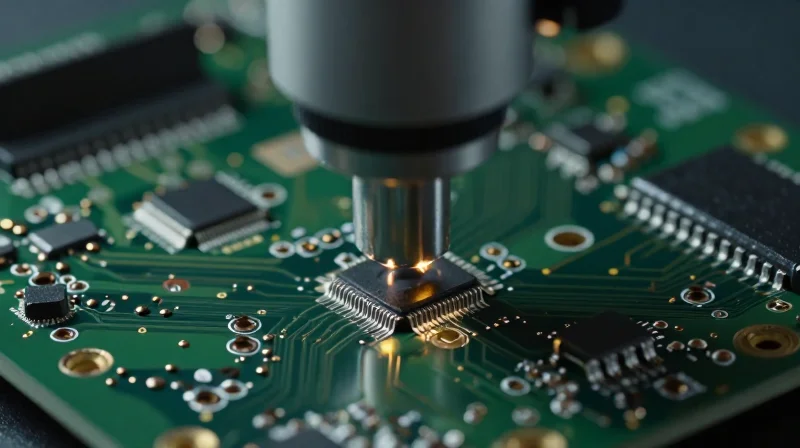
The Financial Geometry of Defect Detection
In IoT manufacturing, the cost of a defect follows an inverse relationship with time: the later an error is identified, the more expensive it becomes to rectify. A failure caught during Automated Optical Inspection (AOI) costs pennies, whereas the same failure discovered after product deployment necessitates costly logistics, manual field repairs, and catastrophic reputational damage.
| Detection Stage | Estimated Relative Cost | Primary Business Impact |
|---|---|---|
| Design/Prototype | 1x | Minimal resource re-allocation |
| In-Process Assembly | 10x | Scrap and rework labor |
| End-of-Line Testing | 100x | Delayed shipments and logistics |
| Field Deployment | 1000x+ | Recalls, liability, and brand loss |
Strategic Quality Assurance FAQ
- How does proactive testing influence ROI?
Proactive testing shifts the cost curve left, replacing unpredictable reactive field expenses with controlled, repeatable inspection processes that stabilize manufacturing margins. - What is the role of ICT in IoT PCBA?
In-Circuit Testing (ICT) provides high-speed verification of component placement and connectivity, significantly reducing the throughput bottleneck that often compromises quality during high-volume runs. - Can excessive testing hurt ROI?
Over-testing can increase cycle times and test equipment utilization costs. A balanced approach uses Design for Test (DfT) to focus high-coverage diagnostics on high-risk nodes, avoiding redundant testing of stable components.
To achieve sustainable profitability, manufacturers must view Quality Assurance not as a 'sunk cost' of production, but as a critical safeguard of their capital expenditure. By integrating rigorous testing protocols into the core assembly workflow, companies can transform their defect management from a liability-heavy burden into a lean, predictable operational pillar.
Managing Vendor Partnerships for Long-Term Value
The Shift from Transactional to Strategic Engagement
Many organizations treat PCBA assembly as a commodity, repeatedly pitting manufacturers against each other in a race to the lowest quote. However, this transactional approach often leads to hidden costs, including poor quality, supply chain fragility, and a lack of innovation. A strategic partnership transforms the manufacturer from a simple service provider into an extension of your engineering team, enabling iterative cost reduction that survives the entire product lifecycle.
Comparative Approaches to PCBA Vendor Management
| Feature | Transactional Relationship | Strategic Partnership |
|---|---|---|
| Pricing Focus | Unit cost negotiation | Total Cost of Ownership (TCO) |
| Information Flow | Restricted/Siloed | Full transparency/Integrated |
| Problem Solving | Reactive blaming | Proactive root cause analysis |
| Design Influence | Manufacturer follows print | Joint Design for Manufacturing (DFM) |
Key Drivers of Value in Long-Term Partnerships
A mature vendor relationship fosters collaboration in three distinct areas that drive ROI: optimized procurement, shared process improvements, and lifecycle management.
- Integrated Supply Chain Management
Long-term partners often provide early alerts on component obsolescence and lead-time volatility, allowing for preemptive redesigns that prevent expensive production line halts. - Collaborative Cost Engineering
With deeper knowledge of your design goals, partners can suggest lower-cost component alternatives or assembly optimizations that maintain your IoT product's performance profile. - Shared Productivity Gains
As production volumes stabilize, strategic partners are more willing to invest in dedicated assembly fixtures or specialized automation, passing the efficiency gains back to the client.
Common Questions on Vendor Partnerships
- Does partnering increase initial costs?
While a strategic partner may have a higher baseline quote due to superior quality standards and communication, it significantly reduces the Total Cost of Ownership by eliminating rework and emergency expedite fees. - How do we measure the success of a partnership?
Success should be measured by metrics such as First Pass Yield (FPY), reduction in ECN (Engineering Change Notice) cycles, and year-over-year cost reductions realized through joint efficiency initiatives.
Future-Proofing Your Production Line

Designing for Scalability and Adaptability
To protect ROI against the rapid obsolescence cycles typical of the IoT sector, manufacturers must move away from rigid, product-specific assembly lines. By prioritizing modular PCBA designs, companies can swap critical components—such as microcontrollers or connectivity modules—without redesigning the entire board or disrupting the overarching manufacturing workflow.
The Role of Flexible Manufacturing Cells
Flexible manufacturing cells represent the transition from fixed-purpose hardware to software-defined production. These cells can be reconfigured through modular tooling and programmable automation, allowing the same production line to handle multiple IoT device variations with minimal changeover time.
| Strategy | Initial Cost | Long-term ROI | Adaptability |
|---|---|---|---|
| Fixed Assembly | Low | Poor | None |
| Modular PCBA Design | Moderate | High | Superior |
| Flexible Cells | High | Exceptional | High |
Strategic Implementation FAQs
- How does modular design lower long-term costs?
Modular design allows you to refresh individual components (e.g., upgrading a radio module) without re-validating the entire assembly, significantly reducing R&D and tooling costs. - Can flexible cells handle high-volume demand?
Yes, modern flexible cells leverage high-speed robotics and IoT-enabled sensors that allow for rapid scalability and real-time throughput adjustments, ensuring high efficiency even as product mix fluctuates. - Is the capital investment for flexible cells justifiable?
While upfront costs are higher, the reduction in downtime, lower scrap rates, and the ability to pivot to new market demands without secondary investment makes this a key driver for long-term ROI.
By aligning your component sourcing strategy with lean manufacturing and proactive quality control, you can transform your production line into a powerful profit center. Sustainable growth in the IoT space requires both technical precision and financial discipline. Ready to optimize your manufacturing pipeline? Contact our engineering team today to audit your PCBA production costs and start scaling efficiently.
