The convergence of miniaturization and high-performance display technology has propelled mini projectors from niche gadgets to essential tools for entertainment, education, and business. At the heart of every compact projection device lies a sophisticated motherboard, dictating its performance, features, and overall user experience. Zero One Solution Limited, a leader in rapid-response PCB assembly solutions, understands this critical interplay. We specialize in providing comprehensive Mini Projector Motherboard Solutions, empowering innovators to bring their portable projection visions to life with unparalleled efficiency and reliability.
The Critical Role of the Mini Projector Motherboard
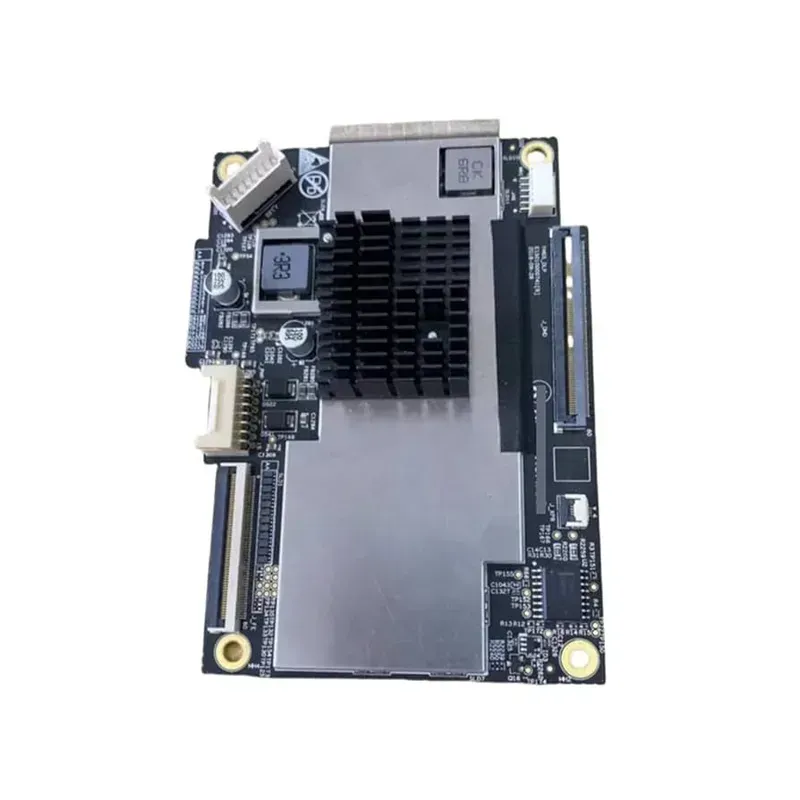
Mini Projector Motherboard
The motherboard serves as the indisputable central nervous system of any mini projector, orchestrating every function from image processing to user interface interactions. Its robust design and optimal performance are paramount, directly dictating the projector's visual fidelity, operational efficiency, and overall user experience. Without a meticulously engineered motherboard, even the most advanced projection components cannot achieve their full potential, underscoring its foundational importance in delivering a seamless and high-quality viewing experience in compact devices.
What are the primary functions a mini projector motherboard manages? The mini projector motherboard orchestrates all critical operations, including video decoding and processing, display signal generation, power management for various components, audio output, connectivity (Wi-Fi, Bluetooth, HDMI), and control over the user interface and input methods.
How does motherboard design impact a mini projector's performance? Motherboard design profoundly influences performance by determining processing speed, heat dissipation efficiency, power consumption, and the stability of various integrated components. A well-designed board ensures smooth video playback, responsive controls, and extended device longevity, preventing issues like lag, overheating, and system crashes.
What are the main challenges in designing a mini projector motherboard? Key design challenges include achieving high power efficiency within a compact footprint, effective thermal management to prevent overheating, maintaining signal integrity for high-resolution output, ensuring electromagnetic compatibility (EMC) in a densely packed environment, and integrating diverse components while minimizing overall cost and size.
Why is power management critical on a mini projector motherboard? Power management is critical due to the limited battery capacity often found in mini projectors and the need to maximize operational time. Efficient power management ICs (PMICs) optimize power distribution to different components, reduce waste, and prevent excessive heat generation, thereby extending battery life and component lifespan.
Can a poorly designed motherboard compromise image quality? Absolutely. A poorly designed motherboard can introduce signal noise, timing inaccuracies, or insufficient processing power, leading to degraded image quality such as flickering, distorted colors, pixelation, or reduced resolution, even if the optical components are high-grade. The motherboard is responsible for processing and delivering a clean, stable video signal to the display engine.
Key Features and Components of a Robust Mini Projector Motherboard
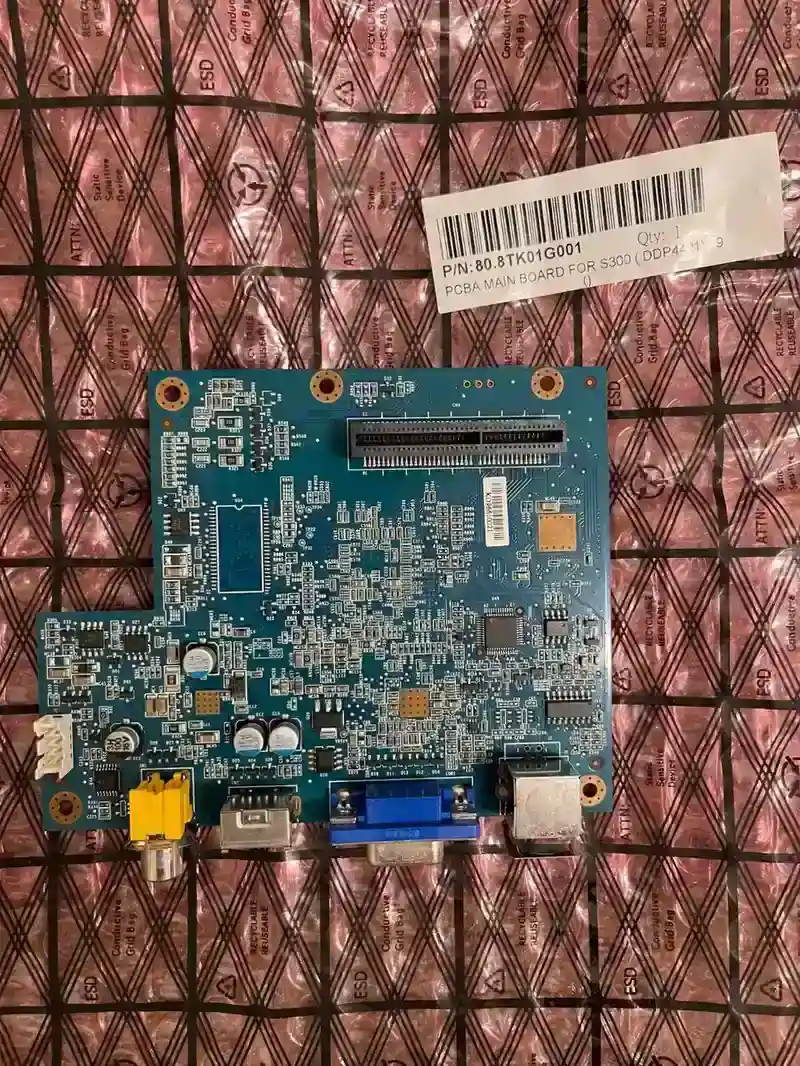
Projector Motherboard Components
A robust mini projector motherboard is the linchpin for delivering exceptional performance and user experience, seamlessly integrating a complex array of components. Its design is a sophisticated dance between maximizing functionality within a minimal footprint, ensuring stable operation, and optimizing power consumption. Understanding these core features and their intricate interplay is crucial for developing a high-quality mini projector solution.
Component Category
Key Components
Impact on Performance
Display Drivers
Panel Drivers (DLP, LCD, LCoS), LED/Laser Drivers
Crucial for image quality, color accuracy, brightness, and contrast. Directly controls the projection technology and light source.
Processing Units
System-on-Chip (SoC), Graphics Processing Unit (GPU), Digital Signal Processor (DSP)
Handles image processing, video decoding, operating system functions, and overall system responsiveness. Determines resolution support and multimedia capabilities.
Memory Subsystem
RAM (DDR SDRAM), eMMC/NAND Flash Storage
RAM facilitates smooth multitasking and application execution, while storage holds the operating system, applications, and user data. Impacts boot time and app loading speed.
Connectivity Modules
Wi-Fi, Bluetooth, HDMI Receiver, USB Controller, Audio Codec
Enables wireless streaming, peripheral connectivity, external device input (laptops, gaming consoles), and audio output. Essential for versatile usage scenarios.
Power Management ICs (PMICs)
Voltage Regulators, Battery Chargers, Power Sequencers
Manages power distribution and efficiency across all components, optimizing battery life in portable units and ensuring stable operation under varying loads. Vital for thermal management and system longevity.
Integrated System-on-Chip (SoC): The Brain of the Projector A high-performance SoC is at the core, integrating the CPU, GPU, and often the display processing unit. This single-chip solution is vital for compact designs, reducing board size and power consumption while delivering powerful multimedia capabilities, including high-resolution video decoding and complex image rendering. Its selection dictates the projector's overall processing power and feature set, from smart capabilities to gaming performance.
Design Challenges in Mini Projector Motherboard Development
Engineer with PCB
Designing a high-performance mini projector motherboard presents a unique set of engineering challenges that demand specialized expertise and meticulous attention to detail. The compact form factor of mini projectors necessitates extreme efficiency in power consumption, effective thermal management, and robust signal integrity, all while ensuring electromagnetic compatibility (EMC) within a confined space. Overcoming these hurdles is crucial for delivering a reliable, feature-rich, and consumer-friendly device.
Thermal Management The miniaturization of components within mini projectors leads to high power density, generating significant heat. Effective thermal management is paramount to prevent component degradation, ensure stable performance, and extend the lifespan of the projector. This involves sophisticated PCB layout, heat sink design, and potentially active cooling solutions like micro-fans, all while maintaining a compact footprint. Balancing heat dissipation with noise reduction is a critical design consideration, especially for devices intended for quiet environments like homes or offices. Advanced simulation tools and materials science are often employed to optimize heat flow paths and select appropriate thermal interface materials (TIMs) to maximize heat transfer efficiency from critical components to the cooling system.
Power Efficiency Mini projectors often rely on battery power or require low energy consumption for portability and reduced operating costs. Designing a motherboard that achieves optimal power efficiency involves selecting low-power components, implementing efficient power conversion circuits (e.g., DC-DC converters), and intelligent power management ICs (PMICs) that can dynamically adjust power delivery based on operational needs. This directly impacts battery life and reduces overall heat generation, alleviating thermal stress. Furthermore, standby power consumption must be minimized to comply with energy efficiency regulations and extend the device's usability between charges, requiring careful selection of components with low quiescent current and optimized power-down sequences for various sub-systems.
Challenge Area
Impact on Mini Projector
Zero One Solution Approach
Signal Integrity
Poor signal integrity leads to image flickering, color distortion, or data loss, impacting display quality.
Rigorous impedance control, careful trace routing, and advanced simulation for high-speed signals like HDMI, MIPI, and LVDS to ensure pristine signal transmission and reduce crosstalk. Utilization of specialized PCB materials with stable dielectric constants for critical signal paths and comprehensive post-layout verification to identify and mitigate potential signal integrity issues before manufacturing.
Electromagnetic Compatibility (EMC) The density of components and high-speed signals within a mini projector motherboard makes it susceptible to electromagnetic interference (EMI) and can also be a source of EMI. Adhering to strict EMC standards is crucial to prevent interference with other electronic devices and ensure the projector itself operates without disruption. This involves careful PCB shielding, ground plane design, filtering techniques, and component placement to minimize radiated and conducted emissions, while ensuring immunity to external noise. Compliance with international standards such as FCC, CE, and RoHS is vital for global market access, necessitating extensive pre-compliance testing and design iterations to ensure robust electromagnetic performance.
Zero One Solution Limited's Expertise in Mini Projector PCBA
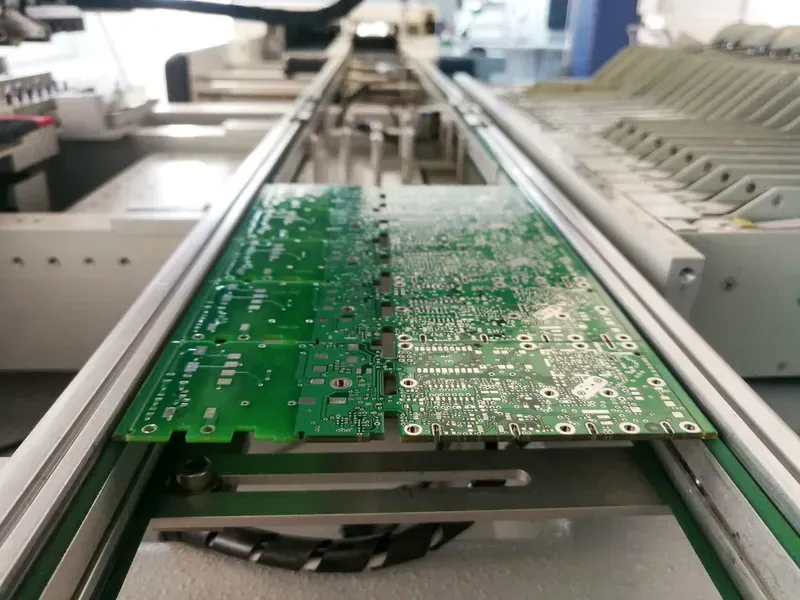
PCB Manufacturing Line
Zero One Solution Limited stands as a beacon of excellence in the realm of mini projector motherboard solutions, leveraging over a decade of specialized experience since our inception in 2011. Our unique advantage lies in providing an unparalleled one-stop service model, encompassing everything from intricate PCB design and rapid prototyping to high-volume manufacturing and precise assembly. This integrated approach ensures that our clients receive not just components, but complete, high-performance PCBA solutions meticulously engineered for the demanding specifications of mini projectors, thereby accelerating their product development cycles and market entry.
Comprehensive PCB Design and Layout Our expert engineers employ cutting-edge EDA tools and deep industry knowledge to craft optimized PCB layouts, focusing on signal integrity, power efficiency, and compact form factors critical for mini projectors. We meticulously design for high-speed data transmission, efficient heat dissipation, and robust power delivery, ensuring stable operation and extended lifespan for the motherboard.
Rapid Prototyping Services Understanding the need for speed in product development, we excel in rapid prototyping. Our advanced facilities and agile processes enable the quick turnaround of functional prototypes, allowing clients to test and iterate designs efficiently, significantly reducing time-to-market and validating concepts swiftly. This capability is crucial for innovative mini projector features and functionalities.
Service Aspect
Zero One Solution Limited's Advantage
Benefit to Client
PCB Design
Advanced EDA tools, Signal Integrity analysis, Thermal Management expertise
High assembly yield, Superior product performance, Minimized field failures
Supply Chain
Global network, Strategic sourcing, Inventory management
Reduced component costs, Timely material availability, Risk mitigation
Advanced Manufacturing Capabilities With state-of-the-art SMT (Surface Mount Technology) and THT (Through-Hole Technology) lines, we possess the capability to manufacture complex multi-layer PCBs with exceptional precision. Our manufacturing processes adhere to stringent international standards, ensuring consistency, reliability, and high yield rates for every mini projector motherboard produced. We handle diverse component sizes and densities with ease, accommodating sophisticated mini projector designs.
Our commitment extends beyond manufacturing to comprehensive assembly services. Utilizing automated optical inspection (AOI), X-ray inspection, and rigorous functional testing, we guarantee that every assembled mini projector PCBA meets the highest performance and reliability benchmarks. Zero One Solution Limited is not just a supplier; we are a strategic partner dedicated to transforming your innovative mini projector concepts into market-ready realities with unmatched speed and quality.
Customization and Flexibility: Tailored Solutions for Diverse Needs
At Zero One Solution Limited, we understand that off-the-shelf solutions rarely meet the intricate demands of innovative mini projector designs. Our core strength lies in providing highly customized Mini Projector Motherboard Solutions, engineered to precisely align with each client's unique project specifications. This bespoke approach ensures optimal performance, integration, and differentiation in a competitive market, moving beyond generic designs to deliver a truly tailored foundation for your next-generation mini projector. Our ability to adapt to diverse technological requirements and form factors is a critical differentiator, empowering our partners to bring their distinct visions to fruition.
Adaptable Projection Technology Support Whether your project utilizes DLP, LCD, or LCoS projection technology, our experienced engineers can design and integrate a motherboard solution that provides optimal signal processing, display control, and power management specifically for your chosen engine. We meticulously tune the board to maximize image quality and light efficiency.
Comprehensive Connectivity Options Beyond standard Wi-Fi and Bluetooth, we offer customization for a wide array of connectivity modules, including advanced wireless protocols, various HDMI input versions, USB-C for power and data, and even specialized audio output options. This ensures seamless integration with diverse external devices and user ecosystems.
Optimized Form Factor and Layout Mini projectors demand compact and efficient designs. We specialize in optimizing PCB layouts to fit precise physical constraints, considering heat dissipation, component placement, and signal integrity within confined spaces. Our designs maximize component density without compromising performance or thermal management.
Tailored Power Management ICs (PMICs) Power efficiency is paramount for portable devices. We design custom PMIC solutions that precisely match your projector's power requirements, ensuring stable voltage delivery, extended battery life, and efficient thermal performance for various power sources, including battery-powered and mains-powered systems.
Specialized Sensor and Control Integration For advanced functionalities like auto-focus, keystone correction, or environmental sensing, we can integrate specific sensor interfaces and control logic directly into the motherboard design. This enables sophisticated features that enhance user experience and differentiate your product.
Customization Aspect
Zero One Solution Limited's Approach
Benefit to Client
Projection Engine Compatibility
Design agnostic to DLP, LCD, LCoS
Flexibility in display technology choice; optimized performance for specific engine
Physical Dimensions & Form Factor
Optimized PCB layout for tight enclosures
Maximized internal space utilization; compact product design
I/O & Connectivity Suite
Tailored integration of HDMI, USB-C, Wi-Fi, Bluetooth, specialized ports
Enhanced user experience; seamless peripheral integration
Power Delivery & Battery Life
Custom PMIC and power path design
Extended operational time; improved energy efficiency
Advanced Feature Integration
Incorporation of sensors, unique control ICs, custom firmware
Quality Assurance and Reliability in Projector Motherboard Manufacturing
Quality Inspection Equipment
Ensuring the highest quality and unwavering reliability is paramount in the production of mini projector motherboards. At Zero One Solution Limited, our commitment to rigorous quality assurance is embedded in every stage of our PCB design, manufacturing, and assembly processes. This meticulous approach guarantees that the final mini projector motherboard solutions are not only high-performing but also exceptionally durable and compliant with stringent industry standards, mitigating risks for our clients and enhancing product longevity.
How does Zero One Solution Limited ensure quality throughout the PCB lifecycle? Zero One Solution Limited implements a multi-stage quality assurance protocol. This begins with comprehensive Design for Manufacturability (DFM) and Design for Assembly (DFA) checks during the design phase to proactively identify and mitigate potential issues. During manufacturing, we employ automated optical inspection (AOI), X-ray inspection, and in-circuit testing (ICT) to verify component placement and solder joint integrity. Post-assembly, functional testing and burn-in testing simulate real-world conditions to ensure the motherboard's performance and reliability under stress. Our processes adhere strictly to IPC standards, such as IPC-A-610 for electronic assemblies, ensuring consistent excellence.
What specific reliability tests are conducted on mini projector motherboards? To guarantee the long-term reliability of mini projector motherboards, Zero One Solution Limited performs a suite of critical tests. These include thermal cycling to assess performance under temperature fluctuations, vibration testing to simulate shipping and handling stresses, accelerated life testing (ALT) to predict lifespan, and highly accelerated stress screening (HASS) to expose latent defects. Additionally, electromagnetic compatibility (EMC) and electromagnetic interference (EMI) testing are conducted to ensure compliance with regulatory standards and prevent interference with other electronic devices, ensuring stable operation in diverse environments.
How does Zero One Solution Limited ensure component quality for motherboards? Component quality is foundational to overall motherboard reliability. Zero One Solution Limited maintains a robust supply chain management system, partnering only with reputable and certified component suppliers. We conduct stringent incoming quality control (IQC) inspections, including visual checks, dimensional measurements, and electrical parameter verification. For critical components, we implement traceability systems to track their origin and performance data, ensuring that only high-grade, authentic parts are integrated into our mini projector motherboard solutions.
What certifications and standards does Zero One Solution Limited adhere to for quality? Zero One Solution Limited operates under internationally recognized quality management systems. We are ISO 9001 certified, demonstrating our commitment to consistent quality and customer satisfaction. Our manufacturing processes comply with RoHS (Restriction of Hazardous Substances) and REACH (Registration, Evaluation, Authorisation and Restriction of Chemicals) directives, ensuring environmental responsibility. Furthermore, our products meet specific industry standards relevant to electronic manufacturing and mini projector applications, such as CE and FCC, where applicable, providing clients with confidence in our compliance and product safety.
How does Zero One Solution Limited handle potential defects or failures? Zero One Solution Limited has a well-defined process for defect management and continuous improvement. Any identified defects during testing or in the field are thoroughly investigated through root cause analysis (RCA). Corrective and preventive actions (CAPA) are then implemented to address the underlying issues and prevent recurrence. This closed-loop feedback system, coupled with statistical process control (SPC) monitoring, allows us to constantly refine our manufacturing processes, enhance product quality, and drive continuous improvement in our mini projector motherboard solutions.
Accelerating Time-to-Market with Zero One Solution Limited
In the fast-paced consumer electronics market, time-to-market is a critical differentiator. Zero One Solution Limited's core strength lies in our ability to dramatically accelerate the product development and launch cycles for mini projector manufacturers. Through our integrated, rapid-response approach to PCB design, prototyping, manufacturing, and assembly, we empower our clients to transform innovative concepts into market-ready products with unprecedented speed and efficiency, securing a vital competitive edge.
Integrated One-Stop Solution Unlike fragmented supply chains that introduce delays, Zero One Solution Limited offers a comprehensive, one-stop service from initial PCB design consultation to mass production. This seamless integration eliminates coordination bottlenecks, reduces communication overhead, and ensures consistent quality control across all stages, significantly compressing overall project timelines for your mini projector motherboard solution.
Rapid Prototyping Capabilities Our specialized rapid prototyping service is engineered for speed without compromising precision. We leverage advanced manufacturing technologies and agile processes to quickly produce functional mini projector motherboard prototypes, enabling rapid iteration, testing, and validation of designs. This drastically shortens the R&D phase, allowing for quicker design finalization and earlier transition to production.
Efficient Manufacturing and Assembly Our state-of-the-art facilities in Shenzhen and strategic global supply chain network ensure efficient and scalable manufacturing and assembly processes. By optimizing material sourcing, production lines, and quality assurance protocols, we minimize lead times and maximize output, ensuring that your mini projector motherboards are produced quickly and reliably to meet market demands.
Frequently Asked Questions about Mini Projector Motherboard Solutions
Navigating the complexities of mini projector motherboard development often leads to various questions regarding design, manufacturing, and strategic partnerships. Below, we address some of the most frequently asked questions to provide clarity and insights into the robust solutions offered by Zero One Solution Limited, ensuring our clients are well-informed to make optimal decisions for their product development.
What are the primary factors influencing the design costs of a mini projector motherboard solution? The design costs for a mini projector motherboard are primarily influenced by several key factors: complexity of features (e.g., advanced connectivity, high-resolution support), choice of components (premium vs. standard), size constraints, thermal management requirements, and the extent of customization needed. Specialized integrated circuits, intricate multi-layer PCB designs, and rigorous testing protocols also contribute significantly to the overall design expenditure. Zero One Solution Limited provides detailed cost breakdowns based on project specifications.
What are the typical lead times for mini projector motherboard prototyping and mass production? Lead times for mini projector motherboard solutions vary based on project scope and current production demands. For rapid prototyping, Zero One Solution Limited typically achieves turnarounds within 7-14 business days, leveraging our advanced facilities and streamlined processes. Mass production lead times are contingent on order volume, component availability, and assembly complexity, generally ranging from 3-6 weeks. We work closely with clients to establish realistic timelines and accelerate market entry.
What is the Minimum Order Quantity (MOQ) for custom mini projector motherboard solutions? Zero One Solution Limited offers flexible Minimum Order Quantities (MOQs) for custom mini projector motherboard solutions, catering to both small-batch R&D prototypes and large-scale mass production. While specific MOQs depend on component sourcing and manufacturing processes, we are committed to supporting innovative projects of all sizes. We encourage clients to discuss their specific volume requirements with our sales team to find the most suitable and cost-effective solution.
How does Zero One Solution Limited ensure the reliability and quality of its mini projector motherboard solutions? Reliability and quality are paramount at Zero One Solution Limited. We adhere to rigorous quality control processes throughout every stage: from initial PCB design verification, material selection, automated optical inspection (AOI), in-circuit testing (ICT), and functional testing, to environmental reliability tests (e.g., thermal cycling, vibration). Our ISO-certified facilities and experienced engineering teams ensure that every mini projector motherboard meets stringent industry standards and delivers consistent, long-term performance.
What kind of after-sales support does Zero One Solution Limited provide for mini projector motherboard solutions? Zero One Solution Limited is dedicated to comprehensive client support even after product delivery. Our after-sales services for mini projector motherboard solutions include technical assistance, troubleshooting, component replacement guidance, and potential re-design or optimization consultations for future iterations. We maintain open communication channels to address any performance queries or support needs, ensuring long-term satisfaction and partnership.
In the rapidly evolving landscape of display technology, the demand for compact, high-performance mini projectors continues to surge. Zero One Solution Limited stands as your premier partner in realizing these innovative devices. Our Mini Projector Motherboard Solutions are not just about providing components; they're about offering a comprehensive ecosystem of design, rapid prototyping, manufacturing, and support, all tailored to accelerate your product development cycle.
Leveraging our deep expertise, global supply chain network, and unwavering commitment to quality, we transform complex ideas into tangible, market-ready products. Whether you're an established brand seeking to optimize your next-gen projector or a startup poised to disrupt the market, Zero One Solution Limited is equipped to be your strategic ally.
Ready to illuminate new possibilities? Contact Zero One Solution Limited today to discuss your mini projector motherboard requirements and discover how our tailored solutions can bring your visionary products to light. Partner with us, and project your success into the future.