In the high-stakes world of aerospace and defense, the reliability of every component is paramount. A missile launch control board, the nerve center of a complex system, demands the highest standards of precision and robustness. Any failure can lead to catastrophic consequences, making the choice of PCB design, manufacturing, and assembly partner a critical decision. At Zero One Solution Limited, we understand these demands implicitly. We provide PCB solutions that not only meet but exceed the stringent requirements of the aerospace industry. This article delves into the critical aspects of missile launch control board solutions, highlighting how our expertise, rapid prototyping capabilities, and commitment to quality make us the ideal partner for your next project.
Understanding the Critical Role of Missile Launch Control Boards
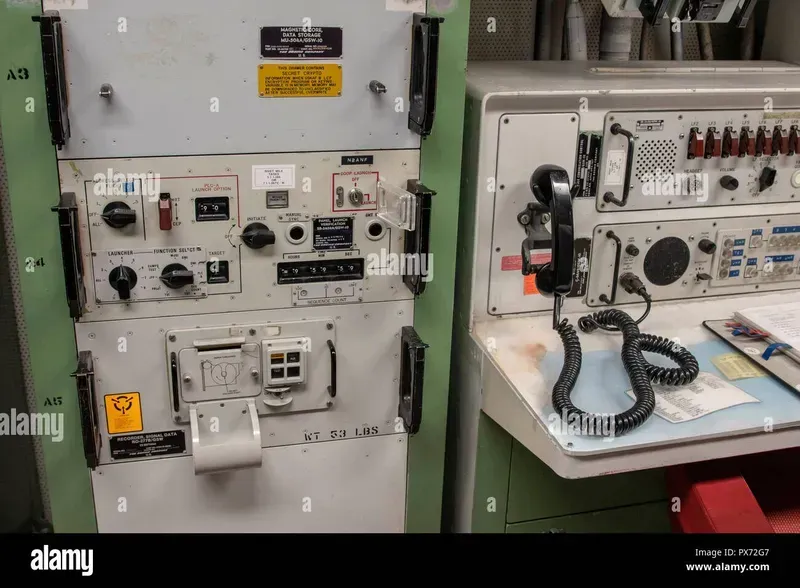
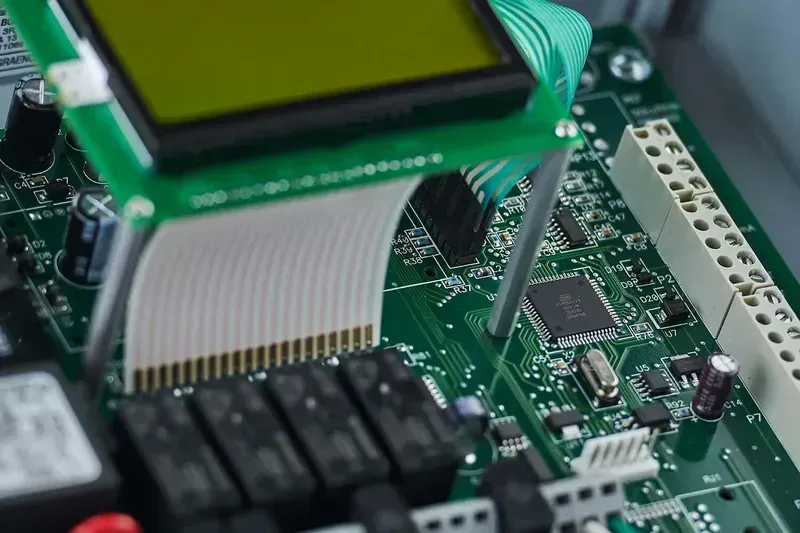
Missile Launch Control Board
The missile launch control board is the central nervous system of any missile system, orchestrating the complex sequence of operations from pre-launch diagnostics to ignition and trajectory initiation. Its flawless operation is paramount, as even a minor malfunction can lead to catastrophic consequences, including mission failure, collateral damage, or even a system compromise. This board must withstand extreme environmental conditions, ensuring unerring accuracy and reliability under immense pressure, making its design and manufacturing a pinnacle of engineering precision.
What is the primary function of a missile launch control board? The primary function of a missile launch control board is to act as the central command unit, receiving and processing critical data from various sensors and systems, then executing the precise sequence of operations required for a successful missile launch. This includes power management, target acquisition, guidance system activation, engine ignition, and flight path initiation, all with sub-millisecond timing precision. It's the brain that translates human intent into a controlled, powerful launch.
Key Design Considerations for High-Reliability PCBs
Designing High-Reliability PCBs for critical applications like missile launch control boards demands an exacting approach, where every design choice directly impacts operational integrity and mission success. The foundation of such reliability lies in meticulous attention to material selection, ensuring signal integrity, implementing robust thermal management, and incorporating redundancy strategies to mitigate potential failures. These considerations are paramount to developing boards that can withstand extreme environments and perform flawlessly under immense pressure.
Material Selection for Extreme Environments The choice of substrate material is critical for high-reliability PCBs. Materials such as polyimide and specialized FR-4 variants offer superior thermal stability, low dielectric loss, and excellent dimensional stability across a wide temperature range, essential for aerospace and defense applications. These materials prevent delamination and maintain electrical performance even under extreme thermal cycling and mechanical stress. The dielectric constant (Dk) and dissipation factor (Df) of the chosen material directly influence signal propagation speed and signal loss, which are vital for maintaining the integrity of high-speed digital and RF signals within the control board. For example, materials with low Dk and Df are preferred for high-frequency applications to minimize signal attenuation and crosstalk. Additionally, fire retardancy and chemical resistance are crucial for safety and longevity in harsh operational environments.
Design Consideration
Description
Impact on Reliability
Signal Integrity
Managing impedance, crosstalk, and electromagnetic interference (EMI) through careful trace routing, ground plane design, and component placement.
Ensures accurate and stable signal transmission, preventing data corruption and operational errors critical for precise control.
Thermal Management
Implementing effective heat dissipation strategies such as copper pours, thermal vias, heat sinks, and optimized component layout.
Prevents overheating, which can lead to component degradation, reduced lifespan, and catastrophic failures in high-power or dense circuits.
Redundancy
Incorporating duplicate circuits, components, or communication paths to ensure continued operation in case of a single point failure.
Significantly enhances fault tolerance and system resilience, crucial for mission-critical applications where failure is not an option.
Component Selection
Choosing military-grade, high-reliability components with extended temperature ranges and proven operational history.
Reduces the likelihood of component failures due to environmental stress or manufacturing defects, extending the board's operational life.
Layer Stack-Up Optimization
Designing the PCB layer stack-up to optimize signal isolation, impedance control, and power distribution.
Minimizes noise, crosstalk, and power integrity issues, providing a stable and predictable electrical environment for sensitive circuits.
The Importance of Material Selection in Aerospace PCBs
In the demanding realm of aerospace and defense, the selection of materials for Printed Circuit Boards (PCBs) is paramount, directly influencing the performance, reliability, and longevity of mission-critical systems such as missile launch control boards. Unlike commercial applications, aerospace PCBs operate under extreme conditions, including wide temperature fluctuations, high vibration, and exposure to harsh chemicals or radiation. Therefore, the choice of substrate, laminate, and conductive materials must inherently possess superior thermal stability, signal integrity, mechanical robustness, and resistance to environmental stressors to ensure unwavering operational integrity.
Material Property
Why it Matters for Aerospace PCBs
Common Materials Used
Thermal Resistance
Ensures stable performance across extreme temperature variations (-55 C to +125 C and beyond), preventing delamination and component failure.
Polyimide, BT-Epoxy, Cyanate Ester
Signal Speed & Integrity
Minimizes signal loss and distortion at high frequencies, critical for precise data transmission in complex control systems.
Withstands extreme G-forces and vibrations during launch and flight without structural compromise.
High Tg (Glass Transition Temperature) materials, reinforced laminates
Zero One Solution Limited: Your Partner in Aerospace PCB Assembly
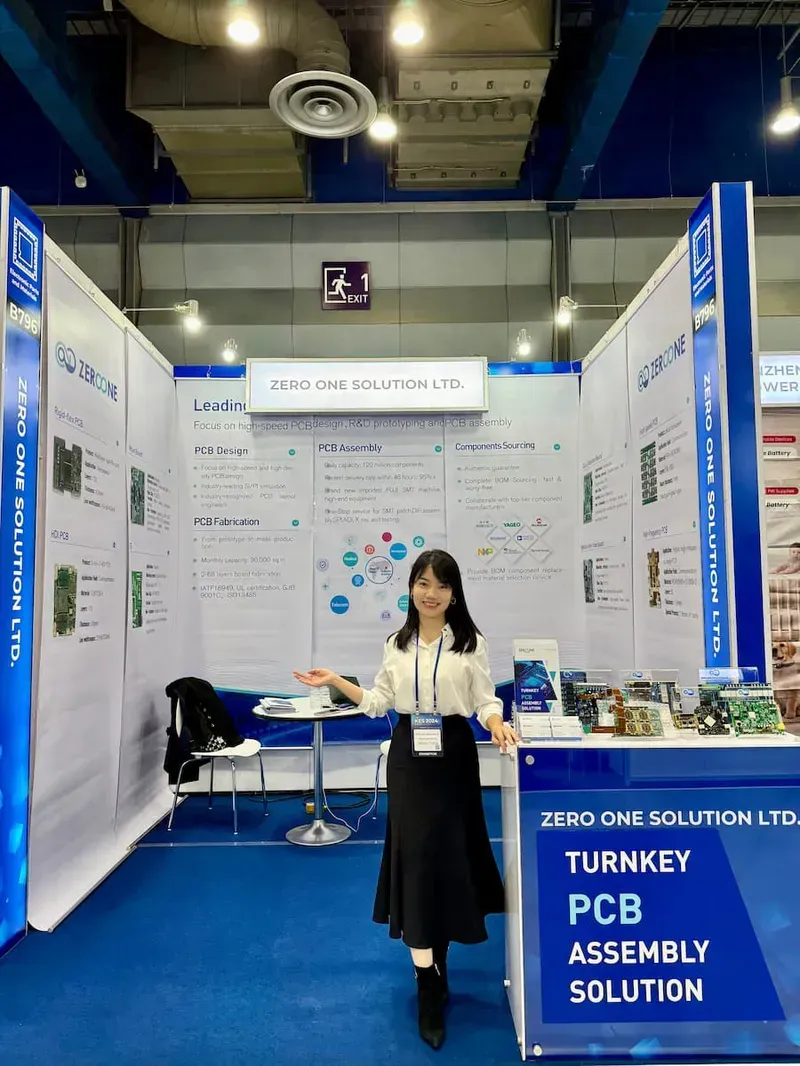
Zero One Solution Factory
Zero One Solution Limited stands as a premier PCB solution provider, uniquely positioned to serve the demanding requirements of aerospace and defense industries, particularly for critical applications such as Missile Launch Control Boards. Our expertise in rapid prototyping, coupled with comprehensive one-stop services encompassing PCB design, manufacturing, and assembly, empowers clients to accelerate product development cycles while upholding the highest standards of reliability and performance. Since our inception in 2011, we have been at the forefront of innovation, driving efficiency and precision in mission-critical electronic systems.
Who is Zero One Solution Limited? Zero One Solution Limited is a specialized PCB solution provider founded in 2011, renowned for its rapid prototyping capabilities and end-to-end services from PCB design to manufacturing and assembly. We are headquartered in Shenzhen, China, with a branch in Dubai, strategically positioned within the global PCBA supply chain.
What specific services does Zero One Solution Limited offer for Missile Launch Control Boards? We offer a full spectrum of services tailored for Missile Launch Control Boards, including high-reliability PCB design, rapid prototyping, precision manufacturing, advanced assembly, and rigorous testing, all designed to meet the stringent demands of aerospace and defense applications.
How does Zero One Solution Limited ensure rapid prototyping for critical aerospace PCBs? Our rapid prototyping process leverages advanced automation, streamlined workflows, and a vast inventory of specialized materials, enabling us to deliver quick turnaround times without compromising the precision or integrity required for aerospace-grade PCBs.
Rigorous Testing and Validation Procedures for Missile Launch Control Boards
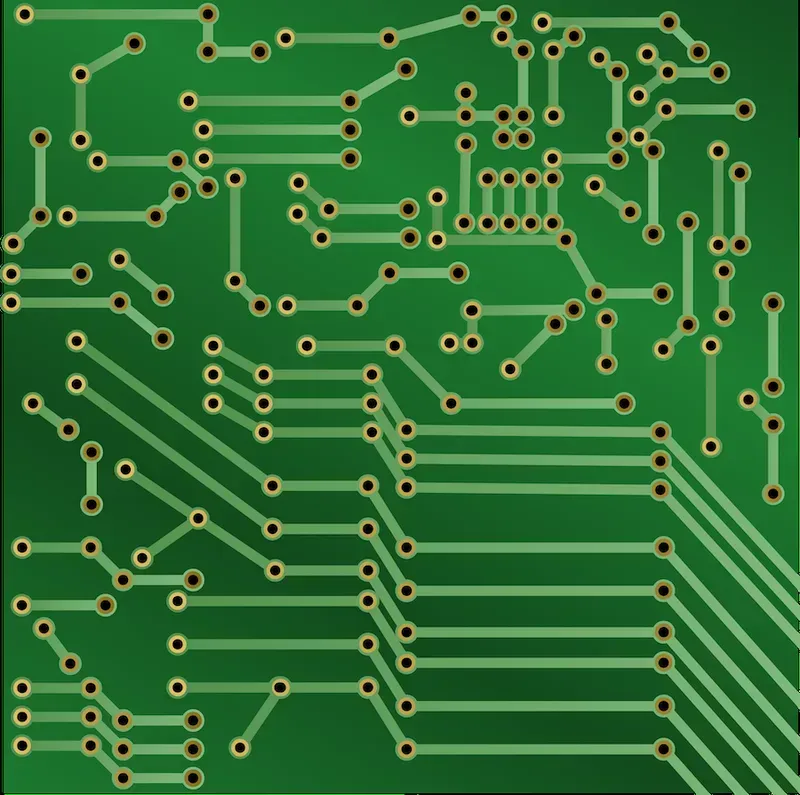
PCB Prototyping
For mission-critical applications like missile launch control boards, the integrity of every component is paramount, necessitating a meticulously rigorous testing and validation regimen. At Zero One Solution Limited, our commitment to unwavering reliability is embedded in a multi-faceted approach to quality assurance, ensuring that each PCB performs flawlessly even under the most extreme operational and environmental conditions. This rigorous methodology is not merely about identifying defects; it's about proactively validating design robustness, material resilience, and manufacturing precision to guarantee performance where failure is not an option.
What are the primary testing methodologies for missile launch control boards? The primary testing methodologies include functional testing to verify all circuits and components operate as intended, environmental stress screening (ESS) to expose potential latent defects through thermal cycling and vibration, and accelerated life testing (ALT) to predict long-term reliability under simulated operational conditions. These methods collectively ensure comprehensive validation.
How does Zero One Solution Limited ensure component reliability under extreme temperatures? We employ thermal cycling and high-temperature operating life (HTOL) testing as part of our ESS and ALT procedures. These tests subject the boards to rapid and prolonged temperature fluctuations, simulating the extreme thermal environments encountered during missile launch and flight, thereby verifying material integrity and performance stability.
What role does vibration testing play in validating missile launch control boards? Vibration testing is crucial for assessing the mechanical robustness of the PCB and its solder joints under conditions mimicking launch shock and in-flight vibrations. This ensures that all components remain securely attached and functional despite severe mechanical stresses, preventing intermittent failures or complete system breakdowns.
How are signal integrity and electromagnetic compatibility (EMC) tested? Signal integrity (SI) is verified through high-speed digital and analog signal analysis, measuring parameters like impedance, crosstalk, and jitter. EMC testing, including electromagnetic interference (EMI) and electromagnetic susceptibility (EMS) assessments, ensures that the board neither emits nor is affected by electromagnetic noise, which is critical for preventing operational disruptions in complex electronic environments.
One-Stop PCB Solutions: From Design to Assembly
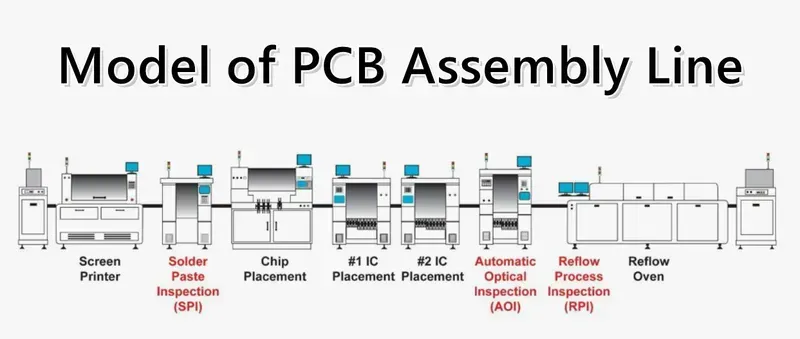
PCB Assembly Line
Zero One Solution Limited offers a comprehensive, integrated one-stop PCB solution, streamlining the entire product development lifecycle from initial design conception to final assembly and testing. This holistic approach eliminates the complexities of managing multiple vendors, ensuring seamless communication, consistent quality control, and significantly accelerating time-to-market for mission-critical applications like missile launch control boards.
Integrated Design & Layout Our expert engineers collaborate closely with clients during the initial PCB design and layout phases, leveraging advanced CAD tools to optimize signal integrity, thermal management, and manufacturability for high-reliability aerospace applications. This early integration of DFM (Design for Manufacturability) and DFT (Design for Testability) principles is crucial for preventing costly revisions later in the development cycle, ensuring the design meets stringent performance and reliability standards from the outset.
Precision Manufacturing With state-of-the-art facilities and adherence to aerospace-grade standards (e.g., IPC Class 3/A), Zero One Solution guarantees precision manufacturing of PCBs. We specialize in producing complex multi-layer boards with tight tolerances, utilizing advanced materials and processes to ensure the robustness and longevity required for extreme operating environments, delivering consistent quality at scale for missile launch control applications.
Service Aspect
Zero One Solution's Integrated Approach
Traditional Multi-Vendor Approach
Project Management
Single point of contact, streamlined communication, unified responsibility.
Multiple points of contact, potential for miscommunication, fragmented responsibility, extended timelines due to coordination overheads.
Streamlined supply chain, reduced procurement complexities, lower administrative costs and lead times.
Fragmented supply chain, increased procurement complexities, higher administrative costs and extended lead times due], [
Reduced potential for design-manufacturing discrepancies, enhanced quality consistency across all stages.
Increased potential for design-manufacturing discrepancies, inconsistent quality due to varied vendor standards.
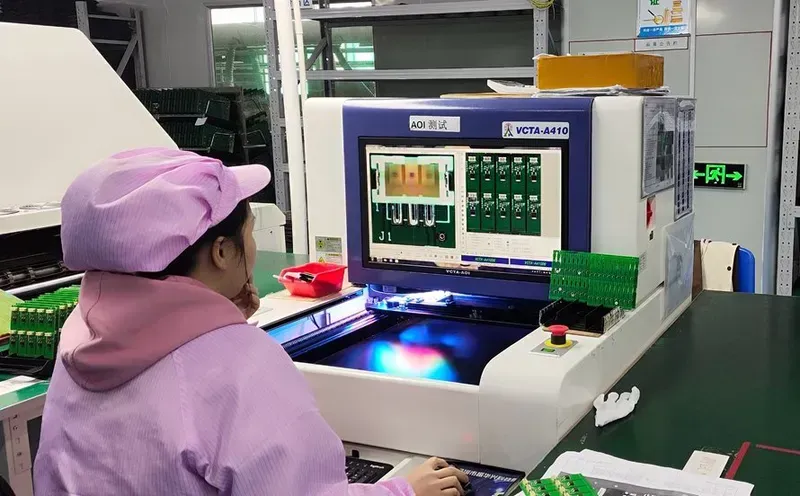
Our commitment to a one-stop solution extends through rigorous assembly and comprehensive testing, utilizing advanced SMT and THT capabilities, coupled with automated optical inspection (AOI), X-ray inspection, and functional testing to validate every component and connection. This end-to-end service model not only simplifies the supply chain but also drastically enhances the overall efficiency and reliability of the final product, providing unparalleled value for aerospace and defense projects.
Quality Assurance and Testing for Mission-Critical Applications
PCB Testing Equipment
For mission-critical systems like missile launch control boards, uncompromising quality assurance and rigorous testing are not merely best practices but absolute necessities. Zero One Solution Limited implements a multi-faceted approach to quality control, integrating stringent inspection protocols and advanced testing methodologies at every stage of the PCB lifecycle, from raw material procurement to final assembly and beyond, ensuring unwavering reliability and performance.
How does Zero One Solution Limited ensure the quality of raw materials for missile launch control boards? We maintain a robust supply chain management system, partnering exclusively with certified and vetted suppliers. All incoming raw materials, including substrates, copper foils, and prepregs, undergo comprehensive incoming quality control (IQC) inspections, verifying material specifications against industry standards like IPC and MIL-PRF to detect any non-conformities before production begins. This includes thorough chemical composition analysis, dimensional checks, and electrical property validation.
What specific in-process testing procedures are utilized during PCB manufacturing? During manufacturing, we employ a series of critical in-process tests. This includes Automated Optical Inspection (AOI) for defect detection on inner and outer layers, Electrical Test (E-Test) to verify circuit continuity and isolation, and impedance control measurements to ensure signal integrity. We also conduct cross-section analysis and destructive physical analysis (DPA) on sample boards to validate layer registration, plating thickness, and overall structural integrity, ensuring adherence to the most exacting specifications.
How does Zero One Solution Limited ensure the reliability of assembled missile launch control boards? For assembled boards, we implement a multi-tiered testing approach. This includes Automated X-ray Inspection (AXI) for solder joint integrity under BGAs and other complex components, In-Circuit Testing (ICT) for component presence and functionality, and Functional Testing (FCT) to simulate real-world operational scenarios. We also perform environmental stress screening (ESS) such as thermal cycling and vibration testing to identify latent defects and confirm performance under extreme conditions, replicating the harsh environments these boards will encounter.
Case Studies: Demonstrating Success in Critical Applications
Aerospace PCB Assembly
Zero One Solution Limited's unwavering commitment to excellence and precision in PCB assembly for critical applications is best exemplified through our successful project deliveries. Our expertise in navigating the stringent demands of aerospace and defense, particularly for missile launch control boards, is validated by a robust track record of delivering high-reliability solutions that meet and exceed performance expectations under extreme conditions. These case studies underscore our capability to transform complex requirements into tangible, resilient hardware.
Advanced Signal Processing Unit for Hypersonic Missile Guidance Zero One Solution Limited was contracted to develop a compact, high-speed signal processing unit PCB for a next-generation hypersonic missile guidance system. The challenge involved integrating multi-layer impedance-controlled traces with advanced thermal management features within a highly constrained form factor. Leveraging our rapid prototyping capabilities, we iterated through design revisions in record time, achieving critical signal integrity targets of less than 2% reflection and maintaining operating temperatures below 70°C even under peak loads. This enabled the client to accelerate their testing phase by 30% and meet a critical national defense program deadline.
Ruggedized Power Distribution Board for Space-Launch Vehicle For a space-launch vehicle project, we designed and manufactured a ruggedized power distribution board requiring extreme vibration resistance and wide temperature tolerance (-55°C to +125°C). Our solution incorporated specialized high-Tg laminates and a proprietary flex-rigid PCB design to mitigate stress points. Through comprehensive environmental testing, including MIL-STD-810G vibration and thermal cycling, the boards demonstrated zero failures over 500 hours of simulated mission profiles, showcasing their exceptional durability and reliability for critical aerospace propulsion systems.
Miniaturized Command and Telemetry Module for UAV Weapon Systems We engineered a miniaturized command and telemetry module PCB for an advanced Unmanned Aerial Vehicle (UAV) weapon system, demanding ultra-low power consumption and high-density component placement. Our team optimized the layout for EMI/EMC compliance and integrated custom shielding solutions. The delivered PCBs resulted in a 40% reduction in module size and a 25% decrease in power draw compared to the client's previous iteration, directly contributing to extended UAV flight times and enhanced operational stealth capabilities.
FAQs about Missile Launch Control Board Solutions
The development and deployment of missile launch control boards are underpinned by complex engineering challenges, demanding exceptional precision and reliability. This section addresses frequently asked questions concerning the critical aspects of designing, manufacturing, and testing these highly specialized PCBs, providing insights into the stringent requirements and advanced solutions inherent to missile launch control board technology.
What are the primary challenges in designing a missile launch control board solution? The primary challenges in designing a missile launch control board solution involve extreme environmental conditions (temperature, vibration, shock), stringent electromagnetic compatibility (EMC) requirements to prevent interference, and the need for absolute reliability and redundancy to prevent mission failure. Miniaturization, high-speed signal integrity, and robust power delivery are also critical considerations to ensure operational integrity and responsiveness.
How does Zero One Solution Limited ensure the reliability of missile launch control board PCBs? Zero One Solution Limited ensures reliability through a multi-faceted approach. This includes meticulous material selection (e.g., high-Tg laminates, low-loss dielectrics), advanced design for signal integrity and thermal management, and rigorous manufacturing processes compliant with aerospace standards like IPC Class 3/A. Comprehensive testing, including environmental stress screening (ESS), functional testing, and in-circuit testing (ICT), further validates performance under extreme conditions, guaranteeing mission-critical reliability.
What specific materials are crucial for missile launch control board PCBs and why? Crucial materials for missile launch control board PCBs include high-performance laminates like polyimide or specialized PTFE composites, chosen for their superior thermal stability, low dielectric loss, and excellent signal integrity at high frequencies. Copper foils with enhanced adhesion are used for robust circuit traces, and specialized solders with high fatigue resistance are employed to withstand thermal cycling and vibration. These materials are selected to ensure electrical performance, mechanical robustness, and long-term reliability in harsh operating environments.
How does rapid prototyping benefit the development of missile launch control board solutions? Rapid prototyping significantly benefits the development of missile launch control board solutions by enabling quick iteration and validation of designs. It allows engineers to test and refine critical functionalities, identify potential issues early in the development cycle, and optimize performance before full-scale production. This accelerated process reduces development time and costs, while enhancing the overall quality and reliability of the final product, crucial for time-sensitive defense applications.
What quality assurance and testing procedures are vital for mission-critical missile launch control board solutions? Vital quality assurance and testing procedures for mission-critical missile launch control board solutions include Automated Optical Inspection (AOI), X-ray inspection for hidden solder joints, In-Circuit Testing (ICT), and Functional Testing (FCT) to verify electrical performance. Environmental Stress Screening (ESS), including thermal cycling and vibration testing, simulates operational conditions to expose latent defects. Conformal coating inspection and cleanliness testing further ensure long-term durability and resistance to environmental factors, adhering to stringent aerospace and defense standards.
In conclusion, the design and manufacture of missile launch control boards demand an unwavering commitment to quality, reliability, and precision. Zero One Solution Limited, with its expertise in rapid prototyping, comprehensive one-stop services, and rigorous quality assurance processes, is uniquely positioned to meet these critical needs. Partner with us to accelerate your product development, reduce risk, and ensure the success of your next aerospace project. Contact Zero One Solution Limited today to discuss your specific PCB requirements and discover how we can help you achieve your goals.