In our increasingly interconnected world, capacitors are indispensable components of electronic devices. Among the leading manufacturers, Murata stands out with its commitment to innovation and quality, especially in its line of capacitors. From the tiniest MLCCs powering wearables to high-frequency options in communication systems, Murata's capacitors are the unsung heroes that keep our technology running smoothly. This guide delves into the world of Murata capacitors, examining their various types, applications, and the technological advancements that make them critical components in modern electronics.
Murata stands as a leading manufacturer, providing a broad spectrum of capacitor technologies meticulously engineered to meet diverse application requirements. Their portfolio encompasses ceramic capacitors, polymer aluminum electrolytic capacitors, trimmer capacitors, single-layer microchip capacitors, and variable capacitors, each with unique performance characteristics.
| Capacitor Type | Key Characteristics | Typical Applications |
|---|---|---|
| Ceramic Capacitors | High capacitance in small size, excellent high-frequency performance, low ESR/ESL. | Mobile devices, consumer electronics, power supplies, automotive. |
| Polymer Aluminum Electrolytic Capacitors | High capacitance, low ESR, stable over a wide temperature range, suitable for power circuits. | Server systems, industrial equipment, automotive. |
| Trimmer Capacitors | Adjustable capacitance for fine-tuning circuits, typically manually adjustable. | RF circuits, antenna matching networks, test equipment. |
| Single-Layer Microchip Capacitors | Compact size, designed for high-frequency applications, precision performance. | High-frequency circuits, impedance matching, microwave applications. |
| Variable Capacitors | Capacitance can be varied mechanically or electrically, used for tuning and adjustment. | RF tuners, oscillators, impedance matching circuits. |
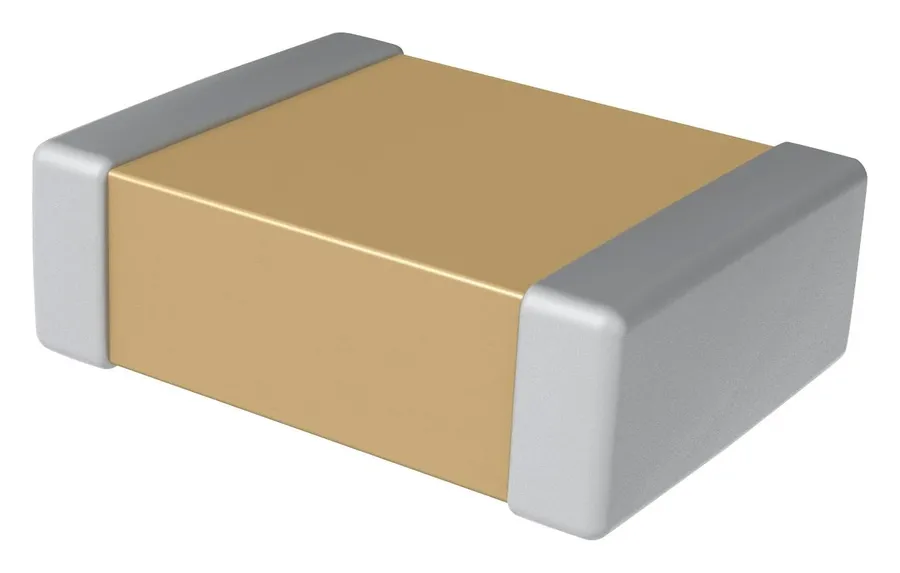
Multilayer Ceramic Capacitors (MLCCs) stand as the most prevalent type of capacitor manufactured by Murata, recognized for their compact dimensions, substantial capacitance, and dependable performance. These components are indispensable in a wide array of electronic devices, serving critical functions such as energy storage and noise suppression.
MLCCs are constructed by layering ceramic dielectric material between conductive electrodes. This structure creates multiple capacitors in parallel within a single package, thus achieving high capacitance within a small footprint.
| Feature | Description |
|---|---|
| Size | Extremely small, suitable for compact devices |
| Capacitance | High capacitance values available in small packages |
| Reliability | Highly reliable, with low failure rates |
| Voltage Rating | Available in various voltage ratings to suit different applications |
| Temperature stability | Good temperature stability, with minimal capacitance change over a broad temperature range |
| ESR (Equivalent Series Resistance) | Low ESR, improving efficiency and reducing heat generation |
| Applications | Power smoothing, decoupling, filtering, and timing circuits |
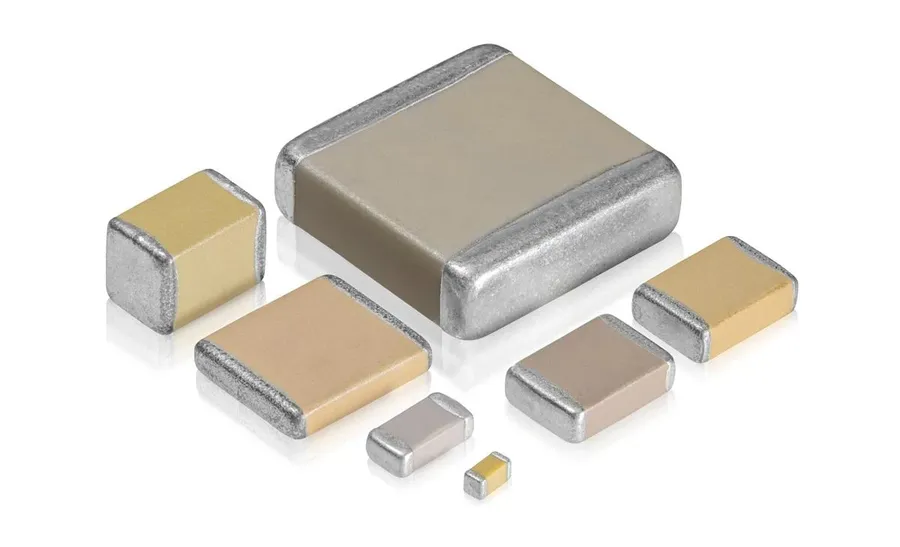
Murata MLCCs are available in a variety of case sizes, capacitance values, voltage ratings, and temperature characteristics, ensuring suitability for diverse application requirements. The dielectric material used in the capacitors also varies, enabling specific performance characteristics such as temperature stability (X5R, X7R) and high capacitance (Y5V).
Common applications include:
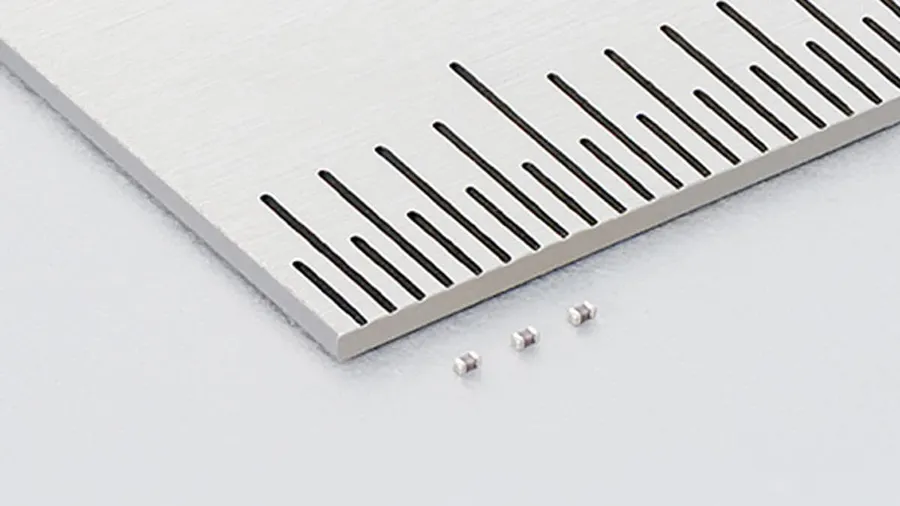
Murata has achieved a significant breakthrough in miniaturization with the introduction of the 006003-inch (0.16mm x 0.08mm) multilayer ceramic capacitor (MLCC). This achievement represents a 75% reduction in volume compared to its predecessors, fundamentally advancing the design of compact electronic devices.
| Feature | 006003-inch MLCC | Previous Generation MLCC |
|---|---|---|
| Size | 0.16mm x 0.08mm | Larger Dimensions (Specific values vary) |
| Volume Reduction | 75% Reduction | Base Size |
| Applications | Highly Compact Devices (Smartphones, Wearables) | General Purpose Electronics |
| Impact | Enables Higher Density Circuit Boards | Standard Density Circuit Boards |
The reduced size of the 006003-inch MLCC impacts electronic design in several ways. The ability to place more components within a limited area has resulted in higher density and more efficient circuit boards. This miniaturization opens opportunities for compact designs in smartphones, wearable devices, and other space-constrained applications. Moreover, these components maintain the performance and reliability expected of Murata capacitors.
Murata's GJM series capacitors represent a pinnacle in high-frequency performance, specifically engineered for applications operating within the 500 MHz to 10 GHz range. These capacitors, characterized by their high Q-factor, are crucial in circuits where signal integrity and minimal energy loss are paramount, such as in high-frequency communication and signal processing modules.
The 'Q' factor, or quality factor, is a dimensionless parameter that quantifies the energy efficiency of a capacitor. A high Q-factor indicates low energy dissipation, which is essential in applications like voltage-controlled oscillators (VCOs) and power amplifier (PA) modules where signal purity and power transfer efficiency are critical. Murata's GJM series capacitors achieve this through advanced material science and precision manufacturing techniques.
| Feature | Description | Benefit |
|---|---|---|
| Frequency Range | 500 MHz to 10 GHz | Suitable for high-speed circuits and RF applications |
| High Q-factor | Low energy dissipation | Maintains signal integrity and reduces power loss |
| Application | VCOs, PAs, RF filters, impedance matching circuits | Enables high performance in signal generation, amplification and filtering |
| Material Technology | Proprietary ceramic formulations and processing | Ensures reliability and stability in demanding environments |
The specific application of high-Q capacitors in VCOs directly influences the phase noise performance, crucial for clean signal generation and precise frequency control. In PAs, these capacitors minimize signal losses, enhancing output power and efficiency. Furthermore, high-Q capacitors are essential components in RF filters, providing sharp selectivity and minimal insertion loss, and are also employed in impedance matching circuits to maximize power transfer.
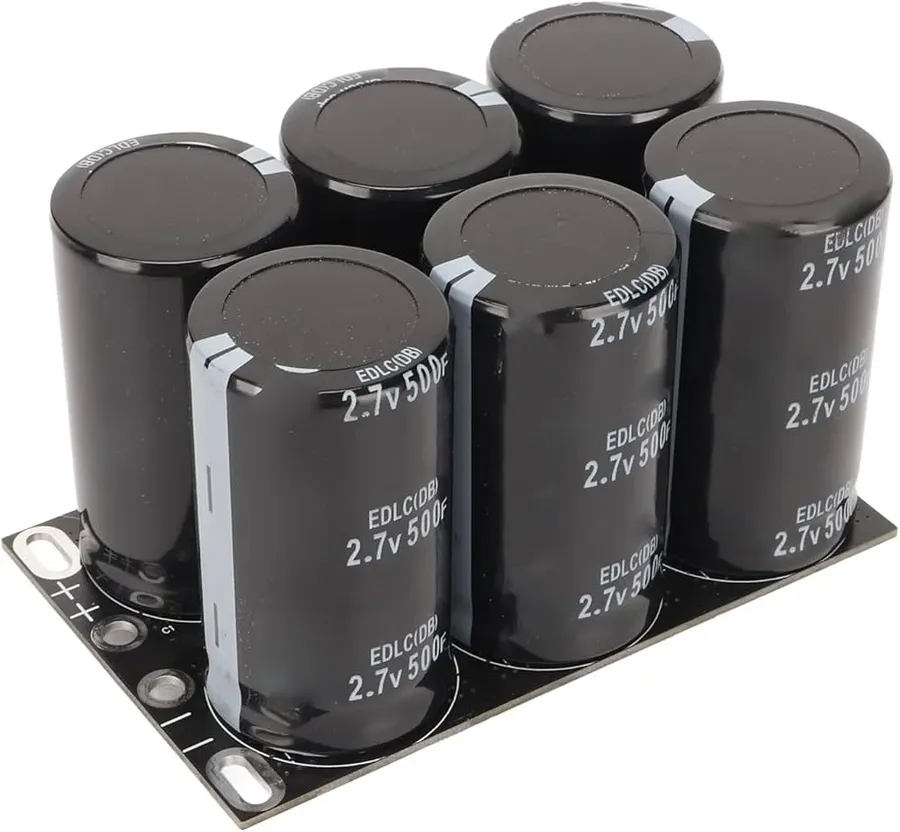
Murata capacitors are integral components across a wide spectrum of industries, leveraging their diverse types and performance characteristics. Their applications range from consumer electronics to demanding industrial environments, showcasing their versatility and reliability.
This section addresses common questions regarding Murata capacitors, focusing on practical aspects like lifespan, operational limits, and technical considerations. We aim to provide clear and concise answers to help users better understand and utilize Murata capacitors effectively.
Selecting the optimal Murata capacitor involves careful consideration of several key parameters to ensure it meets the specific demands of your application. This section provides a practical guide to navigate these critical factors, helping you make informed decisions.
| Factor | Description | Considerations |
|---|---|---|
| Capacitance Value | The amount of charge the capacitor can store. | Match the required capacitance for your circuit, considering tolerances and operating conditions. This value is measured in Farads (F), typically microfarads (µF), nanofarads (nF), or picofarads (pF). |
| Voltage Rating | The maximum voltage the capacitor can safely withstand. | Choose a voltage rating that exceeds the maximum voltage expected in your circuit. Operating at or above the rated voltage can cause damage or failure. |
| Temperature Coefficient | How the capacitance value changes with temperature. | Select a capacitor with a temperature coefficient that suits the operating temperature range. Ceramic capacitors are available with various temperature coefficients like NP0/C0G, X7R, and Y5V. |
| Size Constraints | Physical dimensions of the capacitor. | Ensure the chosen capacitor fits within the available space on your PCB or within the assembly. |
| Cost-Effectiveness | The price of the capacitor, balancing performance and budget. | Consider cost in conjunction with performance requirements. Sometimes slightly higher cost can ensure reliability of the application. |
| ESR (Equivalent Series Resistance) | The resistance within the capacitor. | Lower ESR is generally better for high-frequency applications, minimizing losses. |
| Tolerance | The permissible deviation of the actual capacitance value from the nominal value | Pay attention to the tolerance for your application. A lower tolerance means greater accuracy but is also more costly. |
| Industry Standards | Compliance with relevant industry standards such as AEC-Q200 for automotive applications. | Ensure compliance to ensure the capacitor meets industry requirements for quality and reliability. |
It is also important to consider the application when selecting a capacitor. For instance, an MLCC used for power supply filtering will require different parameters than one used for RF tuning. For example, high-frequency applications require capacitors with low ESR and ESL. Automotive applications require compliance with AEC-Q200 and more stringent operating conditions.
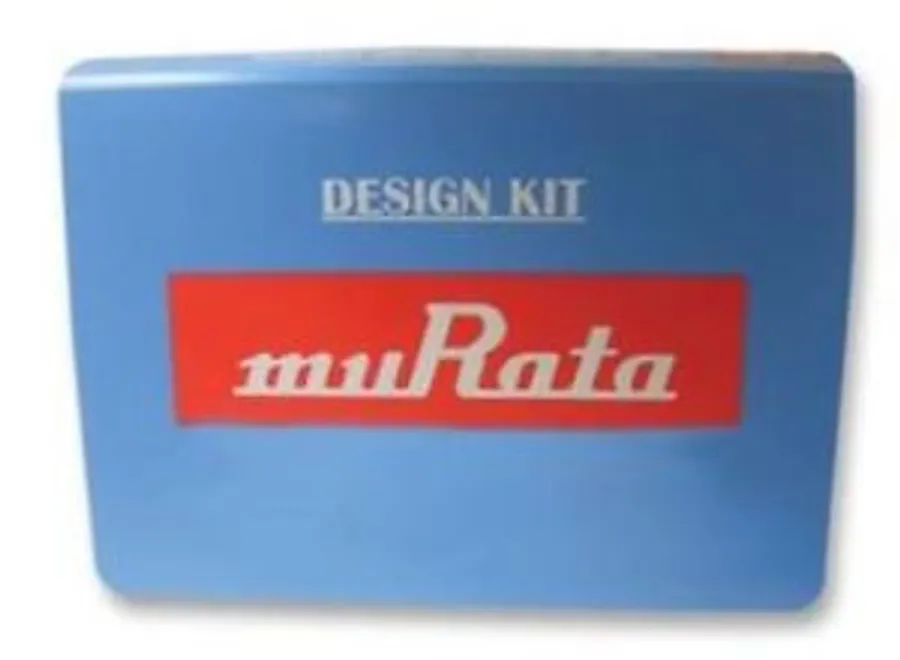
Murata capacitor design kits are curated collections of various capacitor types and values, incorporating the latest advancements in capacitor technology. These kits are designed to streamline the component selection process for engineers by providing a diverse range of options to test and evaluate under different operating conditions, thereby expediting prototyping and design validation.
These kits provide a hands-on approach to capacitor selection, enabling engineers to empirically assess performance metrics such as capacitance stability, temperature dependence, and frequency response, directly in their application circuits, which is more effective than relying solely on datasheets.
| Feature | Benefits |
|---|---|
| Diverse capacitor types | Enables engineers to evaluate different capacitor technologies, like MLCCs and polymer capacitors. |
| Wide range of values | Allows optimization of component values for specific design requirements. |
| Access to latest technology | Enables incorporation of state-of-the-art components into cutting-edge designs. |
| Hands-on testing | Facilitates real-world performance evaluations, more insightful than datasheet analysis. |
| Simplifies selection process | Reduces time and effort in identifying optimal capacitor for project. |
Purchasing Murata capacitors from authorized distributors is crucial to ensure product authenticity and reliability. These distributors provide genuine components, technical support, and traceability, safeguarding against counterfeit products that could compromise performance and safety. This section provides guidance on identifying and selecting reliable sources for acquiring Murata capacitors.
Murata capacitors are at the forefront of electronic component technology, offering a wide range of solutions from the miniature MLCCs that power personal devices to the high-performance options used in critical applications. As technology continues to evolve, Murata's commitment to research and development will undoubtedly continue to provide us with innovative capacitor solutions. Whether you are designing a smartphone or a sophisticated industrial system, understanding Murata’s capacitor offerings is key to building high-performance, reliable products. The future of electronics depends on these small yet powerful components, and Murata is leading the charge.

