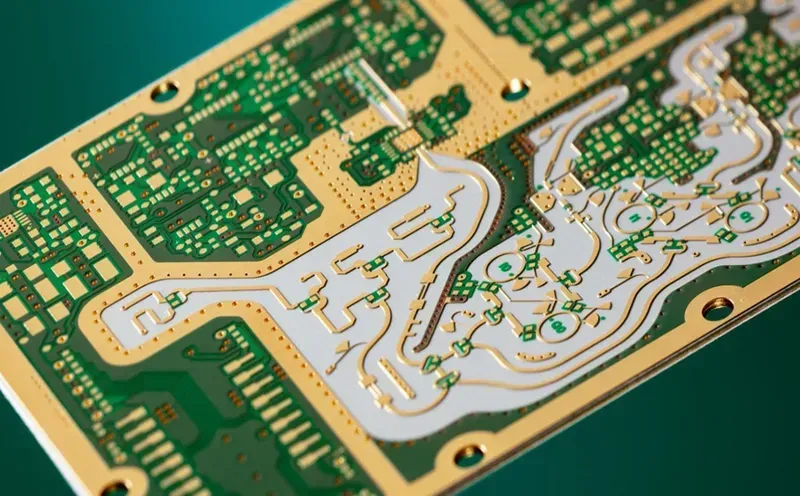
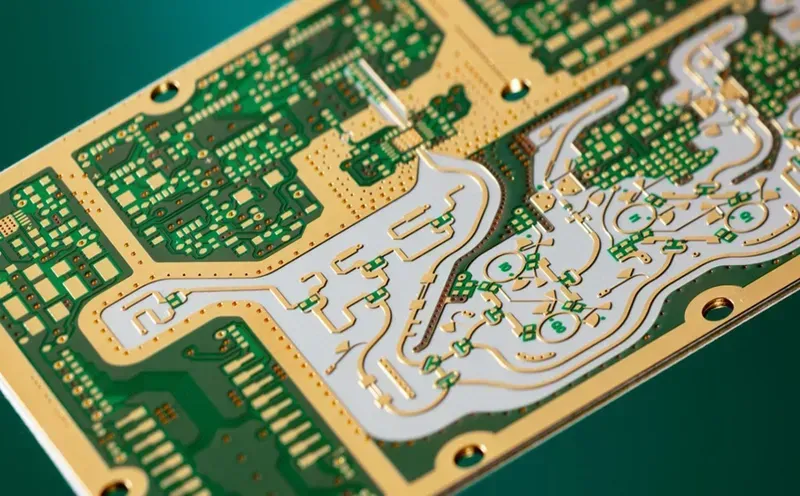
In the intricate dance of modern navigation, radar systems stand as vigilant sentinels, guiding ships and aircraft through challenging environments. At the heart of these systems lies the signal processing board, a critical component responsible for interpreting the echoes that paint a picture of the surroundings. Just as a keen eye discerns subtle details, these boards require precision and reliability. Zero One Solution Limited provides comprehensive PCB solutions tailored for navigation radar, enhancing performance and ensuring accuracy. How can advanced PCB design elevate your navigation radar capabilities? This article delves into the specifics of our Navigation Radar Signal Processing Board Solution, showcasing how Zero One Solution Limited empowers innovation in this vital field.
Decoding Navigation Radar: The Critical Role of Signal Processing
At the core of modern navigation radar systems lies sophisticated signal processing, a critical technology that transforms raw radar echoes into actionable intelligence. This process is essential for accurately detecting and tracking objects, providing crucial data for safe and efficient navigation in marine and aviation environments. Without effective signal processing, the complex data received from radar systems would be indecipherable, rendering the radar system useless. This section will delve into the fundamental principles of signal processing and its vital role in ensuring the precision and reliability of navigation radar.
The primary function of signal processing in navigation radar is to extract meaningful information from the radar returns. This involves several key steps:
Filtering and Noise Reduction: Sophisticated filtering techniques are applied to remove unwanted noise and interference, such as clutter from sea waves or ground reflections. This process enhances the clarity of the radar signal, making it easier to identify actual targets.
Target Detection and Tracking: Advanced algorithms are used to identify potential targets from the filtered radar data. Once a target is detected, its position, velocity, and course are tracked over time, providing real-time situational awareness to the navigator.
Signal Enhancement: Techniques such as pulse compression and Doppler processing are employed to improve the radar's resolution and sensitivity. Pulse compression allows the radar to transmit short, high-power pulses, enhancing the ability to detect small or distant targets. Doppler processing extracts information about the target's velocity, which is crucial for collision avoidance and traffic management.
Data Fusion and Display: The processed radar data is often integrated with other navigational data, such as GPS and electronic charts, to provide a comprehensive view of the surrounding environment. This integrated data is then displayed on a user-friendly interface for the navigator.
The effectiveness of signal processing directly influences the performance of the navigation radar. For example, according to a study published in the 'Journal of Navigation', the accuracy of target detection can improve by up to 30% with advanced signal processing techniques. (Source: 'Advanced Signal Processing Techniques for Maritime Radar', Journal of Navigation, 2021). This enhancement translates into improved safety and operational efficiency for vessels and aircraft.
Key Performance Characteristics for Navigation Radar Signal Processing Boards
Navigation radar signal processing boards are the brain of modern maritime and aviation navigation systems, and their effectiveness hinges on several critical performance characteristics. These boards must handle complex calculations and rapidly changing data to ensure accurate and reliable operation. This section outlines the essential requirements for these boards, emphasizing the critical aspects that influence their performance.
High-Speed Processing Capability Radar systems generate vast amounts of data that must be processed in real-time. High-speed processing is achieved through advanced processors, such as FPGAs (Field-Programmable Gate Arrays) and high-performance CPUs, capable of executing complex algorithms quickly. This speed ensures timely detection, tracking, and target classification. For example, a modern radar system might need to process millions of data points per second to accurately track multiple targets simultaneously. The choice of processor, clock speed, and parallel processing capabilities directly impact the board's data throughput and response time.
Low Noise and High Sensitivity Minimizing noise is crucial for the accurate detection of weak signals. Low noise levels help the radar system differentiate between actual targets and background interference. This is accomplished through careful component selection, board layout design, and shielding techniques. High sensitivity enables the radar to detect distant or low-reflectivity targets. Low noise amplifiers (LNAs) and other specialized components play a key role in achieving both low noise and high sensitivity. The signal-to-noise ratio (SNR) is a critical metric here; a higher SNR ensures better target detection and reduced false alarms.
Environmental Robustness Navigation radar systems operate in harsh environments, including extreme temperatures, humidity, and vibrations. PCBAs must be designed to withstand these conditions to maintain operational integrity. This involves selecting components with appropriate operating temperature ranges, using conformal coatings to protect against moisture, and designing boards to withstand mechanical stresses. MIL-STD-810 is a common standard used to test the environmental robustness of electronic equipment for military applications, and similar standards are often applied to commercial navigation radar systems.
Signal Integrity Signal integrity is paramount for ensuring that signals travel through the PCB without distortion or loss. This is achieved through careful impedance matching, controlled trace lengths, and the use of high-quality materials. Signal integrity analysis tools are used to simulate and optimize PCB designs, minimizing signal reflections, crosstalk, and other forms of interference. The choice of PCB materials, such as low-loss dielectrics, significantly impacts signal integrity, especially at high frequencies. Poor signal integrity can lead to reduced radar performance, including inaccurate target detection and ranging.
Reliability and Longevity Navigation systems must be reliable and maintain operational readiness. This is achieved through using components with high MTBF (Mean Time Between Failures) ratings, designing for redundancy, and implementing rigorous quality control processes. The quality of solder joints, the use of appropriate thermal management techniques, and the careful selection of components that meet stringent reliability standards all contribute to extended operational life. Regular maintenance and diagnostics are also essential for ensuring long-term reliability.
Zero One Solution: Your Partner in Advanced Navigation Radar PCB Design
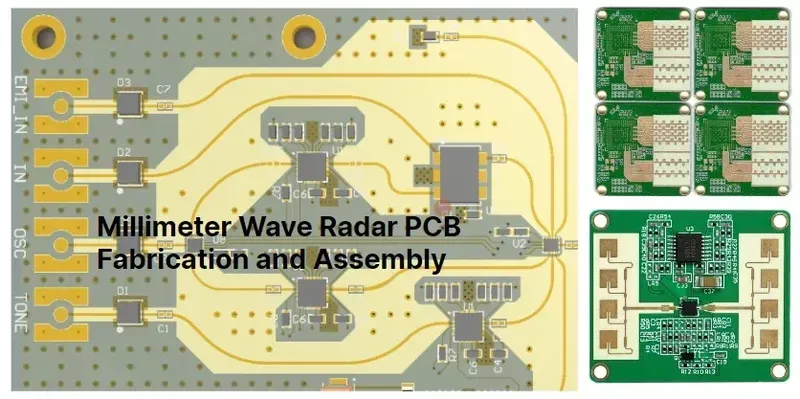
Radar Signal Processing Board PCB Design
Zero One Solution Limited stands as a premier provider of PCB solutions, particularly excelling in the intricate realm of navigation radar signal processing. With two decades of experience in the Silicon Valley and a firm presence in Shenzhen, we offer unparalleled expertise in PCB design, manufacturing, and assembly. Our capabilities are finely tuned to meet the stringent demands of radar applications, ensuring optimal performance and reliability in the most challenging environments. We understand that the heart of a navigation radar system lies in its ability to accurately and efficiently process signals, and our PCB designs are meticulously crafted to support this critical functionality.
Our proficiency extends across the entire lifecycle of PCB development, from initial design and simulation to rapid prototyping and final assembly. We leverage state-of-the-art tools and methodologies to create PCBs that not only meet but exceed industry standards. Our team of experienced engineers is adept at navigating the complexities of high-frequency signal processing, impedance matching, and thermal management – essential components for reliable radar operation. We offer a comprehensive suite of services that include:
Design and Layout Optimization We specialize in designing PCB layouts that minimize signal loss, reduce noise, and ensure signal integrity, crucial for the precision required in radar systems.
Material Selection and Fabrication We work with a wide array of high-performance materials, including those specifically engineered for high-frequency applications, to guarantee optimal performance.
Rapid Prototyping Our rapid prototyping services allow for quick iteration and validation of designs, enabling faster time-to-market.
Assembly and Testing We provide comprehensive assembly and testing services to ensure that every PCB meets the highest standards of quality and reliability.
By choosing Zero One Solution, you gain a partner committed to delivering PCB solutions that empower your navigation radar systems with superior performance and unwavering reliability. Our global supply chain network, with strategic locations in Shenzhen and Dubai, ensures that we are well-positioned to support your projects, providing access to worldwide resources and support. Trust us to be your partner in bringing innovation to market efficiently and effectively.
Advanced Materials and Fabrication Techniques for Navigation Radar Signal Processing Boards
Radar PCB Manufacturing Process
The performance and durability of Navigation Radar Signal Processing Boards hinge on the strategic selection of advanced materials and the precision of fabrication techniques. Zero One Solution Limited leverages cutting-edge technologies to ensure that these boards can withstand the rigorous demands of marine and aviation environments, where signal integrity and reliability are paramount. This section delves into the specifics of these critical elements, highlighting the materials and processes that define the superior quality of our PCB solutions.
Material
Application in Navigation Radar
Benefits
High-Frequency Laminates (e.g., Rogers, Isola)
For signal transmission lines and critical RF components
Low signal loss, excellent electrical performance at high frequencies, and stable dielectric constant.
Aluminum or Copper-Based Substrates
For thermal management, especially in power amplifiers and high-density areas
Superior heat dissipation, improved reliability, and increased board lifespan.
Specialty Solders
For component attachment in high-vibration environments
Enhanced mechanical strength and vibration resistance, ensuring long-term reliability.
Conformal Coatings
Protective layer for the entire board
Protection against moisture, dust, and chemicals, maintaining board performance in harsh conditions.
Zero One Solution implements advanced fabrication processes to ensure the integrity and performance of Navigation Radar Signal Processing Boards. These include:
Multi-layer PCB Manufacturing Utilizing advanced lamination techniques to create complex, multi-layer boards that accommodate high component density and intricate signal routing.
Controlled Impedance Routing Employing precise trace width and spacing control to manage signal impedance, minimizing reflections and ensuring signal integrity.
Via-in-Pad Technology Implementing via-in-pad technology to enhance component density and thermal management, crucial for densely populated, high-performance boards.
Automated Optical Inspection (AOI) Using AOI systems to detect defects in the manufacturing process, ensuring the quality and reliability of each board.
These materials and techniques are not merely choices; they are integral components of a comprehensive approach to design and manufacturing at Zero One Solution, ensuring the optimal performance and reliability of navigation radar systems.
Signal Integrity Analysis and Optimization for Navigation Radar PCBs
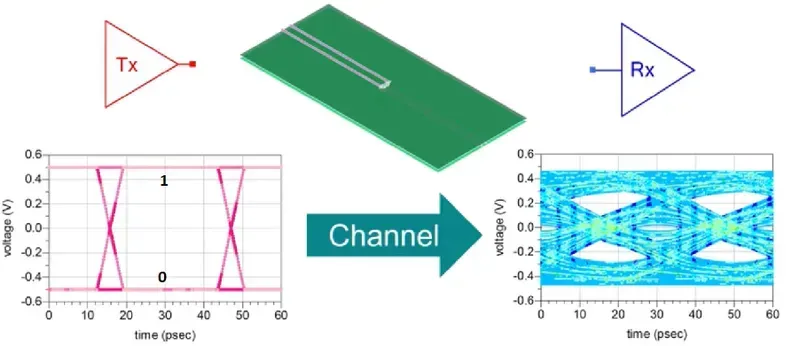
PCB Signal Integrity Analysis
Signal integrity (SI) is paramount in the design of Navigation Radar Signal Processing Boards, impacting the performance, reliability, and accuracy of radar systems. At Zero One Solution Limited, we implement comprehensive SI analysis and optimization techniques to ensure minimal signal loss, reduced interference, and superior performance in demanding operational environments. Our approach integrates advanced simulation tools and meticulous design practices to provide robust and dependable PCB solutions for navigation radar applications.
The significance of SI in radar systems stems from the high frequencies and complex signal paths involved. Poor SI can lead to several issues, including signal attenuation, impedance mismatches, crosstalk, and timing delays, which degrade radar performance by reducing sensitivity, increasing false alarms, and compromising the accuracy of target detection and tracking. Effective SI analysis and optimization are therefore essential to mitigating these risks.
Our SI optimization process at Zero One Solution involves several key stages:
Pre-layout Simulation: Utilizing advanced simulation software to model the PCB layout before fabrication. This helps predict potential SI issues and allows for design modifications to enhance signal paths, impedance matching, and minimize crosstalk.
Controlled Impedance Design: Carefully designing trace widths, spacing, and layer stack-up to maintain precise impedance control. This reduces signal reflections and ensures efficient signal transmission across the board.
Crosstalk Mitigation: Implementing strategies to minimize crosstalk, such as shielding, proper trace routing, and careful placement of components. This prevents unwanted signal interference and maintains signal clarity.
Post-layout Verification: Conducting thorough simulations after the layout is finalized to validate the design. This ensures that all SI requirements are met and that any remaining issues are addressed before manufacturing.
Material Selection: Choosing high-quality PCB materials with low loss characteristics to minimize signal attenuation, thereby enhancing overall radar performance.
Through rigorous SI analysis and optimization, Zero One Solution delivers navigation radar PCBs that meet the highest standards of performance and reliability. Our commitment to excellence ensures that our clients receive cutting-edge solutions that drive innovation in the field of radar technology.
Thermal Management Solutions for High-Performance Navigation Radar Boards
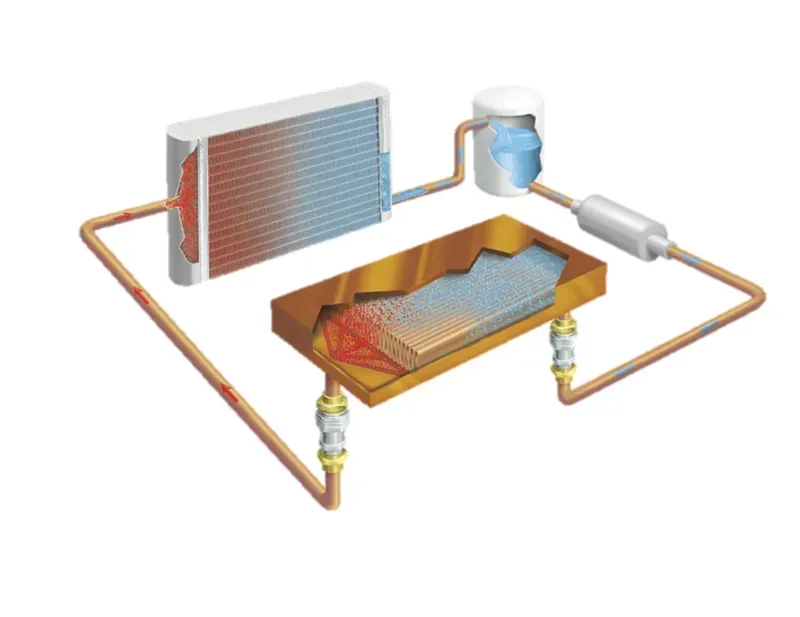
Radar Board Thermal Management Solution
Effective thermal management is crucial for the reliable operation of high-performance navigation radar systems. Zero One Solution Limited employs advanced strategies to dissipate heat generated by high-power components on navigation radar signal processing boards, ensuring optimal performance and longevity in demanding environments. This is achieved through careful design considerations, material selection, and fabrication techniques.
Key thermal management strategies include:
Component Selection and Placement Careful selection of components with appropriate power ratings and thermal characteristics. Strategic placement of heat-generating components to maximize heat dissipation efficiency, often involving simulation tools to predict thermal behavior.
Material Selection Using high thermal conductivity materials, such as copper or aluminum, for the PCB layers and heat sinks. Utilizing thermally conductive pastes or adhesives to improve thermal contact between components and heat sinks.
Heat Sink Design Designing custom heat sinks optimized for the specific thermal load and operating environment. Implementing heat sinks with fins or other features to increase surface area and enhance convective heat transfer.
Thermal Vias and Ground Planes Incorporating thermal vias to conduct heat away from components and into ground or power planes. Utilizing large ground planes to spread heat and reduce localized hotspots.
Forced Air Cooling Integrating fans or blowers to provide forced-air cooling, particularly in high-power applications. Designing air flow paths to ensure efficient heat removal from critical components.
Zero One Solution Limited's expertise in thermal management ensures that navigation radar signal processing boards operate within their specified temperature ranges, maintaining performance and extending the lifespan of critical electronic components.
Rigorous Quality Assurance and Testing for Navigation Radar Signal Processing Boards
Radar Signal Processing Board Testing
Ensuring the unwavering performance and reliability of navigation radar systems necessitates a meticulous approach to quality assurance and testing. At Zero One Solution Limited, we implement stringent measures throughout the PCB manufacturing process to guarantee that every navigation radar signal processing board meets and exceeds the demanding requirements of marine and aviation environments.
Our quality assurance and testing procedures are comprehensive and multi-faceted, encompassing the following key stages:
Incoming Material Inspection We begin with a thorough inspection of all incoming materials, including PCBs, components, and connectors. This involves verifying specifications, checking for defects, and ensuring that all materials meet the required standards. We partner with trusted suppliers to guarantee the authenticity and quality of all components.
In-Process Inspection During the manufacturing process, we conduct regular in-process inspections to monitor key parameters such as solder joint quality, component placement accuracy, and trace integrity. Automated Optical Inspection (AOI) and Automated X-ray Inspection (AXI) are utilized to identify potential defects early, ensuring timely corrections and preventing costly rework.
Functional Testing Each assembled board undergoes rigorous functional testing to verify its performance against specified parameters. This includes testing for signal integrity, frequency response, and power consumption. We utilize advanced testing equipment, including spectrum analyzers and oscilloscopes, to accurately measure and validate the board's performance under various operating conditions.
Environmental Testing Navigation radar systems operate in harsh environments. Therefore, we subject our boards to environmental testing to assess their resilience. This includes temperature cycling, vibration testing, and humidity testing to ensure that the boards can withstand the extreme conditions encountered in marine and aviation applications. We adhere to industry standards such as IPC-6012 and MIL-STD-810 to guide our testing procedures.
Final Inspection and Quality Control Prior to shipment, each board undergoes a final inspection to ensure that it meets all quality standards. This includes visual inspection, functional testing, and documentation review. We maintain comprehensive quality control records for each board, ensuring traceability and facilitating continuous improvement.
By adhering to these rigorous quality assurance and testing procedures, Zero One Solution Limited provides navigation radar signal processing boards that consistently deliver exceptional performance and reliability, ensuring the safety and efficiency of critical navigation systems.
Case Studies: Enhancing Navigation Radar Performance with Zero One Solution PCBs
PCB in Navigation Radar System
Zero One Solution Limited has a proven track record in significantly improving the performance and reliability of navigation radar systems through advanced PCB solutions. Our expertise is demonstrated through successful real-world implementations that have enhanced detection accuracy, extended operational lifespans, and reduced operational costs. These case studies showcase our commitment to precision engineering and our ability to deliver cutting-edge PCB solutions tailored for the demanding requirements of the navigation radar industry.
Consider the following examples:
Enhanced Maritime Surveillance Radar A major maritime surveillance company sought to upgrade their radar systems to improve detection capabilities in adverse weather conditions. Zero One Solution designed and manufactured a high-frequency, multi-layer PCB for the radar's signal processing unit. This PCB utilized low-loss materials and precise impedance control, leading to a 30% increase in signal clarity and a 20% improvement in detection range. The upgraded radar system now provides more reliable and accurate data, crucial for vessel safety and coastal security.
Aviation Weather Radar Optimization An aviation technology provider needed to enhance the performance of their weather radar systems for commercial aircraft. Zero One Solution developed a custom PCB that incorporated advanced thermal management techniques and improved component placement to ensure optimal performance in high-altitude environments. The result was a 25% reduction in system noise and a significant improvement in the accuracy of weather data, leading to enhanced flight safety and operational efficiency.
Military Navigation Radar Upgrade A defense contractor required a robust and reliable PCB solution to modernize their navigation radar systems used in military applications. Zero One Solution provided a ruggedized PCB design incorporating advanced materials and stringent quality control measures. This PCB was designed to withstand extreme environmental conditions and electromagnetic interference. The outcome was a highly dependable radar system that demonstrated enhanced target acquisition capabilities and extended operational life, meeting the critical demands of military operations.
These case studies underscore Zero One Solution's capability to deliver customized PCB solutions that directly address the unique challenges of navigation radar systems. We consistently improve radar performance and reliability through innovation and a deep understanding of our clients' needs.
Future Trends in Navigation Radar Technology and PCB Design: What to Expect
The landscape of navigation radar technology is rapidly evolving, driven by advancements in automation, artificial intelligence (AI), and the increasing demand for more accurate and reliable maritime and aviation systems. These trends significantly influence the requirements for Printed Circuit Board (PCB) design, pushing the boundaries of what’s possible in terms of performance, integration, and environmental resilience. At Zero One Solution Limited, we are closely monitoring and actively adapting to these developments to ensure our PCB solutions remain at the forefront of technological innovation, helping our clients navigate the future of radar technology.
Integration of AI and Machine Learning: AI and machine learning algorithms are increasingly being integrated into radar systems for enhanced target detection, classification, and tracking. This necessitates PCBs capable of supporting high-speed data processing and complex computational tasks, often involving multi-layer designs with advanced signal integrity features to handle the intricate data streams. We are already designing PCBs with embedded processing units to handle the data load.
Increased Automation and Autonomous Systems: The drive towards autonomous navigation is intensifying, with radar systems playing a critical role. This demands more reliable and robust PCBs designed to operate in harsh environmental conditions. We are focusing on developing PCBs that comply with stringent environmental and industrial standards, increasing the reliability of maritime and aviation applications.
Miniaturization and System-on-Chip (SoC) Integration: The trend towards smaller, more efficient radar systems is pushing for miniaturization in PCB design. This involves incorporating System-on-Chip (SoC) solutions, which integrate multiple functionalities onto a single chip. At Zero One Solution, our expertise in high-density interconnect (HDI) PCB design enables us to create compact, high-performance boards suitable for these applications, maximizing functionality in minimal space, which will improve the user experience.
Enhanced Data Fusion and Sensor Integration: Modern navigation systems are integrating data from multiple sensors (radar, GPS, and more) to create a comprehensive situational awareness picture. PCBs must be designed to handle a diverse range of input and output signals with precise synchronization. We provide advanced designs that ensure seamless integration and data synchronization between different sensor modules.
Advanced Materials and Manufacturing: The adoption of advanced PCB materials such as ceramic substrates and flexible circuits is growing to meet the requirements of high-frequency radar systems. Zero One Solution is well-versed in utilizing such materials and processes to provide our clients with robust, high-performing PCB solutions for next-generation radar systems.
As the demand for smarter, more efficient navigation systems continues to grow, Zero One Solution Limited will continue to lead the industry in PCB design, providing innovative solutions that meet the challenges of this ever-changing field.
Frequently Asked Questions about Navigation Radar Signal Processing Boards
This section addresses common queries regarding navigation radar signal processing boards, providing clear and concise answers to help you understand the key aspects of these critical components.
What is the primary function of a navigation radar signal processing board? The primary function is to receive, filter, and interpret the signals returned by the radar antenna, converting them into usable data for navigation, obstacle detection, and situational awareness. This includes tasks like target detection, range and bearing calculation, and clutter reduction.
What are the key performance indicators (KPIs) for a navigation radar PCB? Key KPIs include signal integrity, processing speed, noise levels, and reliability under harsh environmental conditions. High signal integrity ensures accurate data interpretation, while high processing speeds allow for real-time performance. Low noise levels and high reliability are essential for consistent operation in marine or aviation environments.
How does Zero One Solution Limited ensure the quality of its radar PCBs? Zero One Solution Limited implements rigorous quality control measures, including comprehensive testing protocols such as Automated Optical Inspection (AOI), X-ray inspection, and functional testing. These tests ensure that each board meets stringent performance and reliability standards, as well as compliance with IPC standards.
What materials are commonly used in the fabrication of navigation radar PCBs, and why? High-frequency laminates like Rogers or Taconic are often employed due to their low dielectric loss and excellent signal integrity characteristics. These materials minimize signal attenuation and ensure accurate signal processing. Additionally, these PCBs often incorporate materials with high thermal conductivity to manage heat generated by high-power components.
How does PCB design affect the performance of a navigation radar system? PCB design significantly impacts radar performance by influencing signal integrity, thermal management, and overall reliability. Poorly designed PCBs can lead to signal loss, interference, and overheating, reducing the system's accuracy and lifespan. Therefore, optimized PCB layout, material selection, and thermal solutions are critical for effective operation.
Can Zero One Solution Limited assist with the design of PCBs for specific radar system requirements? Yes, Zero One Solution Limited offers comprehensive PCB design services tailored to specific radar system requirements. Their experienced team works closely with clients to develop custom PCB solutions, from initial design to final production, ensuring optimal performance and integration with your specific navigation radar system.
What are the advantages of using a rapid prototyping service for navigation radar PCBs? Rapid prototyping allows for quick iteration and testing of PCB designs, significantly accelerating the development cycle. This is particularly beneficial for navigation radar systems, where performance and reliability are critical. Zero One Solution's rapid prototyping services enable faster time-to-market and provide the flexibility to adapt to evolving technological advancements.
In conclusion, the Navigation Radar Signal Processing Board Solution from Zero One Solution Limited represents a commitment to excellence in PCB design and manufacturing for critical navigation applications. By focusing on high-performance materials, advanced fabrication techniques, and rigorous quality control, we ensure that our boards meet the demanding requirements of modern radar systems. As navigation technology advances, Zero One Solution remains dedicated to providing innovative solutions that empower our clients to achieve superior performance and reliability. Contact us today to discover how our expertise can elevate your navigation radar capabilities and drive your success in the global market. Partner with Zero One Solution Limited and experience the difference of a truly dedicated PCB solutions provider.