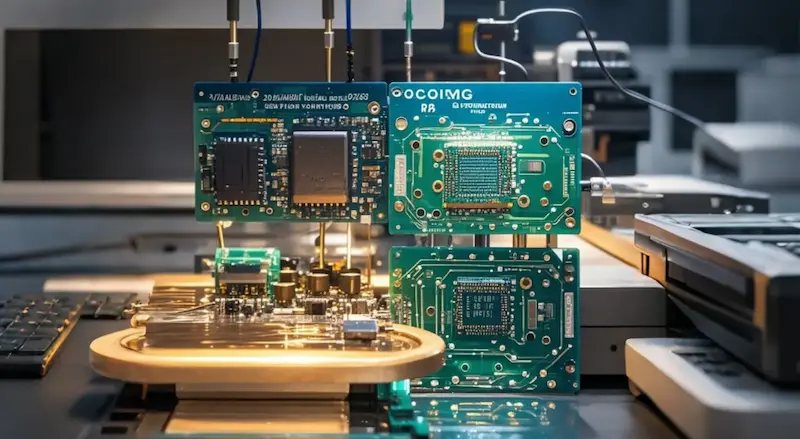
In the intricate world of Printed Circuit Board (PCB) manufacturing, the surface finish plays a critical role in ensuring reliable solderability and protecting the delicate copper traces. Among the various available finishes, Organic Solderability Preservative (OSP) stands out as a popular choice, primarily due to its cost-effectiveness. However, this economical advantage comes with a set of stringent handling requirements that are paramount to its performance. As a leading PCB solution provider specializing in rapid prototyping, Zero One Solution Limited understands the nuances of different surface finishes. In this article, we will delve deep into what OSP is, explore its advantages and disadvantages, and crucially, outline the strict handling rules that are essential for its successful application. Understanding these aspects is vital for engineers and designers aiming to optimize their PCB designs for both performance and budget.
Organic Solderability Preservative (OSP) is a surface finish applied to copper traces on printed circuit boards (PCBs). Its primary function is to create a flat, clean, and solderable copper surface after the PCB fabrication process and before the assembly stage. OSP is essentially an organic coating, typically a water-based, non-rosin organic compound, applied over the exposed copper pads. This thin, transparent layer acts as a barrier, preventing copper oxidation and corrosion while maintaining excellent solderability. It's a cost-effective solution that is widely adopted in the electronics industry, especially for applications where rapid prototyping and cost-efficiency are paramount.
The chemical composition of OSP coatings varies among manufacturers, but they generally consist of: * **Active Ingredient:** A nitrogen-containing heterocyclic compound, often a benzimidazole derivative or similar organic molecule. This is the key component that forms a complex with copper. * **Solvent:** Typically deionized water, making it an environmentally friendlier option compared to some other organic solvent-based finishes. * **Additives:** These can include stabilizers, pH adjusters, and wetting agents to ensure uniform coating and long-term stability.
During the soldering process, the OSP layer is designed to be displaced by molten solder, allowing direct metallurgical bonding between the solder and the copper pad. This process is crucial for creating reliable electrical connections. The effectiveness of OSP relies on its ability to provide a pristine copper surface that is free from oxides and contaminants, ensuring optimal solder wetting and joint formation.
Organic Solderability Preservative (OSP) stands out as a highly effective and economically viable PCB surface finish, offering a compelling set of advantages that make it a popular choice for a wide range of electronic applications. Its ability to provide a flat, smooth, and lead-free surface ensures excellent solder joint formation, contributing directly to the reliability and performance of the final product. At Zero One Solution Limited, we understand the critical role surface finishes play in PCB manufacturing, and OSP's benefits align perfectly with our commitment to providing high-quality, cost-effective solutions for rapid prototyping and mass production.
The primary advantages of employing OSP as a PCB surface finish include:
These benefits make OSP a versatile choice, particularly for applications where cost and reliable solderability are paramount. At Zero One Solution Limited, we leverage OSP's advantages to deliver efficient and high-quality PCB solutions that meet the demanding requirements of rapid prototyping and scalable production.
While Organic Solderability Preservative (OSP) offers compelling advantages in terms of cost and performance for specific applications, it is crucial to understand its inherent drawbacks and limitations. These factors often dictate whether OSP is a suitable choice for a given PCB project and necessitate stringent handling protocols to ensure reliability.
The primary limitations of OSP stem from its organic nature, making it susceptible to degradation and contamination. This sensitivity translates into several key challenges:
Understanding these drawbacks is essential for engineers and manufacturers. They highlight the need for rigorous process control, specialized handling procedures, and careful consideration of the product's intended environment and lifecycle when selecting OSP as a surface finish. For projects demanding extreme durability, frequent rework, or exposure to harsh conditions, alternative surface finishes might be more appropriate.
Organic Solderability Preservative (OSP) is a remarkable surface finish known for its cost-effectiveness and excellent solderability. However, its delicate nature demands strict adherence to handling procedures to preserve its integrity and ensure reliable soldering performance. Mishandling can lead to contamination, oxidation, or physical damage, compromising the OSP layer's ability to provide a pristine surface for component attachment. At Zero One Solution Limited, we understand that successful OSP application relies as much on meticulous handling as on the initial coating process. Therefore, implementing robust protocols throughout the PCB lifecycle – from storage and assembly to cleaning – is paramount.
To maintain the superior performance of OSP finishes, we mandate the following stringent handling rules:
By rigorously adhering to these handling rules, we ensure that the OSP finish on your PCBs maintains its optimal solderability, contributing to high-yield manufacturing and the long-term reliability of your electronic products. This meticulous approach is a cornerstone of our rapid prototyping services at Zero One Solution Limited, ensuring you receive PCBs ready for immediate assembly and testing.
Organic Solderability Preservative (OSP) is a cost-effective surface finish ideal for PCB projects where solderability and low cost are primary concerns, and the product is not subjected to harsh environmental conditions or frequent rework. It's particularly well-suited for consumer electronics, high-volume production runs, and rapid prototyping where quick turnaround times are essential. If your project involves standard assembly processes, a moderate shelf life requirement (typically 6-12 months under optimal conditions), and a design that avoids excessive handling or high-temperature excursions post-assembly, OSP presents a compelling choice.
When evaluating OSP for your project, consider the following key factors:
In essence, choose OSP when you need a low-cost, highly solderable surface finish for standard assembly processes and products that will be used in moderate environments with a typical lifespan. For applications demanding extreme durability, longevity in harsh conditions, or frequent rework, exploring alternatives like ENIG or HASL might be more prudent.
Choosing the right PCB surface finish is critical for ensuring solder joint reliability, component protection, and overall product performance. While OSP offers a compelling balance of cost and performance, understanding its characteristics in relation to other common finishes like HASL, ENIG, Immersion Silver, and Immersion Tin is essential for informed decision-making. Each finish presents a unique set of advantages, disadvantages, and application suitability.
Here's a comparative overview to highlight the key differences:
| Feature | OSP (Organic Solderability Preservative) | HASL (Hot Air Solder Leveling) | ENIG (Electroless Nickel Immersion Gold) | Immersion Silver (ImAg) | Immersion Tin (ImSn) |
|---|---|---|---|---|---|
| Cost | Low | Low | Medium | Medium | Medium |
| Solderability | Excellent (requires careful handling) | Good | Excellent | Excellent | Excellent |
| Surface Flatness | Excellent (very thin layer) | Fair to Poor (uneven, can cause issues with fine-pitch components) | Excellent (flat, excellent for BGA) | Excellent (flat) | Excellent (flat) |
| Shelf Life | Short (typically 6-12 months, sensitive to handling) | Long | Long | Medium (prone to tarnishing) | Medium (prone to tin whiskers if not processed correctly) |
| Process Complexity | Simple | Simple | Moderate | Simple | Moderate |
| Lead-Free Compatibility | Excellent | Excellent | Excellent | Excellent | Excellent |
| Reworkability | Poor (difficult to rework without damaging) | Fair to Good | Good | Fair (can be difficult) | Fair (can be difficult) |
| Typical Applications | Consumer electronics, cost-sensitive products | General purpose, high-volume | High-reliability, high-density interconnects, automotive | Connectors, lead-free assembly | High-frequency, medical devices |
When considering a surface finish, weigh the trade-offs. OSP is ideal for budget-conscious projects where components are handled with care and the PCB will be assembled relatively quickly. If your design demands exceptional flatness for fine-pitch components or requires longer shelf life and easier rework, ENIG often becomes the preferred choice despite its higher cost. HASL remains a cost-effective, robust option for many general applications, though its uneven surface can be a limitation. Immersion Silver and Tin offer excellent solderability and flatness but come with their own set of handling and longevity considerations.
OSP (Organic Solderability Preservative) plays a significant, albeit distinct, role in both rapid prototyping and mass production of PCBs. Its suitability for each manufacturing scale is largely determined by its cost-effectiveness, ease of application, and specific performance characteristics. For rapid prototyping, OSP's low cost and acceptable performance for initial builds make it an attractive option, especially when speed and budget are paramount. However, its sensitivity to handling and environmental factors, coupled with limited rework capabilities, means it might not be the first choice for highly demanding or long-term prototype applications. Despite this, its ability to provide a flat, solderable surface quickly aligns well with the iterative nature of prototype development. As production scales up to mass manufacturing, OSP continues to offer a compelling cost advantage. Its consistent performance in high-volume runs, provided stringent handling protocols are maintained, makes it a viable and economical choice for many consumer electronics and mass-market products. The key is implementing robust quality control and handling procedures throughout the manufacturing and assembly process to ensure reliability.
Here's how OSP fits into different manufacturing scales:
OSP (Organic Solderability Preservative) is a widely used PCB surface finish, prized for its cost-effectiveness and excellent solderability. However, its unique properties also raise specific questions during the design, manufacturing, and assembly process. As a leading PCB solution provider specializing in rapid prototyping, Zero One Solution Limited frequently addresses these queries to ensure our clients achieve optimal results. Below, we answer some of the most common questions about OSP.
Organic Solderability Preservative (OSP) offers a compelling balance of cost-effectiveness and performance for PCB surface finishing. While its affordability is a significant draw, it's crucial to acknowledge and adhere to the strict handling rules to preserve its integrity and ensure reliable solder joints. Understanding its advantages, limitations, and proper application is key to leveraging OSP successfully in your electronic designs. At Zero One Solution Limited, we pride ourselves on providing expert guidance and high-quality PCB solutions, from rapid prototyping to mass production. We are dedicated to helping you navigate the complexities of PCB manufacturing to bring your innovative products to market efficiently. If you have further questions about OSP or need assistance with your next PCB project, don't hesitate to reach out to our experienced team.