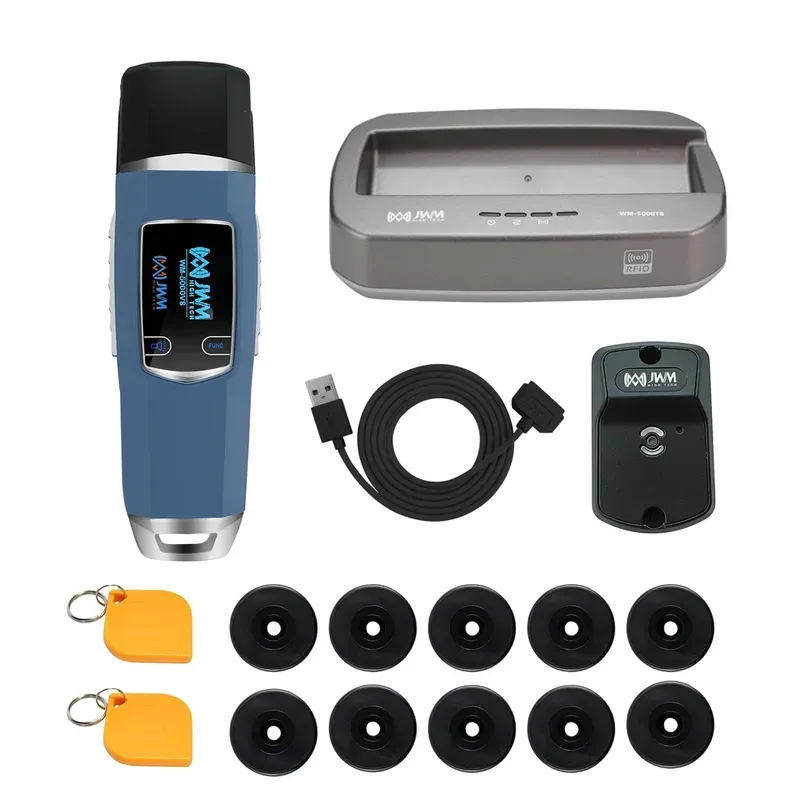
In today's fast-paced world, efficient and reliable patrol systems are crucial for maintaining security and order. At the heart of these systems lies the control board, the central processing unit that orchestrates all operations. Zero One Solution Limited specializes in providing cutting-edge PCB solutions, and our Patrol System Control Board Solution is designed to empower businesses with rapid prototyping and seamless integration. But what exactly makes a patrol system control board solution effective, and how can it be optimized for peak performance? This article delves into the intricacies of patrol system control boards, exploring design considerations, manufacturing processes, and the benefits of partnering with a trusted PCB solutions provider like Zero One Solution Limited.
Introduction to Patrol System Control Boards
At the core of every sophisticated patrol system lies the control board, a critical PCB (Printed Circuit Board) acting as the central nervous system that orchestrates its entire operation. These specialized PCBs are meticulously engineered to manage diverse functions, from data acquisition and processing to communication and power distribution, ensuring the seamless and reliable performance essential for security, asset management, and monitoring applications. Without a robust and precisely designed control board, the functionality, accuracy, and overall effectiveness of a patrol system would be severely compromised, making its development a cornerstone of reliable system deployment.
What is a Patrol System Control Board? A patrol system control board is a custom-designed Printed Circuit Board (PCB) that serves as the central processing unit and communication hub for a patrol system. It integrates various electronic components, including microcontrollers, memory, communication modules (e.g., RFID, NFC, GPS, Wi-Fi, Cellular), power management circuits, and input/output interfaces, to manage the system's core functionalities. Its primary role is to collect data from patrol points, process this information, and facilitate its transmission for analysis and reporting, ensuring efficient and accurate monitoring.
Why are Control Boards Crucial for Patrol Systems? Control boards are crucial because they dictate the reliability, functionality, and overall performance of a patrol system. They are responsible for precise data logging, secure data transmission, efficient power management for extended operational periods, and robust operation in diverse environmental conditions. A high-quality control board ensures data integrity, minimizes downtime, and supports advanced features like real-time tracking and automated alerts, which are vital for effective security and operational efficiency.
What are the primary applications of Patrol Systems? Patrol systems, powered by their control boards, find extensive applications across various industries. Key applications include security guard tours in commercial and residential properties, facility management for tracking maintenance rounds, public safety patrols for law enforcement, asset tracking in logistics and inventory management, and monitoring critical infrastructure like pipelines or power grids. They are essential for ensuring compliance, enhancing accountability, and providing verifiable records of site visits and activities.
How do different types of Patrol Systems vary in their control board requirements? The requirements for patrol system control boards vary significantly based on the system's type and intended application. For instance, basic RFID-based systems require control boards with strong RFID reader integration and simple data storage. GPS-enabled systems demand robust GPS modules and efficient power management for continuous location tracking. Advanced real-time systems, often utilizing Wi-Fi or cellular connectivity, necessitate control boards with powerful processors, ample memory, and secure communication protocols to handle continuous data streams and immediate alerts. Environmental factors, such as temperature, humidity, and vibration, also heavily influence the component selection and ruggedization of the PCB.
What are the key functional blocks on a typical Patrol System Control Board? A typical patrol system control board integrates several key functional blocks to perform its duties. These include: 1. **Microcontroller Unit (MCU):** The brain of the board, processing data and managing operations. 2. **Communication Module:** Facilitates data transfer (e.g., RFID reader, GPS, GSM/LTE, Wi-Fi, Bluetooth). 3. **Memory:** Stores collected data and firmware (e.g., Flash, EEPROM, RAM). 4. **Power Management Unit (PMU):** Regulates voltage, manages battery charging, and optimizes power consumption. 5. **Input/Output Interfaces:** Connects to sensors, buttons, LEDs, and other peripherals. 6. **Clock Circuit:** Provides timing for the MCU and other components. 7. **Debugging/Programming Interface:** Allows for firmware updates and diagnostics. The precise configuration of these blocks depends on the system's complexity and features.
Key Design Considerations for Patrol System PCBs
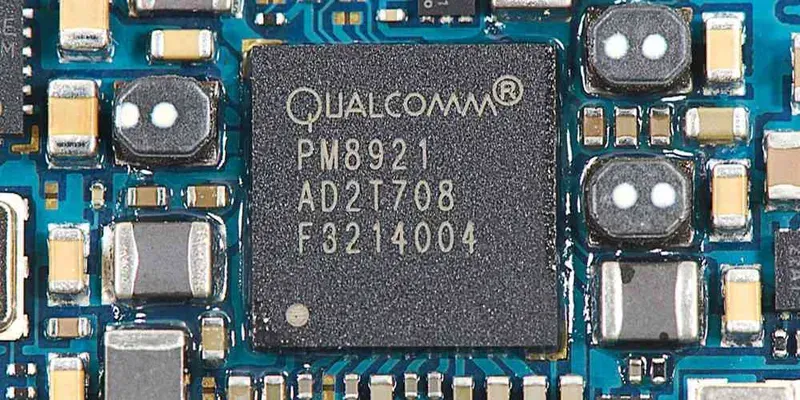
PCB Power Management Chip
Designing Printed Circuit Boards (PCBs) for patrol systems demands meticulous attention to several critical factors, ensuring not only functionality but also unwavering reliability in diverse operational environments. Beyond basic circuit layout, considerations such as robust power management, pristine signal integrity, judicious component selection, and effective thermal management are paramount. These elements collectively dictate the longevity, accuracy, and overall performance of the patrol system, especially when facing environmental stressors.
Why is power management crucial for patrol system PCBs? Patrol systems often operate in remote or mobile settings, relying on battery power or variable external sources. Robust power management ensures stable voltage regulation, efficient power conversion, and protection against overcurrents or voltage spikes, directly impacting battery life and the system's operational uptime and reliability.
How does signal integrity affect patrol system performance? Signal integrity is vital for accurate data transmission, especially in systems incorporating sensors, communication modules (e.g., GPS, Wi-Fi, cellular), and high-speed microcontrollers. Poor signal integrity can lead to data errors, intermittent functionality, and system crashes, compromising the patrol system's ability to collect and transmit critical information accurately.
What are the environmental factors impacting PCB design for patrol systems? Patrol systems can be exposed to extreme temperatures, humidity, dust, vibration, and electromagnetic interference (EMI). PCB designs must account for these by selecting appropriate materials (e.g., higher Tg laminates), conformal coatings, robust component packaging, and incorporating EMI shielding or filtering to ensure reliable operation under harsh conditions.
Why is thermal management a key consideration in patrol system PCB design? Electronic components generate heat, and without effective thermal management, excessive temperatures can lead to reduced component lifespan, performance degradation, and even system failure. For patrol systems, where devices might be enclosed or operate outdoors, proper thermal dissipation through heat sinks, thermal vias, and strategic component placement is essential to maintain optimal operating temperatures.
How does component selection influence the reliability of patrol system PCBs? Selecting industrial-grade or automotive-grade components, which are designed to withstand wider temperature ranges and harsher conditions, significantly enhances the PCB's reliability. Factors like Mean Time Between Failures (MTBF), supplier reputation, and component availability also play a critical role in ensuring long-term system stability and maintainability.
Selecting the Right Components for Optimal Performance
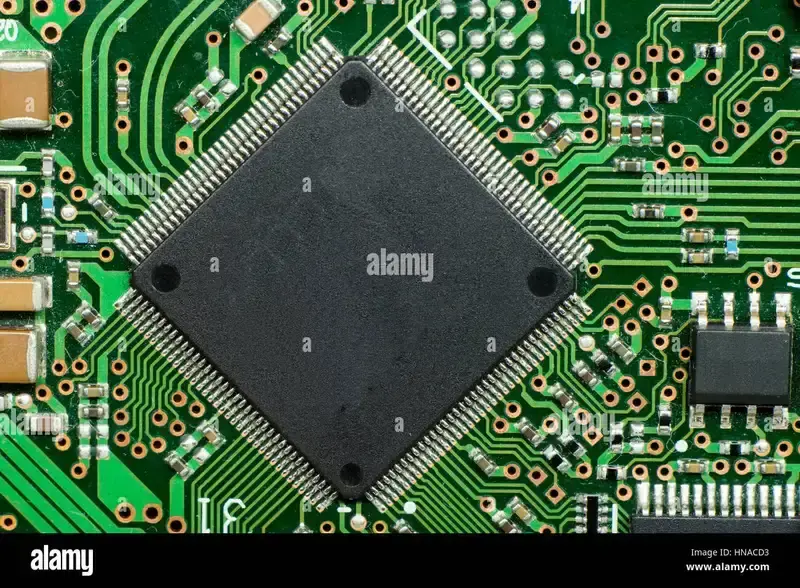
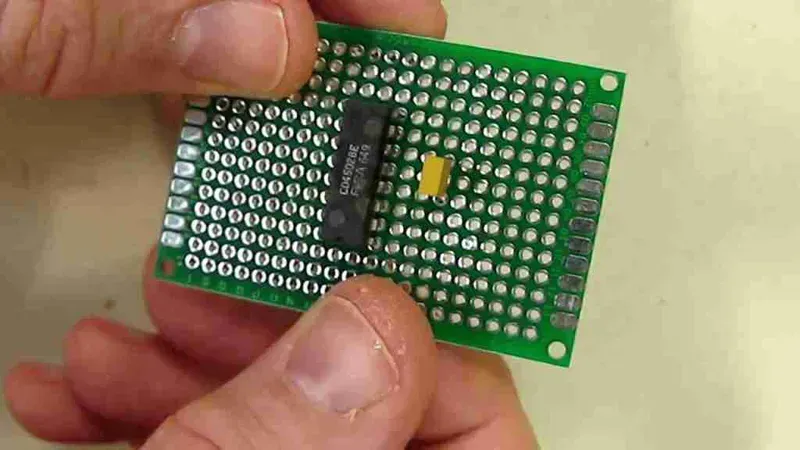
Microcontroller Chip Close-Up
The performance, reliability, and longevity of any patrol system control board are fundamentally determined by the meticulous selection of its core components. This critical phase transcends merely picking parts; it involves a profound understanding of their specifications, compatibility, and how they collectively contribute to the system's operational efficiency and responsiveness under diverse environmental conditions. Optimal component selection directly translates to superior data acquisition, robust communication, and reliable decision-making capabilities, which are paramount for effective patrol and security operations. It's a strategic decision that balances technological capability with cost-effectiveness and future scalability.
Microcontrollers (MCUs) The brain of the patrol system, MCUs process data, execute commands, and manage peripherals. Key considerations include processing power (clock speed, core architecture), memory (Flash, RAM), power consumption, peripheral interfaces (GPIO, UART, SPI, I2C, ADC), and security features. For patrol systems, low-power consumption and robust performance in varying temperatures are critical. For instance, an ARM Cortex-M series MCU offers an excellent balance of power and performance for embedded applications, with options for secure boot and cryptographic acceleration, crucial for data integrity in security systems.
Sensors Sensors are the eyes and ears of the patrol system, detecting environmental parameters or specific events. This can include motion sensors (PIR, ultrasonic), GPS modules for location tracking, temperature/humidity sensors, and specialized proximity or access sensors. Selection criteria involve accuracy, sensitivity, response time, power consumption, size, and operating range. For outdoor patrol systems, ruggedized sensors with wide operating temperature ranges and IP ratings are essential.
Communication Modules Reliable data transmission is vital for real-time monitoring and reporting. Communication modules can include Wi-Fi, Bluetooth, LoRa, Cellular (2G/3G/4G/5G), or Ethernet. Factors to consider are range, data rate, power efficiency, network availability, and security protocols. For widespread patrol areas, cellular or LoRa modules offer extended range, while Wi-Fi or Bluetooth are suitable for localized data transfer within a facility. The choice depends heavily on the deployment environment and required communication frequency.
Memory Chips Memory components store firmware, configuration data, and collected patrol data. This includes volatile memory (SRAM, DRAM for temporary data) and non-volatile memory (Flash, EEPROM for persistent storage). Critical factors are capacity, read/write speeds, endurance (for non-volatile memory, especially in frequent logging scenarios), and power consumption. For data logging in remote patrol units, high-endurance Flash memory is preferred to ensure data integrity over long periods.
Power Management ICs (PMICs) Efficient power management is crucial for battery-powered patrol systems. PMICs regulate voltage, manage battery charging, and optimize power distribution across components. Considerations include conversion efficiency, input voltage range, output current capabilities, quiescent current, and integrated protection features (over-voltage, under-voltage, over-current). A well-chosen PMIC extends battery life and ensures stable operation.
PCB Manufacturing Processes for Patrol System Control Boards
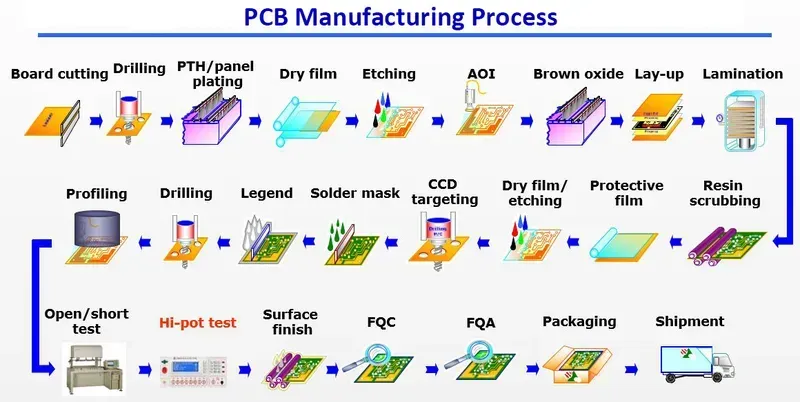
PCB Manufacturing Process
The robust performance and unwavering reliability of Patrol System Control Boards are fundamentally rooted in meticulous PCB manufacturing processes, encompassing fabrication, assembly, and rigorous testing. Adherence to stringent industry standards, such as IPC, is paramount to ensure the control board functions flawlessly in diverse operational environments, from demanding security applications to critical asset tracking systems, ultimately guaranteeing the longevity and accuracy of the entire patrol system.
PCB Fabrication: Laying the Foundation This initial stage involves creating the bare PCB board. Key processes include material selection (e.g., FR-4 for its mechanical strength and electrical insulation), circuit pattern imaging (photolithography), etching (removing unwanted copper), and multi-layer lamination for complex designs. Precision in each step is crucial to prevent signal integrity issues and ensure accurate component placement later on. For instance, maintaining tight trace width and spacing tolerances is vital for high-frequency signals common in modern communication modules used in patrol systems.
PCB Assembly: Bringing the Board to Life Once fabricated, components are mounted onto the bare board. This phase typically involves solder paste application, pick-and-place for precise component positioning (utilizing advanced automated machinery for speed and accuracy), and reflow soldering or wave soldering to create robust electrical connections. For patrol systems, critical components like microcontrollers and sensors require precise placement and secure soldering to withstand vibrations and environmental stresses. Zero One Solution Limited employs state-of-the-art SMT lines capable of handling fine-pitch components and BGA packages, essential for compact and powerful patrol system control boards.
Rigorous Testing and Quality Control: Ensuring Reliability Post-assembly, comprehensive testing is indispensable to validate the functionality and integrity of the control board. This includes Automated Optical Inspection (AOI) for solder joint quality, In-Circuit Testing (ICT) to check for shorts, opens, and component values, and Functional Testing (FCT) to simulate real-world operational scenarios. Adherence to IPC standards (e.g., IPC-A-610 for electronic assemblies) guarantees the highest level of quality and reliability, minimizing potential field failures and ensuring the patrol system operates flawlessly. Our quality control protocols are designed to detect even the most subtle defects, preventing costly recalls and maintaining system uptime.
Rapid Prototyping for Accelerated Development
Rapid prototyping stands as a cornerstone in the accelerated development of patrol system control boards, enabling swift iteration and validation of designs. By compressing the traditional design-test-refine cycle, it not only significantly reduces time-to-market but also inherently elevates product quality through early identification and rectification of potential issues, making it indispensable for complex, high-reliability applications like patrol systems. This agile approach is critical for staying competitive in a rapidly evolving security technology landscape, where speed and precision are paramount.
Reduced Time-to-Market Rapid prototyping allows for parallel processing of design and testing phases, drastically cutting down the overall development timeline. This agility means products can reach the market faster, gaining a significant competitive advantage. For instance, a typical patrol system PCB prototype can be fabricated and assembled within 3-5 days, compared to weeks or months for traditional methods. This efficiency is vital in sectors with short product lifecycles and high demand for innovation, such as smart security solutions. Accelerating development also means faster revenue generation and quicker market feedback loops for continuous improvement, enabling companies to respond swiftly to market demands and shifts in technology trends. The ability to rapidly iterate and deploy minimizes the risk of obsolescence and maximizes the window of market opportunity. In the patrol system domain, where security threats evolve rapidly, quick deployment of advanced solutions is crucial for maintaining effective protection.
Enhanced Design Validation and Risk Mitigation The ability to quickly produce functional prototypes allows engineers to validate design concepts, test component compatibility, and assess performance under real-world conditions. This iterative process uncovers design flaws or performance bottlenecks early in the development cycle, long before mass production, thereby mitigating costly rework and delays. For example, validating communication protocols or power consumption profiles on a physical prototype helps ensure system stability and reliability. This early detection mechanism is particularly valuable for mission-critical patrol systems, where failure is not an option. Moreover, rapid prototyping facilitates comprehensive functional testing, electromagnetic compatibility (EMC) testing, and environmental stress testing, providing invaluable data for design refinement. This proactive approach to quality assurance minimizes post-production issues, reduces warranty claims, and ultimately strengthens brand reputation through superior product performance and dependability.
Feature
Traditional Prototyping
Rapid Prototyping
Development Time
Weeks to Months
Days to Weeks
Cost of Iteration
High
Low
Risk of Design Flaws
Higher (discovered later)
Lower (discovered earlier)
Flexibility for Changes
Limited
High
Testing Scope
Post-assembly
Continuous during development
Zero One Solution Limited leverages its rapid-response R&D prototype manufacturing capabilities to provide unparalleled support for patrol system control board development. Our integrated services, from design to assembly, ensure that your innovative concepts are quickly transformed into robust, high-performance prototypes, empowering you to accelerate product development and secure your market position with confidence.
The Role of PCB Assembly in Patrol System Reliability
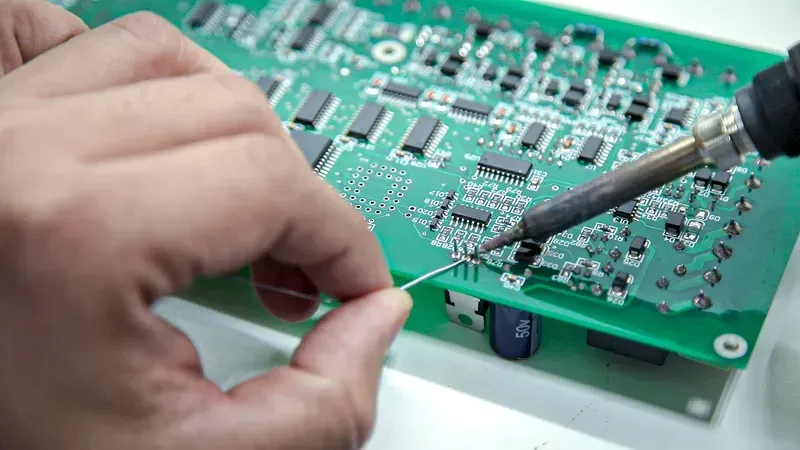
PCB Component Soldering
Robust PCB assembly is paramount to the long-term reliability and operational integrity of patrol system control boards. Beyond mere component mounting, the assembly process encompasses precise component placement, advanced soldering techniques, and rigorous quality control, all critical for ensuring that patrol systems function flawlessly in demanding environments and provide consistent, accurate data without interruption.
Precision Component Placement Accurate placement of components, especially fine-pitch ICs and sensitive sensors, is fundamental. Automated Pick-and-Place (P&P) machines ensure micrometer-level precision, minimizing misalignments that can lead to electrical shorts, open circuits, or intermittent failures critical for continuous operation of patrol systems like those in security or logistics tracking. Advanced optical inspection systems further verify placement accuracy before soldering.
Advanced Soldering Techniques The integrity of solder joints directly impacts the longevity and performance of the control board. Techniques like reflow soldering (for Surface Mount Technology - SMT) and wave soldering (for Through-Hole Technology - THT) must be meticulously controlled. Factors such as temperature profiles, solder paste quality, and flux application are optimized to prevent common defects like cold joints, bridging, and voids, which can compromise signal integrity and power delivery in patrol systems.
Assembly Factor
Impact on Reliability
Zero One Solution Approach
Component Placement Accuracy
Prevents shorts, open circuits, and intermittent failures.
Automated Pick-and-Place with visual inspection (AOI).
Solder Joint Integrity
Ensures stable electrical connections and mechanical strength.
What makes PCB assembly critical for patrol system reliability? The complex and often harsh operating conditions of patrol systems demand exceptional reliability from their control boards. Precise PCB assembly ensures stable electrical connections, robust mechanical integrity, and consistent performance, minimizing the risk of failures that could compromise security, data collection, or operational efficiency. Any assembly flaw, no matter how minor, can lead to system downtime or erroneous readings, which is unacceptable for critical patrol applications.
Zero One Solution Limited: Your Partner for Patrol System PCB Solutions
PCB Prototype Sample
For robust and reliable patrol system control board solutions, Zero One Solution Limited stands as an unparalleled partner, offering comprehensive expertise from initial design to final assembly. Our foundational strength lies in rapid-response R&D prototype manufacturing, enabling accelerated product development and ensuring your innovative patrol systems reach the market with exceptional efficiency and uncompromising quality.
Comprehensive PCB Expertise Zero One Solution Limited provides end-to-end services encompassing PCB design, manufacturing, and assembly for patrol system control boards. Our integrated approach ensures seamless transitions between development phases, optimizing performance and reducing potential compatibility issues. We leverage decades of collective experience in critical areas like power management, signal integrity, and thermal dissipation, which are paramount for the demanding operational environments of patrol systems. By meticulously adhering to industry-leading standards, we guarantee the longevity and reliability of every board we produce.
Rapid-Response R&D Prototyping In the fast-paced world of security and surveillance, time-to-market is a critical differentiator. Zero One Solution Limited specializes in rapid-response R&D prototype manufacturing, drastically shortening development cycles without compromising precision or quality. This capability allows for quick iterations and rigorous testing of patrol system control board designs, validating concepts and fine-tuning functionalities swiftly. Our agile prototyping process accelerates innovation, helping clients bring cutting-edge patrol technologies to deployment faster than competitors.
Global PCBA Supply Chain Network Strategically headquartered in Shenzhen, China's electronic manufacturing hub, and with a key branch office in Dubai, Zero One Solution Limited operates within a robust global PCBA supply chain network. This strategic positioning provides unparalleled access to high-quality components, advanced manufacturing technologies, and diverse talent pools. Our extensive network ensures supply chain resilience, competitive pricing, and efficient logistics, guaranteeing that your patrol system control board projects are executed smoothly and delivered on schedule, regardless of scale or complexity.
Unwavering Quality and Reliability The reliability of a patrol system is directly dependent on the integrity of its control board. At Zero One Solution Limited, quality is not merely a goal but a foundational principle embedded in every stage of our process. From stringent component selection and meticulous PCB fabrication to precision assembly and rigorous testing, we uphold the highest quality assurance standards, including IPC certifications. Our commitment to excellence ensures that every patrol system control board we deliver is robust, durable, and capable of performing flawlessly in critical applications, providing peace of mind to our clients and end-users.
Case Studies: Successful Patrol System Implementations with Zero One Solution
Patrol System Device
Zero One Solution Limited consistently delivers robust and innovative PCB solutions that are the backbone of high-performance patrol systems across diverse industries. Our expertise in rapid prototyping, precision manufacturing, and advanced assembly translates directly into tangible benefits for our clients, enabling them to overcome complex challenges and achieve superior operational efficiency and reliability in their security and monitoring applications.
Case Study
Challenge
Zero One Solution's Approach
Outcome
Smart Campus Security Patrol System
Integration of multiple sensor types (RFID, IR, GPS) into a compact, energy-efficient control board for seamless real-time tracking and anomaly detection in a large university campus.
Designed a multi-layered PCB with optimized signal integrity and low-power components. Implemented a custom firmware for data aggregation and wireless transmission, leveraging our rapid prototyping capabilities for quick iteration and validation.
Reduced patrol response times by 30% and improved incident detection accuracy by 25%. The system demonstrated exceptional battery life and reliable operation across diverse campus environments, leading to enhanced overall security posture for the institution. Cost-efficiency was achieved through optimized component selection and manufacturing processes, delivering a high-value solution within budget constraints by using DFM and DFA principles at design stage itself that helped client to optimize the BOM and assembly process as well from the very beginning of the project life cycle itself. It reduced the overall cost of the project and it's life cycle cost in a long run. Zero One Solution has helped client to achieve high degree of market competitiveness. Zero One Solution Limited's design engineers ensured that the PCB met the stringent requirements for electromagnetic compatibility (EMC) and electromagnetic interference (EMI) to prevent interference with other campus systems. The design also incorporated robust thermal management strategies to ensure stable performance under continuous operation. To ensure the reliability of the system, Zero One Solution Limited conducted extensive environmental testing, including temperature, humidity, and vibration tests, to simulate real-world operating conditions and validate the board's durability. The final product achieved a mean time between failures (MTBF) significantly higher than the industry average, demonstrating the board's exceptional reliability and longevity. Zero One Solution also provided comprehensive technical support and documentation, ensuring smooth integration and deployment of the patrol system. This ongoing support helped the client quickly resolve any operational issues and maximize the system's performance. The system's modular design allowed for easy future upgrades and expansions, ensuring its long-term viability and adaptability to evolving security needs. This forward-thinking approach protected the client's investment and provided a scalable solution for future growth. The campus security team reported a significant improvement in their ability to monitor and respond to security incidents, leading to a safer environment for students and staff. The success of this project led to additional collaborations with the university for other smart campus initiatives, further solidifying Zero One Solution Limited's reputation as a trusted partner in advanced PCB solutions. Our commitment to quality and innovation ensured that the patrol system not only met but exceeded the client's expectations, setting a new standard for campus security.
Future Trends in Patrol System Control Board Technology
The evolution of patrol system control board technology is intrinsically linked to advancements in broader technological landscapes, driven by the imperative for enhanced security, efficiency, and real-time responsiveness. The next generation of control boards will feature deeper integration of intelligent capabilities, significantly pushing the boundaries of what traditional patrol systems can achieve. This forward trajectory is fundamentally shaped by the convergence of miniaturization, advanced sensor fusion, and sophisticated data processing at the edge.
How will IoT impact future patrol system control board design? IoT integration will lead to patrol system control boards that are inherently networked, enabling real-time data exchange with central monitoring stations, other sensors, and even autonomous agents. This necessitates highly efficient communication modules (e.g., 5G, LoRaWAN) and robust data encryption, moving towards ultra-low power designs for extended field operation without frequent recharging or battery replacement. The shift will be towards distributed intelligence, where individual patrol units contribute to a larger, cohesive security network, demanding sophisticated data routing and edge processing capabilities on the board itself, minimizing latency and bandwidth dependence.
What role will AI play in the next generation of patrol system control boards? AI will transition from cloud-centric processing to edge AI on the patrol system control board. This enables real-time anomaly detection, predictive maintenance, and autonomous decision-making without constant reliance on network connectivity. For instance, AI algorithms embedded directly on the microcontroller unit (MCU) can process sensor data (e.g., video, audio, environmental) to identify suspicious activities or unusual patterns instantaneously. This requires specialized AI accelerators or highly optimized MCUs capable of executing complex neural network models with minimal power consumption, transforming control boards into intelligent decision-making nodes.
How will wireless communication standards evolve for patrol system control boards? Wireless communication in future patrol system control boards will leverage a diverse portfolio of standards tailored for specific operational needs. While Wi-Fi and cellular (5G/LTE-M) will remain crucial for high-bandwidth data transmission (e.g., video streaming), low-power wide-area networks (LPWANs) like LoRaWAN and NB-IoT will become prevalent for long-range, low-data-rate applications such as status reporting and sensor data. Additionally, ultra-wideband (UWB) will gain traction for precise indoor positioning and secure, short-range communication. The design challenge lies in integrating multiple communication modules seamlessly while managing power consumption and antenna interference, providing a highly reliable and adaptable communication backbone.
In conclusion, a robust and well-designed Patrol System Control Board is essential for effective security and monitoring. Zero One Solution Limited offers comprehensive PCB solutions, from rapid prototyping to manufacturing and assembly, ensuring that your patrol systems operate at peak performance. By choosing Zero One Solution Limited, you gain access to cutting-edge technology, expert support, and a commitment to excellence. Contact us today to discuss your specific needs and discover how our Patrol System Control Board Solution can enhance your security infrastructure. Partner with Zero One Solution Limited and experience the difference that quality PCB solutions can make.