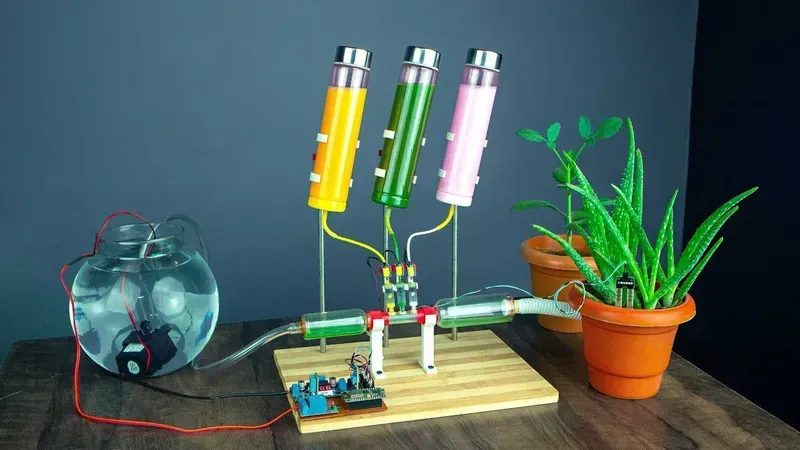
In an era defined by the urgent need for sustainable and efficient agricultural practices, the concept of smart fertilization has emerged as a critical area of innovation. Traditional fertilization methods often lead to over-application, resulting in environmental damage, increased costs, and reduced crop quality. However, by integrating cutting-edge technology into fertilization processes, we can revolutionize agriculture and ensure food security for future generations. At the heart of this technological revolution lies the Smart Fertilization Control PCB Solution, a sophisticated system designed to optimize nutrient delivery to crops with unparalleled precision. Zero One Solution Limited are at the forefront of providing innovative PCB solutions, empowering agricultural businesses to embrace precision agriculture and achieve sustainable growth. This article delves into the intricacies of our Smart Fertilization Control PCB Solution, exploring its design, functionality, and transformative potential.
Introduction to Smart Fertilization Control PCB Solutions
Smart fertilization control PCB solutions are at the forefront of modern agriculture, transforming traditional farming practices into highly efficient, data-driven operations. This innovative approach precisely delivers nutrients to crops based on real-time needs, ensuring optimal growth while minimizing waste. Zero One Solution Limited, a leader in rapid prototyping and comprehensive PCB solutions, empowers this revolution by providing the robust and reliable printed circuit board technology essential for these advanced systems. Our expertise facilitates the development of systems that not only boost crop yields but also significantly contribute to environmental sustainability.
What is Smart Fertilization? Smart fertilization is an advanced agricultural technique that uses sensors, data analytics, and automated delivery systems to apply precise amounts of nutrients to crops, exactly when and where they are needed. Unlike traditional broadcast fertilization, it tailors nutrient application to specific plant requirements and soil conditions, optimizing resource use and minimizing environmental impact.
Why is Precision Nutrient Delivery Crucial? Precision nutrient delivery is crucial for several reasons: it maximizes crop yields by ensuring plants receive optimal nourishment; it reduces fertilizer overuse, which in turn lowers operational costs and mitigates environmental pollution from runoff; and it promotes soil health by preventing nutrient imbalances. This targeted approach is fundamental to sustainable agriculture.
How do PCBs Enable Smart Fertilization Systems? Printed Circuit Boards (PCBs) are the foundational electronic platforms that integrate all components of a smart fertilization system. They host the microcontrollers, sensors, communication modules, and power management circuits, enabling data acquisition, processing, and control of fertilization mechanisms. High-quality PCB design ensures signal integrity, efficient power distribution, and overall system reliability in demanding agricultural environments.
What are the Environmental Benefits of Smart Fertilization? The environmental benefits of smart fertilization are substantial. By reducing the excessive use of fertilizers, it minimizes nutrient runoff into water bodies, preventing eutrophication and protecting aquatic ecosystems. It also decreases greenhouse gas emissions associated with fertilizer production and application, contributing to climate change mitigation and fostering more sustainable farming practices.
What is Zero One Solution Limited's role in this technology? Zero One Solution Limited specializes in providing end-to-end PCB solutions, from design and rapid prototyping to manufacturing and assembly, specifically for smart agricultural applications like fertilization control. Our 20 years of expertise ensure that the PCBs are robust, reliable, and optimized for harsh environments, enabling our clients to accelerate their product development and bring innovative smart farming solutions to market efficiently.
The Core Components of a Smart Fertilization Control System
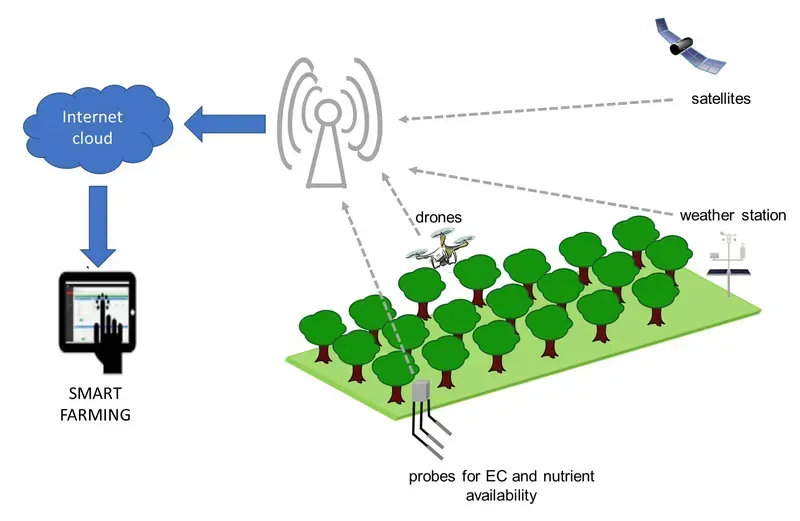
Smart Fertilization System Sensors
At the heart of every precision agriculture initiative lies a sophisticated Smart Fertilization Control System, meticulously designed to optimize nutrient delivery and maximize crop yield. These systems are fundamentally built upon an intricate interplay of specialized electronic components, seamlessly integrated via advanced Printed Circuit Board (PCB) design. The efficacy and reliability of such systems hinge on the careful selection and masterful integration of core components like advanced sensors, powerful microcontrollers, and robust communication modules, all working in concert to enable real-time data acquisition, intelligent decision-making, and precise nutrient application.
Environmental Sensors These crucial components, including soil moisture sensors, pH sensors, EC (Electrical Conductivity) sensors, and ambient temperature/humidity sensors, provide the vital raw data about the plant's immediate environment. Their accuracy directly impacts the system's ability to determine precise fertilization needs.
Nutrient-Specific Sensors Specialized sensors are employed to monitor actual nutrient levels in the soil or nutrient solution. These can include nitrate, phosphate, and potassium sensors, ensuring that the fertilization strategy is aligned with the plant's specific uptake requirements at different growth stages.
Microcontroller Units (MCUs) Serving as the system's brain, MCUs process the vast amounts of data collected by the sensors. They execute complex algorithms to analyze nutrient deficiencies, predict plant needs, and determine the optimal fertilization schedule and dosage. Modern MCUs offer high processing power and low power consumption, crucial for remote agricultural applications.
Communication Modules Enabling seamless data exchange within the system and with external platforms, these modules often include Wi-Fi, LoRa, or cellular (4G/5G) capabilities. They facilitate remote monitoring, control, and data logging, allowing farmers to manage fertilization strategies from anywhere and integrate with cloud-based analytics platforms.
Peristaltic Pumps/Solenoid Valves These actuators are responsible for the precise delivery of fertilizers. Controlled by the MCU, they ensure that the exact amount of nutrient solution is applied at the right time, minimizing waste and maximizing absorption. The precision of these components is vital for efficient resource utilization.
Power Management Units (PMUs) Essential for system longevity and reliability, PMUs manage power distribution and often include battery management systems for solar-powered or remote installations. Efficient power management ensures continuous operation, even in challenging environmental conditions.
Zero One Solution Limited excels in designing and manufacturing PCBs that flawlessly integrate these diverse components. Our expertise ensures optimal signal integrity, efficient power distribution, and thermal management, creating a robust and reliable foundation for your smart fertilization control system. We understand that the synergy between these core components, underpinned by superior PCB engineering, is what transforms raw data into actionable insights for agricultural success.
Key Features and Benefits of Zero One Solution Limited's PCB Design
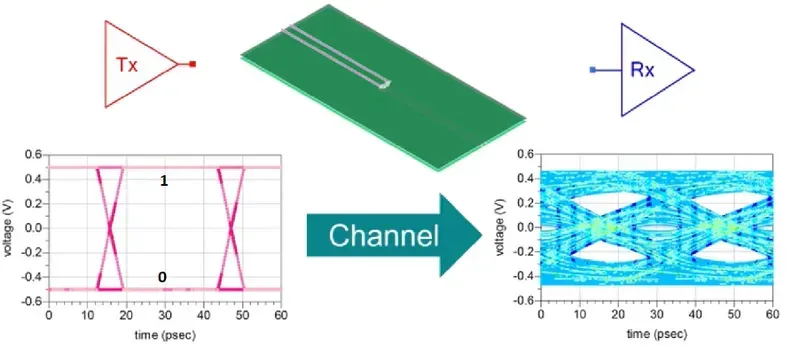
PCB Signal Integrity Testing
Zero One Solution Limited's PCB designs for smart fertilization systems are engineered to address the inherent challenges of agricultural environments, ensuring unparalleled reliability and longevity. Our meticulous design process prioritizes critical factors such as signal integrity, robust power management, and efficient thermal dissipation, which are paramount for the continuous and precise operation of sophisticated agricultural electronics. These foundational design principles guarantee that our PCBs deliver consistent performance, withstand demanding operational conditions, and provide the bedrock for optimized crop nutrient delivery.
Optimized Signal Integrity In smart fertilization, accurate sensor data is crucial. Our PCB designs incorporate advanced signal integrity techniques, including controlled impedance traces, strategic grounding, and careful component placement, to minimize noise and interference. This ensures that sensor readings (e.g., soil moisture, nutrient levels) are precise, leading to highly accurate and responsive fertilization decisions and preventing data corruption in electrically noisy agricultural settings. The result is superior data fidelity for intelligent nutrient delivery algorithms.
Robust Power Management Systems Smart fertilization units often operate in remote locations with variable power sources, demanding highly efficient and reliable power distribution. Zero One Solution Limited designs PCBs with sophisticated power management circuits, including DC-DC converters, low-dropout regulators (LDOs), and power conditioning filters. This ensures stable power delivery to all components, protects against voltage fluctuations, and maximizes energy efficiency, which is critical for battery-powered or solar-powered agricultural deployments, thereby extending operational uptime and reducing maintenance cycles.
Feature
Zero One Solution Limited's Approach
Benefit for Smart Fertilization
Thermal Management
Advanced heat dissipation techniques (e.g., thermal vias, copper pours, component spacing) and selection of thermally stable materials.
Prevents overheating of critical components, extends PCB lifespan, and ensures consistent system performance even in hot agricultural climates, reducing failure rates and improving reliability under sustained operation.
class SmartFertilizerPCB:
    def __init__(self, sensor_data, power_source):
        self.signal_integrity_checked = self.check_signal_integrity(sensor_data)
        self.power_managed = self.manage_power(power_source)
        self.thermal_regulated = self.regulate_thermal()

    def check_signal_integrity(self, data):
        # Implementation for noise reduction and data accuracy
        return True if data_is_clean else False

    def manage_power(self, source):
        # Implementation for stable power delivery and efficiency
        return True if power_is_stable else False

    def regulate_thermal(self):
        # Implementation for heat dissipation
        return True if temperature_is_optimal else False
The Role of IoT in Smart Fertilization
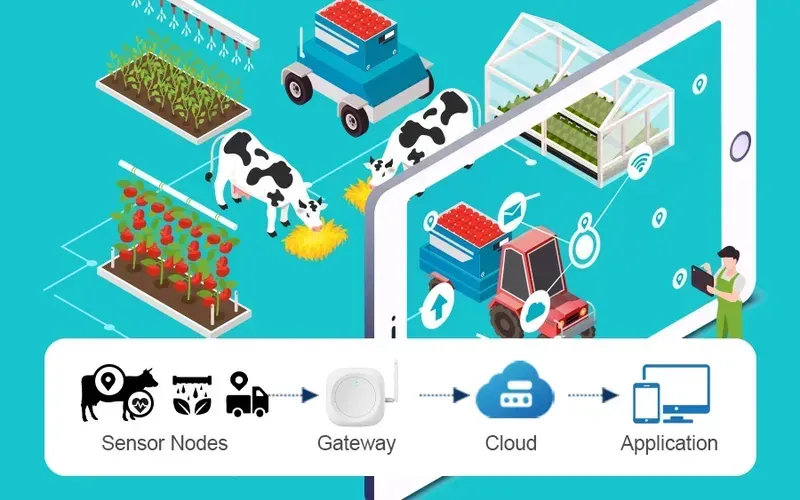
Agricultural IoT Data Transmission
The Internet of Things (IoT) serves as the indispensable backbone for advanced smart fertilization control PCB solutions, transforming traditional agricultural practices into data-driven, precision farming. By integrating sensors, actuators, and communication modules, IoT facilitates seamless data transmission from the field to cloud platforms, enabling real-time monitoring, intelligent analysis, and remote control of fertilization processes. This interconnected ecosystem empowers farmers with unprecedented visibility and control, optimizing nutrient delivery for healthier crops and sustainable resource management.
How does IoT enhance the efficiency of smart fertilization? IoT enhances efficiency by enabling continuous, real-time data collection from various sensors (soil moisture, pH, nutrient levels). This data is then transmitted to a central processing unit, often cloud-based, allowing for immediate analysis and the precise calculation of fertilizer requirements. This eliminates guesswork, prevents over-fertilization, and ensures nutrients are applied exactly when and where they are needed, leading to significant reductions in waste and improved resource utilization.
What are the primary data points collected by IoT in smart fertilization systems? Primary data points include soil moisture content, pH levels, ambient temperature, humidity, nutrient concentrations (e.g., nitrogen, phosphorus, potassium), and crop health indicators. Additionally, weather data and historical fertilization records are often integrated to build comprehensive models for predictive analysis and optimized nutrient delivery strategies.
How does cloud connectivity benefit smart fertilization control? Cloud connectivity is crucial for processing and storing vast amounts of agricultural data. It enables advanced analytics, machine learning algorithms, and AI-driven insights to refine fertilization strategies over time. Furthermore, cloud platforms provide remote access to data and control functionalities, allowing farmers to monitor and adjust fertilization schedules from anywhere, enhancing flexibility and responsiveness to changing environmental conditions.
Can IoT-enabled smart fertilization systems be integrated with existing farm infrastructure? Yes, IoT-enabled smart fertilization systems are designed for modularity and interoperability, allowing for integration with existing irrigation systems, farm management software, and various agricultural machinery. This flexibility minimizes the need for complete overhauls, allowing farmers to gradually adopt and scale their precision agriculture initiatives while leveraging current investments.
What are the security considerations for IoT in smart fertilization? Security considerations are paramount for IoT in smart fertilization, including data privacy, protection against unauthorized access, and ensuring the integrity of control commands. Robust encryption protocols, secure authentication mechanisms, and regular security audits are essential to safeguard sensitive agricultural data and prevent malicious interference that could impact crop health or system performance. Zero One Solution Limited prioritizes secure data transmission and robust system architecture in our PCB designs.
IoT Component
Function in Smart Fertilization
Benefit to Farmers
Sensors
Collect real-time data on soil conditions, weather, and crop health.
Enables precise, data-driven decisions on nutrient application.
Microcontrollers/Gateways
Process sensor data locally and transmit it to the cloud.
Facilitates efficient data handling and minimizes latency.
,Communication Modules (Wi-Fi, LoRa, Cellular)
Ensure reliable data transfer between field devices and cloud platforms.
Allows for remote monitoring and control, extending operational reach.
,Cloud Platform
Stores, processes, and analyzes large datasets; hosts AI/ML algorithms.
Provides actionable insights, predictive analytics, and automated decision-making.
,Actuators/Valves
Control the precise release and distribution of fertilizers.
Ensures accurate nutrient delivery, reducing waste and improving efficacy.
Manufacturing and Assembly of High-Quality PCBs for Fertilization Control
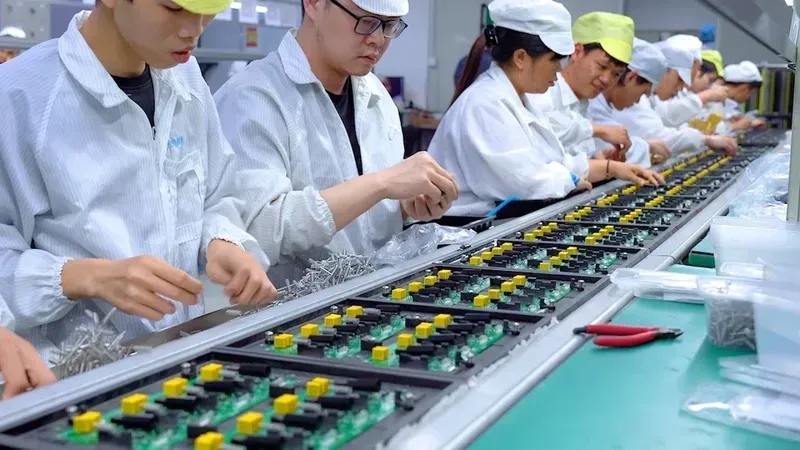
PCB Assembly Production Line
The performance and longevity of smart fertilization systems fundamentally rely on the robust manufacturing and precise assembly of their Printed Circuit Boards (PCBs). Achieving high-quality PCBs in this application demands rigorous adherence to industry standards, meticulous component selection, and advanced assembly techniques to ensure faultless operation in often challenging agricultural environments. Zero One Solution Limited, leveraging its extensive experience, prioritizes these critical stages to deliver PCBs that are not only high-performing but also exceptionally reliable.
What are the critical stages in manufacturing high-quality PCBs for smart fertilization systems? Manufacturing high-quality PCBs for smart fertilization involves several critical stages, beginning with precise design translation into manufacturing data (Gerber files), followed by material selection (e.g., FR-4 for standard applications, specialized laminates for harsh conditions), fabrication of the bare board (drilling, plating, etching), and finally, the assembly process. Each stage incorporates stringent quality control checks to prevent defects and ensure the board meets design specifications for functionality and durability.
How does component selection impact the reliability of fertilization control PCBs? Component selection is paramount for reliability. For smart fertilization control PCBs, components must withstand environmental factors like humidity, temperature fluctuations, and dust. This involves choosing industrial-grade, automotive-grade, or even ruggedized components with extended operating temperature ranges, high ingress protection (IP) ratings, and proven long-term stability. Poor component choices can lead to premature failure, calibration drift, and system downtime, directly impacting crop health and yield.
What assembly techniques ensure the performance and longevity of these PCBs? Advanced assembly techniques are crucial for performance and longevity. This includes automated pick-and-place for precise component positioning, reflow soldering for consistent and strong solder joints, and rigorous inspection methods such as Automated Optical Inspection (AOI) and X-ray inspection to detect hidden defects. Furthermore, applying conformal coatings or potting can protect the assembled PCB from moisture, chemicals, and physical shocks, significantly extending its operational life in agricultural settings.
What quality control measures are essential in PCB manufacturing for agricultural applications? Essential quality control measures include Design for Manufacturability (DFM) analysis to catch issues pre-production, in-line process control during fabrication and assembly, and comprehensive post-assembly testing. This includes In-Circuit Testing (ICT) to verify component presence and connectivity, Functional Testing (FCT) to simulate real-world operation, and environmental stress testing (e.g., burn-in, thermal cycling) to expose potential weaknesses before deployment. Zero One Solution Limited employs a multi-tiered QC approach to guarantee reliability.
How does Zero One Solution Limited ensure the quality and reliability of its smart fertilization PCBs? Zero One Solution Limited ensures quality and reliability through an integrated approach encompassing meticulous DFM reviews, sourcing components exclusively from reputable suppliers, operating state-of-the-art manufacturing and assembly lines, and implementing stringent quality assurance protocols at every production phase. Our expertise in rapid prototyping allows for iterative design improvements, and our comprehensive testing capabilities validate performance under simulated agricultural conditions, ensuring every PCB delivers optimal reliability and precision.
Case Studies: Real-World Applications of Smart Fertilization PCBs
Smart Fertilization System in Field
Real-world implementations of smart fertilization control PCBs consistently demonstrate their transformative impact on agricultural efficiency and sustainability. These case studies underscore how Zero One Solution Limited's robust PCB solutions are at the forefront of enabling precision agriculture, leading to enhanced crop yields, significant reductions in fertilizer usage, and minimized environmental footprints. Our advanced PCB designs are the backbone of systems that translate data into actionable insights, proving instrumental in optimizing nutrient delivery across diverse agricultural landscapes.
Project Name
Challenge Addressed
Zero One Solution's PCB Impact
Quantifiable Result
Precision Vineyard Irrigation System
Uneven nutrient distribution and water waste in vineyards.
Integrated multi-sensor data fusion PCB for variable rate fertilization and drip irrigation control.
30% reduction in water usage, 20% increase in grape yield, 15% decrease in fertilizer runoff over 2 seasons.
Automated Hydroponic Nutrient Delivery
Manual nutrient balancing leading to inconsistent growth and high labor costs.
High-density PCB with integrated pH, EC, and temperature sensors for automated nutrient solution adjustment.
50% reduction in labor for nutrient management, 25% faster crop cycles, 10% less nutrient waste.
Large-Scale Crop Field Monitoring
Inefficient broad-acre fertilization, leading to over-application and soil degradation.
22% reduction in fertilizer consumption across 1,000 acres, 8-12% improvement in crop uniformity.
Urban Vertical Farm System
Limited space and high energy consumption for controlled environment agriculture.
Compact, high-reliability PCB for integrated LED lighting, climate control, and nutrient delivery.
35% increase in crop density, 18% reduction in energy costs for nutrient delivery pumps, year-round production.
Smart Greenhouse Climate & Fertilization
Suboptimal growth conditions due to inconsistent environmental parameters and nutrient supply.
Custom PCB for intelligent integration of environmental sensors (temp, humidity, CO2) with nutrient dosing pumps.
Improved plant health scores by 40%, 15% lower disease incidence, optimized nutrient uptake leading to higher biomass.
Future Trends in Smart Fertilization Technology
The evolution of smart fertilization technology is rapidly accelerating, driven by the imperative for sustainable agriculture and enhanced efficiency. Future trends in this domain will primarily focus on integrating more sophisticated sensor arrays, advanced data analytics, and autonomous systems to create hyper-precision nutrient delivery. These advancements aim to not only maximize crop yield and minimize environmental impact but also to usher in a new era of truly intelligent and self-optimizing agricultural practices.
What are the next big advancements in sensor technology for smart fertilization? Future sensor advancements will move beyond traditional NPK measurements to include hyperspectral imaging for plant health diagnostics, electrochemical sensors for real-time soil micronutrient analysis, and even root-level monitoring. These next-generation sensors will provide a granular understanding of plant and soil conditions, enabling highly targeted and dynamic fertilization strategies.
How will data analytics transform smart fertilization control? Data analytics in smart fertilization will evolve from descriptive reporting to predictive and prescriptive models. Leveraging AI and machine learning, systems will analyze vast datasets from sensors, weather patterns, historical yields, and market prices to forecast nutrient needs and recommend optimal fertilization schedules and compositions. This will enable proactive decision-making and continuous optimization.
What role will automation play in the future of smart fertilization technology? Automation will extend beyond current irrigation and fertilization systems to include fully autonomous robotic platforms capable of localized nutrient application based on real-time plant-specific data. Drones equipped with spraying capabilities, autonomous ground vehicles for soil sampling and direct injection, and self-calibrating systems will reduce labor costs and increase application precision, operating around the clock without human intervention.
How will climate change influence the development of future smart fertilization solutions? Climate change will necessitate smart fertilization solutions that are more resilient and adaptable. This includes systems capable of dynamic adjustment to extreme weather events, optimizing nutrient uptake under stress conditions, and reducing greenhouse gas emissions associated with fertilizer use. Future PCBs will be designed to withstand harsher environmental conditions and integrate with climate-resilient farming practices.
What are the cybersecurity considerations for future smart fertilization systems? As smart fertilization systems become more interconnected and reliant on data, cybersecurity will become paramount. Future solutions will incorporate robust encryption, secure boot mechanisms, and intrusion detection systems at the PCB level to protect sensitive agricultural data and prevent unauthorized control of critical farming infrastructure, ensuring the integrity and reliability of nutrient delivery.
Partnering with Zero One Solution Limited for Your PCB Needs
Choosing the right PCB solution provider is paramount for the success of your smart fertilization control system. Zero One Solution Limited offers unparalleled expertise, rapid prototyping capabilities, and an unwavering commitment to quality and customer satisfaction, ensuring your agricultural technology innovations are brought to life with precision and efficiency. Our strategic location within the global PCBA supply chain, coupled with a deep understanding of complex electronic manufacturing, positions us as the ideal partner for high-reliability, performance-driven PCB solutions in the agricultural sector.
Why should I choose Zero One Solution Limited for my Smart Fertilization Control PCB Solution? Zero One Solution Limited specializes in rapid-response R&D prototype manufacturing and one-stop PCB services from design to assembly. Our 13 years of experience, strategic global presence, and focus on high-quality, reliable solutions specifically tailored for agricultural technology provide a significant competitive advantage for your smart fertilization projects. We ensure optimal performance, longevity, and seamless integration of your systems.
What specific expertise does Zero One Solution Limited offer for agricultural PCB solutions? We possess deep expertise in designing and manufacturing PCBs for demanding agricultural environments. This includes proficiency in managing signal integrity for precise sensor data, robust power management for continuous operation, and effective thermal management for outdoor installations. Our designs prioritize durability, efficiency, and compatibility with IoT integration, crucial for smart farming applications.
How does Zero One Solution Limited ensure rapid prototyping for new smart fertilization concepts? Our core strength lies in rapid prototyping. We leverage advanced manufacturing facilities, streamlined processes, and a highly skilled engineering team to quickly turn your concepts into functional PCB prototypes. This accelerated development cycle significantly reduces time-to-market, allowing you to innovate faster and validate designs more efficiently in the dynamic agricultural technology landscape.
Feature
Zero One Solution Limited Advantage
Impact on Smart Fertilization PCBs
Rapid Prototyping
Accelerated design-to-production cycle (e.g., 3-5 days for prototypes)
Enables faster iteration and market entry for new fertilization control systems, reducing R&D costs and risks
One-Stop Solution
Comprehensive services from PCB design to manufacturing and assembly
Simplifies the supply chain, ensures seamless integration, and reduces potential compatibility issues between stages of production
Global Supply Chain Network
Strategic locations in Shenzhen (China) and Dubai (UAE) for global resource access
Ensures access to diverse components, competitive pricing, and efficient logistics, vital for scalable agricultural deployments
Quality Assurance
Rigorous quality control protocols throughout design, manufacturing, and assembly
Guarantees high reliability and longevity of PCBs in harsh agricultural environments, minimizing downtime and maintenance for farmers
Partnering with Zero One Solution Limited means collaborating with a team that understands the critical demands of smart agriculture. We are dedicated to empowering your innovations, from precise nutrient delivery systems to fully automated farm management solutions. Contact us today to discuss how our bespoke PCB solutions can elevate your smart fertilization technology and contribute to sustainable agricultural practices.
In conclusion, the Smart Fertilization Control PCB Solution represents a significant advancement in precision agriculture, offering a pathway to sustainable and efficient crop management. By optimizing nutrient delivery, reducing waste, and minimizing environmental impact, this solution empowers farmers to maximize yields while minimizing their ecological footprint.
Zero One Solution Limited is committed to providing cutting-edge PCB solutions that drive innovation across various industries. Our expertise in rapid prototyping and PCB manufacturing ensures that our clients have access to the latest technologies and high-quality products. Contact us today to learn more about our Smart Fertilization Control PCB Solution and how it can transform your agricultural practices.
Share your thoughts and experiences with smart fertilization in the comments below! Or visit our website to explore our full range of PCB solutions.