In an era increasingly focused on sustainable development and energy efficiency, solar street lighting has emerged as a cornerstone of smart city infrastructure. These autonomous systems, powered by the sun, offer a greener, more cost-effective alternative to traditional lighting. At the heart of every reliable solar street light lies its control board – the brain orchestrating power management, battery charging, and LED illumination. Zero One Solution Limited, a leader in rapid-response PCB assembly solutions since 2011, brings unparalleled expertise to this critical component. How can a meticulously engineered control board redefine the performance and longevity of solar street lights? This article delves into the core of our comprehensive Solar Street Light Control Board Solution, designed to empower innovation and accelerate product development for our clients.
The Evolution of Solar Street Lighting: A PCB Perspective
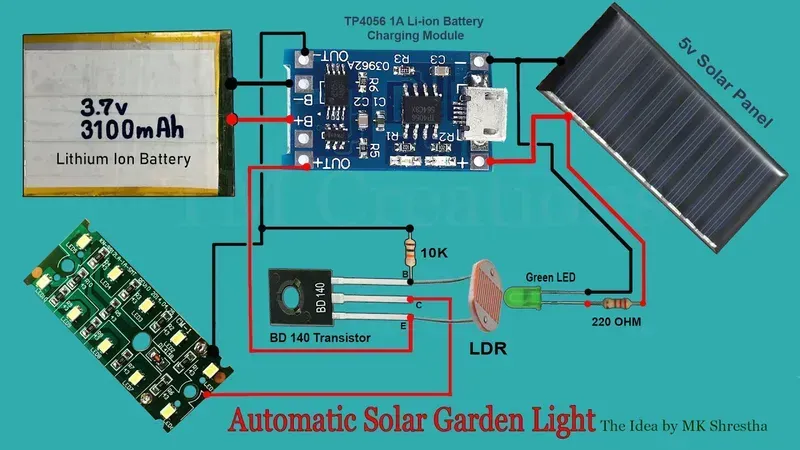
Solar Street Light PCB Design
The evolution of solar street lighting has been intrinsically linked to breakthroughs in Printed Circuit Board (PCB) technology, transforming these systems from simple, standalone units into intelligent, interconnected networks. Early solar street lights relied on rudimentary PCBs to manage basic charging and illumination. However, modern PCB design and manufacturing advancements have enabled sophisticated control boards that optimize energy harvesting, enhance lighting efficiency, and integrate smart city functionalities, fundamentally redefining urban and rural illumination infrastructure.
First Generation: Basic On/Off Control Initial solar street lights featured simplistic PCBs primarily for basic charge control and manual on/off functions. These boards, often single-layered, housed components for voltage regulation and current limiting, ensuring rudimentary battery protection and LED operation. Their limitations included fixed illumination times and minimal energy efficiency, relying heavily on manual intervention or simple light-dependent resistors.
Second Generation: PWM Charge Controllers and Timer Functions The advent of Pulse Width Modulation (PWM) charge controllers marked a significant leap. PCBs evolved to accommodate these more complex circuits, allowing for more efficient battery charging and rudimentary programmable timer functions. This generation enabled dusk-to-dawn operation and adjustable lighting schedules, improving energy conservation and reducing manual adjustments, showcasing a nascent form of intelligent control.
Third Generation: MPPT, Dimming, and Enhanced Protection Modern solar street light control boards leverage Maximum Power Point Tracking (MPPT) technology, requiring more intricate multi-layered PCBs. These boards integrate advanced microcontrollers, robust LED drivers, and sophisticated protection circuits for overcharge, over-discharge, and short-circuit. Furthermore, features like intelligent dimming capabilities, varying light intensity based on ambient conditions or motion detection, became feasible, optimizing power consumption and extending battery life through precise power management.
Fourth Generation: IoT, Connectivity, and Smart City Integration The latest evolution sees PCBs at the heart of IoT-enabled solar street lights. These highly integrated boards incorporate communication modules (e.g., LoRa, GPRS, Zigbee) for remote monitoring, fault diagnosis, and centralized management. This connectivity transforms individual street lights into nodes within a smart city ecosystem, facilitating real-time performance tracking, predictive maintenance, and adaptive lighting networks, vastly improving operational efficiency and urban safety. Zero One Solution Limited designs PCBs that are foundational to this advanced integration, driving the future of smart, sustainable lighting.
Key Components of a Solar Street Light Control Board
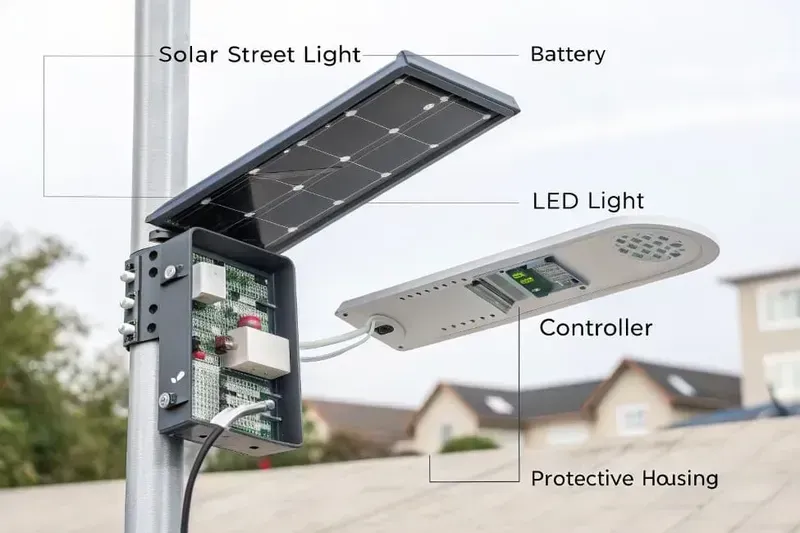
Solar Street Light Controller Components
At the core of every efficient solar street light is a meticulously designed control board, acting as the intelligent brain that orchestrates power management, lighting control, and system protection. These boards integrate several crucial electronic components, each playing a vital role in ensuring optimal performance, energy efficiency, and longevity of the solar lighting system. Understanding these key components is fundamental to appreciating the sophisticated engineering behind modern solar street light solutions, which are increasingly critical for sustainable urban development and off-grid illumination.
Component
Function
Importance in Solar Street Light
Charge Controller (MPPT/PWM)
Regulates the voltage and current coming from the solar panel to charge the battery, preventing overcharging and deep discharging.
Ensures battery health and extends its lifespan, maximizing energy harvesting from the solar panel.
][
LED Driver
Provides a constant current or voltage to the LED array, ensuring stable and efficient illumination.
Optimizes LED performance, prevents damage from fluctuating power, and enables dimming capabilities for energy saving.
][
Microcontroller (MCU)
The central processing unit that manages various functions like lighting schedules, dimming, battery management, and communication.
Enables intelligent control, automation, and adaptability to environmental conditions, forming the "brain" of the system.
][
Communication Module (e.g., LoRa, NBIoT, GPRS)
Facilitates remote monitoring, control, and data transmission between the street light and a central management system.
Allows for smart city integration, remote diagnostics, performance tracking, and over-the-air updates, enhancing operational efficiency.
][
Battery Protection Circuit
Monitors battery voltage, current, and temperature to prevent overcharging, over-discharging, and short circuits.
Crucial for safety and extending battery life, protecting against damage due to electrical anomalies.
][
Temperature Sensor
Monitors the ambient and internal temperatures of the control board and battery.
Enables temperature compensation for charging/discharging and protection against extreme conditions, ensuring reliable operation.
Zero One Solution Limited's Expertise in Control Board Manufacturing
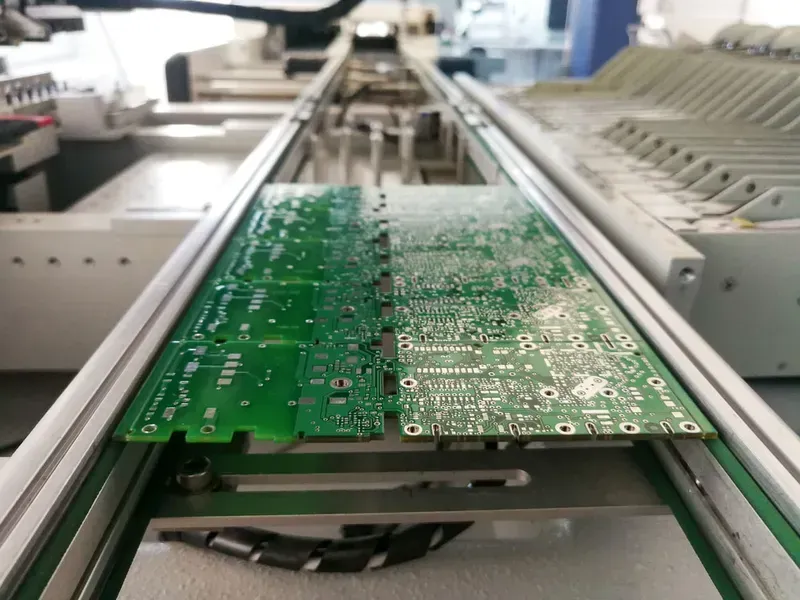
PCB Manufacturing Factory Production Line
At Zero One Solution Limited, our unparalleled expertise in PCB design, rapid prototyping, manufacturing, and assembly positions us as a premier partner for advanced solar street light control board solutions. We are committed to empowering our clients to accelerate product development and deployment through a seamless one-stop service model, ensuring exceptional efficiency and market readiness. Our strategic presence in Shenzhen, China, and Dubai facilitates global access to resources and robust supply chain integration, making us a vital link in the worldwide PCBA network for solar lighting innovations.
Capability
Description
Benefit for Solar Street Light Control Boards
Rapid PCB Prototyping
Accelerated design iteration and proof-of-concept development.
Quickly validate innovative control board designs, reducing time-to-market for new solar street light functionalities.
High-Precision PCB Manufacturing
Advanced fabrication processes for complex multi-layer boards with tight tolerances.
Ensures reliability and performance of control boards in harsh outdoor environments, critical for solar street lighting longevity.
Automated SMT & Through-Hole Assembly
State-of-the-art assembly lines for both surface-mount and through-hole components.
Guarantees consistent quality and high-volume production of control boards, meeting diverse project demands efficiently.
Comprehensive Quality Assurance
Rigorous testing including AOI, X-ray inspection, and functional testing.
Minimizes defects and maximizes the operational lifespan of control boards, essential for the demanding conditions of solar street lights.
One-Stop Service Model
Integrated services from design optimization to final assembly.
Streamlines the entire production process, reducing lead times and costs while ensuring cohesive product development for solar lighting systems.
Global Supply Chain Network
Leveraging our Shenzhen headquarters and Dubai branch office.
Provides access to a vast network of suppliers and efficient logistics, ensuring cost-effective and timely material sourcing for solar control board components.
Advanced Features in Our Solar Street Light Control Solutions
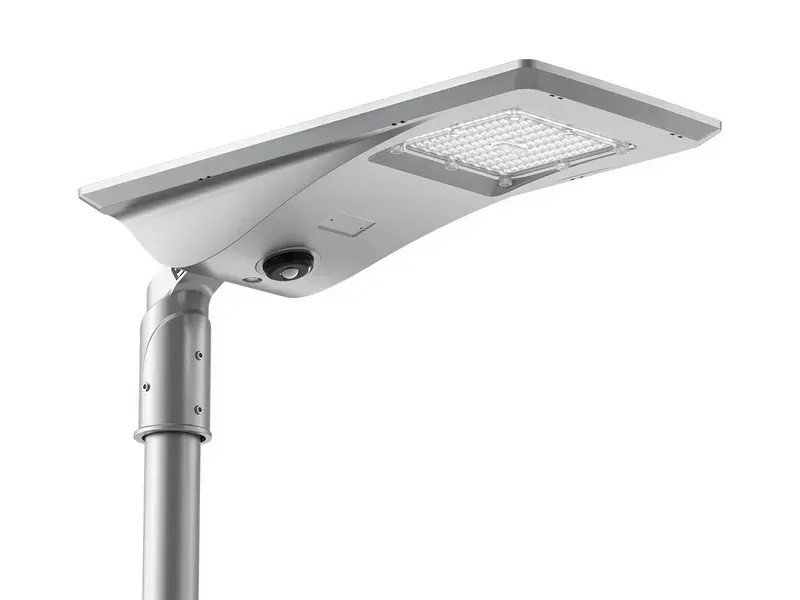
Smart Solar Street Light
Zero One Solution Limited's solar street light control boards are engineered with an array of advanced features that transcend basic functionality, delivering unparalleled performance, longevity, and smart city readiness. These innovations are crucial for optimizing energy efficiency, extending battery life, and providing comprehensive control over solar lighting infrastructure, directly addressing the evolving demands of modern urban and remote lighting projects.
Intelligent Power Management (IPM) Our control boards integrate sophisticated IPM algorithms that dynamically adjust LED output based on real-time battery status, environmental conditions, and programmed lighting schedules. This ensures maximum light output when needed while conserving energy during low-demand periods or adverse weather, significantly extending the system's operational autonomy and reducing the risk of premature battery degradation. This adaptive power distribution maximizes solar energy utilization and ensures reliable illumination throughout the night, even in challenging conditions.
Adaptive Dimming Capabilities Beyond simple on/off functions, our solutions offer multi-stage dimming and time-based dimming profiles. This allows for precise control over light intensity throughout the night, aligning with specific traffic patterns or security requirements. For instance, lights can operate at full brightness during peak hours and dim down during off-peak times, leading to substantial energy savings (up to 40% reduction in power consumption reported by some municipalities) and reduced light pollution, while still maintaining adequate safety levels.
IoT Connectivity for Remote Monitoring & Control Equipped with integrated communication modules (e.g., LoRaWAN, NB-IoT, GPRS), our control boards enable seamless IoT connectivity. This facilitates remote monitoring of critical parameters such as battery voltage, charging current, LED status, and fault detection from a centralized platform. Furthermore, it allows for remote configuration of lighting schedules and dimming profiles, enabling proactive maintenance, rapid troubleshooting, and efficient management of large-scale deployments without the need for on-site visits. This feature significantly reduces operational costs by up to 30% and enhances responsiveness to system issues, crucial for smart city infrastructure.
Feature
Technical Detail
End-User Benefit
Smart City Impact
Intelligent Power Management
MPPT/PWM hybrid algorithms, adaptive load control based on battery SoC and environmental data.
Optimized energy consumption, extended battery lifespan by 20-30%, reliable night-long illumination.
Reduces energy waste, supports grid independence for public lighting, improves urban resilience and sustainability metrics.
Significant energy savings (up to 40%), reduced light pollution, customizable lighting levels for safety and security.
Enhances energy efficiency, contributes to sustainable urban development, improves public safety through optimized visibility.
IoT Connectivity
Integrated LoRaWAN/NB-IoT/GPRS modules, cloud-based data analytics and control platform.
Real-time monitoring, remote fault diagnosis, proactive maintenance, reduced operational costs by up to 30%.
Enables smart street lighting networks, facilitates data-driven decision making, lays groundwork for future smart city applications like traffic monitoring and environmental sensing.
Customization and Flexibility for Diverse Applications
At Zero One Solution Limited, we understand that no two solar street lighting projects are identical. Each deployment, from bustling urban centers to remote rural pathways, presents a unique set of challenges and requirements, necessitating a highly adaptable and customized solar street light control board solution. Our commitment to flexibility ensures that our clients receive a PCB tailored precisely to their distinct operational parameters, maximizing efficiency and longevity in every application.
Tailored Power Output Integration Our control boards are engineered to seamlessly integrate with a wide spectrum of LED power outputs, ensuring optimal illumination while conserving energy. Whether your project demands low-wattage accent lighting or high-lumen main road illumination, our solutions are precisely calibrated to match the specific power requirements of your chosen LED arrays.
Battery Chemistry Compatibility Recognizing the diversity in energy storage technologies, our control boards offer broad compatibility with various battery types, including LiFePO4, Gel, AGM, and Lead-Acid. This flexibility allows clients to select the most suitable battery chemistry based on cost, lifespan, environmental conditions, and charging cycles, ensuring peak performance and system reliability.
Environmental Resilience Design Solar street lights operate in diverse and often harsh environmental conditions. Our control boards are designed with robustness in mind, featuring extended operating temperature ranges, IP-rated enclosures, and enhanced surge protection to withstand extreme heat, cold, humidity, and electrical fluctuations, guaranteeing uninterrupted operation and durability.
Advanced Sensor and Connectivity Integration Beyond basic control, we offer customization for advanced functionalities. This includes integrating various sensors (e.g., PIR motion sensors for adaptive dimming, ambient light sensors), and communication modules (e.g., LoRaWAN, NB-IoT, GPRS) for remote monitoring, diagnostics, and smart city network integration, enabling dynamic and responsive lighting solutions.
Collaborative Design and Prototyping Our approach is inherently collaborative. We work closely with clients from initial concept to final production, utilizing rapid prototyping capabilities to quickly iterate designs and validate performance. This iterative process ensures that the final control board not only meets but exceeds specific project requirements, leading to optimized system performance and accelerated time-to-market.
Quality Assurance and Reliability in PCB Production
PCB Quality Control Testing
Ensuring the unwavering reliability and longevity of solar street light control boards is paramount, particularly given their exposure to diverse outdoor environmental challenges. At Zero One Solution Limited, our commitment to uncompromised quality assurance is woven into every stage of PCB production, from initial design verification to final functional testing, guaranteeing that each control board not only meets but exceeds stringent industry standards for performance and durability. This rigorous methodology is critical for delivering solutions that withstand the test of time and elements.
Incoming Material Inspection (IQC) Every raw material, from copper clad laminates to integrated circuits, undergoes meticulous inspection upon arrival. We verify component specifications against design requirements, conduct visual checks for defects, and perform electrical tests to confirm performance integrity, adhering to IPC-A-600 and J-STD-001 standards to prevent upstream quality issues.
In-Process Quality Control (IPQC) Throughout the manufacturing cycle, continuous monitoring and inspection are implemented. This includes automated optical inspection (AOI) for solder joint integrity and component placement accuracy, X-ray inspection for hidden solder joints (like BGA components), and impedance controlled testing for high-speed signal integrity. Our processes strictly follow ISO 9001 guidelines to maintain consistency and precision.
Automated Testing & Functional Validation Each control board undergoes comprehensive automated testing, including In-Circuit Testing (ICT) to detect manufacturing defects and ensure component functionality. This is followed by rigorous Functional Testing (FCT) that simulates real-world operating conditions, verifying power management, LED dimming, battery charging, and communication protocols. We utilize custom test jigs and software to ensure 100% functional compliance.
Environmental Stress Testing Given the harsh outdoor environments solar street lights face, our control boards are subjected to accelerated life testing, including thermal cycling, humidity chamber tests, and vibration testing. This proactive approach identifies potential failure points under extreme conditions, ensuring resilience against temperature fluctuations, moisture, and mechanical stress, critical for long-term outdoor deployment.
Quality Control Stage
Key Process
Objective
Standard/Methodology
Material Sourcing
Supplier Qualification & Material Verification
Ensure components meet specifications and reliability standards
ISO 9001, Vendor Audits, Data Sheets
PCB Fabrication
Impedance Control, Copper Thickness Measurement, Solderability Test
Achieve precise electrical characteristics and robust solder joints
Confirm cosmetic quality, compliance with specifications, and secure packaging
AQL Standards, Customer Requirements
FAQs About Solar Street Light Control Board Solutions
Navigating the complexities of solar street light control board solutions can raise numerous questions for project developers, installers, and maintenance teams. This section addresses the most frequently asked questions to provide clarity and practical insights into the design, functionality, installation, and troubleshooting of these critical components, ensuring optimal performance and longevity for your solar lighting infrastructure.
What is the primary function of a solar street light control board? The primary function of a solar street light control board is to regulate the entire operational cycle of the solar street light system. This includes managing the charging of the battery from the solar panel, controlling the discharge of power to the LED lamp, implementing intelligent dimming based on ambient light or time, and providing essential battery protection features like overcharge and over-discharge prevention. It acts as the central intelligence unit, optimizing energy efficiency and extending system lifespan.
How does a control board handle different battery types (e.g., LiFePO4, Lead-Acid)? A sophisticated solar street light control board is designed with configurable charging and discharging parameters to accommodate various battery chemistries, such as LiFePO4, Lithium-ion, and Lead-Acid. This is achieved through integrated battery management algorithms that adjust charging voltage, current, and cutoff thresholds according to the specific battery's requirements, ensuring optimal charging efficiency, preventing damage, and maximizing cycle life. Zero One Solution Limited's control boards feature customizable profiles for seamless integration.
What role does MPPT or PWM play in a solar control board? MPPT (Maximum Power Point Tracking) and PWM (Pulse Width Modulation) are two key charge control technologies integrated into solar street light control boards. PWM controllers provide a cost-effective solution for basic charge regulation, effectively preventing battery overcharge. MPPT controllers, however, are more advanced, actively tracking the maximum power point of the solar panel to extract up to 20-30% more power, especially in varying weather conditions. This leads to faster charging and more efficient energy utilization, particularly beneficial for larger systems or those in less sunny regions. Zero One Solution Limited offers solutions incorporating both technologies to suit diverse project needs.
Can solar street light control boards be integrated with IoT for remote monitoring? Yes, modern solar street light control boards are increasingly designed with IoT (Internet of Things) connectivity capabilities. This integration allows for remote monitoring of critical parameters such as battery voltage, charging current, LED power consumption, and fault status. Through various communication protocols (e.g., LoRaWAN, NB-IoT, GPRS), data can be transmitted to a central platform, enabling proactive maintenance, performance analysis, and remote control of lighting schedules or dimming, significantly improving operational efficiency for smart city applications. Our advanced control boards incorporate these features for enhanced management.
What are the typical lifespan and maintenance requirements for a control board? The typical lifespan of a high-quality solar street light control board, when properly installed and maintained, can range from 5 to 10 years or even longer, often correlating with the lifespan of the battery it manages. Maintenance requirements are generally minimal, primarily involving ensuring proper ventilation and protecting it from extreme environmental conditions. Regular system checks can identify potential issues early. Zero One Solution Limited's rigorous quality assurance and robust design minimize the need for frequent maintenance, contributing to long-term reliability and reducing total cost of ownership.
The solar street light control board is more than just a circuit; it's the intelligence that drives sustainable urban development. Zero One Solution Limited's comprehensive solution provides the robust, efficient, and intelligent PCB foundations needed for the next generation of solar street lights. Our commitment to rapid prototyping, advanced manufacturing, and global supply chain integration ensures that your innovative ideas can swiftly transform into market-ready products. Ready to illuminate the future with reliable and smart solar street lighting? Partner with Zero One Solution Limited to transform your vision into reality. Contact us today to discuss your project requirements and discover how our expertise can accelerate your success.