Tire Pressure Monitoring System (TPMS) PCB Solution
2025.07.20
In the rapidly evolving automotive industry, safety and efficiency are paramount. The Tire Pressure Monitoring System (TPMS) has become an indispensable technology, directly contributing to both. But what truly underpins the reliability and precision of these crucial systems? The answer lies within their sophisticated Printed Circuit Boards (PCBs). As Zero One Solution Limited, a leader in rapid-response R&D prototype manufacturing since 2011, we understand that a high-quality TPMS PCB is not just a component, but the very heartbeat of a dependable monitoring system. This article delves into the intricate world of TPMS PCB solutions and how our expertise ensures optimal performance, faster development cycles, and superior product outcomes for our clients globally.
The Critical Role of TPMS in Modern Vehicles
Tire Pressure Monitoring Systems (TPMS) have become indispensable in modern vehicles, acting as vigilant guardians of driver safety, fuel economy, and environmental sustainability. By continuously monitoring tire pressure, TPMS provide real-time data, alerting drivers to potentially dangerous under-inflation or over-inflation conditions. This proactive approach significantly reduces the risk of tire failures, enhances vehicle handling, and contributes to optimized fuel efficiency, ultimately lessening the carbon footprint. The reliable performance of TPMS is not merely a convenience; it's a fundamental aspect of modern vehicle design, directly impacting the driving experience and overall vehicle safety.
TPMS technology has evolved significantly, transitioning from indirect systems (relying on wheel speed sensors) to direct systems, which use pressure sensors within each tire. These direct systems offer superior accuracy and immediate feedback, facilitating better driver awareness. The shift toward mandatory TPMS in various regions underscores the technology's importance in road safety. Furthermore, the integration of TPMS with advanced driver-assistance systems (ADAS) highlights its role in enhancing vehicle intelligence and promoting a safer driving environment. Manufacturers and consumers alike benefit from the increased safety, reduced maintenance costs, and improved fuel efficiency that TPMS provides. Accurate and reliable TPMS operation is thus critical for both consumers and manufacturers, establishing the foundation for the essential role of the PCB within the system.
Understanding the TPMS PCB: The Core of Tire Pressure Monitoring
TPMS PCB Components
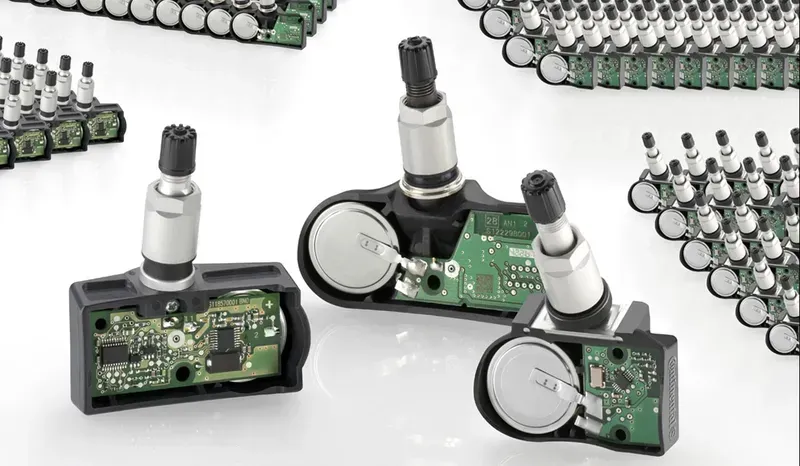
At the heart of every Tire Pressure Monitoring System (TPMS) lies the Printed Circuit Board (PCB), a sophisticated electronic platform that orchestrates the system's critical functions. This small, yet intricate, component is responsible for gathering, processing, and transmitting vital tire pressure and temperature data, ensuring the safety and efficiency of modern vehicles. The performance and reliability of the TPMS PCB directly impact the accuracy of the system and, consequently, the driver's safety. The TPMS PCB integrates several key components that work in harmony to monitor tire conditions and alert the driver to potential hazards.
Sensors Miniature pressure and temperature sensors, often integrated within the tire valve stem or wheel, are the initial point of data collection. These sensors provide real-time information on each tire's condition.
Microcontroller The microcontroller serves as the 'brain' of the TPMS PCB, processing data received from the sensors. It interprets the data, checks for anomalies, and prepares information for transmission.
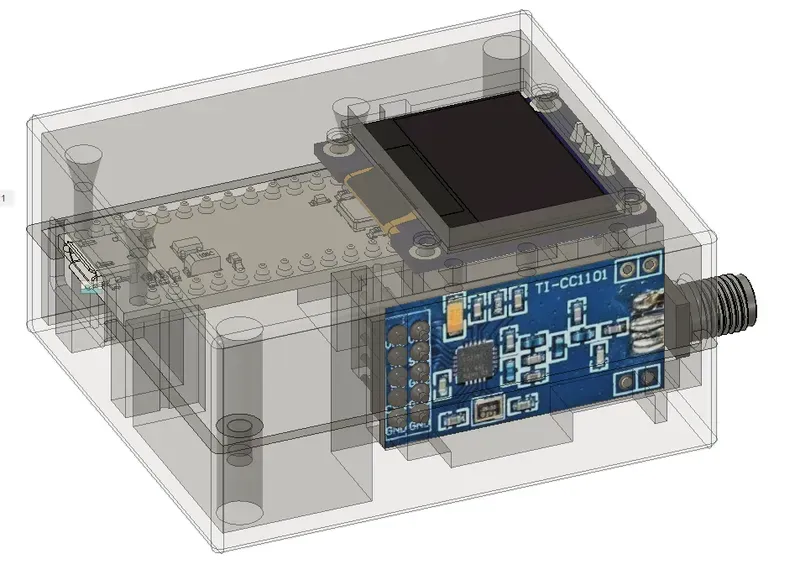
RF Communication Module This module is essential for wireless data transmission. It modulates and transmits the tire pressure and temperature data to the vehicle's central processing unit (ECU) or a dedicated receiver.
Power Management ICs Power management ICs regulate the power supply to all components, ensuring efficient energy consumption and extending the battery life of the TPMS sensors. This is crucial for the long-term reliability of the system.
Antenna The antenna is designed to send and receive radio frequency signals, allowing for wireless communication between the tire sensor and the vehicle's receiver. The design of the antenna is critical for range and signal strength.
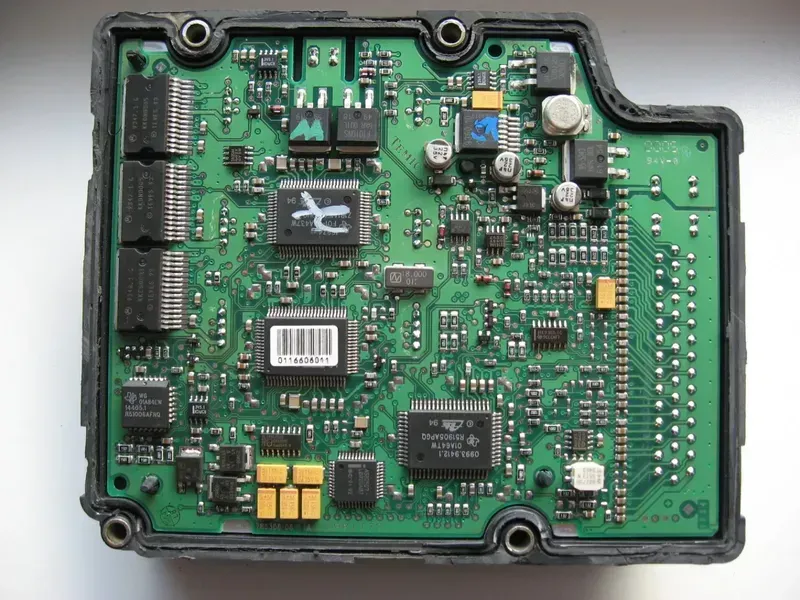
The TPMS PCB must withstand harsh environmental conditions, including extreme temperatures, vibrations, and moisture. The materials and manufacturing processes used to create the PCB must be carefully selected and executed to ensure long-term durability and reliability. The design and manufacturing quality of the PCB directly affects the accuracy of the TPMS.
Key Design Considerations for High-Performance TPMS PCBs: Ensuring Accuracy and Longevity
Miniature TPMS PCB
The design of Tire Pressure Monitoring System (TPMS) PCBs presents a unique set of engineering challenges that directly impact the system's accuracy, reliability, and lifespan. At Zero One Solution Limited, we understand that meticulous design choices are critical to delivering high-performance TPMS solutions. These considerations go beyond basic functionality, addressing factors essential for robust performance in demanding automotive environments.
Miniaturization for Compact Integration TPMS PCBs must fit within the confined space of a tire or wheel well. This necessitates careful component selection and strategic layout to minimize board size without compromising functionality. We utilize advanced PCB manufacturing techniques, including high-density interconnect (HDI) technology, to achieve miniaturization goals.
Robust Material Selection for Durability TPMS PCBs are exposed to extreme temperatures, vibrations, and moisture. Selecting materials like FR-4 with high thermal resistance and employing conformal coatings can protect the circuitry and extend the lifespan of the PCB. Zero One Solution Limited uses IPC-rated materials to ensure durability and reliability in harsh automotive conditions.
Optimizing Antenna Design for Reliable Wireless Communication Effective wireless communication is crucial for TPMS functionality. Our engineers carefully design and optimize antenna layouts, considering factors like frequency, impedance matching, and antenna placement, to ensure reliable data transmission from the tire sensor to the vehicle's receiver. This involves simulations and real-world testing to minimize signal loss and maximize range.
Power Consumption Management for Extended Battery Life Many TPMS sensors are battery-powered, making power efficiency paramount. We implement low-power design techniques, including optimized component selection and efficient power management circuitry. This helps to extend the battery life of the TPMS sensor, reducing the need for frequent replacements.
Electromagnetic Compatibility (EMC) for Interference Resistance The automotive environment is rife with electromagnetic interference (EMI). We incorporate EMC design principles, such as proper grounding, shielding, and filtering, to ensure that the TPMS PCB is resistant to external interference and does not generate its own disruptive emissions. This includes adherence to industry standards like CISPR 25.
Our expertise extends to various TPMS types, including direct and indirect systems. Direct TPMS requires PCBs with pressure and temperature sensors inside each tire, whereas indirect systems calculate tire pressure using wheel speed sensors. Both types demand precision engineering, and our team is proficient in tailoring designs to meet specific requirements.
Accelerate Your TPMS Innovation with Zero One Solution's Rapid Prototyping
TPMS PCB Prototyping
In the fast-paced automotive industry, time-to-market is critical. Zero One Solution Limited specializes in rapid PCB prototyping for Tire Pressure Monitoring System (TPMS) applications, enabling you to swiftly transform concepts into functional prototypes. Our streamlined process dramatically reduces development cycles, allowing for quick iterations and thorough design validation. With our expertise, you can accelerate your R&D, test new features, and bring cutting-edge TPMS solutions to market ahead of the competition.
Our approach includes a 'one-stop service' encompassing design, manufacturing, and assembly, providing a seamless experience from initial concept to finished product. We leverage our global network and strategic locations in Shenzhen, China, and Dubai to ensure efficient supply chain management and exceptional client support. Shenzhen, the heart of China's electronics manufacturing, provides unparalleled access to resources, while our Dubai office enhances our ability to serve clients worldwide. This strategic presence allows us to offer rapid turnaround times and robust support throughout the entire development process.
Our rapid prototyping capabilities provide significant advantages:
Reduced Time-to-Market: Quickly validate designs and iterate on them, accelerating your product's journey from concept to production.
Cost-Effective Testing: Rapid prototyping allows you to identify and fix design flaws early in the development cycle, reducing costly errors in later stages.
Design Flexibility: Iterate on designs quickly and efficiently to create innovative and customized TPMS solutions.
Comprehensive Support: Benefit from our full range of services, including PCB design, manufacturing, assembly, and testing, ensuring a smooth and efficient development process.
Our commitment is to equip our clients with the tools and support they need to succeed in a competitive market. By partnering with Zero One Solution, you gain a strategic advantage in bringing innovative TPMS products to fruition faster and more efficiently.
Manufacturing and Assembly Excellence for TPMS PCBs
TPMS PCB Quality Control
At Zero One Solution Limited, our manufacturing and assembly processes for Tire Pressure Monitoring System (TPMS) PCBs are meticulously engineered to ensure unparalleled reliability, durability, and performance, crucial for the demanding automotive environment. We achieve this through a combination of cutting-edge technology, rigorous quality control, and adherence to the highest industry standards, solidifying our position as a leading PCBA solution provider in the TPMS sector.
Our manufacturing prowess is underpinned by:
Advanced SMT Capabilities: We utilize state-of-the-art Surface Mount Technology (SMT) equipment to handle high-density components commonly found in TPMS PCBs. This ensures precise placement and soldering of even the smallest components, which is critical for the functionality of the TPMS and for ensuring its longevity.
Stringent Quality Control Measures: Our quality control process is comprehensive, incorporating Automated Optical Inspection (AOI), X-ray inspection, and functional testing at various stages of production. This multi-layered approach guarantees that every PCB meets our stringent quality benchmarks before leaving our facilities.
Rigorous Testing Protocols: Each TPMS PCB undergoes a series of tests, including electrical testing, environmental stress testing (temperature, vibration, and humidity), and performance validation, to ensure its resilience and correct operation under real-world automotive conditions.
Adherence to Automotive Standards: We are committed to adhering to and exceeding industry standards, including IATF 16949, to demonstrate our dedication to producing high-quality, reliable PCBs tailored for the automotive sector. This compliance confirms our commitment to quality and consistency in every aspect of our operation.
Global Supply Chain Network: Our strategically positioned global supply chain, including our bases in Shenzhen and Dubai, allows us to source high-quality components efficiently and provide rapid response times to our clients. This robust network ensures that we have access to the best resources, regardless of geographical constraints.
Our manufacturing excellence, combined with our global supply chain network, provides a competitive advantage, enabling us to deliver complete, high-quality solutions that consistently exceed client expectations. By partnering with Zero One Solution Limited, clients gain a trusted ally committed to precision, quality, and innovation in every TPMS PCB we produce, which provides a one-stop service from product design to manufacturing and assembly.
The Zero One Advantage: Your Partner in TPMS PCB Excellence
TPMS PCB One-Stop Service
Choosing Zero One Solution Limited for your Tire Pressure Monitoring System (TPMS) PCB needs means opting for a partner committed to innovation, quality, and speed. We offer a distinct advantage in the competitive automotive electronics landscape, providing comprehensive solutions that streamline your development process and accelerate your time-to-market.
Comprehensive 'One-Stop' Service From initial design and rapid prototyping to manufacturing and assembly, we manage every aspect of your TPMS PCB project. This integrated approach reduces lead times, minimizes communication challenges, and ensures seamless quality control throughout the process.
Rapid Prototyping for Accelerated Innovation Our expertise in rapid prototyping empowers you to quickly validate designs, iterate on concepts, and bring cutting-edge TPMS solutions to market faster. We understand the importance of speed in today's automotive industry and are dedicated to supporting your R&D efforts.
Unwavering Commitment to Quality We adhere to the strictest quality standards, including IATF 16949 compliance, ensuring the reliability, durability, and performance of every TPMS PCB we produce. Our stringent testing protocols and quality control measures guarantee that your products meet the highest industry benchmarks.
Strategic Global Presence With headquarters in Shenzhen, China, and a branch in Dubai, we leverage a global supply chain network to provide cost-effective solutions and responsive support. Our strategic locations enable us to serve clients worldwide, facilitating efficient project management and timely delivery.
Expertise in PCBA and Industry-Leading Technology Our core competency lies in PCBA, supported by advanced SMT capabilities and a team of experienced engineers. We stay at the forefront of technology, offering cutting-edge solutions that enhance the performance and functionality of your TPMS systems. Our team's understanding of automotive industry-specific challenges sets us apart, enabling us to provide targeted solutions.
Partner with Zero One Solution Limited, and experience the difference. We're more than just a PCB provider; we're your dedicated partner in driving TPMS innovation. We are committed to supporting you from concept to mass production, ensuring your success in the dynamic automotive market.
FAQs About TPMS PCB Solutions
Navigating the complexities of Tire Pressure Monitoring System (TPMS) PCB solutions often raises several key questions. This FAQ section provides concise, expert answers to common inquiries, empowering you with the knowledge to make informed decisions about TPMS PCB design, manufacturing, and integration.
What materials are typically used in TPMS PCBs? TPMS PCBs often utilize high-quality materials to withstand harsh automotive environments. Common choices include FR-4 for the PCB substrate due to its excellent electrical insulation and thermal properties, as well as robust solder mask and surface finishes like ENIG (Electroless Nickel Immersion Gold) to ensure durability and solderability. These materials are selected for their ability to operate reliably within a wide temperature range, resist vibrations, and provide a long operational lifespan.
What is the typical lifespan of a TPMS PCB? The lifespan of a TPMS PCB is typically designed to match or exceed the vehicle's expected operational life, often 7-10 years or more. This longevity is achieved through careful material selection, rigorous testing, and adherence to stringent manufacturing processes. Factors affecting lifespan include operating temperature, vibration levels, and the quality of components used. Proper design considerations and manufacturing quality are crucial to ensuring long-term reliability.
How are TPMS PCBs tested for reliability? TPMS PCBs undergo extensive reliability testing to ensure they can withstand the rigors of automotive use. These tests include thermal cycling (testing the PCB's ability to withstand rapid temperature changes), vibration testing (simulating road conditions), humidity testing, and EMC (Electromagnetic Compatibility) testing. These tests are conducted to verify the PCB’s performance and durability under various operational conditions, and ensure compliance with automotive standards.
What cost factors influence TPMS PCB manufacturing? Several factors influence the cost of TPMS PCB manufacturing. These include the complexity of the design (e.g., number of layers, component density), the materials used (e.g., specialized substrates, high-quality components), manufacturing volumes, and the level of testing required. Rapid prototyping services can help to reduce costs by identifying design flaws early on. Partnering with a provider like Zero One Solution Limited, which offers comprehensive services and optimized supply chains, can often lead to cost efficiencies without compromising quality.
How do TPMS PCBs integrate with different vehicle systems? TPMS PCBs communicate with other vehicle systems via wireless communication protocols, typically using radio frequencies (RF). The data collected by the TPMS sensors is transmitted to the vehicle's central processing unit (ECU), where it is analyzed and displayed to the driver. Integration involves ensuring compatibility with the vehicle's communication protocols, power systems, and safety standards. This integration process requires expertise in both hardware and software to ensure seamless and reliable data transfer.
Can Zero One Solution Limited assist with the design of TPMS PCBs? Yes, Zero One Solution Limited offers comprehensive design services for TPMS PCBs. Our engineering team has extensive experience in designing PCBs for various automotive applications, including TPMS. We provide full support from initial concept to final production, including design, prototyping, manufacturing, and assembly. Our rapid prototyping capabilities and commitment to quality make us a valuable partner in developing innovative and reliable TPMS solutions.
What automotive industry standards do you adhere to? Zero One Solution Limited strictly adheres to automotive industry standards, including IATF 16949, to ensure the highest quality and reliability of our TPMS PCBs. We also comply with other relevant standards such as RoHS (Restriction of Hazardous Substances) and REACH (Registration, Evaluation, Authorization and Restriction of Chemicals) to ensure environmental compliance. This commitment to standards demonstrates our dedication to quality, safety, and environmental responsibility.
In conclusion, the efficacy of a Tire Pressure Monitoring System is inextricably linked to the quality and precision of its underlying PCB. Zero One Solution Limited stands at the forefront of providing comprehensive, high-quality TPMS PCB solutions, from rapid prototyping and design to manufacturing and assembly. Our commitment to innovation, global reach, and unparalleled expertise ensures that your automotive safety systems are not just compliant, but truly cutting-edge. Partner with Zero One Solution and accelerate your product development, bringing safer, more efficient vehicles to market faster. Contact us today to discuss how our TPMS PCB solutions can elevate your next project.