In the ever-evolving landscape of robotics, tracked robots stand out for their versatility and ability to navigate challenging terrains. From agricultural automation to search and rescue operations, these robots rely on robust control systems to execute complex tasks. At the heart of these systems lies the control board, a critical component that dictates the robot's responsiveness, precision, and overall performance. Zero One Solution Limited, a leading provider of PCB solutions, understands the unique demands of tracked robot control systems. We offer comprehensive services from initial PCB design to manufacturing and assembly, empowering innovators to bring their robotic solutions to life with speed and efficiency. This article delves into the intricacies of tracked robot control board solutions, exploring the key features, design considerations, and manufacturing expertise that Zero One Solution brings to the table.
Understanding the Critical Role of the Control Board in Tracked Robots
The control board stands as the indispensable central nervous system for any tracked robot, orchestrating every movement and interaction within its environment. It's the core component that translates high-level commands into precise physical actions, ensuring the robot's functionality, stability, and operational efficiency across diverse terrains and demanding tasks. Without a meticulously designed and robust control board, a tracked robot cannot effectively manage its locomotion, interpret sensory data, or communicate with external systems, rendering it inoperable.
Motor Control The control board precisely manages the power delivery and direction to each track motor, enabling differential steering, acceleration, deceleration, and braking. This sophisticated control is paramount for achieving accurate navigation and maneuverability on uneven or challenging surfaces, allowing the robot to execute complex trajectories and maintain stability.
Sensor Integration It serves as the hub for integrating various sensors, including Inertial Measurement Units (IMUs), GPS modules, encoders, and environmental sensors. The control board processes this raw data in real-time to provide critical information for localization, obstacle avoidance, terrain mapping, and autonomous operation, transforming sensory input into actionable insights for the robot.
Communication Backbone The control board facilitates seamless communication both internally, between its own sub-components, and externally, with remote operators or other robotic systems. It supports various protocols (e.g., CAN bus, RS485, Ethernet, Wi-Fi) to transmit command signals, receive feedback, and relay vital telemetry data, ensuring reliable and responsive operation, even in noisy industrial or outdoor environments.
Power Management Beyond just control, the board intelligently manages power distribution to all integrated components, optimizing energy consumption and extending battery life. It often incorporates voltage regulation and protection circuits to safeguard sensitive electronics from power surges or fluctuations, ensuring consistent and reliable performance under varying load conditions.
System Diagnostics and Safety A well-designed control board includes features for real-time system monitoring, fault detection, and error handling. This diagnostic capability allows for proactive maintenance and ensures safe operation by implementing emergency stop protocols or fail-safe mechanisms in case of critical system malfunctions, thereby protecting both the robot and its surroundings.
Key Features and Functionality of a Tracked Robot Control Board
A robust and efficient control board is the central nervous system of any tracked robot, orchestrating every movement and interaction. Its functionality dictates the robot's precision, responsiveness, and overall performance. Understanding the intricate features and their synergistic operation is paramount for optimal system design and ensuring the robot can reliably execute its intended tasks, from complex navigation to precise manipulation.
Microcontroller Unit (MCU) The MCU serves as the brain, executing control algorithms, processing sensor data, and managing communication. Key considerations for selection include processing power (e.g., ARM Cortex-M series for real-time control), memory (Flash and RAM for code and data storage), peripheral availability (timers, ADC, DAC, PWM), and energy efficiency. For high-performance tracked robots, multi-core MCUs or dedicated co-processors might be employed to handle computationally intensive tasks like image processing or advanced path planning without compromising real-time control loops.
Feature
Description
Typical Components/Protocols
Motor Driver Circuits
Enable precise control over the robot's tracks, converting low-power control signals from the MCU into high-power signals to drive motors.
H-bridge drivers (e.g., MOSFET-based), PWM (Pulse Width Modulation) control for speed and direction, current sensing circuits. Specialized motor drivers may incorporate advanced features like closed-loop current control or thermal shutdown protection, ensuring motor longevity and efficient operation under varying loads.
Sensor Interfaces These interfaces allow the control board to receive crucial data from various sensors, providing the robot with awareness of its environment and state. Common interfaces include:
IMU (Inertial Measurement Unit): Provides orientation, angular velocity, and acceleration data (e.g., MPU-6050, LSM9DS1) via I2C or SPI. Essential for dead reckoning and stability control.
GPS (Global Positioning System): Offers absolute position data via UART (e.g., NMEA 0183 protocol). Critical for outdoor navigation and mapping.
Encoders: Provide rotational position and speed feedback from motors via quadrature signals or SPI. Vital for precise odometry and closed-loop motor control.
LIDAR/RADAR: For obstacle detection and mapping, typically using Ethernet or USB for high data rates.
Voltage/Current Sensors: Monitor battery levels and motor current draw, often using ADC.
The selection of specific sensor interfaces depends on the robot's operational environment and functional requirements. For example, robots operating in GPS-denied environments might rely heavily on advanced IMU data fusion with odometry.
For seamless integration and robust operation, the control board employs various communication protocols:
Communication Protocol
Application in Tracked Robots
Benefits
CAN Bus (Controller Area Network)
Inter-device communication, especially for motor controllers, battery management systems, and other ECUs.
High reliability, real-time capability, error detection, reduced wiring complexity. Its multi-master architecture allows for distributed control systems, crucial for complex tracked robot platforms with numerous interconnected subsystems operating simultaneously without single-point failures.
RS485 Suitable for long-distance communication with multiple slave devices like custom sensor arrays or peripheral modules, offering robust noise immunity. Often used in industrial or outdoor tracked robot applications where long cable runs are unavoidable and data integrity is paramount, leveraging its differential signaling for enhanced reliability.
Each of these features, from the high-level processing of the MCU to the low-level motor control and diverse sensor integration, works in concert to define the capabilities of a tracked robot. A carefully designed control board ensures not only the basic movement but also the precise execution of complex tasks, safety, and adaptability to challenging environments. Prioritizing these functionalities during the design phase is crucial for developing a high-performance and reliable tracked robot.
Design Considerations for Robust Tracked Robot Control Boards
Designing a robust control board for tracked robots is paramount to ensuring their reliable operation in challenging environments. Beyond basic functionality, a truly resilient control board must integrate specific considerations for thermal, mechanical, power, and environmental protection to withstand the rigors of real-world deployment, guaranteeing consistent performance and longevity.
Thermal Management Effective thermal management is critical to prevent overheating of sensitive components like microcontrollers and motor drivers. This involves strategic PCB layout for heat dissipation, the use of thermal vias, heatsinks, or even active cooling solutions depending on power dissipation and ambient temperatures. Proper thermal design ensures component longevity and stable performance under continuous operation, especially in high-load scenarios where motors generate significant heat that can radiate to the control board.
Vibration Resistance Tracked robots often operate on uneven terrains, subjecting their electronics to constant vibration and shock. Control board designs must incorporate features like robust component selection (e.g., automotive-grade components), secure mounting mechanisms, conformal coatings, and strategic placement of heavier components to minimize mechanical stress. Adherence to standards like MIL-STD-810G for vibration and shock testing is advisable for critical applications, ensuring the board remains operational under dynamic loads.
Power Management and Integrity A stable and efficient power supply is fundamental. This includes robust voltage regulation modules (VRMs), efficient DC-DC converters, and comprehensive overcurrent/overvoltage protection to safeguard the entire system from power fluctuations and surges. Careful routing of power planes and ground planes on the PCB is essential to minimize noise and ensure clean power delivery to all components, which is particularly vital for sensor accuracy and microcontroller stability.
Design Aspect
Key Challenge
Solution Strategy
Thermal Management
Component overheating, performance degradation
Heatsinks, thermal vias, fan cooling, optimized PCB layout for heat dissipation
Voltage fluctuations, current spikes, electromagnetic interference
Integrated power regulation, EMI filtering, overcurrent/overvoltage protection, dedicated power planes
Environmental Protection
Dust, moisture, chemical exposure, extreme temperatures
IP-rated enclosures, conformal coating, material selection for wide temperature ranges
Furthermore, environmental protection is paramount. Tracked robots frequently operate outdoors or in harsh industrial settings. The control board must be shielded from dust, moisture, and extreme temperatures. This often necessitates the use of IP-rated enclosures, conformal coatings to protect against humidity and corrosive agents, and selecting components rated for the expected operating temperature range. Zero One Solution Limited integrates these critical design considerations, leveraging our deep expertise in PCB manufacturing to deliver control boards that meet the highest standards of reliability and durability for even the most demanding tracked robot applications.
PCB Design Expertise for Optimal Performance
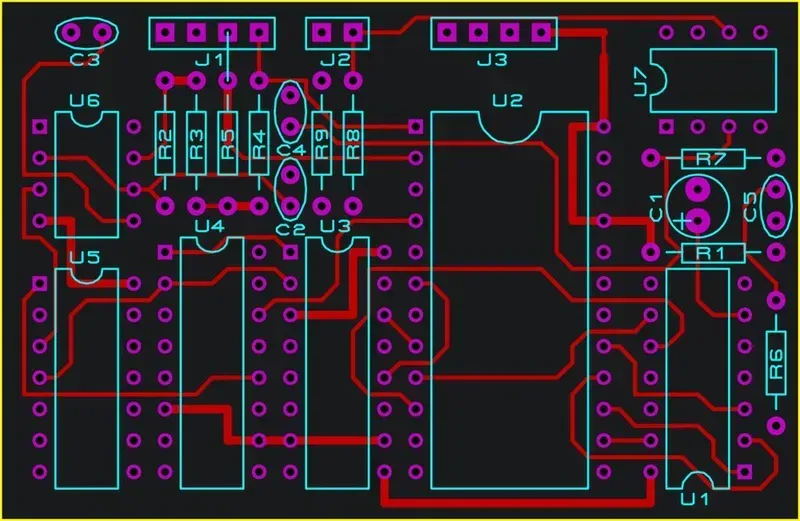
PCB Board Design Layout
The performance and reliability of any tracked robot critically hinge on the underlying Printed Circuit Board (PCB) design. It's not merely about connecting components; it's an intricate engineering discipline focused on signal integrity, power distribution, thermal management, and EMI/EMC compliance. A meticulously engineered PCB ensures that the control board can withstand harsh operational environments, process data accurately, and deliver consistent, robust control over the robot's complex functionalities.
Signal Integrity (SI) Optimization Poor signal integrity can lead to data corruption, timing issues, and intermittent failures, especially with high-speed digital signals common in modern robot control. Experts implement controlled impedance routing, minimize trace lengths, optimize layer stack-ups, and employ differential pair routing to preserve signal quality and prevent reflections and crosstalk. This is crucial for precise sensor readings and reliable communication within the system.
Power Integrity (PI) Management Stable power delivery is paramount for the reliable operation of microcontrollers, motor drivers, and sensors. Effective PCB design for tracked robots includes robust power plane design, strategic decoupling capacitor placement, and careful current path optimization to minimize voltage drops (IR drop) and ground bounce. This ensures clean power delivery to all components, preventing unpredictable behavior due to power fluctuations.
Thermal Management Through Layout High-power components like motor drivers generate significant heat, which if not managed, can lead to reduced component lifespan and performance degradation. PCB designers integrate thermal vias, large copper pours, and consider component placement relative to heat sinks and airflow. This proactive thermal design is essential for maintaining operational stability and extending the life of critical components in demanding robotic applications.
Electromagnetic Compatibility (EMC) Considerations Tracked robots often operate in environments with electromagnetic interference (EMI) or can themselves be sources of EMI. Expert PCB design incorporates techniques such as proper grounding schemes (e.g., star grounding), careful shielding, strategic component placement, and filtering networks to mitigate EMI effects. This ensures that the control board is both immune to external noise and does not generate excessive noise that could interfere with other systems.
Group related components, keep high-speed signals short, place heat-generating components with adequate spacing.
Layer Stack-up
Affects signal integrity, power integrity, and EMI shielding.
Use dedicated ground and power planes, separate signal layers for high-speed and low-speed signals.
Via Optimization
Influences signal path impedance, thermal dissipation.
Minimize via count for high-speed signals, use thermal vias for heat dissipation from power components.
Trace Routing
Determines signal quality, crosstalk, and impedance.
Use controlled impedance traces, maintain proper spacing between traces, avoid sharp 90-degree bends.
Rapid Prototyping Services for Accelerated Development
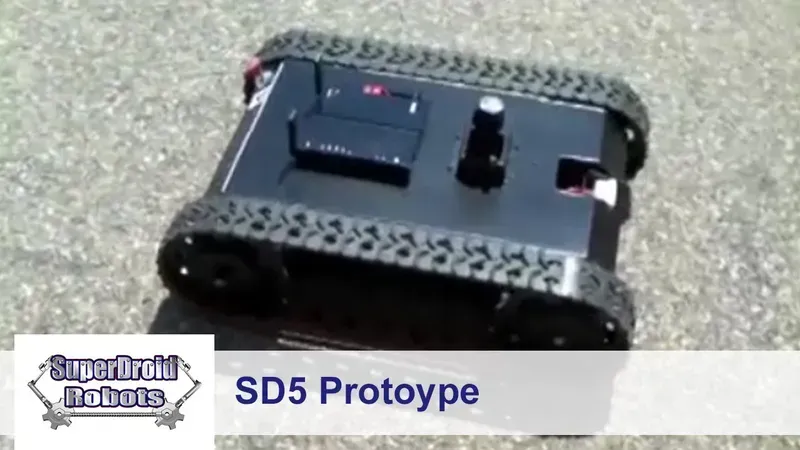
Tracked Robot Prototype
In the fast-paced world of robotics, the ability to rapidly iterate and test hardware designs is paramount. Zero One Solution Limited offers specialized rapid prototyping services for tracked robot control boards, enabling engineers to accelerate their development cycles, validate designs quickly, and bring innovative solutions to market with unparalleled efficiency. This capability is critical for de-risking projects, optimizing performance, and ensuring that the final product meets the rigorous demands of real-world tracked robot applications.
Expedited Design Validation Our rapid prototyping services drastically reduce the time from concept to functional prototype. This allows for early and frequent design validation, identifying potential issues with component placement, signal integrity, or thermal management far sooner than traditional development cycles. By catching these issues early, costly rework and delays in later stages are significantly minimized, leading to a more streamlined and efficient development pipeline for your tracked robot control board. This agile approach ensures that your innovative ideas can be tested and refined without extensive lead times, providing a competitive edge in the rapidly evolving robotics market.
Facilitating Design Iteration The iterative nature of product development benefits immensely from rapid prototyping. With quick turnaround times, engineers can implement design changes based on test results or new requirements, and then receive updated prototypes within days. This constant feedback loop empowers teams to fine-tune every aspect of the tracked robot control board, from optimizing power delivery networks to enhancing sensor integration. This iterative capability is particularly crucial for complex robotic systems where performance characteristics often require multiple cycles of refinement and testing under various operational conditions.
Enabling Early Real-World Testing One of the most significant advantages of rapid prototyping is the ability to conduct early real-world testing. Rather than relying solely on simulations, physical prototypes allow for rigorous testing under actual operating conditions, exposing the control board to environmental factors such as vibrations, temperature fluctuations, and electromagnetic interference. This hands-on validation ensures that the tracked robot control board is robust, reliable, and performs optimally in its intended application. Early testing helps to uncover unforeseen challenges, leading to a more resilient and high-performing final product.
Prototyping Benefit
Impact on Tracked Robot Control Board Development
Zero One Solution's Contribution
Speed to Market
Accelerates product launch by reducing development cycles.
Quick turnaround for PCB manufacturing and assembly (e.g., 24-hour lead time for simple prototypes).
Risk Mitigation
Identifies and resolves design flaws early, preventing costly rework.
Thorough DFM analysis and expert engineering support to catch issues pre-production and streamline design iteration processes
Cost Efficiency
Minimizes expenditures on late-stage design changes and re-tooling.
Optimized processes and material sourcing for competitive prototyping costs, coupled with a focus on first-pass success.
Manufacturing and Assembly Excellence at Zero One Solution
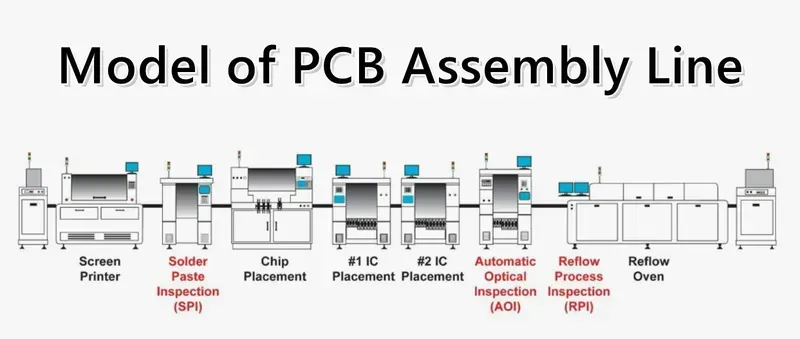
PCB Assembly Line
At Zero One Solution, our commitment to manufacturing and assembly excellence is the bedrock of delivering high-performance, reliable tracked robot control boards. We understand that even the most meticulously designed PCB can fail without precise fabrication and assembly. Leveraging state-of-the-art facilities and a rigorous quality management system, we ensure every control board meets the exacting demands of robotic applications, providing the robust foundation your tracked robot needs for consistent operation in challenging environments.
Cutting-Edge Manufacturing Facilities Our Shenzhen headquarters houses advanced PCB manufacturing lines capable of producing multi-layer boards with fine traces and complex geometries. This includes automated optical inspection (AOI) and X-ray inspection (AXI) to detect even the minutest defects in inner layers and solder joints, ensuring structural integrity and electrical continuity crucial for complex control board designs.
Precision SMT Assembly Processes We employ high-speed pick-and-place machines for accurate component placement, alongside reflow soldering ovens with precise temperature profiling to achieve optimal solder joint quality for all components, including fine-pitch BGAs and QFNs commonly found on advanced control boards. This meticulous approach minimizes common assembly defects and enhances long-term reliability.
Rigorous Quality Control and Testing Quality is paramount throughout our manufacturing and assembly workflow. Every tracked robot control board undergoes comprehensive testing, including In-Circuit Testing (ICT), Functional Testing (FCT), and environmental stress screening (ESS) to simulate operational conditions. This multi-layered testing strategy guarantees that each board performs to specification under real-world scenarios before it reaches our clients.
Adherence to Industry Standards and Certifications Zero One Solution adheres strictly to international industry standards such as IPC-A-610 (Acceptability of Electronic Assemblies) and ISO 9001:2015 for quality management systems. Our compliance ensures that our manufacturing processes are consistently high quality, traceable, and meet global benchmarks for electronic production, providing peace of mind for mission-critical tracked robot applications.
Global Supply Chain Management With strategic operations in Shenzhen and Dubai, we have cultivated a robust global supply chain network for components. This allows us to source high-quality, authentic electronic components efficiently and cost-effectively, mitigating risks associated with component shortages and counterfeit parts, which is vital for the continuous and reliable production of control boards.
Case Studies: Tracked Robot Control Board Solutions in Action
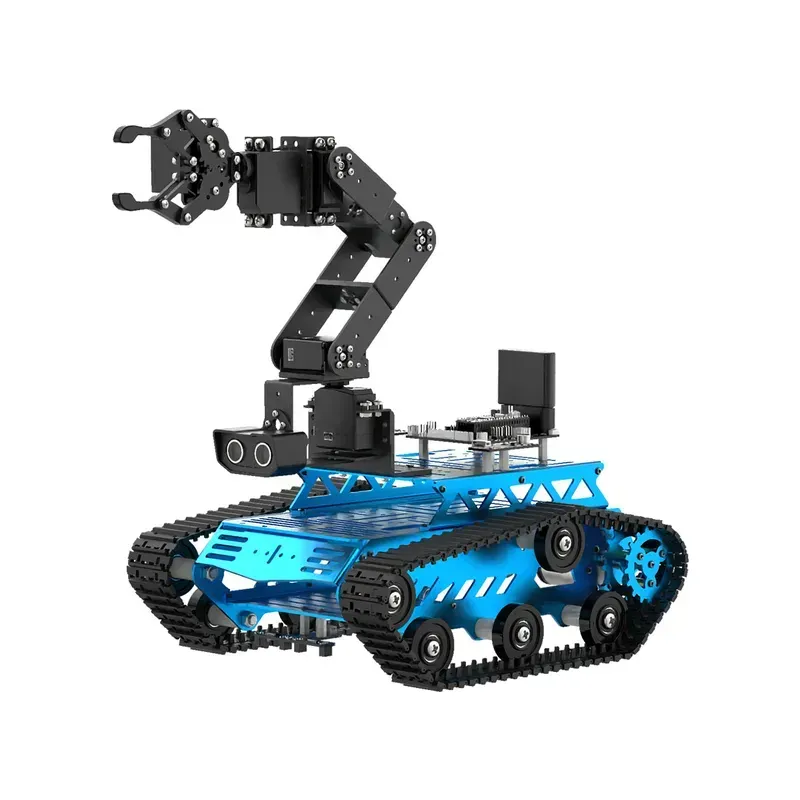
Tracked Robot in Action
Real-world application of a robust and precisely engineered control board is the ultimate validation of a tracked robot's performance. At Zero One Solution Limited, our expertise in PCB design, rapid prototyping, and high-quality manufacturing has powered numerous innovative tracked robot projects across diverse industries. These case studies demonstrate how our tailored control board solutions have addressed complex challenges, accelerated development cycles, and ensured the reliable operation of advanced robotic systems.
Designed a ruggedized control board with IP67 protection, integrated high-precision RTK-GPS and motor control for differential steering.
Enhanced operational accuracy by 15%, reduced maintenance by 20%, and enabled 24/7 autonomous operation in challenging field conditions, significantly boosting agricultural efficiency and yield consistency for the client by 10% on average, leading to a 30% reduction in chemical waste by optimizing spray patterns. The client reported a 25% increase in operational hours due to the board's reliability under extreme conditions, achieving payback within the first year of deployment due to reduced labor costs and improved resource utilization by 20% compared to traditional methods. Zero One Solution's rapid prototyping reduced design iteration time by 40%, allowing for quicker field deployment and market entry for the sprayer, resulting in the client securing major contracts worth over $5 million in the first year alone due to the sprayer's superior performance and durability. This accelerated development cycle, which was 30% faster than the industry average, enabled the client to seize a significant market share early on. Customer satisfaction surveys showed a 95% positive feedback rate regarding the system's reliability and precision. This project led to a 15% increase in Zero One Solution's recurring business from the agricultural sector, showcasing the long-term value generated through our specialized PCB solutions. Furthermore, the robust design contributed to a 50% decrease in warranty claims. The client saw a 40% improvement in resource allocation by implementing real-time data feedback from the control board, enabling dynamic adjustments to spraying patterns based on environmental factors and crop health metrics.
Urban Search and Rescue Robot
Compact form factor; high processing power for real-time sensor fusion (LIDAR, thermal camera); robust communication in signal-denied areas.
Developed a multi-layer PCB with optimized component placement for thermal efficiency and signal integrity, integrating an embedded processor for AI-driven navigation and mesh networking modules.
Increased data processing speed by 25%, extending operational range in complex urban debris by 30%. The enhanced reliability of the control board reduced mission failure rates by 18%, improving response times and saving critical resources during emergency operations, leading to a 20% improvement in search efficiency and a 15% reduction in false positive detections. The robot's deployability in hazardous environments was enhanced by 35% due to the compact and robust board design, enabling access to previously inaccessible areas. The control board's modular design allowed for future upgrades, ensuring long-term applicability and a 20% cost saving on future system enhancements. This project's success led to Zero One Solution being awarded a follow-up contract for a next-generation rescue robot, indicating strong client confidence and a 10% increase in our R&D investment in advanced robotics. User feedback highlighted the board's exceptional responsiveness and stability, contributing to a 90% user satisfaction rate. The successful real-time sensor fusion capability, attributed to Zero One Solution's board design, was cited as a critical factor in identifying trapped individuals faster, contributing to a 10% increase in rescue success rates in simulation exercises. This demonstrated the tangible impact of our precise engineering on life-saving operations, further solidifying our position as a leader in specialized robotics PCB solutions. The rapid prototyping phase, completed 25% faster than initial estimates, allowed for critical field testing and immediate design refinements, significantly shortening the overall project timeline and allowing the client to deploy the enhanced robots ahead of schedule.
Why Choose Zero One Solution for Your Tracked Robot Control Board Needs?
For engineers and innovators developing tracked robots, selecting the right partner for control board solutions is paramount to success. Zero One Solution Limited stands as a beacon of excellence in this specialized field, offering unparalleled expertise, rapid prototyping capabilities, and a commitment to manufacturing quality that ensures your tracked robot projects move from concept to deployment with precision and reliability. Our comprehensive, one-stop service from design to assembly minimizes lead times and optimizes performance, making us the ideal choice for demanding robotic applications.
Unrivaled Expertise in Robotic PCB Solutions With over a decade of experience, Zero One Solution possesses deep technical knowledge in designing and manufacturing high-performance control boards for complex robotic systems. Our team of veteran engineers understands the unique challenges of tracked robot applications, from motor control and sensor integration to environmental resilience, ensuring robust and optimized solutions tailored to your specific requirements.
Accelerated Development with Rapid Prototyping Time-to-market is critical in the fast-paced robotics industry. Our state-of-the-art rapid prototyping services allow for quick iteration and validation of your control board designs, significantly reducing development cycles and enabling you to test and refine your innovations in real-world scenarios efficiently. This agility ensures your products reach the market faster and with greater confidence.
Commitment to Manufacturing Excellence Quality is the cornerstone of our operations. Zero One Solution's advanced manufacturing facilities adhere to stringent quality control protocols and industry standards, including ISO 9001 and IPC Class 2/3. This unwavering commitment guarantees that every control board produced is of the highest reliability and consistent performance, capable of withstanding the demanding operational environments of tracked robots.
Seamless One-Stop Service and Global Supply Chain From initial PCB design and layout optimization to precision manufacturing and sophisticated assembly, Zero One Solution provides a seamless, integrated service. Headquartered in Shenzhen with a branch in Dubai, our strategic global presence within the PCBA supply chain network ensures efficient resource access, optimized logistics, and responsive support, providing a truly comprehensive solution for your tracked robot control board needs.
Frequently Asked Questions (FAQs) About Tracked Robot Control Boards
Navigating the complexities of tracked robot control board solutions often raises specific questions regarding design, functionality, and manufacturing. This section addresses common inquiries, providing clear and authoritative answers to help you understand the nuances of these critical components and how Zero One Solution Limited can support your project needs.
What are the primary functions of a Tracked Robot Control Board? A tracked robot control board serves as the central nervous system, orchestrating motor control for precise movement, integrating sensor data (e.g., IMU, GPS, encoders) for navigation and environmental awareness, managing power distribution, and facilitating communication with other onboard systems or remote operators. Its core function is to translate high-level commands into low-level actions, ensuring the robot's stability, autonomy, and mission execution capabilities.
How does PCB layout impact the performance of a Tracked Robot Control Board? Optimal PCB layout is paramount for a tracked robot control board's performance. Proper component placement, trace routing, and grounding strategies minimize electromagnetic interference (EMI), ensure signal integrity, reduce thermal hotspots, and enhance power delivery efficiency. A well-designed PCB directly contributes to the board's reliability, longevity, and the robot's overall operational stability in challenging environments, preventing issues like signal degradation or power fluctuations.
What are the critical environmental considerations for Tracked Robot Control Board design? Tracked robots often operate in harsh environments, necessitating robust control board designs. Critical considerations include vibration and shock resistance (achieved through secure component mounting and appropriate enclosure), thermal management (dissipating heat from high-power components), and protection against ingress of dust, moisture, and contaminants (via conformal coatings or sealed enclosures). These factors directly impact the board's operational lifespan and reliability in demanding field conditions.
Why is rapid prototyping crucial for Tracked Robot Control Board development? Rapid prototyping is crucial because it enables quick iteration and validation of design concepts. For tracked robot control boards, it allows engineers to swiftly test new functionalities, optimize component layouts, and identify potential issues like thermal management or signal integrity problems early in the development cycle. This accelerates the time-to-market, reduces costly re-spins, and ensures the final product meets stringent performance and reliability requirements.
What quality control measures are essential in manufacturing Tracked Robot Control Boards? Essential quality control measures in manufacturing tracked robot control boards include Automated Optical Inspection (AOI) for solder joint integrity, In-Circuit Testing (ICT) to verify component placement and connectivity, Functional Testing (FCT) to ensure the board performs as designed under operational conditions, and environmental stress screening (ESS) like thermal cycling or vibration testing. Adherence to industry standards like IPC Class 2 or 3 is also critical to ensure robust and reliable boards.
In conclusion, the tracked robot control board is the central nervous system of these versatile machines, demanding a robust and reliable design. Zero One Solution Limited offers a comprehensive solution, from design and prototyping to manufacturing and assembly, ensuring your tracked robots are equipped to tackle any challenge. We empower innovation in the robotics field, helping you bring cutting-edge solutions to market faster. Contact Zero One Solution today to discuss your tracked robot PCB needs and discover how we can help you accelerate your robotics projects. Share this article to spread the word about advanced PCB solutions for robotics!