Understanding Linear Integrated Circuits: Principles, Applications, and Future
2025.02.01
From the precise amplification in medical devices to the smooth audio processing in your headphones, linear integrated circuits (ICs) are the unsung heroes of analog electronics. These miniature marvels, the building blocks of many modern devices, operate in the analog realm, handling continuous signals. This article will guide you through the fundamental concepts of linear ICs, their diverse applications, and their significance in today's technological landscape, offering clear, understandable insights into a complex field.
What are Linear Integrated Circuits?
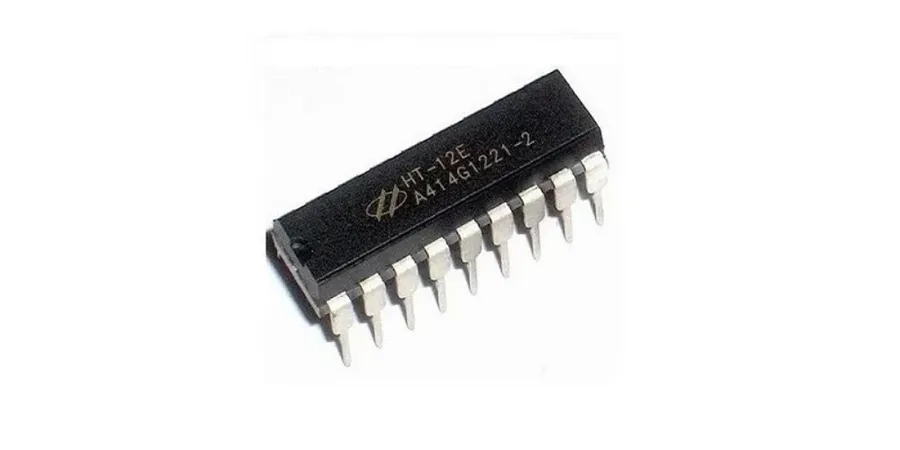
Linear IC Chip
Linear integrated circuits (ICs), fundamental building blocks of modern electronics, are analog circuits characterized by their ability to process continuous signals with a linear relationship between input and output. Unlike digital ICs that manipulate discrete values, linear ICs handle signals that vary smoothly over time, making them indispensable for a wide range of applications requiring precision and fidelity in signal processing.
Key distinctions of Linear ICs include:
Analog Nature Linear ICs process analog signals, which are continuous waveforms. These signals represent physical quantities such as voltage, current, or temperature as a continuously varying value, as opposed to digital signals which have discrete levels.
Linear Response They are designed to operate in a region where the output is directly proportional to the input. This linear relationship is essential for tasks like amplification, filtering, and signal conditioning without introducing distortion.
Key Characteristics Linear ICs are defined by specifications such as gain, bandwidth, input impedance, output impedance, and noise figure, these parameters dictate their performance in different circuits.
Contrast with Digital ICs While digital ICs use binary values (0s and 1s) to perform computations, linear ICs process and manipulate real-world, continuous signals. This fundamental difference leads to distinct applications, with linear ICs used in situations requiring signal fidelity and digital ICs in applications requiring computation and logic.
Fundamental Principles of Linear ICs
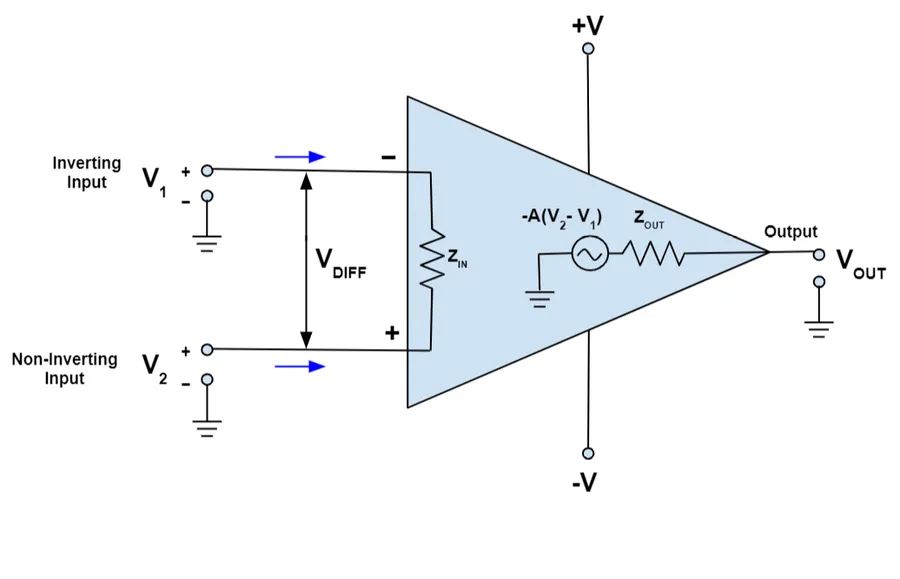
Op-Amp Circuit Diagram
Linear integrated circuits (ICs) operate on the principle of maintaining a linear relationship between input and output signals, which is fundamental to their analog nature. This linearity ensures that the output signal is a faithful, amplified, or modified replica of the input signal. Unlike digital circuits that process discrete signals, linear ICs handle continuous signals, making them essential for a wide range of analog applications.
A core concept in linear IC operation is the direct proportionality between voltage and current. This relationship allows for precise control and manipulation of analog signals. For example, an ideal amplifier in a linear IC increases the signal amplitude without introducing distortion, maintaining the essential characteristics of the original input waveform. In this section, we delve into the underlying principles of their operation, focusing on the core concepts of linearity, signal processing, and the voltage-current relationship. Understanding these basic principles is crucial for understanding how these components function in a variety of analog electronic circuits.
Linearity The primary operating principle of a linear IC is that its output signal is directly proportional to its input signal. This means that a change in the input signal results in a corresponding change in the output signal, with no distortion.
Analog Signal Processing Linear ICs are designed to process continuous analog signals, which can take any value within a range. This contrasts with digital ICs, which process discrete, binary signals.
Voltage-Current Relationship The behavior of linear ICs is fundamentally based on the relationship between voltage and current, where changes in one are directly related to the changes in the other. This fundamental relationship underpins many analog circuit functions.
Continuous Signal Handling Unlike digital ICs, linear ICs can handle continuous signals, which are waveforms that exist continuously over time and can take any value within a range. This continuous processing is essential for applications such as audio amplification and signal conditioning.
Key Components within Linear ICs
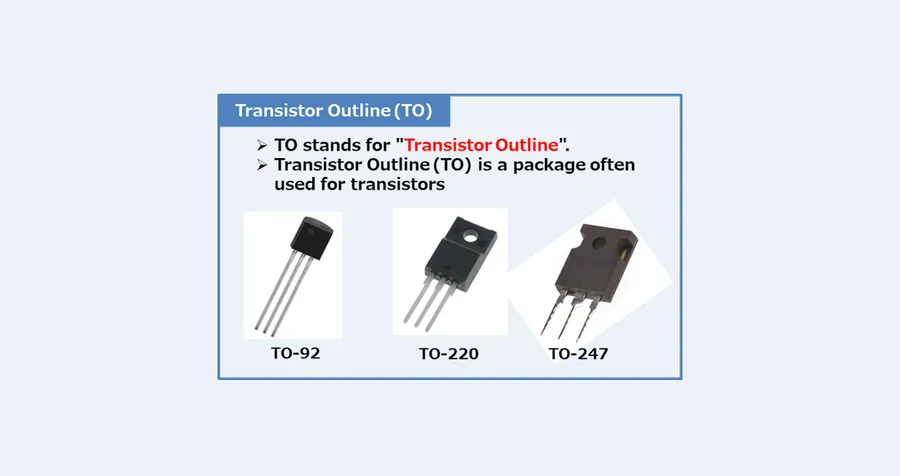
Transistor Packages
Linear integrated circuits are composed of several key building blocks that enable them to perform a wide range of analog signal processing tasks. These fundamental components, such as operational amplifiers, voltage regulators, and comparators, are designed to manipulate continuous signals, each serving specific functions crucial to the operation of various electronic circuits.
Component
Function
Key Characteristics
Typical Applications
Operational Amplifiers (Op-Amps)
Amplify and process analog signals.
High open-loop gain, high input impedance, low output impedance, versatile configurations.
Amplifiers, filters, oscillators, active rectifiers, instrumentation amplifiers.
Voltage Regulators
Maintain a stable output voltage regardless of variations in input voltage or load current.
Low dropout voltage, high efficiency, precise voltage control.
Power supplies, battery chargers, and various electronic devices requiring constant voltage.
Comparators
Compare two input voltages and output a digital signal indicating which is greater.
Fast response time, high gain, rail-to-rail output capability.
Each of these components manipulates analog signals in a specific way: op-amps use feedback to perform precise signal amplification and processing, voltage regulators maintain stability against input and load variations, and comparators produce digital signals reflecting the result of analog voltage comparisons, enabling complex functionalities in larger circuits.
Applications of Linear Integrated Circuits
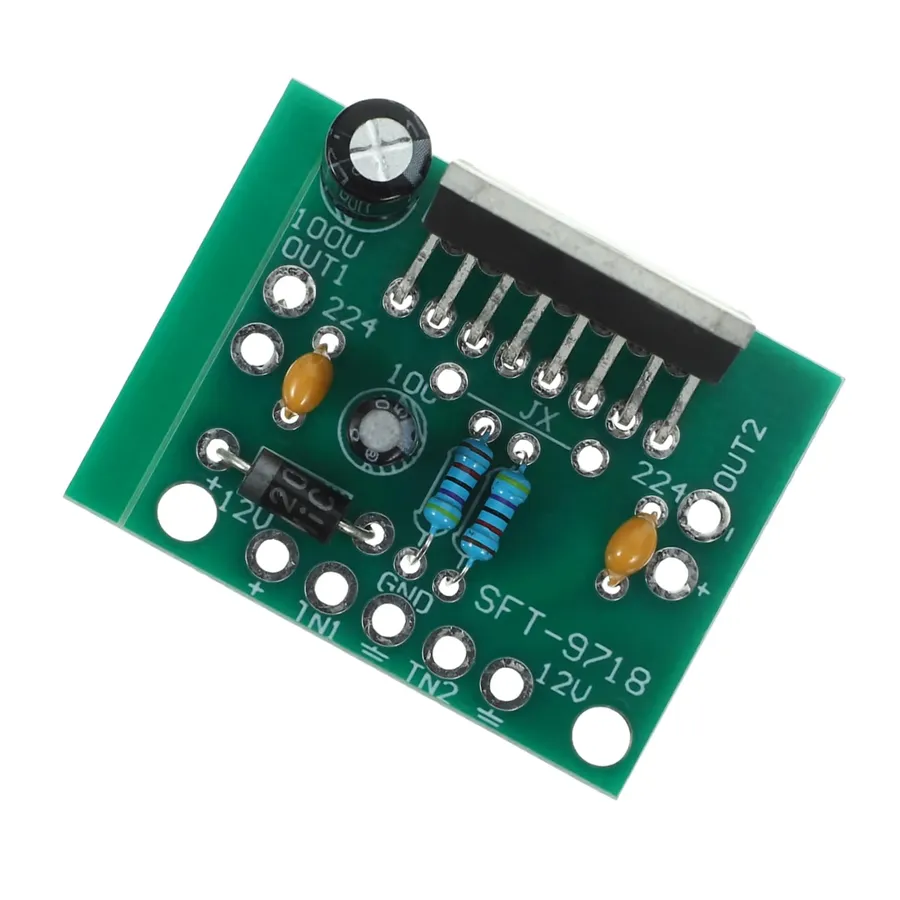
Audio Amplifier Board
Linear integrated circuits (ICs) are indispensable in modern electronics due to their ability to process analog signals with high precision. Their applications span a wide array of fields, addressing needs from fundamental signal conditioning to complex system control.
Here, we explore several key applications of linear ICs, highlighting their diverse roles in various electronic systems.
Power Management Linear ICs are crucial in power management, ensuring stable voltage and current delivery. Voltage regulators, a core component, provide constant output voltages despite variations in input voltage or load current. These are fundamental in everything from simple battery-powered circuits to complex server infrastructure, maintaining the stability and efficiency of electronic devices. Precision current sources, also implemented with linear ICs, ensure accurate and controlled current supply, crucial for specialized applications.
Audio Processing Linear ICs are at the heart of audio processing systems. Operational amplifiers (op-amps) are used for amplification, filtering, and mixing audio signals in audio equipment and communications systems. These circuits are designed to preserve signal fidelity and minimize distortion, essential for high-quality audio reproduction. Equalizers, mixers, and audio amplifiers all depend on linear ICs to process and manipulate audio signals effectively.
Signal Amplification Op-amps serve as workhorses in signal amplification, boosting weak electrical signals to detectable levels. These circuits are designed to increase the magnitude of signals without introducing significant distortion, maintaining the signal integrity. Applications vary from simple sensor interfaces to complex telecommunications equipment.
Signal Filtering Linear ICs play a critical role in signal filtering, where they are used to pass specific frequency components while attenuating others. This application is used in many systems to reduce noise, shape the spectrum of a signal, or isolate a specific frequency band. These filters are employed in radio receivers, audio systems, and communication devices. Active filters, constructed using op-amps, provide better performance and flexibility over passive filter networks.
Instrumentation Linear ICs are used in a variety of scientific and industrial instruments. They are employed in data acquisition systems to convert physical quantities into electrical signals, in sensor circuits to amplify small signals, and in control systems to maintain process variables. Examples include precise temperature control circuits, pressure measurement devices, and various types of sensors.
The versatility of linear ICs stems from their ability to perform different analog functions by adjusting circuit parameters. This adaptability makes them vital for a variety of electronic applications and continues to be a cornerstone of analog circuit design.
Linear ICs in Power Management
Power Management IC
Linear integrated circuits are indispensable in power management applications, providing the necessary precision for voltage and current control in diverse electronic systems. Their ability to regulate power smoothly and efficiently makes them a fundamental element in everything from basic power supplies to sophisticated battery charging circuits.
Linear regulators, a crucial type of linear IC, are employed to maintain a stable output voltage despite variations in input voltage or load conditions. This is achieved through a control loop that continuously adjusts the pass transistor's resistance, ensuring the output remains consistent. This capability is particularly critical in sensitive electronic circuits where fluctuations in power can cause operational instability or damage.
Parameter
Linear Regulator
Switching Regulator
Efficiency
Lower (especially at high voltage drop)
Higher (especially at high voltage drop)
Noise
Lower
Higher (requires filtering)
Complexity
Simpler design
More complex design
Cost
Generally lower cost
Generally higher cost
Heat Dissipation
Higher
Lower
Application
Suitable for low-power applications with stable output
Suitable for high power applications.
In battery charging circuits, linear ICs provide controlled charging, which is essential for maximizing battery lifespan and preventing damage from overcharging. They accurately regulate both the charging current and voltage, adapting to the battery's needs during various charging stages. Moreover, the compact nature of integrated circuits enables smaller, more efficient power solutions, which is highly beneficial in portable electronics. Linear IC's also act as critical elements in voltage reference circuits providing stable and precise reference voltages for comparators and ADC devices.
The selection of appropriate linear ICs for power management involves carefully considering key specifications including: output current capabilities, voltage regulation requirements, thermal characteristics, and overall efficiency, to ensure the chosen components match application's specific demands for stability and reliability.
Linear ICs vs. Digital ICs: Key Differences
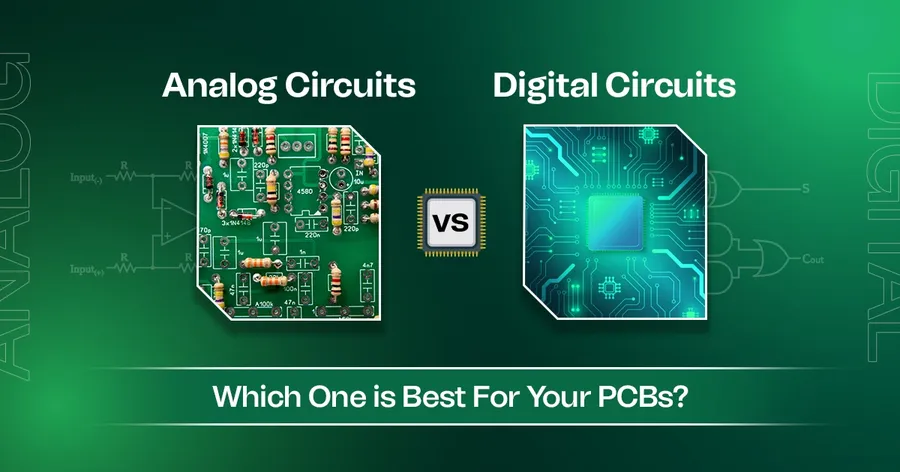
Digital vs Analog Circuits
Linear integrated circuits (ICs), often referred to as analog ICs, and digital ICs represent two fundamental categories in electronics, each designed for distinctly different signal processing tasks. Linear ICs handle continuously variable signals, while digital ICs manipulate discrete, binary signals, leading to significant differences in their architectures, applications, and operational principles.
Feature
Linear ICs (Analog)
Digital ICs
Signal Type
Continuous; Analog (e.g., varying voltage or current)
Discrete; Digital (binary 0s and 1s)
Function
Amplification, filtering, signal conditioning, voltage regulation
Logic operations, data processing, memory storage
Operation
Processes signals based on linear relationships; often involves feedback circuits
Operates using Boolean algebra and logic gates
Typical Applications
Audio amplifiers, power supplies, sensor interfaces, instrumentation, op-amps
Microprocessors, memory chips, logic circuits, digital communication
Precision
High precision in handling analog values; may be susceptible to noise and drift.
Precise for digital operations, not sensitive to small variations.
Signal Representation
Represented by continuously variable physical quantity (e.g., voltage, current)
Represented as binary numbers (0 or 1).
Complexity
Generally simpler circuits designed for specific functions.
Complex circuits with high logic gate density.
Frequently Asked Questions About Linear Integrated Circuits
This section addresses common inquiries regarding linear integrated circuits, clarifying their applications, operational differences from digital ICs, and fundamental principles.
What exactly is a linear integrated circuit? A linear integrated circuit (IC) is an analog circuit designed to process continuous signals, where the output is a linear function of the input. This contrasts with digital ICs which operate on discrete binary signals. Linear ICs are fundamental in applications requiring amplification, signal processing, and precise control of analog signals.
How do linear ICs differ from digital ICs? Linear ICs process continuous analog signals, maintaining a linear relationship between input and output, and are used in applications such as amplification and filtering. Digital ICs process discrete binary signals representing 0s and 1s, and are used for logic operations, data processing, and control systems. The core distinction lies in the nature of the signals they manipulate and their respective applications.
What are some common applications of linear integrated circuits? Linear ICs are widely used in various applications, including audio amplifiers, voltage regulators, signal filters, instrumentation amplifiers, and power management circuits. They are essential for precise control of analog signals, which underpins a vast number of electronic systems.
Can linear ICs perform digital operations? No, linear ICs are designed for analog signal processing and do not inherently perform digital operations. While some hybrid ICs might include both analog and digital components, the core function of a linear IC remains focused on analog signal processing. Digital functions are usually implemented by digital ICs which manipulate discrete signals.
Why are linear ICs important in power management? Linear ICs are critical in power management due to their ability to regulate voltage and current with precision. Components such as voltage regulators within linear ICs ensure stable power supply to other circuits, critical for optimal performance and preventing damage, especially in sensitive electronic devices. Linear regulators are also preferred in applications where low output noise is paramount.
What is the role of operational amplifiers (op-amps) in linear ICs? Operational amplifiers (op-amps) are fundamental building blocks within linear ICs. They perform various signal processing functions, including amplification, buffering, filtering, and comparison. Their high gain, high input impedance, and low output impedance make them incredibly versatile for analog circuit design.
Are there any limitations to using linear ICs? Yes, linear ICs can be less efficient than digital ICs, especially in power management, due to heat dissipation. They can also be more susceptible to noise and drift, requiring careful design considerations for stable and accurate operation. Compared to their digital counterparts, linear ICs often require more complex and precise circuit design for each specific application.
Future Trends in Linear Integrated Circuit Technology
Advanced IC Technology
The landscape of linear integrated circuit (IC) technology is continuously evolving, driven by the demands for increased performance, reduced power consumption, and greater integration. Future trends point towards significant advancements in several key areas, including enhanced efficiency, miniaturization, and the seamless integration of linear and digital control systems.
Enhanced Efficiency Future linear ICs will prioritize higher energy efficiency through advancements in circuit design and material science. This includes improved operational amplifier (op-amp) designs with lower quiescent currents and voltage regulators with reduced dropout voltages. Innovative power management techniques will also contribute to minimized energy waste, extending battery life in portable devices and reducing overall energy consumption in various applications.
Miniaturization and Integration The trend toward smaller form factors will continue, driven by the need to embed more functionality into increasingly compact devices. This will involve advanced fabrication techniques that allow for higher component densities on a single chip. Furthermore, we will see greater integration of linear circuits with digital control logic on the same chip, leading to System-on-Chip (SoC) solutions. This allows for more complex functionalities such as dynamic biasing and calibration.
Integration with Digital Control Systems Future linear ICs will be designed for seamless integration with digital controllers and processors. This convergence will enable smarter and more adaptive systems, for example in the design of advanced mixed-signal power supplies. Digital interfaces will allow real-time monitoring and calibration of linear circuits, facilitating a high degree of system optimization and control.
Advanced Materials and Fabrication Research into new materials will enable the creation of linear ICs with superior performance characteristics. This includes materials that can offer higher electron mobility, greater thermal conductivity, and enhanced reliability. Novel fabrication techniques like 3D integration and advanced packaging will also play a role in improving the performance and form factor of linear ICs.
AI-Driven Design and Optimization The use of artificial intelligence (AI) and machine learning (ML) tools will accelerate the design process and improve the performance of linear ICs. AI algorithms can be used to optimize circuit topologies, component values, and process parameters, leading to faster design cycles and more robust and efficient circuits. This will be particularly relevant in areas such as power management and high-precision instrumentation.
Choosing the Right Linear IC for Your Needs
Selecting the optimal linear integrated circuit (IC) is crucial for achieving desired performance in analog circuit designs. This process involves carefully considering several key parameters and application-specific requirements to ensure the chosen IC meets the demands of the design, this includes understanding the voltage and current requirements, signal characteristics, and other design specifications which can ensure optimal performance and prevent device failure.
Here’s a structured approach to help you make the right choice:
Define Application Requirements Begin by clearly defining the operational parameters of your application. This includes specifying the required voltage range (input and output), current handling capabilities, operating frequency, and temperature conditions. These requirements dictate the basic specifications of the IC required. For example, a power supply circuit will need an IC with higher current capabilities than an audio amplifier circuit which focuses more on low signal distortion.
Voltage and Current Requirements Determine the exact voltage and current levels needed by your circuit. Consider both the nominal values and potential variations under different load conditions. Ensure the IC can deliver the necessary voltage and current safely and efficiently without exceeding its maximum rated values. This involves selecting ICs with appropriate voltage rating to prevent breakdown and with current limits that ensure the application does not push the device beyond its specifications.
Gain and Bandwidth If your application involves signal amplification, specify the required gain (amplification factor) and bandwidth (the range of frequencies the amplifier can handle effectively). Operational amplifiers (op-amps), for instance, are available in a wide variety of gain-bandwidth products and selecting an op-amp that meets these needs will be important for the overall stability and performance of your application.
Noise Performance For precision analog applications, consider the noise characteristics of the linear IC. This includes the input noise voltage, noise current, and the noise figure. Linear ICs with low noise are preferred for sensitive circuits where the signal needs to be preserved, such as audio amplifiers or data acquisition systems where a noisy IC would degrade the quality of measurements.
Accuracy and Linearity For measurement and control circuits, examine the accuracy and linearity specifications of the IC, linearity defines how constant the gain of the IC is for the expected range of signal values, and accuracy determines the deviation between the measured values and the actual values. Choose an IC that provides the required accuracy without distorting the signal.
Power Consumption Analyze the power consumption of the linear IC. Low-power ICs are essential for battery-powered applications and also for thermal management in high-density circuit designs. Evaluate the active and standby current consumption and choose devices that allow for extended operation.
Package Type and Thermal Management Select the appropriate package for the IC based on the PCB layout and thermal constraints, different package types have different thermal management capabilities, and the right package will depend on the power dissipation requirements of your specific application and the requirements of the PCB design. Consider packages such as surface mount or through-hole and use heat sinks if required
Cost Considerations Lastly, consider the cost of the IC in relation to performance. Often times a balance between cost and performance is necessary. Higher performance linear ICs, while offering more optimal performance, can cost more, and the tradeoff may or may not be worth the investment based on the specifications of your application. Explore alternative ICs to find the best option.
Linear integrated circuits are fundamental to modern electronics, enabling a wide array of analog applications, from power regulation to audio amplification. Their continuous evolution is crucial to meeting the growing demands for efficiency, precision, and miniaturization in both consumer and industrial electronics. As linear ICs continue to advance, they are set to unlock new possibilities in signal processing, energy management and many other technological domains that shape our world. Understanding the principles and applications of linear integrated circuits empowers us to better appreciate and utilize the sophisticated technology around us. This ongoing journey of innovation promises even more compact, powerful, and efficient solutions in the near future.