Understanding PCBWay Pricing: A Comprehensive Guide to Costs & Savings
2025.01.01
In today's rapidly evolving electronics landscape, printed circuit boards (PCBs) are the backbone of nearly every electronic device. Whether you're a seasoned engineer or a hobbyist, understanding the costs associated with PCB manufacturing is crucial. PCBWay has emerged as a popular choice for both prototyping and production, but how do you navigate their pricing structure? This article will delve into the intricacies of [pcbway price], offering practical advice and strategies to optimize your spending and achieve high-quality PCBs at competitive prices.
Key Factors Influencing PCBWay Pricing
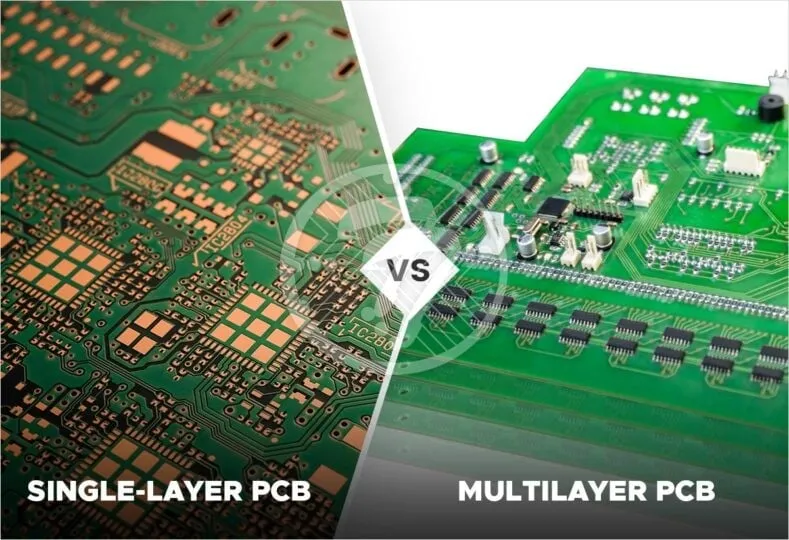
Multilayer PCB
Understanding the primary drivers behind PCBWay's pricing is crucial for effective cost management. Several key factors directly influence the final price of your printed circuit boards, including the board's dimensions, the number of layers, the choice of materials, and the selected finish options. Each of these parameters contributes to the complexity of the manufacturing process and, consequently, the overall cost.
PCB Size The physical dimensions of your PCB directly affect material usage and processing time, with larger boards incurring higher costs due to increased material consumption and potentially longer manufacturing cycles.
Layer Count The number of conductive layers within the PCB has a significant impact on cost. Each additional layer adds complexity to the manufacturing process and necessitates more materials, resulting in a higher final price.
Material Selection The choice of PCB substrate material, such as FR-4, aluminum, or polyimide, influences both the performance and price of the PCB. Specialized materials with superior thermal or electrical properties often come at a premium.
Finish Options Surface finish options, such as HASL (Hot Air Solder Leveling), ENIG (Electroless Nickel Immersion Gold), or Immersion Tin, affect the board's solderability and durability, and each finish has a different cost profile.
Copper Weight The thickness of the copper layers on a PCB, typically measured in ounces per square foot, impacts the board's current-carrying capacity and cost; heavier copper adds more material and processing requirements.
Solder Mask Color While seemingly minor, the color of the solder mask can affect cost; some colors may require additional processing or special inks.
Silkscreen Options Adding silkscreen layers for component labels or other markings increases processing complexity and may incur additional cost.
Navigating PCBWay's Online Instant Quote System
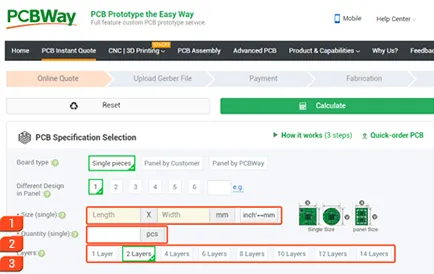
PCB Online Quote System
PCBWay's online instant quote system is a crucial tool for quickly estimating the cost of your printed circuit board (PCB) projects. This system allows users to input their design specifications and receive an immediate price estimate, streamlining the initial stages of PCB procurement. This section will guide you step-by-step to help ensure that you can accurately use this system to obtain the best possible [pcbway price].
Access the PCBWay Website: Begin by navigating to the PCBWay website. Locate the 'Instant Quote' button on the homepage or within the PCB services section.
Select PCB Specifications: The quote system will prompt you to input your PCB's technical details. Essential parameters include:
PCB Size: Enter the dimensions of your PCB in millimeters or inches. Ensure accuracy, as this directly influences the material consumption and cost.
Layer Count: Specify the number of layers in your PCB. Options typically include single-layer, double-layer, and multi-layer boards (4, 6, 8 layers, etc.).
Material: Select the base material, such as FR-4, Aluminum, Rogers, etc. FR-4 is the standard material and is cost effective.
PCB Thickness: Set your desired PCB thickness. Standard thicknesses are 1.6mm, but many options are available, though some can affect the price.
Surface Finish: Choose a surface finish option. ENIG (Electroless Nickel Immersion Gold), HASL (Hot Air Solder Leveling), and OSP (Organic Solderability Preservative) are some of the most common finishes, and each has their own impact on the price.
Solder Mask Color: Select your prefered solder mask color, some colors may add a small amount to the cost.
Copper Weight: Select the copper weight, this is the thickness of the copper used in the PCB.
Quantity: Specify the quantity of PCBs you require. The price per unit usually decreases with larger order quantities, so take this into account.
Input Additional Specifications: If your design requires additional options like blind vias, buried vias, impedance control, etc. input these as well for an accurate quote.
Upload Gerber Files: Upload the Gerber files containing your PCB design. The system will use these files to precisely evaluate manufacturability.
Review the Quote: The system will generate a detailed quote based on the input specifications. Review the estimate before continuing to ensure it meets expectations.
Proceed to Order or Revise: If you are satisfied, proceed to checkout. If not, you may adjust the parameters to see how different specifications affect the overall [pcbway price].
PCB Prototype Pricing vs. Production Pricing
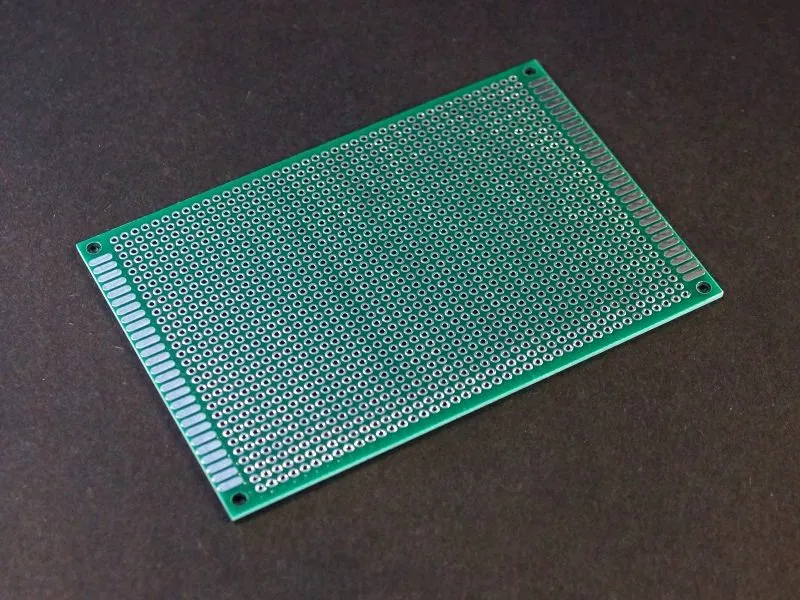
PCB Prototype Board
PCBWay's pricing structure varies significantly between prototype and production orders, reflecting the different manufacturing scales and associated costs. Understanding these differences is crucial for optimizing your project budget and achieving the most cost-effective [pcbway price]. Prototype pricing often involves higher per-unit costs due to setup fees and smaller batch sizes, whereas production pricing benefits from economies of scale.
Prototype PCBs are typically produced in small quantities, often ranging from a few boards to a couple of dozen. These orders are primarily designed for testing and validating a design before committing to larger production runs. Due to the smaller volume, there are higher per-board costs reflecting the setup time, materials preparation, and machinery calibration necessary for any PCB production run. Conversely, production orders benefit from cost efficiencies derived from larger batch sizes, reduced setup costs per unit, and streamlined production processes. The cost per unit significantly decreases as the quantity of PCBs ordered increases, making production runs much more economical for mass production.
Characteristic
Prototype Pricing
Production Pricing
Order Quantity
Very Small (1-20)
Large (100+)
Per-Unit Cost
Higher
Lower
Setup Fees
Higher Relative Cost
Lower Relative Cost
Primary Use
Design validation, testing
Mass production, commercial use
Lead Time
Potentially faster (depends on volume)
May vary depending on order complexity and quantity
When considering a production run, it's important to factor in potential cost efficiencies, especially if your design is stable. PCBWay offers discounts for larger production orders. Conversely, if you are still in the prototype phase or anticipate design revisions, sticking with smaller quantities is more appropriate to avoid wasting resources on obsolete boards. Carefully assessing your project's needs and anticipated production volume is the best way to optimize your [pcbway price].
Comparative Analysis: PCBWay vs. Competitors
PCB Comparison
Choosing the right PCB manufacturer is crucial for both cost-effectiveness and quality. This section provides a comparative analysis of PCBWay's pricing against other leading manufacturers, primarily JLCPCB, to help you make an informed decision based on your specific needs. We will examine the strengths and weaknesses of each platform in terms of pricing structures, service offerings, and other crucial factors, enabling you to secure the most advantageous PCBWay price or its competitor's pricing.
Feature
PCBWay
JLCPCB
Prototyping Costs
Competitive, especially with promotional offers; varied shipping cost impacting final price
Often lower for basic PCBs; shipping costs sometimes lower
Production Costs
Volume discounts available; costs dependent on specifications and complexity
Competitive pricing with larger order quantities, strong SMT assembly option costs
Lead Times
Generally fast turnaround times; may vary based on complexity
Typically fast production, but assembly turnaround times should be considered.
Assembly Services
Comprehensive assembly services; wide range of component sourcing options, but potentially higher cost
Strong SMT assembly capability; often cost-effective for basic assemblies
Material Options
Offers a broad range of materials and finishes, affecting the price.
Good range, but sometimes limited in advanced material options that impact cost.
Customer Service
Responsive and helpful support with strong engineering support
Good customer support available, but not as strong for complex engineering questions.
Special Features
PCB Assembly service with component sourcing, stencil production available
When choosing between PCBWay and JLCPCB, consider not only the base price but also the additional factors that influence the total cost. PCBWay provides a wider array of material choices and advanced features, catering to more specialized requirements, although at a potential cost premium. On the other hand, JLCPCB stands out with its cost-effective pricing for prototypes and basic assembly, making it a good choice for low-complexity projects. The best [pcbway price] or JLCPCB price ultimately depends on your project's complexity, volume, and specific requirements.
Strategies for Reducing PCB Manufacturing Costs at PCBWay
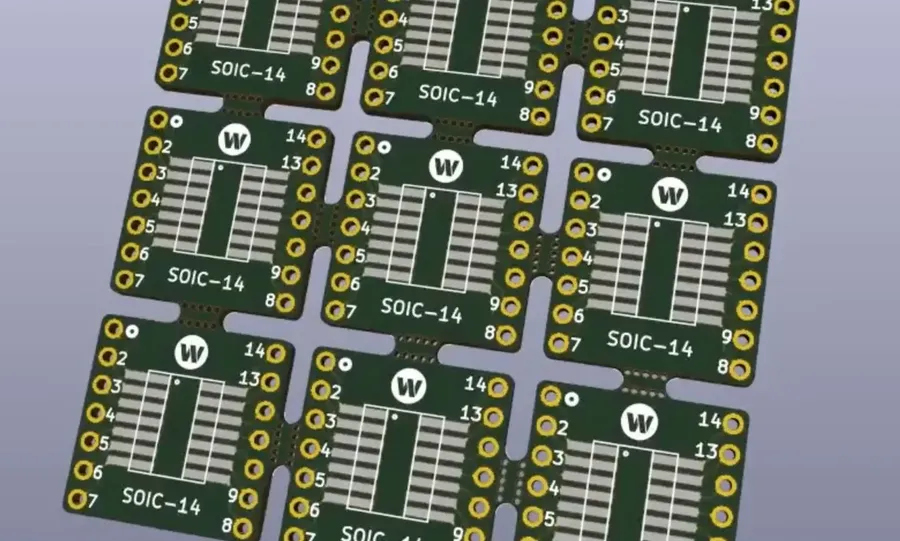
PCB Panel
Optimizing PCB manufacturing costs at PCBWay involves strategic planning across design, material selection, and ordering processes. By proactively addressing these areas, engineers and designers can significantly reduce the final PCBWay price without sacrificing quality or performance.
Design Optimization for Cost Reduction Simplify your PCB design by minimizing the number of layers, vias, and complex shapes. Streamlined designs lead to lower manufacturing costs due to reduced processing time and material usage. Consider using standard component footprints to avoid custom tooling charges.
Material Selection for Cost Efficiency Choosing the right PCB material is crucial. FR-4 is a cost-effective standard for many applications. However, for high-performance or specialized needs, other materials may be necessary. Evaluate material properties carefully based on the application's actual requirements to avoid unnecessary expenses. For example, avoiding exotic materials if not strictly required will lower costs.
Effective Order Planning Consolidating orders to reach larger quantities can significantly reduce per-unit costs due to economies of scale. Planning ahead and grouping projects together will allow for cost savings. Consider panelizing your PCBs to maximize the efficiency of the manufacturing process and reduce the cost per board, if appropriate. Moreover, avoid rush orders unless strictly necessary to evade surcharges.
Component Selection and Sourcing Choose readily available and standard components instead of unique or hard-to-source parts. The more widely available a component, the lower the purchasing cost due to larger volume discounts, simplifying assembly and potentially reducing the overall cost. Also using PCBWay's component sourcing service can reduce costs by leveraging their bulk buying power.
Minimize Special Finishes and Processes Utilize standard surface finishes like HASL (Hot Air Solder Leveling) or ENIG (Electroless Nickel Immersion Gold) only when necessary. Specialized finishes or processes like impedance control, heavy copper, and blind vias increase the fabrication costs. Only apply them when they are essential for the PCB's functionality.
Understanding PCBWay's Assembly Service Costs
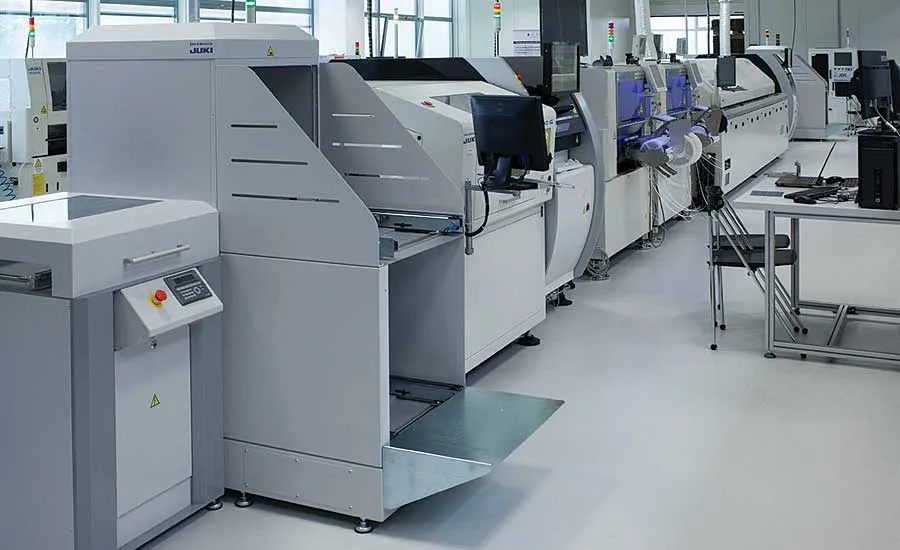
PCB Assembly Line
PCBWay's assembly service encompasses a range of costs beyond bare board fabrication, primarily driven by component sourcing and labor. Understanding these factors is crucial for accurately predicting the overall final assembly price, and optimizing the budget for your project.
Component Sourcing Costs This involves the procurement of all electronic components needed for your PCB. Costs fluctuate based on component type (e.g., resistors, capacitors, integrated circuits), quantity, and current market prices. PCBWay may source components through its own channels or via authorized suppliers, adding to the overall cost.
Labor Fees Labor fees cover the expenses of PCB assembly, including processes like pick-and-place of components, soldering (SMT, through-hole, or mixed), inspection, testing, and quality control. Complexity, number of components, and required assembly techniques contribute to labor cost variations.
Quantity of Boards The quantity of PCBs assembled will also affect the final price. Larger production runs typically offer lower per-unit costs due to economies of scale.
Complexity of Assembly The complexity of the assembly also factors into the cost, such as the density of components on the board, the types of components, and how many SMT and thru-hole components are needed to be soldered. The more complex the assembly, the higher the labor cost will be.
Special Requirements Any special requirements, such as conformal coating, potting, or custom packaging, will increase the cost. Be sure to communicate these requirements at the quoting stage.
Testing and Inspection Testing and inspection to verify quality, such as functional tests, automated optical inspection (AOI), and X-ray inspection, contribute to the final price. The scope and depth of testing directly impact costs.
Frequently Asked Questions About PCBWay Pricing
Understanding PCBWay's pricing structure can be complex, this section addresses the most common questions regarding costs, review times, and estimation, providing clear answers to help you manage your PCB manufacturing budget effectively.
How much should a PCB cost? The cost of a PCB varies significantly based on factors like size, layer count, material, and complexity. Simple single or double-layer boards can be very cost-effective, while complex multi-layer boards with specialized materials will cost more. PCBWay provides an instant quote system, making it easy to get an accurate price based on your specific needs. It's prudent to optimize your design and material selection to fit your budget.
How long does a PCBWay review take? PCBWay's review time varies based on order complexity and workload. Generally, simple PCB designs are reviewed within 24-48 hours. Complex designs may take longer. You will receive updates on your order progress via their online platform, if they find a mistake or an issue they may contact you to discuss this, if there is not issue, they will go into production straight away.
How much does 1 PCB cost? The cost of a single PCB is typically higher than the unit price in a larger batch. This is because much of the cost is upfront, including setting up the machines. While it may be more expensive per unit, ordering a single board may be necessary for prototyping and testing. The PCBWay instant quote system allows you to see the cost of a single board before commiting to a large quantity.
How to estimate PCB assembly cost? Estimating PCB assembly cost involves more than just the cost of the bare board, it's influenced by component sourcing, labor, the number of components, and any required testing or rework. To get an accurate quote, it's important to have a precise BOM and design files. If the design is complex, with many components this will take longer and therefore the assembly cost will be higher. PCBWay's online tool includes a cost calculator, this can be used for an accurate estimate, but keep in mind this is only an estimate.
What are the key factors influencing the final PCBWay price? The most significant factors impacting PCBWay pricing are the PCB size, the number of layers, materials used (FR-4, aluminum, etc.), trace widths, and surface finishes (e.g., HASL, ENIG). Additional considerations can include via types, solder mask color, and any advanced design specifications. You must balance your design needs with cost.
How do different layer counts affect PCBWay pricing? The number of layers in a PCB directly impacts its complexity and cost. More layers mean more materials, more complex manufacturing processes, and thus higher prices. Simple single or double-layer PCBs are the most affordable for basic applications. Multi-layer PCBs become increasingly expensive as more layers are added.
Does the PCB material influence the cost? Yes, the material used significantly affects the price. FR-4 is the most commonly used material and is very cost-effective, but for specialised applications where thermal or electrical performance are critical you will need to consider higher-end materials such as Aluminum, Rogers or Polyimide which will increase the cost.
Optimizing Shipping Costs with PCBWay
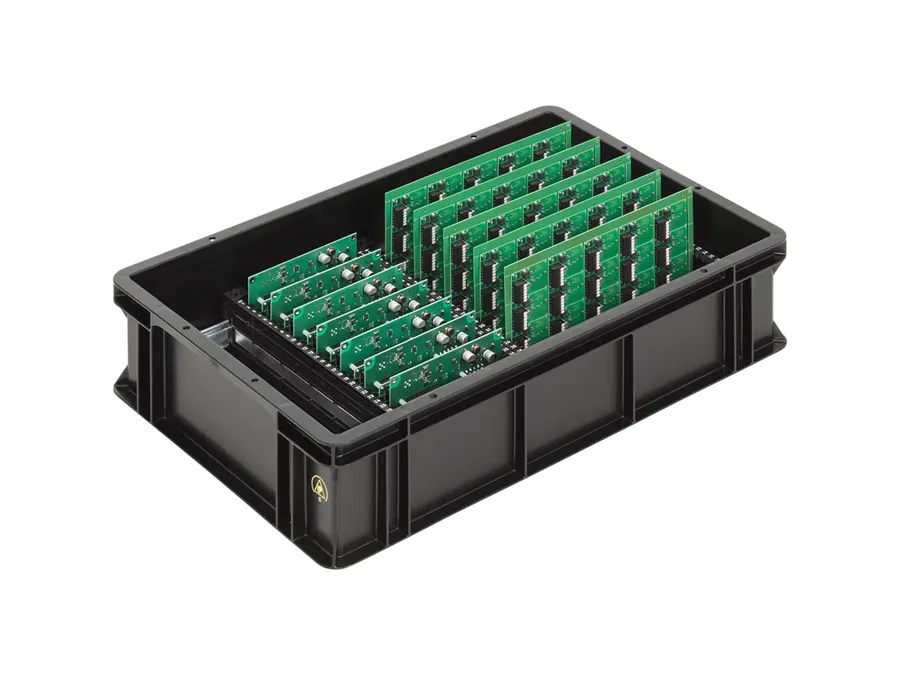
PCB Packaging
Shipping costs are a significant component of the overall PCBWay price, directly influencing the final expense of your project. Optimizing these costs involves carefully considering the shipping options, delivery times, and destination. Understanding these factors can lead to substantial savings and efficient project timelines. PCBWay offers a range of shipping methods to suit various needs, each with its own price point and delivery timeframe.
Several factors affect shipping costs, including the weight and dimensions of the package, the chosen shipping method (e.g., DHL, FedEx, UPS, Postal Service), and the destination country. Faster shipping options typically come with a higher price tag. By understanding these variables, you can strategically plan your orders to minimize expenses and choose a shipping method that aligns with your project's timeline and budget.
Shipping Options PCBWay provides various shipping options, each with different delivery times and costs. Options typically include express courier services (DHL, FedEx, UPS), standard air freight, and postal service options. Express couriers are faster but more expensive, while postal services are more economical but slower. The user should chose according to urgency and cost consideration.
Consolidating Orders To reduce shipping costs, consolidate multiple PCB orders into a single shipment when feasible. Shipping multiple smaller packages is more expensive than one single larger package due to base handling fees. Planning your project needs ahead of time can allow for combining orders and reducing the shipping cost impact on final per board price.
Selecting an Appropriate Shipping Method Express shipping is costly, therefore it is only recommended for urgent orders. For non-urgent projects, standard air freight or postal options provide cost-effective delivery. Carefully consider the delivery timeline requirements to chose the lowest-cost shipping option possible without delaying project completion.
Regional Shipping Cost Variations Shipping costs vary significantly based on the destination. For example, shipping to the USA might have different cost factors than shipping to Europe or Asia. PCBWay generally provides an estimate once the final shipping destination is known. Verify shipping cost in advance if budget is extremely constrained.
Shipping to the USA typically involves a combination of international freight to a US distribution center, followed by domestic delivery via a partner courier. Delivery times can range from 3-7 days with express couriers to 10-20 days with standard postal services. Pricing varies based on weight, package dimensions, and chosen shipping method, therefore, it's important to check all options with PCBWay's quote system before committing to a specific method. Shipping cost can be a considerable addition to the unit PCB price.
Table: Cost Analysis Comparison
This section provides a detailed cost analysis comparison between PCBWay and its competitors, focusing on PCB prototyping, small production runs, and assembly services. The table below illustrates cost-per-unit variations at different order quantities, offering a clear understanding of PCBWay's pricing structure compared to other leading manufacturers. This comparative data is essential for making informed decisions based on your specific needs and budget.
Service
Quantity
PCBWay Cost Per Unit
Competitor 1 Cost Per Unit
Competitor 2 Cost Per Unit
Notes
PCB Prototyping
5 Units
$5 - $10
$8 - $15
$7 - $12
Based on basic specs
PCB Prototyping
10 Units
$3 - $7
$6 - $12
$5 - $9
Based on basic specs
Small Production Run
50 Units
$1.5 - $4
$2 - $5
$1.8 - $4.5
Layer count can affect price
Small Production Run
100 Units
$1 - $3
$1.5 - $4
$1.2 - $3.5
Layer count can affect price
PCB Assembly (Basic)
5 Units
$25 - $50
$30 - $60
$28 - $55
Components are not included
PCB Assembly (Basic)
10 Units
$20 - $40
$25 - $50
$23 - $45
Components are not included
PCB Assembly (Advanced)
5 Units
$40 - $80
$50 - $100
$45 - $90
Advanced components and higher quantity may vary the price
PCB Assembly (Advanced)
10 Units
$35 - $70
$40 - $90
$38 - $80
Advanced components and higher quantity may vary the price
Understanding the nuances of PCBWay pricing is essential for any project involving custom circuit boards. By taking into account the various factors that influence cost, such as design specifications, order quantity, and assembly requirements, you can make informed decisions that align with your budgetary constraints. Whether you are prototyping or scaling up, using our guide on PCBWay pricing will help you to achieve the best value for your project. [pcbway price] starts from $5 for a basic prototype, ensuring accessible options for everyone, from hobbyists to professionals, seeking high-quality PCBs.