Understanding SMT Assembly Cost: A Comprehensive Guide
2025.01.16
In today's fast-paced electronics world, understanding SMT (Surface Mount Technology) assembly cost is crucial. From handheld gadgets to complex industrial systems, SMT is the backbone of modern electronics manufacturing. Just as the materials used in a building influence its final cost, every component and process involved in SMT assembly affects its price. This article breaks down the factors determining SMT assembly cost, offering practical tips and insights to help you navigate this critical aspect of electronics production. By the end, you’ll grasp the cost implications involved in your SMT project.
Key Factors Influencing SMT Assembly Cost
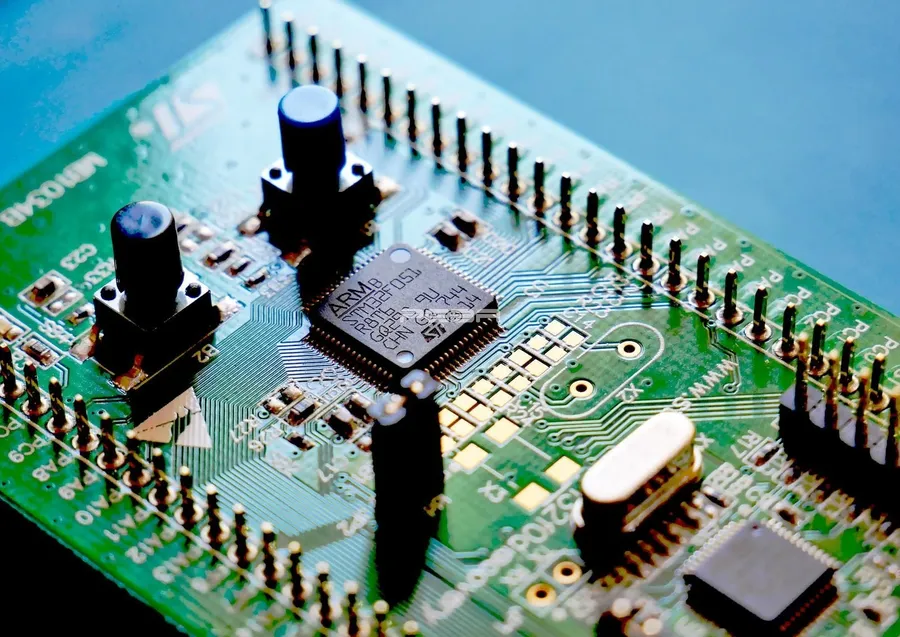
SMT Components on PCB
The cost of Surface Mount Technology (SMT) assembly is not a fixed value; it's a complex calculation influenced by several interdependent variables. Understanding these core factors—material costs, labor expenses, equipment utilization, and design complexity—is crucial for effective budgeting and cost optimization in electronic manufacturing. These elements combine to determine the final price of assembling a printed circuit board (PCB) using SMT processes.
Material Costs This includes the cost of the PCB itself, which can vary greatly depending on the number of layers, material used (e.g., FR4, Aluminum), and surface finish. Furthermore, the bill of materials (BOM), which is the total cost of all components, from resistors and capacitors to more complex integrated circuits, also significantly impacts the SMT assembly cost.
Labor Expenses Labor costs are not just about assembly workers; they include engineers, quality control personnel, and setup technicians. The level of automation influences these costs. For example, if an assembly requires high human intervention rather than automated processes, the cost will be higher.
Equipment Utilization The type of machinery used and their associated operating and maintenance costs impact assembly pricing, with more advanced equipment usually resulting in a higher price. The time a machine is utilized also influences the cost because equipment depreciation and maintenance are often time based.
Design Complexity Complex board designs, with dense component placement, vias, and multiple layers, require more precise assembly techniques, which can increase costs. More complex designs tend to require more detailed setups and processes that increase the overall cost.
SMT Assembly Cost Breakdown: Materials and Components
Surface Mount Components
The cost of Surface Mount Technology (SMT) assembly is significantly influenced by the materials and components used. This section details the impact of Printed Circuit Board (PCB) materials, individual electronic components, and the crucial Bill of Materials (BOM) on overall SMT assembly expenses.
The core of understanding SMT assembly costs lies in analyzing the expenses associated with PCB materials and the components populated on them. The BOM acts as a crucial document listing every component, its specifications, and quantities required, serving as a direct input to the final assembly cost.
Cost Factor
Description
Impact on SMT Assembly Cost
PCB Material
Type of substrate (e.g., FR-4, Aluminum), thickness, copper weight, and surface finish.
Higher-grade materials and finishes (e.g., gold plating) increase costs.
Passive Components
Resistors, capacitors, inductors. Cost varies by size, tolerance, and material.
Standard components are relatively inexpensive, specialized components can significantly increase costs.
Active Components
ICs (Integrated Circuits), transistors, diodes. Cost varies greatly depending on complexity and vendor.
Complex and high-performance ICs are a major cost driver.
Connectors and other components
Headers, terminal blocks, LEDs, and other specialized parts. Cost depends on manufacturer, specification and quality.
Specialized connectors and components can increase costs significantly.
Bill of Materials (BOM)
List of all materials and components with specifications and quantities.
Accuracy of the BOM is critical for cost estimation; inaccuracies lead to cost overruns. Component selection affects cost considerably.
Variations in the cost of materials and components can drastically affect the overall SMT assembly expense. Careful selection and strategic purchasing of these elements are critical for managing and minimizing costs.
Labor Costs in SMT Assembly
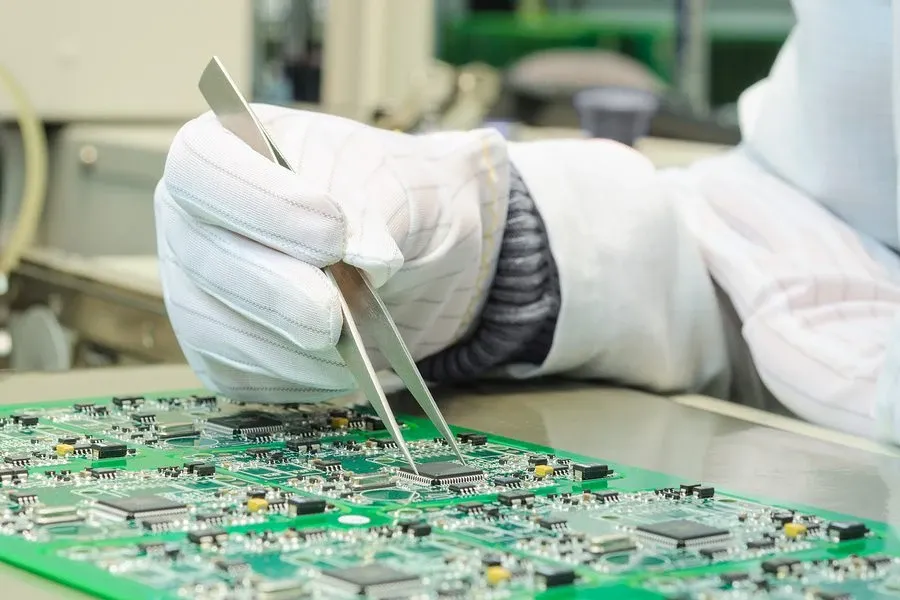
SMT Assembly Technician
Labor costs significantly impact the overall expense of Surface Mount Technology (SMT) assembly, often representing a primary source of variance in total cost. These costs are influenced by a multitude of factors including the level of automation utilized, geographical location of the assembly facility, and the prevailing hourly wages for skilled technicians.
Manual Assembly Manual assembly involves a higher degree of human intervention, making it more labor-intensive and thus more susceptible to variations in hourly rates and regional wage disparities. While offering flexibility, manual assembly typically results in longer processing times, which translates to higher overall costs for larger production runs.
Automated Assembly Automated SMT assembly, facilitated by sophisticated machinery such as pick-and-place robots and reflow ovens, reduces reliance on manual labor and provides significant gains in throughput and precision, thus decreasing per-unit labor costs, especially in high-volume production. However, the expertise of technicians to set up, monitor and troubleshoot remains a factor in the overall cost.
Geographical Location and Wage Disparities Labor costs in SMT assembly are heavily influenced by the geographical location of the manufacturing facility. Regions with lower labor costs, often in developing nations, can offer substantial cost reductions compared to manufacturing facilities in North America, Europe or Japan where hourly rates for trained technicians are higher. However, the total cost equation must also take into account supply chain logistics and delivery times.
Hourly Rates and Skill Level The hourly rates paid to SMT assembly technicians reflect their level of skill, training, and experience. More complex assemblies requiring expert handling will likely demand higher labor rates. Furthermore, some assembly processes may require specific certifications which also influence labor costs.
Factor
Impact on Labor Costs
Considerations
Manual Assembly
Higher labor cost per unit
Suitable for low volume production and complex prototypes
Automated Assembly
Lower labor cost per unit for high volume
Requires skilled technicians for setup and maintenance
Geographical Location
Significant cost variance based on region
Trade-off between cost, delivery times, and quality considerations
Skill Level of Technicians
Higher rates for specialized skills
Required for complex assemblies and precision manufacturing
Equipment and Setup Costs for SMT Assembly
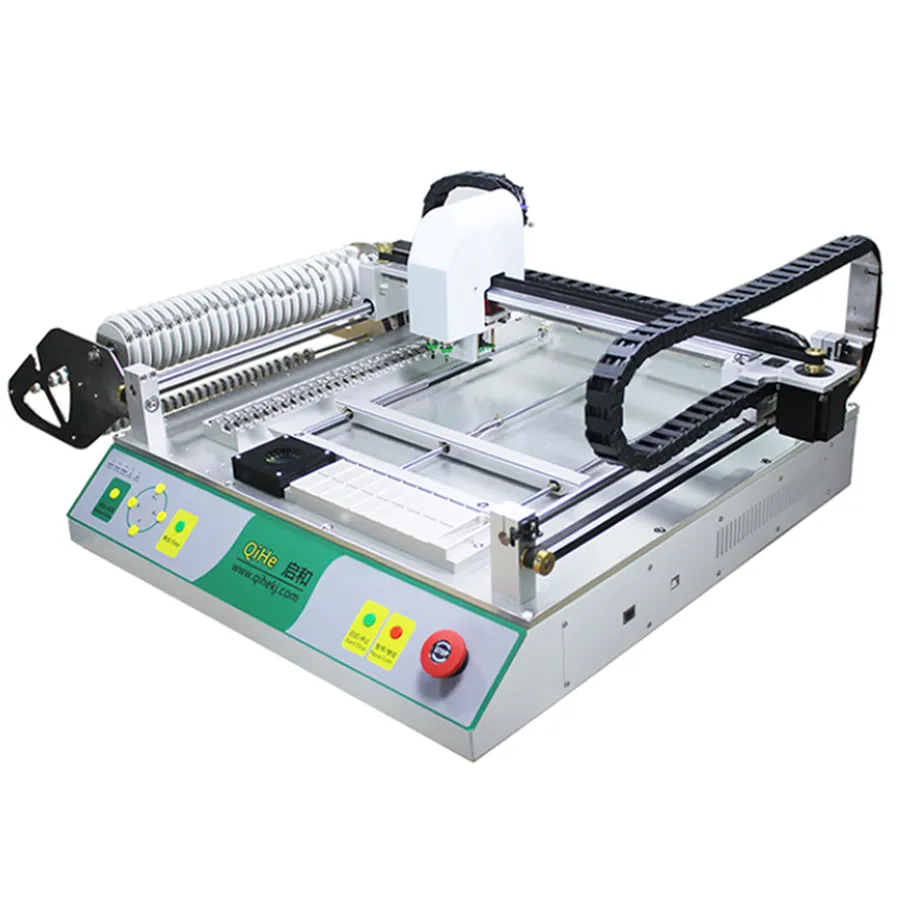
Pick and Place Machine
The cost of SMT (Surface Mount Technology) assembly is significantly influenced by the equipment and setup required. These costs encompass not only the machinery itself but also the associated expenses for initial setup, stencil creation, and ongoing maintenance. Generally, more sophisticated and precise machinery will translate to higher overall assembly costs.
Cost Category
Description
Impact on Total SMT Assembly Cost
Initial Equipment Purchase
Cost of SMT machines like pick-and-place, solder paste printers, reflow ovens, and AOI inspection systems.
Major impact, typically a large upfront investment.
Stencil Creation
The cost of creating high-precision stencils for solder paste application.
Moderate impact, essential for accurate solder application.
Setup Fees
Costs associated with preparing equipment for a specific PCB assembly project, including machine programming and tooling setup.
Moderate impact, varies based on complexity and order size.
Equipment Maintenance
Ongoing expenses for routine maintenance, repairs, and calibration of SMT equipment.
Moderate impact, necessary for consistent quality and machine reliability.
Software and Programming
Costs for the software used to control the SMT line, as well as any programming required for new PCB designs or components.
Minor impact, but essential for correct machine operation.
The Complexity of Your PCB Design: Impact on SMT Assembly Cost
Complex PCB
The complexity of a Printed Circuit Board (PCB) design significantly influences Surface Mount Technology (SMT) assembly costs. Factors such as the number of layers, component density, and board size directly affect the resources, time, and precision required for assembly, thereby impacting the overall cost.
More intricate designs necessitate more sophisticated machinery, highly skilled labor, and increased time for production. The following elements are the key factors that impact SMT assembly costs.
Number of Layers Multi-layer PCBs, with their increased complexity, require advanced manufacturing processes, resulting in higher costs. Each additional layer demands precise alignment and processing, increasing both material and labor expenses. For example, a 4-layer board will inherently cost more to assemble than a 2-layer board due to added complexity during the reflow process.
Component Density Higher component density, or the number of components packed into a given area, increases assembly complexity. Densely populated boards demand more precise pick-and-place operations, often necessitating advanced automated machinery to place smaller components closer to each other without errors. This can slow down the assembly process, increasing both time and cost. This is because densely populated boards often require more precise paste application and component placement.
Board Size Larger boards consume more materials and require more time for handling during the assembly process. Larger PCBs can cause issues due to increased mechanical stress during reflow. Increased board size also increases the time to handle the boards at every step, increasing labor costs as well. Very small boards can also be problematic, due to handling difficulties and the need for more precise placement of components on a smaller scale.
Component Size and Type The size and type of components also influence cost. Very small components (e.g., 0201 packages) require higher precision machinery and more experienced labor for handling and placement. Unusual or specialized components can be more costly as they may need special equipment or handling procedures. Through hole components require a different assembly process from SMT components, which will increase costs if they are both present on the same board.
Specialized Design Requirements Any unique board requirements, such as non-standard shapes, vias (plated holes), specific impedance requirements, or complex routing, often demand specialized equipment and process steps, which ultimately increase costs. This can include the use of special materials or increased testing and inspection times during production.
For instance, a complex circuit board with a high number of layers and densely placed, tiny components will incur significantly higher SMT assembly costs compared to a simpler board with fewer components on a single or double layer configuration.
Careful design considerations and strategic decisions at the PCB design stage are therefore critical for controlling the overall SMT assembly costs.
SMT Assembly Pricing Models: Per-Pad, Per-Component and Turnkey
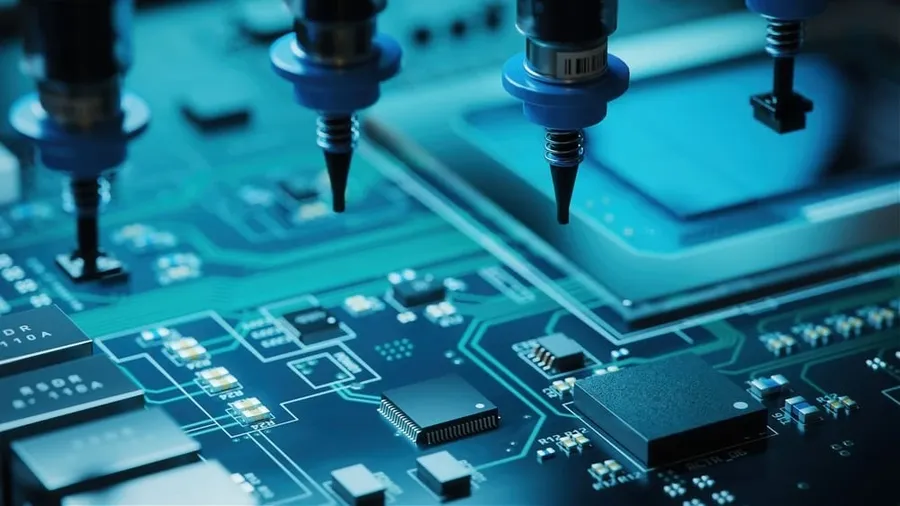
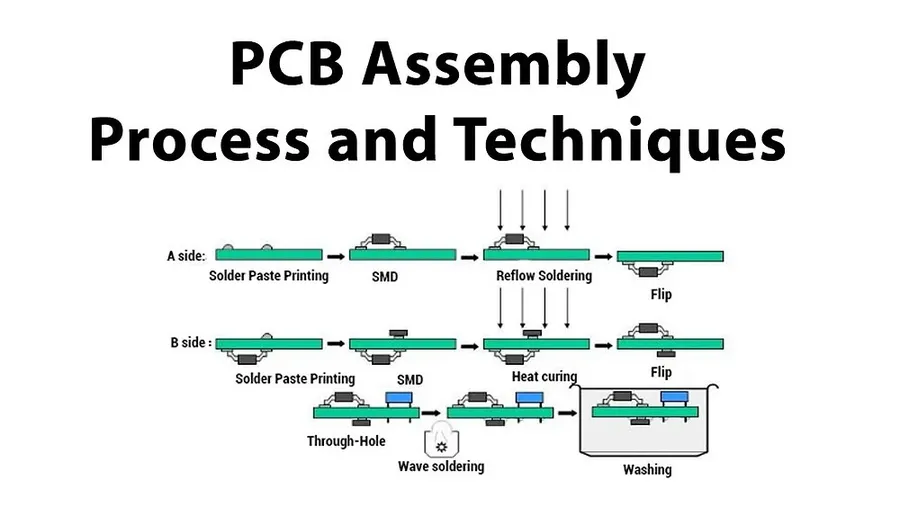
SMT Assembly Process
Understanding the various pricing models for Surface Mount Technology (SMT) assembly is crucial for effective cost management. These models, such as per-pad, per-component, and turnkey, each have distinct cost implications and suitability based on project specifics. Many SMT assembly service providers also incorporate setup fees, and understanding these variable costs is key to cost-effective PCB assembly.
Pricing Model
Description
Pros
Cons
Best Use Cases
Per-Pad
Cost is calculated based on the number of solder pads on the PCB.
Transparent, easy to understand, often suitable for simpler designs.
Can become costly for complex PCBs with many pads, may not accurately reflect assembly complexity.
Simple designs with few component types, boards with a high number of solder pads for large or through hole parts.
Per-Component
Cost is calculated based on the number of components placed on the PCB.
Reflects the complexity of part placement, good for variable BOMs.
Can be less transparent for PCBs with a high number of passive components.
Designs with a high variety of component types, and boards where part placement is the main assembly consideration.
Turnkey
A comprehensive pricing model that covers all aspects from component sourcing to assembly, and sometimes testing.
Convenient, reduces supply chain management overhead, often includes quality assurance.
May be more expensive overall, less control over individual component costs.
Projects requiring a single point of responsibility, where fast turn around and ease of management are needed more than lowest price.
In addition to the models above, it’s common to encounter setup fees. These fees cover the initial costs of tooling and preparation, such as stencil creation and programming the pick-and-place machines. These one-time fees are usually charged for each unique design, making it important to account for them when evaluating per-unit costs for low volume runs.
Estimating SMT Assembly Cost: A Step-by-Step Approach
Accurately estimating SMT assembly costs requires a systematic approach, combining a thorough understanding of the various factors involved and a structured calculation method. This section provides a step-by-step guide to help you estimate the costs associated with your SMT assembly project.
Step 1: Bill of Materials (BOM) Analysis Begin by creating a detailed BOM, listing each component with its specifications, quantity, and cost per unit. Accuracy here is paramount as it directly influences overall material cost. Include specific part numbers and manufacturer details.
Step 2: PCB Fabrication Cost Assessment Determine the cost of manufacturing the bare PCB. Factors like board size, number of layers, material (e.g., FR-4, Aluminum), and special features (e.g., impedance control) will influence this cost. Obtain quotes from PCB manufacturers based on your design specifications.
Step 3: SMT Assembly Process Cost Estimation Estimate the cost of the SMT assembly process. This involves considerations for: a) Setup Fees: Costs associated with preparing the SMT line, programming the pick-and-place machines, etc. b) Component Placement Cost: Per-pad or per-component cost, depending on the pricing model of the assembly service. c) Soldering Cost: Related to the soldering process, which is usually accounted for in the component placement cost. Some assembly houses may charge separately for specific soldering processes, such as wave soldering for through-hole components, or reflow soldering.
Step 4: Labor Cost Calculation Calculate the labor costs, if applicable and separate from the per component cost, taking into account the level of automation, the complexity of the design, and the geographic location of the assembly facility. Some providers may include this in their base cost, while some charge hourly based on complexity, assembly time, or testing.
Step 5: Other Costs Consideration Include additional costs such as stencil creation, testing (e.g., functional, in-circuit), packaging, and shipping. These costs can vary greatly depending on the level of testing required. Ensure all required costs are taken into account to get the final SMT assembly cost.
Step 6: Total Cost Calculation Sum all the costs from previous steps to get the estimated total cost for the SMT assembly. Ensure that all factors are taken into consideration, from design complexity to additional features and testing costs.
Step 7: Formula Implementation (Simplified) The SMT Assembly Cost can be simplified by using the following formula: SMT Assembly Cost = (Cost of PCB + Cost of Components) + (Setup Cost + Component Placement Cost + Labor Cost) + Other Costs. Keep in mind that some of these may be included in the quotes from providers and you should not double count them.
Practical Example: Let's say we are assembling 100 boards. Our BOM cost is $5 per board for components, the PCB manufacturing cost is $2 per board, the setup fee for the SMT line is $100, the component placement cost is $0.1 per component (and we have 100 components per board), the labour is included in the component cost, and other costs such as testing/packaging are $1. Using the formula above we get, (2 + 5) + (100/100 + 0.1*100) + 1= 7 + 11 + 1 = $19 per board. The total assembly cost would be $1900. This simple formula helps break down the major costs. When requesting quotes from suppliers ensure that all of the cost factors are included and do not overlap, as this may lead to inaccurate estimates.
Frequently Asked Questions About SMT Assembly Cost
This section addresses common queries regarding SMT assembly costs, providing clear and concise answers to help you navigate the complexities of pricing in this area.
How much does SMT assembly typically cost? The cost of SMT assembly varies greatly depending on several factors, including the complexity of the PCB design, the number of components, the quantity of boards being assembled, and the chosen assembly service provider. There isn't a fixed price, but costs can range from a few cents per component for large volume runs to much higher per-unit costs for prototyping or small batches. Always request detailed quotes.
How can I calculate the estimated SMT assembly cost for my project? Estimating SMT assembly cost involves summing up various expenses: material costs (PCB, components from the BOM), labor costs (setup, assembly time), and equipment/overhead costs (machine time, stencil creation). A common approach is to break down costs per component and per pad, and then add a setup fee, if applicable. Using online calculators offered by some manufacturers can also provide a rough estimate.
What is the approximate cost of setting up an SMT line? The cost to establish a full SMT assembly line can be substantial, ranging from hundreds of thousands to millions of dollars. This investment includes equipment such as pick-and-place machines, reflow ovens, solder paste printers, and inspection systems. The cost heavily depends on the machine's capabilities, automation level, and the supplier. Therefore, in-house SMT assembly is not suitable for everyone.
What impacts the final cost of assembling a PCB board? The final cost for assembling a PCB is determined by a combination of factors: the complexity of the design (number of layers, component density), the types and quantity of components, the level of automation in the assembly process, and the chosen supplier. The overall material costs contribute greatly but factors such as manual rework and additional inspection will also increase final costs.
Are there ways to reduce the SMT assembly cost? Yes, cost reduction in SMT assembly can be achieved through several strategies: optimizing PCB design for manufacturability, selecting cost-effective components, ordering components in bulk, consolidating orders to reduce shipping fees, and choosing a supplier that matches your project needs and budget. Thorough design review is key to cost reduction.
What are the different pricing models for SMT assembly? Common pricing models include: per-pad pricing, which charges based on the number of solder pads; per-component pricing, where each component placement incurs a cost; and turnkey solutions that provide a complete service including PCB fabrication and component sourcing. Each model has its advantages, and choosing the correct one depends on the complexity of your project and the volume. Many companies offer a mix of setup costs and per component or per solder joint cost.
How do different suppliers impact SMT assembly costs? Different suppliers have varied pricing structures and may specialize in certain project types, which can impact the overall SMT assembly cost. Factors such as geographical location, labor rates, access to equipment, and negotiation terms can lead to significant differences in the final cost. It's essential to compare quotes and evaluate the total value offered by each potential supplier, not just the lowest per-unit price. Consider lead times and quality in addition to cost when choosing a supplier.
Reducing SMT Assembly Costs: Practical Tips
Minimizing SMT assembly costs requires a multifaceted approach, focusing on optimizing design, material selection, and supply chain management. By proactively addressing these key areas, manufacturers can achieve significant cost reductions without compromising quality or performance.
Optimize PCB Design Simplifying PCB designs can have a direct effect on the cost. Reduce the number of layers if possible, this also reduces the amount of material used and the complexity of the manufacturing process. Minimizing the number of unique components and utilizing standard footprints can reduce purchasing costs and manufacturing times.
Component Selection Careful component selection is crucial. Opt for standard, readily available components with competitive pricing to lower material costs. Where possible, consolidate component values to reduce the BOM (Bill of Materials) size and simplify procurement. Consider the use of multi-function components to reduce the total number of parts on the board.
Panelization and Order Quantity Panelize PCBs when possible to maximize manufacturing efficiency. Larger order quantities often yield lower per-unit costs, as suppliers can amortize setup and manufacturing expenses over a larger batch. Plan production runs to take advantage of volume discounts.
Effective Supplier Management Establish strong relationships with reliable suppliers who provide competitive pricing and high-quality services. Regularly review pricing and consider multi-sourcing to mitigate price increases and supply chain risks. Compare quotes from different suppliers and choose options that best match your production needs. Negotiate favorable pricing terms. A single high quality, but more expensive component may be a better choice, instead of two lower quality components.
Design for Manufacturability (DFM) Implement DFM principles early in the design process to reduce manufacturing challenges and rework. This includes considerations like component orientation, spacing between pads, solder mask design, and fiducial marks. A robust DFM process will reduce assembly time, and decrease defect rate and improve the yield, all of which impact the total SMT assembly cost.
Standardization Employ standardized design rules, component footprints, and manufacturing processes. This reduces the amount of customization required and accelerates manufacturing timelines, and can provide benefits when choosing different SMT assembly providers.
Testing Strategies Implement comprehensive testing strategies to catch errors early in the manufacturing process. This can reduce the overall cost and improve efficiency. Test point placement, and testing procedures should be planned in advance and be incorporated into the design.
Case Study: SMT Assembly Cost Comparison of Different Suppliers
Analyzing real-world case studies provides invaluable insights into the variability of SMT assembly costs across different suppliers and geographical regions. This section will dissect specific examples, illustrating how choices in supplier and location significantly impact the final cost, offering a clearer understanding of SMT assembly cost drivers.
It's important to note that absolute costs are always project specific and depend on many factors, but these case studies will focus on illustrating key cost drivers and typical ranges of variation.
Factor
Supplier A (Domestic)
Supplier B (International)
Supplier C (International)
Setup Cost
$500
$200
$150
Cost Per Pad
$0.015
$0.008
$0.006
Component Cost (avg)
$0.10
$0.08
$0.09
Shipping Cost
$50
$150
$200
Lead Time
2 weeks
4 weeks
3 weeks
This table provides an example comparison of three hypothetical suppliers. It demonstrates that while international suppliers may offer lower per-unit costs, factors such as setup, component, and shipping expenses can alter the final cost. Notably, Supplier A has the lowest shipping cost but has a higher cost per pad and higher setup cost.
Further Case Studies will show that the complexity of the board and component selection greatly influences final price. Higher complexity PCBs or use of specialized parts will always incur additional costs. The overall number of units manufactured also impacts the overall price, with economies of scale often available with larger batch orders.
Understanding SMT assembly cost requires a grasp of multiple interconnected factors. From materials and labor to equipment and project complexity, each element plays a pivotal role. By methodically analyzing these factors, you can better plan your SMT projects, reduce expenses, and enhance production efficiency. Keep in mind that the final [smt assembly cost] is a function of many of the variables we have discussed today. As technology advances and global supply chains evolve, staying informed about cost trends and innovative cost-saving strategies will be key to your continued success.