In the world of electronics, even the smallest components play crucial roles. Think of a tiny 1mohm resistor – it might seem insignificant, but it's vital in many applications, acting like a miniature traffic controller for electricity. This article delves into the world of these low-value resistors, highlighting their uses and how to choose the right one, just like choosing the right bridge for your city's traffic flow.
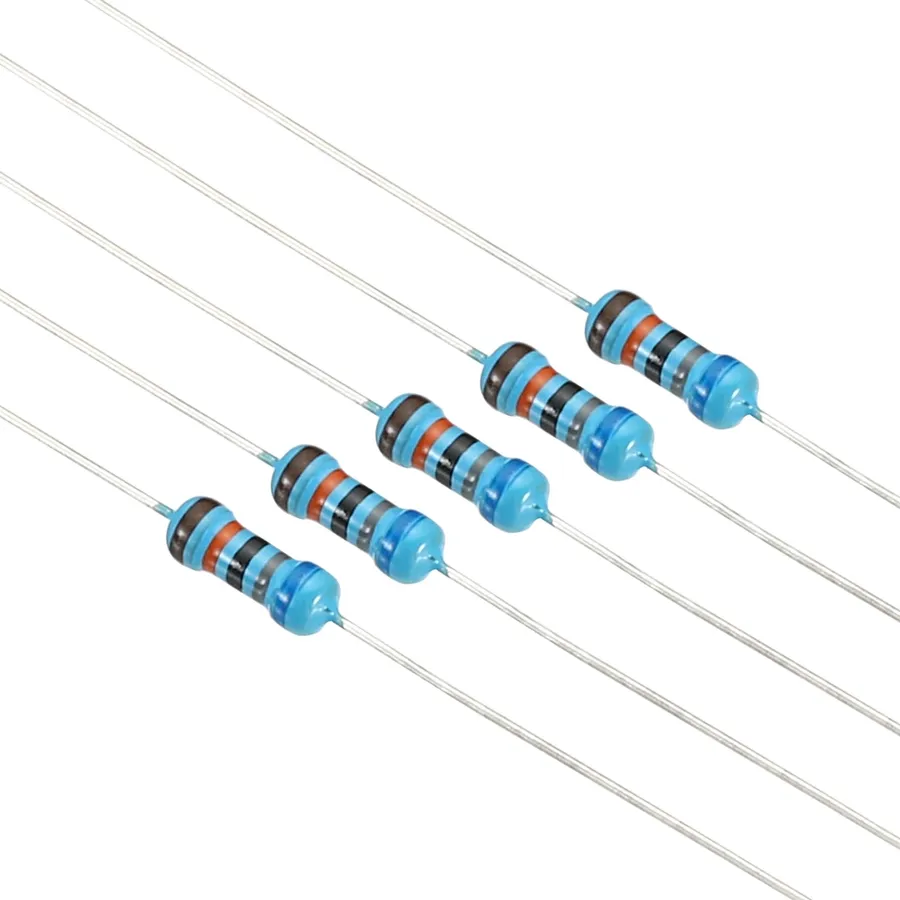
A 1mOhm resistor is a specialized electronic component that presents an exceptionally low resistance of one milliohm (0.001 ohms) to the flow of electrical current. This minute resistance value is vital in applications where minimizing voltage drops and maximizing current flow is paramount. Unlike standard resistors with higher resistance values, 1mOhm resistors are designed for high-current applications that demand precise current measurement and control, leveraging the inherent relationship between current, voltage, and resistance as defined by Ohm's Law (V = IR).
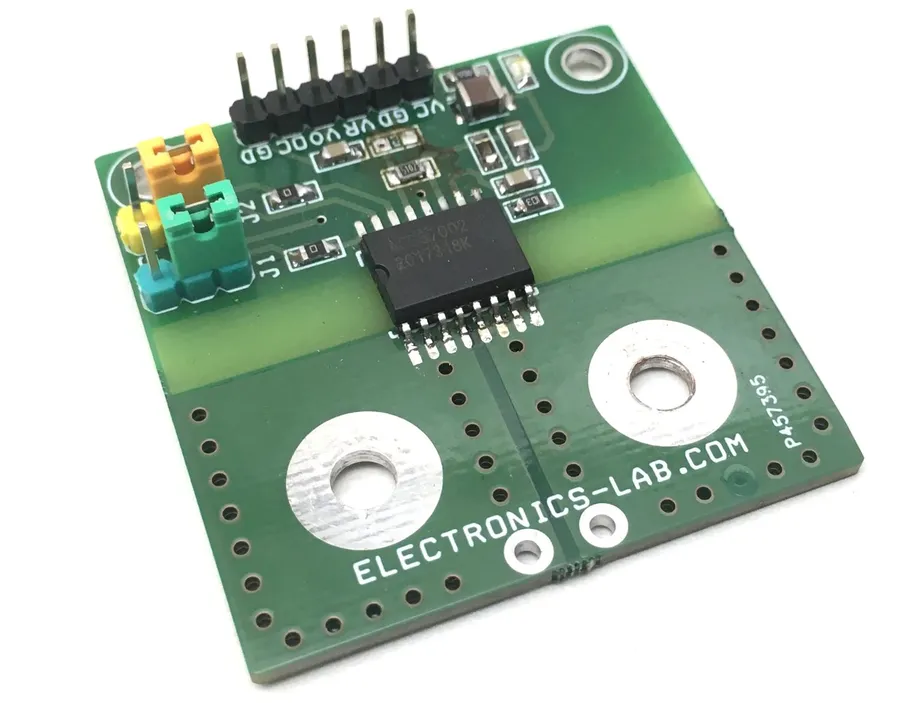
1mOhm resistors, characterized by their extremely low resistance, are indispensable in a variety of electronic applications, primarily where precise current measurement, circuit protection, and minimal power loss are critical. Their unique properties enable them to function as highly effective current sensors and protective elements.
The primary function of a 1mOhm resistor in current sensing is to provide a measurable voltage drop that is directly proportional to the current flowing through it. This relationship is defined by Ohm's Law (V=IR). Given that the resistance (R) is 1 mOhm (0.001 Ohms), the voltage (V) will be very small, but still measurable. Accurate measurement of this small voltage drop requires precise measurement techniques, often involving differential amplifiers, to determine the current (I) in the circuit. This allows for real-time monitoring and control of current flow, which is critical in many power applications.
1mOhm resistors, while primarily used for sensing, also provide a degree of circuit protection. Their low resistance limits fault currents. In the event of an overcurrent, the 1mOhm resistor will experience a significant voltage drop, and will convert excess current to heat and limit it, this can prevent damage to downstream components. Although not as primary function, it is a beneficial safety mechanism. It is often preferable to use a component that both performs a necessary measurement, and has secondary benefit of increasing circuit safety.
In precision measurement applications, the accuracy of the 1mOhm resistor is paramount. These resistors are utilized in instruments designed to measure current and power with high precision. The precise resistance value, low temperature coefficient of resistance, and stable performance allow for accurate and repeatable measurements. These measurements are critical in scientific, industrial, and research fields, where the precision of instrumentation is crucial for reliable data and analysis. When selecting a precision 1mOhm resistor, factors such as tolerance, temperature coefficient, and long-term stability must be considered.
1mOhm resistors are instrumental in current sensing applications, leveraging the principle of Ohm's Law (V = I * R) to convert current flow into a measurable voltage drop. In essence, by placing a 1mOhm resistor in the path of a current, the voltage drop across this resistor directly correlates with the magnitude of the current, providing a simple method for real-time current monitoring within a circuit.
The low resistance value of 1mOhm ensures that this measurement process minimally impacts the circuit's overall performance. A significant impact on the circuit would occur with a larger resistance value, which would not be acceptable for a sensing resistor.
To implement current sensing effectively with a 1mOhm resistor, a differential amplifier or a suitable instrument is typically employed to measure the tiny voltage drop across it. This voltage is then amplified and processed to derive the current value, allowing for accurate current monitoring or control within various electronic systems. This is especially useful in precision measurement and control loops.
| Parameter | Description | Units |
|---|---|---|
| Resistance | The fixed value of the resistor. | Ohms (Ω) |
| Current | Current flowing through the resistor. | Amperes (A) |
| Voltage Drop | The voltage drop across the resistor, proportional to the current flowing through it. | Volts (V) |
| Calculation | Calculated by Ohm's Law (V = I * R), where V is the voltage drop, I is the current, and R is the resistance (1mΩ in this case). | V = I * 0.001Ω |
Low-value resistors, such as 1mOhm resistors, play a critical role in circuit protection by limiting current flow, thereby preventing overloads and subsequent damage to sensitive components. These resistors are strategically placed to introduce a small, controlled resistance that can limit the magnitude of current flowing through specific sections of a circuit during fault conditions.
When a short circuit or overload occurs, the current can rise dramatically. By placing a 1mOhm resistor in the path of that current, a measurable voltage drop is created that can be used to detect the over current condition, while also minimizing the magnitude of current flowing through the circuit, preventing damage to other sensitive components downstream. This effect is primarily derived from Ohm's law (V=IR), a fundamental principle in electrical engineering, with the small resistance of the 1mOhm resistor, a small voltage drop is created for a given amount of current, limiting the overall current and protecting other parts of the circuit.
The use of 1mOhm resistors for circuit protection is particularly effective in high-current applications where large spikes of current are possible. Furthermore, these resistors' low resistance ensures that they do not significantly impede the normal operation of the circuit under standard operating conditions.
1mOhm resistors play a critical role in precision measurement instruments due to their ability to facilitate accurate current and power analysis. By acting as a shunt, these low-value resistors introduce a minimal voltage drop, which is directly proportional to the current flowing through the circuit. This small voltage drop is then measured and amplified using specialized circuitry to yield accurate current readings.
The key benefit of using 1mOhm resistors in precision measurement is their negligible impact on the circuit. Their low resistance minimizes power dissipation in the measurement process, ensuring the device under test is not significantly affected. This allows for true measurements of current without significantly altering the system, making them ideal for calibrating power supplies, measuring battery discharge rates, and precisely monitoring current in sensitive electronic equipment. They also enable the direct measurement of current without significant insertion loss or loading effect, which could otherwise compromise the accuracy of the test.
For example, in power analysis, the voltage across a 1mOhm shunt can be precisely measured by a digital multimeter or other precise instrument and the current calculated with Ohm's Law (I=V/R). This allows for highly accurate measurement and control of the system. Further, their low resistance and high power capability make them ideal for such applications.
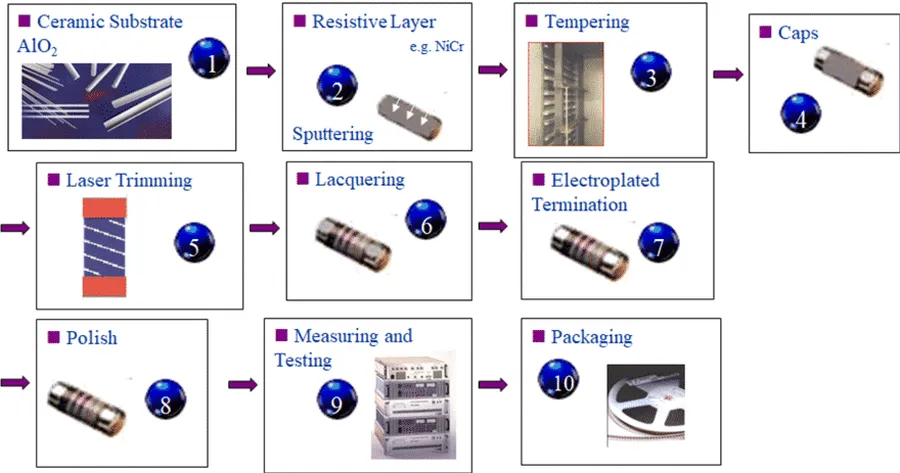
1mOhm resistors, while seemingly simple, come in various forms and specifications crucial for their effective application. These parameters significantly impact performance and suitability for specific circuit designs. This section details key differences in types and specifications pertinent to 1mOhm resistors.
| Feature | Description | Implications for 1mOhm Resistors |
|---|---|---|
| Mounting Style | Method of attaching the resistor to a circuit board. | Through-hole resistors are robust for prototyping but less compact, while surface-mount (SMD) resistors are space-efficient for high-density PCBs. Given the low resistance, SMD is often preferred for better performance. |
| Power Rating | The maximum power the resistor can dissipate without damage. | Typically expressed in watts (e.g., 1/4W, 1W). For 1mOhm resistors, power rating is a key factor when used in current sensing to avoid thermal issues. Higher current means higher power dissipation. |
| Tolerance | The allowable deviation of the actual resistance from the nominal value. | Expressed as a percentage (e.g., ±1%, ±5%). 1mOhm resistors with tighter tolerance are crucial for precise current sensing and measurement, often requiring tolerances of ±1% or better. |
| Temperature Coefficient | Change in resistance per degree Celsius. | Measured in ppm/°C. Low temperature coefficient is critical for stable performance across operational temperatures. This is especially important in precision applications for consistent and accurate measurements. |
| Material | The materials used in constructing the resistor which affect its properties. | Common materials include metal alloy or metal film. Material selection affects the precision and stability of the 1mOhm resistor. Metal alloy resistors are preferred for low TCR and stability. |
Choosing the correct 1mOhm resistor is crucial for ensuring optimal performance and reliability in your electronic designs. The selection process involves careful consideration of several factors, including the specific application requirements, tolerance, physical size, and power handling capabilities. Each of these parameters impacts the resistor's performance in a circuit, and an incorrect selection can lead to inaccurate measurements, circuit malfunction, or even component failure.
This section addresses common questions regarding 1mOhm resistors, covering their characteristics, applications, and distinctions from other resistor values. Understanding these FAQs will help you navigate the selection and usage of these low-value resistors.
The distinction between a 1mOhm (milliohm) resistor and a 1 Mega Ohm resistor is substantial, representing a difference of nine orders of magnitude (10^9) in resistance. This fundamental difference dictates vastly different applications and circuit behaviors, making careful selection crucial.
| Characteristic | 1mOhm Resistor | 1 Mega Ohm Resistor |
|---|---|---|
| Resistance Value | 0.001 Ohms | 1,000,000 Ohms |
| Typical Application | Current sensing, low-side shunt | High impedance applications, biasing |
| Effect on Current | Allows high current flow with minimal voltage drop | Limits current flow to very low levels |
| Impact on Circuit | Used in precise measurement and control | Used in signal processing or as pull-up or pull-down components |
Using the wrong resistor in a circuit can lead to drastically different outcomes. For instance, substituting a 1 mega ohm resistor for a 1 milliohm resistor in a current sensing application could cause a significant reduction in the current reading and can cause the circuit to function unexpectedly or damage components.
Utilizing 1mOhm resistors effectively requires careful consideration of handling, soldering, testing, placement, and PCB design. These low-value resistors are particularly sensitive to parasitic resistance and thermal effects, necessitating precise techniques to ensure accurate and reliable performance in electronic designs.
The humble 1mOhm resistor, often overlooked, plays a pivotal role in modern electronics. Understanding its function, applications, and selection criteria is essential for anyone involved in circuit design. Whether you’re building a high-precision current sensor or protecting your circuit, this small component ensures accurate and reliable performance. Just as a well-placed 1mohm resistor ensures a smooth flow of current in a circuit, understanding its role ensures the success of any electronic project, big or small. So embrace the power of the tiny, and build a stronger, more efficient system.

