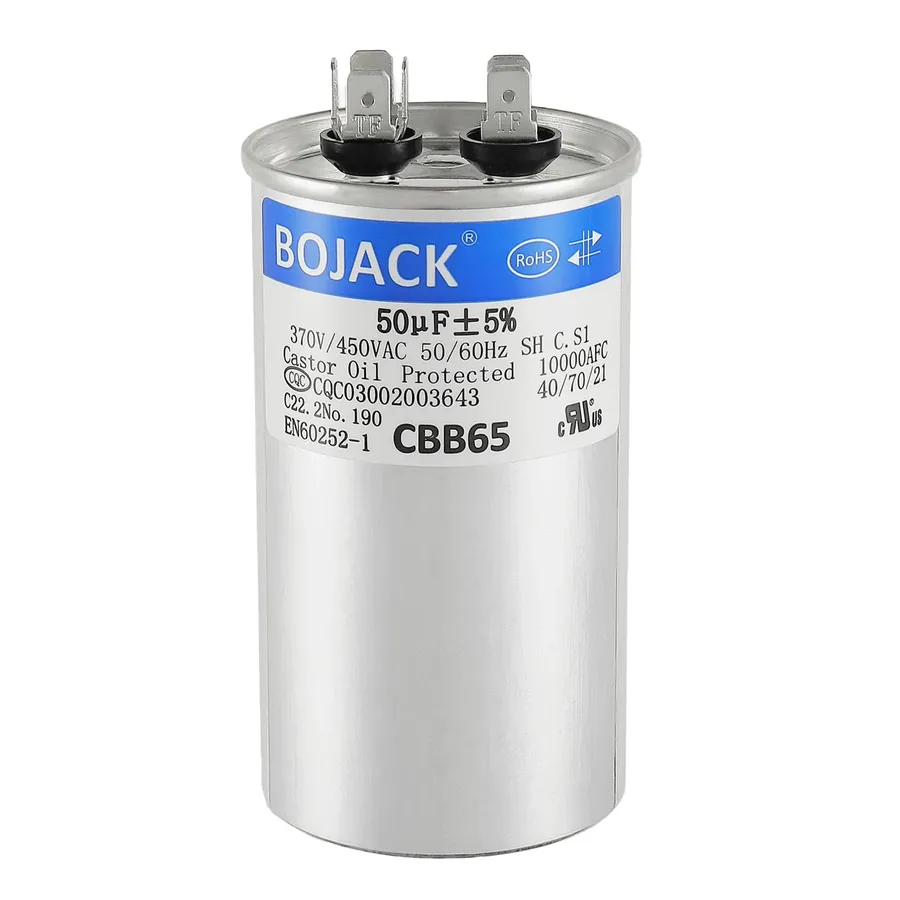
Understanding the 50uf Capacitor: Applications, Types, and Selection
2025.02.09
In the realm of electronics, the 50uf capacitor may seem like a small component, but its impact is significant. From starting a refrigerator's compressor to smoothing out power in complex circuits, this tiny device enables a variety of applications. This article will delve into the essentials of 50uf capacitors, revealing their types, applications, and selection criteria, demonstrating how they make our lives easier.
What is a 50uf Capacitor and What Does it Do?
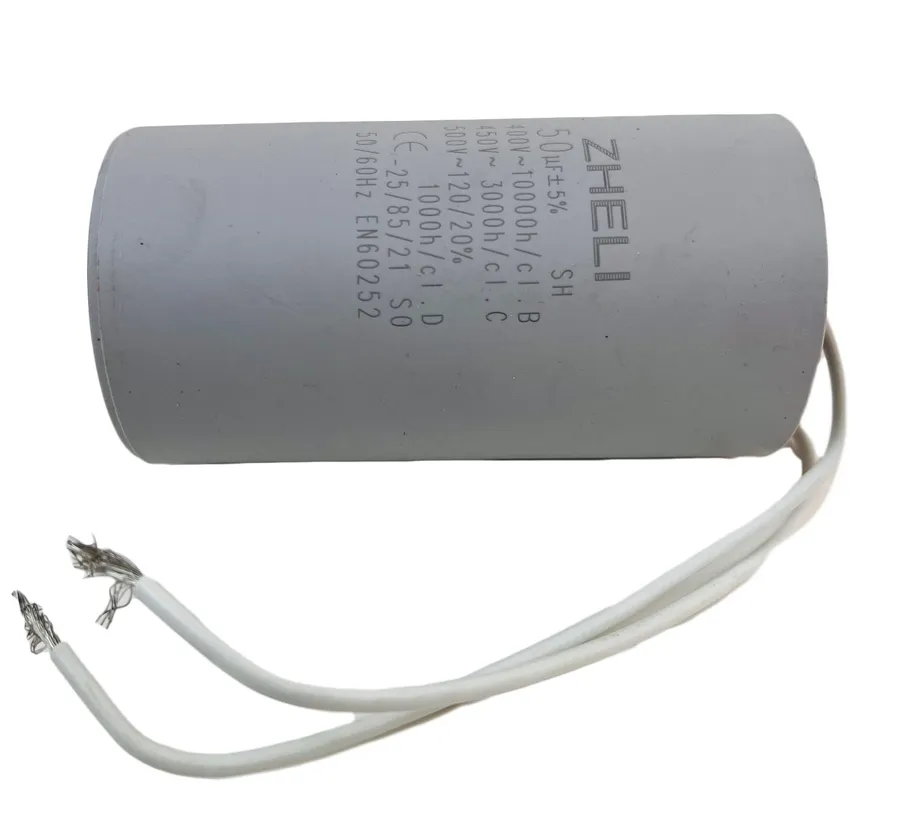
50uf Capacitor
A 50uf capacitor is an electronic component characterized by its ability to store electrical energy temporarily within an electric field and has a capacitance of 50 microfarads (µF). This rating defines the capacitor's capacity to store charge; a higher capacitance indicates a greater capacity to store charge at a given voltage. Capacitors are fundamental in electrical circuits, serving diverse roles from energy storage and filtering to power conditioning and timing. The 50µF capacitor specifically, finds application where a moderate level of energy storage and reactive impedance is required.
Types of 50uf Capacitors: Electrolytic, Film, and More
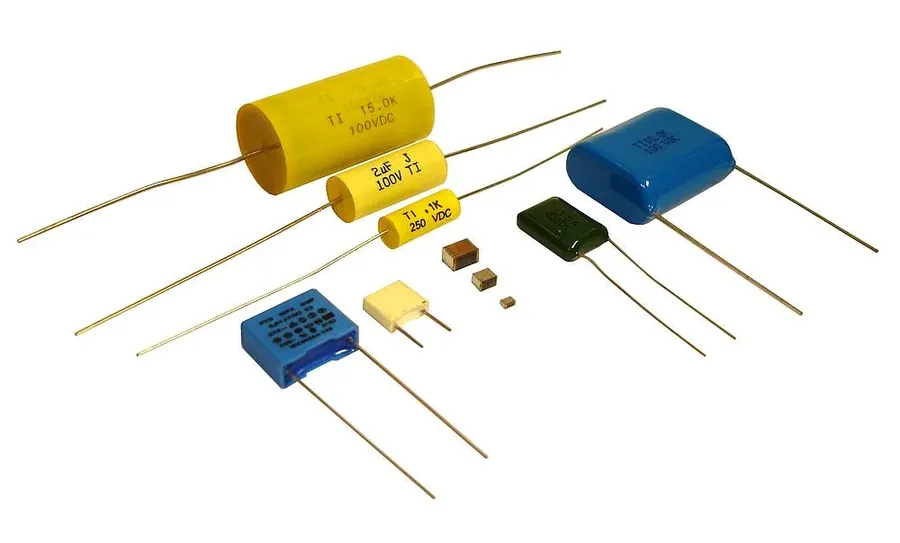
Film Capacitor
50uF capacitors are available in several types, each with distinct characteristics that make them suitable for different applications. The primary differences lie in their construction, performance, and cost, all of which must be considered when selecting a capacitor for a specific application. These variations include electrolytic, film, and ceramic, among others.
Capacitor Type
Construction
Voltage Range
Temperature Stability
Cost
Typical Applications
Electrolytic
Uses a liquid or gel electrolyte; typically polarized.
Low to medium (up to 500V DC)
Moderate; performance degrades at high temperatures
Low
Power supplies, motor start circuits, decoupling
Film (e.g., Polypropylene)
Uses thin films of plastic dielectric; non-polarized.
Medium to high (hundreds to thousands of volts AC or DC)
Excellent; stable over a wide range
Medium to High
Motor run circuits, high-frequency applications, audio equipment
Ceramic
Uses ceramic dielectric; often small and non-polarized.
The 50uF capacitor is a versatile component employed across a spectrum of applications due to its ability to store and release electrical energy, contributing to both the starting and running of various electrical equipment. Its specific capacitance value makes it suitable for tasks demanding moderate energy storage or current control, finding utility from household appliances to specialized industrial machinery.
Motor Run and Start Capacitors In HVAC systems, such as air conditioners and heat pumps, the 50uF capacitor serves as a crucial component for starting and running single-phase motors. It provides the necessary phase shift in the power supply to initiate rotation and maintain efficient motor operation. This is achieved by temporarily storing charge, creating a leading current, and enhancing motor torque.
Appliance Applications Many home appliances, including washing machines, dryers, and some refrigerator models, rely on 50uF capacitors to facilitate motor functions. These capacitors ensure the smooth start-up and consistent performance of motors that drive various mechanisms within these appliances, like drum rotation and pump operation. They are often found in compressors and fan motors as well.
Audio Equipment Within audio circuits, a 50uF capacitor is used for filtering and coupling audio signals and is used in crossover circuits to separate audio frequencies, or for power supply decoupling, which reduces unwanted noise and stabilizes power delivery to various components. Their properties provide clean and balanced audio output.
Power Supplies In power supply units, 50uF capacitors are used for filtering out ripples from rectified AC power and ensuring a stable DC output. These capacitors play an important role in smoothing the fluctuating DC voltage and ensure proper function of electronic components. This ensures clean and reliable power delivery in devices such as power adapters.
Industrial Machinery Industrial machinery, including pumps, conveyors, and various motor-driven systems, often utilizes 50uF capacitors for motor starting and control. These capacitors provide the additional boost required for the smooth operation of heavy-duty equipment, ensuring reliable performance even under demanding conditions.
50uf Capacitor Voltage Ratings: Choosing the Right One
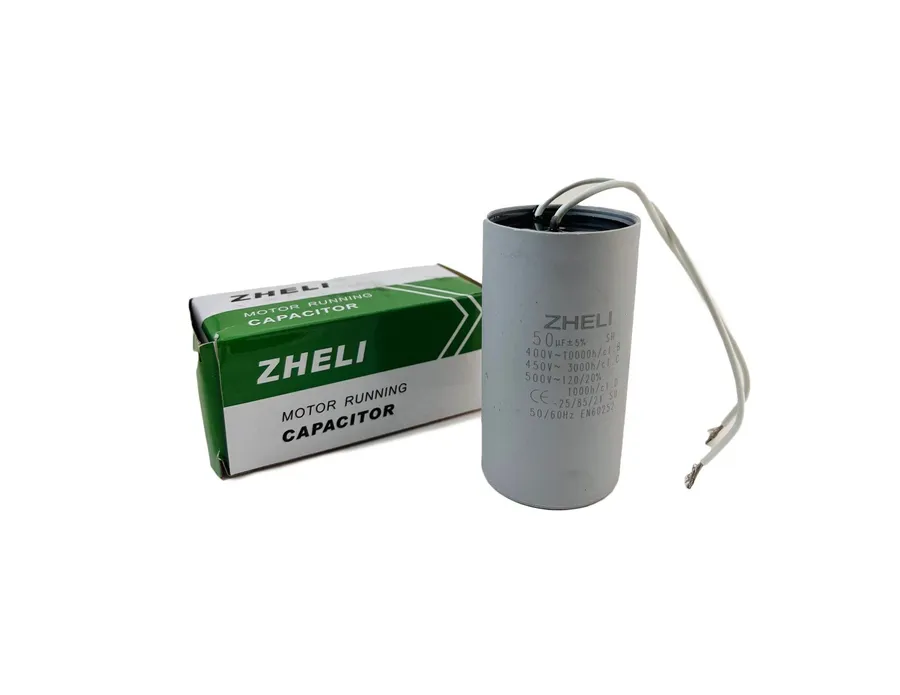
50uf Capacitor Voltage Ratings
Selecting the correct voltage rating for a 50uf capacitor is crucial for both safety and the longevity of your application. Capacitors are designed with a maximum voltage limit, exceeding which can lead to dielectric breakdown, potentially causing failure, overheating, or even fire. Therefore, understanding voltage ratings (e.g., 250V, 370V, 450V) is paramount to ensure safe and reliable operation.
Application
Typical Voltage Rating
Reasoning
Small Appliance Motor Start
250VAC - 370VAC
Lower voltage operation and intermittent duty cycles.
HVAC Fan Motors
370VAC - 450VAC
Higher voltage due to inductive loads and continuous operation.
Industrial Motors
450VAC or higher
High starting torque and robust industrial power supplies require high voltage tolerance.
Audio Amplifiers (Power supply smoothing)
50VDC - 250VDC
Lower voltage DC requirements specific to audio circuitry.
Power Supplies
100VDC - 450VDC
Various DC voltage requirements in power conversion circuitry.
50uf Capacitor Replacement: Identifying and Troubleshooting Issues
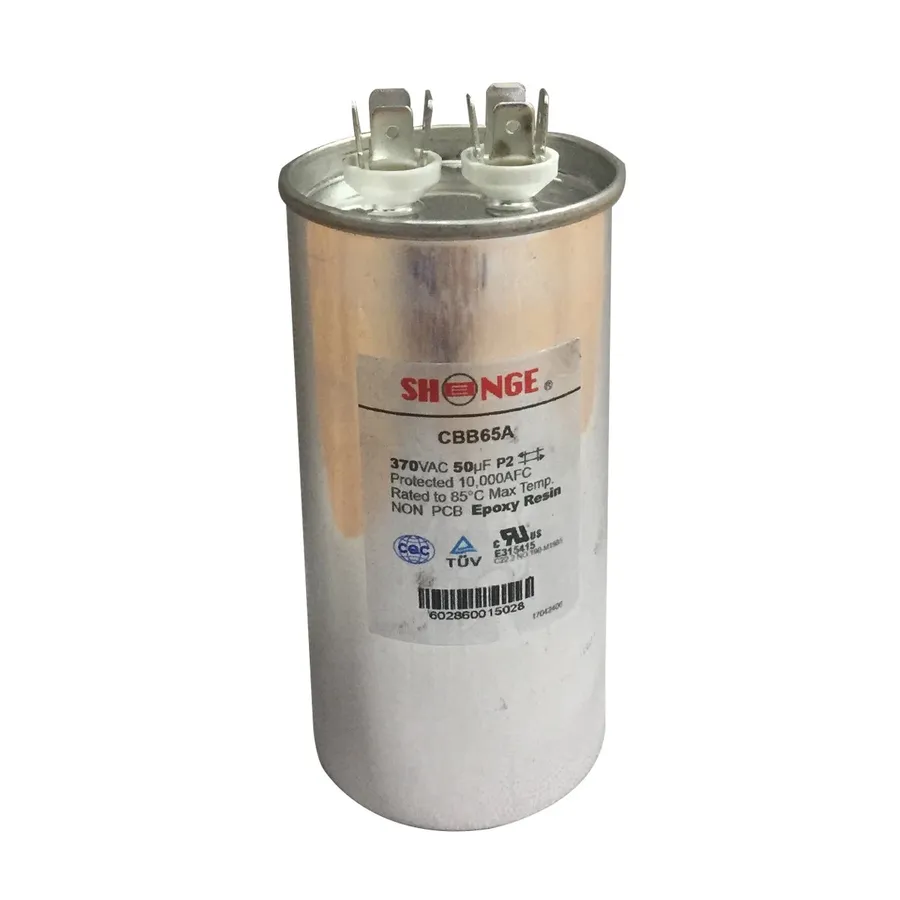
Capacitor Replacement
Replacing a 50uf capacitor requires careful identification of failure signs, understanding testing procedures, and adherence to safety protocols. This section provides a comprehensive guide to troubleshooting, testing, and replacing 50uf capacitors, ensuring a safe and successful repair.
Common Signs of a Failing 50uf Capacitor A failing capacitor can manifest in several ways, including bulging or leaking casings, reduced device performance, unusual noises, or complete system failure. These symptoms indicate the capacitor is no longer functioning within its specifications.
Safe Testing Procedures for a 50uf Capacitor Prior to testing, ensure the capacitor is disconnected from the power source and fully discharged. Use a multimeter to measure capacitance, and compare the reading with the capacitor's rating. An extremely high or low reading indicates a fault.
Tools Required for 50uf Capacitor Replacement Essential tools include insulated screwdrivers, wire strippers, a multimeter, and potentially a soldering iron if the capacitor is soldered to the circuit board. It’s also beneficial to have a capacitor discharge tool, which safely removes any stored charge.
Steps to Safely Replace a 50uf Capacitor The process involves disconnecting the power, discharging the old capacitor, carefully removing it, and installing the new one, ensuring correct polarity if applicable, and ensuring the replacement capacitor matches the voltage rating. Verify connections before restoring power. Always take photos of the old unit to ensure you connect the new one correctly.
Importance of Identifying the Correct Replacement Specifications It is vital to replace the capacitor with one that matches or exceeds the original's voltage rating and capacitance value (50uF). Using the wrong specifications can lead to system malfunction or potential safety hazards.
Ensuring Safe Discharge of the Old Capacitor Before Handling Before removal, a capacitor must be discharged to eliminate any stored electrical energy. Use a discharge tool, or a resistor connected across the terminals, to safely reduce the stored charge.
Frequently Asked Questions About 50uf Capacitors
This section addresses common questions about 50uF capacitors, clarifying their properties, applications, and troubleshooting. Understanding these aspects is crucial for selecting and using capacitors effectively in various electrical and electronic circuits.
What does 'uF' mean on a capacitor? The symbol 'uF' stands for microfarad, which is the unit of capacitance. One farad is a very large unit, so microfarads (one millionth of a farad) are commonly used to measure capacitance in practical applications. A 50uF capacitor has a capacitance of 50 microfarads.
What is the significance of the voltage rating on a 50uF capacitor? The voltage rating specifies the maximum voltage that a capacitor can safely withstand. It's critical to choose a capacitor with a voltage rating equal to or greater than the circuit voltage to prevent dielectric breakdown and failure. Common voltage ratings for 50uF capacitors include 250VAC, 370VAC, and 450VAC, depending on the application. Exceeding the rated voltage can lead to capacitor damage or even safety hazards.
What are the differences between various types of 50uF capacitors? 50uF capacitors come in several types, primarily electrolytic, film (such as polypropylene), and ceramic. Electrolytic capacitors are polarized and offer high capacitance values in small packages, but have lower voltage ratings and shorter lifespans. Film capacitors are non-polarized, offering better temperature stability and longer lifespans and can handle higher voltages, at a higher cost and larger physical sizes. Ceramic capacitors are small and inexpensive but are generally not available in 50uF capacitance values. The choice depends on the specific application requirements like space, voltage, temperature, and cost.
What are common signs of a failing 50uF capacitor? Common signs include bulging or leaking casing, reduced capacitance leading to performance issues, overheating, or complete circuit failure. In motor applications, a failing capacitor might cause the motor to hum or struggle to start. It’s critical to replace failing capacitors promptly to prevent more serious problems or equipment damage.
How much energy can a 50uF capacitor store? The energy stored in a capacitor is calculated using the formula: E = 0.5 * C * V^2, where E is energy in joules, C is capacitance in farads, and V is the voltage across the capacitor. For a 50uF (0.00005F) capacitor charged to 250V, the energy stored would be 0.5 * 0.00005F * (250V)^2 = 1.5625 Joules. The amount of energy stored increases with capacitance and the square of the voltage, this means even small increases in voltage can dramatically increase energy storage.
Can I use a capacitor with a higher voltage rating as a replacement for a lower rating? Yes, you can safely replace a capacitor with one that has a higher voltage rating. The voltage rating indicates the maximum voltage the capacitor can withstand without failing. Using a capacitor with a higher voltage rating will not affect the circuit's performance, it provides an extra safety margin and ensures the capacitor is operating within its safe limits. However, always use a capacitor with the same capacitance value, as changing the capacitance will affect the circuit behavior.
What should I do if I don't have an exact 50uF capacitor for replacement? While it's best to use a direct replacement with the same capacitance and voltage ratings, there is some room for slight variation, specifically in the capacitance. It is generally safe to use a capacitor with a slightly higher capacitance value, but not substantially higher, usually less than 10% variance. Using a significantly different capacitance will affect the circuit operation and can lead to performance issues or damage. Always make sure the voltage rating is equal to or greater than the original.
How to Choose the Right 50uf Capacitor for Your Needs
Selecting the correct 50uf capacitor requires a careful assessment of several critical factors to ensure optimal performance, safety, and longevity. This involves not only understanding the capacitance value (50uf) but also considering the operating conditions and specific application requirements. Failure to do so can lead to premature failure of the capacitor or even dangerous situations in high voltage environments.
Below are the key parameters to consider when selecting a 50uf capacitor:
Voltage Rating The voltage rating indicates the maximum voltage the capacitor can safely withstand. Always choose a capacitor with a voltage rating that meets or exceeds the maximum voltage in your application. Common ratings for 50uf capacitors include 250V, 370V, and 450V. Using a capacitor with an insufficient voltage rating can lead to dielectric breakdown, which can cause the capacitor to fail catastrophically.
Capacitor Type The type of capacitor (e.g., electrolytic, film, ceramic) significantly influences its performance characteristics, such as temperature stability, lifespan, and cost. Electrolytic capacitors are often used in motor start and run applications, while film capacitors are favored for audio equipment due to their lower losses and higher precision. The chosen type must align with the application's requirements.
Temperature Range Consider the expected operating temperature range for your application. Capacitors have different temperature ratings, and exceeding these ratings can cause performance degradation or failure. Ensure that the chosen capacitor's operating temperature range is adequate for the intended environment.
Application Environment Assess the environment in which the capacitor will operate. Factors like humidity, vibration, and exposure to harsh chemicals can impact the capacitor's performance and lifespan. For instance, capacitors used in outdoor or industrial settings may require robust construction and specific environmental sealing.
Lifespan Requirements The desired lifespan of the capacitor should be considered, especially in critical applications where failure can result in significant downtime or safety risks. Different types of capacitors exhibit different lifespans under similar operating conditions. Electrolytic capacitors tend to have a limited lifespan, while film capacitors typically have a longer lifespan. Select the appropriate type based on the longevity requirements of the application.
Understanding capacitor markings and datasheets is crucial for proper selection. Datasheets contain detailed technical specifications, such as capacitance tolerance, equivalent series resistance (ESR), and dissipation factor. These specifications are important for ensuring the capacitor will perform as expected in your application.
Parameter
Description
Importance for Selection
Capacitance (50uf)
The electrical charge storage capacity of the capacitor.
Must match the circuit design requirement for intended functionality.
Voltage Rating
Maximum voltage the capacitor can safely withstand.
Must exceed the maximum operating voltage of the circuit to prevent failure.
Temperature Range
Operating temperature range specified by the manufacturer.
Must align with the environment in which it will operate for optimal lifespan and performance.
Capacitor Type
Electrolytic, film, ceramic, etc.
Specific types have different characteristics suitable for diverse applications.
ESR (Equivalent Series Resistance)
A measure of internal resistance.
Impacts the capacitor's performance and suitability for high-frequency applications.
Tolerance
Allowed deviation from the nominal capacitance value.
Important for precise application such as timing circuits.
Proper Handling and Safety Practices for 50uf Capacitors
Handling 50uf capacitors requires strict adherence to safety protocols to prevent electrical shock and component damage. These components, while small, can store significant electrical energy, necessitating careful handling during installation, testing, and disposal, especially those with high voltage ratings or oil-filled designs.
Discharge Before Handling Always discharge a capacitor before handling or disposal. This can be done using a resistor (e.g., 1-10k Ohm) to allow a safe path for the stored energy to dissipate. Never short-circuit the capacitor directly as this can cause sparks and damage the capacitor.
Use Insulated Tools When working with capacitors, particularly in live circuits, always use insulated tools. This precaution mitigates the risk of electric shock. This is especially crucial when dealing with capacitors rated for higher voltages.
Storage Guidelines Store capacitors in a cool, dry place, away from direct sunlight and extreme temperatures. High temperatures can degrade the dielectric material within the capacitor, leading to reduced lifespan and performance.
Awareness of Hazardous Materials Be aware that some capacitors, especially older oil-filled types, may contain hazardous materials like PCBs (polychlorinated biphenyls). Handle these with care, and follow all local regulations for disposal. It is best to assume that old components contain harmful materials unless specifically stated otherwise.
High Voltage Warnings Capacitors with high voltage ratings, such as those rated 370V or 450V, pose a serious risk of electrical shock. Always verify that the circuit is de-energized before handling these components. Always treat high voltage capacitors with utmost caution.
50uf Capacitor: Future Trends and Innovations
The field of capacitor technology, including 50uF capacitors, is continuously evolving, driven by the demand for higher performance, smaller sizes, and improved reliability. These advancements are crucial for supporting emerging technologies and the increasing sophistication of electronic devices.
Current research focuses on several key areas to enhance capacitor capabilities, including:
Increased Energy Density Scientists are developing new materials and fabrication techniques to increase the amount of energy a capacitor can store in a given volume. This leads to smaller, more efficient capacitors, essential for portable devices and electric vehicles. Nanomaterials, like graphene and carbon nanotubes, are being explored for their high surface area to volume ratio and excellent conductivity, which can significantly boost the energy density of capacitors.
Improved Efficiency Reducing energy loss during charge and discharge cycles is a primary goal. Researchers are focused on minimizing internal resistance and leakage currents through the use of advanced dielectric materials and innovative electrode designs. This increases overall efficiency, which is especially critical for energy storage applications.
New Materials Beyond graphene, a variety of new materials are being investigated for their unique electrical and thermal properties. These include metal-organic frameworks (MOFs), MXenes (two-dimensional transition metal carbides, nitrides, or carbonitrides), and advanced polymers with tailored dielectric properties. These new materials promise higher capacitance, better temperature stability, and lower Equivalent Series Resistance (ESR) for better energy efficiency and heat dissipation.
Solid-State Electrolytes The transition from liquid electrolytes to solid-state electrolytes for electrolytic capacitors is gaining traction. Solid-state capacitors offer enhanced safety, improved stability, and extended lifespan by mitigating concerns such as leakage and electrolyte dry-out. This also enables more compact and durable capacitor designs.
Self-Healing Capacitors Research into self-healing capabilities within capacitors is underway. These advanced materials can repair minor defects that occur during normal operation, extending the component's life cycle and reducing the need for replacement. This technology is particularly relevant for high-reliability applications in aerospace and automotive sectors.
These innovations aim to make 50uf capacitors more reliable, efficient, and versatile, expanding their applications in numerous fields. While the immediate impact of these advancements may not be widely seen in off-the-shelf 50uF capacitors, their development is crucial for the future of electronics and energy storage.
The 50uf capacitor is a versatile component playing a crucial role in numerous electronic applications, from starting motors in home appliances to supporting complex industrial machinery. Choosing the right 50uf capacitor involves understanding its technical specifications, intended application, and proper handling procedures. With ongoing innovation, this seemingly small component will continue to be a cornerstone of modern technology. Remember, always take care when handling capacitors, especially those with high voltage ratings or older oil-filled versions which often can be replaced with newer 50uf dry capacitors.