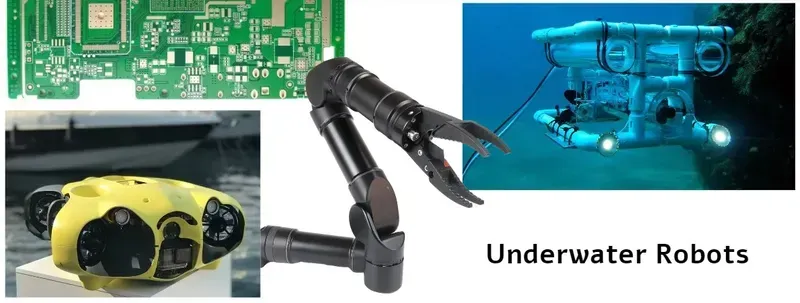
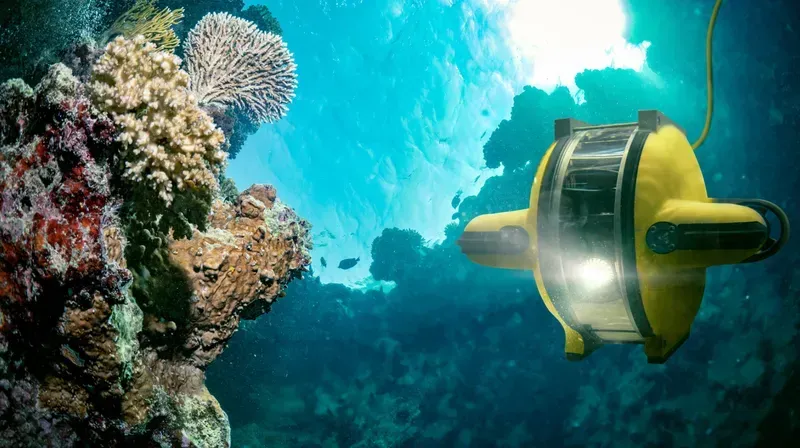
In the depths of our oceans and seas, underwater operation robots are increasingly vital for exploration, research, and maintenance. These robots, often called remotely operated vehicles (ROVs), require highly reliable and durable electronic systems to function effectively. At the heart of these systems lies the printed circuit board (PCB), the backbone for all electronic components. Zero One Solution Limited understands the critical role of PCBs in underwater robotics and offers comprehensive PCB solutions tailored to meet the demanding requirements of these applications. How do you ensure your ROV's PCB can withstand the extreme pressures and corrosive environments? Let's dive into the world of underwater operation robot PCB solutions and explore how Zero One Solution is leading the way.
Introduction to Underwater Operation Robots and PCBs
Underwater Robot PCB
The advent of underwater operation robots has revolutionized various marine industries, from deep-sea exploration and environmental monitoring to offshore oil and gas inspection and defense applications. These sophisticated autonomous or remotely operated vehicles demand unparalleled reliability and precision, largely dictated by their core electronic systems. At the heart of these systems are Printed Circuit Boards (PCBs), which serve as the fundamental backbone, enabling communication, control, and data processing in the most demanding aquatic environments. The increasing complexity and critical nature of underwater missions underscore the imperative for robust and high-performance PCBs, capable of enduring extreme conditions while maintaining flawless functionality.
What are Underwater Operation Robots? Underwater operation robots, often categorized as Remotely Operated Vehicles (ROVs) or Autonomous Underwater Vehicles (AUVs), are specialized robotic systems designed to perform tasks beneath the water's surface. They are equipped with various sensors, manipulators, and propulsion systems, enabling them to navigate, collect data, and execute complex operations in diverse aquatic environments, from shallow coastal waters to the deepest oceanic trenches. Their applications span scientific research, infrastructure inspection, search and rescue, and resource management.
Why are PCBs Critical for Underwater Robots? PCBs are the central nervous system of underwater robots, housing all electronic components necessary for their operation. They facilitate power distribution, signal routing, data acquisition, and communication between various subsystems like sensors, cameras, thrusters, and control units. Given the harsh underwater conditions, the PCB's design, material, and manufacturing quality directly impact the robot's reliability, longevity, and operational success. Without robust and precisely engineered PCBs, the intricate functionalities of these robots would be impossible to achieve.
What Industries Benefit from Underwater Robotics? Numerous industries leverage the capabilities of underwater robotics. The offshore energy sector utilizes them for pipeline inspection, subsea construction support, and rig maintenance. Scientific research employs them for oceanography, marine biology, and archaeological surveys. Defense and security agencies deploy them for reconnaissance, mine countermeasures, and intelligence gathering. Environmental organizations use them for monitoring water quality, tracking marine life, and assessing ecosystem health. Even aquaculture and search and rescue operations benefit significantly from their advanced capabilities.
Challenges in PCB Design for Underwater Environments
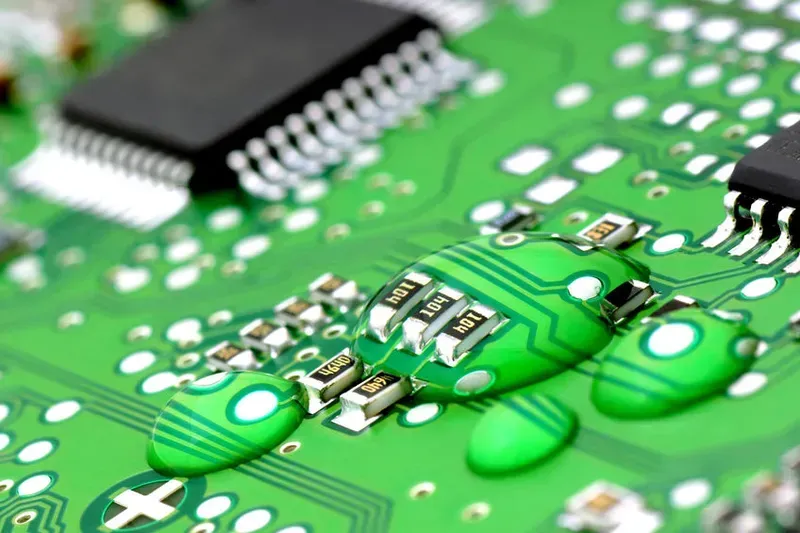
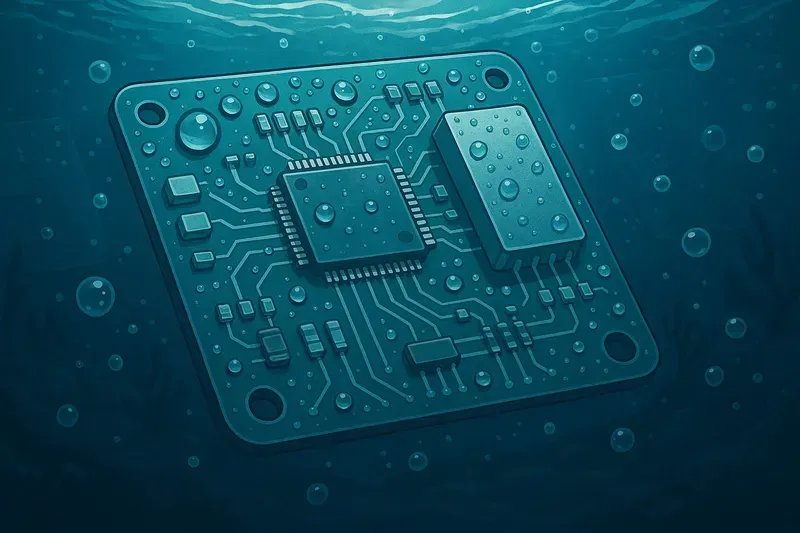
Designing Printed Circuit Boards (PCBs) for underwater operation robots presents a unique set of formidable challenges that demand specialized engineering expertise. Unlike terrestrial or aerial applications, the subsea environment subjects electronic components to extreme conditions including immense hydrostatic pressure, corrosive saline water, and significant temperature fluctuations. These factors critically impact material integrity, signal transmission, and overall system reliability, necessitating a meticulous approach to PCB design and manufacturing to ensure long-term operational success and prevent catastrophic failures.
Challenge Category
Specific Challenge
Impact on PCB Design
Mitigation Strategy
Mechanical Stress
Hydrostatic Pressure
Component crushing, board delamination, voiding in vias/traces.
Robust substrate materials, optimized component placement for pressure distribution, sealed enclosures with pressure equalization.
Chemical Degradation
Corrosion (Saltwater)
Trace oxidation, component degradation, short circuits, signal integrity loss.
Short circuits, leakage currents, signal attenuation.
High-Tg and low-DK/DF laminates, precise impedance control, rigorous sealing, and encapsulation techniques.
Overcoming these hurdles requires a deep understanding of material science, fluid dynamics, and advanced manufacturing processes. For instance, the choice of substrate material is paramount; it must possess excellent dimensional stability under pressure and minimal water absorption. Similarly, the encapsulation and sealing methods are not mere afterthoughts but integral design elements, often involving complex multi-layer protections and specialized potting compounds to create a completely impermeable barrier. Each design decision, from trace width to component selection, must be critically evaluated against the harsh realities of prolonged underwater exposure, ensuring that the PCB not only functions but endures.
Zero One Solution's Expertise in Underwater PCB Solutions
Zero One Solution
At Zero One Solution Limited, our expertise in specialized PCB solutions is rooted in over a decade of dedicated innovation, particularly in challenging environments like underwater operations. We understand that the successful deployment of underwater robots hinges on highly reliable and resilient Printed Circuit Boards. Our comprehensive approach, from rapid prototyping to advanced manufacturing and assembly, ensures that we deliver PCBs capable of withstanding the extreme pressures, corrosive elements, and thermal fluctuations inherent to subsea exploration and industrial applications.
Rapid Prototyping for Accelerated Development Zero One Solution excels in rapid-response R&D prototype manufacturing, enabling clients to quickly test and iterate their underwater robot designs. This agility drastically reduces time-to-market for groundbreaking underwater technologies, providing a significant competitive edge.
Specialized Material Selection for Harsh Environments Our deep understanding of material science allows us to select and implement cutting-edge substrates, coatings, and encapsulants that offer superior resistance to water ingress, chemical corrosion, and hydrostatic pressure, crucial for the longevity of underwater PCBs.
Advanced Manufacturing and Assembly Techniques We employ precision manufacturing and assembly processes tailored for underwater applications, including vacuum lamination, advanced soldering techniques, and robust encapsulation methods like conformal coating and potting, ensuring hermetic sealing and structural integrity.
Rigorous Quality Control and Testing Protocols Every PCB undergoes stringent quality checks, including functional testing under simulated pressure, insulation resistance testing, and accelerated aging tests, to guarantee performance and reliability in the most demanding underwater conditions. Our commitment to ISO 9001 standards ensures consistent excellence.
Global Supply Chain and Strategic Locations With headquarters in Shenzhen and a branch office in Dubai, Zero One Solution leverages a robust global PCBA supply chain network. This strategic positioning ensures timely access to high-quality components and materials, facilitating efficient project execution and global delivery.
Capability
Benefit for Underwater PCBs
Zero One Solution's Approach
Rapid Prototyping
Accelerated design validation & market entry
Dedicated R&D prototyping lines, fast turnaround times
Material Expertise
Enhanced durability & environmental resistance
Extensive knowledge of high-performance polymers & hydrophobic coatings
Precision Manufacturing
Reliable operation in extreme conditions
Automated assembly, vacuum potting, IPC Class 3 standards
Designing Printed Circuit Boards (PCBs) for underwater operation robots presents unique challenges that demand meticulous attention to detail to ensure long-term reliability and functionality in harsh submerged environments. Waterproof PCB design is not merely about sealing; it encompasses a holistic approach involving material science, thermal management, signal integrity, and manufacturing precision to withstand extreme pressures, corrosive elements, and varying temperatures. Neglecting these critical considerations can lead to catastrophic system failures, making a robust and comprehensive design strategy paramount for any successful underwater robotic application.
Material Selection for Submerged Durability The choice of substrate and component materials is foundational for waterproof PCB design. Traditional FR-4 may suffice for basic applications, but advanced composites like polyimide or ceramic-filled laminates offer superior moisture resistance, lower dielectric loss, and enhanced thermal stability, crucial for deep-sea or high-pressure environments. Conformal coatings (e.g., acrylic, epoxy, silicone, parylene) and encapsulation materials (e.g., potting compounds, resins) provide additional layers of protection against water ingress, chemicals, and mechanical shock. Gold plating for contacts and traces offers excellent corrosion resistance compared to other finishes like ENIG or HASL, especially in saline conditions.
Component Placement for Optimized Sealing and Heat Dissipation Strategic component placement is vital for both effective sealing and thermal management. Components that generate significant heat should be positioned to allow for efficient heat dissipation, potentially requiring thermal vias or integration with heat sinks that can function effectively in a pressurized, conductive medium like water. Furthermore, components should be placed to facilitate uniform application of conformal coatings and encapsulation materials, avoiding air traps or voids that could compromise waterproofing. Keep high-voltage or sensitive analog components away from board edges where water ingress is most probable.
Trace Routing for Signal Integrity and Corrosion Mitigation Trace routing in waterproof PCBs must balance signal integrity with resistance to environmental stressors. Wider traces and appropriate spacing can improve current carrying capacity and reduce the risk of localized corrosion. Consider using internal layers for critical signal traces to provide additional protection from external contaminants. Differential pairs require careful routing to maintain impedance control and minimize noise. Moreover, avoid sharp angles or tight bends in traces, as these can create stress points during thermal cycling or mechanical shock, potentially leading to delamination or crack formation over time.
Pressure Resilience and Thermal Management Underwater PCBs must endure immense hydrostatic pressure without delamination or component crushing. This necessitates robust board thickness, proper via fills, and potentially internal stiffeners. Thermal management is complex as water is an excellent conductor of heat, but enclosed systems can still overheat. Designing for efficient heat transfer to the housing and selecting components with wide operating temperature ranges are crucial. Utilizing low-power components and optimized power delivery networks can also minimize heat generation.
Connectors and Interfacing Solutions Connectors are often the weakest link in a waterproof system. Utilizing subsea-rated, hermetically sealed connectors (e.g., wet-mateable or dry-mateable depending on application) is imperative. The interface between the PCB and the enclosure through bulkhead connectors must also be impeccably sealed. Gaskets, O-rings, and specialized potting compounds are essential for maintaining the integrity of these critical junctions, preventing water ingress at points where external cables or sensors connect to the internal electronics.
Prevents short circuits, material degradation, and signal loss due to water ingress and chemical reactions.
Component Placement
Even distribution for coating, thermal pathways, isolation of sensitive parts
Ensures complete waterproofing, prevents hotspots, and protects critical electronics from environmental factors.
Trace Routing
Adequate width/spacing, impedance control, internal layers for critical signals
Maintains signal integrity, reduces EMI, and minimizes susceptibility to corrosion or electrical breakdown.
Pressure Resilience
Board thickness, via filling, robust enclosure integration
Prevents physical damage (crushing, delamination) under high hydrostatic pressure.
Thermal Management
Low-power components, efficient heat dissipation to housing, wide operating temp range
Prevents overheating and ensures stable operation in varied underwater temperatures.
Sealing & Connectors
Hermetic connectors, effective potting/gaskets for interfaces
Maintains waterproof integrity, prevents water ingress at critical access points.
Manufacturing and Assembly Processes for Underwater PCBs
Underwater PCB Encapsulation
The manufacturing and assembly of PCBs for underwater operation robots demand specialized processes to guarantee their long-term reliability and durability in harsh marine environments. Beyond standard PCB fabrication, critical steps like conformal coating and encapsulation are essential to protect against the detrimental effects of water ingress, extreme pressure, and corrosive elements, ensuring the operational integrity of these complex electronic systems.
Advanced Substrate Preparation Before components are placed, the PCB substrate undergoes meticulous cleaning and surface treatment to ensure optimal adhesion for subsequent protective layers. This includes plasma cleaning and specialized chemical treatments to remove any contaminants and prepare the surface for robust bonding with coatings and encapsulants.
Precision Component Placement and Soldering Automated precision placement (pick-and-place) ensures accurate positioning of components, critical for maintaining signal integrity and thermal management in a sealed environment. Soldering processes, often utilizing low-void vacuum reflow, minimize air bubbles that could compromise the integrity of protective layers and lead to failures under pressure.
Conformal Coating Application Conformal coating involves applying a thin, protective polymeric film over the assembled PCB. This layer provides an initial barrier against moisture, dust, and chemical contaminants. Common materials include acrylics, epoxies, silicones, and polyurethanes, selected based on the specific environmental stresses (e.g., high humidity, chemical exposure, temperature fluctuations) the underwater robot will encounter.
Encapsulation and Potting For ultimate protection, especially against high pressures and direct water immersion, encapsulation (or potting) is employed. This involves encasing the entire PCB assembly in a protective resin, such as epoxy or silicone. This process creates a solid, impermeable barrier that distributes external pressure evenly and prevents any water penetration, crucial for deep-sea or long-duration missions. Vacuum potting techniques are often used to eliminate air voids within the encapsulant.
Hermetic Sealing Technologies In addition to coating and encapsulation, hermetic sealing technologies are often integrated at the enclosure level. This can involve specialized connectors, O-rings, and sealants to create a completely isolated internal environment for the PCB, protecting it from external elements. This multi-layered defense strategy ensures the highest level of reliability.
Process Step
Primary Goal
Key Considerations for Underwater PCBs
Substrate Preparation
Ensure surface cleanliness and adhesion
Removes microscopic contaminants; crucial for robust coating/encapsulant bonding.
Component Placement & Soldering
Accurate component mounting; reliable electrical connections
Minimize voids; precise alignment for optimal thermal and electrical performance in sealed enclosures.
Material selection (e.g., acrylic, silicone) based on water resistance and chemical inertness; uniform coverage.
Encapsulation/Potting
Ultimate pressure and water ingress protection
Epoxy/silicone resins; vacuum potting to eliminate air bubbles; thermal expansion compatibility with components.
Hermetic Sealing Integration
Total isolation of internal electronics
Specialized connectors, pressure-resistant housings, and robust O-rings/gaskets at the system level.
Quality Control and Testing Procedures for Underwater Operation Robot PCBs
Ensuring the unwavering reliability and longevity of Printed Circuit Boards (PCBs) for underwater operation robots necessitates a stringent and comprehensive suite of quality control and testing procedures. At Zero One Solution Limited, our commitment to excellence is reflected in our meticulous approach, which goes beyond standard industry practices to address the unique and demanding challenges of subsea environments. This rigorous regimen guarantees that every PCB we deliver for underwater applications performs flawlessly under pressure, resisting corrosion and maintaining signal integrity in the harshest conditions.
Visual Inspection and Automated Optical Inspection (AOI) Every PCB undergoes meticulous visual inspection for defects such as solder bridges, open circuits, and component misalignment. This is complemented by Automated Optical Inspection (AOI), which utilizes high-resolution cameras to rapidly scan the board for subtle manufacturing flaws, ensuring precision down to the micron level before protective coatings are applied.
Electrical Testing (ICT & Functional Testing) In-Circuit Testing (ICT) verifies the integrity of individual components and connections, identifying shorts, opens, and missing parts. This is followed by comprehensive Functional Testing, where the PCB is tested under simulated operational conditions to confirm that it meets all specified performance parameters for its role within an underwater robot system.
Pressure Testing (Hydrostatic & Hyperbaric Chambers) A critical phase for underwater PCBs involves pressure testing. Our boards are subjected to hydrostatic and hyperbaric chamber testing, simulating the extreme pressures encountered at varying depths. This process verifies the structural integrity of the PCB, its encapsulation, and all sealed connections, ensuring no ingress or deformation occurs under operational pressure loads.
Corrosion Resistance Testing (Salt Spray & Immersion) Given the highly corrosive nature of saltwater, rigorous corrosion resistance testing is paramount. PCBs are subjected to controlled salt spray tests and prolonged immersion in saline solutions to assess the effectiveness of protective coatings and material selections. This validates their ability to withstand the electrochemical degradation prevalent in marine environments.
Thermal Cycling and Shock Testing Underwater robots often experience significant temperature fluctuations. Our PCBs undergo thermal cycling, rapidly transitioning between extreme hot and cold temperatures to expose potential weaknesses in solder joints, components, and materials due to thermal expansion and contraction. Thermal shock testing further verifies robustness against sudden temperature changes.
Vibration and Shock Testing To simulate the dynamic forces encountered during deployment, operation, and retrieval, PCBs are subjected to vibration and mechanical shock tests. This ensures the physical integrity of components, interconnections, and the overall board structure, preventing failures caused by mechanical stress.
Verify circuit integrity and functional performance
IPC-9252, IEEE 1149.1
Comprehensive ICT and functional tests tailored to application
Pressure Testing
Assess integrity under simulated underwater pressure
ISO 13628-6, API 17A
Custom hydrostatic/hyperbaric chamber testing up to 1000m+ equivalent depth
Corrosion Resistance
Evaluate material and coating resilience to saltwater
ASTM B117 (Salt Spray), MIL-STD-810G Method 509.5
Extended exposure testing for various marine conditions
Thermal Cycling/Shock
Verify reliability under temperature fluctuations
MIL-STD-883 Method 1010, IPC-TM-650
Broad temperature range cycling and rapid thermal transitions
Vibration/Shock
Ensure mechanical robustness against operational stresses
MIL-STD-810G Method 514.7, ASTM D4169
Multi-axis vibration and mechanical shock simulations
Case Studies: Successful Underwater Robot PCB Projects
Underwater Robot Project
The efficacy of robust PCB solutions in underwater robotics is best demonstrated through real-world applications. Zero One Solution Limited has been instrumental in numerous pioneering projects, delivering custom-engineered PCBs that withstand the harshest subsea conditions and ensure the reliable operation of critical systems. Our deep understanding of hydrostatic pressures, corrosive saltwater environments, and extreme temperature fluctuations, combined with advanced manufacturing techniques, translates directly into project success.
Deep-Sea Exploration ROV A leading marine research institute required a highly durable and precise PCB for their next-generation Remotely Operated Vehicle (ROV) designed for deep-sea exploration, reaching depths of up to 6,000 meters. Zero One Solution provided multi-layer PCBs utilizing specialized ceramic-filled laminates and advanced conformal coating techniques. Our solution ensured signal integrity for high-definition cameras and sonar systems, and uninterrupted power delivery to manipulators, even under immense pressure, contributing significantly to the ROV's successful data collection and unprecedented discoveries in previously unexplored abyssal zones.
Autonomous Underwater Vehicle (AUV) for Pipeline Inspection An energy company sought an autonomous underwater vehicle (AUV) capable of long-duration pipeline inspections in challenging offshore environments. The critical requirement was a PCB that could support sophisticated navigation, sensor fusion, and real-time data processing while operating independently for extended periods. We developed custom rigid-flex PCBs that reduced overall system weight and volume, crucial for AUV efficiency, and integrated specialized thermal management layers. The PCBs maintained optimal performance and reliability throughout extensive deployment cycles, leading to significant cost savings and improved safety in infrastructure monitoring.
Subsea Communication Buoy System For a naval defense contractor, we engineered PCBs for a network of subsea communication buoys. These buoys needed to operate continuously for years, enduring dynamic ocean currents and harsh marine biofouling. Our solution involved high-reliability PCBs with enhanced moisture barrier properties and robust component encapsulation, ensuring the longevity and consistent performance of the communication modules and acoustic transceivers. This project underscored our capability to deliver solutions for critical, long-term deployment scenarios where failure is not an option.
Benefits of Choosing Zero One Solution for Underwater PCB Needs
Choosing Zero One Solution Limited for your underwater PCB needs means partnering with a leader dedicated to excellence and innovation. Our deep-seated expertise, unwavering commitment to reliability, and exceptional rapid prototyping capabilities provide a distinct advantage in developing robust and high-performance electronic solutions for challenging subsea environments. We understand the critical nature of these applications and are poised to deliver the precision and durability required for success.
Unparalleled Expertise in Subsea Electronics With over a decade of specialization in high-reliability PCB solutions and a strategic presence in global electronics hubs, Zero One Solution possesses a profound understanding of the unique demands of underwater operations. Our engineering team brings extensive experience in material science, hermetic sealing, thermal management, and signal integrity, ensuring that every PCB is meticulously designed to withstand extreme pressure, corrosive elements, and temperature fluctuations, delivering consistent performance where it matters most. We integrate industry best practices and innovative techniques to overcome the toughest subsea challenges.
Proven Reliability and Durability in Harsh Environments Reliability is paramount for underwater operations, where equipment failure can lead to significant costs and operational delays. Zero One Solution employs rigorous quality control and testing protocols, including advanced pressure testing, salt mist corrosion resistance tests, and thermal cycling, to guarantee the longevity and functional integrity of our PCBs. Our manufacturing processes, incorporating specialized conformal coatings and encapsulation techniques, are specifically engineered to provide superior protection against water ingress and environmental degradation, ensuring sustained performance even in the most unforgiving underwater conditions.
Accelerated Rapid Prototyping for Faster Development Cycles In the fast-paced world of underwater technology, speed to market is a critical differentiator. Zero One Solution's core strength lies in rapid-response R&D prototype manufacturing. Our streamlined processes, advanced equipment, and agile project management enable us to quickly translate complex designs into functional prototypes. This significantly reduces development lead times, allows for swift iterative improvements, and empowers our clients to accelerate their product development cycles, bringing groundbreaking underwater solutions to market with unparalleled efficiency and competitive advantage.
FAQs about Underwater Robot PCB Solutions
Navigating the complexities of underwater robot PCB solutions requires specialized knowledge and meticulous attention to detail. This section addresses common inquiries regarding the design, manufacturing, and testing of PCBs engineered for the demanding underwater environment, providing clarity and expert insights for engineers and project managers.
What are the primary material considerations for underwater robot PCBs? For underwater robot PCBs, primary material considerations include substrates with low moisture absorption (e.g., FR-4 with specialized resins or polyimide), robust solder masks for environmental protection, and often lead-free solders for environmental compliance and improved corrosion resistance. Encapsulation materials like epoxy or silicone compounds are also critical for sealing and protection.
How does Zero One Solution ensure the waterproofing of PCBs for underwater applications? Zero One Solution ensures waterproofing through a multi-faceted approach. This includes precise enclosure design and sealing techniques, application of advanced conformal coatings (e.g., Parylene, acrylics, silicones) to protect components, and full encapsulation using specialized potting compounds to create an impenetrable barrier against water ingress. Rigorous pressure testing after assembly verifies seal integrity.
What testing procedures are essential for validating underwater PCB reliability? Essential testing procedures for validating underwater PCB reliability include hydrostatic pressure testing to simulate operational depths, thermal cycling to assess performance across temperature extremes, salt spray and immersion testing for corrosion resistance, and vibration/shock testing to ensure mechanical integrity during deployment and operation. Insulation resistance and dielectric strength tests are also critical.
What are the common failure modes for PCBs in underwater environments? Common failure modes for PCBs in underwater environments include corrosion of traces and components due to water ingress, delamination of PCB layers caused by hydrostatic pressure, short circuits from moisture, and degradation of insulating materials leading to current leakage. Thermal stress from rapid temperature changes can also induce fatigue and cracks.
How does Zero One Solution balance high-density component placement with thermal management for underwater PCBs? Zero One Solution balances high-density component placement with thermal management in underwater PCBs by utilizing advanced PCB layout techniques, incorporating thermal vias, and designing for efficient heat dissipation to the surrounding environment or integrated heat sinks. Careful selection of low-power components and strategic component spacing also minimizes heat generation. Computational Fluid Dynamics (CFD) simulations are often employed to optimize thermal performance prior to physical prototyping.
In conclusion, the PCB is a critical component in underwater operation robots, and its design and manufacturing require specialized expertise. Zero One Solution Limited provides comprehensive PCB solutions, from design to assembly, ensuring that your ROV's electronic systems are reliable and robust. By choosing Zero One Solution, you gain a partner dedicated to delivering high-quality, waterproof PCB solutions that meet the rigorous demands of the marine environment. Ready to elevate your underwater robotics with reliable PCB solutions? Contact Zero One Solution today to discuss your project requirements and discover how we can help you achieve your goals. Let us help you dive deeper with confidence!