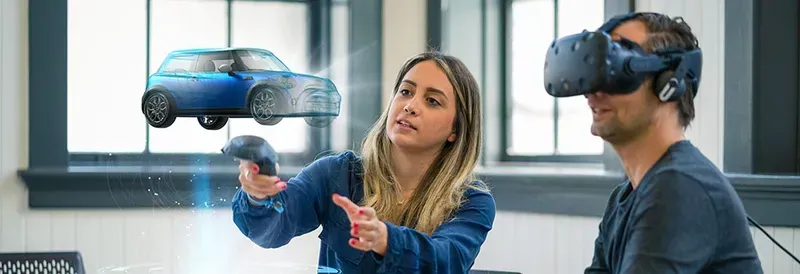
In the rapidly evolving landscape of virtual reality (VR), the underlying hardware plays a pivotal role in delivering immersive and seamless experiences. At the heart of every high-performance VR headset lies a sophisticated motherboard, meticulously designed to integrate complex components while ensuring optimal power efficiency and data processing. As veteran engineers at Zero One Solution Limited, we understand that bringing groundbreaking VR products to market requires not just vision, but also unparalleled expertise in rapid-response R&D prototype manufacturing and a robust global supply chain. How can your innovative VR concepts transcend from design to a tangible, market-ready device with speed and precision? This article delves into how Zero One Solution Limited's comprehensive VR Headset Motherboard Solution empowers innovators to conquer the complexities of hardware development, accelerating your journey from concept to consumer.
The Crucial Role of the VR Headset Motherboard
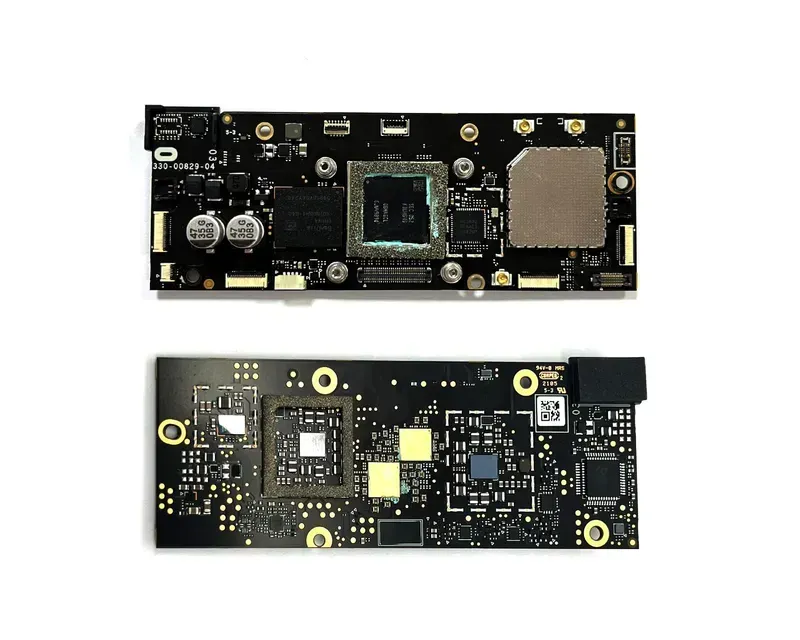
VR Headset Motherboard Close-up
At the heart of every immersive virtual reality experience lies the VR headset motherboard, serving as the central nervous system that dictates performance, power efficiency, and ultimately, user experience. This critical component integrates complex high-speed data processing, advanced graphics rendering, and precise sensor fusion, all within a highly miniaturized form factor. Its design directly impacts the responsiveness of the virtual world, the longevity of battery life, and the overall comfort of the device. The intricate challenges of achieving high-density integration while managing thermal dissipation and electromagnetic compatibility within such compact spaces are paramount in ensuring optimal functionality and a truly seamless VR experience. A meticulously engineered VR headset PCB design is therefore indispensable for translating groundbreaking VR concepts into tangible, high-performing products.
Why is the motherboard considered the "central nervous system" of a VR headset? The motherboard in a VR headset acts as the central hub, integrating and coordinating all essential functions. It processes visual data for displays, manages input from various sensors (head tracking, eye tracking, hand gestures), controls audio, handles power distribution, and facilitates communication with external devices. Without this central processing unit, the individual components would not be able to interact cohesively to create an immersive virtual environment, much like how the nervous system coordinates bodily functions.
Aspect of VR Experience
Motherboard's Role
Impact on User
Performance & Responsiveness
High-speed data processing, low-latency signal routing
Reduces headset bulk and weight, enhancing wearability
Immersion & Fidelity
Integration of advanced display controllers, sensor fusion
Provides realistic visuals and accurate tracking for a believable virtual world
The continuous evolution of VR technology demands motherboards capable of handling exponentially increasing data throughput while maintaining strict power budgets and thermal profiles. As VR headsets become lighter, more powerful, and feature-rich, the role of the motherboard's design in enabling these advancements becomes even more pronounced. Innovators in this space must balance cutting-edge processing capabilities with the physical constraints of wearable technology, a challenge that requires deep expertise in advanced PCB manufacturing and assembly techniques.
Key Design Considerations for VR Motherboards
VR Motherboard Design Blueprint
Designing a robust VR headset motherboard is a complex endeavor that demands meticulous attention to several critical factors, as it directly influences the device's performance, user experience, and overall reliability. The intricate balance of high-speed data handling, efficient power management, effective thermal dissipation, and stringent electromagnetic compatibility within a compact form factor defines the success of a VR headset's core electronics. Zero One Solution Limited, with its deep expertise in advanced PCB solutions, recognizes that these considerations are not merely technical specifications but fundamental pillars underpinning the immersive virtual reality experience.
What are the primary challenges in high-speed data transmission for VR motherboards? The primary challenges involve maintaining signal integrity across numerous high-speed interfaces (e.g., DisplayPort, MIPI DSI, PCIe) for display, sensors, and processing units. This requires meticulous impedance control, crosstalk mitigation, and effective routing strategies to prevent data loss and ensure low-latency, high-bandwidth communication essential for realistic VR experiences.
How crucial is power management in VR headset motherboard design? Power management is paramount in VR headset design, directly impacting battery life, thermal output, and device portability. Efficient power conversion and distribution circuitry are critical to minimize energy consumption, extend usage time, and manage heat generated by high-performance components, ensuring a comfortable and prolonged user experience.
What strategies are employed for thermal dissipation in compact VR motherboards? Effective thermal dissipation in compact VR motherboards often involves a combination of advanced PCB materials with higher thermal conductivity, optimized component placement to avoid hotspots, and passive cooling solutions such as thermal vias and strategically placed heat sinks. For high-performance units, miniature active cooling mechanisms or liquid cooling integration might be considered, though less common in consumer-grade devices.
Why is Electromagnetic Compatibility (EMC) so important for VR headsets? EMC is vital for VR headsets to ensure stable and clear signal transmission without interference from internal components or external sources. Poor EMC can lead to display flickering, sensor inaccuracies, or audio distortion, severely degrading the VR experience. Robust EMC design involves proper grounding, shielding, filtering, and careful layout to minimize electromagnetic interference (EMI) and maintain signal integrity.
How does Zero One Solution Limited address miniaturization and high-density integration in VR PCB design? Zero One Solution Limited leverages its advanced manufacturing capabilities and engineering expertise to achieve optimal miniaturization and high-density integration in VR PCB design. This includes utilizing multi-layer PCBs, fine-pitch component placement, advanced routing techniques, and innovative material selection. Our rapid prototyping allows for quick iteration and optimization of compact designs, ensuring maximum functionality within minimal spatial constraints without compromising performance or reliability.
Zero One Solution Limited's Expertise in VR Headset Motherboard Solution
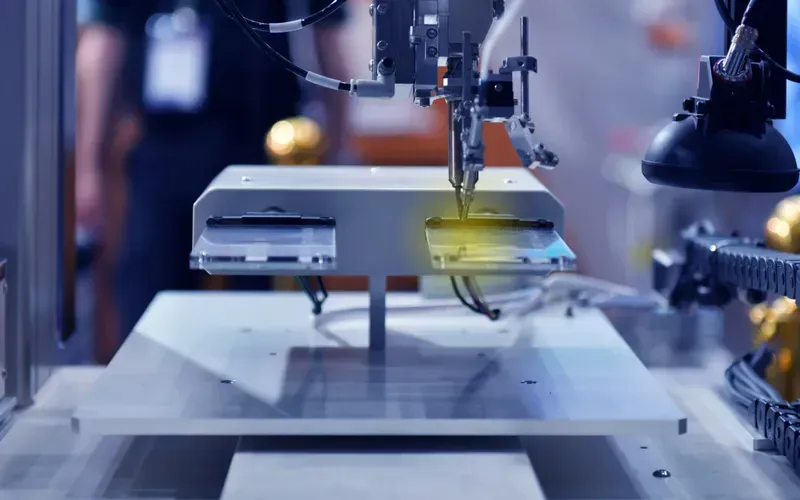
Engineer Operating PCB Manufacturing Equipment
At Zero One Solution Limited, we bring over a decade of specialized expertise to the forefront of VR headset motherboard solution development and manufacturing. Our deep understanding of the intricate demands of immersive technology positions us as a leader in providing comprehensive PCB solutions, from initial design conceptualization to final assembly. We are adept at navigating the complexities inherent in VR hardware, ensuring our solutions meet the rigorous standards for performance, miniaturization, and reliability essential for cutting-edge VR experiences. Our commitment to innovation and precision makes us the ideal partner for accelerating your next-generation VR product to market.
Our Full-Spectrum One-Stop Service for VR Motherboards We offer an unparalleled 'one-stop service' that encompasses every phase of VR motherboard development. This integrated approach ensures seamless project execution, from schematic design and PCB layout to component sourcing, advanced manufacturing, and rigorous testing. By consolidating these critical steps under one roof, we eliminate coordination complexities and significantly reduce time-to-market for even the most complex AR/VR electronics manufacturing projects. This streamlined process minimizes risks, enhances communication, and guarantees a consistent level of quality throughout the entire product lifecycle.
Advanced Manufacturing Capabilities for VR PCB Assembly Our state-of-the-art facilities are equipped with the latest technologies for high-density interconnect (HDI) PCB fabrication, fine-pitch component placement, and advanced soldering techniques crucial for miniaturized VR motherboards. We leverage automated optical inspection (AOI), X-ray inspection, and in-circuit testing (ICT) to ensure the highest levels of quality and reliability. Our manufacturing processes are optimized for precision and efficiency, capable of handling the intricate multi-layer designs and high-speed signal integrity requirements characteristic of VR headset PCBs.
Rigorous Quality Assurance and Testing Protocols Quality is paramount in VR headset motherboard solution. Our comprehensive quality assurance framework includes stringent material inspection, in-process quality control, and exhaustive functional testing. We implement strict environmental testing protocols, including thermal cycling and vibration testing, to ensure the durability and long-term performance of our VR motherboards under various operating conditions. This meticulous attention to detail ensures that every PCB delivered meets or exceeds industry standards and client expectations.
Expertise in Complex VR Headset PCB Design Challenges The Zero One Solution Limited engineering team possesses deep expertise in addressing the unique challenges of VR headset PCB design, including managing high-speed data interfaces (e.g., DisplayPort, MIPI DSI), optimizing power efficiency for extended battery life, and designing for effective thermal dissipation within compact enclosures. We are also proficient in electromagnetic compatibility (EMC) design to prevent interference and ensure signal integrity, which is critical for a flawless VR user experience. Our experience allows us to innovate and overcome the most demanding technical hurdles in VR hardware development.
Our Rapid Prototyping Advantage for VR Hardware
VR Device Rapid Prototyping
In the fast-paced realm of virtual reality, speed to market is paramount. Zero One Solution Limited's rapid prototyping capabilities are a critical differentiator, empowering VR hardware innovators to accelerate their development cycles and gain a significant competitive edge. Our agile approach to VR motherboard prototyping allows for swift design iterations and robust testing, transforming conceptual designs into market-ready solutions with unprecedented efficiency.
Accelerated Development Cycle Our rapid-response R&D prototype manufacturing significantly condenses the traditional development timeline for VR headsets. By streamlining the PCB fabrication and assembly process, we enable our clients to test new VR motherboard designs, validate functionalities, and refine specifications much faster than conventional methods.
Efficient Iteration and Validation The ability to quickly iterate on VR motherboard designs is crucial for optimizing performance, power efficiency, and form factor. Our rapid prototyping services facilitate multiple design cycles in a short period, allowing for immediate feedback and continuous improvement, which is vital for complex VR hardware development.
Reduced Time-to-Market By minimizing delays in the prototyping phase, we directly contribute to a faster time-to-market for innovative VR products. This accelerated deployment helps our clients capitalize on emerging trends and consumer demands, securing an early market position and maximizing revenue potential in the highly competitive VR landscape.
Cost-Effective Prototyping for VR Headsets Despite the speed, our rapid prototyping services remain highly cost-effective. By identifying and rectifying design flaws early in the development process, we help mitigate expensive re-spins and reduce overall project costs, ensuring a more economical path to mass production for VR headset motherboards.
Seamless Transition to Mass Production Our rapid prototyping services are intrinsically linked to our comprehensive manufacturing capabilities. Once a VR motherboard prototype is validated, we ensure a seamless transition to full-scale production, maintaining consistency and quality throughout the entire product lifecycle.
Global Supply Chain and Strategic Locations
Zero One Solution Limited's strategic global presence, anchored by our Shenzhen headquarters and Dubai branch, is a cornerstone of our ability to deliver superior VR Headset Motherboard Solutions. This dual-hub model leverages the unparalleled manufacturing ecosystem of Shenzhen, the world's electronics heartland, while the Dubai office provides a vital bridge for broader market access and enhanced logistical agility across global supply chains. This strategic positioning ensures not only efficient component sourcing and robust manufacturing capabilities but also seamless support and rapid response for our international clientele, solidifying our reputation as a globally integrated PCBA partner.
Strategic Hubs for Global Reach Our headquarters in Shenzhen, China, provides immediate access to a vast network of high-quality component suppliers and advanced manufacturing facilities, enabling rapid prototyping and mass production with unparalleled efficiency. The Dubai branch extends our logistical reach, serving as a critical nexus for distribution, sales, and localized support for clients across diverse regions, ensuring a truly global operational footprint for VR hardware development and manufacturing.
Location
Primary Advantage
Benefit for Clients
Strategic Role
Shenzhen, China (Headquarters)
World's Electronics Manufacturing Hub
Access to comprehensive supply chain, rapid prototyping, advanced manufacturing
Core production & R&D center for VR headset PCBs
Dubai, UAE (Branch Office)
Strategic Gateway for Global Markets
Enhanced logistics, localized support, international market access
Distribution hub & client liaison for global VR solutions
This dual-continent operational model significantly de-risks the supply chain for complex VR projects. By maintaining strong relationships with a diversified network of suppliers in both hemispheres, Zero One Solution Limited mitigates potential disruptions and ensures a consistent flow of high-quality components critical for the intricate VR Headset Motherboard Solution. This global supply chain resilience translates directly into faster project completion times, reduced costs, and ultimately, a more competitive edge for our clients in the rapidly evolving VR market.
Tailored Solutions for Diverse VR Applications
VR Headset in Diverse Applications
At Zero One Solution Limited, we understand that the "one-size-fits-all" approach simply doesn't apply to the rapidly evolving VR landscape. Our VR Headset Motherboard Solution is inherently designed for adaptability, allowing for deep customization to meet the precise demands of a wide spectrum of VR applications. This flexibility ensures that whether your project targets immersive consumer gaming, high-precision industrial training, or critical medical simulations, our core motherboard technology can be meticulously tailored to optimize performance, manage costs, and adhere to specific form factor requirements, proving crucial for diverse VR motherboard design challenges.
Application Segment
Key Motherboard Customization Focus
Typical Requirements
Consumer VR (Gaming/Entertainment)
Optimized for high refresh rates, low latency, efficient power consumption, and cost-effectiveness.
Emphasis on reliability, robust connectivity, specific sensor integration, and durability for demanding environments.
Enhanced EMI/EMC compliance, wider operating temperature range, specific I/O for industrial sensors/haptics, long-term component availability, secure boot.
Medical VR (Surgery/Therapy)
Prioritization of extreme reliability, precision, regulatory compliance (e.g., FDA), and specialized data handling.
Redundancy features, stringent signal integrity, low-noise power delivery, compliance with medical device standards (e.g., IEC 60601), high-resolution imaging support.
Enterprise VR (Collaboration/Visualization)
Focus on enterprise-grade security, network connectivity, and scalable performance for professional applications.
Advanced security features (e.g., TPM), multiple network interfaces (Wi-Fi 6E, 5G), robust data encryption, modular design for upgrades.
How does Zero One Solution tailor motherboard designs for different VR performance tiers? We achieve this through modular design principles and strategic component selection. For high-performance tiers, we integrate more powerful processors (e.g., XR2 Gen 2, custom ASICs), higher-bandwidth memory (LPDDR5/5X), and advanced display pipeline components. For cost-sensitive or lower-tier applications, we select optimized SoCs and streamline peripheral interfaces, ensuring a balance between capability and cost without compromising core functionality.
What specific challenges arise when designing VR motherboards for industrial or medical applications? Industrial and medical VR motherboards face challenges beyond consumer-grade devices, including the need for enhanced environmental robustness (temperature, vibration), stringent electromagnetic compatibility (EMC) to prevent interference with critical equipment, long-term reliability and component lifecycle management, and strict regulatory compliance (e.g., ISO 13485, IEC 60601 for medical devices). Our design process incorporates these standards from concept to production.
How does the form factor of a VR headset influence the motherboard solution? Form factor is a critical driver for VR motherboard design, directly impacting PCB size, layer count, component placement, and thermal management strategies. Smaller, lighter headsets demand highly miniaturized, multi-layer PCBs with densely packed components, often requiring advanced HDI (High-Density Interconnect) techniques. We meticulously optimize layouts to fit within constrained envelopes while ensuring signal integrity and thermal efficiency, often leveraging flexible or rigid-flex PCB technologies.
Can Zero One Solution integrate custom sensors or peripherals into the VR motherboard? Absolutely. Our expertise in custom PCB design includes the seamless integration of a wide array of specialized sensors (e.g., eye-tracking, haptics, biometric sensors) and custom peripherals. This involves not only electrical interface design but also firmware integration and driver development support, ensuring these components function optimally within the overall VR system architecture. Our rapid prototyping capabilities are particularly beneficial for quickly validating these integrations.
What is the importance of power management customization for varied VR applications? Power management customization is paramount because different VR applications have vastly different energy consumption profiles and battery life requirements. For untethered consumer VR, maximizing battery life is key, requiring highly efficient power management ICs and dynamic voltage and frequency scaling. For tethered industrial or medical systems, reliable and stable power delivery, often with redundancy, is prioritized to ensure uninterrupted operation and data integrity. Our solutions are designed to optimize for specific power budgets and operational demands.
In conclusion, the journey from an innovative VR concept to a market-ready product is fraught with complex hardware challenges, but with Zero One Solution Limited as your strategic partner, these hurdles become opportunities. Our VR Headset Motherboard Solution, backed by a decade of expertise in rapid prototyping, comprehensive PCB design, manufacturing, and assembly, provides the critical foundation for your next-generation virtual reality devices. We are committed to empowering your innovation, ensuring your VR headsets deliver unparalleled performance, reliability, and user experience. Don't let hardware complexities slow your progress. Visit Zero One Solution Limited today to discover how our end-to-end VR motherboard solutions can accelerate your product development cycle and bring your visionary VR products to life with exceptional efficiency and quality. Let's build the future of VR, together.