The humble 1N4148 diode, a cornerstone of electronics, is a tiny component with a big impact. Like a one-way street for electricity, this diode allows current to flow in one direction while blocking it in the other. Much like how traffic flows through a well-designed city, the 1N4148 ensures smooth and controlled operation in circuits, especially in high-speed switching applications. This article delves into the core function, specifications, and uses of the 1N4148, making the complex world of electronics more understandable.
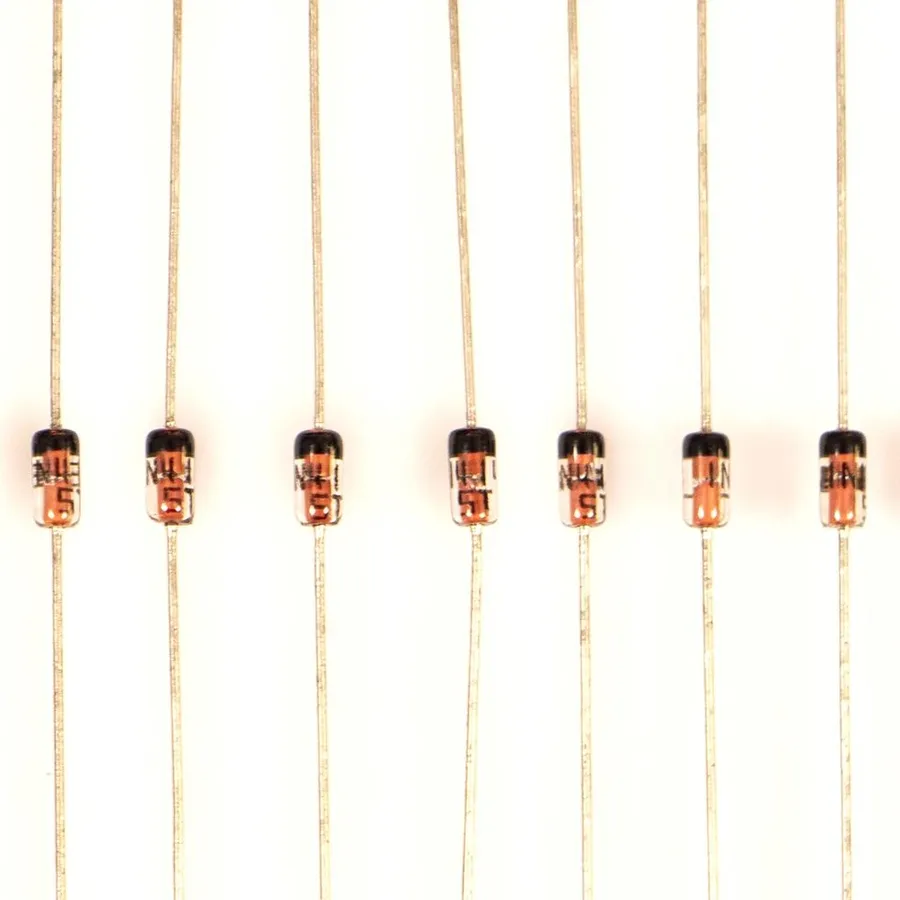
The 1N4148 is a ubiquitous silicon epitaxial planar diode, renowned for its rapid switching capabilities and widespread use in diverse electronic circuits. This small but mighty component is fundamental in many applications, from simple rectification to complex signal processing, thanks to its ability to quickly transition between conducting and non-conducting states.
The 1N4148 diode is a silicon epitaxial planar diode characterized by its fast switching capabilities. Understanding its key specifications is crucial for effective circuit design and application. These parameters determine its suitability for various electronic tasks.
| Parameter | Value | Description |
|---|---|---|
| Peak Reverse Voltage (VRM) | 100V | Maximum reverse voltage the diode can withstand without breakdown. |
| Forward Current (IF) | Typically 200-300mA | Continuous forward current the diode can safely conduct. This varies slightly based on manufacturer and conditions. |
| Maximum Surge Current (IFSM) | 1A (for 1µs pulse) | Peak current the diode can handle during a short surge. This is essential for transient protection. |
| Forward Voltage Drop (VF) | Typically 0.6 to 1V | Voltage drop across the diode when forward biased, varies with forward current. |
| Reverse Recovery Time (trr) | Typically 4 ns | Time taken for the diode to switch off from conducting to non-conducting, a key parameter for high-speed switching applications. |
| Operating Temperature Range | -65°C to +175°C | Temperature range within which the diode operates reliably. |
These specifications are generally applicable but may vary slightly between manufacturers. Consulting the specific datasheet from your supplier is advisable for precise design calculations. The low forward voltage drop and fast reverse recovery time are critical factors for the diode's use in high-speed switching applications.
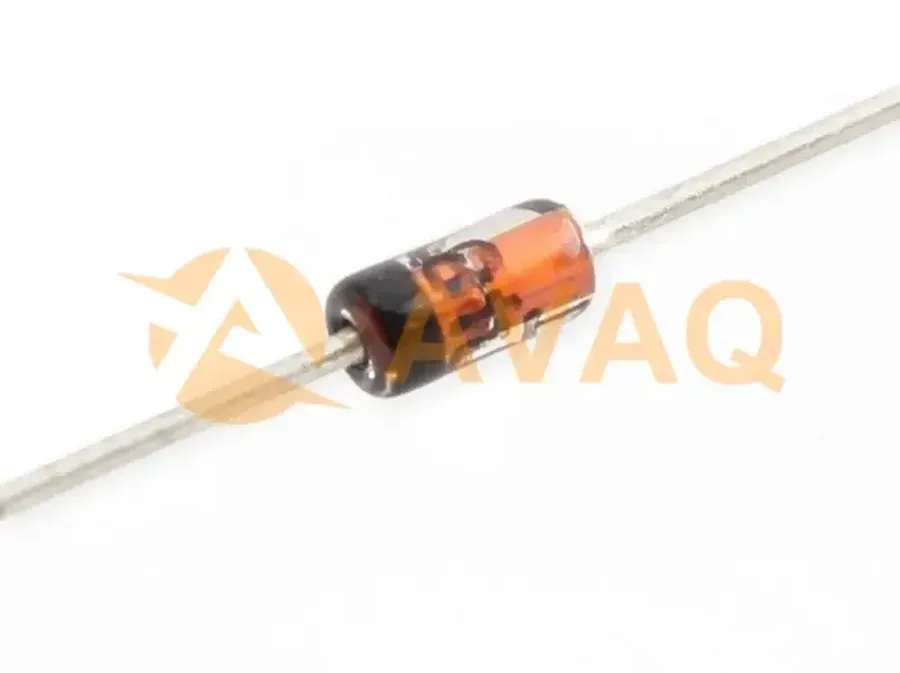
The 1N4148 and 1N914 diodes are frequently cited as equivalents in the realm of electronics, primarily due to their nearly identical electrical characteristics and performance metrics. Both are silicon epitaxial planar diodes, designed for high-speed switching applications, rendering them interchangeable in many circuit designs.
| Parameter | 1N4148 | 1N914 |
|---|---|---|
| Peak Reverse Voltage | 100V | 75V |
| Forward Current (Continuous) | 200mA | 200mA |
| Forward Voltage Drop | ~0.7-1.0V | ~0.7-1.0V |
| Maximum Surge Current | 1A | 1A |
| Reverse Recovery Time | 4 ns | 4 ns |
| Operating Temperature | -65 to +175 °C | -65 to +175 °C |
While subtle differences exist, particularly in peak reverse voltage ratings (100V for 1N4148 vs 75V for 1N914) and some variation among manufacturer specifications, these diodes generally perform equivalently in most typical applications. The crucial feature they share is their fast switching capability, with a reverse recovery time in the range of 4 nanoseconds.
The interchangeable nature of these diodes makes them invaluable in situations where only one is readily available. When selecting a replacement, designers should ensure the chosen diode meets or exceeds the original diode's specifications to prevent circuit malfunction or component failure.
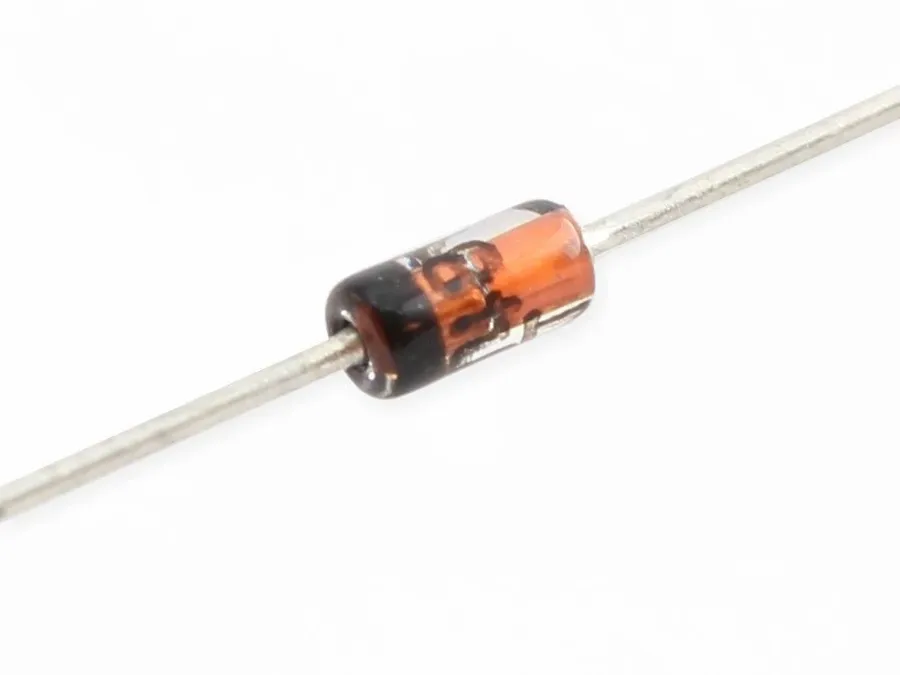
The 1N4148 diode, owing to its fast switching speed and reliable performance, finds application in a wide array of electronic circuits. Its versatility stems from its ability to efficiently rectify signals and act as a protective element, making it an essential component in both basic and complex electronic designs.
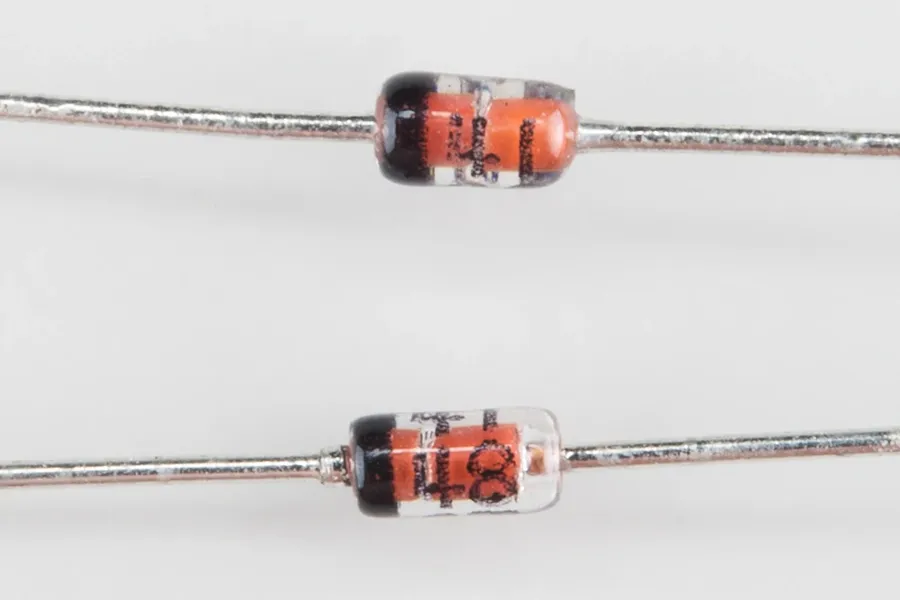
Identifying a 1N4148 diode accurately is crucial for correct circuit assembly and troubleshooting. This section provides clear guidance on visually distinguishing a 1N4148 diode based on its markings, packaging, and physical characteristics, ensuring you can confidently differentiate it from other similar components.
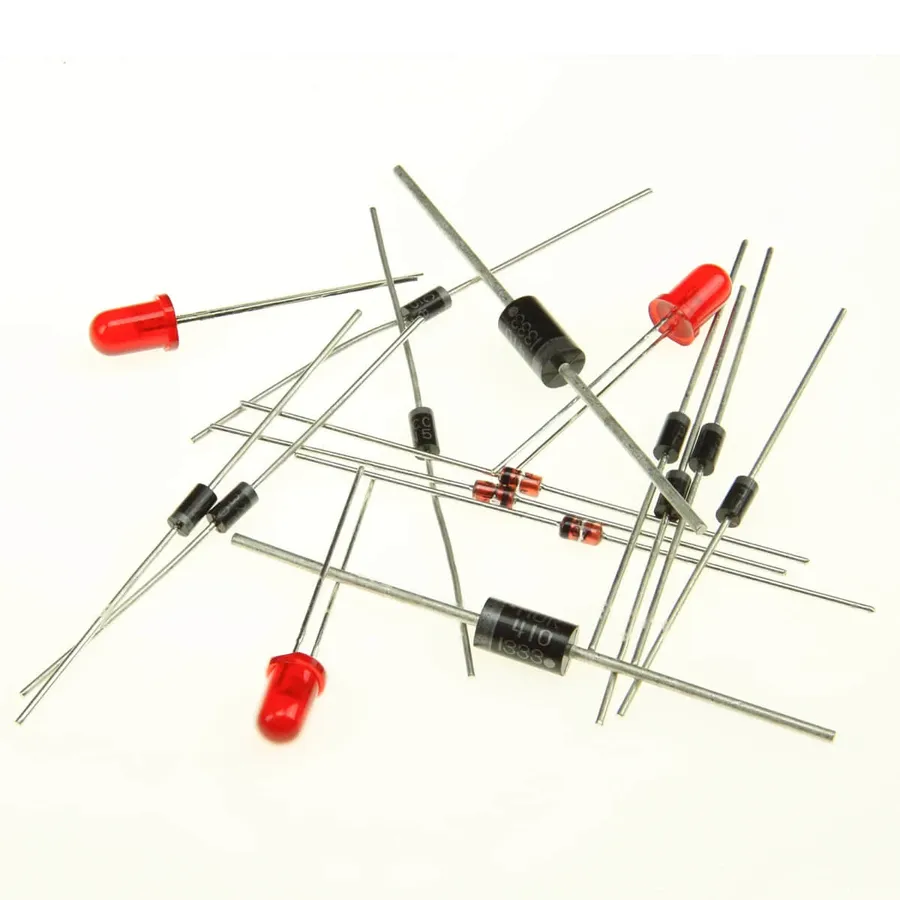
While the 1N4148 diode is widely available and cost-effective, situations may arise where an equivalent or replacement is needed. This section explores suitable alternatives, considering both through-hole and surface-mount device (SMD) options. Understanding these alternatives allows for flexibility in design and ensures project continuity when a specific component is unavailable.
The key considerations when selecting a 1N4148 replacement are the device's forward voltage drop, reverse voltage rating, switching speed, and forward current capacity.
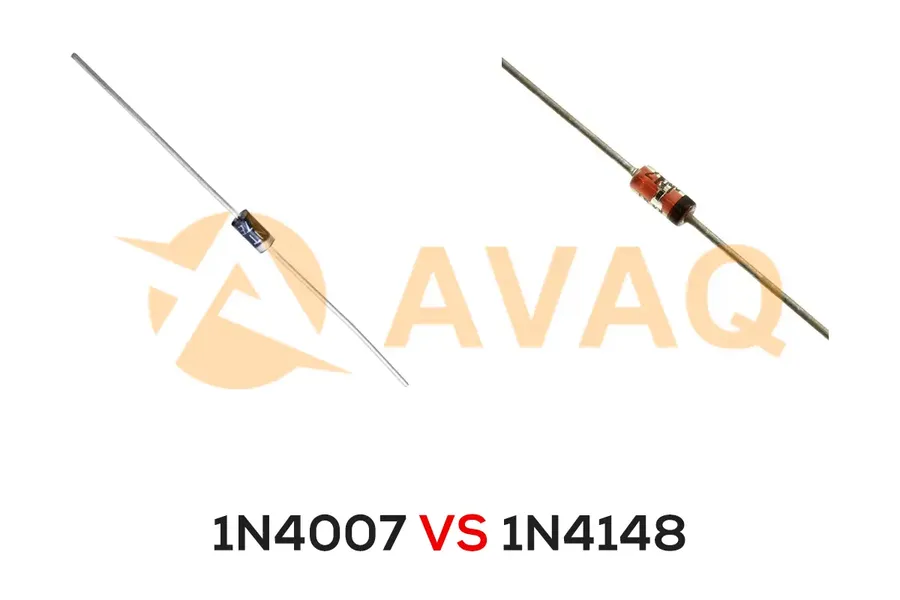
The 1N4148 and 1N4007 are both silicon diodes, but they are designed for different applications due to their distinct electrical characteristics. The 1N4148 is optimized for high-speed switching, while the 1N4007 is designed for rectifier applications. This difference stems from their internal construction and doping levels, resulting in different performance profiles.
| Parameter | 1N4148 | 1N4007 |
|---|---|---|
| Type | Fast Switching Diode | General Purpose Rectifier |
| Peak Reverse Voltage (PRV) | 100 V | 1000 V |
| Forward Current (IF) | 200 mA | 1 A |
| Reverse Recovery Time (trr) | 4 ns | 2-5 µs |
| Typical Forward Voltage Drop (VF) | 0.72 V | 1.1 V |
| Applications | High-speed switching, signal processing | AC to DC rectification, general power applications |
Key differences to note include the 1N4148's significantly faster reverse recovery time (trr), making it suitable for high-frequency switching circuits. The 1N4007, with its higher reverse voltage and current capabilities, is commonly used in power supply rectification. The trade-off between these diodes involves switching speed versus the ability to handle higher voltages and currents. Therefore, selection must be carefully considered based on the specific demands of the application.
This section addresses common queries regarding the 1N4148 diode, providing clear and concise answers to help users understand its function, applications, and alternatives.
The 1N4148 diode's ubiquitous presence in electronics is a testament to its reliability and effectiveness as a switching diode. Understanding its specifications, applications, and equivalents allows electronics enthusiasts and professionals alike to effectively integrate it into their projects. Whether you are building a simple rectifier circuit or a complex digital logic board, knowledge of the 1N4148 is essential. It's a vital component in the world of diodes, much like a universal connector in the realm of circuits, ensuring components work together harmoniously. The 1N4148, a simple yet powerful diode, will remain an indispensable part of the electronics landscape for years to come.

