In the intricate world of electronics, circuits are built from two fundamental types of components: active and passive. These aren't just fancy labels; they define how a component interacts with electrical energy. Active components, like the conductors of an orchestra, introduce energy or control signals, while passive components, like the instruments themselves, either store or dissipate this energy. Understanding this dichotomy is essential for anyone delving into electronics, from hobbyists tinkering at home to seasoned engineers designing complex systems. This article unravels the intricacies of active and passive components, providing a comprehensive guide that empowers you to grasp their differences, functions, and real-world applications.
Defining Active and Passive Components
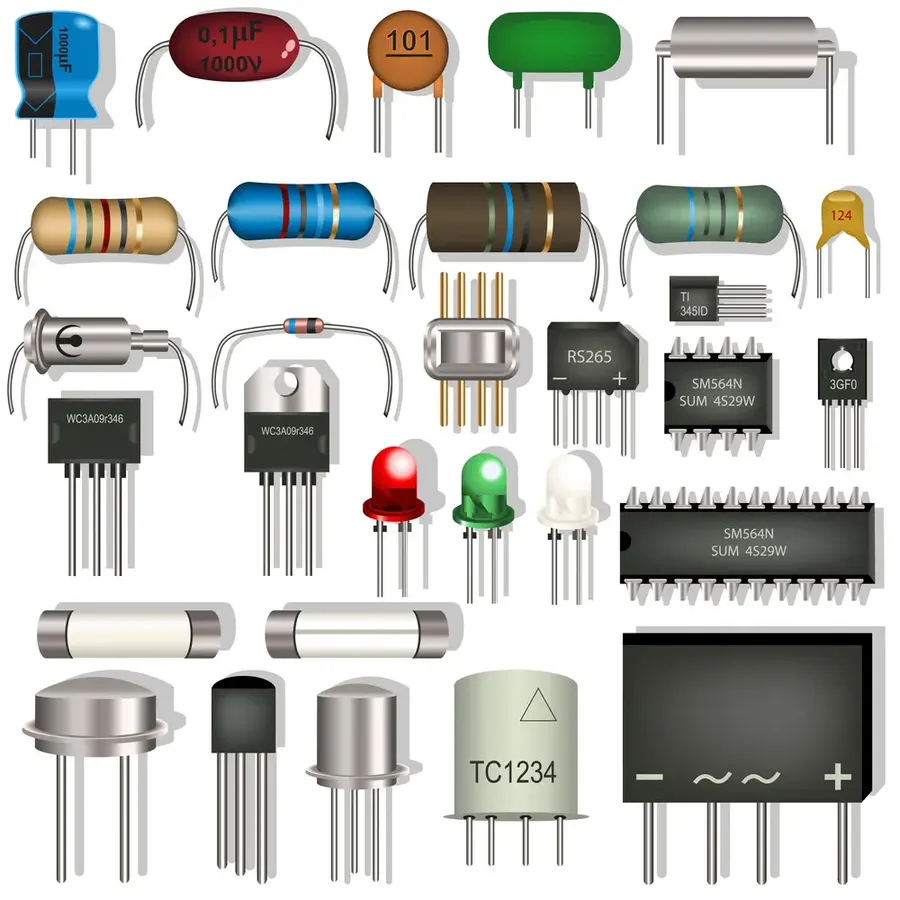
Circuit Board Components
In electronics, components are fundamentally categorized as either active or passive based on their ability to control or modify electrical energy. Active components are characterized by their ability to generate, amplify, or control electrical signals using an external power source. Passive components, conversely, cannot introduce energy into a circuit; instead, they store, dissipate, or manage existing electrical energy. This distinction is crucial to understanding circuit design and behavior.
Active Components: The Energy Providers
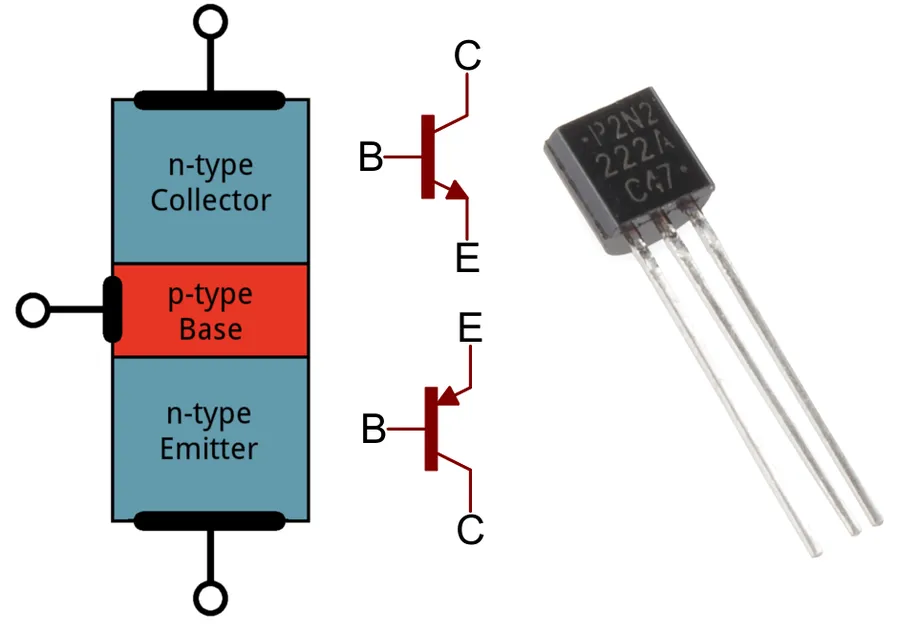
Transistor
Active components are the driving force in electronic circuits, distinguished by their capacity to introduce power, amplify signals, or perform switching operations. Unlike passive components, they require an external energy source to function and actively manipulate electrical signals to achieve desired circuit behaviors. These components are fundamental for complex operations, enabling functions from basic amplification to intricate digital processing.
Active components are integral to almost every functional circuit, providing the power and control necessary for complex operations. Their behavior is characterized by their ability to modify the signal's energy, not just store or dissipate it. This characteristic makes them essential for signal processing, amplification, and switching within electronic systems.
Active components are the driving force behind electronic circuits, capable of controlling and manipulating electrical signals. These components introduce power or amplify signals within a circuit, and their functionality is inherently dependent on an external power source. Understanding the characteristics and applications of each active component is crucial for designing functional and efficient circuits.
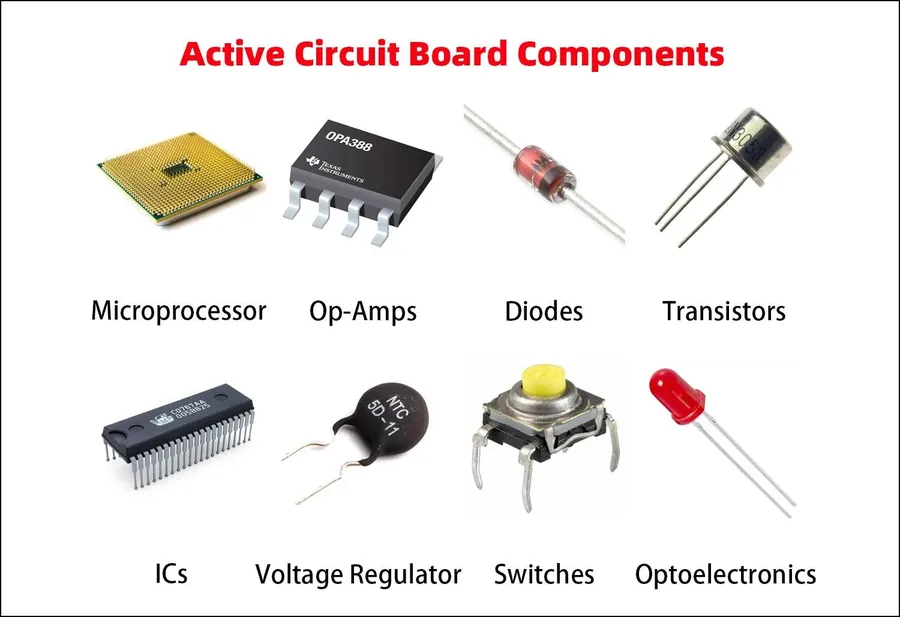
Transistors (BJT, MOSFET) Transistors, including Bipolar Junction Transistors (BJTs) and Metal-Oxide-Semiconductor Field-Effect Transistors (MOSFETs), are semiconductor devices used for switching and amplification of electronic signals. BJTs control current flow using a small base current, while MOSFETs are voltage-controlled devices, typically used in high-speed switching and amplification scenarios.
Diodes Diodes are two-terminal semiconductor devices that allow current to flow primarily in one direction. While they have several applications, such as rectification and voltage regulation, their most critical function is that of a one-way switch of current. While some may argue about diodes being active or passive, this is only because they exhibit non-linear behavior, they still require power and are widely considered active components within the field of electronic engineering.
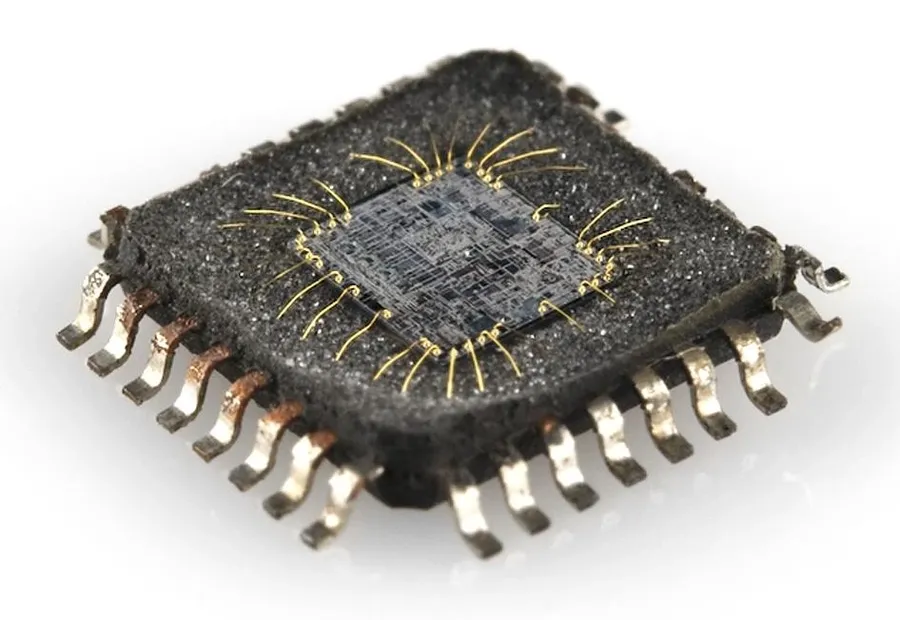
Integrated Circuits (ICs) Integrated circuits are complex electronic circuits fabricated on a single semiconductor chip. They may contain thousands to billions of active and passive components interconnected to perform a specific function, from simple logic gates to complex microprocessors. ICs operate with an external power source, enabling complex operations.
Operational Amplifiers (Op-Amps) Operational amplifiers are high-gain electronic voltage amplifiers with differential inputs and a single output. They are used for performing a wide range of operations, including amplification, filtering, and mathematical operations, actively manipulating voltage signals and require an external power source to function.
Thyristors Thyristors, including Silicon Controlled Rectifiers (SCRs), are semiconductor devices acting as high-speed electronic switches. They are typically used in high-power applications to switch or control the flow of current. They require an external power source, demonstrating the core characteristic of active components.
Passive Components: The Energy Handlers
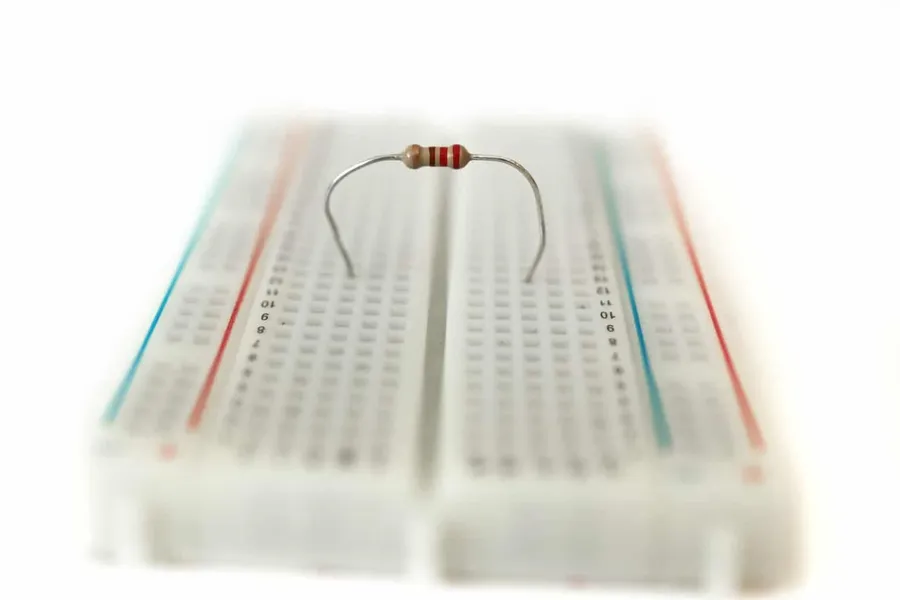
Resistors
Passive components are fundamental elements in electronic circuits, distinguished by their ability to manage electrical energy without requiring an external power source. These components either store energy, dissipate it, or impede the flow of current. Their primary role is to ensure stability within the circuit by managing energy flow.
Passive components are essential for various functions, including filtering, impedance matching, energy storage, and current limiting. Unlike active components, they cannot amplify or switch electronic signals but instead, play a crucial role in shaping and controlling them.
Examples of Passive Components
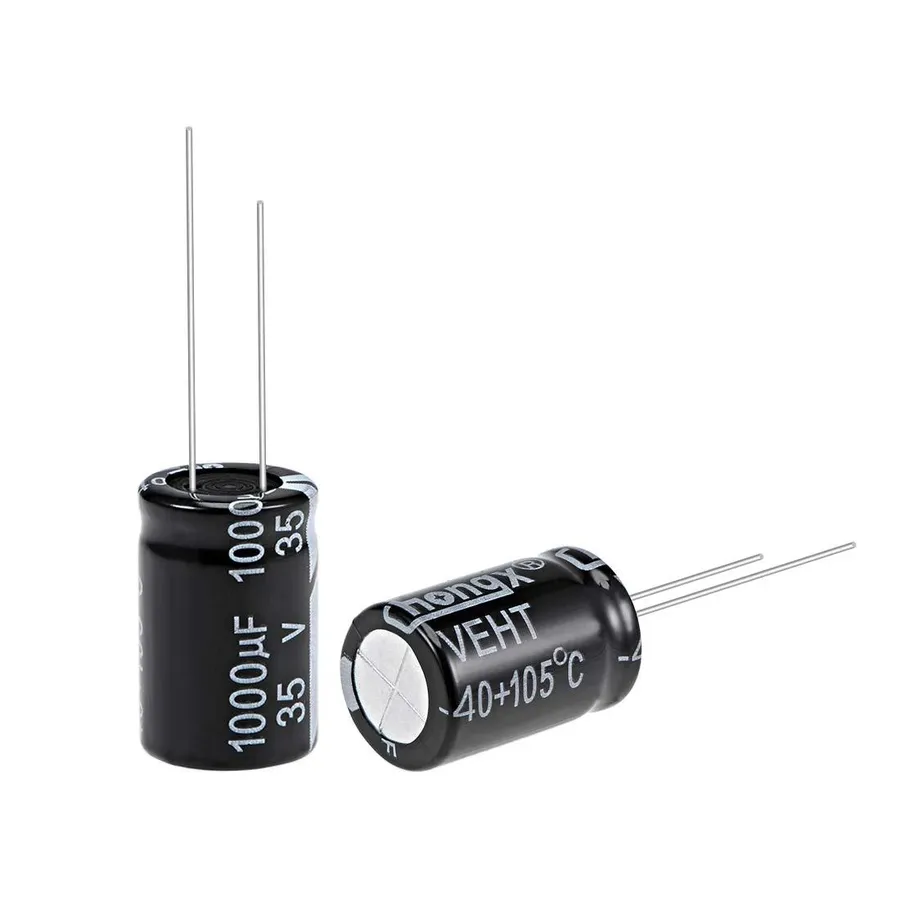
Capacitors
Passive components are fundamental elements in electronic circuits, primarily responsible for storing, dissipating, and controlling electrical energy without requiring an external power source. They are crucial for shaping the behavior of a circuit by managing current flow, voltage levels, and energy storage. The following details the roles of resistors, capacitors, inductors and transformers.
Resistors Resistors oppose the flow of electrical current, converting electrical energy into heat. They are used to limit current, divide voltage, and provide bias in circuits. The resistance is measured in ohms (Ω), with higher resistance impeding current more strongly. Resistors are crucial for setting proper operating conditions within a circuit.
Capacitors Capacitors store electrical energy in an electric field, acting like temporary batteries. They are used for filtering, decoupling, and energy storage in various electronic circuits. The capacitance is measured in farads (F), indicating the capacitor's ability to store charge. Capacitors are essential for smoothing voltage fluctuations and filtering out unwanted frequencies.
Inductors Inductors store energy in a magnetic field when current flows through them. They resist changes in current flow and are used in filters, tuning circuits, and energy storage. Inductance is measured in henries (H). Inductors are critical for blocking high-frequency signals while allowing low-frequency signals to pass, as well as for energy transfer in power supplies.
Transformers Transformers transfer electrical energy from one circuit to another through magnetic induction, typically changing voltage levels. They are used for stepping up or stepping down voltage in power distribution, signal isolation, and impedance matching. Transformers are essential for optimizing power delivery and isolating circuits for safety.
Component
Function
Unit
Typical Application
Resistor
Opposes current flow
Ohms (Ω)
Current limiting, voltage dividing
Capacitor
Stores energy in an electric field
Farads (F)
Filtering, decoupling, energy storage
Inductor
Stores energy in a magnetic field
Henries (H)
Filtering, tuning circuits
Transformer
Transfers electrical energy between circuits, changes voltage
N/A
Voltage transformation, isolation
Active vs. Passive Components: A Comparative Analysis
Integrated Circuit
Understanding the fundamental differences between active and passive components is crucial for effective circuit design. Active components fundamentally control and direct energy, while passive components manage existing energy by storing, dissipating, or regulating it. This distinction dictates their roles and power requirements within electronic circuits.
Maintain or reduce the overall energy of a circuit
Frequently Asked Questions About Active and Passive Components
This section addresses common questions regarding active and passive electronic components, offering clear and concise explanations to enhance understanding. These fundamental elements form the bedrock of electronics, and differentiating between them is crucial for effective circuit design and analysis.
What are active components, and can you provide examples? Active components are electronic elements that can control the flow of electrical energy, often by amplifying or switching signals. They require an external power source to operate. Examples include transistors (BJTs, MOSFETs), diodes, integrated circuits (ICs), operational amplifiers (op-amps), and thyristors. These components actively modify electrical signals.
What exactly are passive components? Passive components are electronic elements that do not require an external power source to operate and cannot introduce net energy into a circuit. They store or dissipate energy. Key examples include resistors, capacitors, inductors, and transformers. These components manage electrical energy without adding power to the circuit.
How do active components differ from passive components? The primary difference lies in their ability to control energy. Active components can generate power, amplify signals, or switch current, thus requiring an external power supply. Passive components, in contrast, only store or dissipate energy and do not require an external power source to operate, they are primarily used for impedance matching, filtering, and energy storage.
Is an LED considered an active or passive component? An LED (Light Emitting Diode) is classified as an active component. Although it emits light and doesn't amplify the signal, it requires a power source to operate and it modifies electrical energy into light energy. Active components are defined by this ability to control or convert energy from one form to another using an external power source.
Can a circuit function with only passive components? A circuit composed exclusively of passive components cannot amplify or generate power. It can manage, filter, and manipulate existing signals but cannot create new ones or compensate for power loss. Active components are necessary for signal generation, amplification and switching functionalities in a circuit.
What are some everyday examples where active and passive components are used together? Almost all electronic devices such as smartphones, computers, and televisions rely on the synergistic use of both active and passive components. For example, the power supply and audio amplifier in a smart phone utilizes a large number of active and passive components; passive components for energy storage, filtering and impedance matching, and active for amplification and signal control.
Practical Applications of Active and Passive Components
Electronic Devices
Active and passive components are the fundamental building blocks of virtually all electronic devices, working in concert to achieve complex functionalities. Their combined characteristics dictate the overall behavior and performance of these systems, and understanding their applications is crucial to comprehending how electronics function in everyday life.
Consider the ubiquitous smartphone. It contains a complex interplay of both types of components. Active components, such as the processing chip (integrated circuit), the display driver (another type of IC), and the power amplifier (often a transistor), actively manipulate the electrical signals to process information, display visuals, and transmit data, respectively. Meanwhile, passive components, such as resistors, capacitors, and inductors, are integral to ensuring the stability of the power supply, tuning the radio frequency signal for wireless communication, filtering noise, and storing energy. This synergy is essential for the smartphone's operation.
Further applications are highlighted below, each emphasizing the interplay of active and passive components.
Power Supplies: Active components like voltage regulators control and convert power from the main source, while passive components like capacitors filter the output, ensuring a stable and clean power supply. Resistors set current limits and act as voltage dividers.
Audio Amplifiers: Operational amplifiers (Op-Amps) boost the audio signals (active components), while resistors and capacitors set the gain and frequency response, allowing for sound reproduction at audible levels (passive components).
Radio Frequency (RF) Circuits: Transistors are utilized as amplifiers and switches (active), while inductors and capacitors are used in tuned circuits to select the desired frequency and filter out interference for wireless communication (passive components).
LED Lighting: LEDs actively emit light when energized, while resistors are included to limit the current flowing through these devices and prevent damage(passive). Integrated circuits (ICs) can be employed for more advanced dimming or color control features.
Motor Control Circuits: Transistors can be used to control the speed and direction of motors (active), while capacitors and inductors aid in mitigating voltage spikes and smoothing current flow (passive).
Sensor Systems: Transistors and Op-Amps amplify weak sensor signals (active), while resistors and capacitors are used to tune and filter noise from the signal (passive).
Advancements and Future Trends in Active and Passive Components
Flexible PCB
The landscape of both active and passive components is undergoing rapid evolution, driven by the ever-increasing demands of modern electronics. Current trends emphasize enhancing power efficiency, reducing component size (miniaturization), and expanding functionality to meet the needs of emerging technologies. These advancements are not isolated but are deeply interconnected, influencing each other and shaping the future of electronic systems.
Below are key trends that are shaping the development of active and passive components:
Power Efficiency Improvements Active components are increasingly designed to operate with minimal power consumption, reducing energy waste and heat generation. Similarly, passive components are being developed with lower losses to maximize the overall efficiency of electronic systems. For instance, wide-bandgap semiconductors like GaN and SiC in active devices are enabling higher efficiencies and power densities. Simultaneously, low-ESR capacitors and low-loss inductors are becoming more prevalent in passive components.
Miniaturization and Integration Driven by the proliferation of portable devices and IoT applications, there's a strong push towards smaller and more integrated components. Active components, like microprocessors and memory, are shrinking in size due to advancements in semiconductor manufacturing. Similarly, passive components are also miniaturizing through advancements like multi-layer ceramic capacitors and thin-film resistors, often integrated directly into substrates to create compact, highly efficient systems.
Enhanced Functionality Both active and passive components are evolving to perform more complex functions. Active components are becoming more versatile with features like integrated sensing and wireless communication capabilities. Passive components are now designed to have tunable characteristics, which can dynamically change their parameters in response to external stimuli, enabling greater flexibility and optimized performance in electronic circuits. Examples include varistors, tunable inductors, and switchable capacitors.
Advanced Materials The use of novel materials is pivotal in achieving these advancements. Active components are benefiting from materials with higher electron mobility and breakdown voltages (such as 2D materials). For passive components, advancements in ceramics, polymers, and magnetic materials are leading to better performance in terms of energy storage, loss reduction, and thermal stability.
Sustainable and Eco-Friendly Components There's a growing demand for sustainable electronics, driving the development of more environmentally friendly active and passive components. This includes using recyclable materials, reducing the use of harmful substances, and designing components that have a longer lifespan, reducing electronic waste and its environmental impact.
The convergence of these trends signifies a dynamic shift in the way electronic systems are being designed and manufactured. These future advancements aim to produce smaller, more powerful, and energy-efficient devices with enhanced performance and longevity. This will have a major impact on areas such as consumer electronics, industrial automation, healthcare, and sustainable energy.
The dance between active and passive components forms the very foundation of modern electronics. Active components, as the conductors of energy, and passive components, as the facilitators of it, each play their vital roles. Through understanding their differences, functionalities, and how they interact with each other, you're not just learning about individual components; you're grasping the fundamental language of electronics. As technology evolves, these components will become even more sophisticated, enabling us to innovate in new and exciting ways. Whether you're a seasoned professional or a budding enthusiast, this deeper understanding is a crucial step towards mastering the ever-evolving world of electronics.