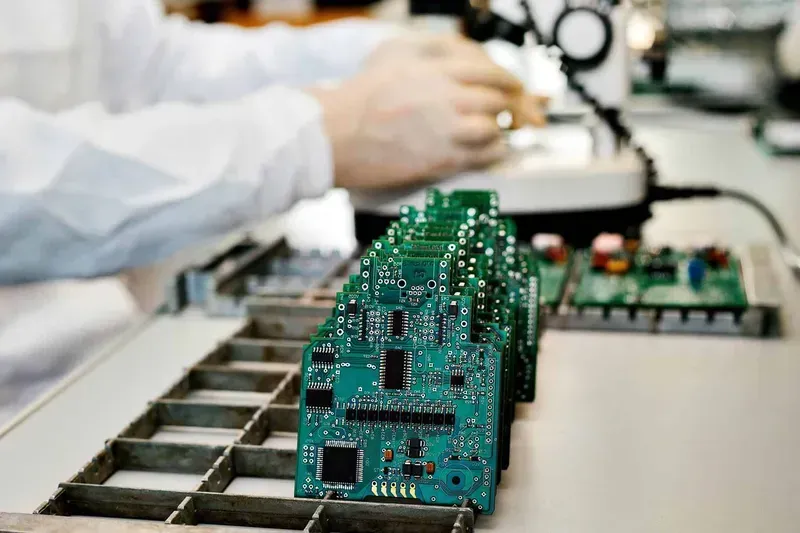
In the rapidly evolving landscape of modern agriculture, the integration of drone technology has revolutionized farming practices. Agricultural drones, equipped with advanced sensors and imaging systems, offer farmers unprecedented insights into crop health, field conditions, and overall farm management. At the heart of these sophisticated aerial vehicles lies the flight control system, a critical component that relies on a high-performance Printed Circuit Board (PCB). Zero One Solution Limited understands the unique demands of agricultural drone technology and provides specialized PCB solutions to ensure optimal flight control and system reliability. This article delves into the intricacies of agricultural drone flight control PCB solutions, exploring their design considerations, manufacturing processes, and the benefits they bring to precision agriculture.
Introduction to Agricultural Drone Flight Control Systems
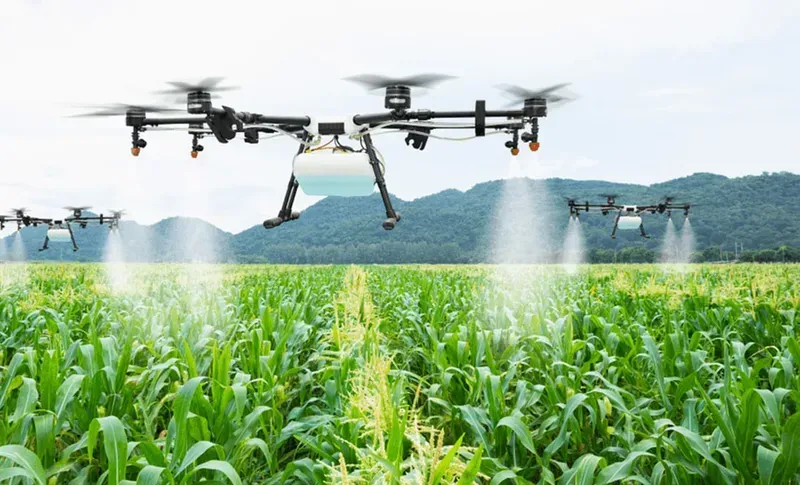
Agricultural drone in field
Agricultural drones have revolutionized modern farming, enabling precision agriculture through tasks like crop spraying, monitoring, and data collection. At the core of every high-performing agricultural drone lies its flight control system, a sophisticated integration of hardware and software where the Printed Circuit Board (PCB) serves as the foundational backbone, orchestrating every command and sensor input critical for stable, efficient, and reliable aerial operations in demanding agricultural environments.
Enhanced Efficiency and Precision Agricultural drones significantly boost operational efficiency by precisely applying pesticides, fertilizers, and water, reducing waste and environmental impact. The flight control PCB ensures accurate navigation and controlled dispensing, leading to healthier crops and increased yields. For instance, studies show that precision spraying can reduce chemical usage by up to 30% compared to traditional methods.
Data-Driven Farm Management Equipped with advanced sensors, agricultural drones collect vital data on crop health, soil conditions, and irrigation needs. The integrity of this data relies heavily on the robust performance of the flight control PCB, which processes and transmits information for intelligent farm management decisions. This allows farmers to identify issues early and apply targeted interventions, optimizing resource allocation.
Addressing Labor Shortages and Safety Concerns Drones offer a scalable solution to agricultural labor shortages, automating repetitive and hazardous tasks. By operating autonomously, they minimize human exposure to harmful chemicals and reduce the physical demands of fieldwork, enhancing worker safety. The reliability of the flight control system, underpinned by its PCB, is paramount for safe and autonomous operation in diverse agricultural landscapes.
Environmental Adaptability and Durability Agricultural drones operate in challenging conditions, from extreme temperatures and humidity to dusty and corrosive environments. The flight control PCB must be engineered for exceptional durability and resilience, ensuring consistent performance despite these external stressors. This includes considerations for conformal coatings and robust component selection to withstand vibrations and moisture.
Processes sensor data (NDVI, thermal), maintains stable hover
Livestock Management
Real-time tracking, health monitoring
Manages flight for wide area surveillance, communicates data
Irrigation Optimization
Efficient water distribution
Coordinates flight with multispectral imagery for water stress mapping
Planting/Seeding
Automated, high-precision seeding
Ensures accurate seed placement, manages flight stability during dispersal
Key Requirements for Agricultural Drone Flight Control PCBs
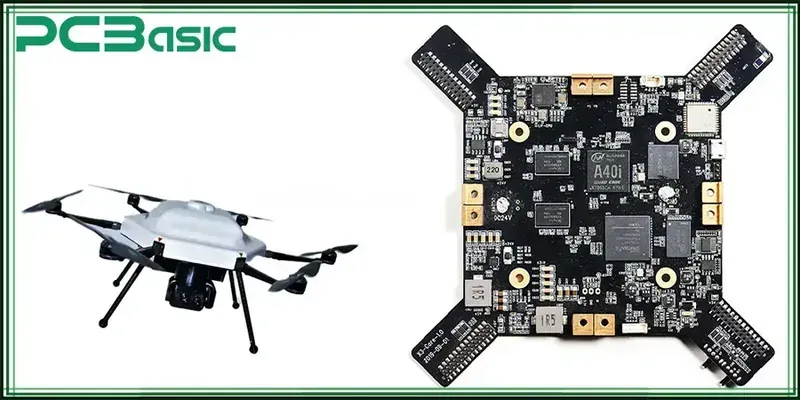
Agricultural drone PCB close-up
The operational efficacy and longevity of agricultural drones hinge critically on the robustness and precision of their flight control PCBs. Unlike standard electronic applications, these PCBs face unique and formidable challenges in the agricultural environment, demanding a specialized approach to design and manufacturing. Understanding these key requirements is paramount for developing solutions that ensure reliable, high-performance drone operations in the field.
Requirement Category
Specific Demands
Impact on PCB Design
Environmental Resistance
Extreme temperatures (-20°C to 50°C), high humidity, dust, corrosive agrochemicals (pesticides, fertilizers), UV exposure.
Requires specialized conformal coatings (e.g., acrylic, epoxy, urethane), robust sealing, and corrosion-resistant soldermasks to prevent short circuits and material degradation. Material selection must consider UV stability.
Vibration and Shock Tolerance
Constant high-frequency vibrations from propellers and engines; sudden impacts from hard landings or accidental collisions.
Demands enhanced mechanical integrity. Components must be securely anchored (underfill, staking, low-profile designs). Board stiffness is critical, often achieved through thicker laminates or specific material weaves (e.g., high Tg FR-4). Trace routing must avoid sharp corners to mitigate stress points.
Signal Integrity & EMC
High-speed data transmission for GPS, sensors, and communication links; susceptibility to electromagnetic interference (EMI) from motors and power systems.
Crucial for accurate navigation and control. Requires careful impedance matching, differential pair routing, ground plane optimization, shielding, and strategic component placement to minimize crosstalk and noise. Power integrity (PI) is also vital for stable voltage delivery to sensitive ICs.
Power Management Efficiency
Handling high current draws for motors and payloads; efficient power distribution to maximize flight time and battery life.
Robust power planes, appropriate trace widths for high current, and efficient voltage regulation modules (VRMs). Thermal management becomes critical to dissipate heat generated by power components, often necessitating copper pours and thermal vias.
Miniaturization & Weight
Limited space within drone frames; need to minimize overall weight for extended flight duration and increased payload capacity.
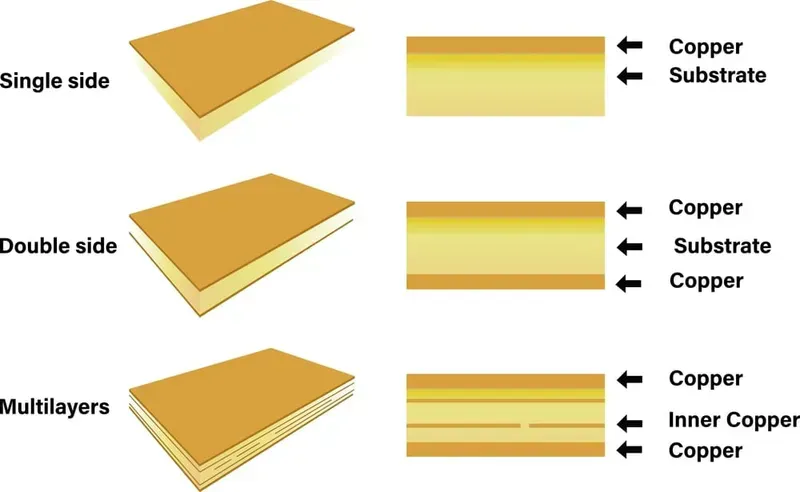
High-density interconnect (HDI) technology, smaller component footprints (0201, 01005 packages), and multi-layer boards (e.g., 8-12 layers) are employed. Thinner core materials can reduce weight while maintaining structural integrity.
Reliability & Durability
Continuous operation in harsh conditions; long operational lifespan for cost-effectiveness.
Selection of high-reliability components (automotive-grade or aerospace-grade), rigorous testing (HALT/HASS), and robust manufacturing processes. IPC Class 2 or 3 standards are often mandated.
Design Considerations for Optimal Performance
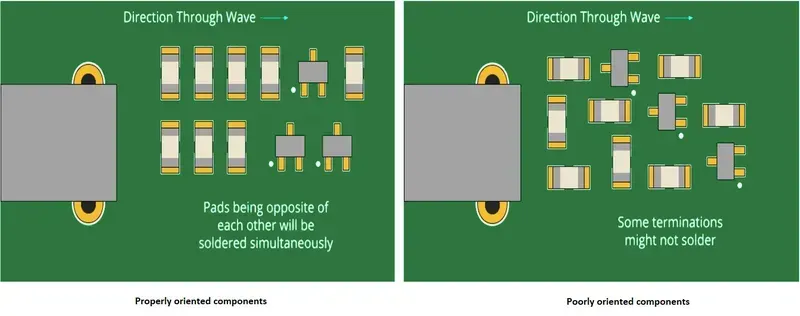
PCB component placement
Achieving optimal performance in agricultural drone flight control PCBs necessitates meticulous attention to design considerations, ensuring robust functionality and reliability in demanding field conditions. The cornerstone of superior PCB performance lies in strategic component placement, precise signal routing, and effective thermal management. These critical design elements directly impact signal integrity, power efficiency, and the overall longevity of the flight control system, which is paramount for the consistent and accurate operation of agricultural drones, thereby maximizing their utility in precision farming.
Component Placement Strategy Strategic component placement minimizes signal path lengths, reduces electromagnetic interference (EMI), and optimizes thermal dissipation. Critical components such as microcontrollers, IMUs (Inertial Measurement Units), and power management ICs should be placed to reduce noise coupling and ensure stable power delivery. For instance, high-frequency components should be isolated from sensitive analog circuits, and decoupling capacitors should be placed as close as possible to IC power pins to filter noise effectively. Proper component spacing also facilitates efficient heat dissipation, preventing localized hotspots that can degrade performance or lead to premature component failure. Adherence to IPC-2221 standards for component clearance and spacing is crucial for manufacturability and reliability.
Signal Routing and Integrity Signal integrity is paramount for accurate data acquisition and control in flight systems. Design practices include using controlled impedance traces for high-speed signals (e.g., communication buses like SPI, I2C, CAN, and high-frequency sensor data lines) to prevent reflections and signal degradation. Differential pair routing with tight coupling and matched lengths is essential for sensitive signals to minimize common-mode noise. Ground planes and power planes should be robust and continuous to provide low impedance paths for return currents and reduce ground bounce. Careful consideration of trace width, spacing, and via selection is critical to minimize parasitic inductance and capacitance, which can impact signal quality at high frequencies. For example, maintaining a clear path for ground return current beneath high-speed traces helps preserve signal integrity and reduce radiated emissions, a key factor in passing EMC/EMI compliance tests like CISPR 32/35.
Utilize thermal vias, copper pours, and heat sinks; analyze thermal profiles early in design. According to JEDEC standards, operating components within their specified temperature ranges significantly extends their lifespan (e.g., a 10°C reduction in operating temperature can double component lifespan).
Power Integrity
Ensures stable voltage supply, reduces noise, prevents brownouts.
Implement robust power planes, sufficient decoupling capacitance, and proper power filtering (e.g., using LDOs or switching regulators where appropriate).
Layer Stack-up Optimization
Improves signal integrity, reduces EMI, provides clear return paths.
Use dedicated ground and power planes, separate high-speed signals on different layers with shielding, and strategically place sensitive analog circuits.
import pcbnew

board = pcbnew.LoadBoard("flight_controller.kicad_pcb")

# Example: Checking component placement for critical ICs
for component in board.GetModules():
    if "IMU" in component.GetReference() or "MCU" in component.GetReference():
        pos = component.GetPosition()
        print(f"Critical component {component.GetReference()} at {pos.x},{pos.y}")
        # Further checks for nearby decoupling caps, thermal vias, etc. can be automated

# Example: Basic check for differential pair routing
# (Requires more advanced parsing or specialized DRC rules in real tools)
# This is illustrative, actual tools like Altium, Cadence Allegro have built-in capabilities.

print("Design considerations for Agricultural Drone Flight Control PCBs are critical for reliability.")
Material Selection for Durability and Reliability
PCB material sample
The operational environment of agricultural drones, characterized by exposure to dust, moisture, pesticides, and varying temperatures, necessitates the selection of robust PCB materials to ensure unparalleled durability and long-term reliability of the flight control system. The choice of substrate, copper foil, and solder mask significantly influences the PCB's performance under stress, its lifespan, and resistance to environmental degradation. Strategic material selection is not merely a design choice; it is a critical engineering decision that underpins the agricultural drone's ability to operate consistently and effectively in demanding field conditions, directly impacting mission success and ROI.
Material Type
Key Properties for Agricultural Drone PCBs
Impact on Durability & Reliability
FR-4 (Standard)
Good electrical insulation, cost-effective, widely available.
Adequate for many applications, but may lack superior thermal and moisture resistance for extreme agricultural environments. Susceptible to delamination under high thermal cycles or prolonged moisture exposure, potentially compromising signal integrity over time.
Enhanced resistance to thermal cycling and high operating temperatures, crucial for drones exposed to direct sunlight or intensive processing. Reduces risk of board warping or component stress during operation.
Material Type
Key Properties for Agricultural Drone PCBs
Impact on Durability & Reliability
Polyimide
Excellent thermal stability, superior chemical resistance, high flexibility (for flex/rigid-flex PCBs).
Ideal for compact, irregularly shaped flight control modules. Offers exceptional resistance to harsh chemicals like pesticides and extreme temperatures, extending operational life in corrosive agricultural settings.
Material Type
Key Properties for Agricultural Drone PCBs
Impact on Durability & Reliability
Ceramic (Alumina/Aluminum Nitride)
Exceptional thermal conductivity, high rigidity, low thermal expansion coefficient.
Provides superior heat dissipation for high-power components in flight controllers, preventing overheating and improving component lifespan. Offers high dimensional stability, crucial for precise sensor alignment and maintaining signal integrity in vibration-prone environments.
Material Type
Key Properties for Agricultural Drone PCBs
Impact on Durability & Reliability
Solder Mask (Epoxy/Liquid Photoimageable)
Protection against oxidation, short circuits, and environmental contaminants.
Crucial for protecting copper traces from moisture, dust, and chemicals encountered in agricultural fields. A high-quality, chemically resistant solder mask ensures long-term electrical insulation and prevents corrosion of the PCB.
Material Type
Key Properties for Agricultural Drone PCBs
Impact on Durability & Reliability
Copper Foil (ED/RA)
Conductivity, current carrying capacity, adhesion to substrate.
Electrolytic Deposited (ED) copper is standard; Rolled Annealed (RA) copper offers superior flexibility and fatigue resistance, beneficial for flex-PCBs or applications with continuous vibration, preventing trace cracking.
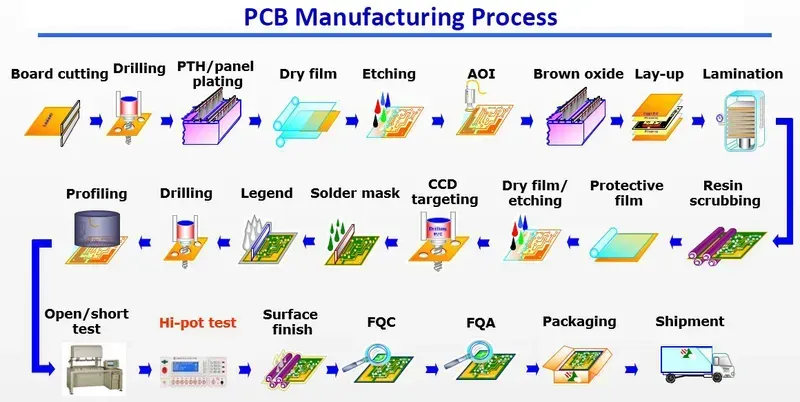
Manufacturing Processes and Quality Control
PCB manufacturing process
The precision and reliability of Agricultural Drone Flight Control PCBs are directly attributable to stringent manufacturing processes and robust quality control. From initial design validation through final product delivery, every stage is critical to ensuring these PCBs withstand the demanding conditions of agricultural operations. Advanced manufacturing techniques, coupled with rigorous testing protocols, guarantee the performance and longevity essential for reliable drone flight and mission success. This meticulous approach minimizes field failures and maximizes operational efficiency, directly impacting agricultural productivity.
PCB Prototyping and Iteration Rapid prototyping is the cornerstone of agile development for agricultural drone PCBs. This phase involves quickly fabricating initial board designs to validate functionality, identify potential issues, and refine layouts. Iterative prototyping, often utilizing advanced technologies like multi-layer fabrication and fine-pitch component assembly, allows for swift design improvements based on real-world performance tests. Zero One Solution Limited excels in rapid prototyping, enabling our clients to accelerate their R&D cycles and bring innovative agricultural drone solutions to market faster.
Automated Manufacturing and Assembly Modern PCB manufacturing for flight control systems relies heavily on automation to achieve high precision and consistency. This includes automated solder paste printing, high-speed pick-and-place machines for component mounting (SMT), and reflow soldering. Automated Optical Inspection (AOI) and Automated X-ray Inspection (AXI) systems are integrated inline to detect defects such as misaligned components, solder bridges, and voids, ensuring superior assembly quality and reducing human error. This automation is crucial for producing the complex, high-density PCBs required for advanced flight controllers.
Quality Control Stage
Key Activities
Purpose
Incoming Material Inspection
Verify raw material specifications (laminates, copper foil, solder paste)
Ensure materials meet required standards for durability and electrical performance
Simulate harsh agricultural environments to assess long-term reliability
Functional Testing (FCT)
Simulate actual flight control signals and power flows
Verify complete functionality of the assembled PCB under operational conditions
Final Visual Inspection
Thorough visual check for cosmetic defects and assembly quality
Ensure aesthetic and structural integrity before packaging and shipping
Zero One Solution Limited's commitment to quality control extends beyond standard practices. We implement a comprehensive Quality Management System (QMS) compliant with international standards, ensuring traceability and accountability at every step. Our state-of-the-art facilities in Shenzhen and global network support this robust quality assurance, providing our partners with highly reliable Agricultural Drone Flight Control PCBs that meet the most demanding industry standards and operational requirements. This dedication to excellence underpins the unparalleled reliability of our solutions.
Zero One Solution Limited: Your Agricultural Drone Flight Control PCB Solution Partner
PCB prototyping service
Zero One Solution Limited stands as a premier PCB solution provider, particularly for the demanding requirements of agricultural drone flight control systems. Our specialized expertise in rapid prototyping and comprehensive one-stop services, from PCB design to manufacturing and assembly, positions us as an indispensable partner for innovators seeking to accelerate their product development and market entry. We empower clients to transform advanced agricultural technologies into tangible, high-performance drone solutions, leveraging our decade-plus of industry leadership and global strategic presence.
Rapid Prototyping for Accelerated Innovation At the core of our offering is our unmatched rapid-response R&D prototype manufacturing. This capability is critical for agricultural drone developers who need to quickly test and iterate their flight control designs. Our streamlined process ensures that concept-to-prototype cycles are minimized, significantly reducing time-to-market and enabling agile development in a fast-evolving industry.
Comprehensive One-Stop PCB Services Zero One Solution Limited provides end-to-end solutions for agricultural drone flight control PCBs. This includes expert PCB design, precision manufacturing, and efficient assembly services. Our integrated approach ensures seamless transitions between each stage, maintaining strict quality control and technical consistency throughout the entire production lifecycle, from initial concept to final functional board.
Strategic Global Supply Chain Network Headquartered in Shenzhen, China, the global hub of electronic manufacturing, and with a branch office in Dubai, we are strategically positioned within a robust global PCBA supply chain network. This extensive network guarantees seamless access to a vast array of high-quality components and materials, enabling us to manage supply chain risks effectively and ensure timely delivery of critical PCB solutions for agricultural drone applications worldwide.
Uncompromising Quality and Reliability For agricultural drone flight control systems, reliability is paramount. Zero One Solution Limited is committed to delivering PCBs that meet the highest standards of quality and durability. Our rigorous quality control measures, advanced testing protocols, and adherence to international industry standards ensure that every PCB we produce can withstand the harsh operational environments typical of agricultural applications, providing unwavering performance and longevity.
Benefits of Using High-Quality PCBs in Agricultural Drones
The operational efficacy and longevity of agricultural drones are intrinsically linked to the quality of their flight control Printed Circuit Boards (PCBs). High-quality PCBs are not merely components; they are foundational elements that directly enhance the drone's flight stability, ensure data accuracy, and significantly improve overall system efficiency, leading to superior performance in critical agricultural applications such as precision spraying and crop monitoring. Investing in premium PCB solutions translates directly into tangible benefits for agricultural operations.
Enhanced Flight Stability and Control Superior PCB design and manufacturing minimize signal interference and electromagnetic compatibility (EMC) issues, which are critical for maintaining stable flight. Accurate signal transmission ensures that flight control algorithms receive precise data from sensors (e.g., IMUs, GPS), enabling the drone to execute maneuvers smoothly and resist external disturbances like wind. This translates to more precise flight paths, crucial for uniform spray coverage and accurate mapping.
Improved Data Accuracy and Reliability High-quality PCBs feature optimized trace routing and impedance control, preserving the integrity of sensor data. This is vital for applications requiring high precision, such as multispectral imaging for crop health analysis or LiDAR for terrain mapping. Reliable data input ensures that agricultural insights are accurate, empowering farmers to make informed decisions for better yield management and resource optimization.
Increased System Efficiency and Power Management Efficient power distribution and thermal management, inherent in well-designed PCBs, reduce power loss and prevent overheating of critical components. This directly contributes to longer flight times, crucial for covering large agricultural areas without frequent recharging. Furthermore, optimal power delivery ensures consistent performance across various environmental conditions, maximizing the drone's operational uptime.
Frequently Asked Questions About Agricultural Drone Flight Control PCBs
Why is PCB material selection crucial for agricultural drone flight control? Material selection directly impacts the PCB's durability, thermal performance, and signal integrity. For agricultural drones operating in harsh environments (humidity, dust, temperature fluctuations), materials like FR-4 with enhanced properties or specialized high-Tg laminates are vital to ensure long-term reliability and prevent failures due to environmental stress or heat dissipation issues from high-density components. Optimal material choices prevent performance degradation and extend the drone's operational lifespan, directly affecting ROI for agricultural businesses relying on consistent performance for precision farming tasks. Our expertise ensures the selection of materials that meet IPC standards and environmental resilience, ensuring peak performance even in demanding field conditions, which directly translates to reliable and uninterrupted agricultural operations, maximizing productivity for our clients. We prioritize materials that withstand vibration, moisture, and chemical exposure, common in agricultural settings, ensuring your flight control system remains robust and responsive throughout its lifecycle. This meticulous approach guarantees that the PCB's physical and electrical characteristics remain stable, preventing signal loss or component failure that could lead to drone malfunction or data inaccuracies during critical agricultural applications such as spraying or mapping. Furthermore, considering the increasing complexity and data processing demands of modern agricultural drones, material properties like dielectric constant and dissipation factor are carefully evaluated to maintain signal integrity for high-speed data transmission, crucial for real-time control and precise autonomous navigation. Therefore, our focus extends beyond basic functionality to ensure that the material foundation supports advanced capabilities and long-term operational resilience, a cornerstone for dependable agricultural drone technology. This strategic material choice not only safeguards the drone's critical flight control functions but also contributes to the overall safety and effectiveness of agricultural operations, minimizing downtime and maintenance costs. By selecting materials with superior thermal management properties, we also address the heat generated by powerful processors and communication modules, preventing thermal runaway and extending component life, which is paramount for drones performing extended missions. This comprehensive approach to material science ensures that the PCB is not merely a circuit carrier but an integral, high-performance component of the agricultural drone's success.
In conclusion, the agricultural drone flight control PCB solution is a critical enabler of precision agriculture, offering enhanced efficiency, data accuracy, and overall operational reliability. Zero One Solution Limited, with its expertise in rapid prototyping and comprehensive PCB services, is dedicated to providing cutting-edge solutions that meet the evolving needs of the agricultural drone industry. By partnering with us, you gain access to high-quality, custom-designed PCBs that optimize drone performance and contribute to the advancement of sustainable farming practices. Contact Zero One Solution today to discuss your specific requirements and explore how our PCB solutions can elevate your agricultural drone technology. Share this article to help more people understand the importance of PCB solutions for agricultural drones. Visit our website to learn more about our services!