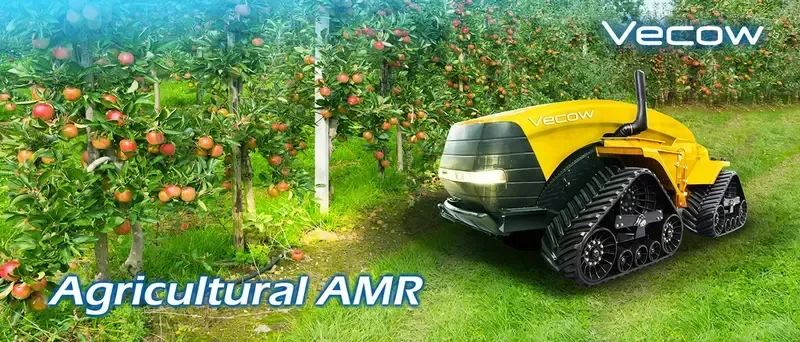
In today's world, agricultural robots are revolutionizing farming, increasing efficiency, and addressing labor shortages. At the heart of these advanced machines lies sophisticated Printed Circuit Board (PCB) technology. Zero One Solution Limited understands the critical role of high-quality, reliable PCBs in agricultural robots. As a leading PCB solution provider specializing in rapid prototyping, we offer comprehensive services from PCB design to manufacturing and assembly, empowering our clients to develop cutting-edge agricultural solutions. But what specific PCB solutions are essential for the success of agricultural robots, and how can Zero One Solution Limited help you achieve your goals?
Introduction: The Rise of Agricultural Robots
The agricultural sector is undergoing a transformative shift, driven by the escalating demand for food and the imperative for sustainable practices. At the forefront of this revolution are agricultural robots, autonomous systems designed to enhance efficiency, productivity, and environmental stewardship across various farming operations. These sophisticated machines, ranging from precision planters and harvesters to drone-based crop monitors and automated irrigation systems, are fundamentally reshaping traditional farming paradigms, addressing critical challenges such as labor shortages, resource optimization, and yield enhancement. Their increasing adoption signifies a pivotal move towards data-driven, intelligent agriculture, enabling farmers to achieve unprecedented levels of operational control and output.
Why are agricultural robots becoming increasingly important? Agricultural robots are crucial for several reasons: they automate labor-intensive tasks, thereby mitigating labor shortages and reducing operational costs; they enable precision agriculture, optimizing resource use (water, fertilizers, pesticides) and minimizing environmental impact; and they enhance overall farm productivity and crop yield through consistent, accurate execution of tasks.
What specific challenges do agricultural robots address? Agricultural robots tackle challenges such as the aging farming workforce, rising labor costs, the need for sustainable resource management, unpredictable weather patterns, and the demand for increased food production to feed a growing global population. They also help in real-time data collection for informed decision-making.
How do agricultural robots contribute to sustainability? These robots contribute to sustainability by facilitating precision farming, which reduces waste through targeted application of resources. They can also minimize soil compaction, decrease reliance on harmful chemicals, and optimize energy consumption, leading to a more environmentally friendly agricultural ecosystem.
What are some common applications of agricultural robots today? Common applications include autonomous tractors for plowing and planting, robotic harvesters for fruits and vegetables, precision spraying systems for weed and pest control, drone-based systems for crop health monitoring and mapping, and automated systems for irrigation and livestock management.
What impact do agricultural robots have on farm economics? Agricultural robots can significantly improve farm economics by reducing labor expenditures, optimizing input costs (fertilizers, pesticides, water), increasing yields through precision and efficiency, and potentially opening new revenue streams through higher quality produce or specialty crops. While initial investment can be substantial, the long-term ROI is often compelling.
The Core: PCBs - The Brains of Agricultural Robots
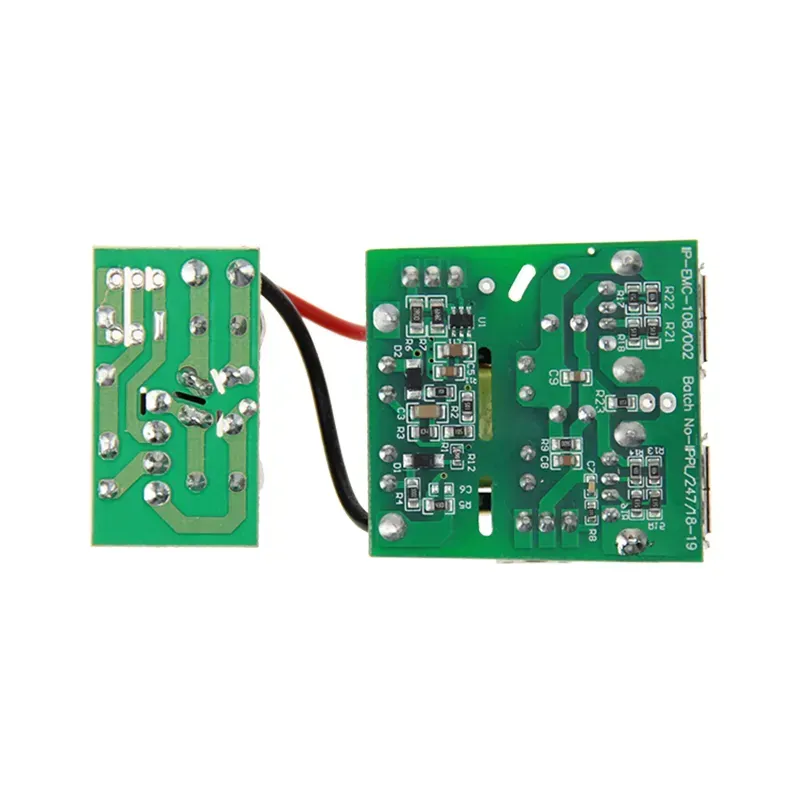
Agricultural robot PCB board
Printed Circuit Boards (PCBs) are the indispensable foundation upon which every agricultural robot operates, serving as the central nervous system that orchestrates complex functions from precision planting to autonomous harvesting. These intricate electronic boards are responsible for routing electrical signals, supplying power, and enabling communication between all critical components, effectively transforming mechanical structures into intelligent, responsive agricultural tools. Without robust and intelligently designed PCBs, the advanced sensors, sophisticated processing units, and precise actuators that define modern agricultural robotics would be inert.
How do PCBs enable autonomous navigation in agricultural robots? PCBs facilitate autonomous navigation by integrating GPS modules, inertial measurement units (IMUs), and various environmental sensors (LIDAR, cameras). They process real-time data from these components, enabling precise localization, path planning, obstacle detection, and steering control. High-speed data buses and robust power delivery on the PCB are crucial for reliable and continuous operation in dynamic agricultural settings.
Component Type
PCB Function
Impact on Agricultural Robot Performance
Microcontrollers/Processors
Houses and connects the central processing units, executing algorithms for AI, machine learning, and control.
Enables intelligent decision-making, real-time data analysis, and complex task execution, enhancing precision and efficiency.
Sensors (GPS, Vision, Environmental)
Provides stable power, precise signal conditioning, and high-fidelity data pathways for various sensors.
Ensures accurate data acquisition for navigation, crop health monitoring, and environmental sensing, critical for optimal yields.
Communication Modules (Wi-Fi, 5G, LoRa)
Integrates wireless communication chipsets, antennae, and transceivers to enable data exchange.
Facilitates remote monitoring, fleet management, and data synchronization with cloud platforms, improving operational oversight.
Challenges in Agricultural Robot PCB Design
Designing Printed Circuit Boards (PCBs) for agricultural robots presents a unique set of formidable challenges, primarily stemming from the harsh and unpredictable environmental conditions these machines operate in. Unlike controlled industrial settings, agricultural environments expose PCBs to a relentless assault of moisture, dust, extreme temperatures, and constant vibrations, demanding a robust and resilient design philosophy to ensure reliable operation and longevity. Addressing these specific stressors proactively in the design phase is paramount to the success and functional integrity of any agricultural robot system.
What are the primary environmental factors impacting agricultural robot PCB design? The primary environmental factors include moisture (rain, humidity, condensation), dust and debris (soil, crop residue), extreme temperatures (from freezing winters to scorching summers), and significant vibrations and shocks (from rough terrain and machinery operation). Each factor can critically compromise PCB performance and longevity if not adequately addressed.
How does moisture affect agricultural robot PCBs and what are the mitigation strategies? Moisture can cause short circuits, corrosion, and electrochemical migration, leading to component failure. Mitigation strategies include applying conformal coatings, selecting hermetically sealed enclosures, employing moisture-resistant materials for substrates and components, and designing with adequate spacing between traces to reduce the risk of current leakage.
What considerations are important for PCB design in dusty agricultural environments? Dust and fine particulate matter can accumulate on PCB surfaces, leading to insulation breakdown, overheating, and short circuits, especially when combined with moisture. Key considerations include using smooth, easy-to-clean enclosure designs, applying anti-static coatings, employing tight sealing for enclosures, and designing with components that have high ingress protection (IP) ratings against solid particles.
How do extreme temperatures influence PCB material selection for agricultural robots? Extreme temperatures can cause thermal expansion and contraction, leading to solder joint fatigue, delamination of PCB layers, and changes in component electrical characteristics. Material selection is critical, favoring substrates with low coefficient of thermal expansion (CTE) mismatch, such as certain FR-4 variants or specialized high-Tg (glass transition temperature) laminates, and components rated for extended temperature ranges.
What are the implications of vibration and shock on agricultural robot PCB reliability? Constant vibrations and sudden shocks can cause mechanical stress on solder joints, component leads, and connectors, leading to intermittent connections or complete component detachment. Design implications include using robust mechanical mounting solutions for components, incorporating vibration dampeners, optimizing component placement to distribute stress evenly, and employing through-hole components or reinforced surface-mount devices where high mechanical stress is anticipated.
Zero One Solution's Comprehensive PCB Solutions for Agricultural Robots
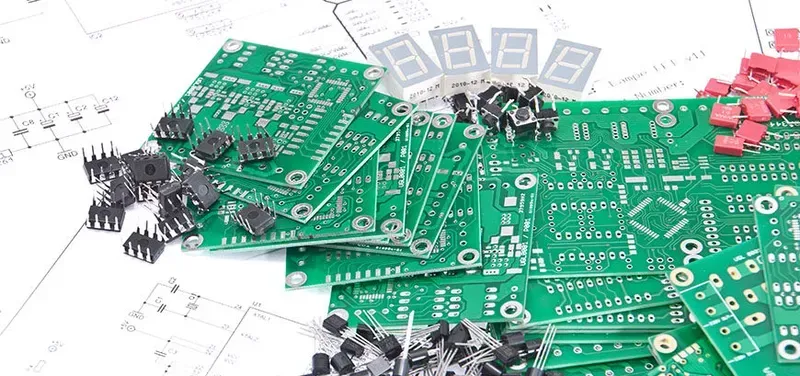
PCB design manufacturing assembly
Zero One Solution Limited stands as a pivotal partner in the advancement of agricultural robotics, offering comprehensive Printed Circuit Board (PCB) solutions meticulously tailored to meet the exacting demands of this specialized sector. Our expertise spans the entire lifecycle of PCB development, from innovative design to precision manufacturing and robust assembly, all underpinned by a commitment to rapid prototyping. This integrated approach ensures that agricultural robot developers receive high-performance, durable, and reliable electronic foundations crucial for their cutting-edge applications, directly addressing the unique challenges posed by demanding agricultural environments.
Rapid Prototyping and Design Acceleration In the fast-paced world of agricultural robotics, swift iteration is paramount. Zero One Solution excels in rapid prototyping, transforming concepts into functional PCBs with exceptional speed. Our agile design process, coupled with advanced simulation tools, allows for quick validation and refinement, significantly reducing time-to-market for agricultural robot innovations. This capability is critical for developers seeking to test and deploy new functionalities or entire robotic systems promptly.
Specialized Manufacturing for Harsh Environments Agricultural robots operate in some of the most challenging environments – exposed to moisture, dust, vibrations, and temperature extremes. Our manufacturing processes are specifically engineered to produce PCBs that can withstand these rigors. This includes the use of specialized substrates, conformal coatings for moisture and dust protection, and robust soldering techniques to ensure signal integrity and structural resilience even under constant vibration and shock.
Precision Assembly for Optimal Performance The performance of an agricultural robot hinges on the precise assembly of its electronic components. Zero One Solution employs state-of-the-art automated assembly lines and highly skilled technicians to ensure impeccable component placement and soldering accuracy. Our assembly services cover surface-mount technology (SMT), through-hole technology (THT), and mixed-technology boards, ensuring optimal connectivity and long-term reliability for complex robotic systems.
Rigorous Quality Assurance and Testing Quality is non-negotiable, especially for mission-critical agricultural equipment. Every PCB manufactured and assembled by Zero One Solution undergoes stringent quality control protocols, including automated optical inspection (AOI), X-ray inspection for hidden solder joints, in-circuit testing (ICT), and functional testing. This multi-layered inspection ensures that each PCB meets the highest industry standards for performance, durability, and reliability, minimizing field failures.
Service Aspect
Key Benefit for Agricultural Robots
Zero One Solution's Advantage
PCB Design
Optimized for environmental resilience and specific sensor/actuator integration
Experienced engineers with deep understanding of agricultural application demands
Rapid Prototyping
Accelerated product development cycles and iterative design improvements
Dedicated rapid-turnaround lines and efficient design-to-production workflow
Manufacturing
Durability against moisture, dust, vibration, and temperature fluctuations
Utilizing advanced materials, conformal coatings, and robust fabrication techniques
Assembly
Precision and reliability for complex robotic systems
State-of-the-art SMT/THT lines, automated inspection, and skilled technicians
Supply Chain Management
Access to specialized components and global resource efficiency
Strategic presence in Shenzhen and Dubai, leveraging a vast global network
Key Considerations for Agricultural Robot PCB Design
Designing Printed Circuit Boards (PCBs) for agricultural robots demands a rigorous approach, far beyond conventional electronics. The harsh and dynamic agricultural environments — characterized by moisture, dust, extreme temperatures, vibrations, and corrosive agents — necessitate specialized design considerations to ensure unparalleled reliability and performance. A robust PCB is the bedrock of a resilient agricultural robot, directly influencing its longevity, accuracy, and operational efficiency in the field. Consequently, meticulous attention to detail in component selection, signal integrity, power management, thermal control, and material choice is paramount for successful deployment.
Component Selection for Agricultural Robot PCBs Components must be industrial-grade, rated for extended temperature ranges (-40°C to +85°C or wider), and exhibit high resistance to shock and vibration. Hermetically sealed or conformal-coated components are preferred to mitigate ingress of moisture and dust. Specialized connectors with high IP ratings (e.g., IP67/IP68) are essential to prevent water and debris ingress at connection points.
Signal Integrity in Harsh Agricultural Environments Maintaining signal integrity is critical for accurate data transmission and control. This involves careful impedance matching, proper routing of high-speed traces to minimize crosstalk and electromagnetic interference (EMI), and adequate grounding schemes. Robust shielding and filtering techniques are often employed to combat electromagnetic noise prevalent in agricultural machinery and outdoor environments.
Optimizing Power Distribution for Agricultural Robot PCBs Agricultural robots often operate on battery power or fluctuating power sources from engines, requiring efficient and stable power delivery. Design must include robust voltage regulators, surge protection, and overcurrent protection to handle transient loads and potential power fluctuations. Multi-layer PCBs with dedicated power and ground planes are crucial for stable power distribution and noise reduction.
Thermal Management for Agricultural Robot PCBs Operating in direct sunlight or enclosed spaces, agricultural robot PCBs can experience significant heat build-up. Effective thermal management involves selecting components with low power dissipation, strategic placement of heat-generating components, and incorporating thermal vias, heat sinks, or even active cooling solutions. This prevents component degradation and ensures long-term reliability.
Material Selection for Agricultural Robot PCBs The choice of PCB substrate material is vital. FR-4 is common, but in extreme conditions, materials with higher Tg (glass transition temperature) or enhanced moisture resistance (e.g., polyimide or specialized laminates) are considered. Conformal coatings (e.g., acrylic, silicone, epoxy) provide an additional layer of protection against moisture, dust, chemicals, and fungi, significantly extending the PCB's lifespan in agricultural settings.
Manufacturing and Assembly Excellence at Zero One Solution
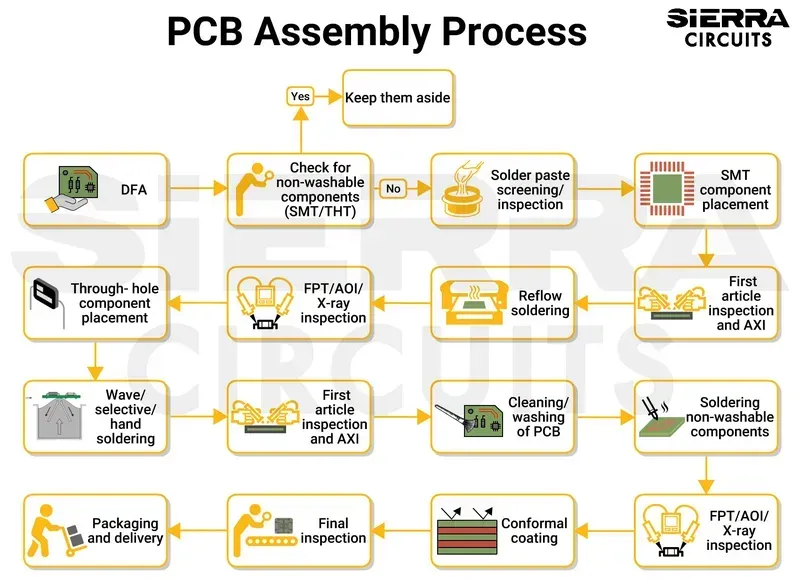
PCB manufacturing assembly process
At Zero One Solution, our manufacturing and assembly processes for Agricultural Robot PCB Solutions are meticulously engineered to deliver uncompromised quality and durability, ensuring that our clients' innovations withstand the demanding conditions of agricultural environments. We integrate advanced technology with stringent quality control, providing robust PCBs that are fundamental to the reliability and performance of modern agricultural robotics.
Process Aspect
Zero One Solution's Approach
Benefit for Agricultural Robots
Material Selection
Utilizing high-grade, moisture-resistant, and high-Tg laminates, coupled with durable soldermasks and robust surface finishes (e.g., ENIG, OSP).
Enhanced resistance to humidity, chemicals, and temperature fluctuations, ensuring longevity and reliability in harsh outdoor conditions.
Precision Manufacturing
Advanced drilling, etching, and plating technologies (e.g., LDI, AOI) to achieve tight tolerances and high-density interconnects (HDIs) for complex designs.
Superior signal integrity and power delivery, crucial for the precise sensor data processing and control required by agricultural robots.
Automated Assembly
High-speed SMT lines equipped with pick-and-place machines, reflow ovens with precise temperature profiling, and automated optical inspection (AOI).
Consistent component placement and soldering quality, minimizing defects and improving overall PCBA reliability under vibration and mechanical stress.
Environmental Sealing & Conformal Coating
Application of specialized conformal coatings (e.g., acrylic, silicone, epoxy) and encapsulation techniques post-assembly.
Protection against dust, moisture, corrosive agents, and extreme temperatures, significantly extending the operational lifespan of the PCBAs in the field.
How does Zero One Solution ensure PCB durability against harsh agricultural environments? We employ a multi-faceted approach, starting with the selection of high-grade, environmentally resilient materials like high-Tg laminates and robust surface finishes. Our manufacturing processes incorporate precise etching and plating for structural integrity, and critically, we apply advanced conformal coatings and encapsulation post-assembly to create a protective barrier against moisture, dust, chemicals, and extreme temperatures, ensuring long-term reliability in the field.
What quality control measures are in place for agricultural robot PCBs? Our quality control is integrated at every stage. This includes Automated Optical Inspection (AOI) for bare board and assembled boards, X-ray inspection for complex components like BGAs, in-circuit testing (ICT), and functional testing (FCT) to verify performance. Additionally, environmental stress screening (ESS) and accelerated life testing (ALT) are performed to simulate real-world conditions and ensure robust performance.
Can Zero One Solution handle high-density interconnect (HDI) designs for agricultural robots? Absolutely. Our state-of-the-art manufacturing facilities are fully equipped for HDI PCB fabrication. This includes advanced laser drilling for microvias, sequential lamination, and fine-line etching capabilities. HDI technology is crucial for compact, feature-rich agricultural robots that require complex circuitry in a limited space, enabling higher functionality and reduced form factors.
What is the typical turnaround time for agricultural robot PCB prototyping? Zero One Solution specializes in rapid prototyping. For agricultural robot PCBs, we offer expedited services with turnaround times as short as 24-72 hours for bare board fabrication and slightly longer for full assembly, depending on complexity and component availability. This rapid response capability is vital for accelerating the R&D cycles of our agricultural robotics clients.
How does Zero One Solution address signal integrity in agricultural robot PCB designs? Signal integrity is paramount for agricultural robots relying on precise sensor data. We address this through careful impedance control, optimized trace routing, power and ground plane optimization, and consideration of crosstalk. Our design review process includes thorough simulations to predict and mitigate signal integrity issues, ensuring reliable data transmission for critical functions like navigation and data collection.
Applications of Agricultural Robot PCBs
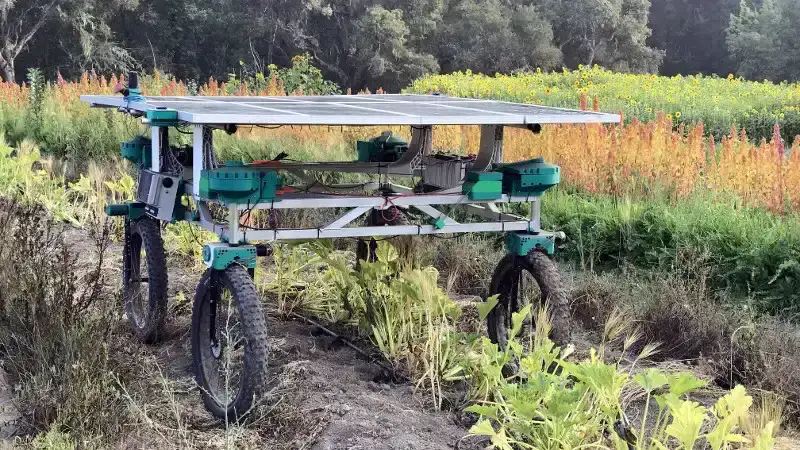
Agricultural robot PCB applications
Printed Circuit Boards (PCBs) are the unseen architects of modern agricultural automation, enabling the precision, autonomy, and data-driven capabilities of agricultural robots across diverse applications. From enhancing crop yield through targeted interventions to optimizing resource utilization, the sophistication and reliability of PCBs directly translate into the efficiency and effectiveness of these transformative machines. Their robust design ensures seamless operation in demanding agricultural environments, driving the next wave of smart farming.
Autonomous Tractors and Farm Vehicles PCBs are central to the navigation, control, and sensor integration systems of autonomous tractors and other self-driving farm vehicles. They manage GPS, LiDAR, and camera inputs for precise path planning and obstacle detection, alongside controlling engine, steering, and implement functions for tasks like plowing, seeding, and tilling. The robust PCBs ensure reliable operation in varied terrain and weather conditions.
Harvesting and Picking Robots In harvesting robots, PCBs orchestrate complex electromechanical movements, machine vision systems, and gripping mechanisms. They process data from sensors to identify ripe produce, guide robotic arms for delicate picking, and manage the collection and sorting processes, significantly reducing labor costs and minimizing crop damage.
Precision Spraying and Fertilization Systems PCBs in precision spraying and fertilization robots enable variable rate application, minimizing chemical and fertilizer usage while maximizing efficacy. They integrate with GPS and sensor data to create detailed field maps, allowing precise dispensing based on real-time soil conditions and crop needs, thereby promoting environmental sustainability and cost savings.
Drone-Based Crop Monitoring and Analytics Lightweight, high-performance PCBs are crucial for agricultural drones, facilitating stable flight control, high-resolution imaging from multispectral and hyperspectral cameras, and real-time data transmission. These drones provide invaluable insights into crop health, irrigation needs, and pest infestations, empowering farmers with actionable intelligence for informed decision-making.
Automated Irrigation and Water Management Systems PCBs are integral to smart irrigation systems, controlling pumps, valves, and sensors to optimize water distribution based on soil moisture levels, weather forecasts, and crop type. They enable automated, localized watering, reducing water waste and ensuring optimal hydration for plant growth.
Livestock Management Robots In the livestock sector, PCBs power robots for automated feeding, milking, and health monitoring. They manage sensor data for individual animal tracking, health diagnostics, and behavioral analysis, improving animal welfare and farm productivity through continuous, precise management.
The widespread adoption of agricultural robots, underpinned by advanced PCB technology, is not merely an incremental improvement but a fundamental shift towards more efficient, sustainable, and data-driven farming practices. Zero One Solution Limited stands at the forefront, providing the essential PCB solutions that bring these innovative agricultural applications to life, ensuring reliability and performance in the field.
Case Studies: Zero One Solution's Success in Agricultural Robotics
Agricultural robot case studies
Zero One Solution Limited consistently demonstrates its leadership in the agricultural robotics sector through a proven track record of delivering robust and innovative PCB solutions. Our rapid prototyping and comprehensive manufacturing capabilities have been instrumental in transforming complex agricultural challenges into successful, deployable robot systems. Below are examples illustrating our impact:
Automated Crop Monitoring Drone A client required a lightweight, highly integrated PCB for an autonomous drone designed for real-time crop health analysis. We engineered a compact, multi-layer PCB incorporating advanced signal processing units and low-power communication modules, ensuring stable data transmission even across vast agricultural fields. Our solution reduced the drone's overall weight by 15% and improved battery life by 20%, directly impacting operational efficiency and data acquisition frequency for the client. The bespoke design also featured enhanced moisture resistance, crucial for outdoor drone applications in varying weather conditions. This success was achieved by leveraging our in-house material expertise and precision manufacturing processes, enabling a quick turnaround from concept to flight-ready prototype.
Zero One Solution's commitment to excellence and deep understanding of the unique demands of agricultural environments position us as the ideal partner for developing cutting-edge agricultural robot PCB solutions. Our collaborative approach and technical prowess ensure that your innovative concepts are brought to fruition with unparalleled speed and reliability.
The trajectory of agricultural robotics is intrinsically linked to advancements in Printed Circuit Board (PCB) technology. As the agricultural sector increasingly embraces automation for enhanced efficiency and sustainability, the demand for more sophisticated, robust, and adaptable PCBs continues to escalate. The future of agricultural robot PCB design is characterized by innovations that promise greater flexibility, reduced footprints, and seamless connectivity, directly addressing the evolving needs of modern agriculture.
What are the primary emerging trends in agricultural robot PCB technology? The key emerging trends include flexible PCBs (FPCBs), significant miniaturization, and advanced wireless communication integration. These trends are driven by the need for more adaptable, compact, and interconnected robotic systems capable of operating efficiently in diverse and challenging agricultural environments.
How do flexible PCBs (FPCBs) benefit agricultural robots? Flexible PCBs offer unparalleled advantages in agricultural robotics due to their ability to bend and conform to irregular shapes, reducing weight and space constraints. This flexibility enables more innovative robot designs, improves durability by reducing stress points compared to rigid boards, and facilitates easier integration into complex mechanical systems, which is crucial for robots navigating uneven terrain or performing intricate tasks.
Why is miniaturization critical for the next generation of agricultural robot PCBs? Miniaturization is crucial because it allows for the development of smaller, lighter, and more agile agricultural robots. Reduced size and weight lead to lower power consumption, extended operational times, and the ability to maneuver in confined spaces or interact with delicate crops without causing damage. It also facilitates the integration of more sensors and processing power into a compact form factor, enhancing robot capabilities.
What role does wireless communication integration play in future agricultural robot PCBs? Wireless communication integration is pivotal for enabling real-time data exchange between agricultural robots and central control systems, as well as for fleet management and remote diagnostics. Future PCBs will increasingly incorporate advanced wireless modules (e.g., 5G, Wi-Fi 6E, LoRaWAN) to support high-bandwidth sensor data transmission, autonomous navigation updates, and immediate operational adjustments, leading to more responsive and intelligent agricultural operations.
Are there any other notable advancements besides flexibility, miniaturization, and wireless communication? Beyond these core trends, other advancements include enhanced power management solutions for prolonged battery life, ruggedized PCB materials and coatings for extreme environmental protection, and the integration of AI-enabled edge computing capabilities directly onto the PCB for faster, more localized decision-making. The increasing adoption of modular and reconfigurable PCB designs is also emerging, allowing for easier upgrades and customization.
Conclusion: Partnering with Zero One Solution for Agricultural Robotics Innovation
In the rapidly evolving landscape of agricultural technology, the backbone of innovation lies in robust and reliable PCB solutions. Agricultural robots, from autonomous tractors to precision sprayers, are transforming farming practices, and the integrity of their electronic systems is paramount to their performance and longevity. Zero One Solution Limited stands as a pivotal partner in this transformation, offering unparalleled expertise in PCB design, manufacturing, and assembly specifically tailored for the demanding agricultural environment. Our commitment to rapid prototyping and stringent quality control ensures that your agricultural robotics projects not only meet but exceed industry standards, driving efficiency and sustainability in the global food supply chain.
Why are reliable PCB solutions crucial for agricultural robots? Reliable PCB solutions are the bedrock of agricultural robot functionality. They ensure consistent operation in harsh outdoor conditions, where exposure to moisture, dust, vibrations, and extreme temperatures is common. Without durable and precisely engineered PCBs, agricultural robots would face frequent malfunctions, leading to downtime, reduced productivity, and significant operational costs. Zero One Solution's focus on material selection and robust design mitigates these risks, guaranteeing sustained performance and longevity for critical agricultural applications.
Zero One Solution Limited is your strategic partner for advancing agricultural robotics. Our comprehensive, one-stop PCB solutions are designed to accelerate your product development cycle, from initial concept to mass production. We empower innovators to bring cutting-edge agricultural robots to market faster, more reliably, and with greater impact.
In conclusion, robust and reliable PCB solutions are paramount for the effective operation of agricultural robots. Zero One Solution Limited, with its expertise in rapid prototyping, comprehensive design, manufacturing, and assembly services, is uniquely positioned to empower your agricultural robotics innovation. By choosing Zero One Solution, you gain a partner committed to quality, speed, and technological advancement. Contact us today to explore how our PCB solutions can transform your agricultural robots and drive the future of farming. Let's cultivate innovation together! Share this article to help others learn about the importance of robust PCB solutions in agricultural robotics.