In the world of electronics, the BC548 transistor is a fundamental component, akin to the bricks that build our modern devices. This NPN bipolar junction transistor is widely used in a variety of circuits, from simple amplifiers to complex switching applications, playing a key role in how electronic devices interact with the world. This article will delve into the BC548's characteristics, applications, and alternatives, providing a thorough understanding for both beginners and experienced electronics hobbyists.
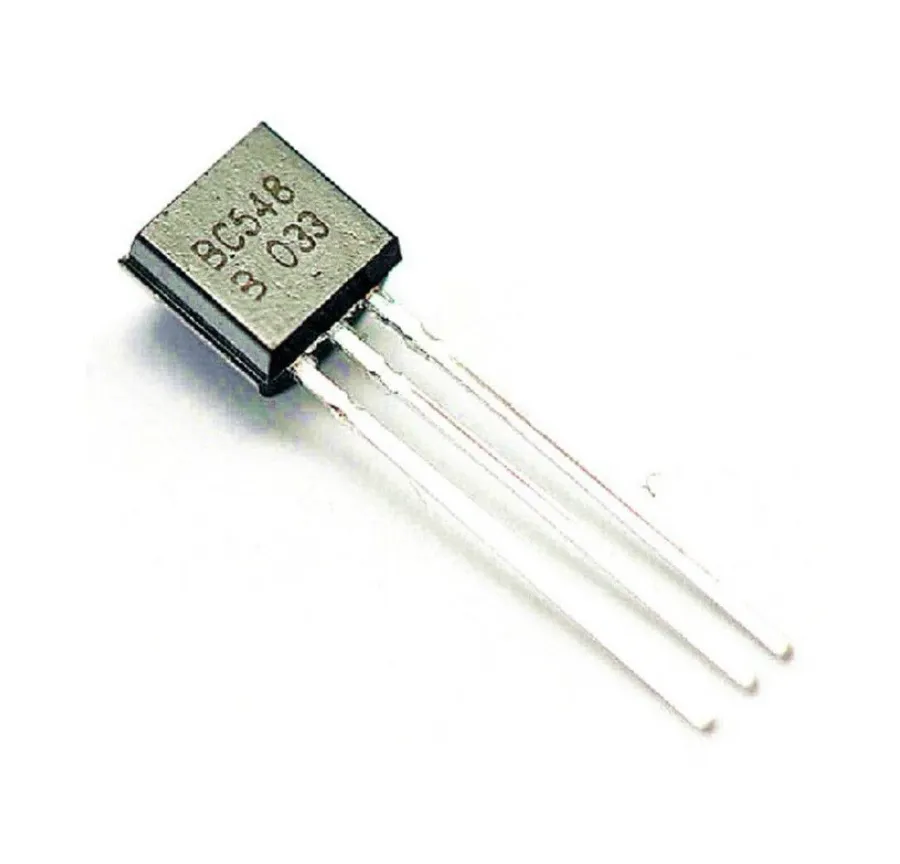
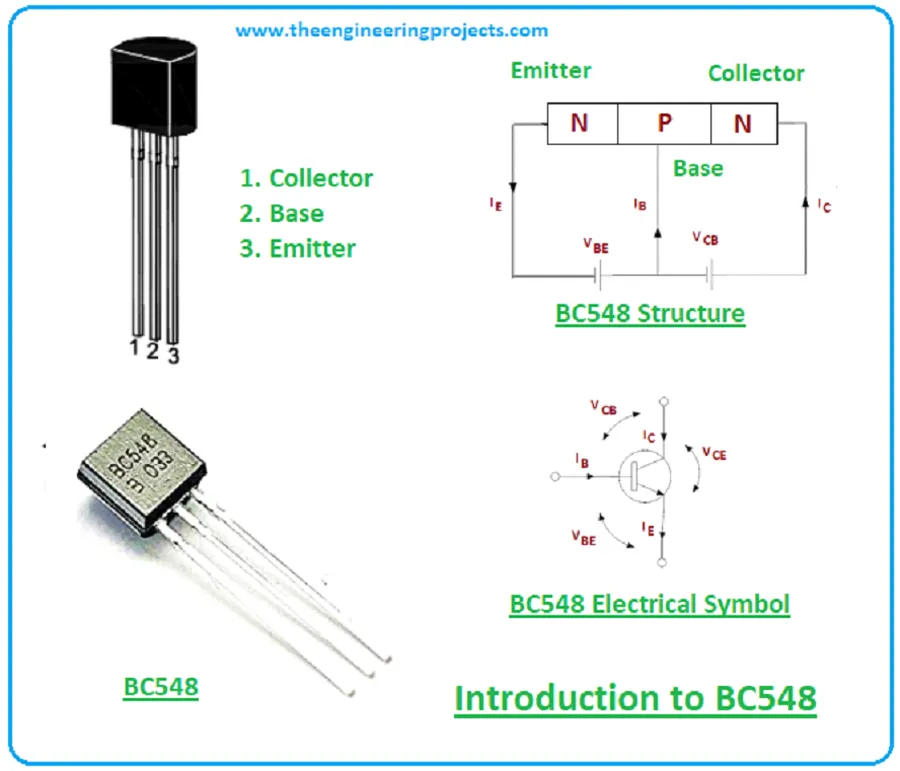
The BC548 is a widely used NPN bipolar junction transistor (BJT), a fundamental semiconductor device that forms the building blocks of many electronic circuits. It's constructed from a silicon substrate, carefully doped with impurities to create three distinct layers: a lightly doped p-type region (the base) sandwiched between two n-type regions (the collector and emitter). This precise structure enables the transistor to control electrical current flow, a behavior crucial for amplification and switching applications.
The working principle of the BC548, like other BJTs, relies on the injection and control of charge carriers (electrons and holes). A small current flowing into the base terminal modulates a larger current between the collector and emitter. This 'current-controlled current source' behavior makes the BC548 suitable for both amplifying weak signals and acting as an electronic switch. The silicon construction offers good temperature stability and reliability, making it a common choice in a wide range of applications. The doping process involves introducing impurities into the silicon crystal lattice, precisely controlling the concentration of electrons and holes, and hence, the electrical properties of the transistor.
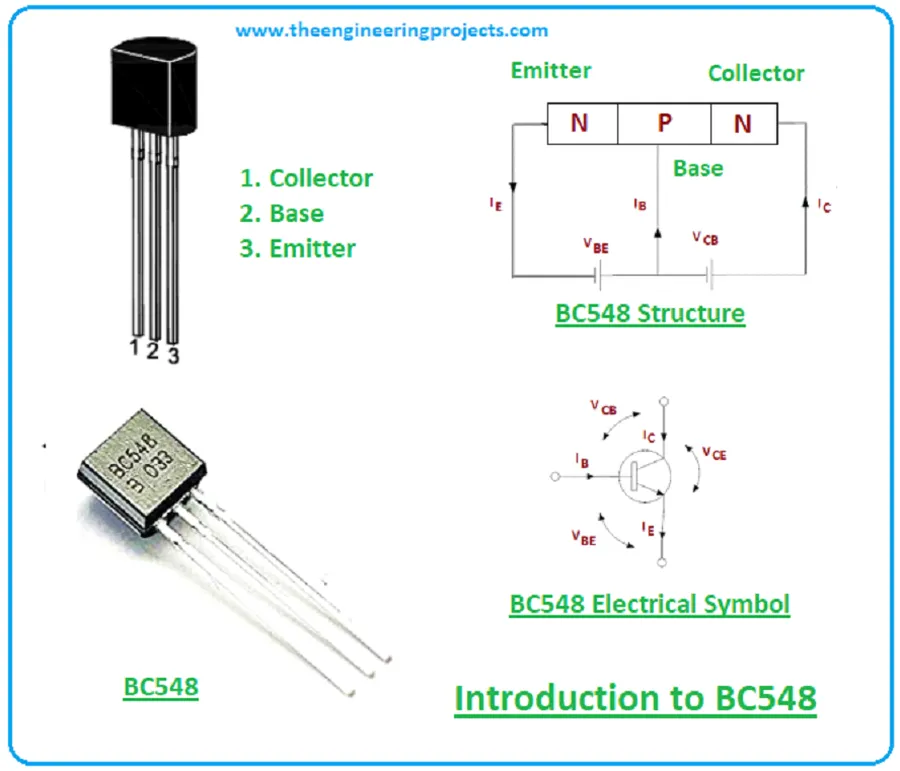
Understanding the BC548 transistor's performance requires a thorough examination of its key specifications. These parameters dictate its behavior in different circuit configurations and determine its suitability for various applications. These specifications are crucial for engineers to select the correct transistor for a specific task, and to predict how the device will function within a circuit.
| Parameter | Symbol | Value | Unit | Description |
|---|---|---|---|---|
| Collector Current | Ic | 100 | mA | Maximum allowable current flowing through the collector terminal. |
| Collector-Emitter Voltage | Vce | 30 | V | Maximum voltage that can be applied between collector and emitter. |
| Collector-Base Voltage | Vcb | 30 | V | Maximum voltage that can be applied between collector and base. |
| Emitter-Base Voltage | Veb | 5 | V | Maximum voltage that can be applied between emitter and base. |
| Power Dissipation | Pd | 500 | mW | Maximum power the transistor can dissipate without damage. |
| Current Gain | hFE | 110-800 | - | Ratio of collector current to base current; varies significantly among devices. Represents the amplification factor of the transistor. |
| Transition Frequency | fT | 300 | MHz | Frequency at which the current gain drops to 1. |
| Operating Junction Temperature | Tj | 150 | °C | Maximum allowable temperature of the transistor's junction. |
The BC548 belongs to the BC54x family, which includes variants like the BC547 and BC549. While these transistors share similar characteristics, key differences exist in their specifications. For instance, the BC547 has a slightly lower voltage rating, while the BC549 has a higher gain. These differences make each variant better suited to particular applications. It is important to consult the datasheets to make the correct selection.
The practical implications of these specifications are significant. For example, the maximum collector current and power dissipation determine the load that the transistor can drive. The current gain will determine the biasing configuration needed, and how it amplifies the input signal. Understanding these parameters allows designers to leverage the transistor effectively within their circuit designs. Failing to adhere to these parameters can lead to poor performance, or in the worst cases, component failure.
The BC548 transistor, a fundamental component in electronics, is a three-terminal device, each pin serving a distinct function: the base (B), the collector (C), and the emitter (E). Understanding the arrangement and roles of these pins is crucial for effectively using the BC548 in any circuit design. Proper pin identification ensures correct biasing and prevents potential circuit damage.
The BC548 transistor is typically housed in a TO-92 package. Looking at the flat side of the transistor with the pins facing downwards, the pin on the left is the collector, the middle pin is the base, and the right pin is the emitter. This physical arrangement provides a standardized way to use the component across different applications.
Here’s a breakdown of each pin's function:
Mounting considerations are essential when using a BC548 transistor. Given that they often operate at low power levels, they do not require specific heat-sinking measures. However, ensuring that the leads are properly soldered and the component is securely mounted on the circuit board helps prevent accidental disconnections or damages during handling.
Understanding the direction of current flow is important. In an NPN transistor, the current flows from collector to emitter when a positive current is supplied to the base with respect to emitter. This fundamental principle is the basis for the transistor's functionality in both amplification and switching applications.
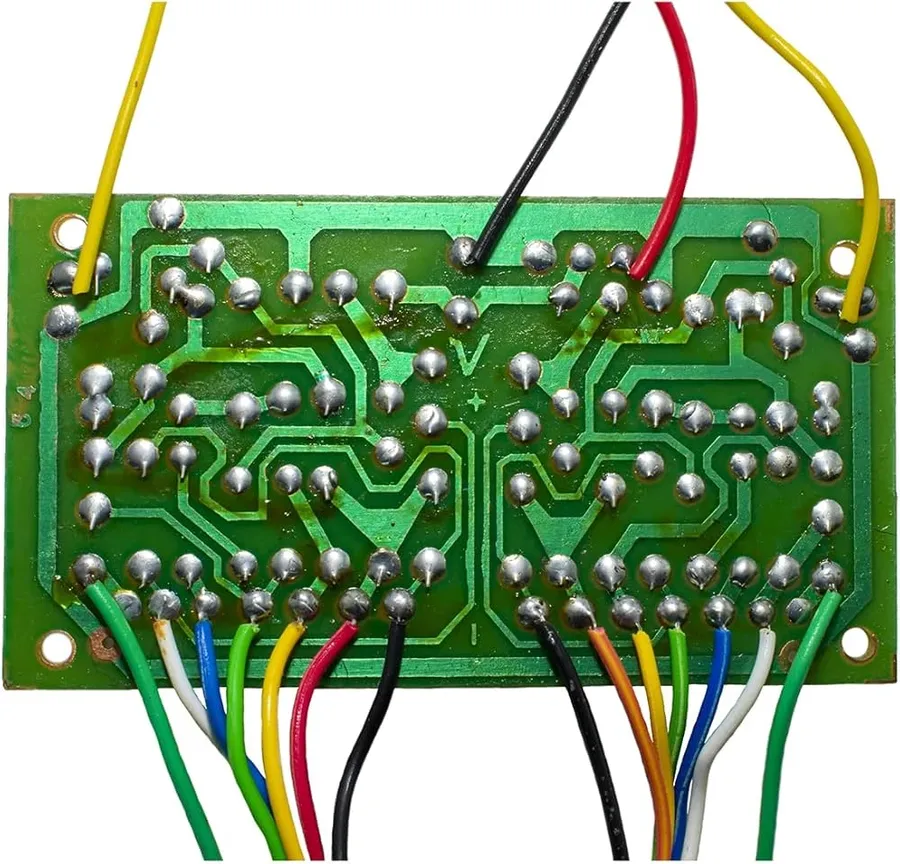
The BC548 transistor, a versatile NPN bipolar junction transistor, finds widespread use in electronic circuits due to its excellent performance characteristics and low cost. It is commonly employed as a switch, amplifier, and in various signal processing applications. Its ability to control current flow makes it a fundamental component in both simple and complex electronic designs.
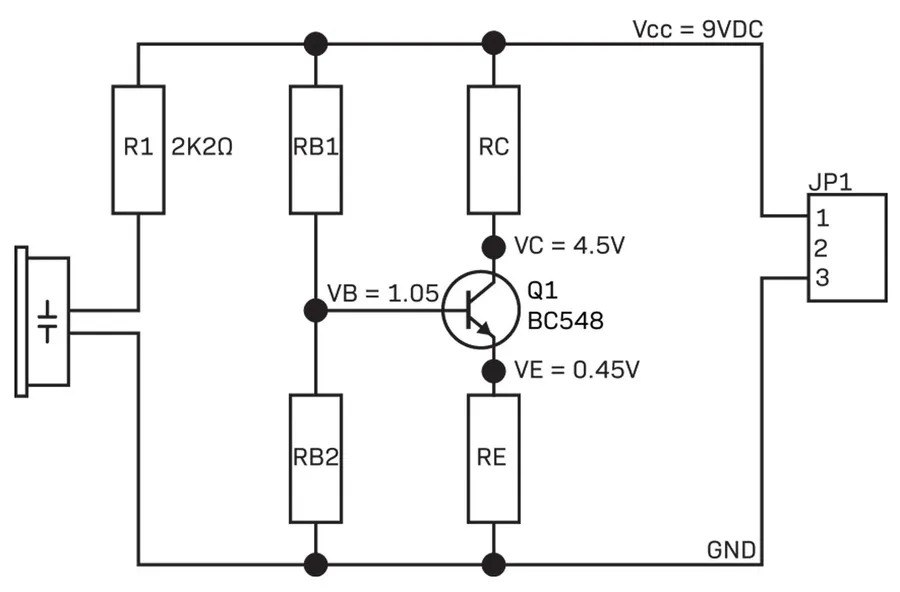
Examples of practical implementations include its use in simple light-activated switches, audio preamplifiers, and as a control element in digital logic circuits. These examples demonstrate the versatility of the BC548 across diverse application domains.
The BC548 transistor, a versatile NPN bipolar junction transistor, excels in small-signal amplification tasks due to its favorable characteristics within its operating region. This section explores how the BC548 can be configured as an amplifier, covering practical circuit designs, appropriate biasing methods, and essential optimization techniques to achieve desired performance.
To leverage the BC548 as a small-signal amplifier, one must implement a biasing circuit which establishes a stable operating point known as the quiescent point (Q-point). This Q-point determines the DC current and voltage levels in the circuit. There are several popular biasing techniques each with their advantages and disadvantages:
For practical application, a common-emitter (CE) configuration is frequently chosen due to its high voltage and current gain. The circuit typically involves a voltage-divider bias network, with an input capacitor to block any DC from the signal source and an output capacitor to isolate the DC bias from the load. A load resistor connected to the collector limits the collector current and establishes the voltage gain.
Here is a typical biasing component selection guide for the BC548 amplifier circuit to achieve a desired Q-Point. Note that component values should be modified based on the power supply, and output impedance requirements.
| Component | Typical Value | Purpose |
|---|---|---|
| R1 (Voltage Divider) | 10kΩ - 100kΩ | Sets the base bias voltage |
| R2 (Voltage Divider) | 1kΩ - 10kΩ | Sets the base bias voltage |
| Rc (Collector Resistor) | 1kΩ - 10kΩ | Sets the collector current and voltage gain |
| Re (Emitter Resistor) | 100Ω - 1kΩ | Provides stability and reduces gain |
| C1 (Input Capacitor) | 1uF - 10uF | Blocks DC component of the input signal |
| C2 (Output Capacitor) | 1uF - 10uF | Blocks DC component of the output signal |
| C3 (Bypass Capacitor) | 10uF - 100uF | Provides a low impedance path for AC signal to ground |
Optimization involves choosing suitable components values for the resistors and capacitors, adjusting bias points, and using feedback as necessary. The key considerations during optimization are Gain, Bandwidth, Input impedance, and output impedance. Furthermore, special attention is required to ensure the transistor operates within it's safe operating area.
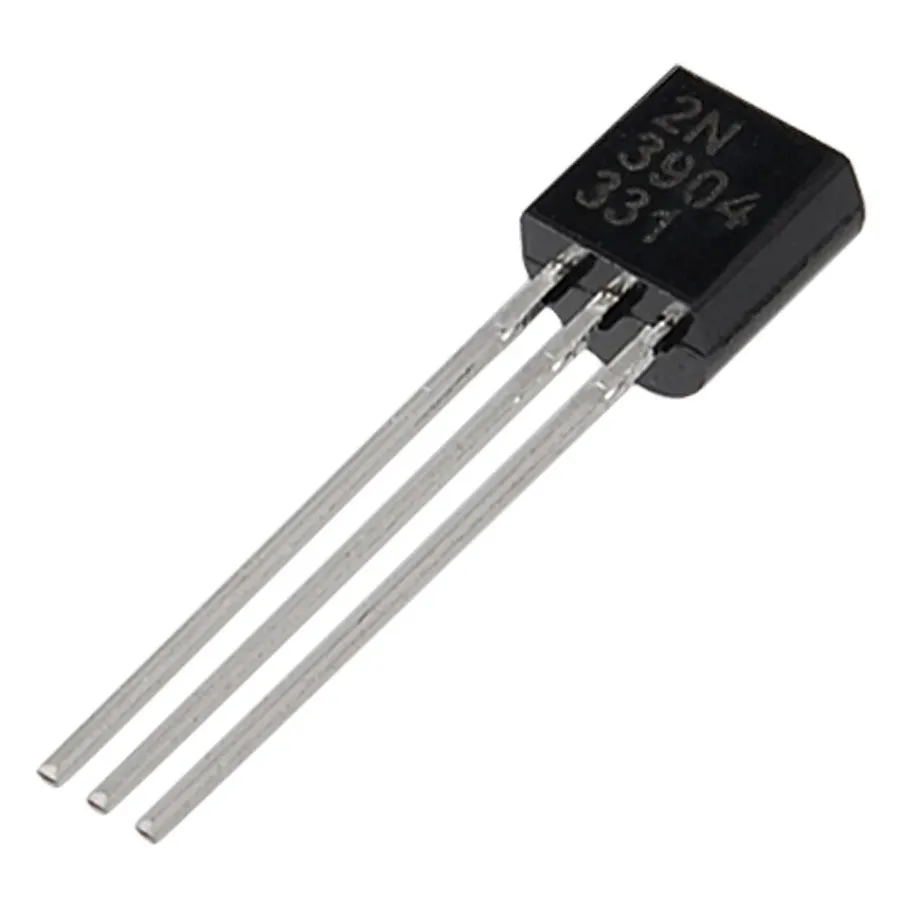
The BC548 transistor, when configured as a switch, provides an effective means of controlling the flow of current to another part of a circuit. This function is pivotal in numerous applications, ranging from simple relay driving to complex digital logic operations. Its capability to rapidly transition between 'on' and 'off' states makes it suitable for use in pulsed and intermittent circuits.
The principle behind using a BC548 as a switch relies on its ability to control a larger current between the collector and the emitter by applying a relatively small current to its base. When the base is adequately biased, the transistor saturates, allowing maximum current flow (switch 'on'), conversely, when the base current is removed or sufficiently low, the transistor cuts off, blocking current flow (switch 'off').
While the BC548 is a versatile and commonly used NPN transistor, situations may arise where an alternative is needed. This section details several suitable substitutes, providing a comparative analysis of their specifications and optimal usage scenarios. Understanding these alternatives allows for flexibility in design and troubleshooting.
| Transistor | Type | Polarity | Max Collector Current (Ic) | Max Collector-Emitter Voltage (Vce) | Typical Application |
|---|---|---|---|---|---|
| BC548 | BJT | NPN | 100mA | 30V | General purpose amplifier, switch |
| 2N2222 | BJT | NPN | 800mA | 40V | High current switch, general purpose |
| BC547 | BJT | NPN | 100mA | 45V | General purpose amplifier, switch |
| BC549 | BJT | NPN | 100mA | 30V | Low noise amplifier |
| BC550 | BJT | NPN | 100mA | 45V | Low noise amplifier |
The table above outlines several common alternatives to the BC548. Here's a more detailed look at each:
This section addresses common questions regarding the BC548 transistor, providing clear and concise answers to enhance understanding of its usage, alternatives, and troubleshooting.
The BC548 transistor is a ubiquitous component in electronics, serving as a workhorse for signal amplification and switching circuits. This guide provides a thorough understanding of its specifications, applications, and alternatives, helping both novice and experienced engineers leverage the device's full potential. As technology advances, the principles behind basic components such as the BC548 remains crucial for new innovations. Therefore, mastery of the BC548 will serve as a valuable building block in your exploration of electronics.

