Passive Components in Electronics: An Essential Guide
2025.01.27
In our digitally driven world, electronic circuits are the unsung heroes powering countless devices. Within these intricate systems, passive components form the bedrock, quietly enabling functionality. Unlike their active counterparts, passive components don't generate energy but are vital for shaping and controlling electrical signals. From the subtle glow of an LED to the powerful processing of a computer, understanding passive components is key to appreciating the world of electronics.
What are Passive Components?
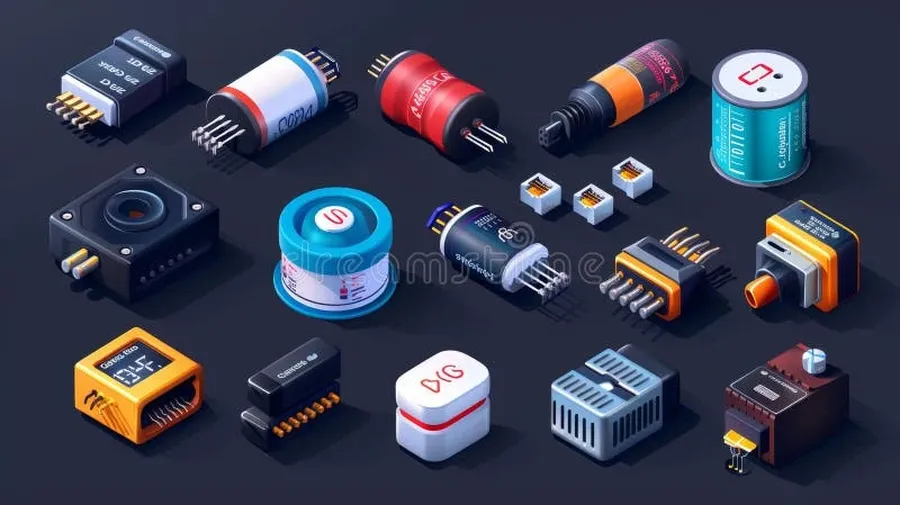
Electronic Components
Passive components are fundamental electronic elements that, unlike active components, do not generate energy but instead manage it through dissipation, storage, or absorption. Their behavior is characterized by their inability to amplify or switch electronic signals, making them essential for shaping and controlling electrical currents within circuits.
The Core Passive Components: Resistors
Various Resistors
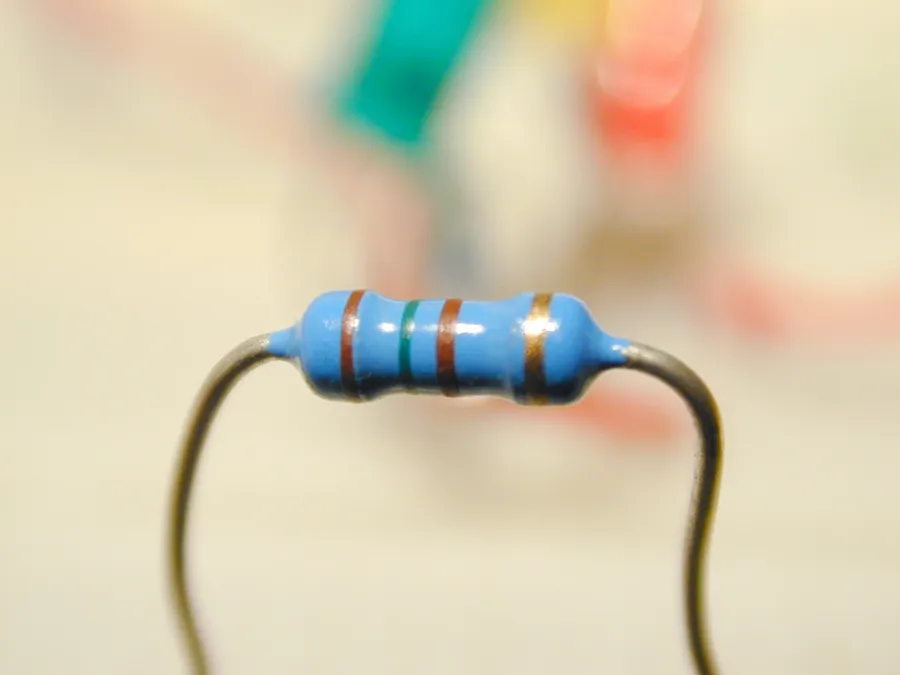
Resistors are fundamental passive components in electronics, primarily functioning to impede the flow of electrical current. This current limitation is crucial for controlling voltage levels, setting bias points, and managing heat dissipation within a circuit. They do not amplify or generate electrical signals, but rather manage the energy already present in the circuit by dissipating it as heat.
Resistors are categorized based on their construction, material, and application. The primary characteristic of a resistor is its resistance, measured in ohms (Ω), which dictates how much it opposes current flow.
Type of Resistor
Description
Typical Applications
Fixed Resistors
Offer a pre-defined resistance value that cannot be altered. Common types include carbon film, metal film, and wire-wound resistors.
General circuit applications, pull-up and pull-down resistors, current limiting
Variable Resistors (Potentiometers)
Allow the resistance value to be adjusted mechanically. They typically have three terminals: two for the ends of the resistive element and one for a sliding contact (wiper).
Volume control, sensor calibration, voltage dividers
Variable Resistors (Trimmers)
Similar to potentiometers, but are typically smaller and are designed to be adjusted during the calibration or setup of a circuit.
Precision adjustments in circuits, fine-tuning
Thermistors
Their resistance varies significantly with temperature. They are made of ceramic materials and classified into two main types: Negative Temperature Coefficient (NTC) and Positive Temperature Coefficient (PTC).
Temperature sensing and control, circuit protection
Light Dependent Resistors (LDRs)
Their resistance changes based on the intensity of the light falling on it. They are typically constructed from semiconductor materials.
Light sensing, automatic lighting controls
Resistors are critical in a myriad of electronic devices. They are used in the power supply to divide the voltage and limit the current; they are also used to set the gain of an amplifier, to act as a pull-up or pull-down resistor, and to shape the signals. Specific examples include volume controls in audio equipment (using potentiometers), temperature sensing circuits (using thermistors), and light-activated devices (using LDRs).
The Core Passive Components: Capacitors
Various Capacitors
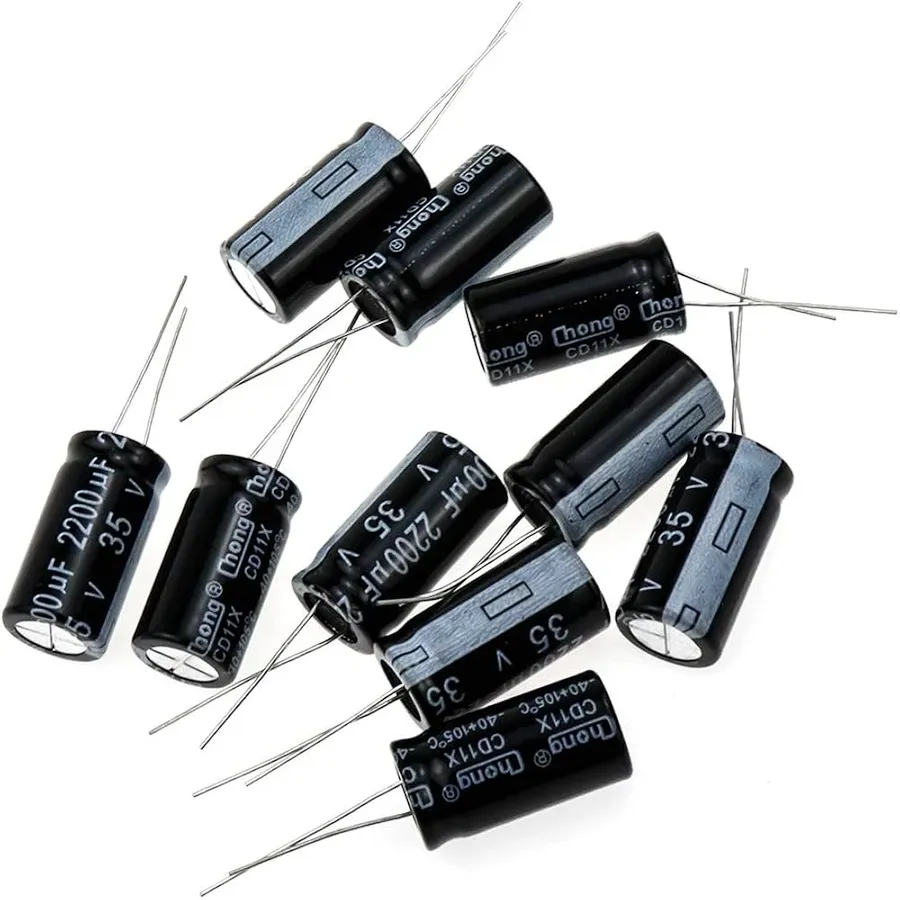
Capacitors are fundamental passive electronic components that store electrical energy in an electric field. They are characterized by their ability to accumulate charge and release it at a later time, making them crucial for filtering, smoothing, timing, and energy storage in electronic circuits. Unlike resistors that impede current flow, capacitors block DC signals while allowing AC signals to pass, enabling their applications in a wide range of electronics.
Function of Capacitors Capacitors primarily store electrical charge, acting like small, rechargeable batteries in a circuit. They consist of two conductive plates separated by a dielectric material. The dielectric material prevents the direct flow of current between the plates but allows for the storage of charge when a voltage is applied. This stored charge can be quickly released into the circuit when needed, enabling numerous useful functions.
Capacitor Operation When a voltage source is connected across a capacitor, electrons accumulate on one plate while leaving the other plate positively charged. The amount of charge a capacitor can store is directly proportional to its capacitance, measured in Farads (F). The dielectric constant of the material between the plates impacts the capacitance. The relationship between charge (Q), voltage (V), and capacitance (C) is represented by the equation Q = CV.
Filtering and Smoothing Capacitors are widely used for filtering and smoothing signals, particularly in power supplies and audio circuits. In power supplies, they smooth out voltage ripples and provide a stable DC supply. In signal processing, capacitors are used in AC coupling and decoupling circuits, filtering high frequency noise while allowing desired AC signals to pass.
High capacitance in small size, temperature stable, polarized, high cost.
The Core Passive Components: Inductors
Various Inductors
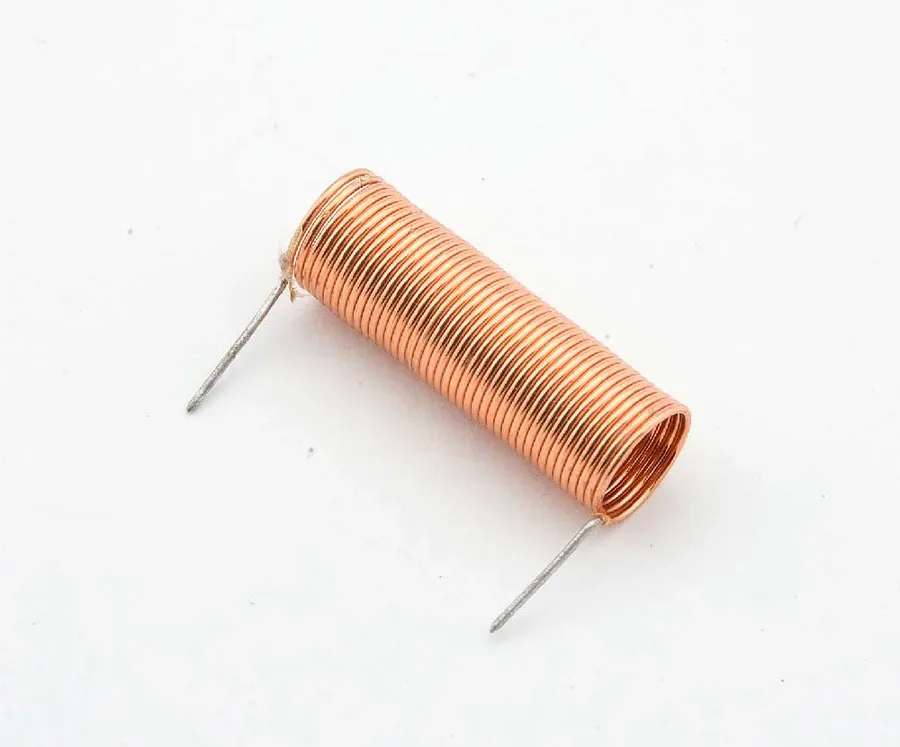
Inductors are fundamental passive components in electronics that store energy in a magnetic field when electrical current flows through them. They play a critical role in various electronic circuits, primarily in filtering, energy storage, and impedance matching.
The core function of an inductor is to oppose changes in current, this property is measured in Henries (H). When current passes through an inductor, it creates a magnetic field, and any change in this current induces a voltage that opposes the change, this phenomenon is described by Faraday's Law of Induction.
Inductors are made by winding a conductive wire into a coil and there are several types of inductors, each suited for specific applications:
Inductors are not ideal components, they possess inherent characteristics like resistance, inter-winding capacitance, and saturation. When selecting inductors, these factors, along with inductance value, current rating, and frequency response should be carefully considered. For example, an inductor used in a high-frequency application will require a lower internal capacitance than an inductor used in a power supply circuit.
Other Important Passive Components
Passive Components
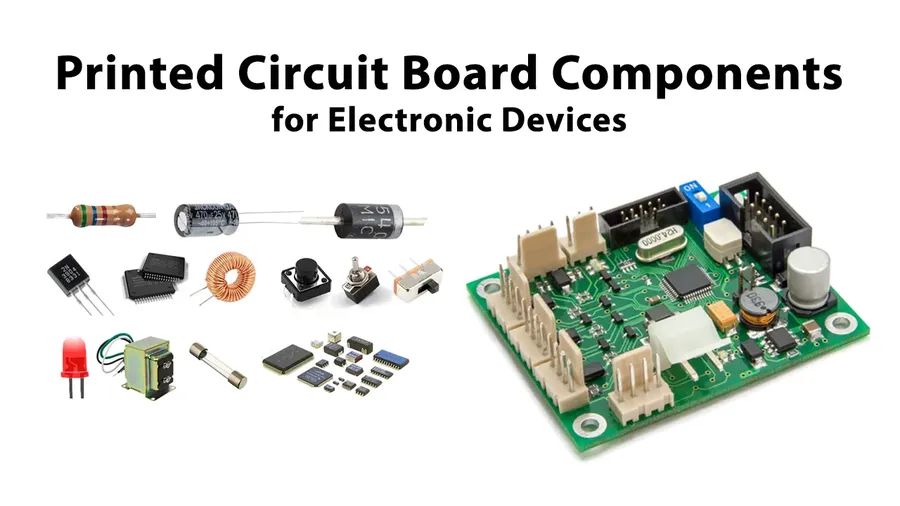
Beyond resistors, capacitors, and inductors, several other passive components play crucial roles in electronic circuits. These components, while not always at the forefront of discussion, are essential for various signal conditioning, power delivery, and circuit protection functions. This section will explore transformers, diodes, and coils, highlighting their specific functions and applications.
These components, while passive, are integral to the function of many electronic devices. Understanding their specific uses allows for a more comprehensive approach to circuit design and analysis.
Component
Function
Applications
Transformers
Steps up or down voltage levels and isolates circuits
Power supplies, audio amplification, impedance matching
Diodes
Allows current flow in one direction only
Rectification, signal demodulation, protection circuits
Coils
Stores energy in a magnetic field and resists changes in current flow
Filtering, tuned circuits, power inductors
Passive Components vs. Active Components: Key Differences
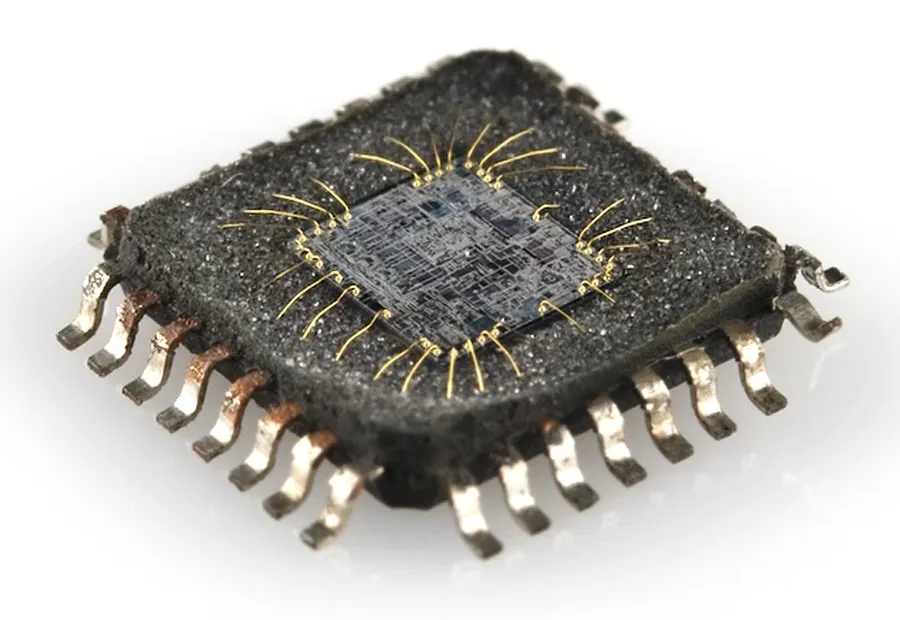
Integrated Circuit
The fundamental distinction between passive and active components lies in their interaction with energy within an electronic circuit. Passive components, such as resistors, capacitors, and inductors, manage energy by dissipating, storing, or absorbing it without introducing a net gain. Active components, conversely, control electron flow and can introduce power gain, making them the active elements in amplification, switching, and logic functions.
Feature
Passive Components
Active Components
Energy Handling
Dissipate, store, or absorb energy; do not generate power.
Can generate or amplify energy; control electron flow.
Power Gain
Do not provide power gain; have a gain of less than one.
Provide power gain or amplification.
Circuit Role
Typically used for voltage division, current limiting, filtering, and energy storage.
Used for switching, amplification, logic functions, and signal processing.
Examples
Resistors, capacitors, inductors, transformers, diodes (in some contexts).
Transistors (BJT, MOSFET), operational amplifiers (op-amps), diodes (in some contexts), integrated circuits (ICs).
Energy Source
Do not require an external power source to perform their function, although they are usually in a circuit powered by an external source.
Usually require an external power source to operate.
Control
Parameters are largely fixed and set when component is made.
Can have its operating characteristics altered by other parts of the circuit and requires control signals.
Frequently Asked Questions About Passive Components
This section addresses common inquiries regarding passive components in electronics, offering clear, concise answers to aid understanding and practical application. It covers aspects from material composition to testing methodologies, ensuring a comprehensive overview.
What materials are commonly used in the construction of passive components? Passive components utilize a variety of materials based on their function and desired electrical properties. Resistors often employ carbon film, metal film, or metal oxide. Capacitors may use ceramics, polymers, or electrolytic materials. Inductors typically consist of conductive wire wound around a core made of ferrite or air. The choice of material directly impacts the component's performance characteristics like temperature stability and power handling capability.
What are the differences between surface mount (SMD) and through-hole passive components? Surface mount devices (SMD) are designed to be mounted directly onto the surface of a printed circuit board (PCB) and are typically smaller and lighter. Through-hole components, on the other hand, have leads that are inserted into holes on the PCB. SMDs facilitate higher density circuit designs and are better suited for automated assembly processes, whereas through-hole components are easier to prototype and offer better mechanical strength.
How do I determine the correct value of a passive component needed for my circuit? Determining the correct passive component value involves analyzing the specific requirements of the circuit. For resistors, Ohm's Law is crucial for calculating resistance needed to limit current. Capacitors are chosen based on capacitance values for timing, filtering, or energy storage applications. Inductor values depend on inductance needed for filtering or energy storage, often influenced by desired frequency responses. Circuit simulation tools and datasheets provide detailed guidance and specifications that help to ensure the correct component selection.
Can passive components be tested to verify their functionality? Yes, passive components can be tested using various instruments. Resistors can be measured with a multimeter to verify their resistance value. Capacitors can be tested with a capacitance meter to measure their capacitance and check for shorts or opens. Inductors can be tested using an LCR meter, to measure inductance and resistance. These measurements help ensure the component meets the specifications and functions correctly within a circuit. Testing ensures the component does not deviate from its designed performance.
Is an LED a passive component? No, an LED (Light Emitting Diode) is considered an active component. Active components are capable of generating or amplifying electrical signals and require an external power source to operate. LEDs actively convert electrical energy into light energy; therefore they are not classified as passive components, which only manage electrical energy.
What are some common failure modes of passive components? Passive components can fail in several ways. Resistors can drift in value due to heat or age, or open entirely due to physical damage or overload. Capacitors can fail due to dielectric breakdown, leading to shorts, or dry out, leading to reduced capacitance. Inductors may experience open or short circuits due to wire breakage or core saturation. Environmental factors like humidity or extreme temperatures also can accelerate component degradation.
What are the passive components within a capacitor? A capacitor itself is considered a passive component, and it's made up of conductive plates separated by a dielectric material (an insulator). These dielectric materials can be ceramic, polymer, or electrolytic. The conductive plates store electric charge, and the dielectric material facilitates the storage by preventing charge flow between the plates and enhancing the capacitor's ability to store charge. The basic structure defines the electrical behavior.
Applications of Passive Components in Electronics
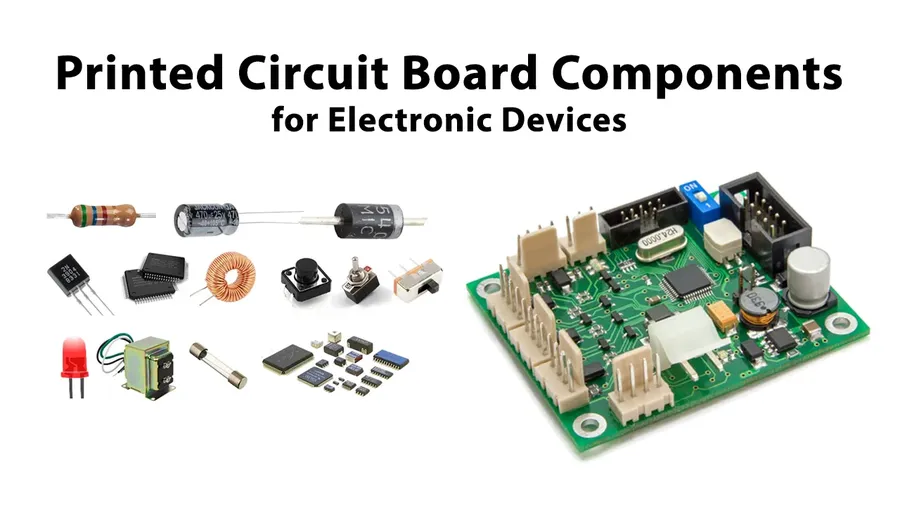
Circuit Board
Passive components are indispensable in a vast range of electronic applications, shaping the behavior of circuits from the most basic to the most complex. They are crucial for power management, signal conditioning, and ensuring the stability and reliability of electronic systems. Their applications are diverse and ubiquitous, forming the backbone of modern electronics.
Power Supplies Resistors, capacitors, and inductors are fundamental in power supplies for voltage regulation, filtering out noise, and storing energy. Resistors limit current, capacitors smooth voltage, and inductors manage current flow, all contributing to a stable power delivery. Transformers, another type of passive component, are used for stepping up or down voltages.
Signal Filtering Passive filters, employing combinations of resistors, capacitors, and inductors, are essential for selectively passing or blocking specific frequencies. These filters are critical in audio circuits for noise reduction and in communication systems for channel selection. They ensure that only the desired signals are processed, enhancing performance.
Timing Circuits Resistors and capacitors are used together to create RC circuits, which are fundamental in timing applications. This includes setting clock frequencies for microcontrollers, creating delays, and generating waveforms for various electronic devices. Their precision and stability are crucial for reliable operation.
Oscillators LC circuits, combining inductors and capacitors, are vital in oscillator circuits, generating sinusoidal waveforms that serve as clock signals in microprocessors or as carrier signals in communications. The precise matching of these components dictates the frequency and stability of the generated signal.
Impedance Matching Passive components, especially resistors and transformers, are utilized to match impedances between different parts of a circuit. This is critical in RF and audio applications to maximize power transfer and minimize reflections, ensuring efficient signal processing and transmission.
LED Circuits Resistors are essential in LED circuits to limit current and protect the LEDs from damage, ensuring their longevity and consistent performance. Proper resistor selection is critical for both the brightness and lifespan of the LEDs.
Sensor Applications Many sensor circuits use passive components to create voltage dividers, Wheatstone bridges and other measurement systems. These circuits allow the measurement of different physical phenomena through changes in resistance or capacitance.
Selecting the Right Passive Component
Choosing the appropriate passive component is crucial for ensuring the proper functionality and reliability of any electronic circuit. This selection process involves careful consideration of various electrical and physical parameters tailored to specific circuit requirements. Failing to select components that meet these requirements can lead to circuit malfunction or even component failure.
Tolerance Tolerance specifies the allowable deviation from a component's nominal value (e.g., resistance, capacitance). Resistors with tighter tolerances (e.g., ±1%) are required for precision circuits, while general-purpose applications might be satisfied with wider tolerances (e.g., ±5% or ±10%). High tolerance components often have higher price.
Voltage and Current Ratings Passive components are designed to operate within specific voltage and current limits. Operating a component beyond its ratings can lead to permanent damage and cause failures. It is crucial to check if the voltage and current ratings of the chosen component safely exceed the highest voltage and current demands of a circuit during operation, including considerations for transient conditions.
Temperature Coefficient The temperature coefficient describes how much a component's value changes with temperature variations. A stable temperature coefficient is desirable for applications that experience changes in temperature. Temperature stability is important to maintain circuit performance within the designed values. High precision circuits require components with small temperature coefficient values.
Mounting Type Passive components are available in various mounting types, including surface mount technology (SMT) and through-hole. Surface mount components are smaller and better suited for high-density circuit boards, while through-hole components offer more robust connections. The selection of a mounting type will depend on the assembly methods used, board density and the durability requirements of the device.
Power rating This refers to the maximum power a component can safely dissipate without being damaged or overheating. For example, resistors used in high power circuits must be chosen to have a high enough power rating to dissipate the heat and prevent damage.
Frequency characteristics Components like capacitors and inductors exhibit different behaviors at different frequencies. It’s essential to select components that are appropriate for the operating frequencies of the circuit. The frequency response of capacitors and inductors is determined by their parasitic values, such as ESR (Equivalent Series Resistance) and ESL (Equivalent Series Inductance).
Physical size and package Physical dimensions of the components are critical, especially in compact designs. It is essential to consider physical limitations in the designs to avoid size conflicts.
Passive components are the fundamental building blocks of electronic circuits, controlling and managing electrical energy with precision. Understanding their diverse roles—from resistors limiting current to capacitors storing charge and inductors managing magnetic fields—is crucial for effective circuit design. These seemingly simple devices underpin the functionality of complex technologies, highlighting the essential nature of passive components in electronics and their continued evolution.