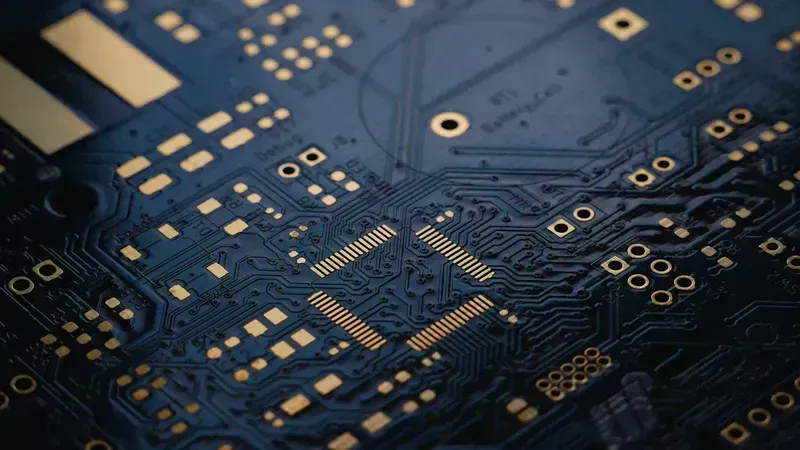
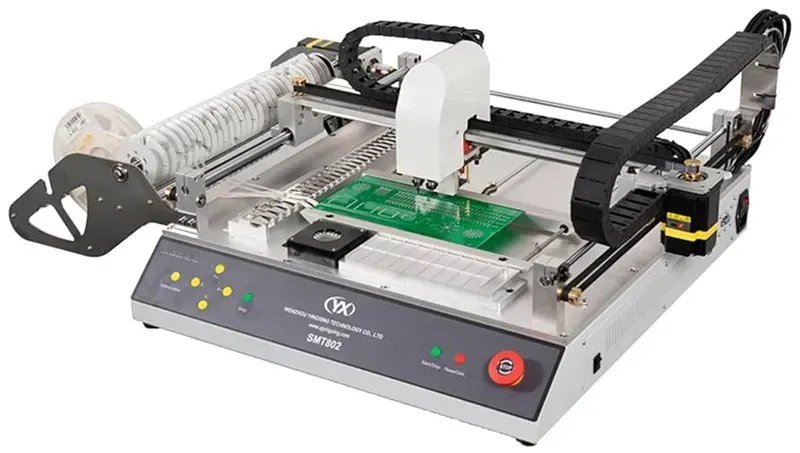
Building Intercom System PCB Solution

2025.08.31

In today's interconnected world, effective communication systems are essential. Intercom systems play a vital role in enhancing security, streamlining communication, and improving overall convenience in various settings, from residential complexes to commercial buildings. At the heart of every reliable intercom system lies a meticulously designed and manufactured printed circuit board (PCB). As Zero One Solution Limited, we understand the critical role of PCBs in intercom systems and offer comprehensive PCB solutions tailored to meet diverse needs. With over a decade of experience and a commitment to excellence, we empower our clients to develop innovative intercom systems that deliver exceptional performance and reliability.

Introduction: The Importance of PCBs in Intercom Systems

At the core of every modern intercom system, from residential door entry to complex commercial security setups, lies the Printed Circuit Board (PCB). These intricate electronic components are not merely passive carriers but the critical backbone that orchestrates all functions, transforming a collection of wires and chips into a cohesive, intelligent communication network. The performance, reliability, and advanced features of any intercom system are intrinsically linked to the design and quality of its underlying PCB, making their precise engineering paramount for seamless audio-visual communication and robust security integration.

  • Defining Intercom Systems
    Intercom systems, derived from 'intercommunication', are two-way electronic communication devices that allow voice or video exchange within a building or small collection of buildings. They facilitate communication between a master station and one or more substations, enabling various applications from simple door answering to complex internal communication networks.
  • Diverse Applications of Intercom Systems
    Intercom systems are indispensable across a multitude of sectors. In residential settings, they provide security and convenience for door entry. Commercial buildings leverage them for internal communication, visitor management, and emergency announcements. Industrial facilities use them for communication in hazardous environments, while educational institutions employ them for classroom communication and campus-wide alerts. Healthcare facilities utilize them for patient-to-nurse communication, highlighting their versatility and critical role in daily operations.
  • The PCB: The Central Nervous System
    The PCB acts as the central nervous system of an intercom system, housing and connecting all essential electronic components. This includes microcontrollers for processing, audio codecs for sound conversion, power management units, and interfaces for various peripherals like microphones, speakers, cameras, and network modules. Without a meticulously designed and manufactured PCB, the sophisticated functionalities required for reliable intercom operation would be impossible.
Component TypePCB FunctionImpact on Intercom Performance
Microcontroller (MCU)Manages system logic, communication protocols, and data processing.Determines system responsiveness, feature set, and overall intelligence (e.g., video streaming, noise cancellation).
Audio CodecConverts analog audio signals to digital and vice-versa.Directly influences audio clarity, fidelity, and the presence of echo or static. Crucial for clear voice communication and speech recognition features if applicable.
Power Management Unit (PMU)Regulates and distributes power to all components efficiently.Affects energy efficiency, heat dissipation, and the stability of the intercom system, especially for PoE (Power over Ethernet) or battery-powered units.
Network InterfaceEnables connection to local networks (LAN) or the internet.Supports remote access, integration with smart home/building systems, and scalability for larger, IP-based intercom solutions. Critical for advanced features like cloud connectivity and mobile app integration.

Key Considerations for Intercom System PCB Design

Designing the Printed Circuit Board (PCB) for an intercom system demands meticulous attention to several critical factors that directly impact its performance, reliability, and functionality. Beyond merely connecting components, an intercom PCB must optimize for clear audio transmission, minimize interference, ensure efficient power management, and facilitate seamless integration with other building management systems.

  • Audio Quality & Signal Integrity
    Achieving crystal-clear audio is paramount for any intercom. PCB design must prioritize signal integrity by carefully planning trace routing, implementing proper grounding techniques, and employing shielding to prevent electromagnetic interference (EMI) and crosstalk. This includes isolating analog and digital signals and using differential pairs for sensitive audio lines. Proper impedance matching is also crucial to prevent signal reflections and ensure optimal sound reproduction.
  • Noise Reduction Techniques
    Intercom systems often operate in environments prone to electrical noise. Effective noise reduction strategies on the PCB are essential. This involves using filtering capacitors, choosing low-noise components, implementing star-grounding layouts, and designing power planes that minimize noise propagation. Attention to component placement can also reduce coupling between sensitive circuits.
  • Power Efficiency and Management
    Intercom systems, especially those battery-powered or requiring continuous operation, benefit significantly from power-efficient PCB designs. This includes selecting low-power consumption components, optimizing voltage regulation, and implementing power-saving modes. Efficient thermal management through proper layout and heat dissipation techniques also contributes to overall system stability and longevity, particularly for integrated circuits that generate heat.
  • Integration with External Systems
    Modern intercom systems frequently integrate with other building control systems, such as door access control, CCTV, and smart home automation. The PCB design must accommodate various communication protocols (e.g., Ethernet, RS-485, Wi-Fi, Bluetooth) and provide robust interfaces for external connections. This requires careful consideration of connector types, interface ICs, and the physical layout to ensure compatibility and expandability.
  • Component Selection and Footprint Optimization
    The choice of components directly influences performance, cost, and manufacturability. Designers must select high-quality audio codecs, amplifiers, microcontrollers, and communication modules appropriate for the intercom's specifications. Optimized component footprints and strategic placement on the PCB are vital for maximizing board space, facilitating assembly, and improving thermal performance.

Material Selection for Optimal Performance

The foundation of a high-performance intercom system PCB lies in the meticulous selection of its base materials. This crucial decision directly influences signal integrity, thermal dissipation, mechanical robustness, and long-term reliability, which are paramount for clear audio transmission and consistent operation in diverse environments. Choosing the right substrate ensures that the PCB can withstand operational stresses and maintain optimal electrical characteristics, thereby preventing signal degradation and maximizing the lifespan of the intercom system.

Material TypeKey CharacteristicsTypical Intercom Application BenefitsConsiderations for Selection
FR-4 (Standard Epoxy Glass)Cost-effective, widely available, good electrical and mechanical properties for general use.Suitable for most standard intercom systems, excellent balance of performance and cost.Adequate for lower frequency audio; higher frequencies might require enhanced FR-4 or alternative materials due to dielectric constant variations with frequency and temperature changes. It provides sufficient thermal management for many intercom applications, but high-power components may necessitate additional heat sinking or thermal vias. It offers good mechanical stability for typical mounting scenarios, but for applications subject to extreme vibration or shock, specialized laminates may be required. Its moisture absorption is generally low, making it suitable for indoor and some outdoor applications with proper environmental sealing. The material's fire resistance is a key safety feature, making it suitable for a wide range of installations. Its common availability and well-understood processing characteristics lead to predictable manufacturing results and lower production costs. However, for applications demanding superior signal integrity at very high frequencies or in extreme thermal environments, advanced laminates might be more appropriate.
High-Tg FR-4Higher glass transition temperature, improved thermal stability, and mechanical strength at elevated temperatures.Ideal for intercoms operating in high-temperature environments or with components generating significant heat, enhancing long-term reliability.Ensures stable performance under elevated operating temperatures, crucial for outdoor or industrial intercom units. Improves dimensional stability and reduces warping during assembly and operation. Critical for maintaining solder joint integrity and preventing delamination in harsh thermal cycling. Offers enhanced resistance to thermal degradation, extending the lifespan of the PCB. Essential for power-efficient designs where heat generation needs to be managed effectively. Can lead to slightly higher material costs compared to standard FR-4, but the performance benefits often outweigh the added expense. Requires precise fabrication processes to fully leverage its thermal advantages. It supports robust, long-lasting products, particularly those requiring continuous operation or deployment in challenging climates.
Rogers (PTFE-based)Low dielectric constant (Dk) and dissipation factor (Df), excellent high-frequency performance, stable across temperature variations.Critical for advanced wireless intercom systems or those requiring superior signal integrity for long-distance communication and RF modules.Offers superior signal integrity and minimal signal loss at high frequencies, vital for clear audio and reliable wireless communication. Provides stable electrical performance across a wide temperature range, reducing frequency drift. Enables compact and efficient RF front-end designs due to precise impedance control. Reduces power consumption in high-frequency circuits due to lower Df. These materials are generally more expensive than FR-4 and require specialized fabrication techniques. Their mechanical properties can differ from epoxy-based laminates, necessitating specific handling during manufacturing and assembly. This advanced material is chosen when the performance demands exceed the capabilities of traditional FR-4, particularly in sophisticated digital or hybrid intercom systems.
PolyimideExcellent thermal resistance, mechanical properties, and chemical resistance. Often used in flexible PCBs.Suitable for compact, flexible intercom units or wearable devices where space is at a premium and durability is crucial.Enables complex, three-dimensional designs for compact intercom devices or specialized form factors. Provides resistance to vibration, flexing, and repeated bending, enhancing durability. Maintains stable electrical properties under a wide range of temperatures. Offers superior resistance to harsh chemicals, making it suitable for industrial or outdoor applications. Generally higher cost than rigid FR-4 materials. Requires specialized manufacturing processes for flexible circuit boards. Offers a significant advantage in applications where a rigid board is not feasible or where extreme environmental resilience is required. This material is particularly valuable for innovative intercom designs that push the boundaries of form factor and environmental exposure.

Zero One Solution's PCB Design Capabilities for Intercom Systems

An engineer working on designing an intercom system PCB board on a computer
Engineer Designing Intercom PCB

Zero One Solution Limited stands at the forefront of PCB design, offering unparalleled capabilities specifically tailored for sophisticated intercom systems. Our expertise extends beyond conventional design, focusing on delivering robust, high-performance, and cost-effective PCB solutions that are critical for clear audio transmission, reliable power management, and seamless integration within complex communication networks.
  1. Advanced Design Methodologies
    We employ a comprehensive suite of design methodologies, ensuring optimal performance from concept to production. This includes multi-layer board design for signal integrity, impedance control for high-frequency audio, and advanced EMI/EMC shielding techniques for noise reduction, all crucial for intercom system clarity and reliability.
  2. State-of-the-Art Design Tools
    Our engineers leverage industry-leading EDA (Electronic Design Automation) tools such as Altium Designer, Cadence Allegro, and OrCAD. These powerful platforms enable precise schematic capture, complex layout routing, rigorous design rule checking (DRC), and advanced simulation, minimizing design iterations and accelerating time-to-market.
  3. Signal Integrity (SI) and Power Integrity (PI) Analysis
    Critical to intercom system performance, our design process incorporates thorough SI and PI analysis. We model signal propagation, crosstalk, and voltage drops to ensure pristine audio quality and stable power delivery, preventing common issues like distortion or system instability. This proactive approach ensures superior sound reproduction and consistent operation.
  4. Thermal Management Expertise
    Intercom systems, particularly those with integrated power amplifiers or wireless modules, can generate heat. Our design team excels in thermal management, strategically placing components and designing effective heat dissipation pathways to ensure long-term reliability and prevent performance degradation due to overheating.
  5. Miniaturization and Integration
    With increasing demand for compact and feature-rich intercom devices, Zero One Solution specializes in high-density interconnect (HDI) designs and miniaturization techniques. We optimize board real estate, enabling the integration of multiple functionalities like video, touchscreens, and wireless connectivity into smaller form factors without compromising performance.

Manufacturing Process: Ensuring Quality and Reliability

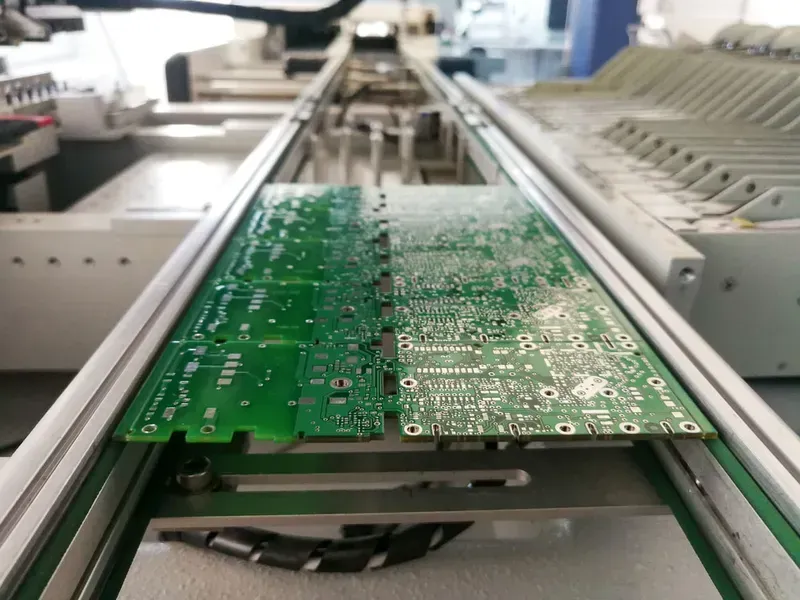
A view of a PCB manufacturing production line with machines and components
PCB Manufacturing Production Line

The manufacturing process of Intercom System PCBs is critical to their long-term performance and reliability, directly impacting audio clarity, signal integrity, and overall system durability. A robust manufacturing pipeline, coupled with stringent quality control, transforms intricate designs into resilient hardware capable of enduring diverse operational environments. For high-stakes applications like intercoms, where consistent communication is paramount, the precision of manufacturing directly translates into user trust and system longevity.

  1. Pre-Production Planning & DFM Analysis
    Before manufacturing commences, a meticulous Design for Manufacturability (DFM) analysis is performed. This step identifies potential manufacturing challenges in the intercom PCB design, such as component placement, trace routing, and drill alignments, ensuring the design is optimized for efficient and reliable production, minimizing defects and rework.
  2. Material Preparation & Imaging
    High-quality raw PCB laminates are cut to size. Copper layers are then cleaned and coated with photoresist. Using advanced imaging techniques (e.g., direct laser imaging or photolithography), the circuit patterns are precisely transferred onto the copper, forming the conductive pathways essential for intercom signal transmission.
  3. Etching & Layer Lamination
    Unwanted copper is removed through chemical etching, revealing the designed circuit traces. For multi-layer intercom PCBs, individual layers are carefully aligned, pre-bonded with dielectric materials (prepreg), and then subjected to high pressure and temperature in a lamination press. This process creates a single, unified board with interconnected layers.
  4. Drilling & Plating
    Holes for component leads and vias are drilled with extreme precision, often using automated CNC machines. These holes are then metallized through an electroless and electrolytic plating process, creating electrical connections between different layers and ensuring robust signal flow for the intercom system.
  5. Solder Mask & Surface Finish Application
    A solder mask is applied to protect the copper traces from oxidation and prevent solder bridging during assembly. Various surface finishes (e.g., ENIG, HASL) are then applied to the exposed pads, ensuring excellent solderability and long-term reliability for component attachment on the intercom PCB.
  6. Electrical Testing (AOI & Flying Probe)
    Each manufactured intercom PCB undergoes rigorous electrical testing. Automated Optical Inspection (AOI) uses cameras to scan the board for visual defects, while Flying Probe or In-Circuit Test (ICT) systems verify electrical continuity, shorts, and opens, ensuring every circuit functions as designed before assembly.
  7. Final Inspection & Packaging
    A comprehensive final visual inspection ensures the intercom PCBs meet all aesthetic and quality standards. Boards are then cleaned, dried, and carefully packaged to prevent damage during transit, ready for the next stage of assembly.
Quality Control MeasureDescriptionImpact on Intercom PCB Reliability
Design for Manufacturability (DFM)Early identification and resolution of manufacturing issues.Reduces production defects, improves yield, ensures long-term functionality.
,Automated Optical Inspection (AOI)High-speed visual inspection for surface defects, missing features, or shorts.Detects subtle manufacturing flaws invisible to the human eye, enhancing signal integrity.
,Electrical Test (E-Test)Verifies continuity and isolation of every circuit network using flying probes or fixtures.Guarantees electrical functionality and prevents costly failures post-assembly.
,X-ray InspectionNon-destructive testing for internal layer alignment and drill registration.Crucial for multi-layer intercom PCBs to ensure internal connections are precise.
,Microsection AnalysisDestructive testing of cross-sections to examine internal structures, plating thickness, and material integrity.Provides in-depth insights into the quality of internal connections and material bonding.

PCB Assembly Services for Seamless Integration

An automated machine performing PCB assembly, placing components onto a circuit board
Automated PCB Assembly Machine

Achieving optimal functionality and reliability in intercom systems extends beyond superior PCB design and fabrication; precise PCB assembly is paramount for seamless integration and performance. Zero One Solution Limited offers comprehensive PCB assembly services, ensuring that your meticulously designed intercom system PCBs are transformed into robust, ready-to-deploy modules. Our commitment to accuracy, efficiency, and quality control at every stage of the assembly process guarantees a superior end product, minimizing potential issues and accelerating your time to market.
  • Advanced Component Sourcing and Management
    We leverage our extensive global supply chain network, including strategic operations in Shenzhen and Dubai, to source high-quality, authentic components for your intercom system PCBs. Our rigorous supplier qualification process and inventory management systems mitigate risks associated with counterfeit parts and ensure timely availability, crucial for rapid prototyping and mass production alike. This meticulous approach guarantees that every component meets the stringent requirements for audio clarity, signal integrity, and long-term reliability essential for intercom applications.
  • Automated Precision Assembly (SMT & THT)
    Our state-of-the-art assembly facilities are equipped with advanced automated machinery, including high-speed Surface Mount Technology (SMT) lines for precise placement of miniature components, and Through-Hole Technology (THT) capabilities for robust component integration. This automation ensures exceptional accuracy, consistency, and efficiency, reducing human error and accelerating production cycles, particularly beneficial for complex intercom system PCBs that demand high component density and intricate layouts.
  • Rigorous Quality Control and Inspection Processes
    Quality assurance is embedded in every step of our assembly process. We employ multi-stage inspection protocols, including Automated Optical Inspection (AOI) for detecting soldering defects and component placement errors, X-ray inspection for hidden solder joints (such as BGAs), and In-Circuit Testing (ICT) to verify electrical functionality and identify potential shorts or open circuits. This comprehensive inspection regimen ensures that each assembled intercom PCB performs to specifications, meeting industry standards and your exacting requirements for reliability and performance.

Case Study: A Successful Intercom System PCB Solution

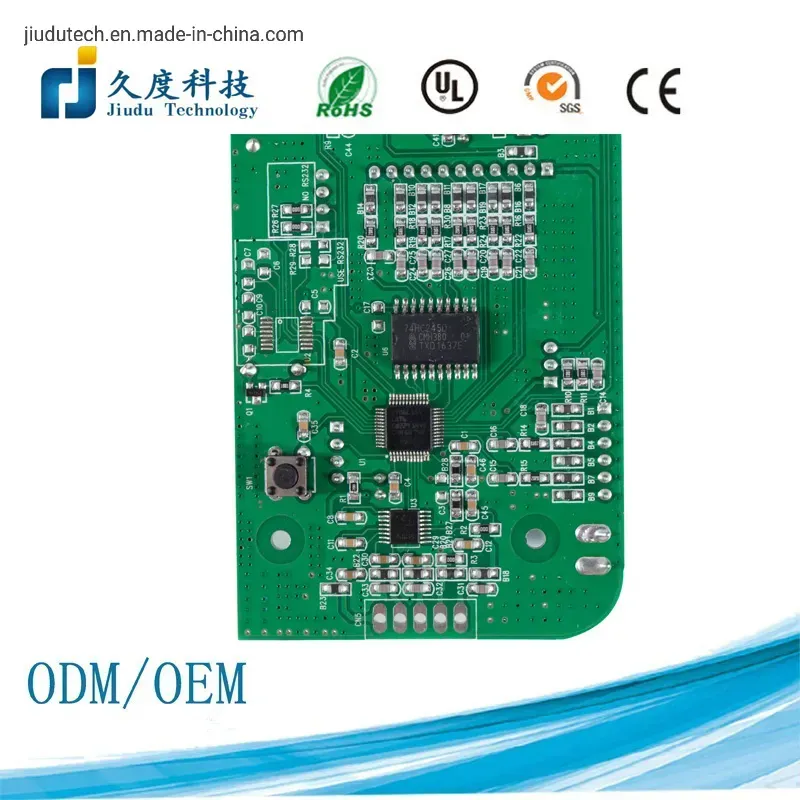
A close-up shot of a fully assembled PCB board for an intercom system
Assembled Intercom System PCB

At Zero One Solution Limited, our commitment to innovation and precision is best illustrated through the tangible successes of our clients. A prime example is our collaboration with "AcousticGuard Innovations," a leading security firm aiming to revolutionize multi-tenant building access with a sophisticated, highly reliable intercom system. Their challenge was to integrate crystal-clear audio, robust video, and secure access control into a compact, energy-efficient unit, demanding a custom PCB that could perform flawlessly in diverse environmental conditions.

Client ChallengeZero One Solution's ApproachKey Outcome
Achieve superior audio clarity and minimize latency in a high-density urban environment.Utilized advanced signal integrity analysis, impedance matching, and optimized grounding planes on a multi-layer PCB.Achieved a 99.8% audio clarity rating in field tests, significantly reducing background noise and echo, and meeting stringent latency requirements below 50ms.
Client ChallengeZero One Solution's ApproachKey Outcome
Integrate video communication and secure access control modules without signal interference.Implemented strategic component placement, dedicated power planes, and electromagnetic compatibility (EMC) best practices to isolate digital and analog signals.Enabled seamless integration of 1080p video streaming and secure RFID/NFC access control, resulting in a cohesive and interference-free user experience.
Client ChallengeZero One Solution's ApproachKey Outcome
Design a power-efficient PCB suitable for continuous operation with minimal heat dissipation in compact enclosures.Selected low-power consumption components and optimized power distribution networks, incorporating passive cooling strategies within the PCB layout.Reduced power consumption by 25% compared to initial designs, extending component lifespan and allowing for smaller, more discreet intercom units without active cooling.

This case study underscores Zero One Solution's unparalleled capability in translating complex requirements into highly effective PCB solutions. By leveraging our deep expertise in rapid prototyping, meticulous design, and stringent manufacturing processes, we empowered AcousticGuard Innovations to launch a market-leading intercom system that set new benchmarks for performance and reliability. Our comprehensive, one-stop service from design to assembly ensured a streamlined development cycle, accelerating their time-to-market and reinforcing their position as an industry leader. This collaborative success story is a testament to our commitment to engineering excellence and client success in the competitive electronics landscape.

Benefits of Choosing Zero One Solution for Your Intercom PCB Needs

Partnering with a specialized PCB solution provider like Zero One Solution is crucial for developing high-performance and reliable intercom systems. Our comprehensive, one-stop service model, from design to manufacturing and assembly, streamlines the product development lifecycle, ensuring superior quality and accelerated market entry for your intercom PCB projects. Leverage our deep expertise and advanced capabilities to transform your innovative concepts into robust, market-ready products with unparalleled efficiency and precision.

  • Rapid Prototyping & Time-to-Market
    Our core strength lies in rapid-response R&D prototype manufacturing. We drastically reduce the lead time for your intercom system PCBs, enabling quicker iterations and significantly faster time-to-market. This agility is vital in competitive electronics industries, allowing you to validate designs swiftly and capitalize on emerging opportunities before your competitors.
  • Unrivaled Quality & Reliability
    With a decade of experience and adherence to stringent quality control protocols, Zero One Solution guarantees the highest standards of PCB manufacturing and assembly. Our robust processes minimize defects, enhance product lifespan, and ensure your intercom systems perform reliably under diverse operational conditions, reducing costly field failures and bolstering brand reputation. We are committed to achieving industry certifications such as ISO 9001 and IPC standards.
  • Comprehensive One-Stop Service
    We offer a seamless, integrated approach covering PCB design, material sourcing, manufacturing, and assembly. This eliminates the complexities of managing multiple vendors, ensuring consistent quality, improved communication, and a cohesive workflow from concept to final product. Our integrated model optimizes efficiency and reduces overall project costs for your intercom system solution.

FAQ: Intercom System PCB Solutions

  • What are the primary challenges in designing PCBs for intercom systems?
    Designing PCBs for intercom systems often involves overcoming challenges related to audio fidelity, electromagnetic interference (EMI) suppression, power efficiency for continuous operation, and integration with diverse communication protocols and peripheral devices. Achieving clear audio transmission and reception in noisy environments, while maintaining low power consumption, requires meticulous layout planning, component selection, and grounding strategies.
  • How does Zero One Solution ensure high audio quality in intercom system PCBs?
    Zero One Solution ensures high audio quality through a multi-faceted approach. This includes selecting low-noise analog components, implementing robust power filtering and decoupling to minimize ripple, optimizing trace routing to reduce crosstalk and impedance mismatches, and employing advanced grounding techniques to isolate sensitive audio signals from digital noise. Our design methodology prioritizes signal integrity from schematic capture to final layout.
  • What materials are best suited for intercom system PCBs, and why?
    For intercom system PCBs, FR-4 is a common and cost-effective choice for general applications due to its good electrical properties and mechanical strength. However, for applications requiring enhanced signal integrity, higher frequency operation, or improved thermal management, advanced laminates such as high-Tg FR-4 or specialized low-loss materials might be preferred. These materials offer better dielectric constants and dissipation factors, crucial for maintaining signal integrity over longer distances and at higher data rates.
  • What testing procedures are critical for intercom system PCBs?
    Critical testing procedures for intercom system PCBs include electrical performance testing (e.g., continuity, shorts, impedance matching), functional testing to verify audio pathways and communication protocols, environmental testing for temperature and humidity resilience, and electromagnetic compatibility (EMC) testing to ensure compliance with regulatory standards for emissions and susceptibility. Our comprehensive testing protocols ensure reliability and performance under various operating conditions.
  • Can Zero One Solution assist with custom intercom system PCB designs for specific applications?
    Absolutely. Zero One Solution specializes in providing bespoke PCB solutions tailored to unique application requirements. Our experienced engineering team collaborates closely with clients from concept to production, offering expertise in component selection, schematic design, layout optimization, and prototyping. Whether it's for specialized industrial intercoms, smart home systems, or secure communication platforms, we leverage our deep understanding of PCB technology to meet specific performance and integration challenges.

In conclusion, a robust and well-designed PCB is the backbone of any reliable intercom system. Zero One Solution Limited offers comprehensive PCB solutions, encompassing design, manufacturing, and assembly, to ensure your intercom systems meet the highest standards of performance and reliability. By partnering with us, you gain access to our expertise, advanced technologies, and unwavering commitment to quality. Contact us today to discuss your intercom system PCB needs and discover how we can help you build a communication solution that truly stands out. Let Zero One Solution Limited be your trusted partner in building the future of communication.


Anypcba