
In the modern retail landscape, the Electronic Shelf Label (ESL) has moved from a luxury to a baseline operational requirement. However, the true cost of these systems is often hidden in the frequency of battery replacements and the mounting labor costs associated with maintenance. By re-evaluating PCB architecture, retailers can unlock hidden ROI through reduced power leakage and extended component lifespans.
The Hidden Costs of Power Inefficiency in Retail Electronics
The Erosion of Operating Margins via Quiescent Current
In the context of long-life Electronic Shelf Label (ESL) systems, quiescent current (IQ)—the current consumed by the device while in sleep mode—is the silent killer of profitability. Because ESLs spend over 99% of their operational lifecycle in a dormant state, even micro-ampere variations in board-level power consumption compound significantly over thousands of units. When a PCB design fails to minimize leakage, the cumulative effect necessitates shorter battery replacement cycles, directly impacting the Total Cost of Ownership (TCO).
Quantifying the Financial Impact
| Inefficiency Factor | Operational Impact | Cost Multiplier |
|---|---|---|
| High Quiescent Current | Premature Battery Failure | High labor costs for site visits |
| PCB Leakage Paths | Unpredictable Discharge | Increased logistics & disposal overhead |
| Inefficient Voltage Regulators | Thermal Energy Loss | Reduced cycle life per battery pack |
Frequently Asked Questions on Power Inefficiency
- How does PCB layout contribute to power leakage?
Poor dielectric isolation and suboptimal component placement can create parasitic leakage paths, especially in high-humidity retail environments where moisture exacerbates conductive bridges. - What is the secondary cost of frequent battery maintenance?
Beyond the component cost of the battery, retailers face significant labor expenses and operational downtime, often negating the initial savings achieved by purchasing cheaper, less efficient PCB designs.
Principles of Low-Leakage PCB Architecture
Minimizing Passive Power Dissipation
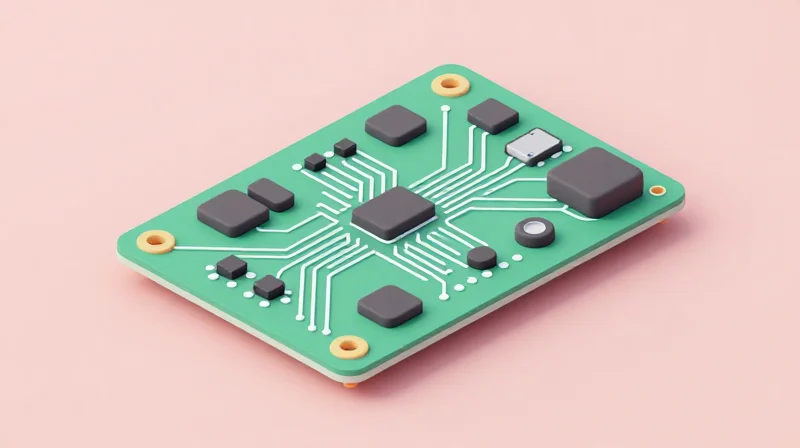
Architecting for low leakage requires a holistic approach that targets the parasitic pathways which drain energy while the device is in sleep mode. By focusing on high-impedance routing, component selection with sub-microamp quiescent currents, and strategic power gating, engineers can significantly reduce the standby power floor, which is the primary driver of premature battery replacement costs in large-scale ESL deployments.
Strategic Component Selection
| Component Type | Leakage Factor | Optimization Strategy |
|---|---|---|
| Voltage Regulators | High Quiescent Current | Select Nano-power LDOs or DC-DC converters |
| Capacitors | Dielectric Leakage | Utilize high-grade C0G/NP0 ceramics |
| Protection Diodes | Reverse Bias Current | Select ultra-low leakage TVS diodes |
PCB Design Best Practices
- How does trace length impact leakage?
Longer traces increase the surface area available for moisture absorption and parasitic capacitance, both of which can facilitate leakage currents in high-impedance signals. - Why is surface cleanliness critical?
Contamination such as solder flux residue creates low-resistance paths across the PCB surface, leading to conductive leakage that significantly degrades battery performance over long durations. - What role does power domain partitioning play?
By physically isolating the radio and display driver stages from the sensing circuitry, you can utilize load switches to fully disconnect power to inactive modules, eliminating dormant current draw.
Implementing a 'clean sheet' approach to PCB layout involves keeping sensitive high-impedance nets away from high-energy rails and ensuring adequate guard banding. While these design choices may incrementally increase initial PCB manufacturing costs, the long-term ROI is realized through a drastic reduction in maintenance labor and battery inventory requirements across a five-to-ten-year lifecycle.
Quantifying the Five-Year ROI Model

The Economics of Micro-Ampere Optimization
In massive Electronic Shelf Label (ESL) deployments, the ROI of high-efficiency PCB design is not found in unit cost savings, but in the radical reduction of Total Cost of Ownership (TCO). By optimizing quiescent current, engineers can extend battery life beyond the standard three-year cycle, effectively deferring or eliminating the most expensive operational cost: manual battery replacement.
| Parameter | Standard PCB Design | High-Efficiency PCB Design |
|---|---|---|
| Average Quiescent Current | 5.5 µA | 1.8 µA |
| Projected Battery Life | 3.2 Years | 5.8 Years |
| Maintenance Cycles (5yr) | 1.0 | 0.0 |
| Battery Replacement Cost | High | Negligible |
Quantifying the Five-Year TCO Impact
The financial model hinges on the labor-to-component cost ratio. While a high-efficiency PCB may carry a 5-8% price premium in manufacturing, the elimination of a single mid-cycle battery replacement for a fleet of 50,000 ESL units yields immediate ROI. When calculating TCO, we must include not just the battery replacement unit cost, but the technician labor hours and the associated retail operational disruption during the swap.
- Direct Component Savings
Fewer battery change-outs represent a direct decrease in logistical overhead and consumable procurement. - Labor and Deployment Efficiency
Staffing costs for maintenance typically account for over 70% of the five-year operational spend; extending longevity shifts this budget toward value-added store activities. - Environmental/CSR Impact
Reduction in lithium-ion waste contributes to corporate sustainability goals, which is increasingly factored into enterprise-level purchasing decisions.
Frequently Asked Questions
- Is the ROI immediate?
No, the ROI of efficient PCB design is typically realized in the second half of the deployment lifecycle, specifically when the standard design requires maintenance that the high-efficiency design avoids. - Does PCB efficiency affect data throughput?
Not inherently; sophisticated power gating ensures that high performance is available during active transmission while minimizing consumption during deep-sleep states.
Reducing Maintenance Labor: The Direct Impact on Store Operations
The Hidden Cost of Frequent Battery Replacements
For large-scale retail deployments, the cost of an Electronic Shelf Label (ESL) system extends far beyond hardware acquisition. When PCB design lacks power efficiency, the accelerated discharge cycle necessitates a higher frequency of battery swaps. This manual intervention represents the single most significant maintenance burden in store operations. Relying on high-efficiency, low-leakage architecture effectively doubles the interval between service events, shifting labor allocation from reactive maintenance to strategic store activities.
Operational Impact Comparison
| Metric | Standard PCB Design | High-Efficiency PCB Design |
|---|---|---|
| Battery Life Expectancy | 2.5 Years | 5+ Years |
| Maintenance Cycles (5 Years) | 2 per device | 1 per device |
| Labor Expenditure | High (Interruption-heavy) | Low (Scheduled maintenance) |
| Store Operational Risk | Frequent display downtime | Minimal service disruptions |
Minimizing Store-Level Disruptions
Beyond the direct labor costs of technicians, frequent battery changes create localized operational friction. Maintenance crews often require access to shelves during business hours, disrupting customer flow and potentially obstructing product accessibility. Designing PCBs with robust power management ensures that the shelf edge ecosystem remains reliable for longer durations, which is critical for maintaining consistent price integrity and promotional synchronization without the constant interference of hardware maintenance.
Key Questions on Maintenance Labor ROI
- How does PCB power efficiency impact technician overhead?
Reduced quiescent current directly extends battery life, allowing retailers to align battery replacement cycles with other routine store maintenance, significantly lowering 'per-call' labor costs. - What is the consequence of high-leakage designs?
High-leakage designs force 'emergency' replacement cycles that fall outside of planned maintenance windows, leading to unpredictable labor demands and higher hourly service rates. - Can design choices eliminate physical maintenance entirely?
While not entirely eliminated, high-efficiency architectures can push battery replacement timelines beyond the expected lifecycle of the shelf label itself, effectively making the units maintenance-free for the duration of their deployment.
Component Selection: Beyond the Datasheet
The Hidden Costs of Datasheet-First Engineering
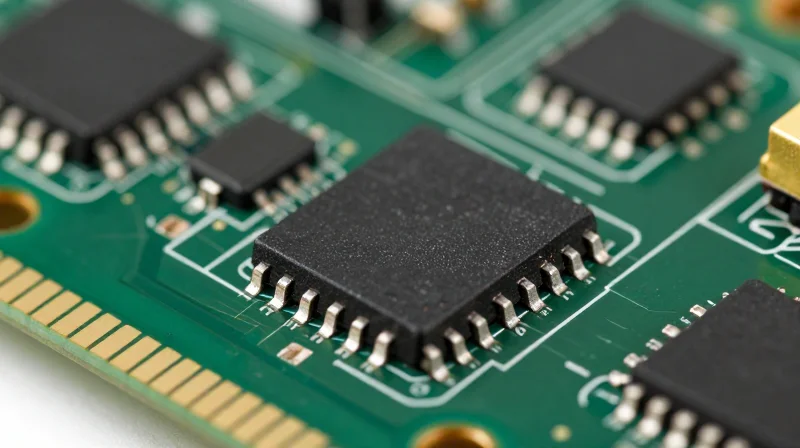
Relying strictly on nominal specifications often leads to premature failure in Electronic Shelf Label (ESL) applications. While a microcontroller may claim low power consumption, the true ROI is dictated by its behavior in deep-sleep modes, where the device spends over 99% of its operational life. Engineers must prioritize components with minimal leakage current and superior stability across temperature fluctuations typical of retail environments.
Critical Passive Component Selection
| Component Type | Key Metric | Impact on ROI |
|---|---|---|
| Capacitors | Low Leakage/ESR | Extends discharge cycles for coin cells |
| Resistors | Precision/Tolerance | Reduces voltage divider wasted current |
| Inductors | DCR Efficiency | Maximizes DC-DC conversion efficiency |
Frequently Asked Questions: Component Strategy
- Why is ESR critical for battery-powered ESLs?
High Equivalent Series Resistance (ESR) in capacitors causes significant voltage drops under high-current radio pulses, which can trigger premature battery voltage cutoff even when capacity remains. - Does component tolerance impact long-term ROI?
Yes; tight-tolerance components reduce the need for aggressive guard-banding in power budgets, allowing for smaller, more cost-effective batteries without sacrificing reliability. - How do I evaluate ICs for deep-sleep performance?
Ignore nominal operating current and focus exclusively on the datasheet 'Sleep Current' or 'Deep-Sleep' metrics with real-time clock (RTC) enabled, as this is the baseline consumption for the system's multi-year life.
Firmware Synergy: Complementing Hardware Efficiency
Orchestrating Hardware-Level Power Efficiency
While hardware efficiency establishes the theoretical limit of power consumption, firmware acts as the active governor that dictates real-world battery longevity. For ESL systems, the firmware stack must transition from extreme micro-amp sleep states to high-speed communication bursts with near-zero latency, ensuring that no peripheral component remains powered longer than necessary.
Strategies for Idle-State Minimization
To achieve a decade of operation on a single coin cell, the firmware must leverage hardware-level features like DMA (Direct Memory Access) and interrupt-driven logic. By offloading data transfer tasks to hardware peripherals, the CPU core can remain in a deep-sleep state for 99% of its lifecycle.
| Strategy | Hardware Dependency | Firmware Implementation |
|---|---|---|
| Deep Sleep | Low-Leakage ICs | Register-level power gating |
| DMA Transfers | Integrated DMA controller | Asynchronous data handling |
| Burst Comm | High-speed transceiver | Aggressive duty-cycle timing |
Optimization Questions and Answers
- How does interrupt-driven design impact battery life?
Polling-based loops consume significant power by keeping the CPU active; interrupt-driven designs wake the system only when necessary, keeping the processor in low-power modes during idle periods. - What is the role of firmware in preventing peripheral leakage?
Firmware can programmatically disable internal pull-up/pull-down resistors and set unused GPIO pins to high-impedance states to eliminate parasitic current draw from the physical layout. - Does higher code complexity decrease ROI?
Initial development time increases, but efficient code execution reduces the number of CPU cycles per task, directly lowering the overall energy footprint and extending the battery replacement interval.
Sustainability and Regulatory Compliance
The Intersection of Efficiency and Environmental Governance
High-efficiency PCB design is no longer just a performance metric; it is a fundamental requirement for meeting stringent environmental, social, and governance (ESG) standards. By minimizing energy consumption and extending battery longevity, ESL systems reduce the frequency of hazardous chemical waste associated with frequent battery replacements and premature unit disposal. This approach aligns directly with international directives such as the WEEE (Waste Electrical and Electronic Equipment) and RoHS (Restriction of Hazardous Substances), protecting manufacturers from regulatory penalties and enhancing corporate sustainability ratings.
Regulatory Drivers for Sustainable PCB Architecture
| Regulation | Impact on ESL Design | ROI Driver |
|---|---|---|
| RoHS | Elimination of lead/halogenated flame retardants | Reduces long-term liability costs |
| Ecodesign Directive | Mandates improved energy efficiency | Lowers operational carbon footprint |
| WEEE Directive | Requires modular, recyclable design | Extends product lifecycle, amortizing costs |
Sustainability FAQ
- How does efficient PCB design reduce electronic waste?
By optimizing power delivery and thermal performance, the lifespan of the PCB and its components is significantly increased, preventing premature hardware failure and reducing total landfill contribution. - Are there tax incentives for choosing sustainable PCB designs?
Many regions offer carbon credits or tax exemptions for hardware architectures that demonstrate measurable energy reductions, directly improving the internal rate of return (IRR) on capital investment. - Does regulatory compliance limit design choices?
While compliance necessitates careful component selection, it often forces engineers to innovate with high-efficiency materials that ultimately perform better and last longer, creating a competitive market advantage.
Strategic Implementation Guidelines

Strategic Sourcing and Design Lifecycle Management
To achieve a positive ROI on high-efficiency ESL deployments, procurement and engineering teams must move beyond short-term unit price considerations. Implementation should focus on the Total Cost of Ownership (TCO), accounting for the significant reduction in battery replacement labor and waste management costs over a 5-to-10-year horizon.
| Implementation Phase | Key Focus Area | ROI Driver |
|---|---|---|
| Design Specification | Ultra-Low Leakage Components | Extended battery life intervals |
| Vendor Selection | Long-Term Supply Availability | Minimal redesign overhead |
| Deployment | Automated Firmware Provisioning | Reduced field labor costs |
| Sustainability | Component Recyclability | Reduced regulatory tax liability |
Best Practices for Large-Scale Deployment
- How do we validate PCB efficiency gains before mass deployment?
Utilize precision power profiling tools to measure current draw in simulated sleep, active, and communication modes across a statistically significant sample size. - What role does procurement play in hardware longevity?
Procurement should prioritize vendors providing 'product longevity programs,' ensuring that the specific integrated circuits used in the initial design remain available for the duration of the system's intended lifecycle. - How can hardware design minimize long-term maintenance?
Implement modular battery holders and use conformal coatings to protect PCBs from humidity and shelf-level contaminants, significantly reducing field failures.
Conclusion: Sustaining Efficiency through Governance
The successful implementation of high-efficiency ESL hardware relies on a governance model that treats the PCB as a core business asset rather than a consumable. By standardizing component specifications across global deployments and prioritizing energy-efficient firmware interoperability, enterprises can capture the full economic benefits of their hardware investment while meeting ambitious sustainability targets.
Optimizing PCB design is not merely an engineering choice; it is a strategic business decision that directly impacts the bottom line. By prioritizing high-efficiency architectures, retailers can effectively future-proof their infrastructure and drastically reduce the burden of long-term maintenance. Contact our engineering team today to review your current hardware specifications and begin building a more efficient, cost-effective retail shelf display system.
