
In the competitive landscape of retail technology, the longevity of your Electronic Shelf Label (ESL) hardware is your biggest asset. When your design requires a consistent five-year battery lifespan, every component counts—especially the PCB. Choosing a manufacturing partner isn't just about assembly; it's about engineering integrity. Here is how to vet your next partner to ensure long-term, low-power performance.
Understanding the Impact of PCB Quality on Battery Longevity
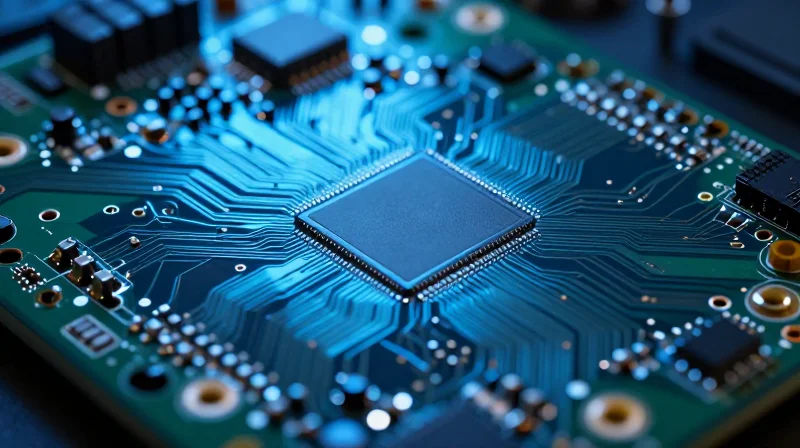
The Direct Link Between PCB Integrity and Power Efficiency
In low-power hardware like Electronic Shelf Labels, the PCB is not merely a mounting substrate; it is an active component in the device's energy budget. Manufacturers that lack rigorous material control or precise etching processes introduce hidden parasitic elements. When a device relies on coin-cell batteries meant to last years, even nano-ampere leakage currents caused by poor substrate cleanliness or improper trace geometry can significantly reduce operational lifespan.
Critical Factors Affecting Battery Longevity
| PCB Factor | Physical Cause | Impact on Battery |
|---|---|---|
| Trace Resistance | Insufficient copper weight or narrow traces | Voltage drops triggering premature low-battery cutoffs |
| Leakage Current | Substrate ionic contamination | Constant background power drain even in sleep mode |
| Parasitic Capacitance | Improper layer spacing or routing | Increased energy required for signal switching |
Frequently Asked Questions
- How does ionic contamination impact ESL power?
Residual fluxes and contaminants from substandard cleaning processes create conductive paths on the board, leading to unintended leakage currents that drain batteries during dormant states. - Can trace resistance really impact battery life?
Yes. High resistance forces the battery to work harder to maintain voltage levels under load, often leading the battery management system to report a lower capacity than is actually available. - Why is layer stack-up important for low-power devices?
Precise stack-up control minimizes crosstalk and parasitic capacitance, ensuring that the high-frequency pulses used for display updates remain efficient without wasting energy in unintended electromagnetic coupling.
Evaluating Manufacturing Tolerances and Precision

Evaluating Manufacturing Tolerances and Precision
For Electronic Shelf Label (ESL) hardware, manufacturing precision is not merely a quality metric; it is a foundational requirement for energy efficiency and signal integrity. Because these devices often rely on small-capacity coin cell batteries, any deviation in trace width, copper thickness, or drilling alignment can introduce unwanted impedance fluctuations or parasitic leakage paths, accelerating battery drain.
Critical Precision Metrics for ESL Boards
| Metric | Impact on ESL Hardware | Required Precision Level |
|---|---|---|
| Trace Width Tolerance | Maintains consistent impedance and power consumption. | ±10% or better |
| Registration Accuracy | Ensures alignment for high-density interconnects. | < 50 microns |
| Drill Hole Tolerance | Prevents annular ring issues and signal shorting. | ±0.05mm |
Impedance Control and Miniaturization
As ESLs continue to shrink in form factor, high-density interconnects (HDI) become necessary. When manufacturing lacks strict impedance control, signal reflections occur, forcing radio components to work harder and draw excess power. A high-quality manufacturer must demonstrate an ability to maintain tight control over dielectric thickness and copper etching processes to ensure consistent impedance across every unit in your batch.
- How does drill precision affect low-power reliability?
Poor drill alignment results in thin annular rings, which can lead to micro-cracks or intermittent shorts that increase leakage current, significantly shortening the lifespan of your battery-powered label. - Why should I request TDR testing from my manufacturer?
Time Domain Reflectometry (TDR) testing verifies that your impedance values match the design specifications, ensuring that the final hardware behaves exactly as simulated for optimal radio performance.
Material Selection: Substrate Requirements for Reliability
Substrate Requirements for Reliability
In the context of Electronic Shelf Labels (ESLs), the PCB substrate is not merely a mounting surface but a structural component that dictates how the device handles environmental stress. Because retail environments can experience significant temperature fluctuations and humidity levels, choosing materials with appropriate Glass Transition Temperature (Tg) and low moisture absorption is vital to preventing long-term mechanical failure and electrical drift.
Key Material Metrics for ESL Environments
| Material Property | Relevance to ESL Reliability | Recommended Threshold |
|---|---|---|
| Glass Transition (Tg) | Prevents board warping and via fracture. | >150°C |
| Moisture Absorption | Limits leakage currents in humid aisles. | <0.1% |
| Loss Tangent (Df) | Minimizes signal attenuation in RF links. | <0.02 |
Strategic Material Selection FAQ
- Why does Tg matter for thin ESL form factors?
As ESLs become thinner and smaller, the PCB undergoes increased mechanical strain during manufacturing and deployment. A higher Tg ensures the resin matrix remains stable, preventing delamination and via cracking under cyclical thermal stress. - Does material choice affect battery life?
Yes. Substrates with high moisture absorption can create parasitic leakage paths between traces, especially in humid retail environments. Selecting low-absorbency laminates mitigates these leakage currents, preserving the battery life of low-power devices. - How do I ensure my manufacturer selects the right laminate?
Specify performance requirements rather than just material brands. Require your PCB partner to validate the Coefficient of Thermal Expansion (CTE) against the expected shelf-edge temperature variations to ensure long-term integrity.
The Role of Surface Finishes in Low-Power Designs
Impact of Surface Finishes on Low-Power ESL Reliability
For ESL devices, surface finishes are not merely about solderability; they act as the final barrier against environmental degradation. In low-power circuits, the oxidation resistance of the finish directly impacts contact resistance and signal integrity, which are paramount when operating at minimal voltage thresholds. The choice between ENIG, ENEPIG, and OSP dictates how well the hardware withstands ambient moisture and temperature fluctuations over a five-year deployment cycle.
| Finish Type | Oxidation Resistance | Solder Joint Reliability | 5-Year Longevity |
|---|---|---|---|
| ENIG | Excellent | Moderate (Risk of Black Pad) | High |
| ENEPIG | Superior | High (Excellent for small pads) | Very High |
| OSP | Low | High | Limited (Sensitive to storage/humidity) |
Comparing Finishes for ESL Hardware
- Why is ENEPIG considered the gold standard for ESL?
ENEPIG offers the best balance of oxidation resistance and wire-bonding/solder-joint integrity. By adding a palladium layer between the electroless nickel and immersion gold, it eliminates the black pad risks associated with traditional ENIG, making it ideal for the high-density, low-power components used in ESL. - Is OSP viable for long-term ESL retail applications?
OSP is cost-effective but generally lacks the multi-year oxidation resistance required for long-term deployments unless the PCB is perfectly sealed in a moisture-proof enclosure. Exposure to store-level humidity can lead to degradation of the bond pads, potentially increasing contact resistance over time. - Does the surface finish affect battery drain?
While the finish itself is not a direct battery drainer, any oxidation that increases the contact resistance at critical connections forces the device's power management circuit to work harder to maintain signal levels, which can lead to premature battery failure.
When choosing a PCB manufacturer for your ESL solution, ensure they provide transparent documentation on their ENIG or ENEPIG plating processes. Consistent nickel thickness and gold purity are the best safeguards against intermetallic growth, which is the primary cause of intermittent connection failures in long-life, low-power hardware.
Quality Certifications and Compliance Standards
Essential Quality Frameworks for ESL Hardware
For Electronic Shelf Label (ESL) hardware, quality management is not merely a bureaucratic requirement; it is a technical necessity. Manufacturers must adhere to standardized protocols to ensure that high-volume production maintains the sub-millimeter precision required for low-power architectures. Engaging a partner without these certifications introduces significant risk regarding intermittent failure rates and component longevity.
| Certification | Significance for ESL Hardware |
|---|---|
| ISO 9001:2015 | Ensures consistent management systems and process repeatability for high-volume batches. |
| IPC-A-600 Class 2/3 | Defines acceptance criteria for PCB fabrication quality; Class 3 is recommended for high-reliability retail environments. |
| RoHS/REACH | Mandatory compliance for hazardous material restriction, ensuring safety and global supply chain legality. |
| UL Certification | Essential for fire safety compliance, especially relevant for ESLs powered by lithium coin cells or thin-film batteries. |
Navigating Manufacturing Compliance
- Why is IPC Class 3 preferred over Class 2 for ESLs?
While Class 2 is standard for consumer electronics, Class 3 provides tighter tolerances for dielectric spacing and copper plating thickness, which prevents structural failures in ESLs exposed to fluctuating temperatures and physical impact. - Does ISO certification guarantee reliable PCB fabrication?
ISO 9001 guarantees a documented process exists, but it does not measure technical skill. You should always request a capability audit that specifically verifies equipment calibration records and cleanroom standards. - How does environmental compliance (REACH/RoHS) affect hardware performance?
Strict adherence to these standards limits the use of volatile organic compounds and ensures lead-free soldering processes, which are critical for maintaining the structural integrity of the small, thin PCBs found in modern ESLs.
When auditing a potential manufacturer, insist on seeing the actual audit certificates and the date of the last third-party inspection. A reputable partner should readily provide a quality manual or a summary of their non-conformance rate, as this transparency is a clear indicator of a mature, quality-focused manufacturing culture.
Supply Chain Transparency and Component Sourcing

Mitigating Risks of Counterfeit Components
For Electronic Shelf Label (ESL) hardware, where power efficiency is measured in micro-amps, counterfeit components represent an existential threat. Substandard capacitors or inferior voltage regulators often exhibit higher leakage currents than authentic counterparts, leading to shortened battery life and thermal instability. Reputable PCB manufacturers mitigate this risk through rigorous authorized-distributor-only procurement policies, ensuring full traceability from the original component manufacturer (OCM) to the final assembly.
Comparison of Supply Chain Validation Methods
| Strategy | Effectiveness | Impact on ESL Longevity |
|---|---|---|
| Direct OCM Sourcing | Highest | Guarantees optimal low-leakage specs |
| Authorized Distributor Only | High | Ensures batch consistency and warranty |
| Open Market Procurement | Low | High risk of counterfeit power chips |
Transparency Protocols and Verification
- How do manufacturers track component provenance?
Leading manufacturers utilize Certificate of Conformance (CoC) documentation and unique batch codes to verify that every component matches the bill of materials (BOM) specifications exactly. - Why does material sourcing affect power consumption?
Counterfeit integrated circuits often use outdated process nodes or poor-quality silicon dies, which inherently possess higher static power consumption, effectively draining ESL batteries prematurely. - What role does third-party auditing play?
Periodic audits of the manufacturer's procurement pipeline ensure that no grey-market sources are introduced to reduce costs, protecting the hardware's long-term power budget.
When auditing a potential manufacturing partner, request a copy of their 'Conflict Minerals' policy and their internal anti-counterfeit program documentation. A manufacturer that openly discusses their supplier verification workflow demonstrates the transparency required to support a scalable, reliable ESL infrastructure.
Prototyping Capabilities and DFM Feedback Loops

The Strategic Value of Early DFM Engagement
For Electronic Shelf Label (ESL) hardware, where every micro-ampere of current leakage impacts battery longevity, engaging a manufacturer during the prototyping phase is not optional—it is a competitive necessity. A robust DFM process identifies layout flaws, such as trace routing that induces unintended parasitic capacitance or poor thermal relief that complicates reflow, before they become entrenched in a mass-production cycle.
DFM Feedback vs. Manufacturing Efficiency
| Feature | Passive Manufacturing | Active DFM Partnership |
|---|---|---|
| Design Review | Post-order automated check | Pre-production simulation and consultation |
| Power Leakage Mitigation | None provided | Stack-up and layout analysis for leakage reduction |
| Iteration Speed | Slower; failures caught in first run | Rapid; design issues resolved in CAD |
| Yield Impact | Variable based on design quality | High; optimized for consistent yield |
Key Prototyping Capabilities to Vet
When selecting a partner for ESL development, focus on their technical capabilities beyond basic PCB fabrication. You require a partner that treats your low-power design as a system-level challenge rather than just a board-level fabrication task.
- How does early DFM review impact battery life?
Engineers can identify high-impedance paths or trace routing errors that create current leakage, which significantly extends the field service life of ESL hardware. - What prototyping speed is expected?
A tier-one manufacturer should offer multi-layer PCB turnarounds within 3-5 days, accompanied by a detailed DFM report highlighting potential assembly bottlenecks. - Do I need automated test fixture development?
Yes; for low-power devices, your partner should be able to co-design in-circuit testing (ICT) or flying probe tests to verify power consumption parameters immediately after assembly.
Ultimately, the right partner converts your design files into a high-yield, energy-efficient product. By prioritizing manufacturers that offer transparent DFM feedback loops, you bridge the critical gap between conceptual circuit efficiency and real-world performance.
Conducting On-Site Audits and Facility Visits
While digital vetting and documentation are essential, they do not replicate the insight gained from a physical facility tour. When manufacturing hardware for Electronic Shelf Labels (ESL), where battery longevity depends on minute tolerances and pristine assembly, conducting an on-site audit allows you to confirm that the manufacturer's claims match their daily operational reality.
Key Focus Areas During Your Audit
| Audit Category | What to Observe | Relevance to ESL Hardware |
|---|---|---|
| Cleanroom Conditions | Air filtration, static control (ESD), and general floor hygiene | Contaminants can cause micro-shorts or parasitic power leakage in low-power circuits. |
| Inspection Lines | Calibration status of Automated Optical Inspection (AOI) machines | Essential for detecting solder bridges or misaligned components that drain batteries. |
| Workforce Expertise | Technician training logs and active soldering quality | Skilled workers ensure consistent placement of ultra-low power components. |
Common Audit Questions
- How is environmental control monitored for surface mount assembly?
A top-tier manufacturer should demonstrate humidity and temperature control logs. Fluctuations can lead to moisture absorption in components, affecting long-term ESL reliability. - Is the AOI software updated to flag components typical in ESL designs?
Ensure their inspection programming specifically targets the component density and miniaturization common in high-efficiency ESL labels. - How are maintenance schedules handled for pick-and-place machinery?
Regular maintenance prevents nozzle wear and placement inaccuracy, which can lead to stress on fragile low-power hardware circuits.
Ultimately, your goal is to assess the manufacturer's 'cultural' commitment to quality. A facility that enforces strict organization, clear labeling of WIP (Work in Progress), and consistent operator training is significantly more likely to deliver the reliable, low-power PCBs your ESL project demands.
Selecting the right PCB manufacturer is the bridge between a successful prototype and a field-ready product that lasts five years in the retail environment. By prioritizing manufacturing precision and material quality, you can guarantee the long-term reliability your customers demand. Ready to scale your ESL production with a partner who understands low-power constraints? Contact our engineering team today for a comprehensive DFM audit of your hardware design.
