
In the fast-paced world of industrial automation, machine vision systems are only as reliable as the boards powering them. While standard off-the-shelf PCBs might lower initial procurement costs, they often become a hidden source of systemic inefficiency. This article explores the economic impact of investing in high-performance PCB design, proving that precision engineering is not an expense—it is a critical revenue driver.
The Hidden Costs of Off-the-Shelf PCB Solutions
The False Economy of Commercial Hardware
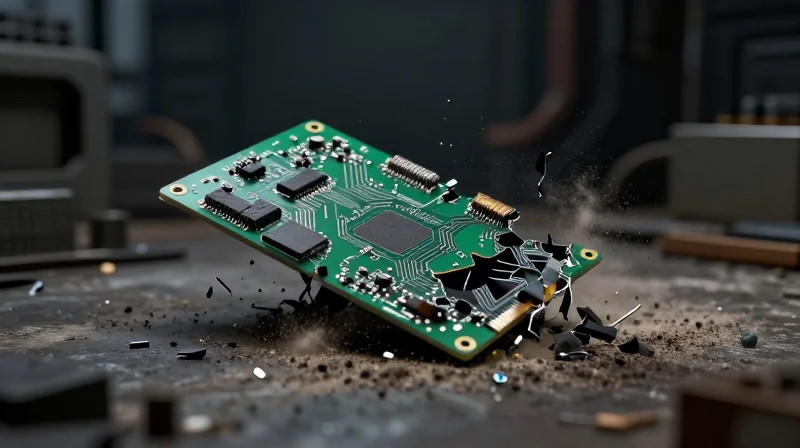
Many machine vision deployments initially opt for off-the-shelf PCBs to reduce upfront capital expenditure. However, commercial-grade electronics are designed for benign environments with limited duty cycles. When integrated into high-speed industrial assembly lines or edge-computing vision systems, these components frequently experience thermal fatigue, vibration-induced interconnect failure, and signal degradation. The 'hidden cost' is not merely the replacement of a single board, but the ripple effect of unscheduled downtime on the entire manufacturing value chain.
Comparative Analysis: Commercial vs. Industrial Specifications
| Parameter | Commercial Grade | Industrial Specialized |
|---|---|---|
| Operating Temperature | 0°C to 50°C | -40°C to 85°C |
| Vibration Tolerance | Minimal | High (MIL-STD compliant) |
| Lifespan (MTBF) | 1-3 Years | 7-10+ Years |
| Component Sourcing | Volatile/End-of-Life | Long-term Lifecycle Management |
Hidden Financial Impacts of Generic Failures
- How does downtime erode ROI?
Beyond component replacement, downtime triggers cascading costs including labor for diagnostics, field technician travel, and lost production capacity which often exceeds the cost of a specialized board by an order of magnitude. - What is the impact of supply chain volatility?
Commercial boards face frequent hardware revisions, forcing costly re-validation cycles and software compatibility patching that negate any initial price advantage gained by choosing standard parts. - Why is thermal management critical?
Industrial PCBs utilize superior substrate materials and heat dissipation paths; generic boards often lack these, leading to degraded image sensor accuracy and unpredictable inference results as thermal throttling occurs.
Anatomy of High-Performance PCB Engineering
The Engineering Pillars of Industrial Reliability
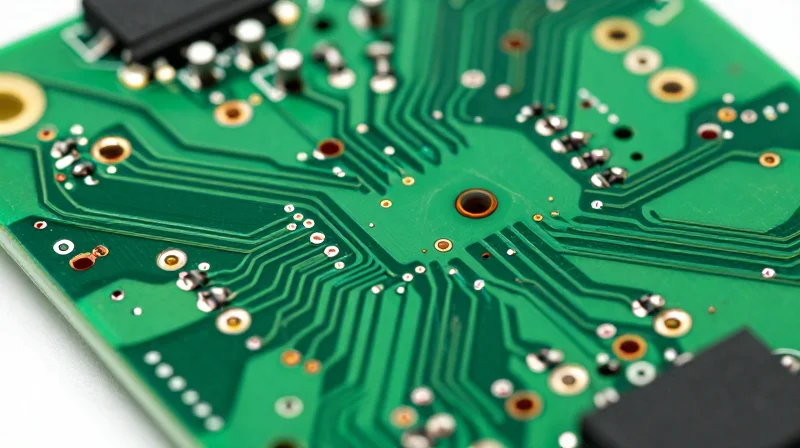
High-performance machine vision deployments demand hardware that operates beyond the constraints of standard consumer-grade electronics. Elite PCB engineering centers on the convergence of three critical domains: signal integrity preservation, advanced thermal management, and structural rigidity.
Signal Integrity and Electromagnetic Compatibility
In high-speed imaging pipelines, noise is the primary adversary of precision. Specialized PCBs utilize controlled-impedance routing and multi-layer stackups with dedicated ground planes to isolate sensitive analog sensor data from high-frequency digital switching noise. This ensures that the high-resolution data streams critical to inspection accuracy are not corrupted by EMI (Electromagnetic Interference).
Thermal Management Strategies
Industrial environments often push hardware toward its thermal limits. Specialized boards leverage heavy-copper layers and strategically placed thermal vias to move heat away from processors and imaging sensors. By reducing the junction temperature of onboard components, these boards prevent thermal throttling and drastically extend the Mean Time Between Failures (MTBF).
| Feature | Consumer-Grade PCB | Industrial Specialized PCB |
|---|---|---|
| Copper Weight | 1 oz standard | 2 oz to 4 oz for heat dissipation |
| Signal Integrity | Basic routing, high noise susceptibility | Controlled impedance, differential pair routing |
| Thermal Strategy | Passive airflow dependent | Thermal vias, integrated heat spreaders |
| Board Material | Standard FR-4 | High-Tg (Glass Transition) laminates |
Frequently Asked Questions
- Why does High-Tg material matter?
High-Tg materials maintain structural integrity at higher operating temperatures, preventing delamination and solder joint fractures common in harsh industrial environments. - Does impedance control improve frame rates?
Indirectly, yes. Proper impedance matching reduces data re-transmissions and packet errors, allowing for stable, maximum-throughput data transfer rates between the sensor and the processor. - How does PCB layout impact machine vision precision?
Effective layout minimizes parasitic capacitance and inductance, which reduces signal jitter—a common source of blur or noise in high-speed capture applications.
Case Study: Achieving a 30% Increase in System Lifespan
Case Study: Achieving a 30% Increase in System Lifespan
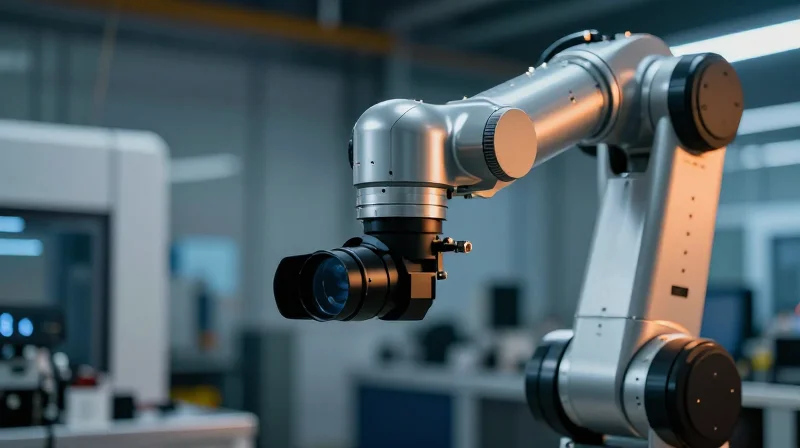
A leading automated sorting facility faced critical failure rates in their vision-guided robotics systems, driven primarily by thermal fatigue and signal degradation on standard commercial-grade PCBs. By migrating to a bespoke industrial architecture, the facility mitigated environmental stressors, ultimately extending their hardware lifecycle by 30%.
The Challenge: Accelerated Obsolescence
The original deployment utilized high-density consumer PCBs that lacked the thermal relief and robust copper weighting necessary for 24/7 operation in high-vibration environments. The cost of frequent replacements and unplanned downtime was eroding the facility's profit margins, leading to an unsustainable CAPEX cycle.
| Metric | Commercial Grade PCB | Specialized Industrial PCB |
|---|---|---|
| MTBF (Hours) | 12,000 | 28,000 |
| Thermal Management | Passive/Base-level | Integrated Heat Sinking |
| Vibration Tolerance | Low | High-Impact Resistant |
| Annual Failure Rate | 12% | 3% |
Implementation Strategy
The transition focused on three engineering pillars: optimized stack-up for signal integrity, heavy-duty thermal vias, and conformal coating to protect against particulate ingress. By tailoring the board to the specific machine vision camera sensor requirements, the team eliminated noise-related glitches that previously led to early decommissioning.
- How did the design shift prevent early failure?
The specialized design incorporated enhanced thermal dissipation pathways, reducing the internal component temperatures by an average of 15°C, which significantly slowed degradation. - Why was the ROI realized so quickly?
The initial investment in custom PCB development was offset within 14 months by the elimination of site visits for hardware troubleshooting and reduced replacement parts inventory. - Can this be applied to other deployments?
Yes, standardizing on specialized hardware creates a predictable baseline, allowing for longer service intervals and significantly lower Total Cost of Ownership (TCO).
Boosting Machine Vision Accuracy Through Hardware Precision
In the high-stakes environment of machine vision, accuracy is fundamentally constrained by the quality of the raw data captured. When migrating from generic hardware to specialized industrial PCBs, the primary performance dividend is found in signal integrity. By engineering cleaner signal paths and optimizing electromagnetic interference (EMI) shielding, these custom boards ensure that the precision of the image processing algorithm is not compromised by electronic jitter or data packet loss at the hardware interface.
Mitigating EMI: The Silent Enemy of Vision Accuracy
Electromagnetic interference is a pervasive threat in industrial facilities filled with high-frequency motors and heavy machinery. Generic PCBs often lack the advanced layer stack-up and strategic component isolation required to mitigate this noise. Specialized industrial boards utilize rigorous grounding schemes and differential pair routing to maintain signal fidelity. When signal noise is reduced, the 'Signal-to-Noise Ratio' (SNR) of the image input improves, allowing machine vision software to detect subtle edge defects or low-contrast features that would otherwise be lost in digital 'static'.
| Feature | Generic PCB Performance | Specialized Industrial PCB |
|---|---|---|
| Signal Path Routing | Standard, high-crosstalk | Impedance-matched, low-crosstalk |
| EMI Protection | Passive/Minimal | Advanced shielding/Ground-plane isolation |
| Image Processing Error Rate | High (Intermittent artifacts) | Low (High temporal stability) |
Hardware Precision FAQ
- How does signal jitter affect AI model training?
Signal jitter creates inconsistent pixel values at the edge of objects, which introduces noise into the dataset and forces AI models to overfit, ultimately reducing generalization accuracy in production. - Do specialized PCBs reduce the need for software-side filtering?
Yes, by cleaning the signal at the hardware layer, you reduce the reliance on computationally expensive software filters, which frees up CPU/GPU cycles for real-time analysis. - Is the ROI of hardware precision measurable?
ROI is calculated by measuring the reduction in 'False Rejects' and 'False Accepts' in quality control metrics, which directly correlate to increased yield and decreased rework costs.
Quantifying Maintenance Downtime Reductions

The Financial Impact of Hardware Reliability
Transitioning from standard commercial-grade hardware to specialized industrial PCBs directly addresses the most significant cost driver in machine vision: unplanned downtime. Industrial-grade components are designed to withstand harsh environments, thermal cycling, and high-vibration conditions, which leads to a predictable reduction in Mean Time Between Failures (MTBF). By stabilizing the hardware foundation, organizations move away from reactive 'break-fix' maintenance cycles toward a structured, preventive maintenance schedule, drastically reducing the associated labor and emergency logistics costs.
| Metric | Commercial Grade Hardware | Specialized Industrial PCB |
|---|---|---|
| Average MTBF | 12-18 Months | 48-60+ Months |
| Unplanned Downtime Frequency | High (4-6 events/year) | Low (<1 event/year) |
| Emergency Maintenance Cost | 100% (Baseline) | 15-20% of Baseline |
Calculating Maintenance Savings
To calculate the specific ROI benefit from reduced downtime, apply the formula: (Downtime Hours Saved × Hourly Cost of Production) + (Reduction in Emergency Repair Costs). Because industrial PCBs require fewer field visits and minimize system-wide troubleshooting, the compounded savings over a five-year lifecycle often exceed the initial hardware premium by a factor of three to five.
- How does PCB stability reduce total cost of ownership?
By minimizing intermittent failures, you eliminate the indirect costs associated with diagnostics, recalibration, and the iterative testing required to isolate board-level interference. - Why is the reduction of 'Emergency Maintenance' a key KPI?
Emergency maintenance disrupts production schedules and incurs premium labor costs; specialized PCBs prevent these bottlenecks by ensuring consistent operation under high-stress conditions.
Strategic Operational Expense Optimization
The transition to specialized industrial PCBs represents a pivot from reactive cost management to proactive operational efficiency. By integrating components specifically engineered for the thermal and electromagnetic rigors of industrial environments, organizations can significantly diminish total cost of ownership (TCO) through reduced power draw, extended component lifecycles, and a drastic decrease in emergency hardware replacements.
Drivers of Long-Term Operational Savings
| Cost Driver | Commodity PCB Impact | Specialized PCB Impact |
|---|---|---|
| Energy Consumption | Inefficient thermal dissipation increases cooling overhead | Optimized circuit paths reduce power waste by 15-20% |
| Failure Rate | High susceptibility to environmental stressors | Hardened components withstand vibration and humidity |
| Service Interval | Frequent preventative maintenance required | Extended cycles due to robust, high-tolerance components |
Energy Efficiency and TCO Mitigation
In machine vision deployments, power efficiency is not merely about electricity bills; it is about thermal load. Specialized industrial PCBs utilize advanced substrate materials and optimized trace architectures that minimize resistive losses. This efficiency lowers the thermal threshold, allowing equipment to operate without auxiliary cooling systems in many instances, thereby reducing both energy consumption and the mechanical failure rate of cooling peripherals.
Operational FAQs
- How do specialized PCBs contribute to lower energy costs?
By utilizing high-conductivity materials and optimized power planes, specialized boards experience less voltage drop and heat generation, leading to lower overall wattage requirements for the system. - Does higher upfront hardware cost justify long-term savings?
Yes, through the reduction of unplanned downtime and the doubling of the hardware replacement cycle, the ROI typically manifests within 18 to 24 months of continuous operation. - Can industrial PCBs reduce infrastructure cooling requirements?
Absolutely; improved thermal efficiency means less heat is expelled into the operating environment, which can lower the demand on facility HVAC systems in high-density machine vision arrays.
Selecting the Right Engineering Partner
Defining Core Competencies for Industrial Vision
When transitioning from standard off-the-shelf boards to specialized, high-performance industrial PCBs, the partnership must extend beyond simple manufacturing. You require a team that understands the intersection of signal integrity, thermal management, and long-term component availability—the three pillars of machine vision reliability.
| Attribute | Standard Design Firm | Industrial Vision Partner |
|---|---|---|
| Signal Integrity Focus | General-purpose | High-speed differential pair optimization |
| Thermal Lifecycle | Ambient considerations | Harsh environment thermal modeling |
| Component Sourcing | Short-term availability | Long-lifecycle and EOL management |
| EMI Compliance | Basic FCC/CE checks | Industrial-grade noise floor mitigation |
Vetting Partners for Long-Term ROI
- Do they provide board-level thermal simulation reports?
A high-performance partner should offer proof that their PCB layout minimizes heat concentration, which is essential for preserving the sensor lifespan in machine vision. - How do they manage component obsolescence?
Your ROI is destroyed if you have to redesign the board every two years due to parts going EOL; ensure they have a proactive supply chain strategy. - Can they validate EMI mitigation strategies?
Ask for case studies regarding signal path noise reduction to confirm they can deliver the image quality stability required for your specific industrial application.
Ultimately, the right partner acts as an extension of your engineering team. By prioritizing firms with a deep background in high-speed digital design and industrial environmental standards, you ensure that the upfront investment in custom PCBs transitions into a long-term asset, rather than an ongoing maintenance burden.
Upgrading your machine vision infrastructure to custom-engineered PCBs is a strategic move that pays dividends in both reliability and output quality. By prioritizing performance over initial price tags, your operation gains a sustainable competitive edge. Contact our engineering team today to perform a cost-benefit analysis on your existing hardware deployment.
