Capacitors vs. Inductors: Key Differences & Applications
2025.02.04
In the intricate world of electronics, components like capacitors and inductors are the unsung heroes, playing crucial roles in shaping the behavior of electrical circuits. Much like how the human body relies on the heart to pump blood (the energy source), and lungs to regulate oxygen (energy storage), circuits rely on capacitors to store energy in an electric field, and inductors to store energy in a magnetic field. These passive components, though different, work in tandem to manage the flow of electrical energy. Let's unravel the core differences and practical uses of these ubiquitous circuit elements.
Fundamental Differences: Energy Storage
Various capacitors and inductors
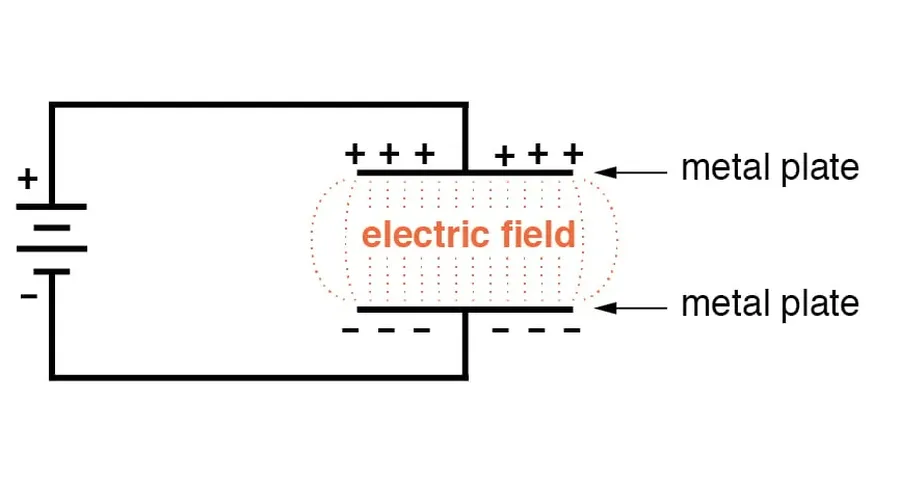
The core distinction between capacitors and inductors lies in their energy storage mechanisms. Capacitors accumulate electrical energy by storing separated electrical charges (voltage) within an electric field established between conductive plates. Conversely, inductors store energy in a magnetic field that is generated by the flow of electrical current through a coil. This fundamental difference dictates their behavior in circuits and their respective applications.
Circuit Behavior: DC vs. AC
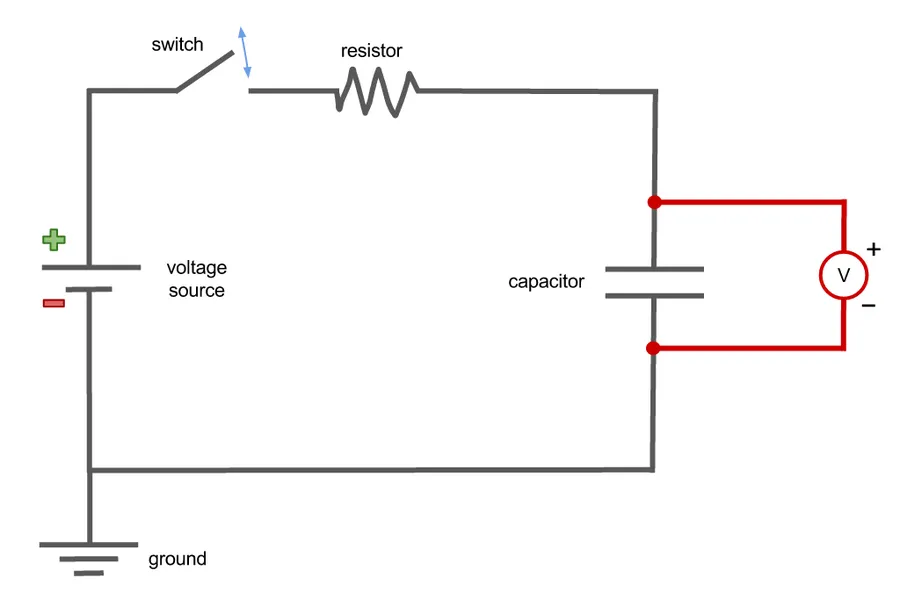
Capacitor in a Circuit
The behavior of capacitors and inductors in electrical circuits is fundamentally different under direct current (DC) and alternating current (AC) conditions. This difference arises from the way these components store and release energy; capacitors store energy in an electric field, while inductors store energy in a magnetic field.
Circuit Type
Capacitor Behavior
Inductor Behavior
DC Circuit (Steady State)
Acts as an open circuit (blocks current after charging)
Acts as a short circuit (allows current to flow)
DC Circuit (Initial Connection)
Acts as a short circuit(initially allows current to flow)
Acts as an open circuit (initially blocks current flow)
AC Circuit
Passes AC current; capacitive reactance decreases with increasing frequency.
Resists AC current; inductive reactance increases with increasing frequency.
In a DC circuit, a capacitor initially allows current flow as it charges, but once fully charged, it blocks current flow acting as an open circuit. Conversely, an inductor initially resists current change, but under steady-state DC conditions, it allows current to flow without resistance, effectively acting as a short circuit. These behaviours change when subjected to AC current. Capacitors and inductors exhibit reactance, which is an impedance dependent on the frequency of the AC current. Capacitive reactance decreases as frequency increases, whereas inductive reactance increases as frequency increases.
Capacitor Characteristics
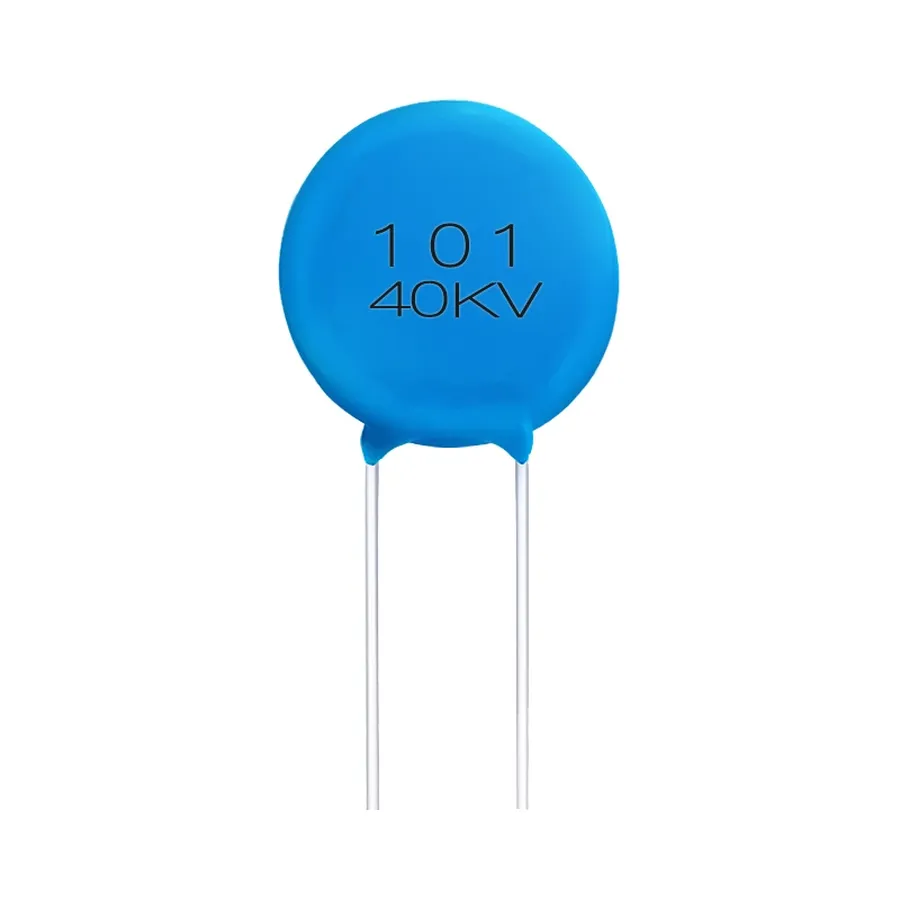
Ceramic Capacitors
Capacitors, fundamental components in electronic circuits, are characterized by their ability to store electrical energy in an electric field. This ability, known as capacitance, is measured in Farads (F) and defines how much charge a capacitor can accumulate for a given applied voltage. The capacitance value is a critical parameter influencing the behavior of capacitors in various applications.
Characteristic
Description
Unit
Capacitance (C)
Measure of a capacitor's ability to store charge
Farad (F)
Voltage Rating (V)
Maximum voltage a capacitor can safely withstand
Volt (V)
Temperature Stability
How well the capacitor's characteristics remain stable with temperature changes
Percentage change per degree Celsius (°C)
Key factors that influence a capacitor’s characteristics include:
Physical Size Larger capacitors generally have higher capacitance values, although material properties also play a significant role. The physical dimensions dictate the size of the conductive plates and their distance of separation, thereby affecting overall storage capacity.
Dielectric Material The material between the capacitor's conductive plates (the dielectric) determines its permittivity. Different materials, such as ceramic, film, and electrolytic materials, have different dielectric constants, impacting the capacitor’s capacitance, voltage rating, temperature coefficient and size.
Construction The method of construction and layering affects its overall performance. Different designs optimize for high capacitance, high voltage, or temperature stability, each meeting specific application requirements.
Common types of capacitors include:
Electrolytic Capacitors Typically used for high capacitance applications, these capacitors have a polarized structure, meaning they must be connected correctly in a circuit with the positive and negative terminals properly aligned. They are often found in power supplies due to their large capacitance in small volume.
Ceramic Capacitors Known for their stability and small size, these capacitors are used widely in high-frequency applications and decoupling circuits. They offer various temperature coefficients to meet different stability needs.
Film Capacitors Offering a good balance between stability, capacitance, and voltage handling capabilities, film capacitors are used in audio circuits and general-purpose applications. They are known for their low losses and are ideal for AC signals.
Inductor Characteristics
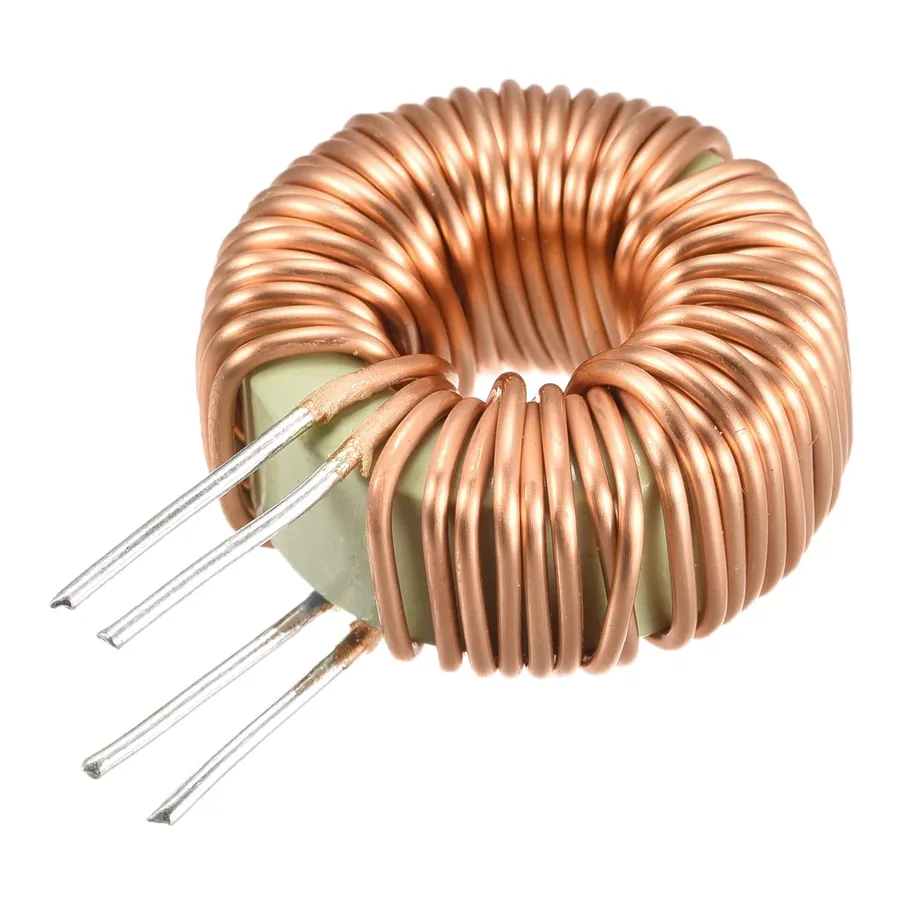
Toroidal Inductor
Inductors, fundamental passive components in electrical circuits, are characterized by their inductance, which is the measure of their ability to store energy in a magnetic field when an electric current flows through them. This property, quantified in Henrys (H), directly impacts the behavior of the inductor in various circuit applications.
Key characteristics of inductors are determined by their physical construction and materials. These factors influence both the inductance value and how the inductor performs in a circuit.
Characteristic
Description
Unit
Impact on Inductance
Inductance (L)
Ability to store energy in a magnetic field for a given current.
Henrys (H)
Primary measure of an inductor's energy storage capability.
Core Material
Material around which the coil is wound; influences the magnetic flux
N/A
Ferromagnetic materials (ferrite, iron) increase inductance compared to air.
Number of Turns (N)
The count of loops in the inductor coil.
Turns
Inductance increases proportionally to the square of the number of turns (L ∝ N²).
Coil Shape and Dimensions
The geometry of the coil (e.g., solenoid, toroid) and its physical dimensions.
N/A
Shape and dimensions affect the magnetic flux linkage and hence inductance.
Time Constant (τ)
Time required for the current to reach approximately 63.2% of its final value in an RL circuit
Seconds
Determined by the inductance and resistance in the circuit (τ = L/R).
Common types of inductors are categorized based on their core material:
Air-Core Inductors: Utilize air as the core material. They exhibit lower inductance values and are often used in high-frequency applications due to their reduced core losses.
Ferrite-Core Inductors: Employ ferrite materials as the core, which significantly increases inductance compared to air-core inductors. They are commonly used in power electronics and filtering applications.
Iron-Core Inductors: Use iron or steel alloys as the core. They offer high inductance values but are susceptible to saturation at high current levels. They are often used in low-frequency power applications.
Applications of Capacitors
Power Supply Filter
Capacitors, fundamental components in electronics, are primarily utilized for their ability to store electrical energy and manage voltage fluctuations within circuits. Their diverse applications span across numerous electronic systems, fulfilling roles critical to circuit functionality and overall performance. The core principle of a capacitor's function lies in its capacity to accumulate charge, which enables its use in filtering, decoupling, energy storage, and timing circuits.
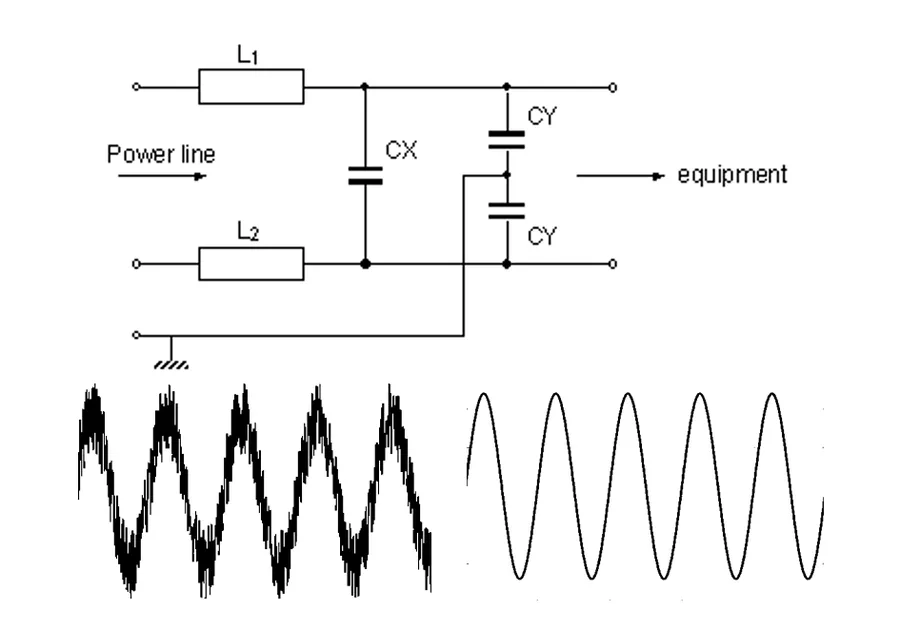
Filtering Capacitors are essential for filtering out unwanted frequencies from electrical signals, particularly in power supplies. By strategically placing them in a circuit, they can smooth out voltage ripples and provide a stable voltage source. In low-pass filters, capacitors allow low-frequency signals to pass while blocking high-frequency signals. This characteristic is critical in preventing unwanted noise from interfering with circuit operations.
Decoupling In digital circuits and other electronic systems, capacitors are used to decouple different sections of the circuit. Decoupling capacitors are positioned close to ICs and other active components, effectively minimizing high-frequency noise and preventing interference between various parts of the circuit. By shunting current spikes to ground, they maintain the signal integrity and smooth out power fluctuations. This ensures that different components operate without impacting others within the system, resulting in a more reliable and stable design.
Energy Storage Capacitors can act as temporary energy storage devices in a circuit, releasing this energy when needed. Although they do not match the capacity of batteries, their rapid charge and discharge times are crucial for applications needing short bursts of power. Applications range from flash cameras to pulsed lasers where instantaneous high-current pulses are required. Furthermore, in many systems, capacitors are used to hold a charge to keep memory alive in case of power outages.
Tuning Circuits In resonant or tuning circuits, capacitors are crucial in setting the frequency of these systems, especially in radio and communication devices. They interact with inductors to form tank circuits that resonate at a particular frequency. By varying the capacitance, the resonant frequency can be tuned, allowing the selection of different radio frequencies. In simple terms, these circuits allow a specific frequency to pass while impeding others, enabling devices to select the desired channel for processing.
Touch Screen Technology Capacitive touchscreens use a grid of transparent electrodes and rely on the human body's capacitance, which is able to store electric charge. When a finger touches the screen, it creates a coupling and changes the electrical field, which is then detected by the sensor array. This allows for accurate touch detection, which is a main component of modern interactive devices.
Flash Cameras and Photography Capacitors are vital in flash systems of cameras because they provide the high energy needed for light generation in a very short time. These capacitors charge slowly from the batteries and discharge rapidly to power the flash lamp, producing short bursts of bright light. This technology makes it possible to quickly and effectively take photographs under poor lighting conditions.
Memory Systems In many electronic memory systems, capacitors form the core of memory cells in Dynamic Random-Access Memory (DRAM). In DRAM, each bit is represented by the presence or absence of a charge on a capacitor. Although the charge leaks over time, these capacitors are refreshed at regular intervals to retain the data, which is a unique way of working for computer memory.
Applications of Inductors
Transformer Coils
Inductors are indispensable components in numerous electronic circuits, primarily leveraging their ability to store energy in a magnetic field. Their applications span from power management to signal processing, making them fundamental in various technologies.
Power Supplies Inductors are crucial in power supplies for smoothing and switching operations. They are used to reduce ripple voltage, filter out noise, and act as energy storage elements in switching regulators, crucial for ensuring stable and efficient power delivery.
Filtering Inductors are integral to filter circuits designed to attenuate or block high-frequency signals, such as radio frequency interference. This is achieved by creating a high impedance to high-frequency signals while allowing low-frequency or DC signals to pass through with minimal attenuation.
Resonant Circuits In resonant circuits, such as those found in radios and oscillators, inductors work in conjunction with capacitors to tune the circuit to a specific frequency. This is achieved by impedance matching at a particular frequency where the inductive reactance cancels out the capacitive reactance.
Energy Storage Inductors serve as energy storage elements in various applications, such as switching converters. They accumulate energy in their magnetic field when current flows and release it back into the circuit when needed, facilitating efficient power conversion and regulation.
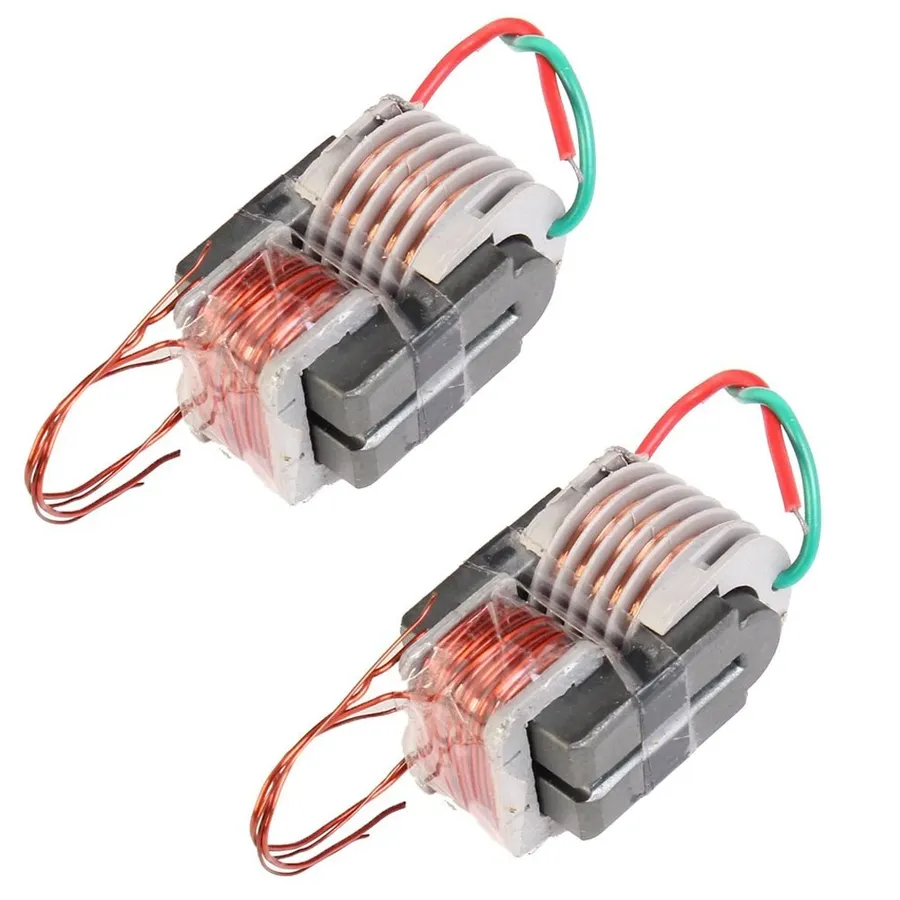
Transformers Inductors form the core of transformers. Transformers utilize the principle of magnetic flux linkage between multiple inductors to step up or step down voltage levels, enabling efficient power transfer across different circuit sections or devices.
Motors Inductors are used in motors, where their interaction with magnetic fields facilitates the conversion of electrical energy into mechanical motion, essential in the operation of various mechanical systems and devices.
Chokes Inductors are used as chokes in circuits to block high-frequency AC while allowing low-frequency AC or DC to pass through. These are commonly used in power supplies and audio circuits to suppress noise and interference.
Capacitor and Inductor Behavior in AC Circuits
In alternating current (AC) circuits, capacitors and inductors exhibit a unique property known as reactance, which is frequency-dependent impedance. Unlike resistance, which dissipates energy, reactance stores and releases energy, influencing the phase relationship between voltage and current. The interaction of capacitive and inductive reactances is fundamental to AC circuit analysis, particularly in filter design and impedance matching.
Characteristic
Capacitor
Inductor
Reactance
Capacitive Reactance (Xc)
Inductive Reactance (Xl)
Formula
Xc = 1 / (2πfC)
Xl = 2πfL
Frequency Dependence
Decreases as frequency (f) increases
Increases as frequency (f) increases
Phase Relationship (Ideal)
Current leads voltage by 90 degrees
Voltage leads current by 90 degrees
Impedance
High at low frequencies, Low at high frequencies
Low at low frequencies, High at high frequencies
This frequency-dependent behavior is crucial in applications like filtering, where capacitors are used to block low-frequency signals and pass high-frequency signals, while inductors do the opposite. The formulas for capacitive reactance (Xc) and inductive reactance (Xl), where 'f' is the frequency, 'C' is capacitance, and 'L' is inductance, reveal these opposing relationships. The phase relationship is also important to remember; in an ideal capacitor, the current leads the voltage by 90 degrees; in an ideal inductor, the voltage leads the current by 90 degrees.
Frequently Asked Questions About Capacitors and Inductors
This section addresses common questions regarding the functionality and applications of capacitors and inductors, providing clear and concise answers to enhance understanding of these fundamental electronic components.
What is the primary purpose of an inductor in an electronic circuit? An inductor's primary function is to resist changes in current flow within a circuit. It does so by storing energy in a magnetic field. Inductors are widely used in filtering, energy storage, and impedance matching applications. When current changes, an inductor opposes this change, creating a voltage that counteracts the change in current. This principle is crucial for circuits involving alternating current.
How does a capacitor work within a circuit? A capacitor stores energy by accumulating electrical charge on its plates. When voltage is applied, charge builds up on the capacitor, creating an electric field between the plates. When current is fluctuating, a capacitor resists the change in voltage. Conversely, a charged capacitor will release its stored energy to support the voltage when the source is removed. This behavior makes them essential in filtering, decoupling, and timing circuits.
What is the main application of a capacitor? Capacitors find widespread application in various electronic circuits. They are most commonly used for filtering signals by blocking low frequencies (DC) while allowing high frequencies (AC) to pass, and vice versa. In power supplies, they are used to smooth out fluctuations in voltage. They also provide energy storage to maintain system stability for short periods. Other applications include decoupling, tuning, and timing circuits.
How do capacitors and inductors behave differently in AC circuits? In AC circuits, capacitors and inductors exhibit opposing behaviors. Capacitors impede the flow of low frequencies more than high frequencies, while inductors block high frequencies more than low frequencies. Capacitors exhibit capacitive reactance, which decreases as the frequency increases, whereas inductors exhibit inductive reactance, which increases as the frequency increases. These behaviors are key to designing resonant and filtering circuits.
What are the key differences in energy storage mechanisms between capacitors and inductors? Capacitors store energy in an electric field created by the accumulation of charge on their plates when voltage is applied. Inductors, conversely, store energy in a magnetic field created by the flow of current through a coil. The energy storage in a capacitor is related to the voltage across its terminals and capacitance, while the energy storage in an inductor is related to the current flowing through it and its inductance. This fundamental difference in storage mechanisms leads to their different behaviors in circuits.
Are capacitors and inductors ideal components in practical circuits? No, capacitors and inductors are not ideal components in practical circuits. Real-world capacitors exhibit parasitic resistance and inductance, whereas real-world inductors exhibit parasitic resistance and capacitance. These parasitic effects can cause deviations from expected behavior, particularly at high frequencies. The choice of capacitor or inductor type and material can help minimize parasitic effects.
How do you choose the right capacitor or inductor for a particular application? Selecting the right capacitor or inductor involves several considerations. For capacitors, the capacitance value, voltage rating, tolerance, temperature stability, and dielectric material are important factors to consider. For inductors, the inductance value, current rating, core material, Q-factor, and self-resonant frequency are critical parameters. The specific application will dictate which set of specifications needs greater consideration. Design calculations, simulation and physical test will always help in final selection.
Comparative Analysis: Capacitors vs. Inductors
Capacitors and inductors are fundamental passive components in electrical circuits, yet they exhibit distinct characteristics and serve different purposes. This comparative analysis provides a side-by-side perspective, emphasizing their differences in physical properties, energy storage mechanisms, and typical applications.
Feature
Capacitor
Inductor
Symbol
Two parallel plates
Coil or loop
Energy Storage
Electric field between plates
Magnetic field around the coil
DC Behavior
Blocks DC current (open circuit after charging)
Passes DC current (short circuit)
AC Behavior
Passes AC current, blocks DC. Reactance decreases with frequency.
Resists AC current. Reactance increases with frequency.
Primary Parameter
Capacitance (Farads)
Inductance (Henrys)
Reactance Formula
Xc = 1 / (2πfC)
Xl = 2πfL
Applications
Filtering, decoupling, energy storage, timing circuits
Filtering, tuning, energy storage, transformers
Typical Components
Electrolytic, ceramic, film capacitors
Air-core, ferrite-core, iron-core inductors
In conclusion, capacitors and inductors, while seemingly simple, are fundamental components in modern electronics, functioning like tiny electrical reservoirs and filters. Capacitors store energy in electric fields and inductors in magnetic fields, showcasing their unique roles in shaping electrical behavior. Whether it's the smoothing of power supplies or the tuning of a radio, understanding these components is paramount for any electronic engineer, offering immense value in circuit design and optimization. Like the yin and yang, capacitors and inductors work in perfect harmony to make our tech-driven world possible.