
In the world of industrial automation, your PLC hardware is the nervous system of the factory floor. When operating in extreme temperatures, high-vibration areas, or electrically noisy environments, a single PCB failure can cost thousands in downtime. Finding a manufacturing partner that doesn't just build, but engineers for longevity, is the most important decision you will make.
The Critical Nature of Industrial-Grade Reliability
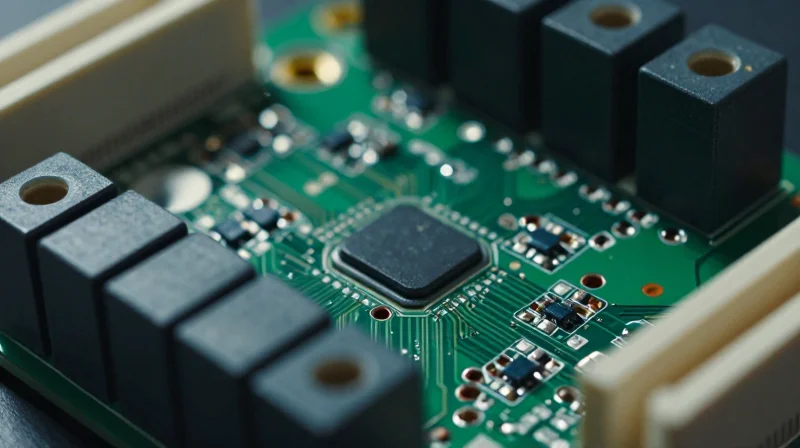
In the world of industrial automation, Programmable Logic Controllers (PLCs) serve as the central nervous system for mission-critical operations. Unlike consumer-grade electronics designed for controlled environments, industrial-grade PCBs must withstand extreme thermal fluctuations, persistent mechanical vibration, and electromagnetic interference (EMI) that would cause standard boards to fail within hours or days. Choosing a manufacturer that prioritizes industrial-grade reliability is not merely a quality preference; it is a fundamental safety and financial imperative.
Consumer-Grade vs. Industrial-Grade Reliability
| Feature | Consumer-Grade | Industrial-Grade |
|---|---|---|
| Operating Temperature | 0°C to 40°C | -40°C to 85°C |
| Vibration/Shock Tolerance | Low/Negligible | High (MIL-STD compliant) |
| Component Lifecycle | Short (1-3 years) | Long (10+ years) |
| EMI/EMC Shielding | Basic/Minimal | Robust/Rigid Standards |
The Real-World Cost of Hardware Failure
When a PLC fails due to inferior PCB manufacturing, the cost extends far beyond the price of the board. Industrial downtime often incurs losses reaching thousands of dollars per minute. Furthermore, failure in safety-critical systems—such as chemical processing or automated robotics—poses significant risks to personnel safety and environmental compliance. Reliable manufacturing processes, including rigorous testing and quality control protocols, are the only buffer against these catastrophic outcomes.
Frequently Asked Questions
- Why can't I use standard consumer-grade PCBs for PLC hardware?
Consumer-grade PCBs lack the thermal dissipation, trace thickness, and conformal coating necessary to survive the harsh realities of a factory floor, leading to premature signal degradation and total hardware failure. - What manufacturing processes ensure industrial reliability?
Key processes include Automated Optical Inspection (AOI), X-ray testing for internal layer integrity, IPC-Class 3 soldering standards, and rigorous environmental stress screening (ESS). - How does component sourcing affect long-term reliability?
Industrial manufacturers source components with high MTBF (Mean Time Between Failure) ratings and guaranteed long-term availability, preventing obsolescence issues that compromise system maintenance.
Decoding Quality Certifications (ISO and IPC)

In the high-stakes world of industrial automation, quality certifications are more than just badges on a website; they are documented proof of a manufacturer's commitment to rigorous process control and defect prevention. For Programmable Logic Controller (PLC) hardware, where downtime can lead to catastrophic financial or physical consequences, adherence to ISO and IPC standards provides the necessary safety net for consistent, mission-critical performance.
The Pillars of PCB Manufacturing Quality
| Certification | Focus Area | Industrial Impact |
|---|---|---|
| ISO 9001 | Management Systems | Ensures consistent quality processes and continuous improvement. |
| IPC-A-610 Class 3 | Assembly Acceptance | Sets strict criteria for high-reliability electronic assemblies. |
| ISO 13485/IATF 16949 | Vertical Standards | Advanced quality requirements for medical or automotive applications. |
ISO 9001: The Framework for Consistency
ISO 9001 certification serves as the foundation for a manufacturer's Quality Management System (QMS). It mandates that the manufacturer maintains clear documentation, performs regular internal audits, and demonstrates a commitment to resolving non-conformance. For a PCB supplier, this translates into traceability—a vital capability for industrial PLC manufacturers to track components from raw material sourcing through to final assembly.
IPC-A-610 Class 3: The Gold Standard for Reliability
While Class 1 and 2 standards are sufficient for consumer electronics, industrial PLC hardware requires IPC-A-610 Class 3. This standard dictates the criteria for 'high-performance electronic products' where continuous operation is essential and equipment downtime is not tolerated. Inspections under Class 3 focus on solder joint integrity, component placement precision, and electrical clearance, ensuring the board can withstand vibration, thermal shock, and the harsh electrical noise inherent in industrial plants.
Frequently Asked Questions
- Can a manufacturer be reliable without ISO certification?
While it is theoretically possible, the lack of ISO certification means there is no third-party verification of their internal processes, making it difficult to guarantee repeatability at scale. - What happens if I use Class 2 boards for industrial PLCs?
You increase the risk of intermittent failures, solder fatigue, and shorter operational lifespans, as Class 2 standards do not mandate the same level of robustness required to survive extreme industrial duty cycles. - Does having these certifications eliminate the need for my own QA testing?
No; certifications ensure that the manufacturer's processes are controlled, but your specific PLC design should still undergo rigorous environmental and functional testing before mass production.
Navigating EMC Standards for Electrically Noisy Environments

The Imperative of EMC in Industrial Environments
In heavy industrial environments, Programmable Logic Controllers (PLCs) operate alongside high-voltage motors, variable frequency drives, and heavy-duty switchgear. These devices generate significant electromagnetic interference (EMI) that can disrupt sensitive digital signals, leading to data corruption or catastrophic system failure. A top-tier PCB manufacturer does not treat EMC as an afterthought; they view it as a foundational requirement integrated into the initial layout and manufacturing stages.
Design Strategies for Noise Mitigation
| Design Feature | Mechanism of Action | Impact on Reliability |
|---|---|---|
| Multi-layer Stacking | Dedicated ground/power planes | Reduces loop area and crosstalk |
| Component Isolation | Physical separation of analog/digital | Prevents noise coupling into sensitive signals |
| Controlled Impedance | Optimized trace geometry | Minimizes signal reflections and EMI |
Manufacturer Verification Processes
A reliable partner ensures compliance through systematic testing procedures before the product reaches the final assembly line. This includes pre-compliance emissions testing and susceptibility checks to ensure the board can withstand the specific noise profiles of the intended operating environment.
- How does PCB layout impact EMC performance?
Improper stack-up and trace routing create antennas that radiate EMI. A manufacturer expert in industrial standards will enforce strict design rules to minimize loop inductance and noise propagation. - Why should I verify a manufacturer's EMI testing capabilities?
If a manufacturer lacks in-house or close-partner access to an EMC chamber, you risk discovering non-compliance only after production, leading to costly redesigns and certification delays. - Are there specific surface finishes that assist with EMC?
While not a primary factor, consistent surface finishes like ENIG or Immersion Silver help maintain low-resistance grounding paths necessary for effective shielding and signal integrity.
Supply Chain Transparency and Component Sourcing
Supply Chain Transparency and Component Sourcing
For PLC applications, the integrity of every component—from microcontrollers to passives—determines the entire system's reliability. A manufacturer must provide total visibility into their sourcing channels, favoring authorized distributors over open-market brokers to eliminate the high risk of counterfeit hardware. This transparency is the only effective defense against premature failures that result from substandard materials entering the production line.
Mitigating Counterfeit Risks vs. Obsolescence Planning
| Risk Category | Primary Strategy | Verification Metric |
|---|---|---|
| Counterfeit Components | Authorized Distribution | Certificate of Conformance (CoC) |
| Component Obsolescence | Lifecycle Management | PCN/EOL Monitoring Records |
| Traceability Gaps | Digitized Documentation | Full Lot-Level Traceability |
Common Concerns in PCB Supply Chain Management
- How can I guarantee my manufacturer isn't using gray market parts?
Demand a full Bill of Materials (BOM) transparency report that identifies the source of every component. Reputable manufacturers exclusively use authorized Tier-1 distributors and provide audit trails back to the original component manufacturer (OCM). - What should be expected regarding PCN (Product Change Notification) alerts?
A high-tier manufacturer should have a proactive system that automatically notifies you of EOL (End-of-Life) notices. They should also provide a 'Last Time Buy' strategy to secure necessary inventory before components vanish from the market. - Does component traceability stop at the board level?
No; robust manufacturing requires lot-level traceability. You should be able to identify exactly which batch of chips went onto which specific PLC unit, allowing for targeted recalls if a specific manufacturer batch is later flagged for defects.
By prioritizing partners who maintain AS6081 compliance—the standard for avoiding, detecting, and mitigating counterfeit electronic parts—you ensure that your industrial PLC investment is built on a foundation of verified, authentic components. Do not compromise on traceability; in the world of industrial control, unknown origins are a precursor to inevitable downtime.
Material Selection for Harsh Environmental Conditions
Material Engineering for Extreme Conditions
Industrial Programmable Logic Controllers (PLCs) are frequently deployed in environments characterized by extreme thermal cycling, chemical exposure, and particulate accumulation. A reputable PCB manufacturer must utilize substrate materials, such as high-Tg (Glass Transition Temperature) FR-4 or polyimide, which maintain mechanical and electrical integrity under continuous thermal stress. Relying on standard consumer-grade materials will lead to via cracking, delamination, and premature signal failure.
Protective Measures: Conformal Coating and Potting
To mitigate the effects of moisture, conductive dust, and corrosive gases, the application of chemical barriers is non-negotiable. The choice between conformal coating and potting compounds depends on the degree of protection required against mechanical shock versus chemical ingress.
| Method | Primary Protection | Maintenance Suitability | Best Use Case |
|---|---|---|---|
| Conformal Coating | Moisture/Dust/Fungus | High (Easy to rework) | Standard industrial automation |
| Potting/Encapsulation | Mechanical Shock/Chemical | Low (Permanent) | High-vibration/Submersible |
Material Selection FAQ
- Why is Tg (Glass Transition Temperature) critical for PLC reliability?
A high-Tg substrate prevents the PCB from becoming soft or expanding excessively at high temperatures, which is essential to maintain the integrity of plated-through holes during thermal expansion cycles. - Does the manufacturer's choice of surface finish affect durability?
Yes; in high-sulfur or corrosive environments, finishes like ENIG (Electroless Nickel Immersion Gold) or Hard Gold are superior to HASL because they offer better resistance to oxidation and chemical degradation. - How can I verify if a manufacturer uses industrial-grade laminates?
Request the Certificate of Conformance (CoC) and the material datasheet. Verify that the substrate complies with UL 94V-0 flammability ratings and matches the required thermal profile defined in your design specifications.
DFM and DFT: Engineering for Efficiency and Testability

The Strategic Role of DFM and DFT in Industrial PLC Production
For PLC applications where downtime is catastrophic, DFM and DFT are not merely optional quality controls; they are the fundamental frameworks that dictate product scalability and field reliability. DFM focuses on optimizing the board design for the assembly process to minimize waste and errors, while DFT ensures that every critical circuit can be verified during manufacturing to prevent defective units from ever reaching the field.
DFM vs. DFT: Core Objectives
| Feature | Design for Manufacturing (DFM) | Design for Testing (DFT) |
|---|---|---|
| Primary Goal | Production efficiency and cost reduction | Defect detection and quality assurance |
| Focus Area | Component placement, panelization, and solderability | Test points, access, and diagnostic firmware |
| Economic Impact | Lower per-unit cost through reduced re-work | Prevention of expensive field failures and recalls |
Best Practices for Implementation
- Early Collaborative Design
Engage your manufacturer during the prototype phase. Early DFM feedback on component orientation and spacing can prevent significant re-spins later. - Strategic Test Point Integration
Ensure that In-Circuit Test (ICT) or Flying Probe testing points are accessible on the PCB bottom side to streamline automated testing without complex fixtures. - Standardization of Footprints
Stick to standard IPC-compliant footprints. This simplifies automated optical inspection (AOI) algorithms and reduces the probability of mounting defects.
Frequently Asked Questions
- Does implementing DFM increase initial development time?
While front-loading the design phase with DFM reviews may add minor initial duration, it significantly reduces the overall time-to-market by eliminating common production bottlenecks and late-stage engineering changes. - Why is DFT critical for PLC applications?
PLCs often control critical infrastructure; DFT ensures that high-speed I/O and communication interfaces meet strict signal integrity requirements, preventing intermittent failures that are notoriously difficult to diagnose in the field.
Scalability and Partnership Longevity
Assessing Scalability and Capacity Planning
Scalability is not merely about production volume; it is about the manufacturer’s ability to maintain rigid quality standards while accelerating throughput. As your PLC deployment scales from prototype to mass industrial production, your partner must demonstrate flexible manufacturing lines and a responsive supply chain that avoids bottlenecks.
The Importance of Partnership Longevity
Industrial PLCs often have 10 to 20-year lifecycles. A partner that prioritizes short-term gains over long-term stability poses a risk to your product’s sustainability. Successful partnerships are built on proactive lifecycle management, including end-of-life (EOL) component monitoring and forward-thinking engineering revisions.
| Growth Stage | Key Scalability Indicator | Risk Mitigation |
|---|---|---|
| Prototyping | Rapid Turnaround | Design validation and DFM feedback |
| Pilot Production | Process repeatability | Early detection of material drift |
| Full-Scale | Throughput consistency | Supply chain resilience and price stability |
Frequently Asked Questions
- How do I ensure a manufacturer can handle sudden demand spikes?
Request an audit of their current production capacity versus committed volume. A scalable partner should demonstrate a modular facility layout and the ability to integrate additional shifts or equipment without compromising ISO compliance. - What indicates a commitment to long-term product support?
A high-quality partner will provide a dedicated lifecycle management dashboard or regular EOL (End of Life) PCN notifications, ensuring you have ample time to qualify replacement components. - Does the manufacturer have a financial foundation for long-term survival?
Look for stability in their own vendor base, consistent investment in new technology, and a history of low client turnover within the industrial control sector.
Selecting the right PCB manufacturer is a long-term strategic investment, not just a procurement task. By focusing on compliance, material integrity, and transparent processes, you can safeguard your operations against costly downtime. Ready to ensure your next industrial project is built for peak reliability? Contact our engineering team today to discuss your specific requirements.
