
Selecting the right substrate is the backbone of any successful high-frequency design. As signal integrity becomes increasingly difficult to maintain at higher gigahertz, the choice between industry-standard laminates like Rogers 4350B and 4003C can make or break your project's performance. This guide cuts through the data sheets to provide the practical engineering insights you need to make an informed decision.
Understanding the Fundamentals of Rogers Laminates
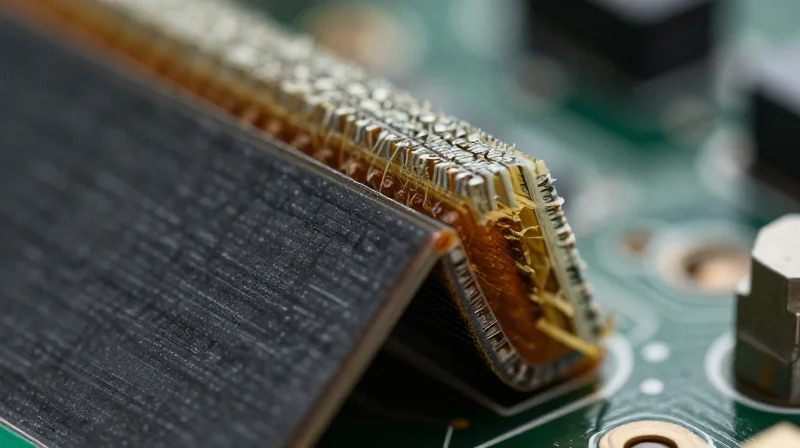
The Engineering Foundation of Rogers 4000 Series Laminates
Rogers 4350B and 4003C represent the flagship hydrocarbon ceramic laminate systems designed to bridge the gap between cost-effective FR-4 manufacturing processes and the high-frequency requirements of RF and microwave applications. Unlike standard epoxy glass materials, these substrates combine a thermoset resin system with ceramic fillers, providing exceptional dimensional stability and consistent dielectric performance across varying temperatures.
Why Hydrocarbon Ceramic Materials Dominate RF Design
The primary advantage of these laminates lies in their ability to maintain a low dissipation factor and stable dielectric constant (Dk) at multi-gigahertz frequencies. Their integration into standard PCB fabrication lines without the need for specialized sodium napthalene treatments makes them a practical, scalable choice for high-volume high-frequency modules.
| Feature | Performance Impact |
|---|---|
| Dk Stability | Maintains consistent impedance over frequency and temperature. |
| CTE Alignment | Matches copper thermal expansion to improve plated through-hole reliability. |
| Manufacturing | Compatible with standard FR-4 processing infrastructure. |
Common Questions on Rogers Fundamentals
- Are these materials compatible with lead-free solder?
Yes, both 4350B and 4003C possess high glass transition temperatures (Tg), allowing them to withstand the higher thermal profiles required for lead-free assembly processes. - How does the ceramic filler impact fabrication?
The ceramic filler is precisely engineered to control the coefficient of thermal expansion (CTE) and dielectric constant; however, designers must ensure that drilling parameters are adjusted appropriately to account for the abrasive nature of these fillers.
Key Similarities: Why 4350B and 4003C Are Often Compared
Core Architectural Commonalities
At their foundation, both Rogers 4350B and 4003C are woven glass-reinforced hydrocarbon/ceramic laminates. This shared chemistry provides a stable dielectric constant (Dk) and low dissipation factor (Df), which are essential for minimizing signal degradation in high-frequency applications. Because they utilize the same resin system and filler technology, they exhibit nearly identical thermal expansion characteristics, making them highly predictable in standard PCB fabrication processes.
Performance Comparison Table
| Parameter | Rogers 4350B | Rogers 4003C |
|---|---|---|
| Dielectric Constant (Dk) | 3.48 | 3.38 |
| Dissipation Factor (Df) | 0.0037 | 0.0027 |
| Glass Transition Temp | >280°C | >280°C |
| Coefficient of Thermal Expansion (CTE) | 14-16 ppm/°C | 14-16 ppm/°C |
Common Application Advantages
Engineers often interchange these materials because they share a manufacturing ecosystem. Both materials are processed using standard FR-4 PCB fabrication methods, eliminating the need for specialized chemical treatments or expensive plasma etch steps often required by PTFE-based laminates. This reliability and ease of manufacturing remain their most significant shared asset for large-scale RF production.
- Are they compatible with standard assembly?
Yes, both materials are designed to be compatible with standard FR-4 fabrication and assembly techniques, reducing complexity in the production cycle. - Why do they share the same thermal profile?
The identical reinforcement matrix and ceramic loading ensure that both laminates offer excellent dimensional stability during multi-layer reflow and thermal cycling. - Does the shared material architecture affect impedance?
Both provide very tight tolerance on dielectric thickness and Dk, allowing for precise controlled-impedance design in stripline and microstrip configurations.
Diving Into Rogers 4350B: The Flame-Retardant Workhorse
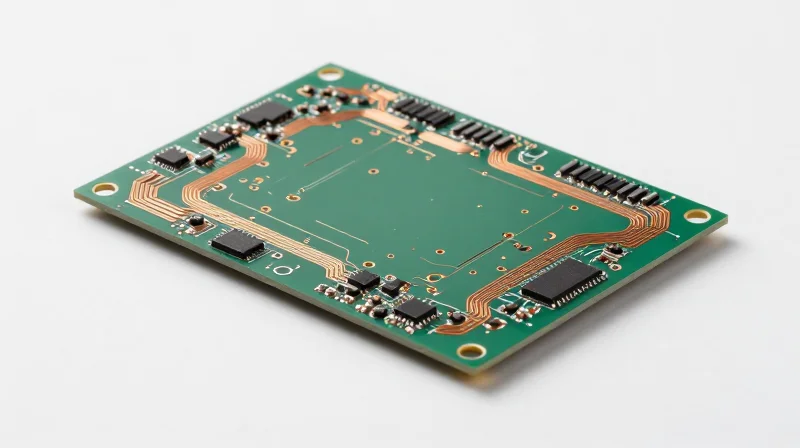
Diving Into Rogers 4350B: The Flame-Retardant Workhorse
Rogers 4350B stands as the quintessential high-frequency laminate, engineered specifically to bridge the gap between high-performance RF requirements and high-volume, cost-effective manufacturing. Unlike its sibling, the 4003C, the 4350B is formulated with specialized fillers that provide a UL 94V-0 flame-retardant rating. This critical safety certification makes it the preferred choice for commercial telecommunications, automotive radar, and consumer electronic applications where safety standards are non-negotiable.
Compatibility with Automated Assembly
A primary advantage of the 4350B is its thermal stability and structural integrity during automated assembly. It behaves significantly like standard FR-4 glass-reinforced epoxy, meaning PCB fabricators do not need to implement specialized, non-standard processing steps. This compatibility translates to higher throughput, lower scrap rates, and reduced overall production costs for high-frequency designs.
| Feature | Rogers 4350B Attribute | Benefit |
|---|---|---|
| Flame Rating | UL 94V-0 | Essential for safety-regulated markets |
| Processing | FR-4 Compatible | Reduces fabrication lead time and cost |
| Stability | High Tg | Resistant to thermal stress during reflow |
Key Considerations for Designers
- Why is the UL 94V-0 rating critical for 4350B?
The 94V-0 rating confirms the material's ability to self-extinguish when exposed to flame, making it a mandatory requirement for internal electronic components in consumer and automotive systems. - Does the flame retardant affect dielectric loss?
While the 4350B contains flame-retardant additives, its electrical performance remains remarkably stable and similar to the non-flame-retardant 4003C, allowing designers to maintain high signal integrity without sacrificing safety. - Can 4350B undergo multiple reflow cycles?
Yes, its robust resin system is designed to withstand the thermal rigors of lead-free soldering processes and repeated reflow cycles without delamination.
Analyzing Rogers 4003C: Prioritizing Electrical Performance
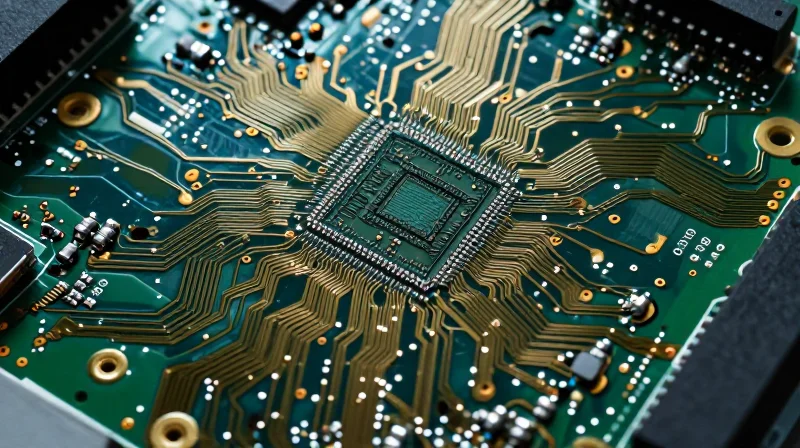
Prioritizing Signal Integrity: The Case for Rogers 4003C
Rogers 4003C is engineered specifically for engineers who prioritize pure electrical performance over standard regulatory compliance like UL 94V-0. By eliminating flame-retardant additives, the dielectric constant (Dk) remains exceptionally stable and consistent, minimizing signal dispersion and insertion loss at microwave frequencies. This material choice is ideal for high-speed, high-frequency applications where every millidecibel of signal loss matters and where the PCB layout environment is controlled.
Electrical Performance Comparison
| Feature | Rogers 4003C | Implication |
|---|---|---|
| Flame Retardant | None | Higher dielectric purity |
| Dk Stability | Excellent | Predictable impedance |
| Insertion Loss | Lower | Improved signal clarity |
| Application Scope | RF/Microwave | Specialized environments |
Common Considerations for 4003C Integration
- Why choose 4003C if it lacks UL 94V-0 certification?
Engineers select 4003C when the primary goal is maximizing electrical throughput in non-consumer, shielded, or specialized enclosure environments where the flammability rating is not a regulatory requirement. - Does the absence of flame retardants affect the manufacturing process?
While fabrication is similar to 4350B, the lack of flame retardant requires strict adherence to internal safety protocols during assembly and product deployment, as the material will not self-extinguish. - Is 4003C better for strict impedance control?
Yes, because the formulation is less complex, the dielectric constant exhibits lower variation, allowing for tighter impedance tolerances on critical transmission lines.
Dielectric Constant (Dk) Stability Across Frequencies

Dk Stability and Frequency Performance
Both Rogers 4350B and 4003C utilize a proprietary ceramic-filled hydrocarbon resin system, which offers exceptional Dk stability over a broad range of frequencies. While both laminates exhibit minimal Dk roll-off at higher frequencies compared to standard FR-4, minor differences exist due to the addition of flame-retardant fillers in the 4350B, which slightly alter the dielectric properties compared to the un-filled 4003C.
| Feature | Rogers 4350B | Rogers 4003C |
|---|---|---|
| Dk at 10 GHz | 3.66 | 3.38 |
| Dk Thermal Coefficient | +50 ppm/°C | +40 ppm/°C |
| Flame Retardant | Yes (UL 94V-0) | No |
Predicting Signal Propagation Behavior
When designing for high-frequency applications, the dielectric constant stability directly impacts impedance control and signal velocity. Because Rogers 4003C lacks flame-retardant additives, it generally offers a marginally lower dielectric loss and slightly more stable Dk consistency across extreme frequency spectrums. However, for most commercial high-frequency applications up to 20 GHz, the 4350B provides perfectly acceptable performance with the added benefit of regulatory safety compliance.
- How does Dk shift affect high-frequency designs?
Any instability in Dk across frequencies results in phase velocity changes, which can lead to signal dispersion and impedance discontinuities in high-speed transmission lines. - Why is the Dk lower for 4003C?
The absence of flame-retardant fillers reduces the overall dielectric loading, resulting in a lower nominal Dk value compared to the 4350B's 3.66 rating. - Which material is better for impedance-sensitive circuits?
Rogers 4003C is typically preferred for strictly impedance-controlled designs due to its slightly higher predictability and lower loss tangent, assuming the application environment does not mandate flame retardancy.
Thermal Properties and Reliability Considerations
Thermal Performance Comparison
While both Rogers 4350B and 4003C share a ceramic-filled hydrocarbon matrix, their thermal behavior differs due to the inclusion of flame-retardant fillers in the 4350B. Engineers must account for these variations in coefficient of thermal expansion (CTE) and glass transition temperature (Tg) to prevent mechanical failure during assembly or high-power operation.
| Property | Rogers 4350B | Rogers 4003C |
|---|---|---|
| Glass Transition (Tg) | >280°C | >280°C |
| CTE (X/Y-axis) | 14/16 ppm/°C | 14/16 ppm/°C |
| Thermal Conductivity | 0.62 W/m/K | 0.71 W/m/K |
| UL 94V-0 Rating | Yes | No |
Reliability and Thermal Conductivity Analysis
The higher thermal conductivity of the Rogers 4003C (0.71 W/m/K) provides a marginal advantage in heat dissipation for high-power density RF designs compared to the 4350B. However, the 4350B is the industry standard for designs requiring safety compliance, as its flame-retardant filler system does not significantly degrade thermal mechanical integrity, maintaining a Tg well above 280°C for reliable lead-free soldering.
Common Thermal Reliability Questions
- How does the flame-retardant filler affect thermal expansion?
The filler used in 4350B is carefully balanced to match the CTE of copper (approximately 17 ppm/°C), ensuring minimal stress on plated through-holes during thermal cycling. - Which material is better for high-temperature operating environments?
Both materials offer excellent stability, but 4003C provides slightly better thermal conductivity, making it preferred for power amplifier designs where heat extraction is the primary challenge. - Does the lack of UL 94V-0 in 4003C affect reliability?
No, it does not affect mechanical or thermal reliability. It only impacts safety certification requirements for commercial end-user products.
Cost and Manufacturability Trade-offs
When deciding between Rogers 4350B and 4003C, the core manufacturing trade-off lies in the flame retardant (FR) classification of the 4350B, which simplifies the assembly process but introduces slight variations in material composition compared to the cleaner, UL-94-HB rated 4003C.
Manufacturing and Assembly Considerations
The primary differentiator in manufacturability is that Rogers 4350B is a UL 94V-0 rated laminate, meaning it contains flame retardants. This makes it the preferred choice for commercial products that must meet stringent fire safety standards without requiring additional chassis shielding. Conversely, Rogers 4003C is not inherently flame retardant; it is designed for maximum signal integrity in environments where fire safety is addressed through enclosure design.
| Feature | Rogers 4350B | Rogers 4003C |
|---|---|---|
| Flame Retardant | Yes (UL 94V-0) | No (UL 94HB) |
| Fabrication Handling | Standard industry processes | Standard industry processes |
| Typical Application | Consumer/Commercial | Defense/Aero/Research |
| Cost Profile | Competitive/Volume | Premium/Specialized |
Cost and Availability Analysis
Cost structures for these laminates are heavily influenced by demand volume and standard panel sizing. Rogers 4350B is produced in significantly higher volumes for the consumer electronics and automotive sectors, often resulting in lower per-unit pricing and better availability across multiple distributors. Rogers 4003C, while maintaining a similar manufacturing process, often carries a slight premium due to its niche usage in high-performance signal-sensitive applications where minimizing dielectric loss is the absolute priority.
Frequently Asked Questions
- Does the 4350B's flame retardant affect high-frequency performance?
The additive slightly alters the dielectric loss tangent compared to the 4003C, but for most microwave designs up to 10 GHz, this difference is negligible. - Which material is better for prototype costs?
Rogers 4350B is usually more cost-effective for initial prototyping due to broader availability and slightly lower raw material costs. - Is board house processing capability the same for both?
Yes, both laminates follow standard FR-4-like processing workflows, meaning most specialized PCB manufacturers can handle both without additional tooling charges.
Decision Matrix: When to Choose Which
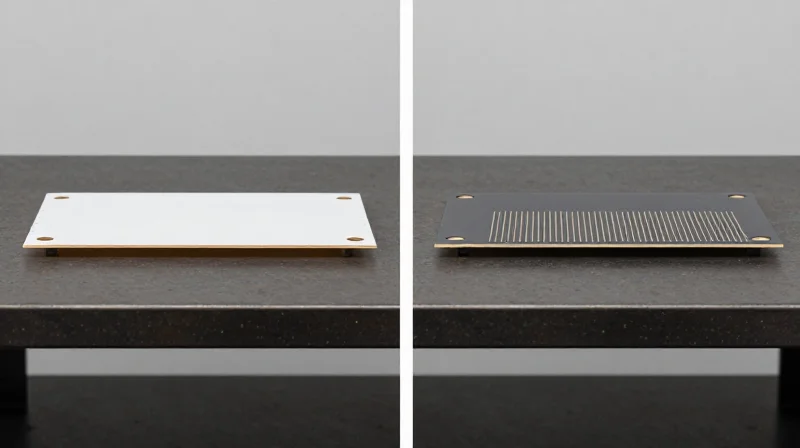
Selection Matrix: Rogers 4350B vs. 4003C
Choosing the optimal laminate depends largely on the specific environmental requirements and manufacturing limitations of your project. While both materials offer excellent high-frequency performance, the 4350B is engineered for high-volume commercial applications requiring UL 94V-0 flammability ratings, whereas the 4003C remains the legacy choice for designs where strict flame retardancy is not a mandatory requirement.
| Requirement | Recommended Material | Rationale |
|---|---|---|
| UL 94V-0 Flame Rating | Rogers 4350B | Mandatory for most commercial consumer electronics. |
| Low-Cost Commercial RF | Rogers 4350B | Optimized for standard FR-4 fabrication processes. |
| Extreme Low-Loss Requirements | Rogers 4003C | Slightly lower loss profile due to absence of flame retardants. |
| Legacy PCB Fabrication | Rogers 4003C | Established long-term footprint in specialized aerospace/defense. |
| Automotive / High Power | Rogers 4350B | Superior thermal robustness and reliability under stress. |
Decision-Making FAQ
- Can I swap 4003C for 4350B without redesigning?
In most cases, yes. They share identical dielectric thicknesses and copper foil types, allowing for a drop-in replacement, though re-validation of thermal and regulatory compliance is advised. - Does the flame retardant in 4350B affect electrical performance?
It has a negligible effect on the dielectric constant, but 4003C will show a marginally lower dissipation factor, which may be critical for extremely sensitive high-frequency filters. - Which material is easier to source?
Rogers 4350B is more widely stocked by distributors globally due to its ubiquitous use in the wireless infrastructure and automotive markets.
Both Rogers 4350B and 4003C offer exceptional performance, but the 'best' material depends on your specific regulatory requirements and thermal constraints. By balancing flame retardancy against raw electrical precision, you can ensure your next high-frequency design hits every performance metric. Ready to finalize your PCB material stack-up? Contact our engineering team today for a consultation on your next high-frequency project.
