Decoding 10k Potentiometer Prices: A Comprehensive Guide
2024.12.29
Have you ever wondered how a simple knob controls the volume of your favorite music or the brightness of a lamp? The magic often lies within a small component known as a potentiometer, and a 10k potentiometer is a versatile workhorse in electronics. This article dissects the world of 10k potentiometers, exploring not just their price but also the different types, their functions, and where to find the best value. Whether you’re a student experimenting with circuits or an engineer designing sophisticated systems, understanding the 10k potentiometer price and its context is crucial. Let's delve into the details!
Understanding the Basics: What is a 10k Potentiometer?
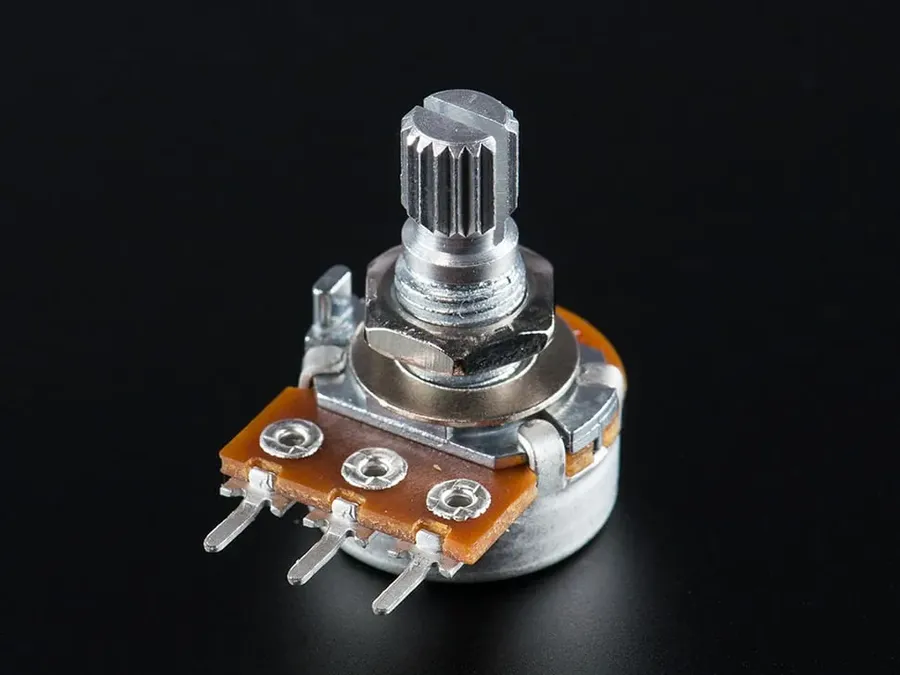
10k Potentiometer
A 10k potentiometer is a three-terminal variable resistor with a total resistance of 10,000 ohms (10 kΩ). It functions as an adjustable voltage divider or a variable resistance, commonly used to control voltage or current within an electrical circuit. The core function of a 10k potentiometer is to allow a user to manually vary the resistance value, enabling changes in the electrical characteristics of the circuit it's part of.
Factors Affecting 10k Potentiometer Price
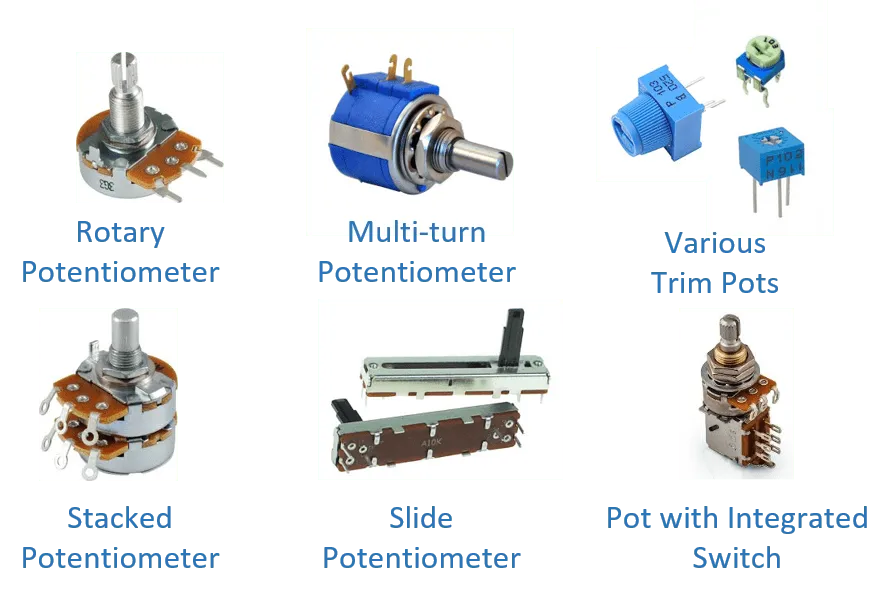
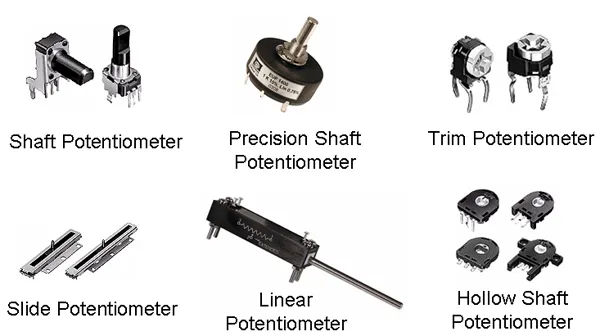
Various Potentiometers
The price of a 10k potentiometer is not fixed and is influenced by a variety of factors. Understanding these factors is crucial for selecting the right potentiometer for your needs while staying within budget. Key determinants include the manufacturer's reputation, the type of potentiometer, its electrical characteristics, physical attributes, and whether it is sold as a stand-alone component or part of a kit.
Manufacturer Well-established and reputable manufacturers often have higher prices due to stringent quality control and higher material standards. Less established brands might offer lower prices but may compromise on consistency and long term reliability.
Potentiometer Type Different types of potentiometers (linear, logarithmic, or trim) have varying manufacturing complexities and specific applications. Linear potentiometers, providing a uniform change in resistance, are often less expensive than logarithmic or specialized trimmers. High-precision multi-turn potentiometers can be the most costly due to their complex construction and very high accuracy.
Electrical Characteristics Key electrical parameters like tolerance (accuracy of the specified resistance), power rating (the maximum power it can safely handle), and the temperature coefficient impact the price. Higher accuracy and power ratings usually increase the cost, reflecting higher quality materials and manufacturing processes.
Physical Attributes The size, packaging, and materials used in the potentiometer's construction influence its cost. Surface mount (SMD) potentiometers and those with higher quality casings designed for harsh environmental conditions tend to be more expensive than standard through-hole models. Additionally, whether the potentiometer is panel mounted (with shaft) or a PCB mount trimpot effects cost.
Included Accessories The inclusion of a knob or being part of a complete kit raises the price. A potentiometer sold with an integrated knob has additional value due to the knob's own cost of production and assembly. Furthermore, kits that contain multiple potentiometers and related electronic components will cost more than the price of the individual potentiometers alone.
Material Quality High-quality construction materials (e.g., metal shaft, carbon or cermet tracks, sealed housing) significantly increase the price compared to cheaper components with plastic or lower quality material, this difference also increases the durability and lifetime of the potentiometer.
Different Types of 10k Potentiometers and Their Uses
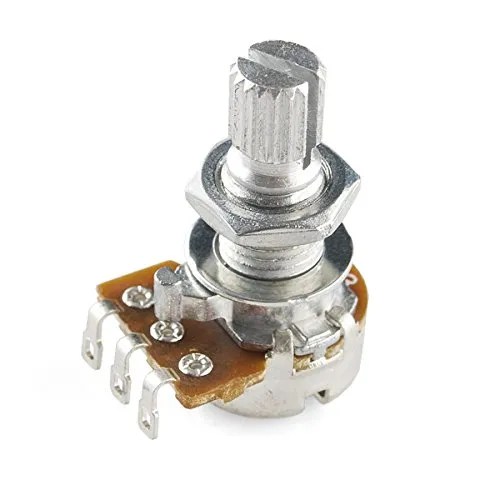
Rotary Potentiometer
10k potentiometers, while all offering a 10,000-ohm resistance range, come in various types each designed for specific applications. These variations primarily differ in their mechanical structure and the way resistance changes as the adjustment mechanism is moved. Understanding these differences is crucial for selecting the correct potentiometer for a given project.
Potentiometer Type
Description
Typical Applications
Resistance Taper
Rotary (Single-turn)
Offers a full range of resistance adjustment within a single rotation of its shaft.
Volume controls, general-purpose adjustments.
Linear or Logarithmic
Rotary (Multi-turn)
Requires multiple rotations of the shaft to cover the full resistance range, enabling finer adjustments.
Precise tuning, calibration, and settings where high accuracy is required.
Linear
Slide
Adjusted linearly via a slider, often used for visual indication of setting.
Audio mixers, graphic equalizers, control panels.
Linear or Logarithmic
Trim Pot (Trimmer Potentiometer)
Small, designed for infrequent adjustments, usually made with a screwdriver.
Circuit calibration, fine-tuning, and settings that are rarely changed.
Linear
The resistance taper of a potentiometer describes how the resistance changes with respect to the physical movement of the potentiometer's control. Linear tapers exhibit a direct proportional change in resistance, where as Logarithmic tapers have more resistance change towards one end which is ideal for Audio application.
Where to Buy 10k Potentiometers: A Price Comparison
Potentiometer Online Store
The cost of a 10k potentiometer can vary significantly based on the vendor and platform from which it is purchased. This section provides an analysis of different purchasing options, focusing on online marketplaces and specialist electronics stores. Understanding these differences can help in securing the best possible deal for your project.
Online marketplaces like Amazon and eBay offer a wide array of 10k potentiometers, often at competitive prices. However, these platforms are also known for having varying levels of quality and potential for counterfeit components. Specialist electronics stores, while possibly more expensive, often provide higher quality components from trusted brands. Below is a comparison of where to buy 10k potentiometers.
Platform
Price Range
Quality
Availability
Shipping
Customer Support
Amazon
Low to Moderate
Varies; potential for counterfeit components
High
Fast, varies by seller
Varies by seller; platform support is available
eBay
Very Low to Moderate
Highly variable; risk of low-quality components
High
Varies, often slower than other options
Varies by seller; platform support is available
Specialist Electronics Stores
Moderate to High
High; genuine products from reputable brands
Moderate to High
Usually reliable, but may be slower and more costly
Generally good; knowledgeable staff available
Direct from Manufacturer
Moderate to High
Highest; most reliable
Moderate, may be subject to minimum order quantities
Reliable, usually from single location
Usually excellent; factory experts available
When choosing where to purchase your 10k potentiometer, consider the following points: If you need a cost-effective solution and are willing to accept the risk of lower quality, online marketplaces like Amazon and eBay may be suitable. However, if your project demands a high degree of reliability and quality, or you require specific specifications, specialist electronics stores or buying direct from the manufacturer are better choices. Always cross-reference vendor ratings and reviews before finalizing your purchase and verify that the technical parameters listed match your project requirements.
Comparing Common 10k Potentiometer Models
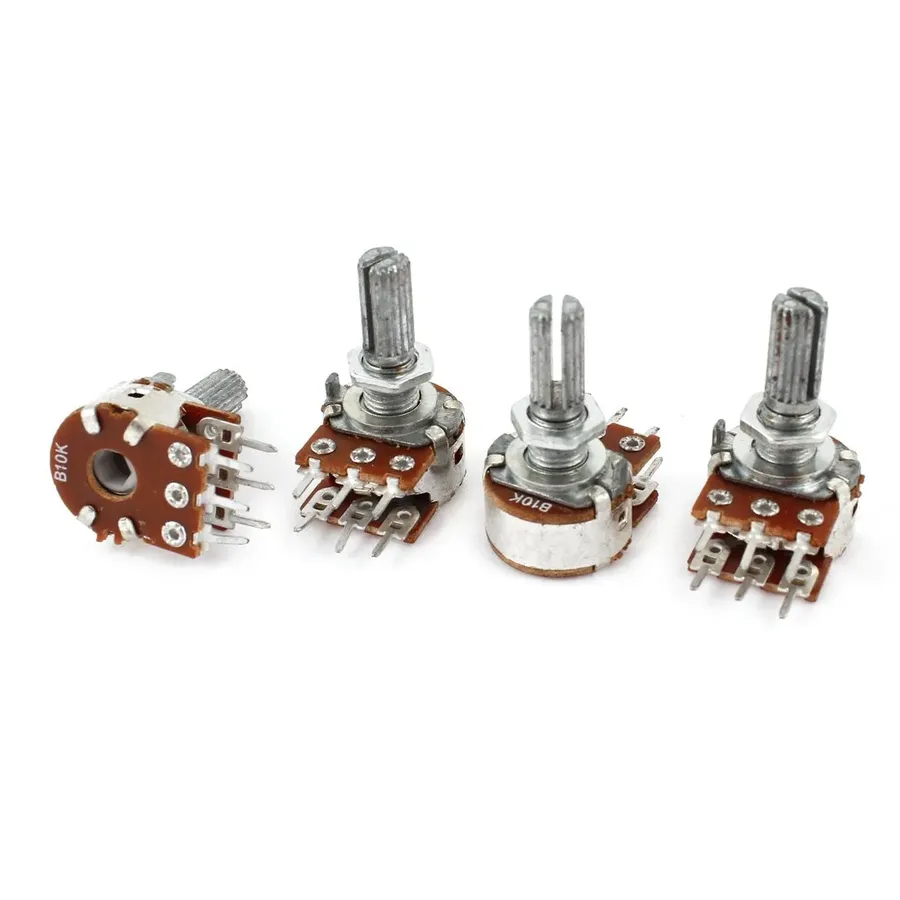
Potentiometers by Brand
Selecting the right 10k potentiometer involves considering several factors, including its intended application, required precision, and cost. This section provides a comparative analysis of various 10k potentiometer models, highlighting their key specifications and typical use cases to help users make informed decisions.
Model Type
Resistance (Ω)
Tolerance (%)
Pin Type
Power Rating (W)
Taper
Typical Application
Approximate Price (USD)
Rotary - Single Turn
10,000
±20
Solder Lugs
0.25
Linear
General Volume Control
1.00
Rotary - Multi Turn
10,000
±10
Solder Lugs
0.5
Linear
Precise Calibration
3.00
Trim Pot (Trimmer)
10,000
±20
Through-hole
0.1
Linear
Circuit Adjustment
0.75
Slide Potentiometer
10,000
±20
Solder Tabs
0.25
Linear
Audio Mixing Consoles
2.50
Dual Gang Potentiometer
10,000 x 2
±20
Solder Lugs
0.25
Logarithmic
Stereo Audio Controls
3.50
10k Potentiometer Applications: From Hobby to Industrial
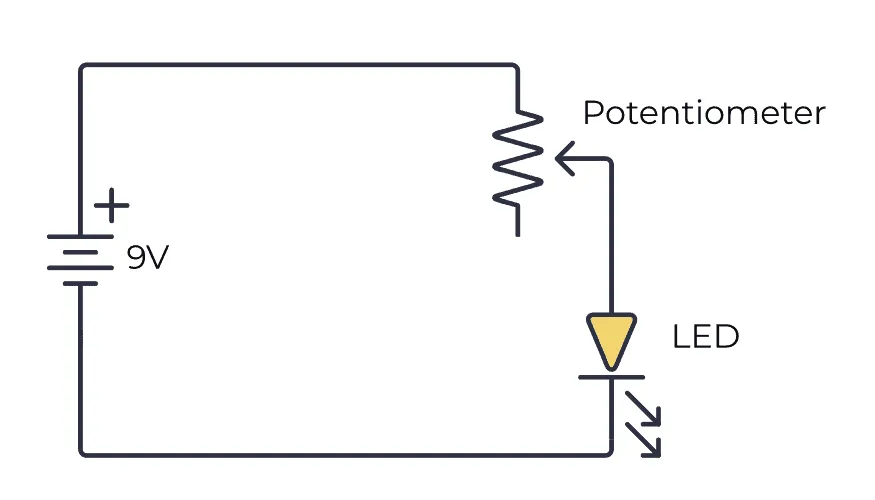
Potentiometer in Circuit
10k potentiometers serve as versatile components in a wide array of applications, spanning from basic hobbyist projects to complex industrial control systems. Their ability to provide variable resistance makes them ideal for controlling voltage, current, and various other parameters within electronic circuits. The following sections detail their use across multiple domains.
Audio Equipment In audio circuits, 10k potentiometers are widely employed as volume controls. By adjusting the potentiometer, users can control the amplitude of the audio signal, thus changing the loudness of the sound. They are also used in equalizers for adjusting the gain of different frequency bands and as balance controls for stereo audio.
Motor Speed Control 10k potentiometers can function as a simple method for controlling the speed of small DC motors. By using the potentiometer to regulate the voltage supplied to the motor, the motor's speed can be adjusted proportionally, allowing for granular control.
Light Dimming Circuits Potentiometers are found in many light dimming applications. Connecting the potentiometer within a circuit can adjust the current flow to a light source, thus changing the intensity of the light emitted, commonly used in home lighting and various electronic displays.
Temperature Control Potentiometers are essential components in simple temperature controllers. By incorporating a thermistor into the circuit, the potentiometer can be adjusted to set a desired temperature point, which is then maintained by the controller. This type of configuration is used for basic heating and cooling applications.
Sensor Calibration In various sensor applications, 10k potentiometers are used for calibration purposes. By adjusting the potentiometer, the sensor's output can be fine-tuned to provide accurate readings, counteracting any manufacturing variances and ensuring the sensor functions within the specified range of operation.
Industrial Control Panels In industrial settings, 10k potentiometers form the heart of control panels, where they enable fine-tuning of machine parameters. They control various aspects of a machine's operation, facilitating precise adjustments that help maintain optimal performance and safety.
Robotics Robots use potentiometers extensively to measure the angle of joints and to control the speed and position of various parts. These sensors feed vital information back to the robot's control system, which coordinates the robot's movement and activities. Potentiometers are a low-cost option for positional feedback in robotics systems.
Test Equipment Potentiometers are used in many test and measurement tools, including power supplies and multimeters. They enable the user to set test parameters accurately and to calibrate the tools for optimum performance.
Frequently Asked Questions About 10k Potentiometer Price and Usage
This section addresses common questions regarding 10k potentiometers, covering their value, usage, and operational limits. Understanding these aspects is crucial for effective implementation in electronic projects.
What is the resistance value of a 10k potentiometer? A 10k potentiometer has a total resistance of 10,000 ohms between its outer two pins. The adjustable wiper pin provides a variable resistance from 0 ohms to 10,000 ohms, relative to either of the outer pins, depending on its position.
What is a 10k potentiometer commonly used for? 10k potentiometers are widely used for variable resistance adjustments in various electronic circuits. Common applications include volume controls in audio devices, brightness control in lighting systems, calibration of sensors, and providing user input in control systems. They act as voltage dividers, allowing the adjustment of the output voltage.
What is the maximum voltage a 10k potentiometer can handle? The maximum voltage a 10k potentiometer can handle depends on its power rating. Generally, potentiometers are rated for a specific power dissipation (in watts) and a maximum voltage. Exceeding either can cause damage or premature failure. It is crucial to consult the potentiometer’s datasheet for specific voltage and power ratings. For typical 10k potentiometers, this value ranges from a few volts to tens of volts, depending on the power rating, with many small signal pots being limited to 5V or 12V maximum. As the resistance of the pot is fixed, the maximum current is defined by the maximum power rating of the device at a specific voltage.
Can a 10k potentiometer be used as a rheostat? Yes, a 10k potentiometer can be used as a rheostat by connecting the wiper pin and one of the end pins to the circuit. This effectively creates a two-terminal variable resistor. However, using a potentiometer as a rheostat usually sacrifices some of the resistance range. Care must be taken not to exceed the rated current, as all current will flow through the wiper.
What is the difference between a linear and logarithmic 10k potentiometer? In a linear potentiometer, the resistance changes uniformly as the knob or wiper is turned. This means that turning the knob 10% will increase the resistance by approximately 10% of the full range. In a logarithmic (or audio) potentiometer, the resistance change is not linear, often increasing more quickly at the higher end. This design mimics the human ear’s perception of loudness and is preferred in audio volume controls.
How do you determine the pinout of a 10k potentiometer? The pinout of a standard 10k potentiometer usually includes three pins: two outer pins and a middle wiper pin. When facing the potentiometer’s terminals, the end pins connect to the two ends of the resistance track, and the middle pin is the adjustable wiper. The resistance between either of the end pins and the wiper changes as the potentiometer’s shaft is turned. Usually the pin order, while commonly consistent, can vary by manufacturer, so consulting the device’s datasheet is recommended.
Are there different physical sizes of 10k potentiometers available? Yes, 10k potentiometers come in various sizes and form factors. They can range from small trim pots used for internal circuit adjustments to larger panel-mounted potentiometers with knobs designed for user control. Physical size may be dictated by space constraints and robustness needs, as well as by the electrical power rating of the device. Larger devices typically have a higher maximum power rating.
Practical Guide: Integrating a 10k Potentiometer into Your Project
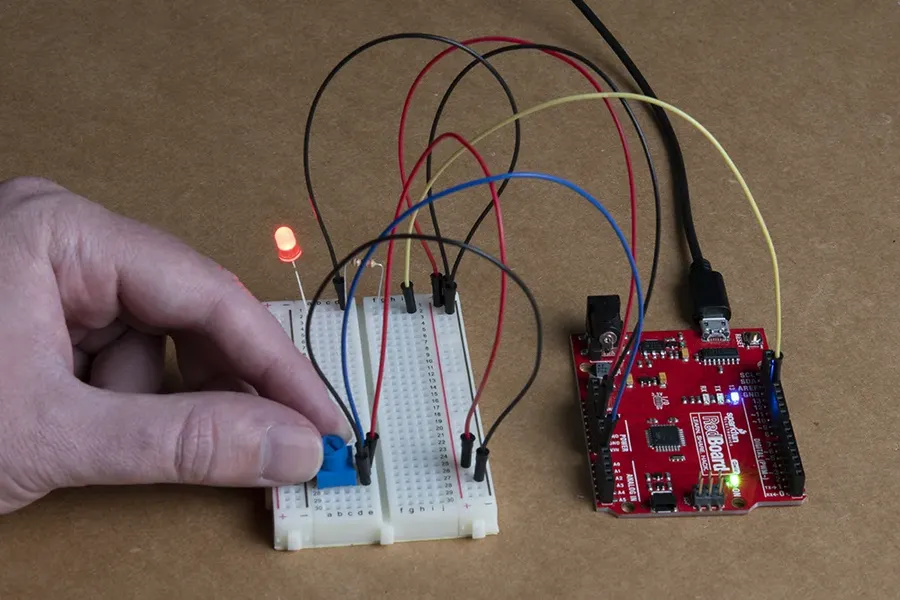
Potentiometer on Breadboard
Integrating a 10k potentiometer into your project requires careful consideration of selection, installation, and testing. This guide provides the foundational knowledge to seamlessly incorporate this versatile component into your designs. The following sections detail wiring basics, microcontroller connectivity, and common troubleshooting techniques.
Before integration, ensure the 10k potentiometer's specifications meet your project's requirements. Key parameters include the potentiometer's tolerance, taper (linear or logarithmic), and power rating. Select a potentiometer that can handle the expected current and voltage in your circuit. Consider also the physical size and mounting style needed for your application
Basic Wiring Diagram A 10k potentiometer has three pins. The two outer pins are connected to the ends of the resistive track, and the center pin is connected to the wiper. When used as a voltage divider, one outer pin is connected to the voltage source, the other outer pin is connected to ground, and the center pin provides the adjustable output voltage. When used as a variable resistor, only two pins (one outer and the center) are used.
Connecting to Microcontrollers Microcontrollers can read the analog output of a 10k potentiometer using an analog-to-digital converter (ADC). Connect the center pin (wiper) of the potentiometer to an analog input pin on the microcontroller. Connect one of the outer pins to the microcontroller’s power supply and the other to ground. The microcontroller can then read the voltage or the change in voltage as a function of the potentiometer's wiper position. Code will be required to translate the ADC reading to a meaningful value.
Testing and Calibration After connecting the potentiometer, verify the output using a multimeter. Measure the voltage between the wiper and ground, making sure it changes smoothly as the knob is turned. For more precise applications, calibrate the potentiometer readings within your microcontroller code to match the desired output range. This ensures correct scaling and linearity for control applications. For example, some code may be needed to translate the 0-1023 integer range of the ADC to a meaningful value like degrees Celsius.
Troubleshooting Common Connection Problems If the potentiometer output is erratic, verify all connections, and check that the potentiometer's resistance is within the expected range of 10K ohms, and that the leads are properly soldered and seated. Ensure that the power supply is stable and within the microcontroller's voltage specifications. Noise can be addressed by adding a capacitor between the wiper and ground to filter out transient signals. Finally, the code should be checked for any errors in reading the analog signal and translating it into a desired range.
In conclusion, the price of a 10k potentiometer can range from under a dollar to over $10, depending on various factors. Understanding the different types, their applications, and where to buy them is crucial for any electronics project. Whether you're controlling audio volume or calibrating sensor readings, the 10k potentiometer is a cornerstone component. By now, you should have a clear understanding of the 10k potentiometer price landscape, enabling you to make informed choices for your specific requirements and budget.