Decoding the 100 Ohm Resistor: Your Comprehensive Guide
2025.01.21
In the world of electronics, the humble 100 ohm resistor plays a crucial, yet often overlooked role. Like a traffic controller managing the flow of electrons, this component regulates current and voltage within circuits. Just as different roads guide vehicles, different types of 100 ohm resistors exist for various applications. In this comprehensive guide, we'll delve into everything you need to know about these essential components, including their color codes, applications, and practical uses, ensuring you understand their significance in both simple and complex electronic projects.
What is a 100 Ohm Resistor?
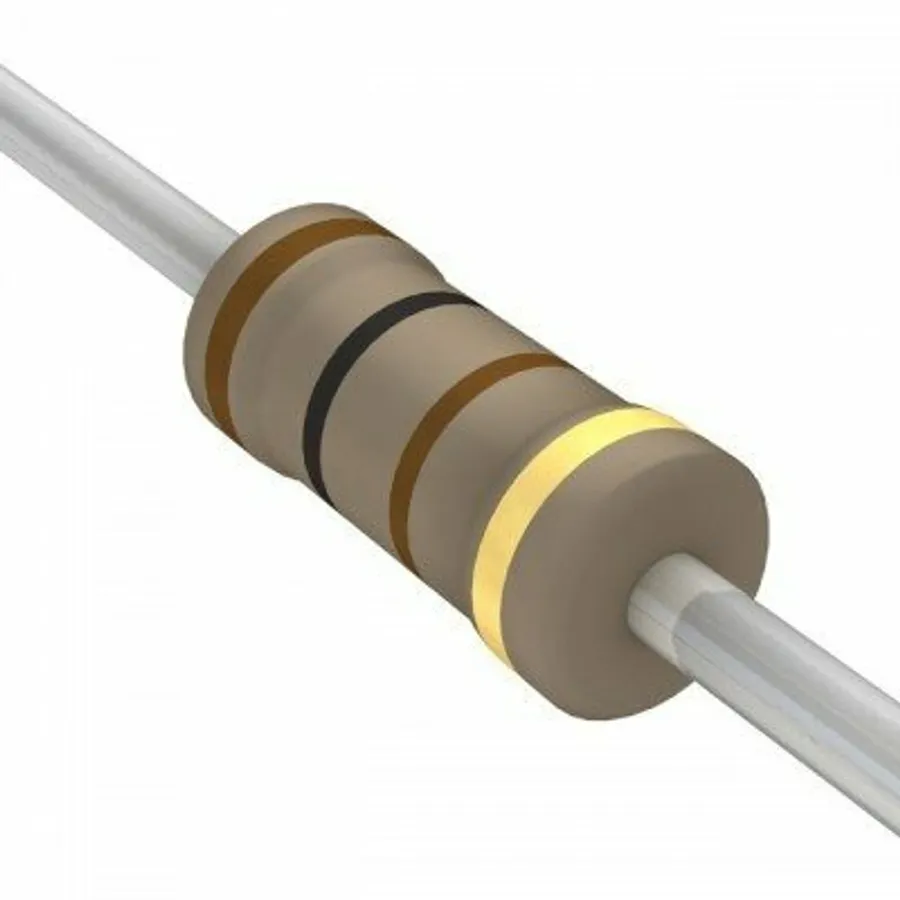
100 Ohm Resistor
A 100 ohm resistor is a fundamental electronic component designed to impede the flow of electrical current with a specific resistance of 100 ohms. This precise resistance is crucial for controlling both voltage and current within electronic circuits, ensuring optimal performance and protecting sensitive components. It serves as a cornerstone in circuit design, enabling engineers to manipulate electrical signals and create stable operating conditions.
At its core, a resistor functions by converting electrical energy into heat as current passes through it. The 100 ohm resistor, in particular, provides a very common value that balances the need to significantly reduce current flow, while not completely eliminating it, making it very versatile across a wide range of applications. The resistance value of 100 ohms indicates the ratio of voltage drop to current flow within the component, following Ohm's Law (V=IR), where V is the voltage, I is the current and R is the resistance. This value is critical in both analog and digital circuits, as it directly influences the behavior of the circuit by limiting the current flow.
Understanding Resistor Color Codes: Decoding the 100 Ohm
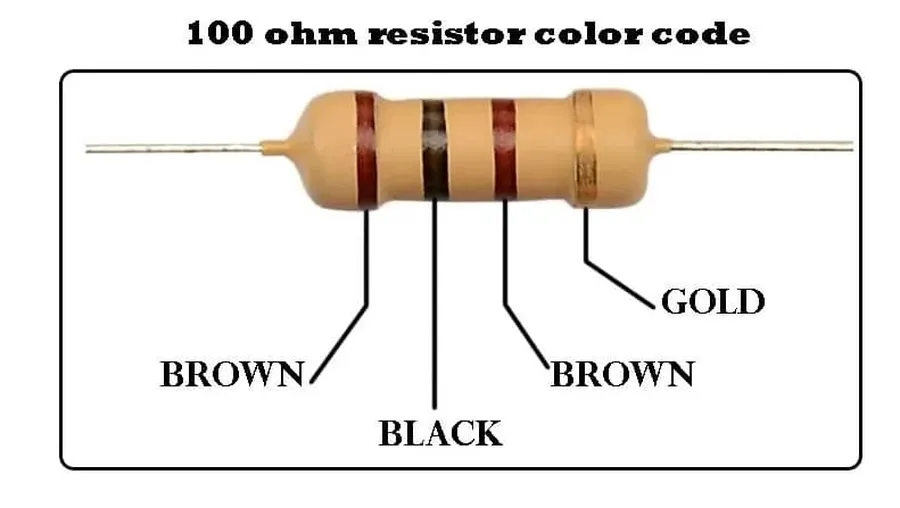
Resistor Color Code
Decoding the color bands on a 100 ohm resistor is crucial for identifying its resistance and tolerance. The color bands follow a standardized system, allowing for quick and easy identification of the resistor's value without needing specialized measuring equipment. For a 100 ohm resistor, two common color-coding schemes are used: a 4-band system and a 5-band system, each indicating specific characteristics about the component.
Band
4-Band Resistor
5-Band Resistor
Meaning
1st Band
Brown
Brown
1st Digit (1)
2nd Band
Black
Black
2nd Digit (0)
3rd Band
Brown
Black
3rd Digit (0) or Multiplier (x10^1) on 4 band resistor
4th Band
Gold
Brown
Multiplier (x10^0) on 5 band resistor or Tolerance (5%) on 4 band resistor
5th Band
-
Brown
Tolerance (1%)
The 4-band system provides a quick estimation, while the 5-band system offers greater precision with lower tolerance values. Understanding these codes allows engineers and hobbyists to efficiently select the correct resistors for circuit design. The 5th band in the 5-band system usually represents a precision tolerance value, and this is not available on 4 band resistors, and the tolerance values vary, the colours for 5% and 1% are shown above.
Types of 100 Ohm Resistors: Metal Film vs. Carbon Film
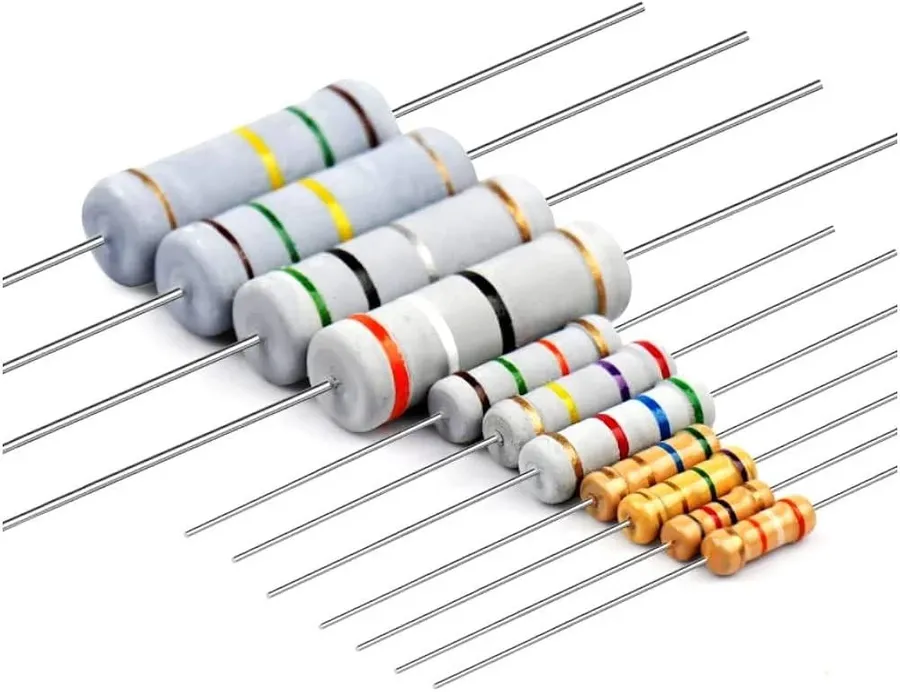
Carbon Film Resistor
100 Ohm resistors are not monolithic; they come in various forms, primarily metal film and carbon film, each with distinct characteristics that influence their suitability for different applications. Understanding these differences is crucial for effective circuit design and performance optimization.
Feature
Metal Film Resistor
Carbon Film Resistor
Resistance Accuracy
High (typically 1% or better)
Lower (typically 5% or 10%)
Temperature Coefficient
Low (stable resistance over temperature)
Higher (resistance varies more with temperature)
Noise Performance
Low
Higher
Cost
Generally more expensive
More cost-effective
Power Rating
Moderate
Moderate
Long-term Stability
Excellent
Good
Typical Applications
Precision circuits, audio equipment, sensors
General purpose circuits, high-volume applications
Metal film resistors are constructed using a thin film of metal deposited on a ceramic substrate, resulting in precise resistance values, low temperature coefficients, and low noise. They are ideally suited for applications requiring stable performance and accuracy, such as in precision instrumentation and audio circuits where signal fidelity is paramount. Conversely, carbon film resistors use a carbon film as the resistive element and are a cost-effective option for general-purpose applications, although they exhibit a higher temperature coefficient and increased noise levels. The choice between these two depends on the specific requirements of the application.
Common Applications of 100 Ohm Resistors
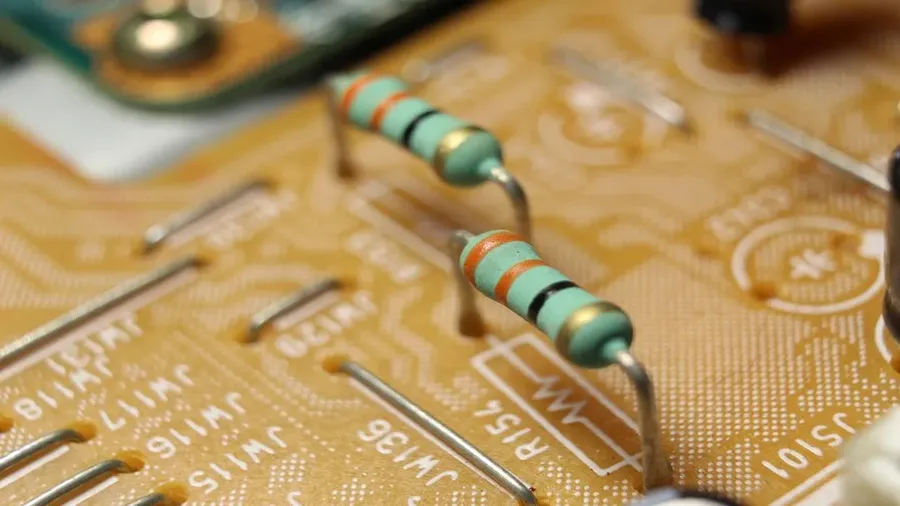
Resistors on Circuit Board
100 ohm resistors are fundamental components in electronics, serving a variety of critical functions within circuits. Their primary use lies in precisely controlling current and voltage, making them indispensable in numerous applications ranging from basic LED circuits to sophisticated signal processing.
Current Limiting for LEDs A key application is limiting current to protect Light Emitting Diodes (LEDs). LEDs have specific current limits; exceeding these can cause damage. A 100 ohm resistor, in series with an LED, limits current to prevent burnout and ensures safe operation. The precise resistance value ensures the LED operates at its optimal brightness and lifespan, according to the Ohm's Law.
Signal Conditioning In analog signal processing, 100 ohm resistors play a vital role in impedance matching and signal attenuation. Impedance matching is crucial in ensuring that signal is transmitted efficiently without reflections or signal loss, while attenuation helps to reduce a signal's amplitude to a desirable level. This is often required when connecting different parts of a circuit or for connecting circuits with different impedances
Pull-Up and Pull-Down Resistors 100 ohm resistors are often used as pull-up or pull-down resistors in digital circuits. A pull-up resistor connects a signal line to a high logic level when the signal input is floating. Conversely, a pull-down resistor connects a signal line to the ground (low logic level), ensuring a defined state in the absence of input. These configurations are common for buttons, switches, or microcontroller inputs, providing a stable default state when input is undefined.
Current Sensing These resistors can function as current-sensing elements in low-current applications. By measuring the voltage drop across the 100 ohm resistor, the current flow through the circuit can be calculated using Ohm’s law (I=V/R). This allows for the monitoring of current levels, crucial for protection and performance analysis.
Simple Voltage Divider 100 ohm resistors can be used to create a voltage divider network, useful for providing reference voltages to components or circuits. A basic voltage divider utilizes two resistors and divides an incoming voltage to a smaller output voltage. In this configuration, the 100 ohm resistors must be precisely matched to give the desired division ratio, or else there could be variation in the voltage output.
General Circuit Protection 100 ohm resistors are frequently employed for basic circuit protection by limiting current in various applications. They are a cheap and effective component for preventing damage during a short circuit. When circuits may experience unanticipated current surges, the resistors are useful to protect more sensitive and costly components.
How to Choose the Right 100 Ohm Resistor
Selecting the appropriate 100 ohm resistor for a specific application requires careful consideration of several key factors. These factors ensure the resistor operates within its intended parameters, providing reliable performance and preventing potential circuit damage. The primary considerations include power rating, tolerance, and physical size, all of which are interconnected and application-dependent.
Factor
Description
Considerations
Power Rating
The maximum power (in watts) that the resistor can safely dissipate without overheating.
Ensure the selected resistor's power rating significantly exceeds the anticipated power dissipation in the circuit. A common practice is to choose a resistor with at least twice the calculated power requirement to provide a safety margin.
Tolerance
The permissible deviation of the actual resistance value from the nominal value (100 ohms in this case), typically expressed as a percentage.
Choose the tolerance according to the precision needed. 5% is generally adequate, but 1% or less tolerance should be used in precision circuits. The resistor's color bands indicate the tolerance.
Physical Size
The dimensions of the resistor, which are correlated to its power rating.
Match the size to physical space available within the circuit, and to its power rating. Higher wattage resistors are physically larger.
Temperature Coefficient
How much the resistance changes with temperature variation.
In applications with wide temperature variation, consider resistors with low temperature coefficient to ensure a more stable and predictable performance. Metal film resistors generally have better temperature characteristics compared to carbon film resistors.
Type (Metal Film vs Carbon Film)
The construction technology of the resistor.
Metal film resistors offer higher precision, lower noise and better temperature stability, but typically cost more. Carbon film resistors are a more cost effective option, but with less precision and lower stability.
For instance, consider a scenario where you need a 100 ohm resistor to limit current through an LED. If the calculated power dissipation across the resistor is 0.125 watts, a 1/4 watt (0.25 watt) resistor would be suitable. Furthermore, if the circuit’s performance requires higher accuracy, a resistor with a 1% tolerance (metal film) may be necessary; however, if lower precision is adequate, a 5% tolerance resistor (carbon film) could be utilized. Finally, when mounting the resistor, be sure to take into account the physical size constraints on your specific circuit board.
100 Ohm Resistor FAQs: Addressing Common Queries
This section addresses frequently asked questions about 100 ohm resistors, providing clarity on their characteristics, applications, and selection process. We aim to resolve common misconceptions and provide practical insights for both beginners and experienced electronics enthusiasts.
What is the typical tolerance of a 100 ohm resistor? The typical tolerance for a 100 ohm resistor is usually either 5% or 1%. A 5% tolerance resistor indicates that its actual resistance value can range from 95 ohms to 105 ohms, while a 1% resistor has a much tighter range of 99 ohms to 101 ohms. Precision applications often require 1% tolerance or better.
What is the standard power rating for a 100 ohm resistor? Common power ratings for 100 ohm resistors include 1/4 watt (0.25W), 1/2 watt (0.5W) , and 1 watt. However, other higher and lower ratings are also available, the power rating of a resistor must be matched to the application in order to avoid thermal overload and component failure. The power rating is a measure of how much power in watts a resistor can safely dissipate as heat, without causing damage to the resistor. Selecting the appropriate power rating requires calculating the expected power dissipation during operation.
What is a common application for a 100 ohm resistor? 100 ohm resistors are utilized in a wide range of applications. A few common applications are current limiting for LEDs, pull-up or pull-down resistors in digital circuits, signal conditioning and termination and as part of voltage dividers. They're a standard component for a wide range of general purpose circuit designs.
What are the color bands for a 100 ohm resistor? For a standard four-band 100 ohm resistor, the color bands are typically Brown, Black, Brown, and Gold. The first two bands (Brown, Black) represent the numerical value (1 and 0, respectively), the third band (Brown) acts as a multiplier (x10), and the last band (Gold) indicates the tolerance (5%). For a five-band resistor the colors would be Brown, Black, Black, Black, Brown, to indicate a 1% tolerance.
Can a 100 ohm resistor be used for LED current limiting? Yes, 100 ohm resistors are commonly used for current limiting with LEDs. The specific resistance needed depends on the LED's forward voltage and desired current. A 100 ohm resistor in combination with other circuitry is often suitable for low-power LEDs when the current limiting requirements are within the resistor's rated limits.
What types of materials are used to make 100 ohm resistors? 100 ohm resistors are typically made using carbon film, metal film, or metal oxide. Metal film resistors are known for their precision, low temperature coefficient, and low noise characteristics. Carbon film resistors are more cost-effective and are suitable for less demanding applications. Metal oxide resistors can withstand higher temperatures.
What does the tolerance of a 100 ohm resistor actually mean? The tolerance of a resistor defines the acceptable variation of its actual resistance value from the stated value. For example, a 100 ohm resistor with a 5% tolerance can have an actual resistance between 95 ohms and 105 ohms. This variation is an inherent property of the manufacturing process and must be taken into account when designing circuits, especially in critical applications, where precise resistance values are needed.
Practical Tips for Using 100 Ohm Resistors
Effectively utilizing 100 ohm resistors in electronic projects requires a blend of theoretical understanding and hands-on technique. This section outlines practical tips to ensure proper implementation, focusing on soldering, circuit design, and prototyping on breadboards.
Soldering Techniques When soldering 100 ohm resistors, ensure the soldering iron is at the correct temperature to prevent overheating and damaging the component. Use a flux to promote a clean solder joint. Apply solder to the pad and lead simultaneously, allowing the solder to flow and create a robust electrical connection. Avoid applying excessive heat or solder.
Circuit Design Considerations In circuit design, always calculate the required power rating of the 100 ohm resistor based on the expected current flow and voltage drop. Select a resistor with a power rating that exceeds the calculated value to ensure reliability. Consider the resistor's placement in the circuit to minimize heat buildup and interference with other components. For example, resistors in a series configuration will have the same current but varying voltage drop, whereas in a parallel configuration, the voltage will be the same, but the current will divide.
Breadboard Prototyping When prototyping with 100 ohm resistors on breadboards, ensure the resistor leads are fully inserted into the breadboard to maintain a stable connection. Use jumper wires of appropriate gauge to connect the resistor to other components. Double-check connections to avoid short circuits. Use a multimeter to check the resistance after placing the components. Keep the wiring neat and organized for easy troubleshooting.
Selecting the Right Resistor Type Choose the type of 100 ohm resistor based on the application and performance requirements. Metal film resistors are more stable and accurate, ideal for critical circuits, but carbon film resistors are more cost-effective and suitable for general-purpose circuits. SMD resistors are suited for miniaturized circuit applications, where size is a constraint. Through-hole resistors are best used for development and prototying.
Storage best practices Store 100 ohm resistors in a dry and clean environment, away from direct sunlight and high temperatures. This ensures the resistors' values remain within their specified tolerances. If the resistors are not sealed, an anti-static bag should be used to prevent damage to the components.
Troubleshooting Common Issues with 100 Ohm Resistors
Effective troubleshooting of 100 ohm resistors in electronic circuits requires a systematic approach, focusing on recognizing symptoms of common problems such as overheating and incorrect resistance values. These issues often stem from circuit design flaws, component selection errors, or physical damage to the resistor itself.
Overheating A resistor's temperature exceeding its rated operating range indicates it's dissipating more power than it can handle. This often arises from excessive current flowing through the resistor. Check the circuit design and power calculations.
Incorrect Resistance Value If a 100 ohm resistor measures significantly different from its specified value, it is likely damaged or defective, or potentially misidentified. Verify with a multimeter and confirm the color code. Ensure your meter is correctly calibrated.
Physical Damage Visible damage, such as cracks, burns, or broken leads, indicates a failed component needing replacement. Damage may be caused by mechanical stress, excessive heat, or environmental factors.
Solder Joint Issues Poor solder joints can cause unexpected resistance in a circuit. Inspect solder connections for cold joints, insufficient solder, or shorts between joints.
Circuit Design Errors An improper circuit design can lead to incorrect operating conditions for the resistor, causing it to fail. Carefully review the circuit diagram and calculations.
Tolerance Issues While not a failure, using a resistor with too high of a tolerance for your application can cause unexpected behavior. Ensure that the tolerance meets the design requirements.
The 100 ohm resistor, though small, is a foundational component in electronics. Whether you're dimming an LED or calibrating a sensor, it's the unsung hero managing the dance of electricity within circuits. Understanding its color code, its characteristics, and proper applications ensures you are equipped to build robust and reliable electronic projects. So, next time you encounter a 100 ohm resistor, appreciate its vital role in the world of electronics, and remember the principles we have discussed. With a solid understanding, you can leverage this tiny but powerful component effectively to achieve a better understanding of electronics. The 100 ohm resistor has practical, foundational use for a better grasp of electronics.