Electrolytic Capacitors: A Deep Dive into Their Types, Uses, and Lifespan
2025.01.17
Electrolytic capacitors are integral components in countless electronic circuits, from the mundane to the most sophisticated. They leverage electrochemical principles to store significant electrical charge. This article unveils the science, variations, applications, and practical considerations of electrolytic capacitors, bridging the gap between theoretical understanding and real-world usage, offering insights that benefit both hobbyists and professional engineers. Understanding their unique properties is essential to designing robust and reliable systems.
What are Electrolytic Capacitors?
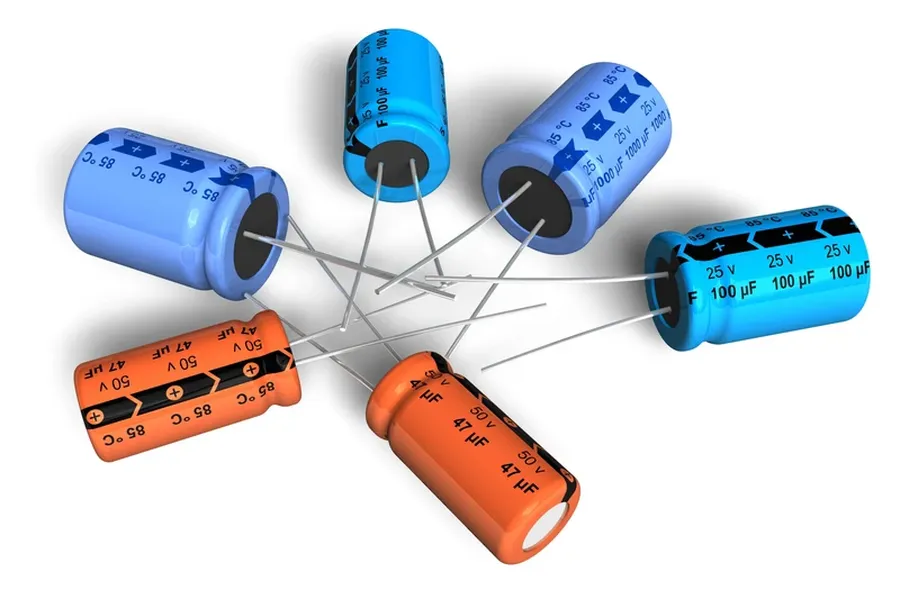
Electrolytic Capacitors
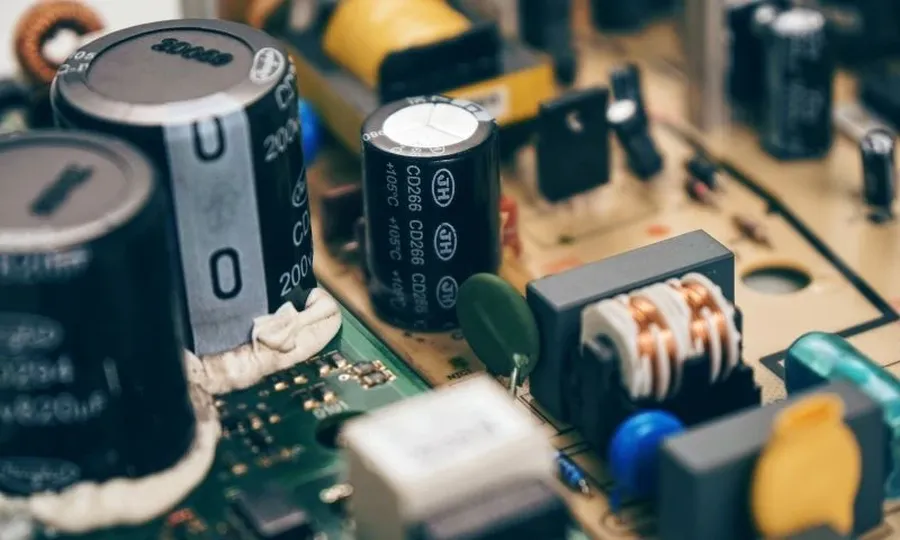
Electrolytic capacitors are a type of capacitor distinguished by their use of an electrolyte as one of the electrodes to achieve a very high capacitance per unit volume. This high capacitance is crucial for applications requiring significant charge storage, such as power supply smoothing and energy buffering. Unlike many other capacitor types, electrolytic capacitors are polarized, meaning they have a defined positive and negative terminal, which is an important consideration for circuit design and component handling.
The Science Behind Electrolytics
Electrolytic capacitors leverage electrochemical principles to achieve exceptionally high capacitance values compared to other capacitor types. The core of their operation lies in the formation of an extremely thin dielectric layer through an electrochemical process, allowing for a significant amount of charge to be stored within a relatively small volume.
The crucial aspect of an electrolytic capacitor is the oxide layer, which acts as the dielectric. This layer is not physically manufactured but is formed electrochemically on the surface of a metal anode (such as aluminum or tantalum). The process involves applying a voltage during manufacturing, which causes a chemical reaction between the anode material and an electrolyte. This forms an insulating oxide layer which is extremely thin, generally on the scale of nanometers. This exceptionally thin dielectric layer is the key to the high capacitance achieved by electrolytic capacitors.
The electrochemical process of oxide layer formation is crucial for several reasons. Firstly, it creates an extremely thin dielectric layer, maximizing the capacitance within a given size. Secondly, this layer is formed in-situ, conforming perfectly to the surface of the anode. The electrolyte, in contact with the oxide layer, forms the other electrode of the capacitor. The application of voltage during the manufacturing process is therefore a critical step in achieving the final operating characteristics.
Fundamentally, the capacitance of a capacitor is determined by the equation C = εA/d, where C is capacitance, ε is the permittivity of the dielectric material, A is the area of the electrodes, and d is the distance between the electrodes. In electrolytic capacitors, the combination of a high dielectric constant of the oxide layer and, critically, the extremely small thickness (d), results in high capacitance values. While different materials (e.g. Aluminium vs. Tantalum) will change the dielectric constant, the key to high capacitance is reducing the thickness of the dielectric layer.
Types of Electrolytic Capacitors
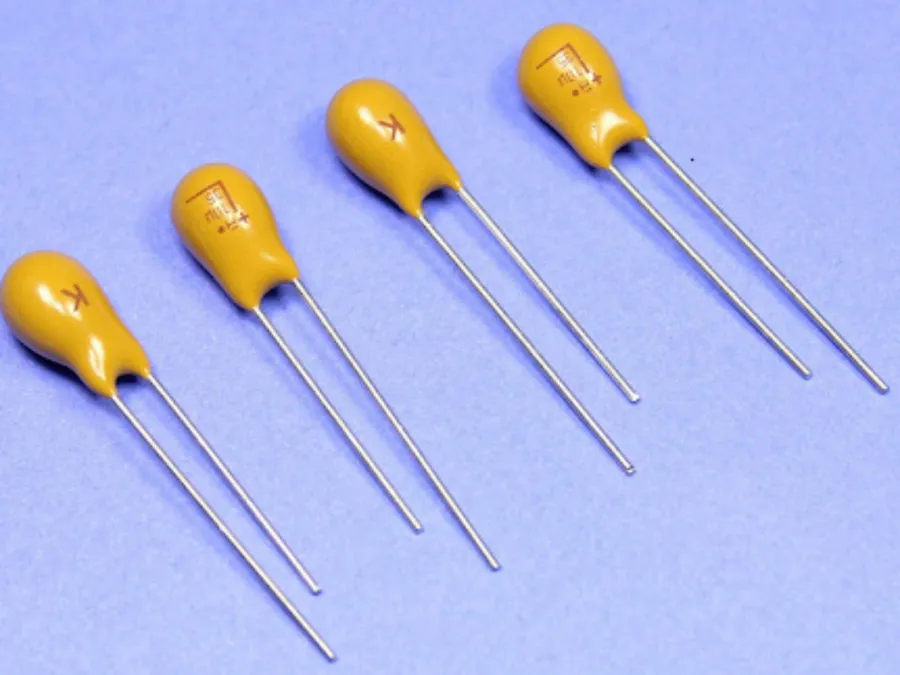
Aluminum vs Tantalum Capacitors
Electrolytic capacitors, distinguished by their high capacitance-to-volume ratio, are essential components in numerous electronic applications. They utilize an electrolyte to achieve this high capacitance, leading to a variety of types, each with distinct characteristics, advantages, and limitations. The three primary types are Aluminum Electrolytic Capacitors, Tantalum Electrolytic Capacitors, and Wet Electrolytic Capacitors.
Type
Material
Capacitance Range
Voltage Range
Advantages
Limitations
Aluminum Electrolytic
Aluminum oxide
0.1µF to >1F
Few volts to several hundred volts
High capacitance, Low cost, Widely available
Polarized, Shorter lifespan, Sensitive to temperature, High ESR
Tantalum Electrolytic
Tantalum pentoxide
0.01µF to 1000µF
Few volts to 125 volts
Small size, High reliability, Stable performance, Low ESR
More expensive, Polarized, Lower surge current tolerance
Wet Electrolytic
Liquid electrolyte, metal foil or porous material
Wide range, depends on design
Wide range, depends on design
High capacitance, High voltage rating
Bulky, Electrolyte leakage, Temperature sensitive
Each type of electrolytic capacitor has specific applications based on its characteristics. Aluminum capacitors are commonly used in power supplies and general-purpose applications due to their cost-effectiveness. Tantalum capacitors find use in high-reliability applications requiring a smaller footprint, whereas wet electrolytics are often chosen for applications needing high capacitance and voltage capabilities, albeit with a larger size.
Aluminum Electrolytic Capacitors: Construction and Characteristics
Aluminum Electrolytic Structure
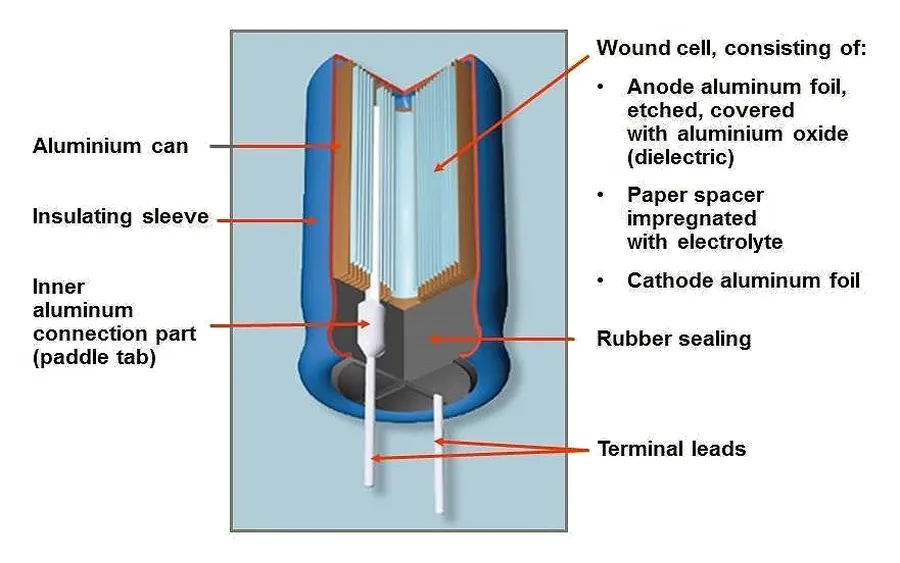
Aluminum electrolytic capacitors are characterized by their use of an aluminum anode, an electrolyte, and a cathode, which together facilitate high capacitance within a compact form factor. The construction and specific properties of these components directly impact the capacitor's overall performance and suitability for various applications.
The key components of an aluminum electrolytic capacitor are:
Anode The anode is typically made of a high-purity aluminum foil that has been electrochemically etched to increase its surface area. This increased surface area is crucial for achieving high capacitance. The aluminum foil is then anodized, forming a thin layer of aluminum oxide (Al₂O₃) on its surface. This oxide layer acts as the dielectric in the capacitor.
Cathode The cathode is generally another aluminum foil that makes electrical contact with the electrolyte. Unlike the anode, the cathode foil typically does not have an oxide layer, facilitating the flow of electrons.
Electrolyte The electrolyte is a conductive paste or liquid that provides ionic conductivity between the anode and cathode, completing the electrical path. It is a key element and the type of electrolyte used (e.g., liquid, solid polymer) can significantly influence the characteristics of the capacitor such as ESR, temperature range, and lifespan.
Separator Paper A paper spacer is often included to prevent direct contact between the anode and cathode foils, enhancing electrical isolation, thus averting any short-circuits. These separators are also designed to soak up the electrolyte and assist in retaining it in place.
Case The entire assembly is housed within an aluminum can (cylindrical or rectangular) with a seal at one or both ends. The case is designed to protect the internal components from the environment as well as to provide mechanical strength. The terminals project through this case providing an electrical connection.
Component
Material
Function
Anode
Etched Aluminum Foil with Al₂O₃ Layer
Stores charge and acts as dielectric
Cathode
Aluminum Foil
Conducts current and completes the circuit
Electrolyte
Conductive Paste or Liquid
Provides ionic conductivity
Separator
Paper
Prevents direct contact between the anode and cathode
Case
Aluminum Can with Seal
Provides protection and structural integrity
The performance of an aluminum electrolytic capacitor is influenced by factors such as the purity of the aluminum, the method of etching the anode foil, the type of electrolyte used, and the construction techniques employed. These parameters dictate capacitance value, equivalent series resistance (ESR), operating temperature range, and lifespan. Understanding the construction and characteristics of these capacitors is essential for their effective utilization in electronic circuit design.
Tantalum Electrolytic Capacitors: Advantages and Applications
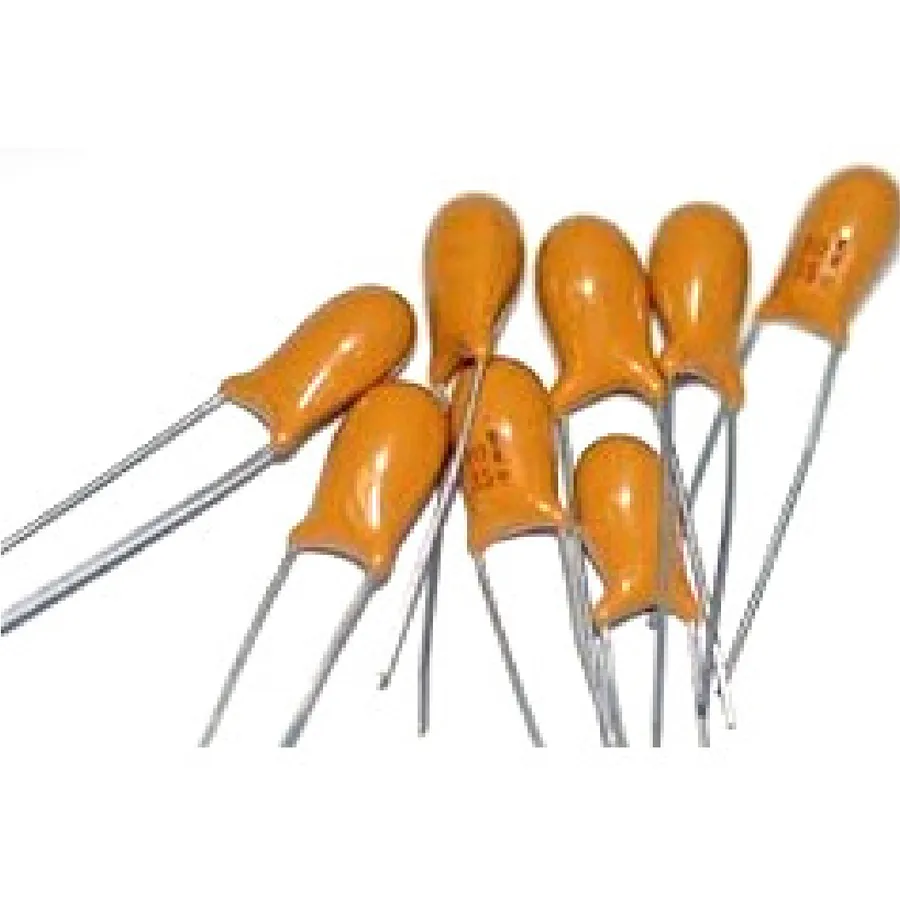
Tantalum Capacitors Application
Tantalum electrolytic capacitors are a specialized type of capacitor known for their high reliability, compact size, and stability. They utilize tantalum as the anode material, which, when anodized, forms a thin dielectric layer of tantalum pentoxide (Ta2O5). This unique construction gives them distinct advantages over other electrolytic capacitors, especially in demanding applications.
Key characteristics and advantages of Tantalum Electrolytic Capacitors include:
High Reliability: Tantalum capacitors exhibit exceptional reliability and stability, making them suitable for critical applications where failure is unacceptable. The robustness of tantalum and its oxide layer contributes to their longevity.
Compact Size: Due to the high dielectric constant of tantalum pentoxide (Ta2O5), these capacitors achieve significant capacitance values in a relatively small physical size. This compactness is particularly beneficial in miniaturized electronic devices.
Stable Performance: They exhibit stable capacitance and low equivalent series resistance (ESR) characteristics over a wide temperature range, which ensures consistent operation across varying environmental conditions.
Lower Leakage Current: Tantalum capacitors demonstrate lower leakage currents compared to aluminum electrolytic capacitors. This makes them advantageous in applications that require low power consumption.
Tolerance to High Temperatures Tantalum capacitors have a higher operating temperature range than aluminum electrolytic capacitors, they can work reliably in high-temperature environment.
Despite these benefits, tantalum capacitors also have some limitations. They are typically more expensive than their aluminum counterparts and can be susceptible to failure under reverse voltage conditions or overvoltage stress. Careful design and application consideration are necessary to fully realize their benefits while mitigating potential risks.
Applications of Tantalum Electrolytic Capacitors:
Aerospace and Military Applications: Their high reliability and stability make them ideal for use in avionics, satellite systems, and military equipment where component failure can have critical consequences.
Medical Devices: Due to their reliable performance and compact size, tantalum capacitors are widely used in implantable medical devices and other healthcare equipment.
Portable Electronics: Their small size and stable performance make them suitable for smartphones, tablets, laptops, and other portable devices where space and weight are critical considerations.
High-Frequency Applications: Tantalum capacitors have good high-frequency characteristics due to their low ESR, making them suitable for use in high-speed digital circuits and RF applications.
Filtering and Decoupling Tantalum capacitors are used in decoupling and filtering applications, their stability under various operating conditions ensures optimal circuit performance.
Applications of Electrolytic Capacitors
Electrolytic Capacitors on PCB
Electrolytic capacitors, leveraging their high capacitance-to-volume ratio, are indispensable in a wide array of electronic applications. Their ability to store significant electrical charge makes them crucial components in various power, signal processing, and energy storage systems. This section details some of the most prominent applications, demonstrating their versatility and importance in modern electronics.
Power Supplies Electrolytic capacitors are widely used in power supplies for smoothing rectified AC voltage to DC, reducing ripple and providing a stable power source. This ensures consistent operation and prevents damage to sensitive electronics. They act as reservoirs of charge, discharging during voltage troughs and recharging when peaks occur, this stabilizes the output voltage.
Audio Amplifiers In audio circuits, electrolytic capacitors play a vital role in signal coupling and filtering. They block DC components while allowing AC audio signals to pass through, preventing unwanted offset voltages from interfering with the amplification stages, improving the clarity of sound output. They are used in the bias networks to maintain the operating point.
Decoupling Circuits Electrolytic capacitors are extensively employed in decoupling and bypass circuits. These capacitors are placed close to integrated circuits to filter out unwanted high-frequency noise on power rails, stabilizing voltage fluctuations and ensuring smooth operation of digital circuits. They provide low impedance paths to ground for the noise.
Energy Storage Due to their high capacitance, electrolytic capacitors are used in applications where energy storage is crucial. They store energy temporarily, especially in backup power systems or as intermediate storage for pulsed power applications. While not ideal for very long term storage due to leakage, they excel in short-term energy buffering.
Motor Starting Circuits In single phase AC motors, electrolytic capacitors can provide the necessary phase shift to create a rotating magnetic field needed for the motor to start. These capacitors are chosen based on motor size, power rating, and operating voltage requirements. They are essential for the starting torque generation and smooth initial motor operation.
Electrolytic Capacitors vs Other Capacitor Types
Electrolytic capacitors, while offering high capacitance in a relatively small volume, differ significantly from ceramic and film capacitors in their construction, performance characteristics, and application suitability. Understanding these distinctions is crucial for selecting the appropriate capacitor for a given electronic circuit design.
Characteristic
Electrolytic Capacitors
Ceramic Capacitors
Film Capacitors
Capacitance Range
High (µF to mF)
Low to Medium (pF to µF)
Medium (pF to µF)
Size
Moderate to Large
Small
Moderate
Polarization
Polarized (except some specialized types)
Non-Polarized
Non-Polarized
Voltage Rating
Moderate
Low to High
Moderate to High
ESR (Equivalent Series Resistance)
Typically Higher
Very Low
Low
Frequency Response
Limited, lower frequency applications
Excellent, High frequency applications
Good, wide range of frequencies
Temperature Stability
Can be affected by temperature
Good Stability
Good Stability
Lifespan
Limited (affected by temperature, voltage and ripple current)
Long
Long
Cost
Generally low to moderate
Low
Moderate to High
Applications
Power supplies, decoupling, energy storage
Bypass, coupling, filtering
Audio, power conditioning, precision circuits
Lifespan and Failure Modes of Electrolytic Capacitors
Failed Electrolytic Capacitor
The operational lifespan of an electrolytic capacitor is not indefinite; it is influenced by several factors and culminates in predictable failure modes. Understanding these factors and failure modes is crucial for reliable circuit design and maintenance. Electrolytic capacitors, unlike ideal capacitors, have a limited service life that is significantly impacted by operational conditions and internal degradation.
Key factors affecting the lifespan of electrolytic capacitors include:
Temperature Elevated temperatures accelerate the degradation of the electrolyte, leading to reduced capacitance, increased equivalent series resistance (ESR), and eventual failure. The rate of degradation roughly doubles for every 10°C increase in temperature, following the Arrhenius equation. This is a critical consideration for applications in high-temperature environments.
Operating Voltage Exceeding the rated voltage can cause dielectric breakdown and irreversible damage to the capacitor. Operating close to or at the rated voltage, especially in combination with temperature stress, reduces the service life of the electrolytic capacitor, potentially leading to premature failure.
Ripple Current The AC component of the current passing through the capacitor, ripple current, causes internal heating. This heat accelerates the drying of the electrolyte, reducing capacitor performance. High ripple currents can lead to significant self-heating and are a critical factor in selecting an appropriate capacitor for a specific application.
Operating Frequency The frequency at which the capacitor operates can affect its performance. High-frequency operation can exacerbate heating due to the capacitor's ESR, accelerating the aging process, and leading to premature failure of the device.
Common failure modes of electrolytic capacitors include:
Electrolyte Drying The most prevalent failure mode involves the gradual loss of electrolyte due to evaporation over time. This leads to an increase in ESR and a decrease in capacitance, eventually causing the capacitor to fail. High temperatures and ripple current accelerates this drying process.
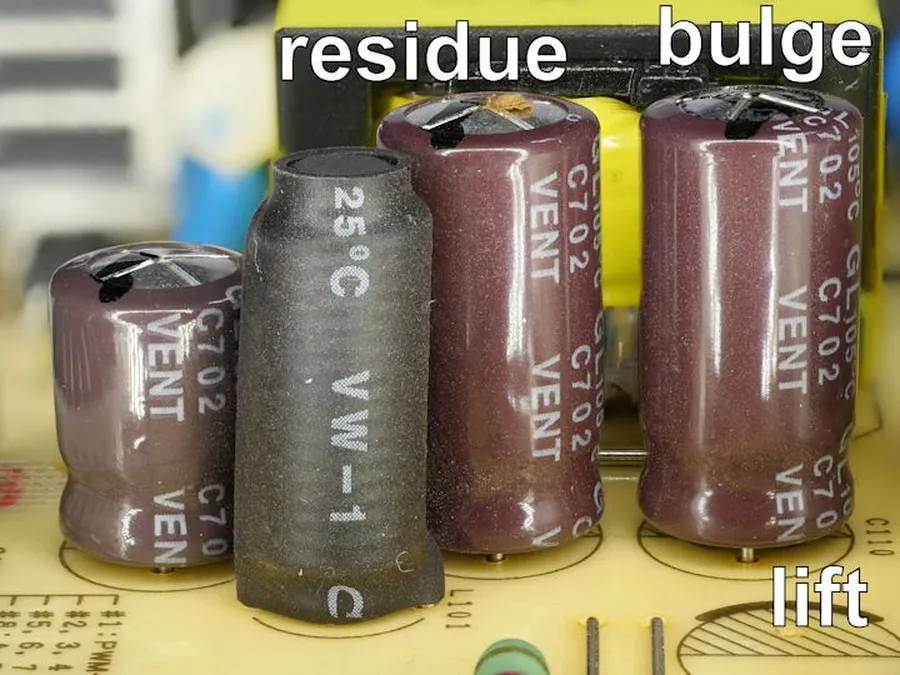
Bulging Internal pressure from vaporized electrolyte can cause the capacitor case to bulge. This is often a precursor to more significant failure, such as electrolyte leakage. This occurs due to the breakdown of the electrolyte into gasses, which pressurize the case.
Dielectric Breakdown Exceeding the rated voltage can damage the oxide layer, causing a short circuit. This leads to immediate failure of the capacitor. This can occur due to transient voltage spikes or excessive voltage applied to the device.
Leakage Current Increase Over time, or under high-stress conditions, leakage current increases due to dielectric degradation. This can cause excessive heat, leading to thermal runaway, and eventually cause the capacitor to fail.
To extend the lifespan of electrolytic capacitors, consider the following best practices:
Operating Within Temperature Limits Use capacitors within their rated temperature range and consider derating for high-temperature applications to reduce degradation and extend operational lifetime.
Choosing Appropriate Voltage Ratings Select capacitors with voltage ratings that significantly exceed the expected operating voltage to provide a safety margin and prevent dielectric breakdown and premature failure.
Managing Ripple Current Use capacitors designed to handle the expected ripple current in the circuit. Adequate thermal management and capacitors with low ESR will help reduce self-heating and prevent electrolyte deterioration.
Proper Storage Store capacitors in a cool, dry place to prevent electrolyte loss before use. Prolonged storage, particularly in hot, humid conditions can reduce the service life of an electrolytic capacitor before its even installed in a circuit.
Frequently Asked Questions About Electrolytic Capacitors
This section addresses common questions regarding electrolytic capacitors, aiming to clarify their functionality, applications, and distinctions from other capacitor types. We will draw upon fundamental electrochemical principles and practical applications to provide accurate and insightful answers.
What does 'electrolytic' mean in the context of a capacitor? The term 'electrolytic' refers to the use of an electrolyte—an ionic conducting liquid, gel, or solid—as a critical component of the capacitor. This electrolyte forms one of the electrodes (typically the cathode) and plays a vital role in establishing a high capacitance value within a compact form factor. The electrochemical properties of the electrolyte are fundamental to the capacitor's operation.
What are some common examples of electrolytic capacitors? Common examples include aluminum electrolytic capacitors, which are widely used due to their cost-effectiveness and high capacitance, and tantalum electrolytic capacitors, which are favored for their stability and reliability, especially in smaller devices. Wet electrolytic capacitors, although less common, use a liquid electrolyte and are often found in high-voltage applications.
What distinguishes an electrolytic capacitor from other types of capacitors? Electrolytic capacitors stand out due to their use of an electrolyte to achieve very high capacitance values in relatively small sizes. They are polarized, meaning they must be connected with the correct polarity in a circuit, unlike ceramic or film capacitors. Additionally, electrolytic capacitors typically have higher equivalent series resistance (ESR) and shorter lifespans, which can be affected by temperature and voltage.
What are the primary applications of electrolytic capacitors? Electrolytic capacitors find extensive use in power supplies for smoothing and filtering, in audio amplifiers for coupling and decoupling, and in energy storage applications. Their high capacitance makes them suitable for bypassing low-frequency noise and storing relatively large amounts of electrical charge, crucial for many electronic applications. They are also common in motor drives, inverters and renewable energy applications.
Can electrolytic capacitors be used in both AC and DC circuits? Electrolytic capacitors are primarily designed for DC circuits due to their polarized nature. Applying an AC voltage or reversing the polarity can damage the capacitor. However, they are frequently used in AC circuits where their primary function is to provide filtering after a rectification stage, or for other specific purposes, where the DC bias predominates. Always check the voltage ratings and use appropriate design considerations when using electrolytic capacitors in AC applications to avoid damage.
What are the key factors affecting the lifespan of electrolytic capacitors? The lifespan of electrolytic capacitors is significantly influenced by operating temperature and applied voltage. Elevated temperatures accelerate the evaporation of the electrolyte and cause degradation of internal components, while high voltages can lead to dielectric breakdown. Other factors such as ripple current and manufacturing quality also play important roles in determining their longevity. Following manufacturer guidelines and using derating guidelines are crucial for extending the operating life.
What are the common failure modes of electrolytic capacitors? Common failure modes include electrolyte dry-out, which increases ESR and reduces capacitance, and bulging of the capacitor case due to internal pressure buildup from excessive heat or current. Dielectric breakdown, especially from over-voltage, and short circuits are also frequent failures. Regular inspection and replacement of these components during maintenance cycles is a best practice.
Electrolytic capacitors are indispensable in modern electronics due to their high capacitance capabilities. This article has explored their various types, construction, applications, and factors affecting their lifespan, with particular focus on the chemical processes inside. From the simple principles of operation to the complex interplay of factors affecting their performance and longevity, understanding the intricacies of electrolytic capacitors is crucial for any aspiring and professional electronics engineer. By understanding the specific benefits of each capacitor type, and learning best practices, you'll be better equipped to develop better systems and ensure optimal performance and longevity of your electronic designs.