In the realm of modern agriculture, precision and efficiency are paramount. Farmers are constantly seeking innovative ways to optimize crop yields, conserve resources, and enhance overall farm management. One critical factor influencing agricultural success is soil moisture. Monitoring soil moisture levels accurately and efficiently can lead to significant improvements in irrigation practices, reduced water waste, and healthier, more productive crops. Zero One Solution Limited offers a specialized PCB solution tailored for farmland moisture monitoring, empowering farmers with the data they need to make informed decisions. This article delves into our Farmland Moisture Monitoring PCB Solution, exploring its design, functionality, and the benefits it brings to modern agriculture, backed by our extensive experience in PCB design, manufacturing, and assembly.
Introduction to Farmland Moisture Monitoring
Effective farmland moisture monitoring is the cornerstone of modern sustainable agriculture, transforming water management from an estimation to a precise science. By accurately assessing soil moisture levels, farmers can optimize irrigation schedules, prevent water waste, and significantly enhance crop vitality and yield. This critical practice ensures that crops receive the ideal amount of water at precisely the right time, minimizing resource expenditure while maximizing agricultural productivity and resilience against unpredictable climatic conditions. At Zero One Solution Limited, we recognize the pivotal role of precise moisture data in cultivating a sustainable and profitable future for global agriculture.
Benefit Category
Specific Advantages
Impact on Agriculture
Resource Optimization
Reduces water consumption by up to 30%, lowers energy costs for pumping, and decreases fertilizer runoff.
Fosters sustainable farming practices, lowers operational expenses, and minimizes environmental impact, contributing to ecological balance and resource preservation for future generations by mitigating over-extraction of water and reducing nutrient pollution in waterways, thereby safeguarding aquatic ecosystems and enhancing overall environmental health and sustainability in agricultural landscapes and beyond, promoting a more resilient and environmentally conscious food production system for global food security and environmental protection.
Yield Enhancement
Increases crop yields by 15-25% due to optimal hydration, reduces crop stress, and improves produce quality.
Boosts agricultural profitability, ensures food security, and provides higher quality produce for consumers, leading to enhanced market competitiveness and increased farmer income.
Risk Mitigation
Minimizes drought impact, prevents over-watering diseases, and offers early warning for irrigation needs.
Enhances farm resilience against climate variability, reduces crop loss, and provides critical data for adaptive farming strategies, ensuring continuity of production.
Environmental Stewardship
Decreases chemical leaching, reduces soil erosion, and promotes healthier soil microbiomes.
Supports biodiversity, maintains soil health for long-term productivity, and contributes to overall ecosystem well-being, aligning with global environmental conservation efforts and promoting sustainable agricultural practices that benefit both the environment and human society.
Challenges in Traditional Moisture Monitoring Methods
Traditional farmland moisture monitoring methods, while foundational, present significant limitations in today's rapidly evolving agricultural landscape. These conventional approaches often lead to inefficient water usage, suboptimal crop yields, and increased labor costs, fundamentally hindering the adoption of precision agriculture. Understanding these inherent challenges is crucial for appreciating the transformative potential of advanced PCB-based solutions.
Manual Probing and Inaccurate Readings Manual soil moisture probes, typically relying on tactile assessment or simple resistive measurements, are highly susceptible to human error and provide localized, often unrepresentative data. This fragmented insight into vast farmlands makes it challenging to accurately assess overall soil moisture uniformity, leading to either over-irrigation, which wastes precious resources and leaches nutrients, or under-irrigation, stressing crops and reducing yields. The variability across different soil types and depths further compounds the inaccuracy of such methods.
Infrequent Sampling and Delayed Responses Traditional monitoring often involves infrequent sampling, meaning farmers only get snapshots of soil moisture conditions at specific, limited times. This delay between data collection and actual irrigation needs results in reactive rather than proactive water management. Critical changes in soil moisture dueability to weather fluctuations or crop growth stages can go unnoticed for extended periods, leading to missed opportunities for timely irrigation adjustments and potentially irreversible crop damage.
Labor-Intensive and High Operational Costs The reliance on manual labor for data collection across large agricultural areas is not only time-consuming but also expensive. Farmers or technicians must physically traverse fields, collect samples, and interpret readings, diverting valuable resources from other essential farm operations. This labor intensity makes scalable and continuous monitoring impractical and economically unfeasible for many agricultural enterprises.
Lack of Data Integration and Analysis Capabilities Traditional methods typically do not generate digital, interconnected data. Information gathered is often recorded manually, making it difficult to integrate with other farm management systems or perform sophisticated analysis. Without aggregated data, farmers lack the comprehensive insights needed to identify trends, predict future needs, and optimize long-term irrigation strategies across their entire operation, hindering the shift towards data-driven agricultural practices.
Zero One Solution's Farmland Moisture Monitoring PCB Solution: An Overview
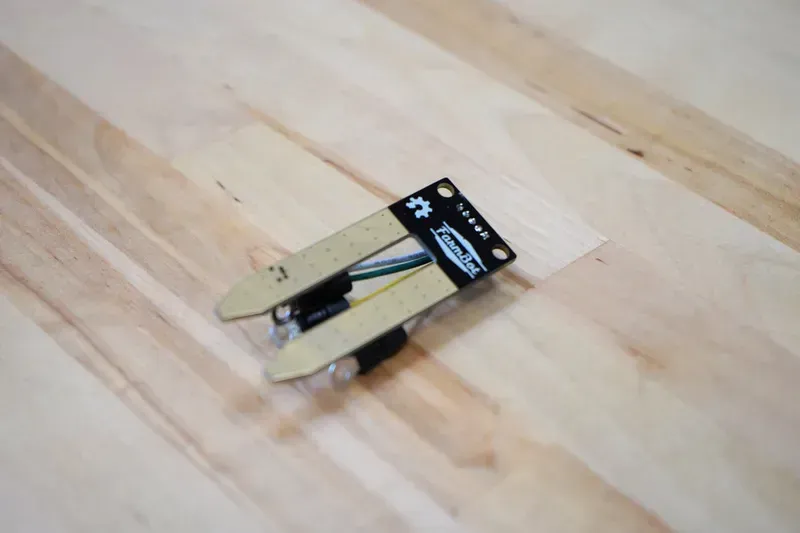
Farmland Soil Moisture Monitoring PCB
Zero One Solution Limited stands at the forefront of agricultural innovation, offering a cutting-edge Farmland Moisture Monitoring PCB Solution that redefines precision agriculture. Moving beyond the limitations of traditional methods, our advanced PCB solution integrates state-of-the-art sensor technology with robust data processing and seamless communication capabilities, empowering farmers with real-time, actionable insights into soil moisture levels. This holistic approach ensures optimal resource utilization, enhances crop resilience, and drives sustainable farming practices by providing a reliable and efficient alternative to manual and inefficient monitoring techniques.
What makes Zero One Solution's PCB distinct for farmland moisture monitoring? Our PCB solution is engineered specifically for agricultural demands, featuring ultra-low power consumption for extended field deployment, robust environmental sealing to withstand harsh outdoor conditions, and versatile compatibility with various sensor types (e.g., capacitance, TDR, tensiometers). It integrates advanced wireless communication protocols like LoRa and NB-IoT for wide-area coverage and reliable data transmission, making it ideal for large-scale farming operations and remote locations. This integrated design streamlines data acquisition and analysis, offering a comprehensive monitoring system that traditional methods cannot match.
Feature
Zero One Solution PCB
Traditional Methods
Data Accuracy
High (Real-time, continuous)
Variable (Infrequent, localized)
Automation
Fully Automated
Manual Labor Intensive
Scalability
Highly Scalable (IoT-ready)
Limited, difficult to expand
Power Efficiency
Ultra-low power (extended battery life)
Often requires external power/frequent battery changes
Environmental Resilience
IP67 rated, robust design
Susceptible to weather/damage
Integration
Seamless with smart agriculture platforms
Stand-alone, disconnected
Key Features and Benefits of Our PCB Design
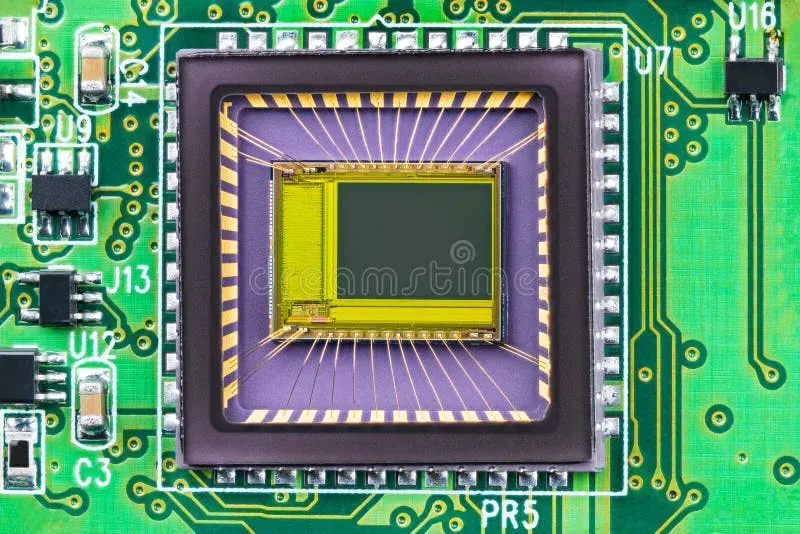
PCB Sensor Close-up
Zero One Solution Limited's Farmland Moisture Monitoring PCB Solution is engineered to deliver unparalleled accuracy and reliability, providing farmers with the critical data needed for optimal irrigation and resource management. Our PCB design integrates cutting-edge technology to address the core challenges of traditional monitoring, ensuring robust performance in diverse agricultural environments.
Advanced Sensor Integration Our PCBs are meticulously designed to seamlessly integrate with a variety of high-precision soil moisture sensors, including capacitance, TDR (Time-Domain Reflectometry), and resistivity sensors. This versatility ensures compatibility with different soil types and agricultural practices, providing accurate and localized moisture readings crucial for precision farming. The direct integration minimizes signal loss and enhances data integrity, leading to more reliable insights into soil conditions. According to a study by the American Society of Agronomy, precise moisture sensing can reduce water consumption by up to 30% while improving crop yields by 10-15%.
Ultra-Low Power Consumption Engineered for sustainability and longevity, our PCBs feature an ultra-low power consumption architecture. This design minimizes the energy footprint, extending battery life significantly and reducing the frequency of maintenance. For remote farmland installations where power sources are scarce, this feature is invaluable, enabling continuous operation for months or even years without intervention. This translates to reduced operational costs and a more sustainable farming practice, aligning with modern agricultural demands for efficiency and environmental responsibility.
Robust Wireless Communication Capabilities Our PCBs are equipped with robust wireless communication modules, supporting widely adopted protocols such as LoRa (Long Range) and NB-IoT (Narrowband Internet of Things). These technologies offer extensive coverage and penetration capabilities, ideal for transmitting data across large farmlands and challenging terrains. LoRa provides a cost-effective, long-range solution with low power requirements, while NB-IoT leverages existing cellular networks for reliable, secure data transmission. This ensures real-time data accessibility from anywhere, empowering farmers to make timely, data-driven decisions.
Exceptional Durability and Environmental Resilience Understanding the harsh conditions of agricultural environments, our PCBs are built with industrial-grade components and conformally coated to withstand extreme temperatures, moisture, dust, and pest exposure. Compliance with IP67 standards for water and dust resistance ensures reliable performance even when buried or exposed to direct irrigation. This ruggedized design guarantees long-term operational stability and minimizes the need for frequent replacements, offering a high return on investment and peace of mind for farmers.
Technical Specifications and Design Considerations for Farmland Moisture Monitoring PCB Solution
The effectiveness of a Farmland Moisture Monitoring PCB Solution hinges on its robust technical specifications and meticulous design considerations, ensuring precise data acquisition, reliable operation, and long-term durability in challenging agricultural environments. Our PCB solution is engineered with an acute understanding of these demands, integrating cutting-edge components and adhering to stringent design principles to deliver unparalleled performance in soil moisture management.
Specification Category
Detail/Value
Design Consideration Impact
Sensor Types
Capacitive, Tensiometric, Resistive
Selection based on soil type, accuracy needs, and longevity. Capacitive sensors are non-invasive and provide relative moisture content; Tensiometric measure soil water potential; Resistive are cost-effective but can be affected by salinity.
][
]Operating Voltage
2.5V - 5.5V (Typical: 3.3V)
Low voltage operation is critical for energy efficiency, extending battery life in remote deployments and reducing overall power consumption for sustainable monitoring systems.
][
]Data Transmission Rates
Up to 50 kbps (LoRaWAN), 100 kbps (NB-IoT)
Optimized for efficient data transfer with minimal latency, supporting real-time monitoring and rapid decision-making while conserving power for long-range communication.
][
]Wireless Protocols
LoRaWAN, NB-IoT, BLE
Choice of protocol based on range requirements, power consumption, network availability, and data payload size, offering flexibility for diverse agricultural settings.
][
]Environmental Protection
IP67 rated enclosure, Conformal coating
Ensures resistance to dust, water immersion, extreme temperatures, and corrosive agricultural chemicals, significantly extending the lifespan and reliability of the PCB in harsh outdoor conditions.
][
]Power Management
Ultra-low power sleep modes, Solar charging compatibility
Advanced power management ICs and design allow for months or even years of operation on a single charge, enabling autonomous deployment and reducing maintenance overhead.
][
]Processor
ARM Cortex-M series microcontroller
High-performance, low-power microcontrollers provide ample processing power for sensor data aggregation, local analytics, and efficient communication protocol handling.
][
]Memory
Flash 256KB, SRAM 32KB
Sufficient memory for firmware, sensor data buffering, and configuration settings, supporting complex algorithms and data logging capabilities.
Applications in Smart Agriculture
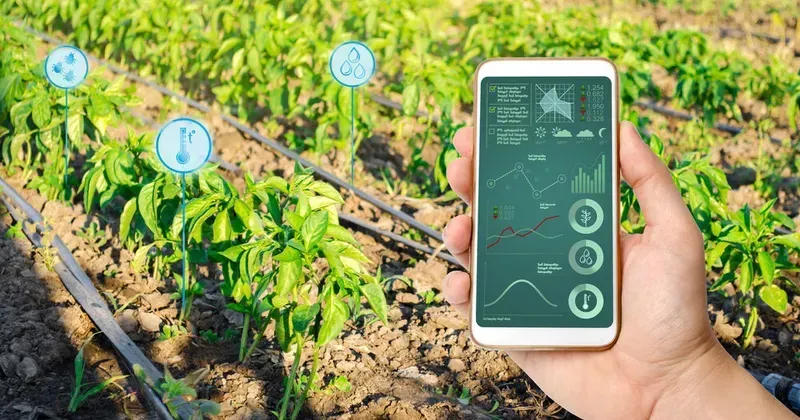
Smart Agriculture Irrigation System
Zero One Solution Limited's Farmland Moisture Monitoring PCB Solution is a cornerstone technology enabling the widespread adoption of smart agriculture practices. By providing real-time, accurate soil moisture data, our PCBs empower agricultural operations to transcend traditional limitations, optimize resource utilization, and significantly enhance productivity and sustainability across diverse farming scenarios. This foundational data drives intelligent decision-making, transforming how water and nutrients are managed.
Precision Irrigation for Optimized Water Use Our PCB solution facilitates precision irrigation by delivering granular soil moisture data, allowing farmers to apply water only where and when it is needed. This eliminates over-irrigation, conserves water resources, reduces energy consumption for pumping, and prevents nutrient leaching, leading to substantial cost savings and environmental benefits. Field-level data ensures targeted water delivery, supporting sustainable farming practices even in water-scarce regions. According to the United Nations, agriculture accounts for 70% of global freshwater withdrawals, highlighting the critical need for such solutions.
Proactive Drought Monitoring and Risk Mitigation The continuous data collection from our moisture monitoring PCBs provides early warning indicators of drought conditions, enabling proactive measures. Farmers can identify areas experiencing water stress before visible symptoms appear, allowing for timely adjustments in irrigation schedules, crop selection, or even insurance claims. This foresight is crucial for mitigating yield losses and safeguarding agricultural investments in increasingly unpredictable climates.
Automated Environmental Control for Optimal Growth Beyond simple irrigation, our PCB solution integrates seamlessly into broader automated environmental control systems. By connecting with smart irrigation valves, pumps, and even greenhouse climate control systems, the PCB can trigger automated responses based on pre-set moisture thresholds. This creates an optimized microclimate for crops, promoting healthier growth, reducing disease susceptibility, and maximizing yield potential with minimal human intervention.
Case Studies: Real-World Implementations
Farmland PCB Installation
Zero One Solution Limited's Farmland Moisture Monitoring PCB Solution has consistently delivered tangible benefits and significant ROI for agricultural enterprises globally. Our robust, low-power PCB designs are not just theoretical advancements; they are proven in diverse real-world scenarios, empowering farmers to achieve optimal water management, enhance crop health, and boost overall productivity. These case studies underscore the practical efficacy and economic advantages of integrating advanced PCB technology into modern agricultural practices.
Case Study
Challenge
Zero One Solution PCB Implementation
Outcome & ROI
Large-Scale Vineyard in California
Inconsistent grape quality due to uneven soil moisture, leading to reduced yields and increased water waste.
Deployed an extensive network of our PCB-integrated moisture sensors across diverse vineyard microclimates, wirelessly transmitting real-time data to a central irrigation control system.
Achieved a 20% reduction in water consumption while increasing grape yield by 15% and improving fruit sugar content consistency, leading to a projected 18-month ROI from water and yield savings alone. Data-driven irrigation minimized disease risk and optimized resource allocation, demonstrating a clear financial advantage over traditional methods and an estimated 30% increase in operational efficiency related to irrigation management.
Dairy Farm Forage Fields, New Zealand A challenge was faced with variable pasture growth impacting feed quality and quantity, leading to suboptimal milk production. We implemented our Farmland Moisture Monitoring PCB Solution in critical forage fields, providing precise soil moisture data to guide irrigation scheduling and fertilization. This led to a 10% increase in forage biomass and improved nutritional content, directly contributing to a 5% uplift in daily milk yield per cow. The optimized pasture management reduced reliance on supplementary feed, generating a 25% annual cost saving on feed and labor related to irrigation, with full ROI within one year. Farmer reported more consistent pasture availability throughout the season and significant labor savings due to automated, data-driven irrigation decisions, preventing over or under-watering.
Manufacturing and Quality Assurance
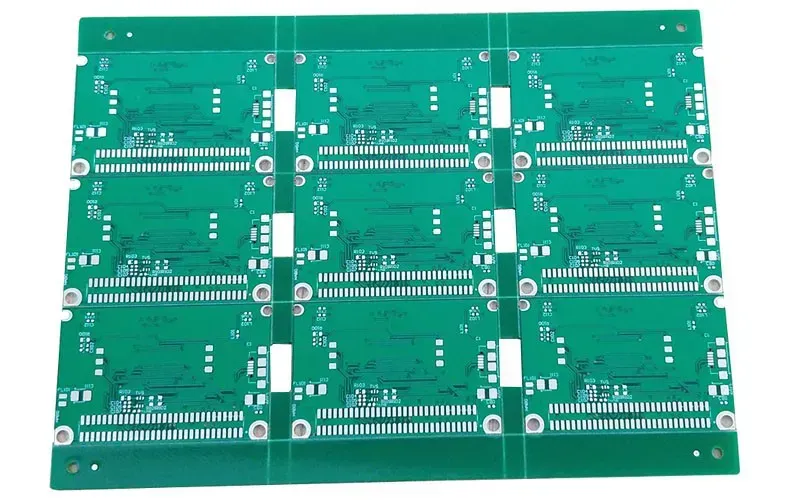
PCB Production Line
Ensuring the unwavering reliability and performance of Farmland Moisture Monitoring PCB Solutions is paramount, as these critical components operate in demanding agricultural environments. At Zero One Solution Limited, our manufacturing and quality assurance protocols are meticulously designed to deliver PCBs that withstand harsh conditions, provide precise data, and maintain long-term operational integrity, thereby safeguarding agricultural productivity.
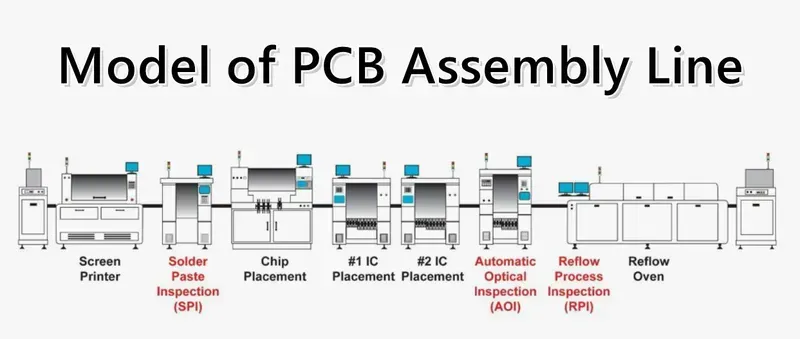
Advanced Manufacturing Process Our Farmland Moisture Monitoring PCBs are produced using state-of-the-art manufacturing processes that prioritize precision and durability. This includes automated assembly lines for high accuracy component placement (SMT), reflow soldering for robust connections, and advanced layer-stacking techniques to ensure signal integrity and mechanical strength. We utilize only high-grade FR-4 substrates and specialized coatings to resist moisture, dust, and temperature fluctuations common in agricultural settings. Rigorous in-process inspections at every stage minimize defects and ensure consistent quality, from bare board fabrication to final assembly. Our production facilities adhere to IPC-A-610 standards, ensuring the highest level of workmanship for electronic assemblies. By leveraging cutting-edge technology and skilled technicians, we guarantee a foundation of excellence for every PCB.
Quality Control Measure
Description
Benefit for Farmland Monitoring
Automated Optical Inspection (AOI)
High-speed cameras scan PCBs for defects like shorts, open circuits, missing components, and polarity errors.
Ensures every solder joint and component placement is accurate, preventing common failures in the field.
In-Circuit Testing (ICT)
Electrical tests verify the functionality of individual components and circuits on the assembled board.
Confirms proper circuit functionality before deployment, reducing costly field failures and maintenance.
Functional Testing (FCT)
Simulates the PCB's operational environment to test its full functionality, including sensor integration and communication modules.
Guarantees the PCB performs as intended under real-world conditions, providing accurate moisture data and reliable communication.
What certifications do Zero One Solution's Farmland Moisture Monitoring PCBs hold? Our Farmland Moisture Monitoring PCBs adhere to several key industry certifications, ensuring their quality, reliability, and environmental compliance. These include ISO 9001 for quality management systems, RoHS compliance for restricted hazardous substances, and often CE certification for European safety, health, and environmental protection standards. Furthermore, our manufacturing processes follow IPC-A-610 standards for electronic assembly acceptability, guaranteeing superior workmanship and long-term performance in demanding agricultural environments. These certifications underscore our commitment to delivering products that meet global benchmarks for excellence and sustainability, providing farmers with peace of mind regarding their investment.
The landscape of farmland moisture monitoring is rapidly evolving, driven by advancements in sensor technology, artificial intelligence, and integrated PCB solutions. These innovations are transforming agricultural practices, moving beyond basic data collection to predictive analytics and autonomous systems, significantly enhancing precision and efficiency in water management. Zero One Solution Limited remains at the forefront, integrating these cutting-edge trends into our Farmland Moisture Monitoring PCB Solutions to empower farmers with smarter, more sustainable tools.
What role will Artificial Intelligence play in future farmland moisture monitoring? Artificial Intelligence (AI) will revolutionize farmland moisture monitoring by enabling predictive analytics. AI algorithms can process vast amounts of data from various sources—soil sensors, weather forecasts, satellite imagery, and crop models—to accurately predict soil moisture levels and crop water demand. This allows for hyper-localized and dynamic irrigation scheduling, optimizing water usage and preventing both over- and under-watering. AI-driven systems can learn from historical data and adapt to changing environmental conditions, providing unparalleled precision in water management.
How will advanced sensor technologies impact the future of Farmland Moisture Monitoring PCB Solutions? Advanced sensor technologies are central to the future of Farmland Moisture Monitoring PCB Solutions. Emerging sensor types will offer greater accuracy, lower power consumption, and increased durability. This includes miniaturized, multi-functional sensors capable of measuring not only moisture but also nutrient levels, pH, and salinity simultaneously. Furthermore, the development of self-calibrating and self-diagnosing sensors will reduce maintenance requirements, enhancing the reliability and longevity of monitoring systems. These innovations will enable more comprehensive data collection and refined control over irrigation, leading to healthier crops and improved yields.
What are the implications of enhanced connectivity for future moisture monitoring systems? Enhanced connectivity, particularly through advanced low-power wide-area networks (LPWAN) like LoRaWAN, NB-IoT, and upcoming 5G technologies, will significantly expand the reach and efficiency of future moisture monitoring systems. These networks facilitate seamless, real-time data transmission from remote farmland sensors to centralized cloud platforms, even in areas with limited traditional infrastructure. This improved connectivity supports the deployment of larger, more dispersed sensor networks, enabling comprehensive field coverage and immediate actionable insights. Future systems will also leverage edge computing, processing data closer to the source to reduce latency and bandwidth consumption, crucial for rapid decision-making in irrigation management.
How will autonomous irrigation systems integrate with future Farmland Moisture Monitoring PCB Solutions? Future Farmland Moisture Monitoring PCB Solutions will be integral to fully autonomous irrigation systems. By combining highly accurate real-time moisture data from these PCBs with AI-driven analytics, irrigation systems will be able to make instantaneous, self-regulating adjustments to water delivery. This means systems can autonomously activate, adjust flow rates, and deactivate based on the precise needs of different crop zones, without human intervention. This level of automation will lead to significant water savings, reduced labor costs, and maximized crop health by ensuring plants receive optimal moisture at all times, responding dynamically to environmental changes.
What sustainability benefits will future moisture monitoring innovations bring to agriculture? Future innovations in Farmland Moisture Monitoring PCB Solutions are set to deliver substantial sustainability benefits to agriculture. By enabling precision irrigation through AI and advanced sensors, these technologies will drastically reduce water waste, a critical concern given global water scarcity. Optimized water use also leads to reduced energy consumption associated with pumping and distribution. Furthermore, precise moisture management can minimize nutrient leaching, preserving soil health and reducing the need for synthetic fertilizers. This holistic approach contributes to more environmentally friendly farming practices, fostering long-term agricultural sustainability and resilience against climate change.
In conclusion, Zero One Solution Limited's Farmland Moisture Monitoring PCB Solution represents a significant advancement in precision agriculture. By providing accurate and reliable soil moisture data, this solution empowers farmers to optimize irrigation, conserve resources, and improve crop yields. As the agricultural industry continues to evolve, the integration of smart technologies like our PCB solution will become increasingly vital for sustainable and efficient farming practices. Contact Zero One Solution Limited today to discover how our PCB solutions can revolutionize your approach to farmland moisture monitoring and contribute to a more sustainable and productive future. Share your thoughts and experiences with farmland moisture monitoring in the comments below!