The quest for sustainable energy solutions has never been more urgent, with fuel cell technology emerging as a pivotal player in this global shift. At the heart of a robust fuel cell system lies its management board—the 'brain' that orchestrates efficiency, safety, and longevity. Zero One Solution Limited, a leader in rapid prototyping and PCB assembly solutions since 2011, understands this critical need. We empower innovators to accelerate product development, and today, we're delving into our specialized Fuel Cell Management Board Solution. How can cutting-edge PCB design and manufacturing unlock the full potential of your fuel cell applications?
The Imperative of Advanced Fuel Cell Management
Advanced Fuel Cell Management is not merely an enhancement but an absolute necessity for modern fuel cell systems, serving as the central nervous system that orchestrates optimal performance, ensures safety, and extends durability. Without a sophisticated management board, fuel cells, inherently complex electrochemical devices, are susceptible to inefficiencies, premature degradation, and critical safety hazards due to their dynamic operating conditions and precise control requirements.
Why are fuel cell management boards crucial for performance? Fuel cell management boards are crucial for performance because they precisely regulate critical operational parameters such as voltage, current, temperature, and reactant flow. This real-time, adaptive control ensures the fuel cell operates within its optimal efficiency window, maximizing power output and minimizing energy losses under varying load conditions. Without such precise management, efficiency can plummet, and the stack's operational life can be significantly shortened.
How do management boards enhance fuel cell safety? Management boards enhance fuel cell safety by continuously monitoring for anomalies and implementing immediate protective measures. They detect critical conditions like over-voltage, over-current, under-voltage, thermal runaway, and gas leaks. Upon detection, the board can trigger emergency shutdowns, isolate problematic cells, or adjust operating parameters to prevent catastrophic failures, safeguarding both the system and its environment.
What role do management boards play in fuel cell durability? Management boards play a vital role in fuel cell durability by preventing conditions that lead to accelerated degradation. This includes preventing anode and cathode starvation, managing hydration levels to avoid membrane drying or flooding, and controlling temperature gradients. By maintaining the fuel cell within its design specifications and mitigating stress factors, the board significantly extends the operational lifespan of the fuel cell stack.
What are the inherent challenges of fuel cell operation without proper control? Without proper control, inherent challenges of fuel cell operation include inefficient energy conversion, leading to lower power output and higher fuel consumption. There's also a significant risk of irreversible damage from localized hot spots, membrane drying out or flooding, and potential safety hazards such as hydrogen leaks or thermal runaway, which can lead to system failure or even explosions.
How do advanced management boards differ from basic control systems? Advanced management boards differ from basic control systems by offering sophisticated algorithms for predictive control, health monitoring, and intelligent fault diagnosis. They often incorporate machine learning for adaptive optimization based on operational history, enabling proactive maintenance and dynamic parameter adjustments. Basic systems typically offer only reactive, fixed-parameter control, lacking the intelligence to optimize or prevent issues before they escalate.
Understanding Zero One Solution Limited's Expertise
Engineer with PCB Prototype
At the core of efficient fuel cell systems lies sophisticated PCB technology, a domain where Zero One Solution Limited has established a formidable presence over a decade. Our expertise isn't just in manufacturing; it's in enabling rapid innovation through our specialized rapid-response R&D prototype manufacturing, allowing businesses to accelerate their product development cycles and bring groundbreaking fuel cell solutions to market with unparalleled speed and precision. This deep understanding of the electronics manufacturing landscape, coupled with our strategic global footprint, positions us as an indispensable partner for advanced fuel cell management board solutions.
Foundational Excellence Established in 2011, Zero One Solution Limited rapidly ascended as a leader in PCB assembly solutions, driven by a commitment to excellence and a deep understanding of complex electronic systems. Our foundational experience spans a wide array of industries, providing a robust base for specialized applications like fuel cell management.
Rapid-Response R&D Prototyping Our cornerstone capability lies in rapid-response R&D prototype manufacturing. We understand the critical need for speed in product innovation, offering expedited PCB design, fabrication, and assembly services that significantly reduce time-to-market for new fuel cell technologies. This agility directly translates into a competitive advantage for our clients.
Strategic Global Presence Headquartered in Shenzhen, China, the global epicenter of electronic manufacturing, and with a key branch office in Dubai, Zero One Solution Limited strategically operates within a vast global PCBA supply chain network. This dual presence ensures seamless access to cutting-edge resources, diverse component availability, and efficient logistics, reinforcing our capacity to support global fuel cell development initiatives.
Integrated One-Stop Services We offer comprehensive one-stop services, encompassing everything from initial PCB design and engineering consultation to advanced manufacturing and assembly. This integrated approach streamlines the entire development process for fuel cell management boards, ensuring consistency, quality, and simplified project management for our clients.
Key Features of Our Fuel Cell Management Board Solution
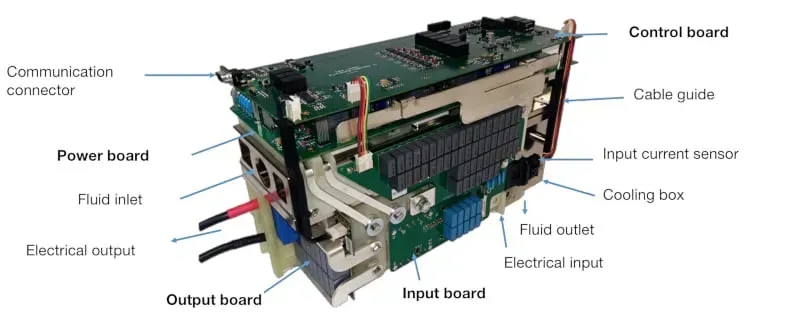
Fuel Cell Management Board
Zero One Solution Limited's Fuel Cell Management Board (FCMB) is engineered to be the brain of your fuel cell system, offering a comprehensive suite of functionalities critical for optimal performance, extended lifespan, and paramount safety. Our solution goes beyond basic control, providing an integrated platform for precise monitoring, intelligent regulation, and robust fault handling, which are essential for unlocking the full potential of diverse fuel cell technologies.
Precision Voltage & Current Regulation Our FCMBs incorporate advanced power management ICs and algorithms for real-time monitoring and dynamic regulation of fuel cell stack voltage and current. This ensures the cell operates within its optimal electrochemical window, preventing over-voltage/current conditions that can lead to irreversible degradation and maximizing efficiency. Typical regulation precision is within
±0.5%.
Comprehensive Temperature Monitoring Thermal management is paramount for fuel cell durability. Our boards feature multiple distributed temperature sensors to monitor critical points within the stack and balance-of-plant (BOP) components. This data enables proactive cooling system control and prevents thermal runaway, with response times often under 100ms for critical thresholds.
Advanced Fault Detection & Protection Equipped with sophisticated diagnostic capabilities, our FCMBs can detect a wide array of anomalies, including individual cell voltage imbalances, gas leakage, coolant pressure deviations, and sensor failures. Upon detection, the system initiates pre-programmed safety protocols, such as controlled shutdown or power reduction, to protect the fuel cell and connected loads. Mean Time Between Failures (MTBF) for our fault detection modules exceeds 500,000 hours.
Robust Communication Protocols Seamless integration with higher-level control systems (e.g., vehicle ECUs, energy management systems) is facilitated through industry-standard communication interfaces like CAN bus, Modbus, and Ethernet. This allows for remote monitoring, data logging, firmware updates, and system diagnostics, ensuring interoperability and ease of deployment in complex architectures. Our CAN bus implementations support data rates up to 1 Mbps.
Design and Engineering Excellence for Fuel Cells
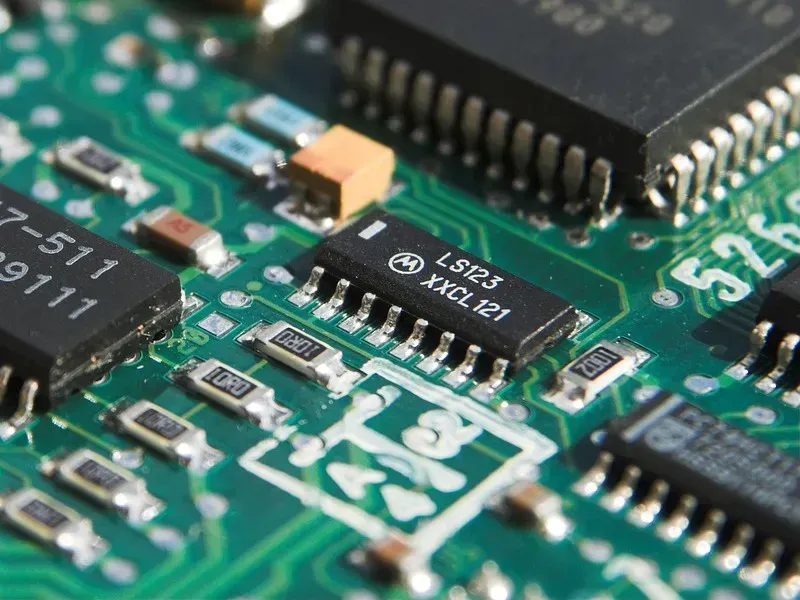
Engineer Designing PCB
Designing a robust and efficient Fuel Cell Management Board (FCMB) demands a meticulous approach to engineering, integrating advanced PCB design principles to withstand the unique operational demands of fuel cell environments. Zero One Solution Limited's decade of expertise in rapid prototyping and high-reliability PCB manufacturing positions us as a leader in crafting FCMBs that excel in performance, longevity, and safety. Our design philosophy centers on optimizing critical aspects such as high-density interconnects, thermal management, electromagnetic compatibility, and selecting materials engineered for harsh conditions.
High-Density Interconnect (HDI) Technology In the intricate world of fuel cell management, space is often at a premium while the complexity of circuitry grows. Our adoption of HDI technology enables the creation of compact, multi-layered PCBs with finer lines, smaller vias, and higher component density. This is crucial for integrating sophisticated control algorithms, numerous sensor inputs, and power management circuits onto a single board, reducing overall system size and enhancing signal integrity. HDI boards are vital for minimizing signal propagation delays and crosstalk, ensuring precise data acquisition and control within the fuel cell system.
Advanced Thermal Management Solutions Fuel cells generate heat during operation, and effective thermal management is paramount to prevent overheating, which can degrade performance and shorten the lifespan of electronic components. Our design engineers implement advanced thermal management techniques, including strategic component placement, optimized copper pour, thermal vias, and integration of heat sinks or specialized thermal interface materials. We utilize computational fluid dynamics (CFD) simulations to predict heat distribution and design boards that efficiently dissipate heat, ensuring stable operation even under demanding loads.
Electromagnetic Compatibility (EMC) Engineering The electrical environment around fuel cells, especially those involving power conversion, can be susceptible to electromagnetic interference (EMI). Our FCMB designs incorporate rigorous EMC engineering principles to ensure reliable operation and compliance with industry standards. This includes careful grounding strategies, shielding techniques, filter integration, and impedance control on high-speed signal lines. Robust EMC ensures that our boards operate without disruption from external noise and do not generate interference that could affect other sensitive components in the fuel cell system.
Robust Material Selection for Harsh Environments Fuel cell systems can expose electronic components to challenging conditions, including varying temperatures, humidity, and chemical exposure. We meticulously select PCB materials that offer superior dielectric properties, thermal stability, and chemical resistance. This includes specialized FR-4 variants, polyimide, or other high-performance laminates, along with robust surface finishes like ENIG (Electroless Nickel Immersion Gold) for enhanced durability and solderability. Our material choices are validated to ensure long-term reliability and resistance to the specific stressors of fuel cell operation, guaranteeing sustained performance over the product lifecycle.
Manufacturing and Assembly for Reliability
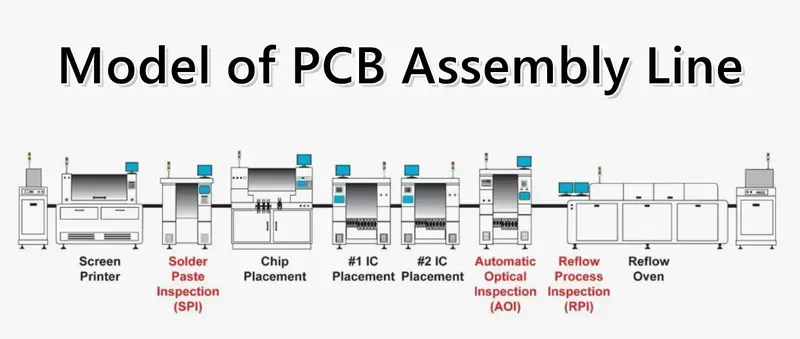
PCB Production Line
The robustness and longevity of a Fuel Cell Management Board (FCMB) are directly proportional to the precision and quality of its manufacturing and assembly. At Zero One Solution Limited, our commitment to reliability is embedded in every stage of our production process, ensuring that each FCMB delivered meets the most stringent industry standards for performance and durability, critical for the demanding operational environments of fuel cell systems.
Advanced Manufacturing Techniques We leverage cutting-edge manufacturing techniques, including automated optical inspection (AOI), X-ray inspection, and in-circuit testing (ICT), to identify and rectify any potential defects early in the production cycle. Our facilities are equipped with state-of-the-art machinery for precise solder paste printing, high-speed pick-and-place, and reflow soldering, all controlled by a rigorous quality management system (QMS) compliant with ISO 9001 standards.
Robust Assembly Processes Our assembly lines are optimized for high-reliability applications, employing skilled technicians and automated processes for component placement and secure interconnections. Special attention is paid to thermal management, with assembly techniques designed to enhance heat dissipation, crucial for the long-term stability of FCMBs under varying operational loads. This includes the meticulous application of thermal interface materials and precise component alignment.
Prototyping to Mass Production Scalability Zero One Solution Limited excels in offering seamless scalability from rapid prototyping to high-volume mass production. Our flexible manufacturing infrastructure allows for quick adjustments to production lines, accommodating evolving design specifications and fluctuating demand. This agility ensures that our clients can transition from R&D to market launch efficiently, without compromising on quality or lead times.
Comprehensive Quality Assurance Quality assurance is paramount. Every Fuel Cell Management Board undergoes a multi-stage testing protocol, including functional testing, environmental stress screening (ESS), and burn-in tests to simulate real-world operating conditions. This exhaustive testing regimen guarantees the long-term reliability and performance of our FCMBs, minimizing field failures and maximizing system uptime.
Supply Chain Integrity Operating within a global PCBA supply chain network, we maintain stringent control over component sourcing. We partner exclusively with verified suppliers, ensuring the authenticity and quality of all raw materials and electronic components. This robust supply chain management mitigates risks associated with counterfeit parts and ensures a consistent flow of high-grade materials for uninterrupted production.
Applications and Impact of Our Solution
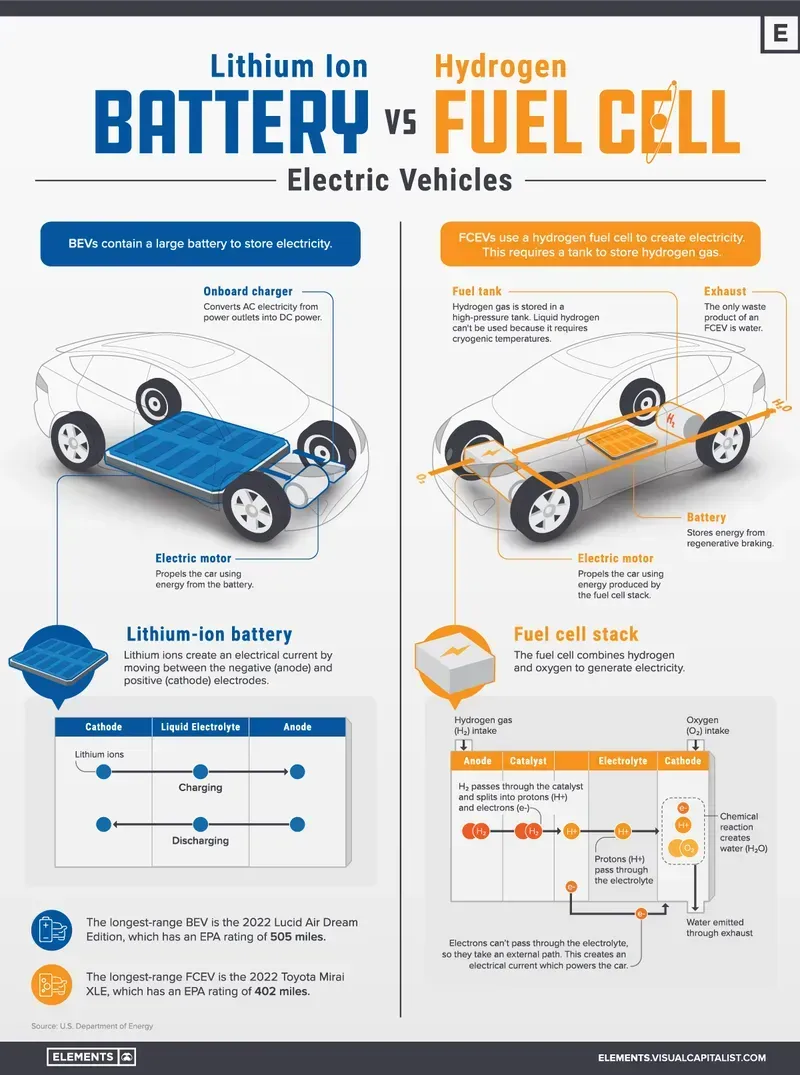
Fuel Cell Car
Zero One Solution Limited's Fuel Cell Management Board (FCMB) solutions are engineered to unlock the full potential of fuel cell technology across a multitude of industries, transforming efficiency, reliability, and safety. Our advanced FCMBs are the linchpin that enables seamless integration and optimal performance, ensuring that the promise of clean, efficient energy is realized in diverse, demanding environments.
Application Sector
Key Benefit of Zero One FCMB Solution
Specific Impact
Automotive & Transportation
Enhanced Efficiency & Extended Range
Optimized power delivery for electric vehicles (FCEVs), extending driving range and reducing refueling times by precisely managing hydrogen flow and stack voltage for peak performance under varying load conditions. For heavy-duty trucks and buses, our solutions ensure consistent power output and fuel economy, critical for long-haul operations. Our boards withstand harsh automotive environments (vibration, temperature extremes) as per AEC-Q100 standards, ensuring reliability and safety, including rapid shutdown in fault conditions and precise state-of-health monitoring allowing for predictive maintenance and extended system lifespan, thereby reducing total cost of ownership for fleet operators and promoting wider adoption of fuel cell vehicles.
Stationary Power Generation
Grid Stability & Reliable Backup
Enabling micro-grids and uninterruptible power supplies (UPS) with stable, consistent energy output. Our FCMBs facilitate seamless integration with existing grid infrastructure, providing robust power conditioning, voltage regulation, and load balancing for critical facilities like data centers, hospitals, and remote communities. They support rapid response to grid fluctuations, enhance energy security, and reduce reliance on conventional generators, offering clean, quiet, and efficient power generation.
Portable & Consumer Electronics
Compactness & Extended Operation
Powering drones, robotic systems, and portable electronic devices with lightweight, high-power-density solutions. Our FCMBs enable smaller form factors and longer operating durations compared to traditional batteries, making them ideal for field operations, remote sensing, and professional tools. They provide quick startup times and efficient energy conversion, crucial for applications requiring instantaneous power on demand.
Marine & Maritime
Sustainable Propulsion & Auxiliary Power
Facilitating the decarbonization of the marine sector by providing reliable power management for boats, ships, and underwater vehicles. Our solutions withstand corrosive marine environments, offering precise control over fuel cell stacks for propulsion and onboard auxiliary systems. This leads to reduced emissions, quieter operation, and enhanced energy independence for maritime vessels, aligning with global sustainability initiatives and stringent maritime regulations.
Aerospace & Defense
High-Performance & Mission Critical Reliability
Providing lightweight and highly reliable power solutions for unmanned aerial vehicles (UAVs), surveillance equipment, and portable field devices. Our FCMBs ensure consistent power in extreme conditions, vital for extended missions and critical operations where traditional power sources are insufficient or too heavy. They offer superior power-to-weight ratios and enhanced operational endurance, giving a strategic advantage in reconnaissance and communication applications.
Customization and Scalability with Zero One Solution
At Zero One Solution Limited, we understand that fuel cell technologies are diverse, and off-the-shelf solutions rarely meet the intricate demands of advanced applications. Our core strength lies in providing highly customizable and scalable Fuel Cell Management Board (FCMB) solutions, engineered to perfectly integrate with your specific fuel cell chemistry, power requirements, and operational environment. This bespoke approach ensures optimal performance, safety, and a significantly accelerated time-to-market for our clients.
Tailored for Diverse Fuel Cell Chemistries We develop FCMBs compatible with a broad spectrum of fuel cell types, including Proton Exchange Membrane Fuel Cells (PEMFC), Solid Oxide Fuel Cells (SOFC), Direct Methanol Fuel Cells (DMFC), and more. Our design flexibility extends to accommodating varying voltage ranges, current capacities, and specific thermal characteristics inherent to each chemistry.
Scalable for Any Application Size From compact, portable fuel cell systems to large-scale stationary power generators or automotive applications, our solutions are inherently scalable. We design modular FCMB architectures that can be easily adapted to manage single-cell stacks or complex multi-stack arrays, ensuring consistent performance regardless of system complexity or power output.
Integration with Existing Ecosystems Beyond the board itself, we specialize in seamless integration. Our FCMBs can be designed with various communication protocols (e.g., CAN, Modbus, Ethernet) to interface effortlessly with your existing Battery Management Systems (BMS), power converters, or higher-level control units, creating a cohesive and intelligent energy management system.
Rapid Prototyping for Iterative Development Leveraging our rapid-response R&D prototyping capabilities, we facilitate quick iterations of your custom FCMB design. This agile approach allows for rigorous testing and refinement, ensuring the final product meets all performance benchmarks and regulatory requirements with exceptional speed.
Customization Aspect
Description
Benefit
Power Handling
Adjustable voltage, current, and power output capabilities.
Optimized for specific load requirements, preventing over/under-delivery.
Sensor Integration
Support for custom temperature, pressure, flow, and gas composition sensors.
Precise monitoring and control for enhanced efficiency and safety.
Firmware Logic
Custom algorithms for cell balancing, fault detection, and energy optimization.
Tailored operational strategies for maximum system longevity and performance.
Physical Form Factor
Design variations in size, shape, and connector types.
Seamless fit within existing mechanical enclosures and system layouts.
FAQs about Fuel Cell Management Boards
Understanding the intricacies of Fuel Cell Management Boards (FCMBs) is crucial for anyone involved in fuel cell system development or deployment. These dedicated electronic control units are the brain of a fuel cell system, ensuring optimal performance, longevity, and safety. Below, we address common questions to demystify FCMBs and highlight their essential role.
What is the primary function of a Fuel Cell Management Board? The primary function of a Fuel Cell Management Board (FCMB) is to precisely monitor and control the operational parameters of a fuel cell stack and its associated balance-of-plant (BoP) components. This includes managing fuel and oxidant flow, temperature regulation, voltage and current monitoring, power conditioning, and fault detection. Its overarching goal is to maximize efficiency, extend stack lifespan, and ensure safe operation under varying load conditions.
How do Fuel Cell Management Boards enhance fuel cell efficiency and lifespan? FCMBs enhance efficiency and lifespan by maintaining the fuel cell within its optimal operating window. This involves dynamic control of reactant stoichiometry, preventing membrane dehydration or flooding, and managing thermal profiles to avoid hot spots or freezing. By mitigating degradation mechanisms like carbon corrosion and catalyst poisoning through precise control, the FCMB significantly contributes to prolonging the stack's operational life and improving overall energy conversion efficiency.
What communication protocols are typically supported by Fuel Cell Management Boards? Modern FCMBs typically support a range of communication protocols to integrate seamlessly with higher-level system controllers and external devices. Common protocols include CAN (Controller Area Network) for robust in-vehicle or industrial communication, RS-485 for industrial control systems, Ethernet for data logging and remote diagnostics, and sometimes SPI or I2C for interfacing with internal components or sensors. The choice depends on the application's specific requirements for data rate, reliability, and network topology.
What are the key safety features integrated into a Fuel Cell Management Board? Safety is paramount in fuel cell systems, and FCMBs integrate multiple features to ensure secure operation. These include over-voltage and under-voltage protection, over-current protection, over-temperature protection, hydrogen leak detection and emergency shutdown, and fault diagnosis with various levels of alarms and system responses. Redundant sensor inputs and fail-safe algorithms are often employed to prevent catastrophic failures and protect both personnel and equipment.
Can Fuel Cell Management Boards be customized for different fuel cell types (e.g., PEMFC, SOFC)? Yes, FCMBs can be extensively customized for different fuel cell types. While core functionalities like power management and thermal control are universal, the specific parameters and control strategies vary significantly. For instance, a Polymer Electrolyte Membrane Fuel Cell (PEMFC) FCMB focuses on hydration management and lower operating temperatures, whereas a Solid Oxide Fuel Cell (SOFC) FCMB would prioritize high-temperature control, thermal cycling management, and redox stability. Customization involves adapting sensor interfaces, control algorithms, and power electronics to the specific chemistry and operational requirements of the fuel cell stack.
In conclusion, Zero One Solution Limited's Fuel Cell Management Board Solution stands as a testament to our commitment to innovation, reliability, and precision in the rapidly evolving energy landscape. Our expertise in rapid prototyping, coupled with a strategic global supply chain, ensures that your fuel cell projects not only meet but exceed performance expectations. Partner with us to navigate the complexities of fuel cell system integration and assembly. Visit our website or contact our expert team today to discuss how our bespoke PCB solutions can power your next generation of clean energy technology.